Land Gate Zadar
The Land Gate is the grandest of Zadar's entrances, a 1543 Venetian arch by Michele Sanmicheli that once carried the only road into the walled city, and it still frames the view from Foša harbour to the Old Town.
Short answer
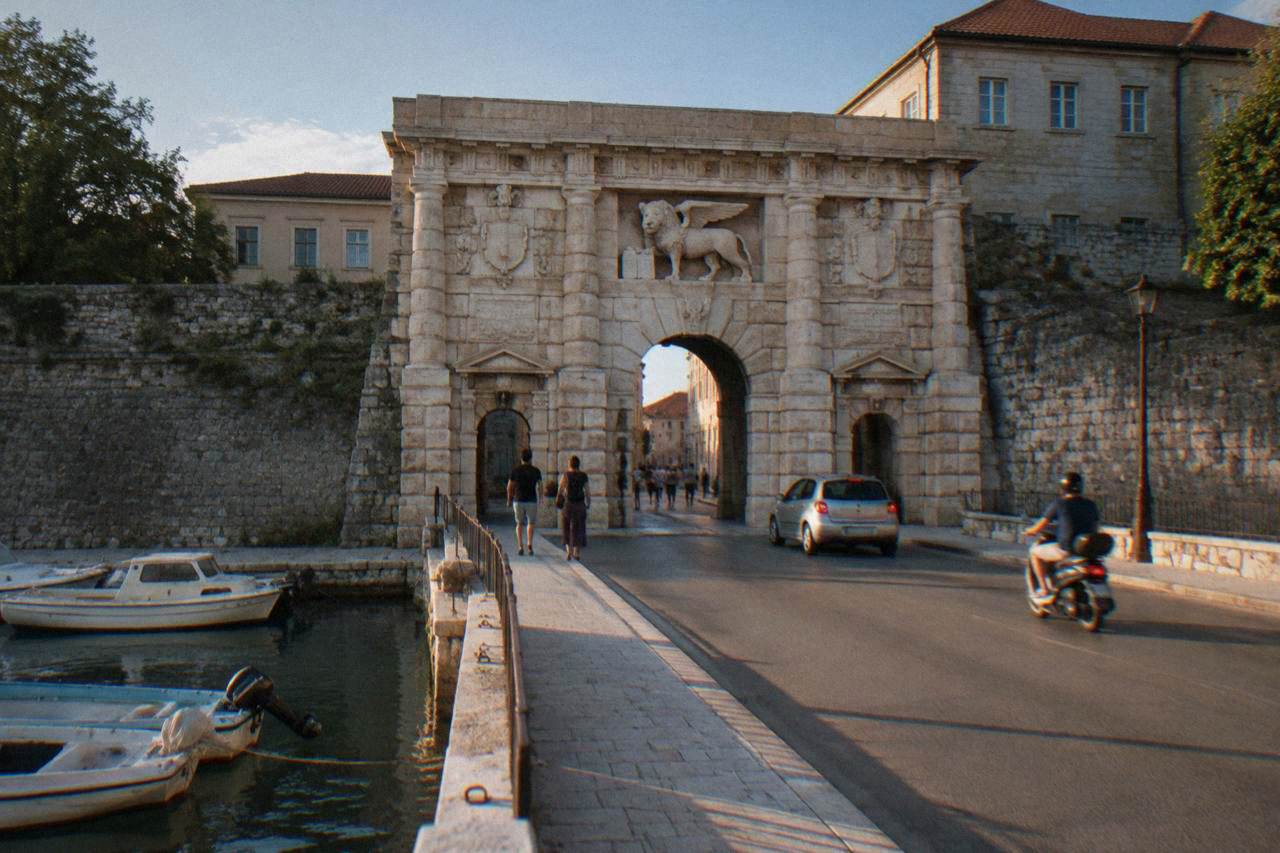
**The Land Gate (Kopnena vrata) in Zadar is a free, always-accessible stone arch built in 1543 and attributed to the Venetian architect Michele Sanmicheli.** It stands at the neck of the Old Town peninsula beside the small Foša harbour, and it is one of the elements tied to Zadar's role as a component of the UNESCO listing of Venetian defence works, inscribed in 2017. Allow a short stop of ten to fifteen minutes, longer if you eat on the harbour beside it.
The Land Gate (Kopnena vrata) in Zadar, a coastal city in Dalmatia on the Adriatic, is the single most theatrical entrance to any Croatian Old Town: a triumphal stone arch from 1543, attributed to the Venetian architect Michele Sanmicheli, that rises straight out of the water's edge at the head of the little Foša harbour. When the Venetians ruled Zadar, this gate and the moat in front of it carried the only land route into the fortified city, and everything arriving by road passed under these stones. Today the moat is a leafy park, the harbour holds small boats, and the arch frames one of the classic Zadar views: pale stone against the sky, the water behind you, the Old Town ahead.
The gate is free to see at any hour, and nothing about it is ticketed. What this guide covers is everything around a visit: what the arch actually is, where it sits on the peninsula, what to notice in the stonework, what else clusters within a few minutes' walk, and how the site connects to the wider story of Venetian defence works that UNESCO recognised in 2017. Practical detail on the harbour, the nearby walls and the best order for a walking route follows, all drawn from what the official sources say, in the reporting voice this site always uses.
What Is The Land Gate In Zadar?
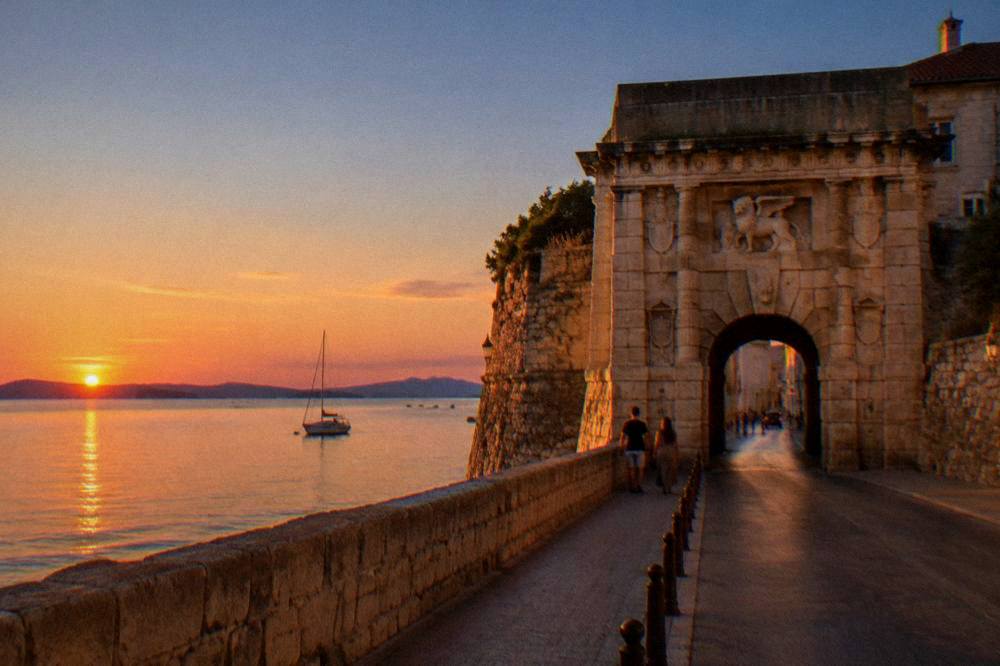
The Land Gate (Kopnena vrata) is Zadar's monumental western city gate, built in 1543 and attributed to the Venetian architect Michele Sanmicheli, and it is a free public monument open at all hours, with the Lion of St Mark carved above the central arch. It was the main landward entrance through the Venetian-era fortifications, crossed by a drawbridge over a defensive moat, and it now stands beside the Foša harbour at the narrow neck joining the Old Town peninsula to the mainland. Its three-arched facade, a central carriage arch flanked by two pedestrian arches, is the feature visitors photograph.
Sanmicheli worked for Venice as one of its leading fortress architects. The gate was never a castle or a palace: it was infrastructure, the controlled point where the road met the city. That function explains its position exactly. The Old Town of Zadar sits on a peninsula (Poluotok), and in the Venetian period the peninsula was cut off by walls and a moat, so the Land Gate was, in the most literal sense, the door to Zadar for anyone arriving overland.
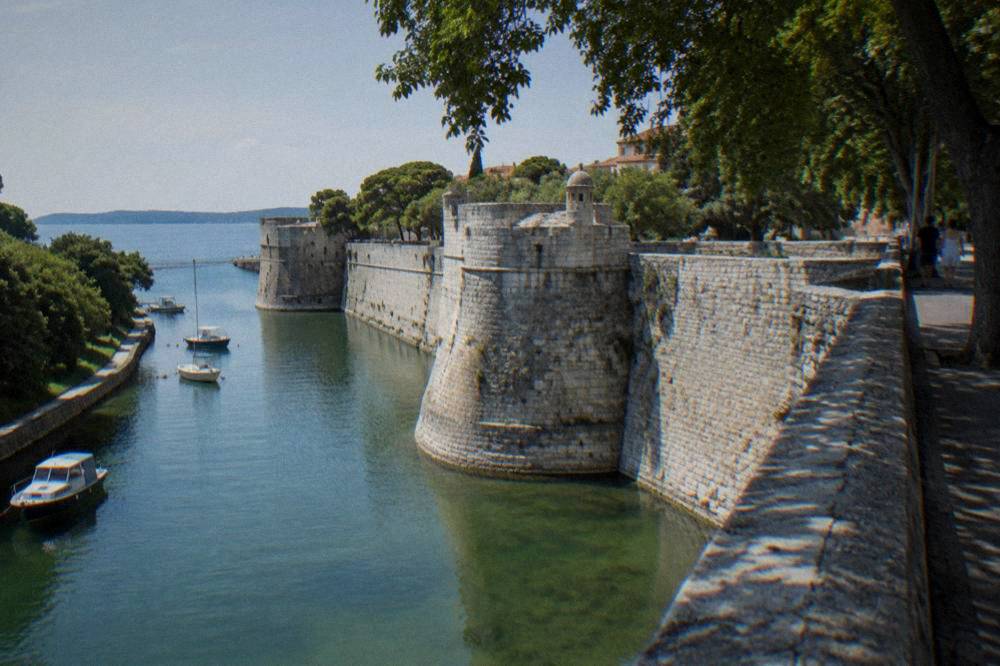
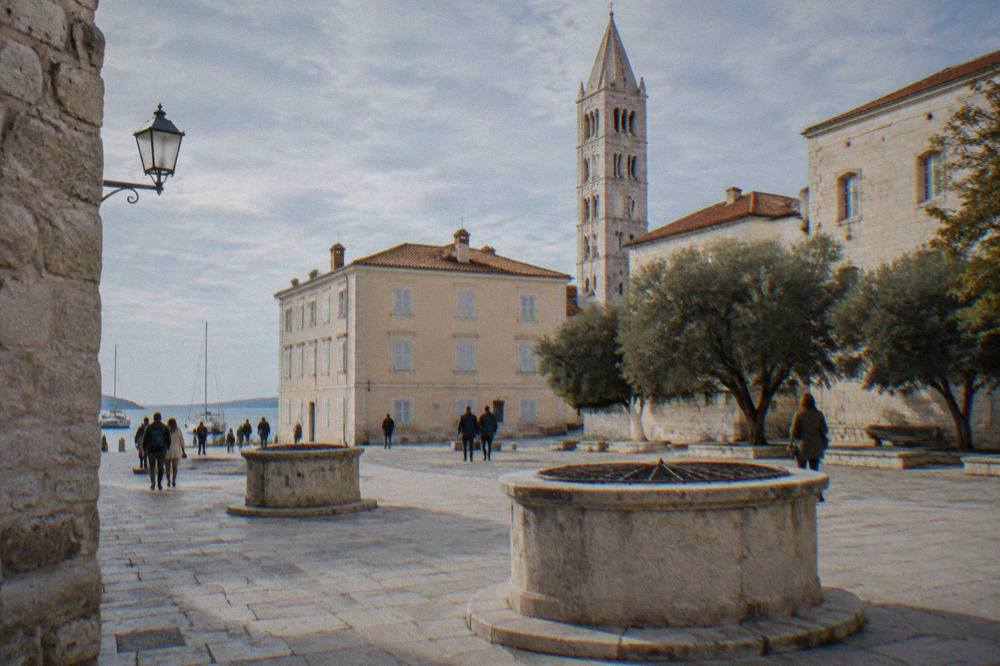
The moat survives as public green space, the Queen Jelena Madijevka Park, a sunken belt of trees and paths that wraps the landward side of the Old Town. Standing on the far side of it and looking back at the gate, the original defensive logic is still readable: water in front, high walls behind, one arch for entry. On the city side, the gate opens toward the Five Wells Square and the main street beyond, which is how the whole ensemble was designed to be experienced, approach, threshold, arrival.
Where Is The Land Gate In Zadar And How Do You Reach It?
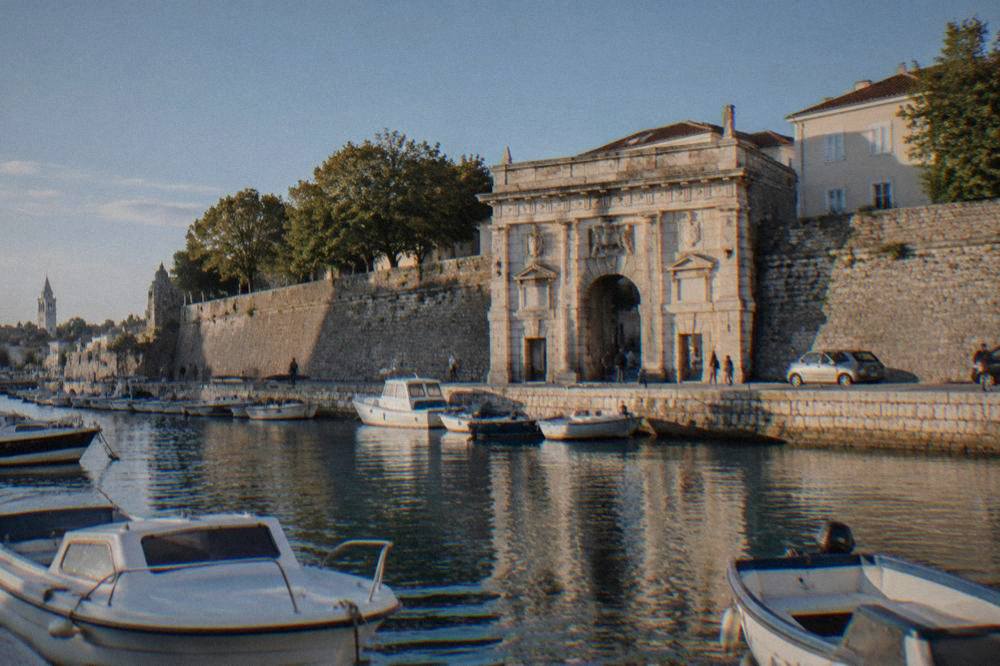
The Land Gate stands directly above the Foša harbour and the Queen Jelena Madijevka Park that occupies the former moat, roughly a five to ten minute walk from the Roman Forum and the Sea Organ. No ticket, no opening hours and no booking apply: it is a public arch on a public street. Anyone arriving at the Old Town from the bus station or the ferry port at Gaženica approaches the peninsula along the shore road and meets the gate at the head of Foša.
The geography rewards a moment of attention. Zadar's Old Town is a narrow finger of land, and the Land Gate marks the point where that finger attaches to the coast. To the gate's west lies the small horseshoe of Foša harbour, where fishing and pleasure boats tie up below restaurants built onto the quay. To the east, inside the walls, lie Five Wells Square and then Kalelarga, the main street that runs the spine of the peninsula. The zadar riva and the Sea Organ sit at the far southwestern tip, so the gate is naturally either the first or the last monument on any Old Town walk.
Distances put the whole ensemble in perspective. The bus station on Ante Starčevića is about 2.6 km from the Old Town, the Gaženica ferry port about 5.2 km, and Zadar Airport about 13 km. Within the peninsula itself everything is on foot, and the flat terrain makes the walk from the gate to the far tip straightforward in ordinary shoes. Cyclists and drivers should note that the peninsula core is a pedestrian zone, so the practical plan is to park or arrive outside and walk in, which is what the layout was built for in any case.
What Should You Look At When You Stand In Front Of The Land Gate In Zadar?
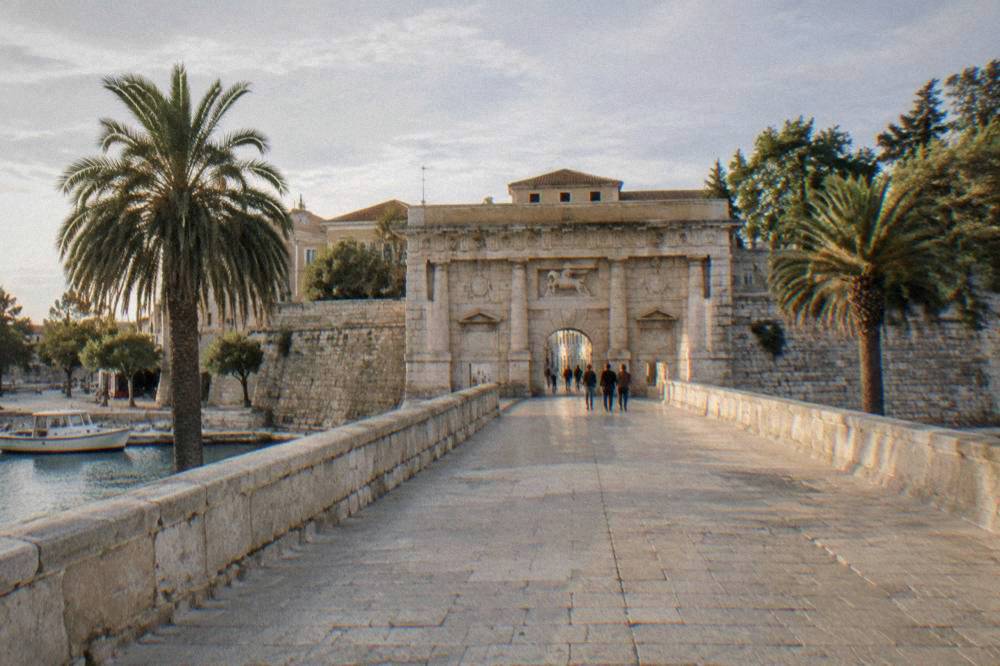
Look for three things at the Land Gate: the central carriage arch flanked by two smaller side arches, the Venetian Lion of St Mark carved above the central opening, and the way the gate meets the water at Foša harbour, which is the view the whole composition was designed around. All three are visible from public ground in a few minutes, and none of it is behind a barrier or a ticket desk. The stone is weathered pale limestone, and the carving is best read in morning or late-afternoon light when the relief stands out."
The three-arch arrangement is the signature of Sanmicheli's gate design. The wide central arch took wheeled traffic and the drawbridge chain, while the narrow flanking arches served people on foot, a separation that kept the gate usable even when the bridge was raised. Above the centre sits the winged lion, the symbol of Venice, a reminder that this was a state monument as much as a military one, proclamation and fortification in a single facade.
The setting is half the sight. Foša is the smallest of Zadar's harbours, a tight bowl of quay and stone below the walls, and the gate steps down toward it like a grand staircase landing. From the water side, looking back, the arch is framed by masts and restaurant terraces, and this is the angle that appears on Zadar postcards. The park in the old moat gives a third viewpoint, from the green depression below street level, where the scale of the walls reads clearest. Walk the full circuit, gate front, harbour, moat, and you have seen the monument from every side its designers intended.
A small practical note belongs here. The area around the gate is part of the historic core where the city posted dress-code signage in summer 2026, asking for appropriate clothing and no swimwear, with reports of fines up to 130 EUR for those who ignore a warning. Cover up off the beach and the question never arises.
Is The Land Gate Part Of A UNESCO World Heritage Site?
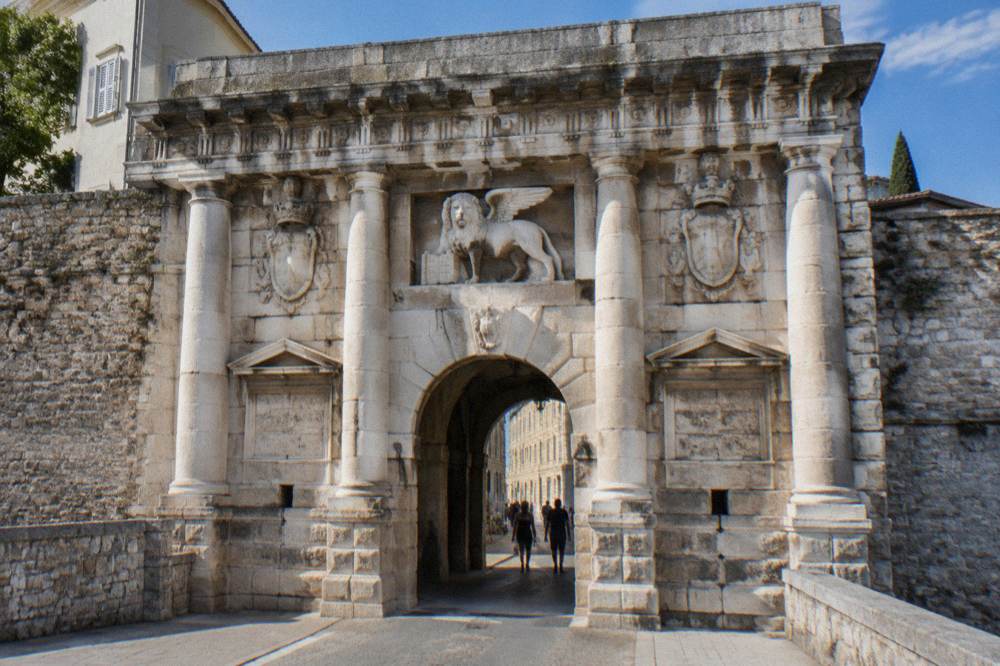
Yes, in a specific and often misunderstood way: the Land Gate belongs to the Venetian-era fortification system that makes Zadar one of six components of the UNESCO property listing Venetian defence works across Italy, Croatia and Montenegro. The Old Town as a whole is not a World Heritage Site, but the gate is the showcase piece of the city's listed fortifications, inscribed in 2017. The Old Town as a whole is not a World Heritage Site, and no sign or booth at the gate itself marks the inscription. The recognition sits at the level of the defensive works, of which the gate is a leading element."
The UNESCO listing covers fifteen sites across three countries grouped into six components, and Zadar's component is its ensemble of Venetian-era defences, of which the Land Gate is the showcase piece. The defences were inscribed in 2017. What this means for a visitor is mostly interpretive rather than practical: nothing at the gate charges, closes or queues differently because of UNESCO status, but the arch belongs to a transnational story of Venetian military engineering, alongside the walls of Bergamo, the fortresses of the Bay of Kotor and the other listed works.
That framing also protects against the most common error in online descriptions of Zadar, the claim that the entire Old Town is World Heritage. It is not. The peninsula holds Roman, medieval, Venetian and modern layers side by side, the Roman Forum and the Church of St Donatus being the most visited of the earlier strata, and only the Venetian defence works fall inside the UNESCO property. The gate is the best single place in the city to see what the inscription actually recognises.
| Zadar fortification element | What it is | Status today |
|---|---|---|
| Land Gate (Kopnena vrata) | 1543 city gate attributed to Michele Sanmicheli | Free public monument, open at all hours |
| City walls (landward curtain) | Venetian-era ramparts above the former moat | Public spaces and parkland |
| Queen Jelena Madijevka Park | The old defensive moat, now sunken gardens | Free public park |
| Foša harbour | Historic small harbour below the gate | Working quay with restaurants |
| UNESCO recognition | Component of the listing of Venetian defence works, inscribed 2017 | Applies to the defence works, not the whole Old Town |
How Much Time Do You Need At The Land Gate In Zadar?
Allow ten to fifteen minutes to see the Land Gate itself from the front, the harbour side and the moat park, or about an hour if you include a drink or a meal on Foša, which is the natural way to use the setting. There is no interior to visit, no ticket to buy and no queue to plan around, so the time cost is entirely flexible. The gate works equally well as the opening stop of an Old Town walk or as a sunset stop on the way out of the peninsula."
Because the monument is an arch on a public street, the only planning variable is light and crowds. Morning brings low sun across Foša and quiet quays; late afternoon and early evening bring the warm colour that suits pale limestone and the terrace tables filling up around the harbour. The gate sits at the start of the main pedestrian axis, so a natural route is gate, Five Wells Square, Kalelarga, People's Square, the Forum and St Donatus, then the cathedral, ending at the Sea Organ and the Greeting to the Sun on the western tip for the sunset the city is known for. Walked without stops, that line takes well under an hour, but the stops are the point.
For a sense of proportion, the verified itinerary pages on this site break the same ground into a one day in Zadar plan and longer versions for two days in Zadar, and in all of them the Land Gate appears early, as the threshold the route crosses on the way in. The table below shows how the stops stack up along the peninsula.
| Stop from the Land Gate | Character | Cost to see |
|---|---|---|
| Five Wells Square | Renaissance cistern square inside the walls | Free public space |
| Kalelarga (Široka ulica) | Main street of the Old Town | Free public space |
| People's Square | Historic civic square with cafes | Free public space |
| Roman Forum | Excavated Roman public square | Free public space |
| Church of St Donatus | Pre-Romanesque round church | Around 7 EUR full price on the museum tariff; access may be limited during planned restoration works |
| Cathedral of St Anastasia | Romanesque cathedral with bell tower | Check locally for tower access details |
| Sea Organ and Greeting to the Sun | Waterfront installations by Nikola Bašić | Free, open at all hours |
One caveat on that list: St Donatus Church faces a roof restoration planned from autumn 2026, expected to run about six months as the first phase of a wider restoration. Group visits are suspended during the works and individual access depends on the phase, so check before counting on entry.
What Is The Best Time Of Day To Photograph The Land Gate In Zadar?
Late afternoon into sunset is the strongest light for the Land Gate's west-facing harbour side, while the first hours of the morning give the quietest quays and clean, low light across the moat park side, according to the ordinary behaviour of the site rather than any scheduled event. The gate stands open to the sky at all hours, so the only constraint is the sun's position and how many people share the frame. Evening adds the bonus of the waterfront installations lighting up a short walk away on the western tip."
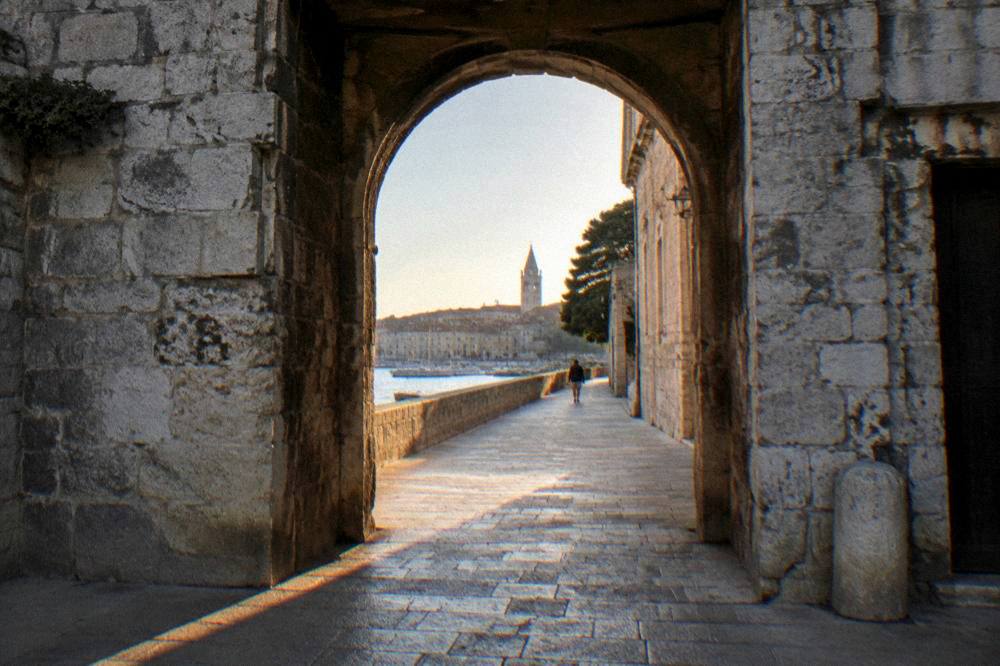
The physics are simple and favourable. The facade above Foša catches the western light in the later part of the day, which is also when the harbour terraces fill and the scene gains life, boats, glasses, voices, against the old stone. Photographers wanting empty frames should reverse that and come early, when the moat park below the walls is shaded and calm and the walk through the green to the gate is itself worth the trip. The arch also photographs well from inside looking out, silhouetted against the harbour, and that angle costs nothing but a short wait for a gap in the foot traffic.
Sunset in Zadar has a reputation built on the waterfront west of the Old Town, where the Sea Organ plays with the waves and the Greeting to the Sun installation lights the paving after dark. A kayak tour on the water at that hour is the other classic angle on the city, and the related tour below runs exactly that idea, a transparent LED kayak out on the evening sea. The Check availability link beside the tour's own page shows the operator's live listing.
What Else Is Near The Land Gate In Zadar?
Within five minutes' walk of the Land Gate sit Five Wells Square, the Kalelarga main street, the Queen Jelena Madijevka Park in the old moat, the Foša harbour restaurants and the start of the walls walk, with the Forum, St Donatus and the cathedral ten minutes further on along the peninsula. The gate is not an outlying monument; it is the front door to the densest cluster of sights in the city. Everything on the list below is reachable on flat, pedestrianised ground."
Foša itself deserves the slowest look. It is the smallest of the city's harbours, wrapped in stone, with restaurants along the quay serving fish and local dishes at the water's edge, and its scale makes it feel less like a working port than a room with a sea floor. The moat park climbs the landward side in terraces of green, a conversion of the defensive ditch into gardens, and the walls above it can be followed on foot toward the harbour mouth. The Old Town area guide on this site maps the wider peninsula, and the attractions guide to People's Square covers the civic heart a few streets in.
For travellers using the gate as a launch point for bigger outings, the day-trip network starts from the same city: Krka National Park, Plitvice Lakes, Kornati and Paklenica are all covered in this site's day-trip guides.
| Destination from Zadar | Driving distance | Driving time |
|---|---|---|
| Nin | 19.8 km | 28 min |
| Paklenica National Park | 46.8 km | 57 min |
| Skradin (for Krka) | 76 km | 62 min |
| Krka, Skradinski Buk | 91 km | 73 min |
| Šibenik | 89 km | 71 min |
| Plitvice Lakes | 145 km | 153 min |
| Split | 158 km | via A1 |
| Zagreb | 297 km | via A1 |
How Does The Land Gate Fit Into Zadar's History?
The Land Gate belongs to the Venetian refortification of Zadar that produced the arch dated 1543 and attributed to Michele Sanmicheli, when Venice strengthened the city as the northern anchor of its Dalmatian sea state, and it is the surviving masterpiece of that programme. Two heritage dates anchor the wider story: 1543 for the gate, and 2017 for the UNESCO inscription of the Venetian defence works it belongs to. Everything earlier or later in the city's long past is a separate chapter with its own monuments.
Zadar's strategic value was its position: a fortified peninsula on a coast the Venetian state depended on, facing the sea routes to Italy. Venice held the city for centuries and reshaped its defences with the help of architects like Sanmicheli, whose gate gave the landward entrance the dignity of a triumphal arch while remaining a working military checkpoint with its drawbridge and moat. When the military need passed, the moat became a park, the bridge became permanent ground, and the gate settled into its present role as a ceremonial threshold rather than a controlled one.
The arch's neighbours tell the rest of the timeline. The Roman Forum a few hundred metres away preserves the classical city, St Donatus the early medieval one, the Cathedral of St Anastasia the medieval and later layers, and the Sea Organ and Greeting to the Sun, by Nikola Bašić in 2005 and 2008, the contemporary waterfront the city is now famous for. The Land Gate is the hinge between the sea and the street, and standing under it, with the harbour behind and Kalelarga ahead, compresses the city's layered past into a single step.
Can You See The Land Gate On A Tour Of Zadar?
Yes: guided walking tours of the Old Town regularly include the Land Gate as a threshold stop, and a kayak tour on the evening water gives the opposite perspective, the gate and walls seen from the sea they once defended. Both angles are worth considering, and both can be booked through the operator's live listing with free cancellation, so the decision carries little risk. Independent visitors need nothing booked at all, since the gate is a free public arch."
The walking option suits travellers who want the fortifications explained in context, gate, walls, moat, Forum, and the Old Town tastings walks pair the monuments with local food and drink, an efficient combination in a city this compact. The water option suits the sunset hours: paddling out from the shore as the light drops, with the Old Town skyline and its walls across the water, is the view the Venetian defenders would have known, inverted. The related tour below runs in transparent LED kayaks after dark, and this site's page about the Zadar walking tour options covers the land-based alternatives in detail.
Between the two, the gate itself needs no guide at all, and that is its charm. The facts that matter are short: 1543, Sanmicheli, UNESCO 2017, free and always open. A guide adds the texture, the sea adds the spectacle, and the stone supplies the rest.
Practical Questions About Visiting The Land Gate In Zadar
Everything practical about the Land Gate comes down to five answers: it is free, it never closes, it sits at the Foša harbour end of the Old Town peninsula, it is best paired with Five Wells Square and Kalelarga on foot, and the only rules to respect are the posted dress-code expectations for the historic core. No booking, no ticket and no time slot exist for the monument itself. The table below condenses the planning facts.
| Question | Answer for the Land Gate |
|---|---|
| Entry price | Free, no ticket |
| Opening hours | Public street, accessible at all hours |
| Location | Head of Foša harbour, neck of the Old Town peninsula |
| Nearest landmarks | Five Wells Square, moat park, Kalelarga |
| Photography | Best harbour-side light late afternoon; quiet quays early morning |
| Access | Flat, pedestrianised; the peninsula core is car-free |
| Dress | Historic-core signage asks for appropriate clothing, no swimwear |
A few neighbouring items do carry questions, and honesty here saves disappointment. The bell tower of the Cathedral of St Anastasia has no verified price or hours on an official page, so confirm locally before planning the climb. The Museum of Ancient Glass charges 7.00 EUR for an adult ticket on its published price list, but its opening hours conflict between sources, so check the museum's own hours page before going. The tourist tax that accommodation collects in Zadar is confirmed at booking, not on this site. And for St Donatus, the restoration works planned from autumn 2026 mean access may be limited, so a quick check before a dedicated visit is the sensible move.
The emergency number in Croatia is 112, the country is in the Schengen area, and the euro has been the currency since 1 January 2023, facts that matter less at a free arch than elsewhere but belong in any complete planning summary. For the wider picture of what the city offers beyond this monument, the Zadar Croatia Travel Guide homepage gathers the attractions, itineraries and day trips in one place, including the practical pages on where to stay and the seasons in the best time to visit guide.
Common Questions About The Land Gate In Zadar
Is the Land Gate in Zadar free to visit?
Yes. The Land Gate is a free public monument on an open street, accessible at all hours, with no ticket, booth or booking. Only the neighbouring museums and the cathedral tower involve entry considerations.
Who built the Land Gate in Zadar?
The gate dates to 1543 and is attributed to the Venetian architect Michele Sanmicheli, who designed fortifications for Venice. The attribution and date are recorded in the verified heritage facts for the city.
Is the Land Gate part of UNESCO World Heritage?
The gate belongs to the fortification system that makes Zadar one of six components of the UNESCO property listing Venetian defence works, inscribed in 2017. The Old Town as a whole is not a World Heritage Site.
How long should I spend at the Land Gate in Zadar?
Ten to fifteen minutes covers the gate from the front, the harbour side and the moat park. An hour or more is natural if you stop for a drink or a meal on Foša harbour below the arch.
What is near the Land Gate in Zadar?
Five Wells Square, Kalelarga, the Queen Jelena Madijevka Park in the old moat and the Foša harbour restaurants are all within five minutes on foot, with the Roman Forum, St Donatus and the cathedral about ten minutes along the peninsula.
When is the best time to photograph the Land Gate?
Late afternoon into sunset gives the warmest light on the harbour facade, while early morning offers quiet quays and clean low light from the moat park side. The arch is lit and open at all hours.
