Zadar Walking Tour
Zadar's Old Town sits on a compact peninsula, and a walking tour of its Roman Forum, Sea Organ, churches and museums can be done in half a day. This guide sets out the route, the verified ticket prices and the practical rules.
Short answer
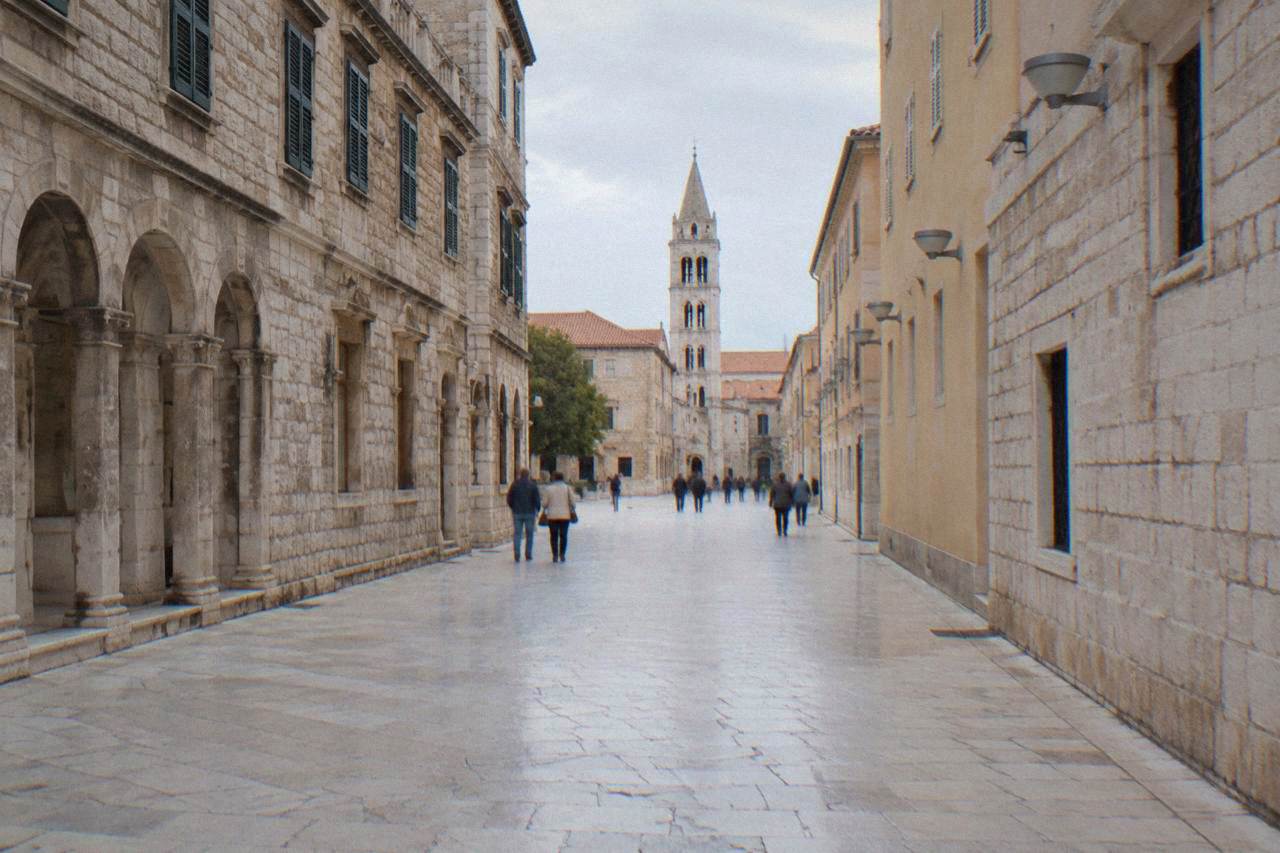
A self-guided walking tour of Zadar Old Town covers the Land Gate, Five Wells Square, Kalelarga, the People's Square, the Roman Forum, St Donatus, the Cathedral of St Anastasia, the Riva and the Sea Organ in about two to three hours at a relaxed pace, with the Sea Organ and Greeting to the Sun free at all hours and museums charging around 7 EUR at full price.
Zadar is a coastal city in Dalmatia, Croatia, built on a narrow peninsula that holds the entire Old Town within a walk of roughly a kilometre end to end, which makes it one of the few Adriatic cities where a walking tour genuinely replaces a car, a bus or a taxi for a full day. This guide from the Zadar Croatia Travel Guide editorial desk sets out a verified route past the Roman Forum, the Sea Organ and the churches, lists what is free and what is ticketed, and reports the prices, distances and rules that primary sources actually publish. Nothing here is an experience claim: every figure comes from an official page or a verified listing, and where a figure does not exist, the page says so and tells you where to confirm it.
What Is The Best Route For A Self-Guided Walking Tour Of Zadar?
The best walking route in Zadar starts at the Land Gate, crosses Five Wells Square onto Kalelarga, the main street, then reaches People's Square, the Roman Forum, St Donatus and the Cathedral of St Anastasia, before finishing on the Riva waterfront at the Sea Organ and Greeting to the Sun, a straight line of under a kilometre that takes in every headline sight on the peninsula and can be walked in either direction in two to three relaxed hours.
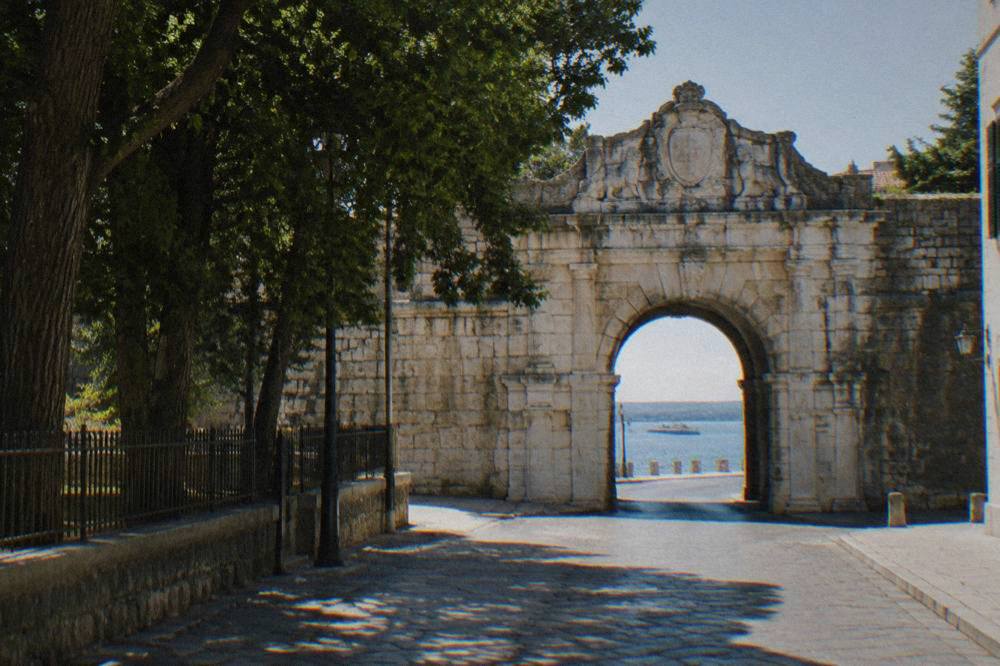
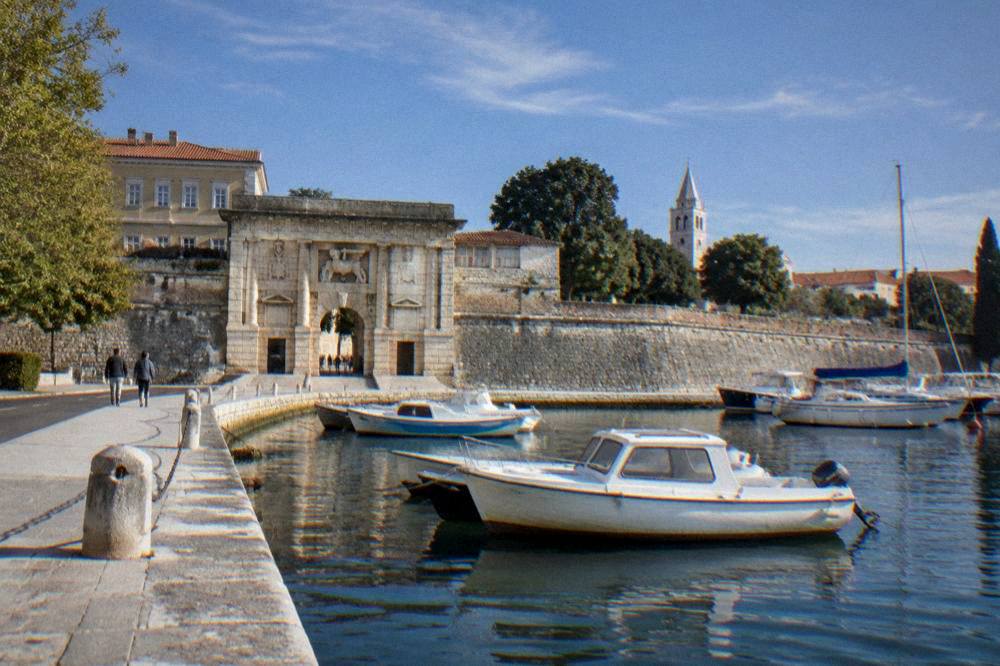
The Land Gate (Kopnena vrata) was built in 1543 to a design attributed to Michele Sanmicheli, and it remains the ceremonial entrance to the peninsula from the side facing the harbour. It is free public space, open at all hours. From there, Five Wells Square sits a short walk inland, and Kalelarga, officially Široka ulica, runs from it toward the heart of the Old Town as the historic main street. All three are free public spaces with no ticket, no queueing system and no closing time.
The route table below keeps the stops in a workable order. Walking times between stops inside the Old Town are a matter of pace rather than published data, so the table gives the sequence, the status of each site and the notable year or figure attached to it, not invented minutes.
| Order | Stop | Status | Key fact |
|---|---|---|---|
| 1 | Land Gate (Kopnena vrata) | Free, open public space | Built 1543, attributed to Michele Sanmicheli |
| 2 | Five Wells Square | Free public square | Historic cistern square, no ticket |
| 3 | Kalelarga (Široka ulica) | Free public street | The Old Town's main street |
| 4 | People's Square (Narodni trg) | Free public square | Historic civic square |
| 5 | Roman Forum | Free, open public site | Roman ruins in the open air |
| 6 | Church of St Donatus | Ticketed, around 7 EUR full price | Roof restoration planned from autumn 2026 |
| 7 | Cathedral of St Anastasia | Ticketed sections | Check the bell-tower price and opening hours at the entrance |
| 8 | Riva waterfront | Free promenade | Seafront walk the whole peninsula shares |
| 9 | Sea Organ | Free, open at all hours | Built 2005, by Nikola Bašić |
| 10 | Greeting to the Sun | Free, open at all hours | Built 2008, by Nikola Bašić |
Two things shape the order more than anything else. The Sea Organ and the Greeting to the Sun sit side by side on the western tip, so they belong at the end of a morning walk or the start of an evening one, timed for sunset rather than for lunch. And the museums, which cluster around the Forum, have hours that the official sources do not state consistently, so the walking plan should treat them as optional insertions rather than fixed anchors. More on that below.
For anyone planning a longer visit around this route, the site's How Many Days In Zadar guide and the Things To Do In Zadar overview both place the Old Town walk in the context of a full itinerary.
What Should You See First In Zadar Old Town?
Start at the Roman Forum, because it is the physical centre of the peninsula and the point from which St Donatus, the Cathedral of St Anastasia and the Archaeological Museum all sit within a couple of minutes' walk, and because it is free, open and unmissable, while the Sea Organ and Greeting to the Sun are better saved for the sunset hours on the western tip.
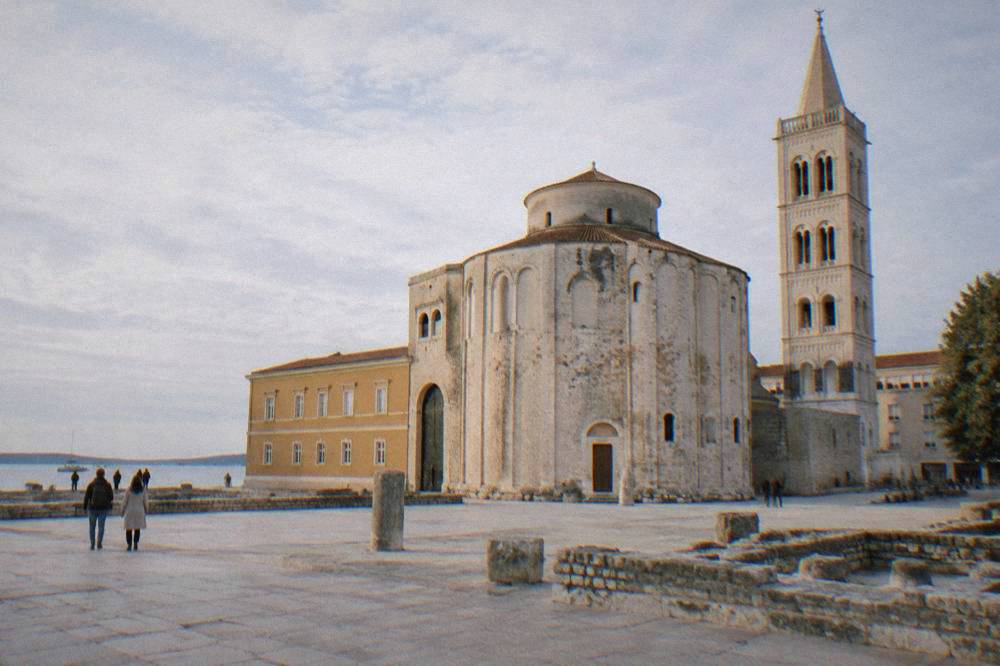
The Forum is a Roman site in the open air, free to walk through at any time. The Church of St Donatus stands beside it, a pre-Romanesque round church and the most recognisable building in the city. Its tariff runs on the Archaeological Museum's price list, which shows rows of 7.00 and 5.00 EUR; this site reports that as "around 7 EUR at full price" and links nothing further, because the split between the two rows was not read line by line. One caveat matters for 2026 and 2027: a public procurement tender for the full replacement of the church's roof structure was launched at the end of August 2026, with works planned from autumn 2026 over about six months as the first phase of a roughly two-year restoration, during which group visits are suspended and individual access depends on the phase. Access may be limited, and the sensible move is to check before going.
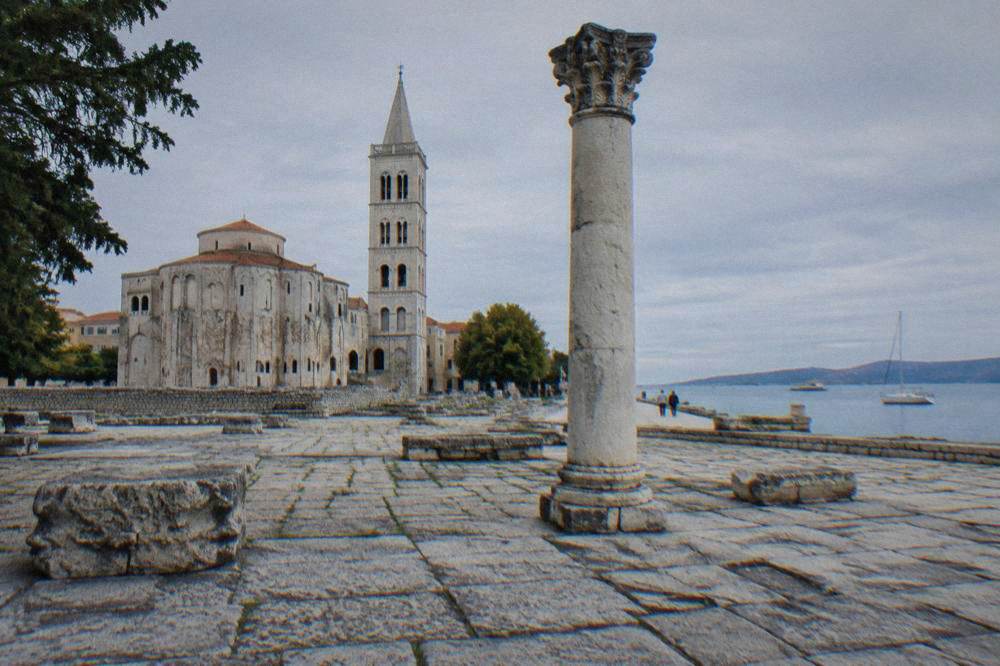
The Cathedral of St Anastasia stands a short walk from the Forum. The bell tower's climb price and opening hours were not found on an official page, so this site prints neither; confirm locally at the entrance.
The Sea Organ and the Greeting to the Sun, both by the architect Nikola Bašić, deserve their place at the end of the route rather than the start. The Sea Organ dates from 2005 and the Greeting to the Sun from 2008. Both are free, open, public installations with no tickets and no opening hours, and no verified light-show start time exists, so any timing plan should be built around sunset itself rather than a published schedule. The site's dedicated Sea Organ and Greeting To The Sun pages cover both installations in detail.
Which Zadar Museums Are Worth Adding To A Walking Tour?
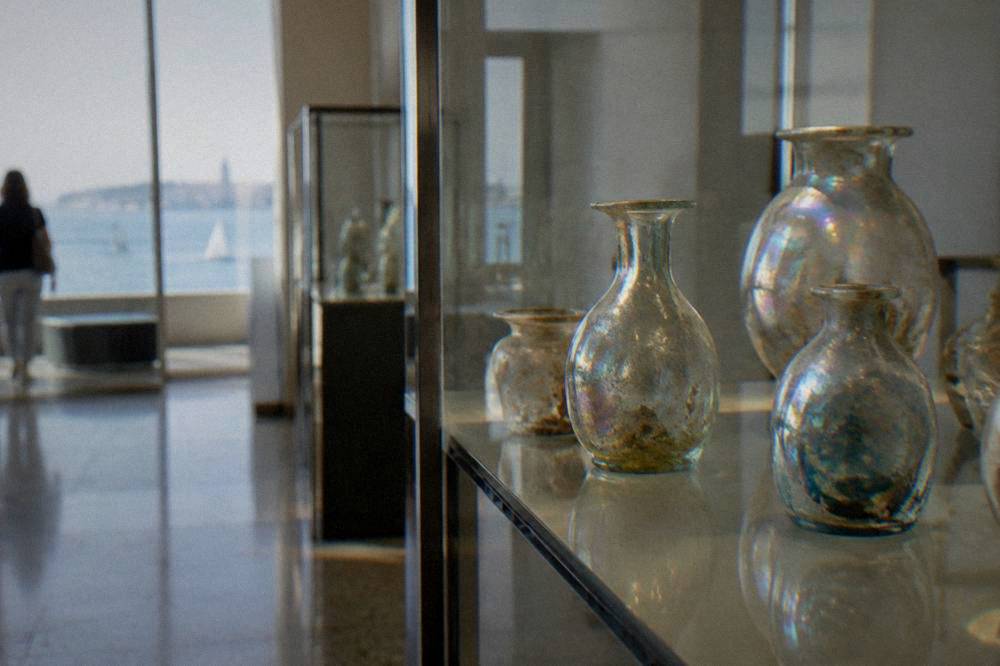
The Museum of Ancient Glass is the one museum with a fully verified price list, at 7.00 EUR for an adult, 5.00 EUR for groups of five or more and 4.00 EUR for schoolchildren, with guided tours at 20 EUR in Croatian or 30 EUR in other languages, while the Archaeological Museum and St Donatus sit at around 7 EUR full price, and the museum's opening hours conflict across sources, so its own hours page is the place to confirm them before setting out.
The Museum of Ancient Glass's ticket page states the anchored prices, which makes it the most reliable museum figure on the peninsula. The museum publishes its working hours on its own site, and that is where to check on the morning of the walk.
| Museum or site | Adult price | Status of the figure |
|---|---|---|
| Museum of Ancient Glass | 7.00 EUR | Verified on the museum's ticket page |
| Museum of Ancient Glass, groups of 5+ | 5.00 EUR | Verified, same page |
| Museum of Ancient Glass, schoolchildren | 4.00 EUR | Verified, same page |
| Guided tour, Croatian | 20 EUR per group | Verified, same page |
| Guided tour, other languages | 30 EUR per group | Verified, same page |
| Archaeological Museum Zadar | around 7 EUR | Tariff page shows 7.00 and 5.00 EUR rows |
| St Donatus | around 7 EUR | Same tariff; roof works may limit access from autumn 2026 |
| Cathedral bell tower | not printed | No official price or hours found |
A walking tour with two museums added is a full morning plus an afternoon; without them, the outdoor route alone is a half-day. The museum cluster sits inside the same three or four blocks around the Forum, so the decision can be made on the day, at the door, once the hours are confirmed.
The related option for readers who would rather ride than walk the wider city is the Hidden Gems of Zadar Eco tuk tuk Tour, an eco tuk tuk ride that covers ground beyond the peninsula. Its figures render from its own listing; this page types none of them.
How Long Does A Walking Tour Of Zadar Take?
A focused walk of the outdoor route, Land Gate to Sea Organ with the Forum and the squares in between, fits comfortably in two to three hours, a day that adds two museums stretches to five or six hours, and the evening sunset hour at the Sea Organ is best treated as a separate, unhurried chapter rather than the tired last leg of a long circuit, because the peninsula is small but the sights reward slowing down.
The peninsula is genuinely compact. The OSRM computed driving distances give a sense of the wider city's scale: the bus station sits 2.6 km from the Old Town, the Gaženica ferry port 5.2 km, and the airport 13.3 km. Inside the peninsula, everything on the route table above is within a walk measured in minutes, not hours.
| From the Old Town to | Distance | Source |
|---|---|---|
| Bus station (Ante Starčevića 1) | 2.6 km, about 6 min by car | OSRM computed |
| Gaženica ferry port | 5.2 km, about 10 min by car | OSRM computed |
| Zadar Airport | 13.3 km, about 22 min by car | OSRM computed |
| Nin | 19.8 km | OSRM computed |
| Paklenica National Park | 46.8 km | OSRM computed |
| Skradin (for Krka) | 76 km | OSRM computed |
| Plitvice Lakes | 145 km | OSRM computed |
The airport's own page says the airport is about 8 km from the city, and its shuttle, run by Liburnija, costs 5.00 EUR one way including luggage and takes about 20 minutes to the Old Town, with the ticket valid for 90 minutes on city buses. That shuttle plus this walking route is, for many arrivals, the entire transport plan for a city break. The Zadar Airport To City Centre page covers the transfer in full.
Is Zadar A Walkable City?
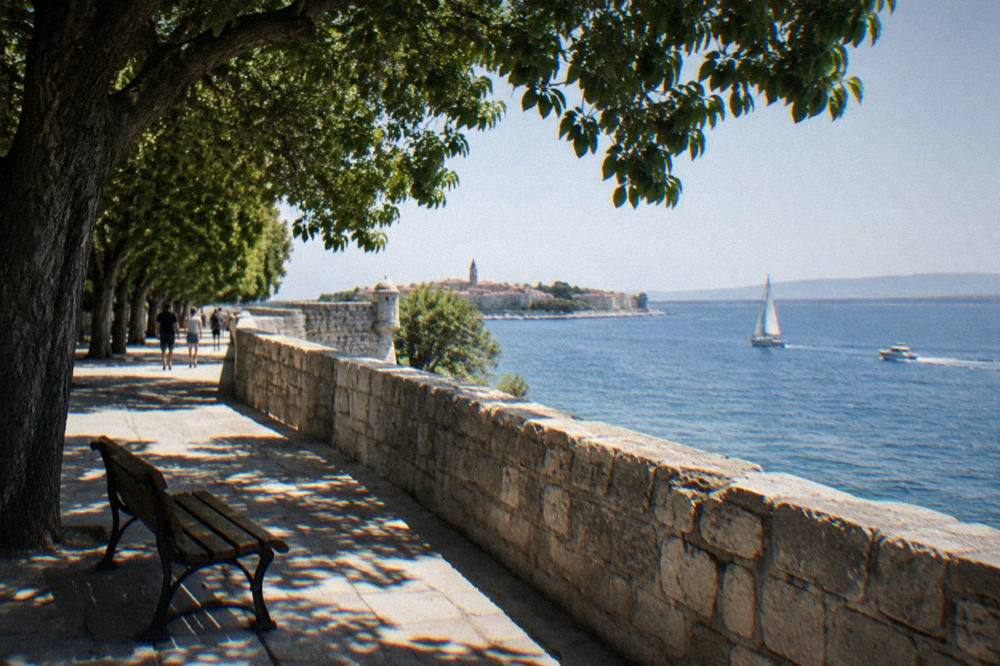
Yes, Zadar is a walkable city to an unusual degree, because the entire historic centre occupies a narrow peninsula where cars are restricted, every headline sight sits within a short stroll of every other, and the airports, ferry ports and bus stations that serve the city all connect to the peninsula by a single shuttle or a short drive, so a visitor can spend several days in Zadar without once needing a timetable.
Walkability on the peninsula itself comes with one practical condition: dress. Zadar posted signs at key access points to the historic centre in summer 2026 requiring appropriate clothing, no swimwear or nudity, under its existing communal order decision, with a verbal warning followed by fines of up to 130 EUR, as reported by local media. This is an informative-sign regime rather than a checkpoint, but a walking tour planned straight off the beach should plan a change of clothes first.
A second reported measure for 2026 is a planned restriction on night-time retail alcohol sales in the Old Town, applying to shops, kiosks and delivery rather than bars and restaurants, under national law changes that let municipalities set the limits. It is attributed to mayor statements in local coverage, and the details are the kind of thing to confirm locally rather than plan around. The wider question of whether the city justifies the trip is covered separately in Is Zadar Worth Visiting, and where to base yourself in Where To Stay In Zadar.
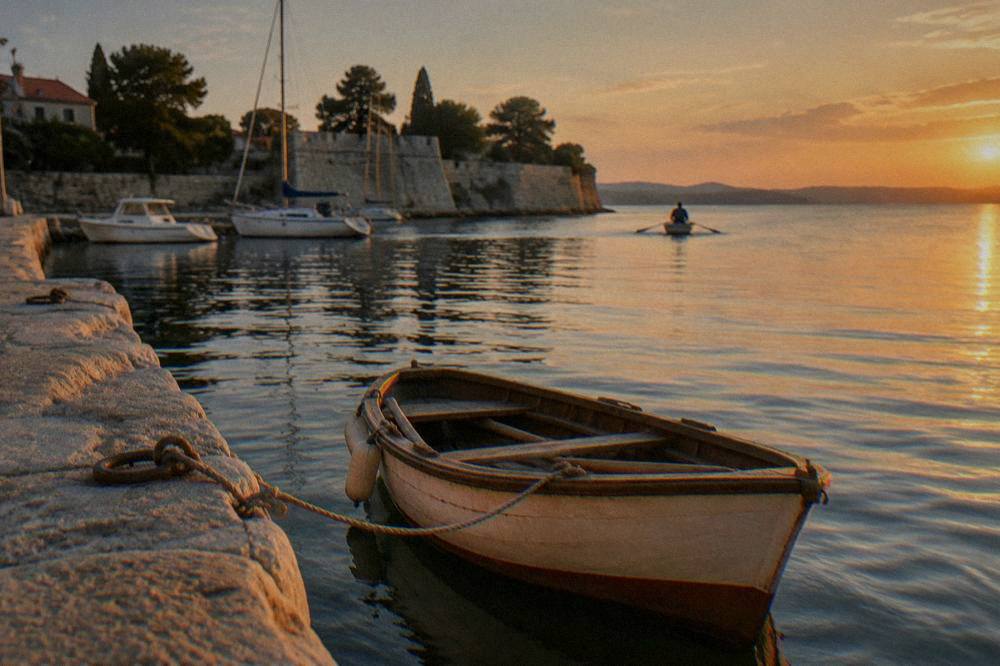
One more walkable detail worth knowing: the Barkajoli, the traditional rowing-boat crossing over the harbour, covers about 75 metres in roughly 1.5 to 2 minutes, year-round, weather permitting. It is a working shortcut, not a tour.
Should You Take A Guided Walk Or Ride Instead Of Walking Alone?
A guided walk adds context the stones do not carry themselves, and Zadar has verified options across walking tours, food-and-wine walks and sightseeing rides, including a Gligora-sponsored cheese-tasting walk, several highlights walks built around the Old Town and Sea Organ, and eco tuk tuk rides that reach corners a walking route skips, so the choice is about depth of commentary and taste stops rather than coverage, since every guided option covers ground the free route already reaches.
Tip-based walks also run locally under a pay-what-you-want model; this site names no platform for them and simply advises confirming arrangements with the guide directly. The verified bookable options below render their own prices and ratings, and this page types none of them, in line with the site's rule that product figures come from listings, never from a keyboard.
The Gligora-sponsored walk pairs the standard Old Town circuit with cheese tasting from a Dalmatian producer, which makes it a natural upgrade for visitors who want the route and lunch in one decision.
For a walk that ends at the installations rather than starting elsewhere, the highlights walk built around the Old Town, Sea Organ and local tastings follows almost exactly the route tabled at the top of this page, with a guide and tasting stops added.
Rounding out the choice, the eco tuk tuk tour this page features as its related product covers hidden-gem corners beyond the peninsula's core, and the Zadar Tours overview places all of these against the boat trips and day excursions the city is equally known for.
When Is The Best Time Of Year To Walk Zadar?
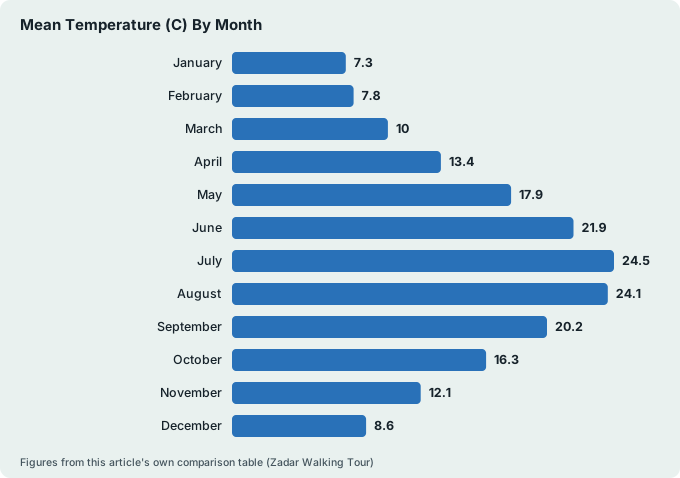
The best months for a walking tour of Zadar, judged on the Zadar station climate record for 1961 to 2024, are May, June, September and October, when mean temperatures run between 17.9 and 20.2 C and monthly rainfall stays between 48.5 and 106.8 mm, while July and August are warmer and drier at 24.5 and 24.1 C with 35.4 and 52.8 mm of rain, and November is the wettest month at 123 mm, so the shoulder months trade a few degrees of warmth for softer light.
| Month | Mean temperature (C) | Rainfall (mm) | Rain days |
|---|---|---|---|
| January | 7.3 | 76.4 | 10 |
| February | 7.8 | 67.0 | 9 |
| March | 10.0 | 66.3 | 9 |
| April | 13.4 | 61.4 | 10 |
| May | 17.9 | 64.4 | 10 |
| June | 21.9 | 48.5 | 8 |
| July | 24.5 | 35.4 | 5 |
| August | 24.1 | 52.8 | 6 |
| September | 20.2 | 110.9 | 9 |
| October | 16.3 | 106.8 | 9 |
| November | 12.1 | 123.0 | 12 |
| December | 8.6 | 99.6 | 12 |
All figures are from the DHMZ Zadar station record, 1961 to 2024, and they reward a close read rather than a generalisation. July has only 5 rain days on average and August 6, which is why the summer streets feel dry even when September's totals jump to 110.9 mm over 9 days. Sunshine across the year totals about 2,600 hours by the same station record. Winter walking is entirely feasible, and it comes with a specific draw: Zadar Advent runs from 24 November 2026 to 2 January 2027, expanded to three locations including a new ice rink on the Forum, with the Zadar Christmas Run on 27 December 2026 inside the programme.
For the fuller seasonal picture, see Best Time To Visit Zadar and Zadar Weather, and for rain-day contingency plans the site keeps a dedicated rainy-day itinerary.
What Rules And Costs Apply While Walking In Zadar?
Walking in Zadar costs nothing at street level, because the Forum, the squares, Kalelarga, the Riva, the Sea Organ and the Greeting to the Sun are all free public space, the only ticketed stops are the museums at around 7 EUR full price and the cathedral sections, and the two rules to know are the 2026 Old Town dress code with fines up to 130 EUR for swimwear and the accommodation-collected tourist tax, whose amount is confirmed at booking rather than published on this site.
The tourist tax (boravisna pristojba) is collected by your accommodation; confirm the current City of Zadar rate when booking. Croatia has used the euro since 1 January 2023, is a Schengen member, and the single emergency number is 112. The airport shuttle costs 5.00 EUR; for taxis, ride-hailing and other buses, ask the driver or operator for the current fare before you ride.
A few gaps that other guides fill with numbers, this one leaves open on purpose: the bell-tower climb price, the Gold and Silver of Zadar ticket, the Barkajoli fare and any city card price all remain unconfirmed here, and the right question is at the door or on the official page, not in a search result. For everything beyond the peninsula, the Zadar Day Trips guide and the Krka Vs Plitvice comparison take over where this walk ends.
Common Questions About Walking Tours In Zadar
What Is The Best Route For A Self-Guided Walking Tour Of Zadar?
Start at the Land Gate, cross Five Wells Square onto Kalelarga, pass People's Square to the Roman Forum, then visit St Donatus and the Cathedral of St Anastasia before finishing on the Riva at the Sea Organ and Greeting to the Sun. The whole line is under a kilometre and works in either direction, with the western-tip installations best timed for sunset.
How Long Does A Walking Tour Of Zadar Take?
The outdoor route fits in two to three relaxed hours. Adding two museums stretches the day to five or six hours, and the sunset hour at the Sea Organ is best kept as its own unhurried chapter.
Are The Sea Organ And Greeting To The Sun Free?
Yes. Both are free, open, public installations by Nikola Bašić, open at all hours, with no tickets and no published light-show start time.
How Much Do Zadar Museums Cost On A Walking Tour?
The Museum of Ancient Glass lists 7.00 EUR adult, 5.00 EUR for groups of five or more and 4.00 EUR for schoolchildren, with guided tours at 20 EUR in Croatian and 30 EUR in other languages. The Archaeological Museum and St Donatus sit at around 7 EUR full price on the same tariff system.
Is There A Dress Code For Walking In Zadar Old Town?
Yes. Signs at key access points require appropriate clothing, no swimwear or nudity, with a verbal warning first and fines up to 130 EUR after that, as reported by local media.
Should You Take A Guided Walk Or Ride Instead Of Walking Alone?
Guided walks and eco tuk tuk rides add commentary, cheese, wine and food stops, and corners the free route skips, but every guided option covers ground the free route already reaches, so the choice is about depth, not coverage. Tip-based walks also run locally; confirm arrangements with the guide directly.
