Best Time To Visit Zadar
Zadar's climate is Mediterranean and coastal, and the right month depends on what you want: swimming, walking the Old Town, or the national parks. Here is what the station data and the seasonal price lists actually say.
Short answer
Late June to early September is the swim season; May, June, September and October give warm weather with thinner crowds; winter is mild, quiet and centred on Zadar Advent.
Zadar sits on a narrow peninsula on the Dalmatian coast of Croatia, with the Adriatic on one side, the islands of Ugljan and Dugi Otok offshore, and the national parks of Krka, Plitvice, Paklenica and Kornati all reachable on a day trip. Choosing when to go is less about dodging bad weather, the station record shows a mild Mediterranean climate year round, and more about matching the month to what you actually want to do. The swim season, the park season, the price season and the festival season in Zadar overlap but do not coincide, and this guide separates them one by one.
What Is The Best Time To Visit Zadar?
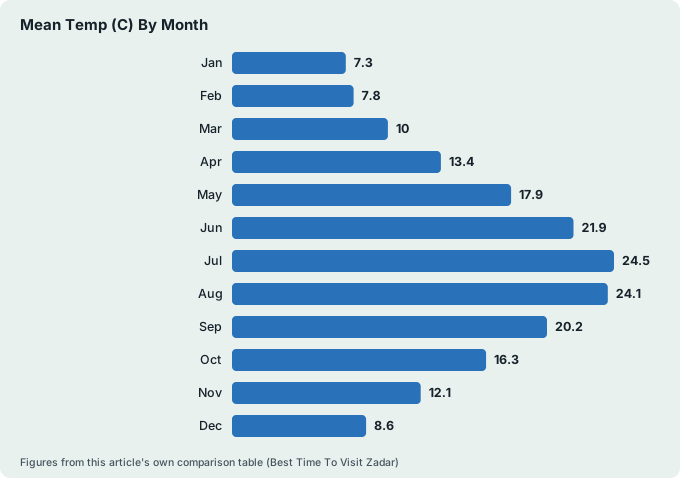
The best time to visit Zadar is late June to early September for swimming and boat trips, and May, June, September and October for sightseeing, walking the Old Town and the national parks with warm weather and thinner crowds. Zadar station, 1961-2024, shows July means of 24.5 C and January means of 7.3 C, so the city never freezes shut, but the sea, the islands and the park boat season all peak in summer.
That one sentence hides a lot of nuance, so this guide unpacks it. The climate record for Zadar, kept by the Croatian Meteorological and Hydrological Service at the city's own station for the period 1961-2024, shows a classic coastal Dalmatian pattern: warm dry summers, mild wetter winters, and about 2,600 hours of sunshine a year. July is the driest month at 35.4 mm of rain and the warmest at a mean of 24.5 C. November is the wettest at 123.0 mm. Those two numbers frame almost every planning decision.
The second axis is price and crowds. National park tickets, boat trips and accommodation in Zadar all run on a summer peak. Krka's adult entry is 40 EUR in June to September and 20 EUR in April, May and October. Plitvice runs the same shape: 40 EUR in summer, 23 EUR in April, May and October, 10 EUR from November to March. If your trip is about the parks rather than the beach, the shoulder months deliver the same lakes and waterfalls at half the entry price, with the trade-off of cooler water and shorter days. The full breakdown, including a month-by-month table, a season-by-season cost picture and the winter Advent calendar, follows below. For a broader look at the city itself, the Zadar weather guide covers the climate record in more depth, and how many days in Zadar helps once you have picked your dates.
What Is The Weather Like In Zadar Month By Month?
Zadar station, 1961-2024, records monthly means from 7.3 C in January to 24.5 C in July, with rainfall peaking at 123.0 mm in November and falling to 35.4 mm in July, and about 2,600 hours of sunshine a year. Summer days regularly pass 30 C, about ten days a month in July and ten in August, while winter stays mild and wet rather than cold.
The table below is the full station record. These are long-run monthly means from the DHMZ station table for Zadar, not a single year's forecast, so treat them as the baseline around which any given week will swing.
| Month | Mean temp (C) | Rainfall (mm) | Rain days | Sunshine (hours) |
|---|---|---|---|---|
| Jan | 7.3 | 76.4 | 10 | 115.6 |
| Feb | 7.8 | 67.0 | 9 | 137.2 |
| Mar | 10.0 | 66.3 | 9 | 188.5 |
| Apr | 13.4 | 61.4 | 10 | 217.3 |
| May | 17.9 | 64.4 | 10 | 279.1 |
| Jun | 21.9 | 48.5 | 8 | 310.9 |
| Jul | 24.5 | 35.4 | 5 | 358.6 |
| Aug | 24.1 | 52.8 | 6 | 324.7 |
| Sep | 20.2 | 110.9 | 9 | 243.1 |
| Oct | 16.3 | 106.8 | 9 | 189.8 |
| Nov | 12.1 | 123.0 | 12 | 119.2 |
| Dec | 8.6 | 99.6 | 12 | 106.8 |
Three readings matter for planning. First, the rain days column: even the wettest months average only around ten to twelve rain days, so a November or December week is rarely a washout, it is a mix of clear, mild days and grey ones. Second, the sunshine column: July delivers 358.6 hours, December 106.8, a more than threefold swing that explains why the summer sunset culture around the Sea Organ is so strong. Third, the extremes: the station record shows a high of 39.0 C on 6 August 2022 and a low of -9.1 C in January 1963, both far outside the monthly means and both rare enough that they should not drive planning.
The wind matters too. Two named winds shape the coast: the bora, a cold, dry, gusty north-easterly that blows mainly in winter, and the jugo, a warm, humid south-easterly. Neither appears as a number in the station record used here, but both are part of local weather talk, and a strong winter bora can feel far colder than the 7.3 C January mean suggests.
When Is Zadar's Peak Season, And What Changes?
Zadar's peak season runs July and August, when the climate is at its warmest and driest, the ferry and boat-trip schedules are at their fullest, and the national parks charge their summer rates of 40 EUR at Krka and Plitvice. Everything is open and everything is busy; the trade for reliable swimming weather is peak prices and peak crowds.
The peak is real but compact. The station record puts the two warmest months at 24.5 C and 24.1 C, with only five and six rain days respectively, and the sea at its annual warmest. Boat trips to the islands, the Kornati archipelago and Telašćica run daily schedules, and the Old Town's restaurant terraces stay full late. The summer also carries the season's entry-price peak at every park in the region, and accommodation rates across the city reflect the same curve, though specific room rates are not published on this site and should be checked at booking.
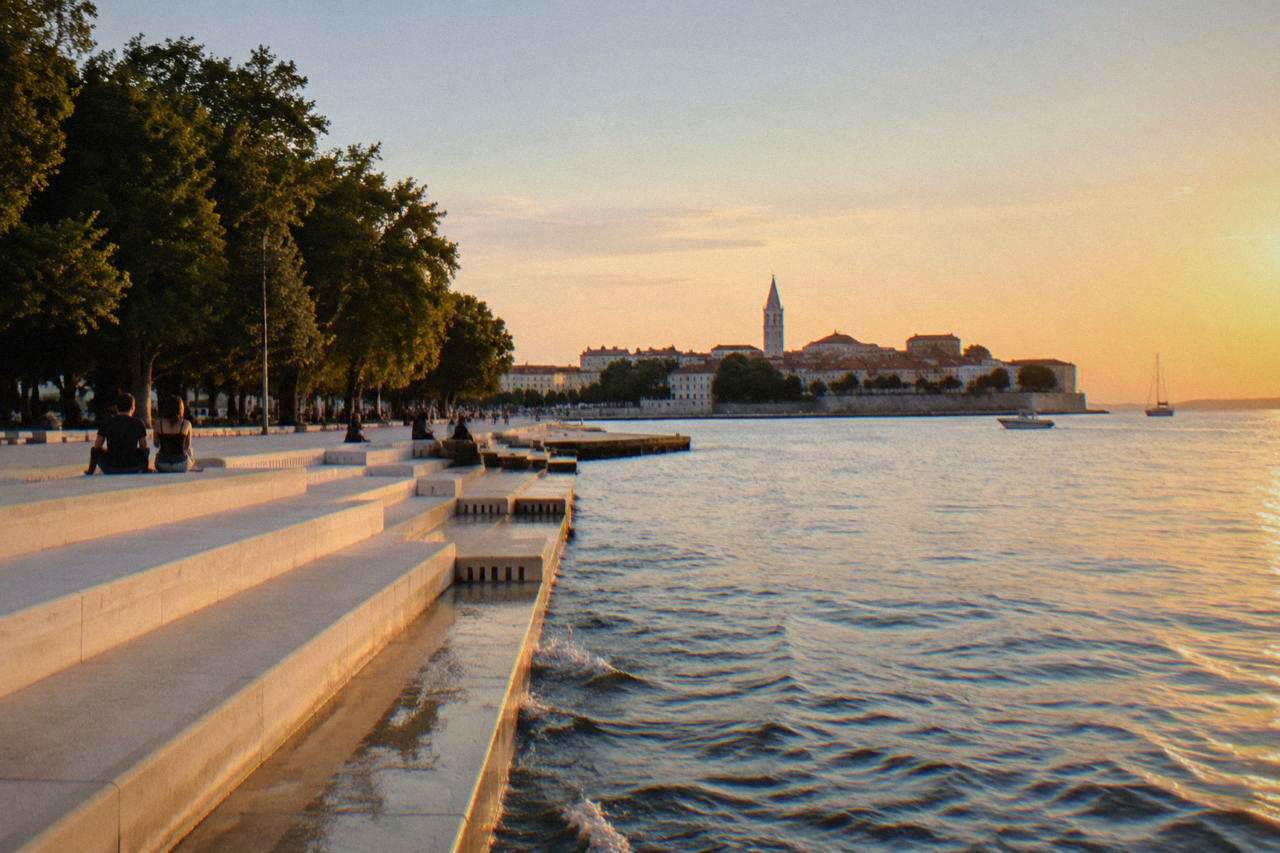
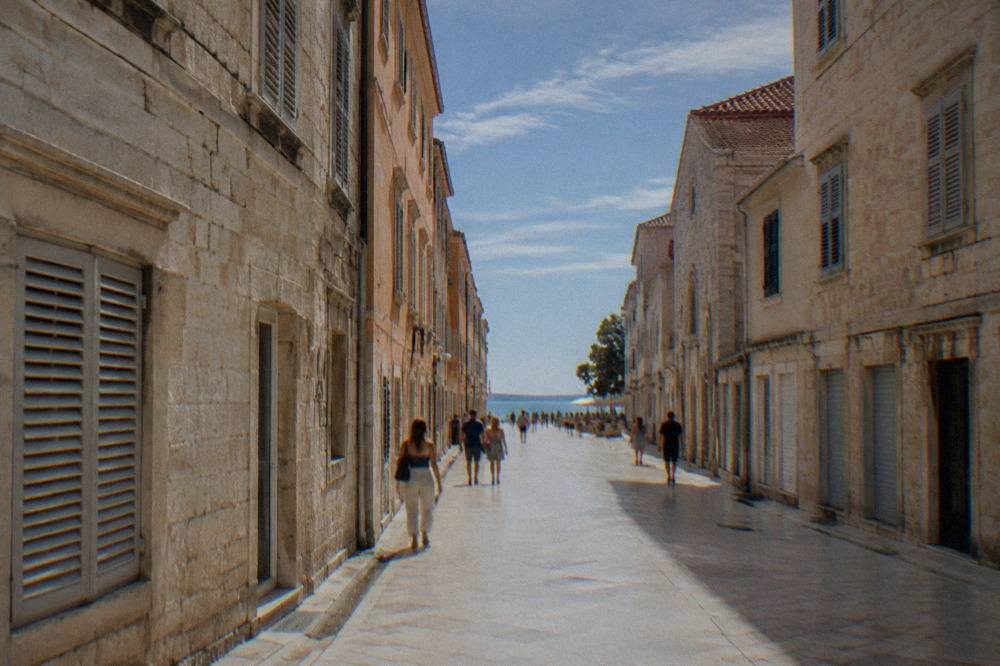
What the peak season is genuinely best for: swimming from the city beaches or the island coves, sunset at the Sea Organ with a crowd that shares the moment, and boat-based days on the water. What it is worst for: a quiet look at the Roman Forum, the Five Wells Square or the Museum of Ancient Glass, and any park visit where you want photographs without a hundred people in them. The Old Town also carries posted dress-code signage, with fines up to 130 EUR reported for swimwear in the historic core, so beach-and-sightseeing days need a change of clothes. The wider question of whether the city justifies the trip at all is covered in is Zadar worth visiting, and the comparison with the region's biggest drawcard is set out in Zadar vs Split.
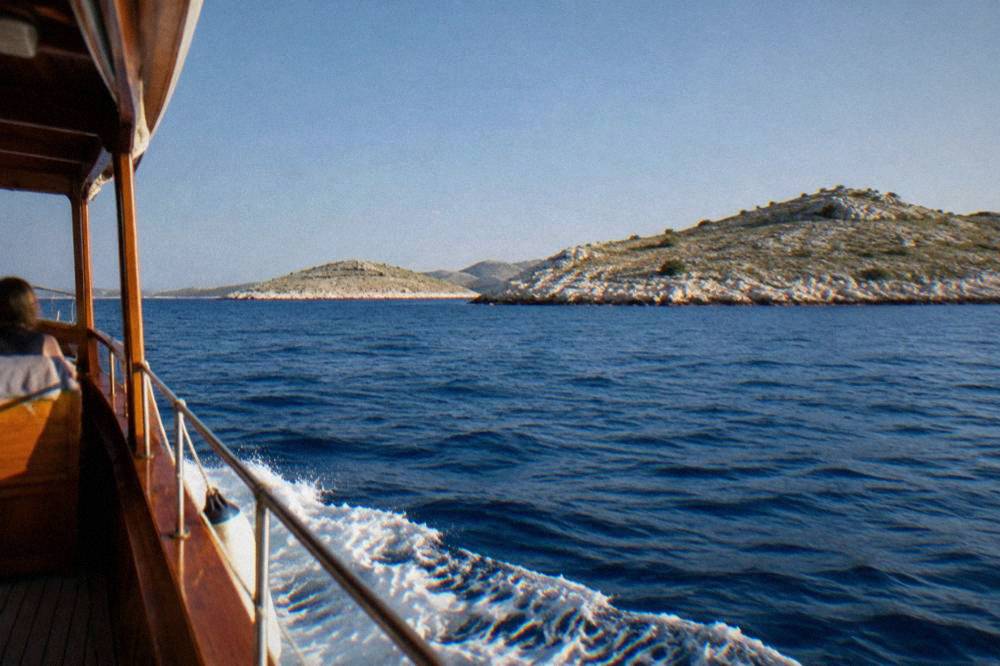
If the peak is your window, book the water days early. The Kornati and Telašćica full-day boat trips are the ones that sell out first, and the guided island runs fill behind them.
There is a second way to see the peak season: get on the water instead of into the queue. The full-day Kornati and Telašćica trip spends the day inside the archipelago, where the crowds thin to whoever is on your boat, and the eco tuk-tuk hidden-gems run takes the Old Town's back lanes at street level. Both are covered on the Zadar day trips page if you want the full inventory first.
When Is The Best Time To Swim In Zadar?
The swim season in Zadar runs roughly June through September, with July and August the safest bet for warm sea and the driest weather; the station record shows those two months at 24.5 C and 24.1 C air temperature with only five and six rain days. May and October can deliver swimmable days, but the sea is cooler and the reliable beach weather thins out at the edges.
Because no monthly sea-temperature normal is published for Zadar, the honest answer about the water itself is that the official live reading, published by DHMZ, is the only sourced number, and it moves through the year. What the climate record does establish is the air side of the equation, and it is unambiguous: the June to September window carries the warmest means, the lowest rainfall and the highest sunshine totals of the year.
The beach infrastructure follows the same calendar. The city's beaches, covered in detail on the Zadar beaches page, run from the concrete and gravel stretches near the Old Town to the sandy coves of the islands. New county concession rules in force for the 2026 season keep access to concession beaches public and free, with no fencing or entry fees, and commercial sunbed zones limited to a set share of each beach's area, so a towel and a patch of shade remain a right rather than a purchase. On the islands, Sakarun beach on Dugi Otok is the famous sandy option, reached by ferry or by boat tour.
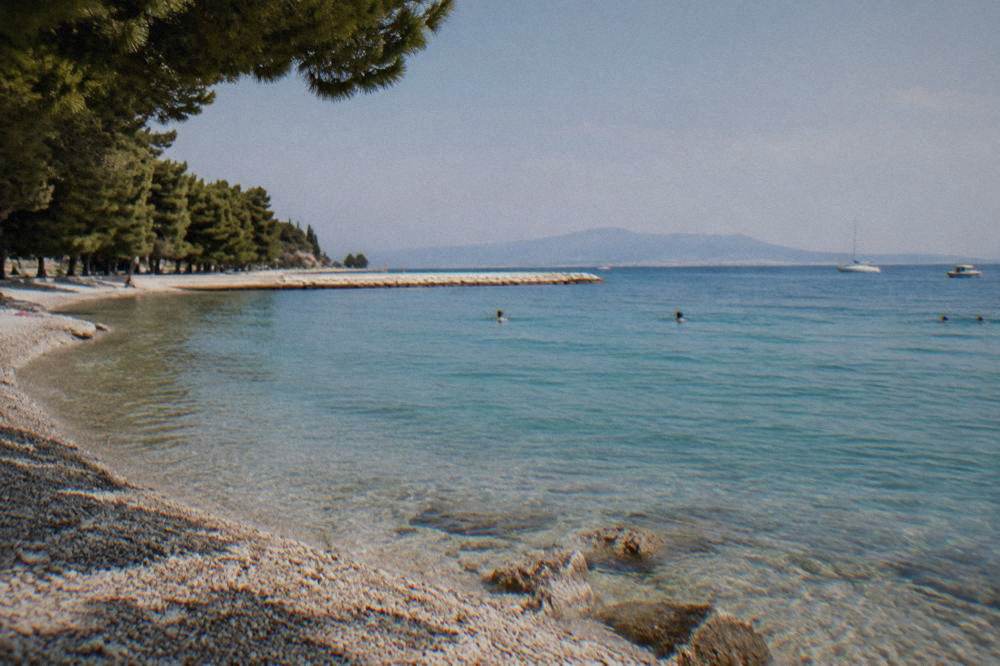
One caution belongs here even in the swim section: the national parks are not swimming destinations in the way older guides describe. Swimming at Skradinski Buk in Krka has been banned since 2021 to protect the travertine formations, and swimming in the park is allowed only at designated spots, Roški slap, Stinice and Pisak, from 1 June to 30 September, conditions permitting. A September trip can still combine a park morning with a swim stop, but only in the right places, and the rules are enforced rather than advisory.
For a boat-based swim day without the park rules, the island runs are the alternative, and they operate on the summer schedule.
What Is Zadar Like In Spring?
Spring in Zadar, March to May, is the city's quietest warm season: station means climb from 10.0 C in March to 17.9 C in May, rainfall holds steady across the three months, and the national parks still charge shoulder or winter rates, with Plitvice at 23 EUR in April and May and Krka at 20 EUR. The sea is too cool for reliable swimming, but walking, cycling and park days are at their best value.
Spring is the connoisseur's window, and the numbers back that up. April's mean of 13.4 C with 217.3 sunshine hours is genuinely pleasant walking weather, and May's 17.9 C with 279.1 hours is close to what much of northern Europe calls a good summer. Rainfall barely changes across the three months, staying in a narrow band in the low-to-mid tens of millimetres per week, spread over about ten rain days each, so the difference between spring and summer is temperature and water, not dryness. Other pages covering the same trip are gathered on Zadar Croatia Travel Guide.
The park pricing is the quiet bonus. Krka's 2026 price list shows the adult land-sites ticket at 7 EUR in January, February, March, November and December, 20 EUR in April, May and October, and 40 EUR from June to September. Plitvice runs the same shape: 10 EUR in the winter months, 23 EUR in April, May and October, 40 EUR in summer. A May visit to either park costs roughly half the summer price for the same trails, with waterfalls at their spring fullest after the winter rains. The comparison between the two parks, including which suits which traveller, is laid out in Krka vs Plitvice.
| Park | Winter rate (EUR) | Shoulder (EUR) | Summer (EUR) |
|---|---|---|---|
| Krka NP (land sites, adult) | 7 | 20 (Apr, May, Oct) | 40 (Jun-Sep) |
| Plitvice Lakes NP (adult, 1 day) | 10 | 23 (Apr, May, Oct) | 40 (Jun-Sep) |
| Paklenica NP (adult, 1 day) | 5 | 8 (Mar, Apr, Oct) | 10 (May-Sep) |
| Telašćica (Dolac land entrance) | 6 | 6 | 8 (Jun-Sep) |
| Kornati NP | per vessel, by length | lower off-season | per vessel, higher in summer |
Kornati is the odd one out and deserves its note: entry there is charged per vessel, by boat length and season, and the ticket is bought outside the park, not at a gate. For visitors arriving on an organised boat trip, the operator handles the logistics, which is one practical reason the Kornati tours are worth their place in the planning. The islands more generally, Ugljan, Dugi Otok, Pag and the rest, are covered on the Zadar islands page.
What Is Zadar Like In Autumn?
Autumn in Zadar, September to November, starts as an extension of summer and ends as the wettest stretch of the year: September still averages 20.2 C, but rainfall climbs from 48.5 mm in June to 110.9 mm in September, 106.8 mm in October and 123.0 mm in November. Early September is a strong shoulder-season pick; late November is a museum-and-cafe month.
September deserves its own paragraph because it is arguably the single best-value month on the calendar. The sea has had all summer to warm, the air mean is still 20.2 C, the park prices drop to shoulder rates from 1 October but the crowds drop sooner, and the light on the Sea Organ steps in the evening is at its softest. The rainfall number, 110.9 mm, looks alarming next to July's 35.4 mm, but it falls across about nine rain days, which leaves well over half the month dry. The catch is that September rain, when it arrives, can arrive heavily.
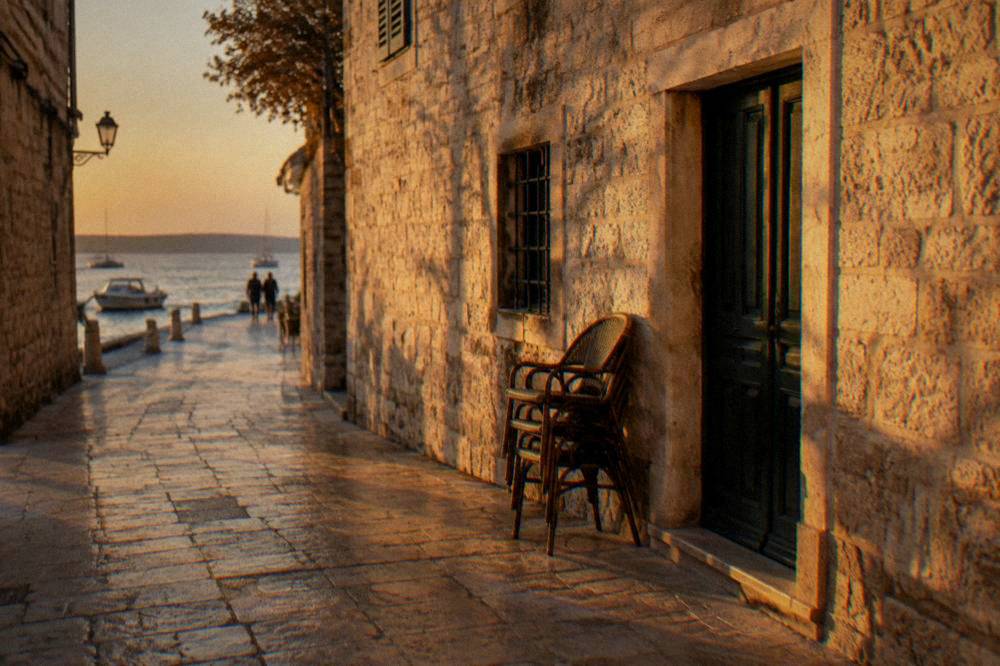
October is the last month of the full tourist offer, with 16.3 C means and 189.8 sunshine hours, and the month when the park price lists step down again: Plitvice drops to 23 EUR in October and then 10 EUR from November, Krka holds 20 EUR in October and returns to 7 EUR in November. From 1 October 2026 both parks confirmed their winter-shoulder rates, so an October visit catches the drop. November, at 12.1 C and 123.0 mm over twelve rain days, is for travellers who want the city to themselves: the Old Town is quiet, the restaurants are local again, and the museums fill the grey hours. The Zadar restaurants and Zadar food pages cover what those months taste like, and the rainy day itinerary exists precisely for the November weeks.
Is Winter A Good Time To Visit Zadar?
Winter in Zadar is mild and quiet rather than cold: station means of 7.3 C in January, 7.8 C in February and 8.6 C in December, with 76.4, 67.0 and 99.6 mm of rain respectively, and the parks at their cheapest, with Krka at 7 EUR and Plitvice at 10 EUR. Zadar Advent, from 24 November 2026 to 2 January 2027, turns the peninsula into a festival ground with a new ice rink on the Forum.
The winter case for Zadar rests on three things. The first is the climate: this is a Mediterranean coast, and a January mean of 7.3 C with 115.6 sunshine hours means bright, brisk walking days between the wet ones. The second is price and space: park entry drops to the winter rate, the Old Town empties, and the whole rhythm of the city slows. The third is the Advent programme, which in 2026-27 expands to three locations across the peninsula, including an ice rink on the Forum, concerts and daily programmes from 24 November 2026 to 2 January 2027, with the Zadar Christmas Run on 27 December 2026 as part of it.
The winter caveats are honest ones. The bora wind can strip the perceived temperature well below the mean. The islands lose much of their ferry-and-beach appeal, and boat trips to Kornati and Telašćica thin out or stop for the season. St Donatus Church, one of the city's defining buildings, enters a roof restoration planned from autumn 2026 and expected to run about six months, so access may be limited and should be checked ahead. And the daylight is short: December delivers only 106.8 sunshine hours, the lowest month of the year, which makes the Advent lights and the museums the natural evening plan. Getting there in winter is straightforward on the air side, with the year-round Munich connection confirmed, and the flights to Zadar and Zadar airport pages carry the details.
When Are Zadar's Best Events And Festivals?
Zadar's event calendar peaks twice: in summer, when the open-air season runs across the peninsula's squares, and from 24 November 2026 to 2 January 2027, when Zadar Advent fills three locations with concerts, an ice rink on the Forum and daily programmes, closing with the Zadar Christmas Run on 27 December 2026. October 2026 also carried the 20th Festival tolerancije, a free-entry film festival, and the 35th Defence of Zadar anniversary programme.
The Advent programme is the anchor of the winter calendar and the one with the fullest published detail for the coming season. The 2026-27 edition expands to three locations, with the Forum hosting the ice rink and a concert series running from the 24 November 2026 opening through early January 2027. The Christmas Run on 27 December 2026 sits inside the programme. For a city of Zadar's size, the Advent period is disproportionately lively, and it is the one stretch when winter weekends are busier than the weather alone would suggest.
| Period | What runs in Zadar | Best for |
|---|---|---|
| Late Jun to early Sep | Full boat-trip schedules, island ferries, beach season, open-air evenings | Swimming, islands, sunsets |
| Jul and Aug | Peak season: everything open, warmest and driest months | Water days, nightlife, families |
| Sep | Warm sea, thinner crowds, park shoulder rates from October | The best-value swim month |
| Oct | Shoulder rates at the parks, quiet Old Town, autumn light | Walking, parks, photography |
| 8 to 10 Oct 2026 | Festival tolerancije, free entry, films and exhibitions | Culture-led short break |
| 24 Nov 2026 to 2 Jan 2027 | Zadar Advent: three locations, Forum ice rink, concerts, Christmas Run 27 Dec | Winter city break |
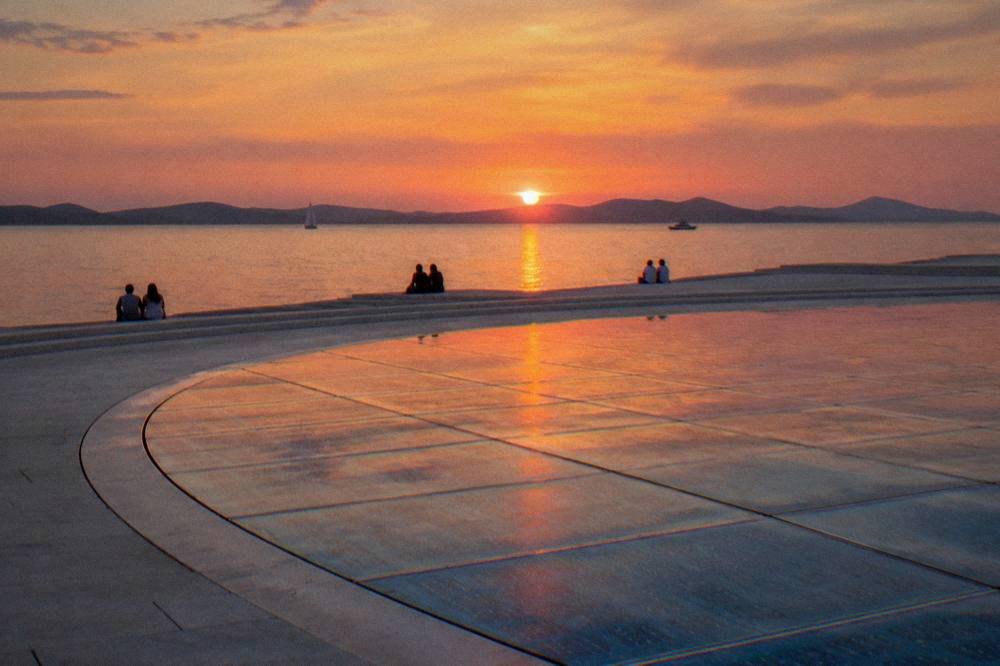
Summer's own festival layer, the open-air concerts and the evening life around the Sea Organ and the Riva, is less a ticketed calendar and more a standing arrangement: the installations are free and open at all hours, and the sunset gathering is the city's nightly event. The practical planning point is that summer evenings are the one thing in Zadar that needs no booking at all, while the boat days and the park days very much do. The Zadar boat tours page sorts the water options, and the evening side of the city, bars and all, is on the Zadar nightlife page.
Which Day Trips From Zadar Work In Which Season?
The classic Zadar day trips split by season: Krka, Plitvice and Paklenica are year-round land visits whose entry fees drop sharply off-season, while Kornati, Telašćica and the island boat days are summer-season products that thin out or stop outside June to September; Nin and Pag are drivable in any month. The ferry to Preko on Ugljan runs year-round, but the beach season on the islands is summer.
The land parks are the flexible half of the list. Krka sits about 91 km from the Old Town by road, Plitvice about 145 km, Paklenica about 46.8 km, and all three sell tickets in every month, at the seasonal rates in the table above. The winter months are genuinely viable for Plitvice in particular: the lakes, the travertine barriers and the waterfalls carry on under the 10 EUR rate from November, and the trade is shorter daylight and the possibility of a wet afternoon. Paklenica, at 5 EUR in its winter months, is a hiking rather than swimming destination anyway, so it loses least in the cold half of the year.
The water half is seasonal by nature. Kornati entry is sold per vessel and the organised full-day trips concentrate in the summer months; Telašćica's land entrance at Dolac stays open with a 6 EUR winter rate, but the boat-based visits that pair the two are a summer product. The islands closer to shore keep year-round ferries, with the crossing to Preko on Ugljan taking about 25 to 30 minutes, but the island beaches and beach bars are summer infrastructure. Nin, with its shallow lagoon and salt works, and Pag, with its lunar landscape and cheese, are car trips that work whenever the road does. The full inventory, with distances and what each trip involves, is on the Zadar day trips page, and the cost side of a Zadar week, park tickets included, is broken down on the Zadar cost page.
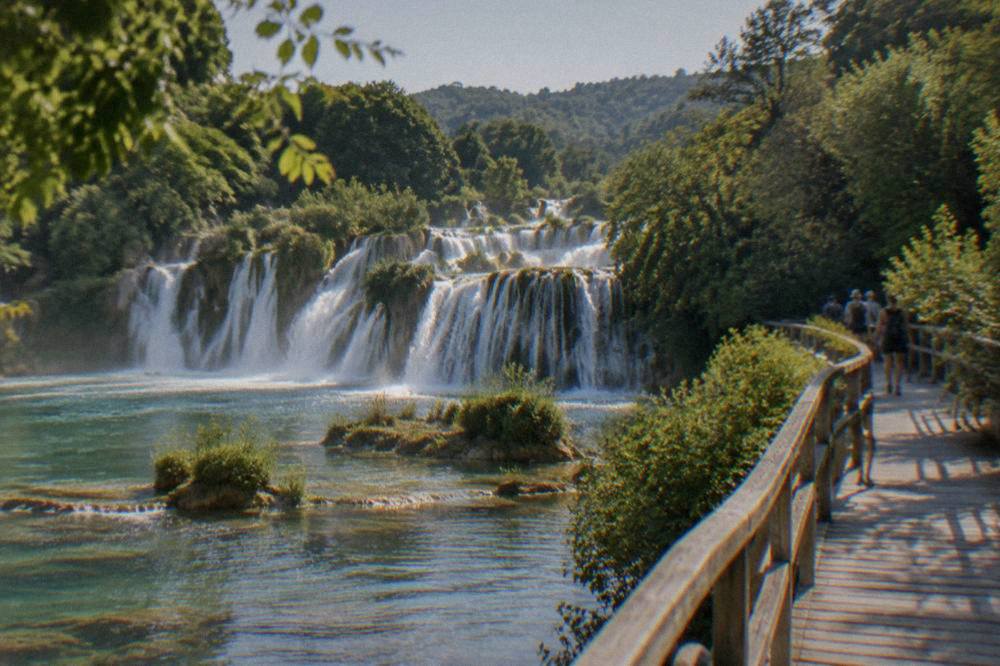
If the parks are the reason for the trip, the guided options remove the ticket-and-timing puzzle entirely, since the operator handles the park entry and the schedule.
How Do Crowds, Prices And Opening Hours Change Through The Year?
Zadar's crowd curve follows the climate curve with a lag: July and August are the busy months, June and September carry summer weather with visibly thinner streets, and May and October are quiet enough that the Old Town feels local again. Park entry fees step down from 40 EUR in summer to 20 or 23 EUR in the shoulder months and 7 or 10 EUR in winter, and the boat-trip schedules shrink to a fraction of their summer size off-season.
The price mechanics are the clearest documented part of this, because the park authorities publish seasonal price lists. The practical rule of thumb from the verified numbers: every land park in the region costs roughly a quarter to a half of its summer price between November and March.
Opening hours follow a gentler curve. The Sea Organ and the Greeting to the Sun, the two waterfront installations by Nikola Bašić, are free and open at all hours in every season, so the city's centrepiece evening costs nothing in January exactly as it does in July. St Donatus Church's roof restoration, planned from autumn 2026, is the one access question to verify directly for any winter trip.
| Month | Air mean (C) | Crowd level | Park rate tier | Swim season |
|---|---|---|---|---|
| Jan | 7.3 | Very quiet | Winter (Krka 7, Plitvice 10) | No |
| Feb | 7.8 | Very quiet | Winter | No |
| Mar | 10.0 | Very quiet | Winter (Paklenica shoulder from Mar) | No |
| Apr | 13.4 | Quiet | Shoulder (Krka 20, Plitvice 23) | Rarely |
| May | 17.9 | Moderate | Shoulder / Paklenica summer | Occasional |
| Jun | 21.9 | Busy | Summer (Krka 40, Plitvice 40) | Yes |
| Jul | 24.5 | Peak | Summer | Yes |
| Aug | 24.1 | Peak | Summer | Yes |
| Sep | 20.2 | Busy, easing | Summer to 30 Sep, then shoulder | Yes, early Sep |
| Oct | 16.3 | Quiet | Shoulder (Krka 20, Plitvice 23) | Sometimes |
| Nov | 12.1 | Very quiet | Winter from Nov | No |
| Dec | 8.6 | Quiet, Advent weekends | Winter, Advent programme | No |
Common Questions About The Best Time To Visit Zadar
What is the best time to visit Zadar?
Late June to early September for swimming and the full boat-trip season; May, June, September and October for sightseeing and the national parks with warm weather, thinner crowds and shoulder-rate park tickets; Advent, from 24 November 2026 to 2 January 2027, for a winter city break built around concerts and the Forum ice rink.
What is the warmest month in Zadar?
July, with a mean of 24.5 C on the Zadar station record for 1961-2024, followed by August at 24.1 C. July is also the driest month at 35.4 mm of rain, and the station record shows about ten days at or above 30 C in each of July and August.
What is the rainiest month in Zadar?
November, with 123.0 mm of rain over about twelve rain days on the Zadar station, 1961-2024 record. October and September follow at 106.8 mm and 110.9 mm, so autumn is the wetter half of the year even though rain falls somewhere in every month.
Can you swim in Zadar in May or October?
It is possible but not dependable. The air means are 17.9 C in May and 16.3 C in October, and no monthly sea-temperature normal is published for Zadar, only an official live reading, so the honest planning position is that May and October deliver occasional swim days rather than a swim season, which runs roughly June through September.
Is Zadar worth visiting in winter?
Yes, for a quiet city break. Winter means sit between 7.3 C and 8.6 C, the parks charge their lowest rates, and Zadar Advent runs 24 November 2026 to 2 January 2027 across three locations with an ice rink on the Forum and a concert programme. Check St Donatus Church access ahead, as roof restoration works are planned from autumn 2026.
When are the national parks cheapest from Zadar?
From November to March. Krka's adult land-sites ticket is 7 EUR in January, February, March, November and December, and Plitvice's adult one-day ticket is 10 EUR in the same months, against 40 EUR each in the June-to-September peak. Both parks dropped to their winter-shoulder rates from 1 October 2026.
The short version, from the Zadar Croatia Travel Guide desk: pick June or September if you want the sea without the peak, pick July or August if you want the full summer machine running, pick May or October for the parks at half price, and pick Advent if you want the city glowing in the dark. The station record says the sun will be there in every one of those windows, about 2,600 hours of it a year, and the Sea Organ plays in all of them for free.
