Zadar Restaurants
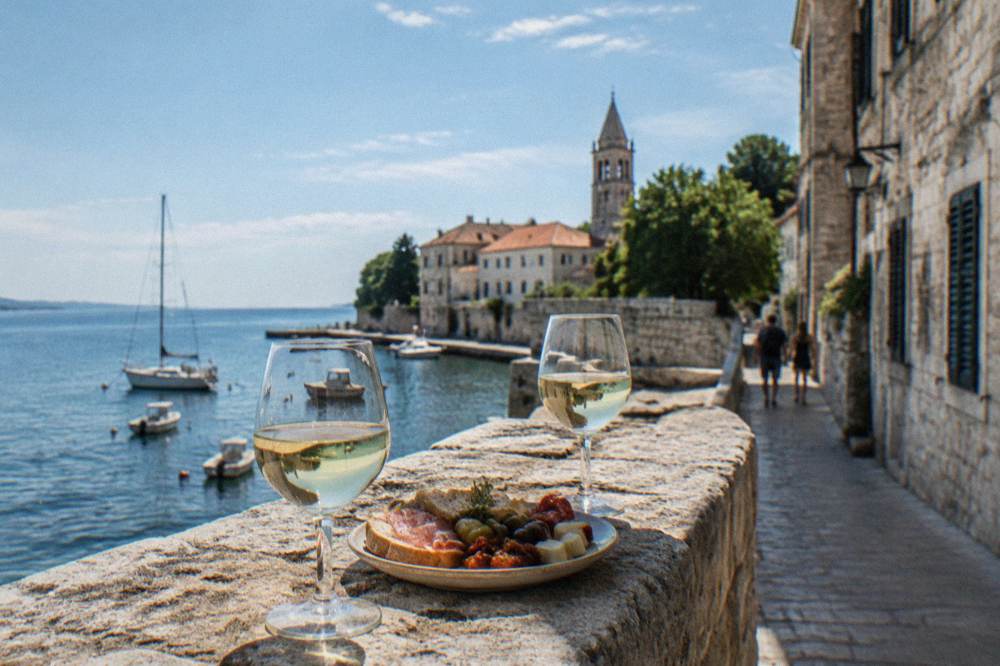
Zadar's restaurant scene is concentrated on the Old Town peninsula and the bays around it. This guide maps where to eat, what the local kitchen actually serves, what a meal plausibly costs, and which food walks and tastings connect dinner to the city's sights.
Short answer
Eat on the Poluotok peninsula for the densest choice of konobas and grills, around the Riva for sunset-facing tables, and in Borik, Puntamika, Diklo or Arbanasi for quieter local kitchens. Look for Dalmatian dishes such as fresh fish, black risotto, pašticada and Pag cheese, and close the meal with maraschino, the liqueur Zadar is known for.
Zadar sits on a narrow peninsula in Dalmatia, on Croatia's Adriatic coast, and that geography shapes the whole restaurant scene: kitchens cluster on the Poluotok, the stone-paved Old Town where the Roman Forum, the Sea Organ and the Cathedral of St Anastasia all sit within a short walk of each other. Beyond the peninsula, the bays of Borik, Puntamika, Diklo and Arbanasi hold quieter konobas, the traditional taverns that anchor Dalmatian eating. This guide reports what the sources say about where to eat, what the local kitchen serves, what a meal realistically costs and how a food walk or a day trip slots into a day that ends with dinner.
Where Are The Best Areas To Eat In Zadar?
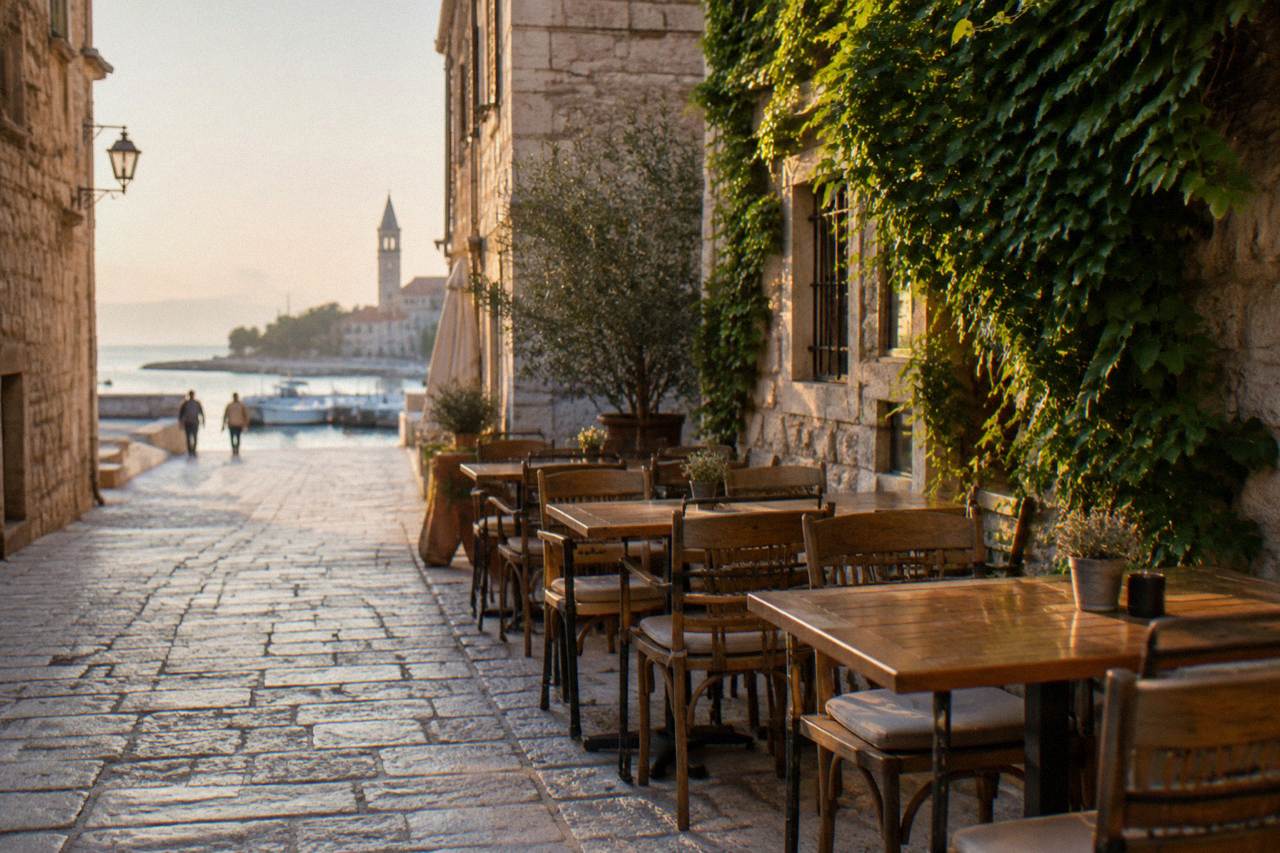
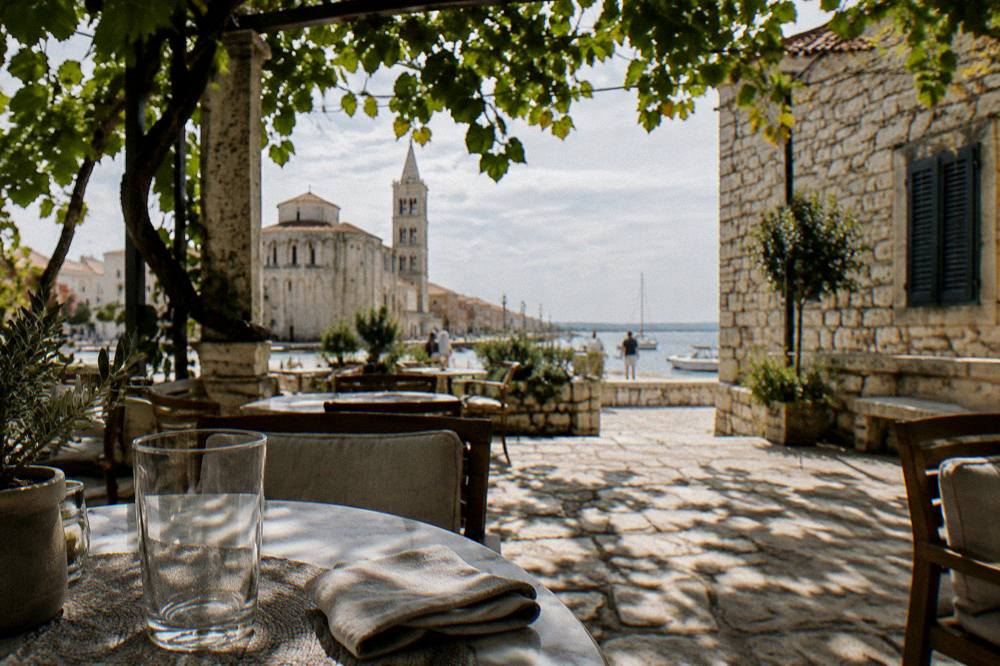
The densest concentration of restaurants in Zadar is on the Old Town peninsula (Poluotok), within a few minutes' walk of the Forum and Kalelarga, with a second band of kitchens along the western Riva facing the sunset, and quieter local eating in the coastal districts of Borik, Puntamika, Diklo and Arbanasi across the harbour. The peninsula is small enough that no two of its squares are far apart, which is why the Old Town guide doubles as a rough restaurant map: if you can walk to the Five Wells Square, you can walk to dinner.
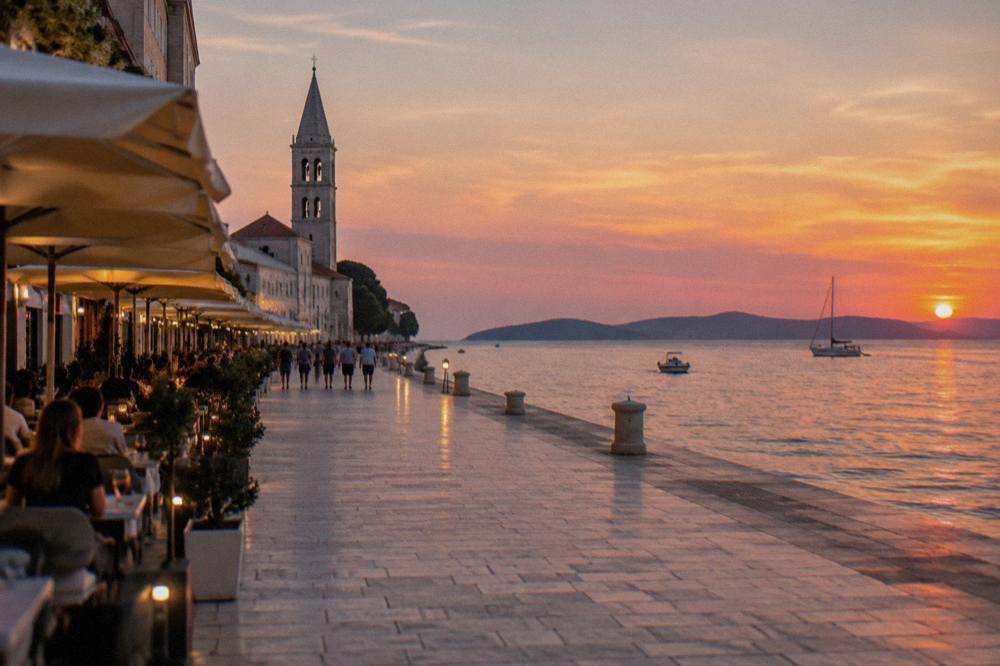
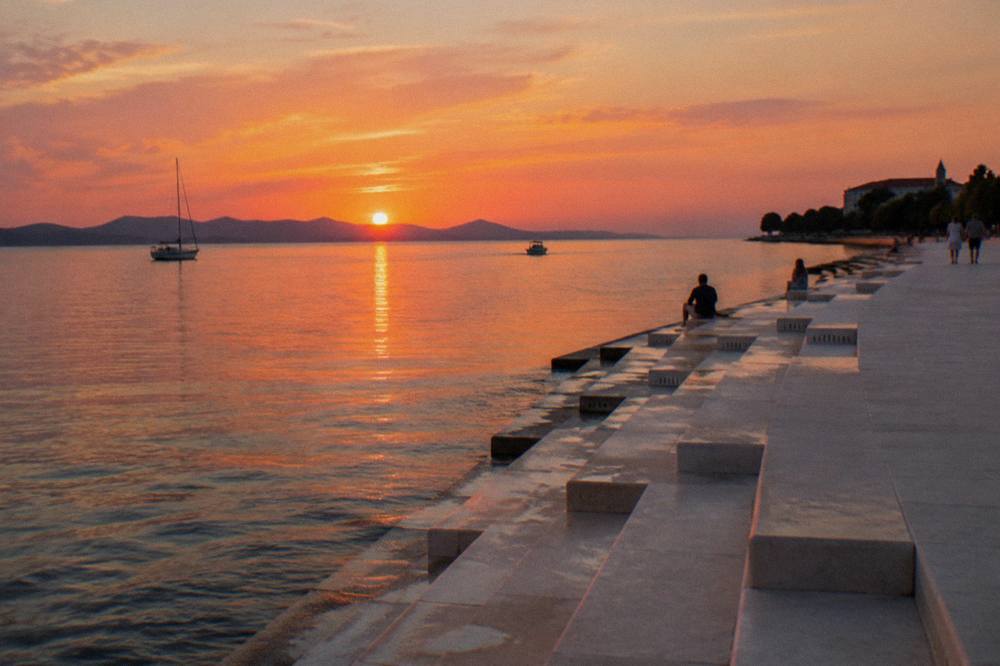
The peninsula's layout matters at dinner time. The Riva, the waterfront promenade on the peninsula's western side, is where tables face the open sea and the sunset, and it sits directly beside the Sea Organ, the free wave-driven installation by Nikola Bašić opened in 2005, and the Greeting to the Sun, the solar light circle from 2008. A table anywhere on that side puts the city's two signature installations within earshot. The sunset and evening route pairs naturally with a Riva-side reservation.
Across the water, the districts spread northwest along the coast. Arbanasi faces the Old Town across the channel, Borik and Puntamika line the beaches north of the centre, and Diklo stretches further out along the shore road. These are the neighbourhoods where kitchens rely less on passing traffic, and where a bus from the bus station reaches the table in a few minutes. The areas are described in more detail in the site's coverage of Zadar's beaches, which often sit next to the same bayside konobas.
The distances involved are short by any standard. The computed road figures from the Old Town, using OSRM routing data, are:
| From The Old Town To | Distance | Driving Time |
|---|---|---|
| Bus station (Ante Starčevića 1) | 2.6 km | 6 min |
| Gaženica ferry port | 5.2 km | 10 min |
| Zadar Airport (Zemunik) | 13.3 km | 22 min |
| Nin | 19.8 km | 28 min |
| Biograd na moru | 29.5 km | 39 min |
| Paklenica National Park | 46.8 km | 57 min |
Two practical notes from the 2026 rule changes reported in local coverage. Dress-code signs posted at the entrances to the historic core ask for appropriate clothing, with no swimwear, and coverage from July 2026 reports fines of up to 130 EUR after a warning, so a beach afternoon needs a change of clothes before the peninsula at dinner. Separately, the municipality signalled a plan to restrict night-time retail alcohol sales in the Old Town, in shops and kiosks rather than bars and restaurants, for the 2026 season; neither item changes where you eat, but both change how the evening runs.
What Food Is Zadar Known For?
Zadar's kitchen is Dalmatian: grilled and salted fish, shellfish, black cuttlefish risotto, pašticada (beef braised in sauce with homemade pasta), Pag lamb and Pag cheese, olive oil, prosciutto, and maraschino, the cherry liqueur the city has given its name to, poured as a digestif. The thread running through the menu is the sea and the dry, stony land behind it: fish caught the same morning, cheese from the island of Pag across the channel, and oil from the groves of the Zadar hinterland.
The influences are legible on the plate. Roman, Venetian and Austro-Hungarian layers all sit in Dalmatian cooking, and in Zadar that shows up as a lot of simple grills, risottos and slow braises rather than heavy sauces. Konobas, the traditional taverns, keep menus short and lean on what the market and the boat delivered that day. The site's guide to Zadar food covers the dishes and their background in detail, and the maraschino and drinks page traces the liqueur's local standing; ordering a small glass at the end of a meal is the local close to dinner.
Wine is regional by default. The Zadar county hinterland and the islands grow their own whites and reds, and house wines by the decilitre are a normal order alongside fish. Pag cheese, a hard sheep's milk cheese from the island, and Pag lamb, raised on the same salt-sprayed pasture, are the two products the region exports proudly; both appear on peninsula menus and in the tastings on the food walks described further down this page.
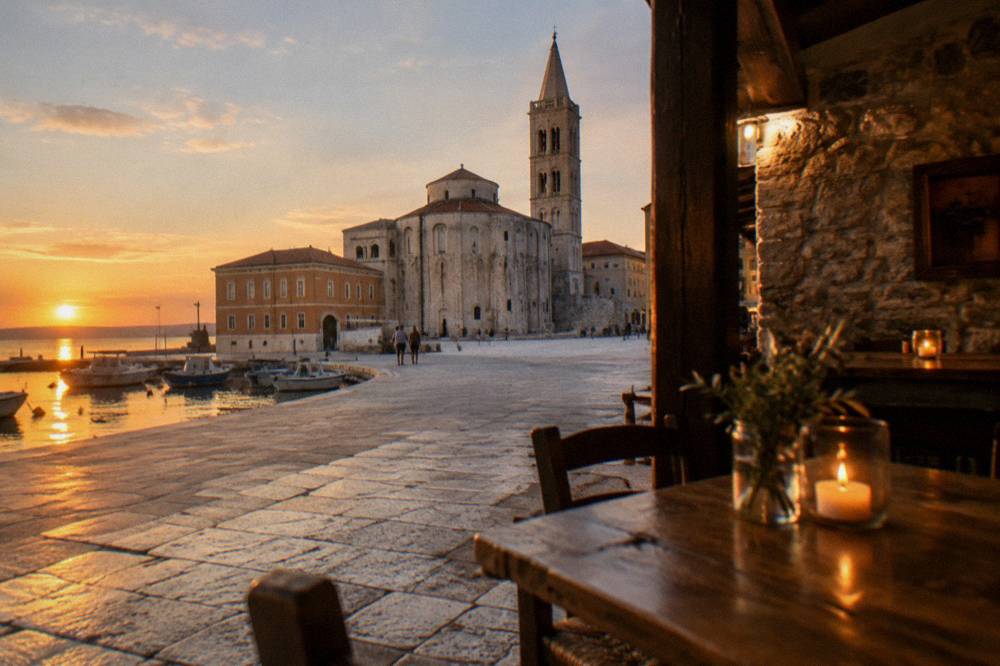
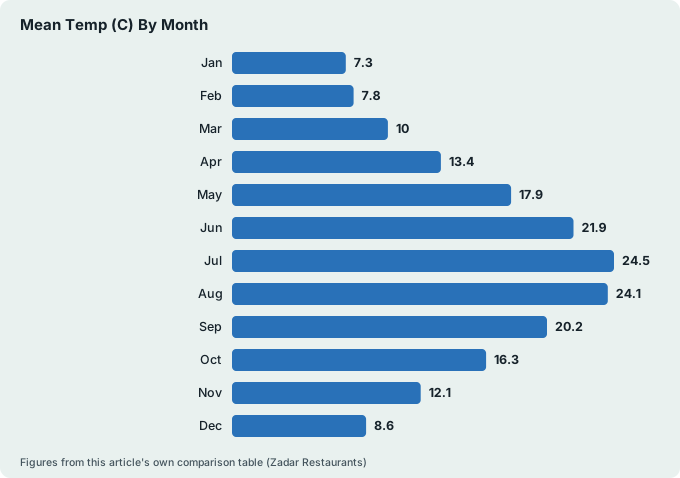
Timing follows the Mediterranean pattern. Lunch runs early afternoon, and dinner tables fill from around 19:00 onward, later in high summer when the evening cools. The climate record for the city, Zadar station, 1961-2024 (DHMZ), shows why: July's mean of 24.5 C and August's 24.1 C make the long light evening the comfortable part of the day, with sunset seating on the Riva at a premium in those months.
| Month | Mean Temp (C) | Precipitation (mm) |
|---|---|---|
| Jan | 7.3 | 76.4 |
| Feb | 7.8 | 67.0 |
| Mar | 10.0 | 66.3 |
| Apr | 13.4 | 61.4 |
| May | 17.9 | 64.4 |
| Jun | 21.9 | 48.5 |
| Jul | 24.5 | 35.4 |
| Aug | 24.1 | 52.8 |
| Sep | 20.2 | 110.9 |
| Oct | 16.3 | 106.8 |
| Nov | 12.1 | 123.0 |
| Dec | 8.6 | 99.6 |
That table is Zadar station, 1961-2024, the official DHMZ record. November is the wettest month at 123 mm and July the driest at 35.4 mm, which is why the outdoor season for restaurant terraces runs so long: the city counts about 2,600 hours of sunshine a year, and the shoulder months of May, June and September combine warm means with moderate rainfall.
How Do You Choose A Konoba On The Peninsula?
Pick by what the kitchen actually does rather than by the terrace: a konoba that grills fresh fish and keeps a short menu is doing the thing Zadar does well, and the honest signals are a displayed catch of the day, prices by weight for whole fish, and menus that name the local cheese, oil and wine rather than generic descriptions. The peninsula holds enough kitchens that walking two extra streets is cheap; the squares nearest the busier sights carry the heaviest foot traffic and the most translated-to-everything menus.
Whole fish priced by the kilogram is the norm rather than the exception, and the staff should tell you the per-kilo price and weigh the fish before cooking it. That is normal practice, not an upsell. Shellfish and risottos are priced per plate; the black cuttlefish risotto is the local benchmark dish, and a kitchen that rushes it will serve it gritty rather than slow-cooked. For land dishes, pašticada is the test: it is a braise that takes hours, so it appears on menus that cook rather than assemble.
The Old Town's compactness cuts both ways. It means every kitchen is walkable, and it means the areas around Kalelarga and the People's Square fill first. The quieter tables tend to sit in the side streets between the Forum and the Land Gate, the 1543 entrance built by Michele Sanmicheli, and in the lanes running down toward the eastern quay, away from the sunset side. The walking tour guide traces these lanes; a self-guided loop before dinner doubles as restaurant reconnaissance.
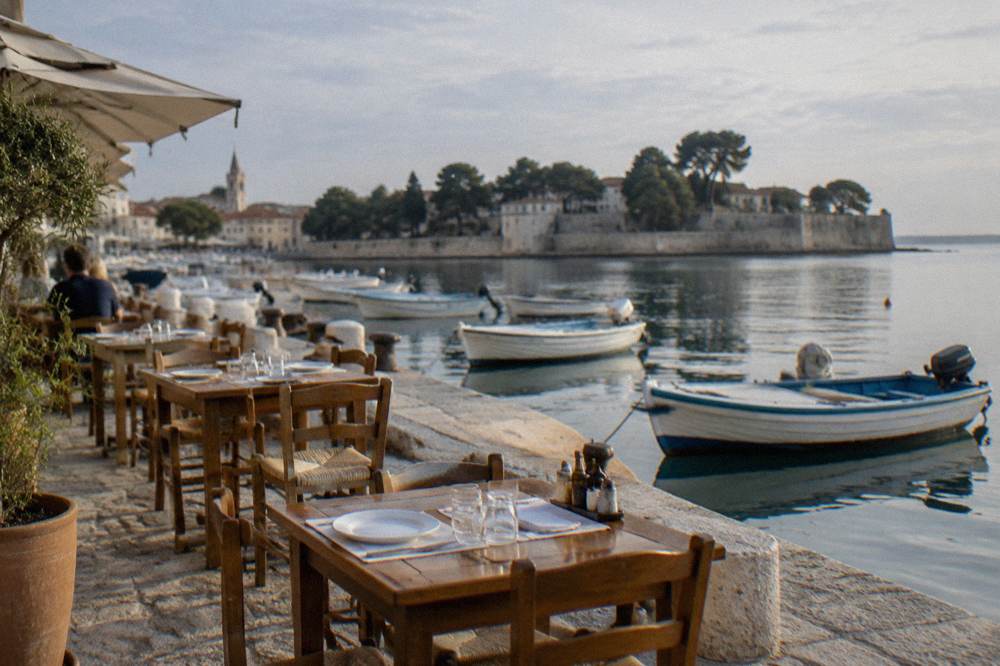
Reservations matter mainly in July and August and on weekends in June and September, above all for Riva-side tables at sunset. Off season, from November to March, the peninsula thins out and the cooking calendar shifts: Zadar Advent runs 24 November 2026 to 2 January 2027 across three locations including a new ice rink on the Forum, per the city's events listing, and the Christmas Run on 27 December 2026, so winter weekends have their own evening traffic around the programme's concert nights.
Where Do You Eat Fresh Fish And Seafood In Zadar?
The seafood kitchens divide between the peninsula, where tables sit among the sights, and the coastal districts of Borik, Puntamika, Diklo and Arbanasi, where the konobas serve the neighbourhoods that fish from these waters, and the honest rule is that the plainer the room and the shorter the fish list, the more likely the catch is local. A drive or bus ride of ten to fifteen minutes from the peninsula reaches all four districts, and each clusters its eating around its own stretch of shore.
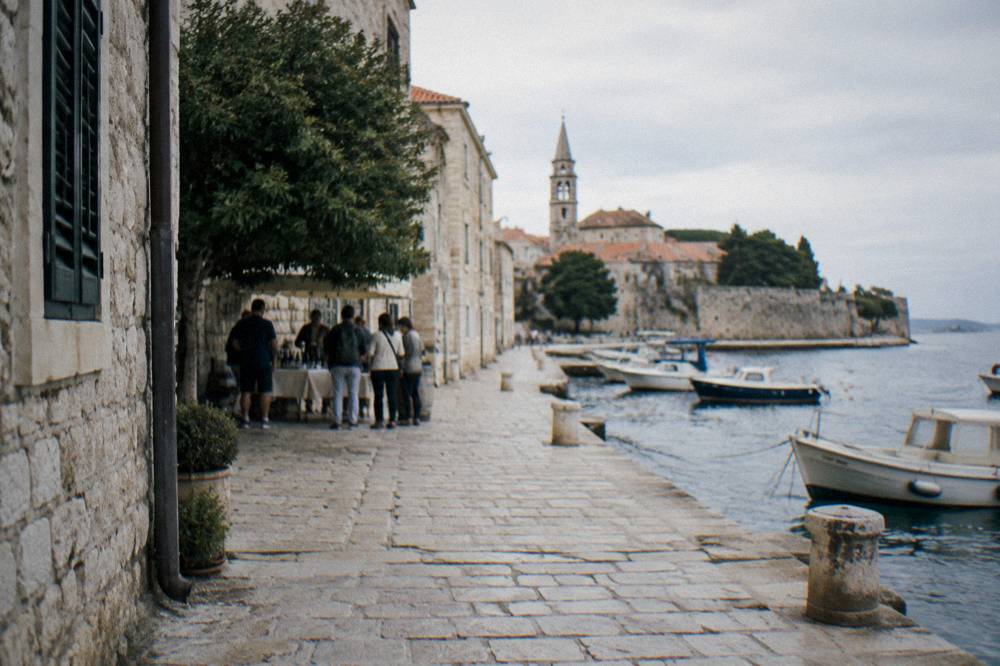
Arbanasi, directly across the channel from the Old Town, is the closest of the four and the one with the shortest journey; a city bus covers it in minutes. Borik and Puntamika sit beside the beaches northwest of the centre, so a swimming afternoon can roll into a fish dinner without returning to the peninsula, an ordering that suits families. Diklo is the furthest stretch and the quietest, with kitchens strung along the shore road. The beach areas themselves follow the county's 2026 concession rules: no fencing and no entry fees, with commercial sunbed use capped at 40 to 60 percent of a beach's area, so access to the shore next to any konoba stays free.
Ordering fish follows one local rhythm. Ask what arrived that day, agree the per-kilo price, and let the kitchen grill it with oil, lemon and greens; the accompaniments are deliberately plain because the fish is the argument. Shellfish, scampi and the risottos carry the rest of the menu, and a bottle of local white is the standard pairing. Note one thing that does not belong on the plate: swimming is not part of any Krka day trip, whatever a menu by the park gates implies, because swimming at Skradinski Buk has been banned since 2021 and is allowed only at designated spots such as Roški slap, Stinice and Pisak, from 1 June to 30 September.
What Does Eating Out In Zadar Cost?
A sit-down dinner in Zadar runs from modest konoba prices for pizza, pasta and grilled meat up to whole-fish pricing by the kilo that can carry a two-person seafood dinner well past 60 EUR, while cover charges, when applied, are small and listed on the menu, and the tourist tax collected by your accommodation is separate from anything on the restaurant bill. No reliable published tariff of dish prices exists for the city's restaurants, so this page does not print one; menus are displayed at the door throughout the peninsula, and reading two or three before choosing is the honest method.
What can be stated with figures are the fixed entrance prices around which a food-centred day is planned, because those come from the operators' own price lists. They matter to diners because they anchor the budget that dinner sits inside:
| Attraction Or Park | Adult Entry (2026) | Source Basis |
|---|---|---|
| Museum of Ancient Glass, Zadar | 7.00 EUR | Museum ticket page |
| Museum of Ancient Glass, groups of 5+ | 5.00 EUR | Museum ticket page |
| Archaeological Museum / St Donatus | around 7 EUR full price | AMZD tariff page |
| Krka NP (all accessible land sites) | 7 / 20 / 40 EUR by season | Park 2026 price list |
| Plitvice Lakes NP | 10 / 23 / 40 EUR by season | Park price list |
| Paklenica NP | 5 / 8 / 10 EUR by season | Park 2026 price list |
| Telašćica Nature Park (Dolac entrance) | 6 / 8 EUR by season | Park price page |
The seasonal drops are worth knowing when a restaurant trip is tied to a park day. From 1 October 2026, Plitvice moved to 23 EUR in October and 10 EUR from November to December, and Krka to 20 EUR in October and 7 EUR in the later winter months, per the parks' price lists and contemporaneous coverage. The same logic applies inside the city: the Museum of Ancient Glass lists a 7.00 EUR adult ticket, 5.00 EUR for groups of five or more and 4.00 EUR for schoolchildren, and its guided tour runs 20 EUR in Croatian or 30 EUR in other languages for a group of about 30, figures from the museum's own ticket page. Its opening hours conflict between sources, so confirm them on the museum's hours page before planning a visit around a meal. Everything else covered here is indexed on Zadar Croatia Travel Guide.
| Museum Of Ancient Glass Item | Price |
|---|---|
| Adult ticket | 7.00 EUR |
| Groups of 5 or more | 5.00 EUR |
| Schoolchildren | 4.00 EUR |
| Guided tour, Croatian | 20 EUR per group |
| Guided tour, other languages | 30 EUR per group |
Two cost items this site refuses to estimate: the city's tourist tax rate, which is collected by your accommodation and confirmed at booking, and taxi or ride-hailing fares from the airport to a restaurant address. For airport transport the airport to city centre guide covers the verified option, the Liburnija shuttle at 5.00 EUR one way including luggage, about 20 minutes, with the ticket valid 90 minutes on city buses.
Can A Food Tour Replace A Restaurant Evening In Zadar?
A guided food and tasting walk is a real alternative to a restaurant table on at least one evening, because the peninsula's tastings fold cheese, oil, wine and maraschino into a route past the Forum, Kalelarga and the Sea Organ, and the featured walk on this site covers the Old Town's sights and its flavours together, with tastings included rather than billed separately. The walks that revolve around tastings sit in the food-and-drink category of the site's tours overview, and the walking formats are compared in the walking tour guide.
The featured option is Zadar Highlights: Old Town, Sea Organ & Local Tastings, which pairs the peninsula's headline sights with local tastings; the operator's live listing carries the current price, dates and availability, and Check availability shows them without commitment. Tip-based walks also run locally; if you take one, confirm the arrangement directly with the guide, as this site does not carry a verified free-walk product for Zadar.
The logic of a tasting evening is practical. It removes the menu-reading gamble from one night, it puts a guide between you and the cheesemonger's counter, and it ends at the Sea Organ and the Greeting to the Sun, both free and open at all hours, which is the city's own dessert course. On nights when a full restaurant table fits better, the restaurant districts above still apply, and the two formats stack: a tasting walk early in a stay calibrates what to order later.
How Do Day Trips From Zadar Fit Around Restaurant Hours?
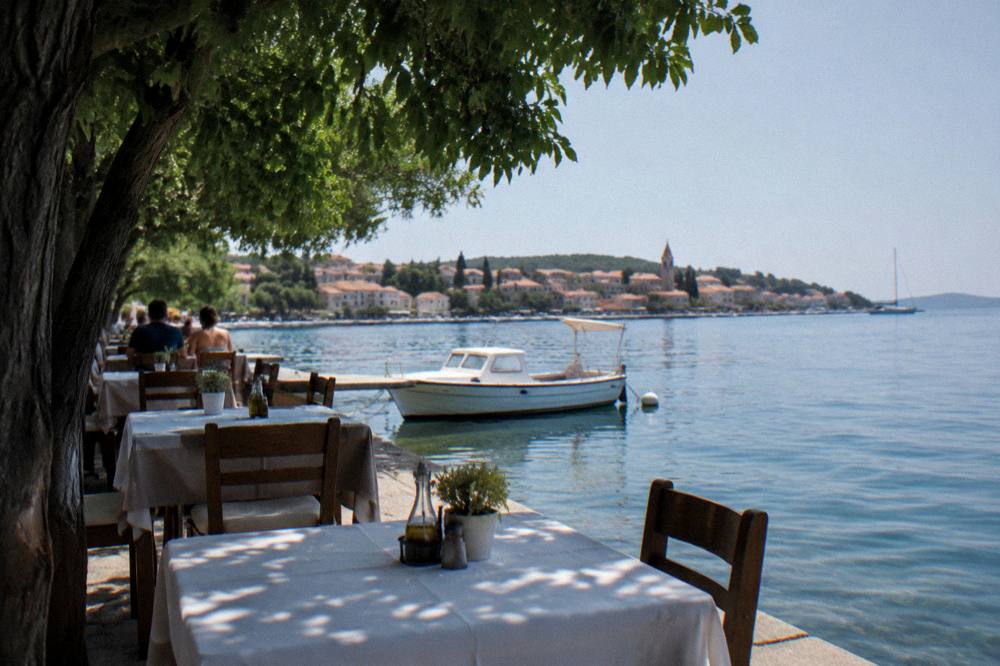
The big day trips, Plitvice Lakes, Krka National Park and Kornati with Telašćica, run as full-day outings that return to Zadar in the late afternoon or early evening, which places them before dinner rather than in competition with it, and the boat formats return along the coast in time for a Riva table at sunset. The computed driving distances tell the story: Skradin, the Krka gateway, is 76 km and about 62 minutes from the Old Town, and Plitvice 145 km and about 153 minutes, so independent drivers eat lunch on the road and dinner back in the city.
| Day Trip Destination | Distance From Old Town | Driving Time |
|---|---|---|
| Skradin (Krka gateway) | 76 km | 62 min |
| Šibenik | 89 km | 71 min |
| Krka, Skradinski Buk | 91 km | 73 min |
| Pag Town | 54 km | 62 min |
| Plitvice Lakes | 145 km | 153 min |
For the guided versions, this site's day trips guide compares the formats. The Plitvice day trip from Zadar is the most in demand, and one of the trio below covers it:
Kornati works differently: the national park charges entry per vessel by length and season, from 25 EUR for boats up to 6.99 m in the off-season months to 95 EUR for vessels of 11 to 17.99 m in summer for one day, with tickets bought outside the park, per the park's 2026 price list. Boat tours that include the crossing handle this in their listing. The Kornati islands guide holds the detail, and the evening return leaves the sunset slot free, which is where the third pick of the trio comes in, a short sunset cruise with a spritz on board:
That format and a restaurant reservation are not rivals: the cruise runs short enough to end at the harbour with the whole evening still ahead, and the Riva's kitchens are a few minutes' walk from where the boats tie up. The site's boat tours guide compares the on-water formats, and the cost guide places restaurant spending inside a full Zadar budget.
When Is The Restaurant Season At Its Best In Zadar?
The eating season runs longest of all the city's seasons: terrace weather stretches from May into October on the Zadar station 1961-2024 record, with May at a 17.9 C mean, September at 20.2 C and October at 16.3 C, while July and August, at 24.5 and 24.1 C, are the warmest and most crowded months and November, at 123 mm of rain, pushes tables indoors. The best time to visit guide works through the same record in full.
September is the month the numbers quietly argue for. The sea is still warm after summer, the mean stays above 20 C, the rain days sit at nine against July's five, and the visitor pressure on peninsula tables eases once school terms resume. May mirrors it on the other side of summer. October keeps a 16.3 C mean and pairs it with the parks' shoulder pricing, the Krka and Plitvice drops from 1 October 2026 noted above, making it a strong month for combining a waterfall day with long dinners.
Winter eating narrows but does not stop. Advent runs 24 November 2026 to 2 January 2027, with the programme spreading across three locations and a new ice rink on the Forum, and the concert calendar announced for opening night on 24 November and dates through early January gives the cold months their own evening economy. The kitchens that stay open cluster tighter around Kalelarga and the People's Square, and the stews and braises of the Dalmatian winter menu, pašticada among them, are the reason that season holds its own.
Common Questions About Zadar Restaurants
Where should I eat in Zadar Old Town?
Concentrate on the lanes between the Forum and the Land Gate and the streets running off Kalelarga and the People's Square, where konobas with short menus and fresh fish sit among the sights, and pick a Riva-side table for sunset evenings beside the Sea Organ and the Greeting to the Sun.
What food is Zadar known for?
Dalmatian staples: grilled fresh fish and shellfish, black cuttlefish risotto, pašticada with homemade pasta, Pag cheese and Pag lamb, local olive oil and wine, and maraschino, the cherry liqueur tied to the city, poured as a digestif.
How much does dinner cost in Zadar?
Menus are displayed at the door and prices vary widely, from simple pizza and pasta dishes to whole fish priced by the kilo that can carry a two-person seafood dinner well past 60 EUR; this site prints no dish-price tariff because no verified published list exists, so compare menus on the street before choosing.
Do I need a restaurant reservation in Zadar?
mainly in July and August and on summer weekends, above all for Riva-side sunset tables; from late autumn to early spring the peninsula thins out and walk-in tables are realistic, though Advent concert nights around the Forum ice rink from 24 November 2026 bring their own winter crowds.
Is there a dress code in Zadar restaurants?
Dress-code signs posted at the entrances to the historic core in summer 2026 ask for appropriate clothing, with no swimwear or nudity, and local reporting says a verbal warning can be followed by fines up to 130 EUR, so change after the beach before dinner on the peninsula.
Are food tours in Zadar worth it?
A tasting walk folds cheese, oil, wine and maraschino into a guided route past the Forum and the Sea Organ, removing the menu gamble from one evening and ending at the free waterfront installations; this site's featured walk covers exactly that format, and the operator's live listing carries current dates and prices.
Eating well in Zadar comes down to three habits: read the menu at the door, order what the sea and the islands supply, and keep at least one evening free for a Riva table as the light drops over the Sea Organ.