Zadar Food
Zadar eats the way a small Adriatic port eats: grilled fish, salted cod, sheep cheese from Pag, cherry liqueur first made here, and tomatoes that need nothing else. This guide sets out what the city's food actually is, where each dish sits on the map of the Old Town peninsula, and how the seasons change the plate.
Short answer
Zadar's food is Dalmatian coastal cooking: fresh Adriatic fish and shellfish, pršut and sheep cheese from nearby Pag, pasta with salted cod (bakalar), black cuttlefish risotto, and maraschino, the cherry liqueur historically produced in the city. Eat in and around the Old Town peninsula (Poluotok), where konobas, market produce and a growing food-walk scene sit within a ten-minute walk of each other.
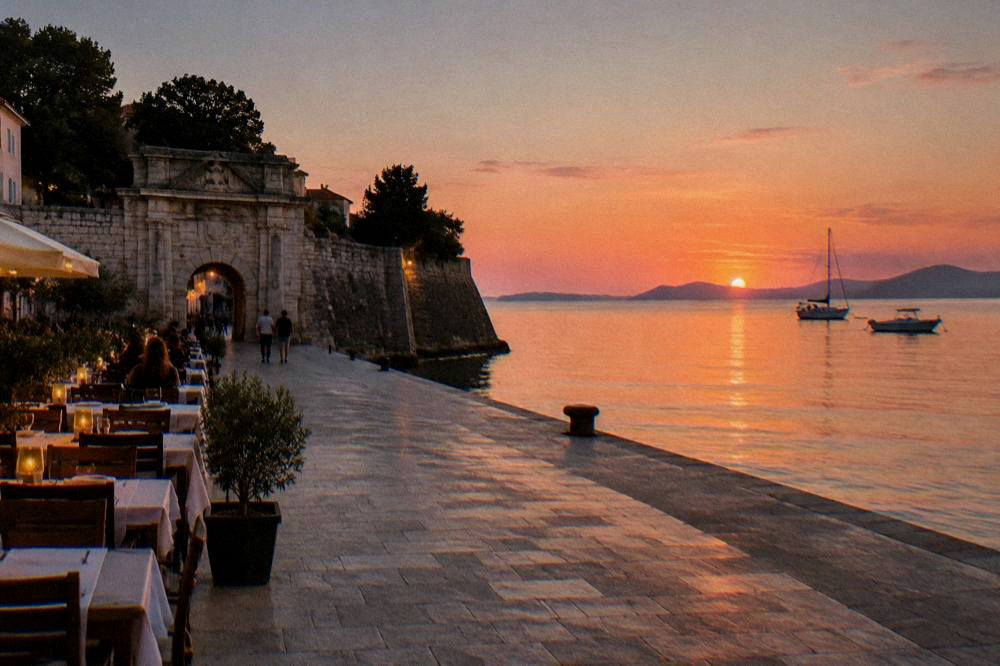
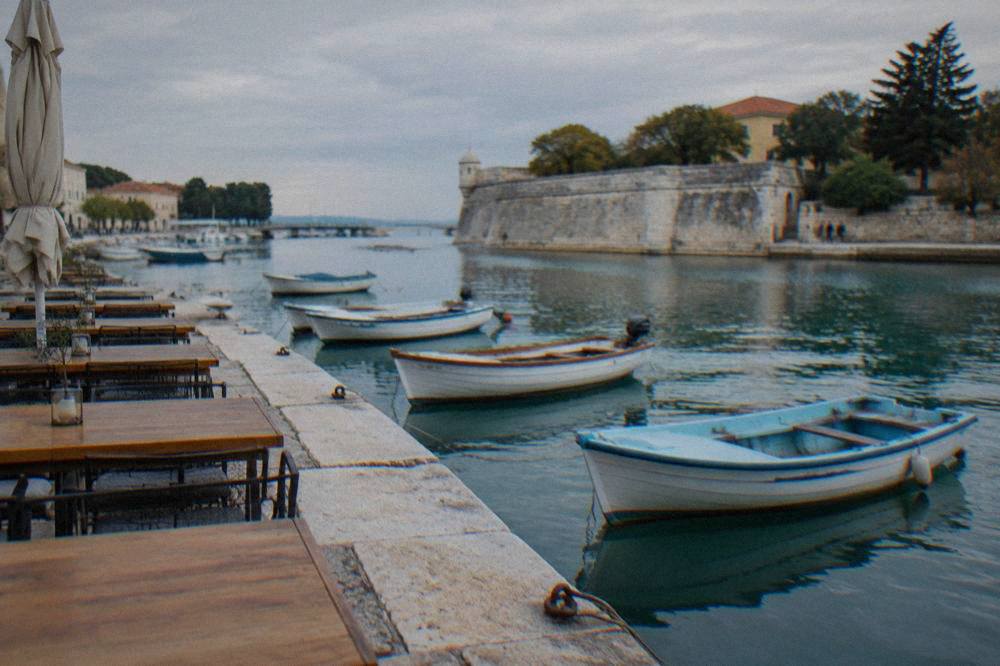
Zadar, a coastal city in Dalmatia on the Adriatic, eats from a short menu written by the sea and the stony ground behind it. Fish comes off boats that tie up a short walk from the Old Town peninsula, cheese comes from sheep grazed on the island of Pag across the water, and the city's own contribution to the world's bar shelves is maraschino, a cherry liqueur whose distilling history here is the one food story the city tells every visitor. The peninsula itself, called Poluotok, holds nearly everything worth eating within a ten-minute stroll, from the green market near the Land Gate of 1543 to the konobas tucked behind the Roman Forum.
The honest framing matters, because Zadar is not a food capital in the way some larger Croatian cities market themselves. It is a modest, confident eating town where the raw materials are exceptional and the cooking mostly leaves them alone. This guide, written by the editorial desk behind Zadar Croatia Travel Guide, reports what the city's kitchens, markets and listings actually offer, and pairs the food with the day trips and evening rituals that surround it.
What Food Is Zadar Known For?
Zadar is known for Dalmatian coastal cooking built on four pillars: whole grilled Adriatic fish and shellfish, salt-cured and smoked products led by Pag sheep cheese and pršut, pasta and risotto dishes such as bakalar na bijelo (salted cod in white sauce) and crni rižot (black cuttlefish risotto), and maraschino, the cherry liqueur whose historic production is tied to the city. Around these sit olive oil, plavac and pošip wines, and simple sweets made from figs, almonds and oranges.
The fish comes first, and the portion of the menu is the sea's decision. What lands at the market in the morning sets the grill in the evening: sea bream, sea bass, sardines, squid, cuttlefish, langoustines when the price allows. The Dalmatian treatment is olive oil, salt, parsley, garlic and fire, and a good konoba will say no to a sauce. The peka, a cast-iron bell baked under embers, usually carries lamb or octopus, and it needs ordering ahead because it cooks for hours.
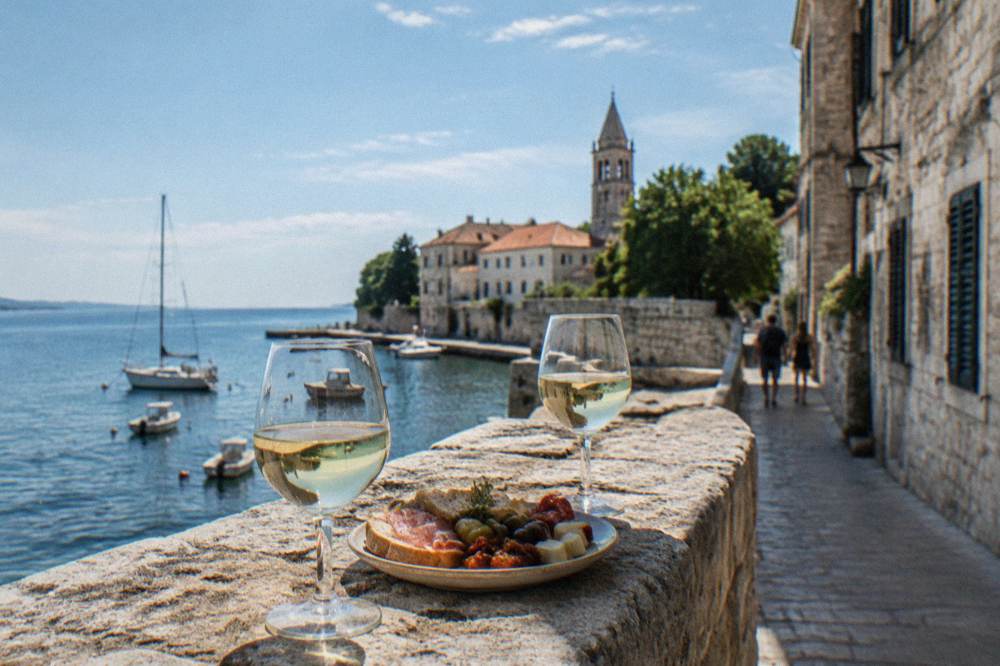
Behind the fish sits the hinterland's contribution. Pag cheese (paški sir), made from the milk of sheep that graze on salt-scoured sage and thyme on the island of Pag, is the most distinctive cheese on the Croatian coast and appears on every serious cheese board in Zadar, often beside pršut, the air-dried ham of Dalmatia, and kulis, a fresh soft cheese. Prosciutto-and-cheese is not a starter here so much as a meal in its own right with bread and a glass of white.
The pasta and rice dishes carry the Venetian memory of the coast. Bakalar, salted cod soaked and whipped with olive oil, garlic and potatoes, is a winter dish with a cult following. Crni rižot, cuttlefish risotto blackened with its own ink, is a year-round test of a kitchen, because it fails easily. Šurlice, hand-rolled pasta tubes traditional on the island of Krk, also appear on North Dalmatian menus, usually with a meat or truffle sauce.
The Dishes, In One Table
| Dish | What It Is | When And Where It Shines |
|---|---|---|
| Crni rižot | Cuttlefish risotto blackened with ink, cooked slowly | A benchmark dish; order where squid is fresh that day |
| Bakalar na bijelo | Salted cod whipped with oil, garlic, potato | Winter dish; traditional around festive tables |
| Peka | Meat or octopus baked under an ember-covered bell | Needs ordering hours ahead, a konoba dish |
| Paški sir | Hard sheep cheese from Pag, sharp and salty | Cheese boards, with pršut and a glass of white |
| Brudet | Fish stew with tomato, vinegar and polenta | A fisherman's dish; depends on the day's catch |
| Fiš paprikaš | Spicy freshwater or saltwater fish stew | More inland tradition, appears on some menus |
| Fritule | Small fried doughnuts, often with raisins and citrus | Advent season and winter |
| Kremšnita | Custard slice in puff pastry | Café classic across the region |
Where To Eat In Zadar Old Town?
The Old Town peninsula concentrates the eating within a few short streets: konobas and seafood restaurants around the harbour edge and the streets behind Kalelarga, café patisseries on the squares, and the green market near the Land Gate for produce, cheese and fish. Everything sits within roughly a ten-minute walk, so the choice is less about transport and more about what kind of meal the evening calls for.
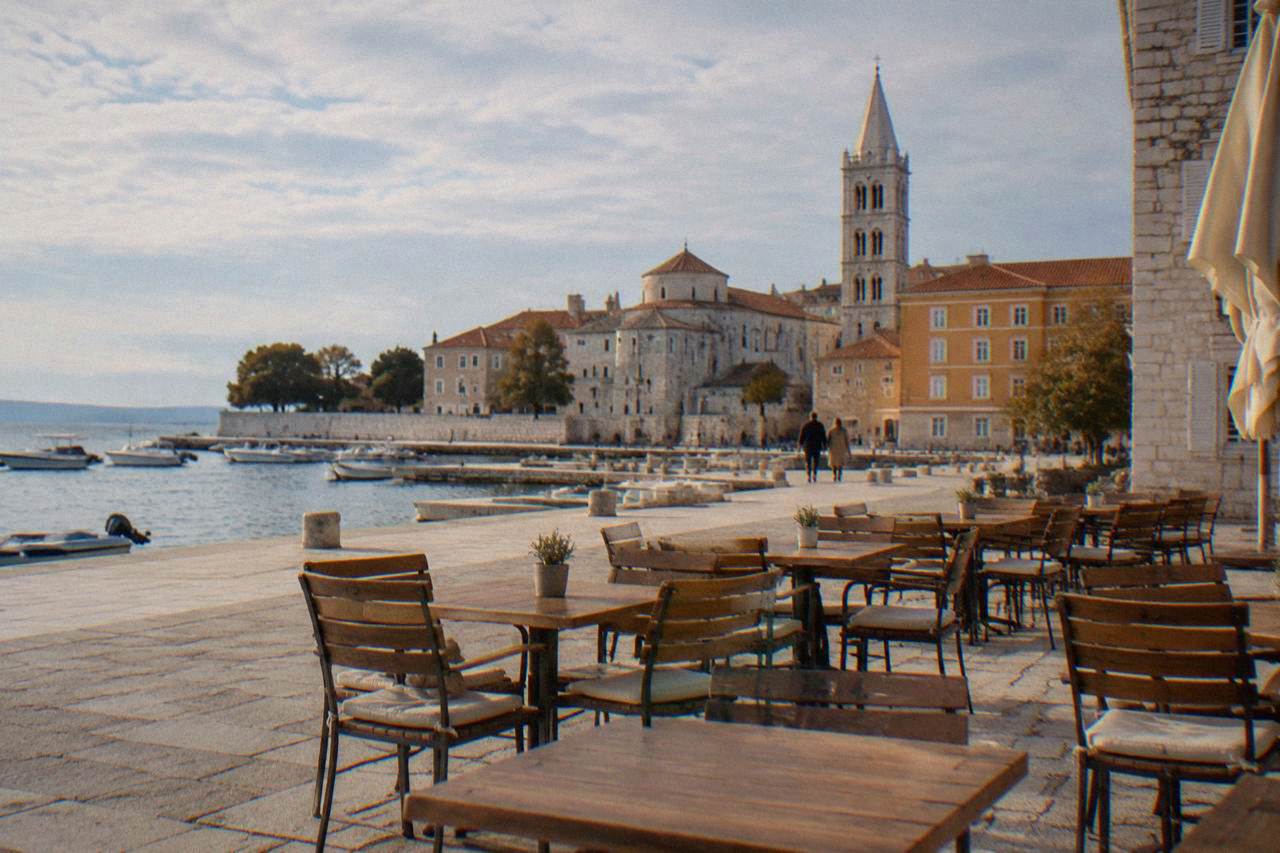
The geography is simple. The peninsula runs west from the Land Gate, built in 1543 to a design by Michele Sanmicheli, past Five Wells Square and along Kalelarga, the main street, to the Roman Forum, the Cathedral of St Anastasia and the seafront where the Sea Organ plays. Restaurants cluster on the streets off this spine and around the harbour on the north side, and the number of tables within the walls is large for the size of the ground they cover.
A useful split: the harbour-side and Forum-edge places lean tourist, with picture menus and set grills; the streets one block in hold the konobas that locals keep alive, and they are the ones worth booking in summer. The green market near the Land Gate sells what the surrounding region grows and catches, and a walk through it in the morning tells you what the good kitchens will be cooking that night. The full restaurant landscape, neighbourhood by neighbourhood, is covered in the companion guide to Zadar restaurants.
Practical notes from the city's own rules are worth knowing before dinner. Since summer 2026 the Old Town has posted dress-code signs at its access points: swimwear is not acceptable in the historic core, and enforcement runs from a verbal warning to fines of up to 130 EUR, as reported locally. The city has also signalled a night-time limit on retail alcohol sales in shops and kiosks on the peninsula for the 2026 season, aimed at noise rather than at bars and restaurants. Neither changes dinner; both change the late-evening shop run.
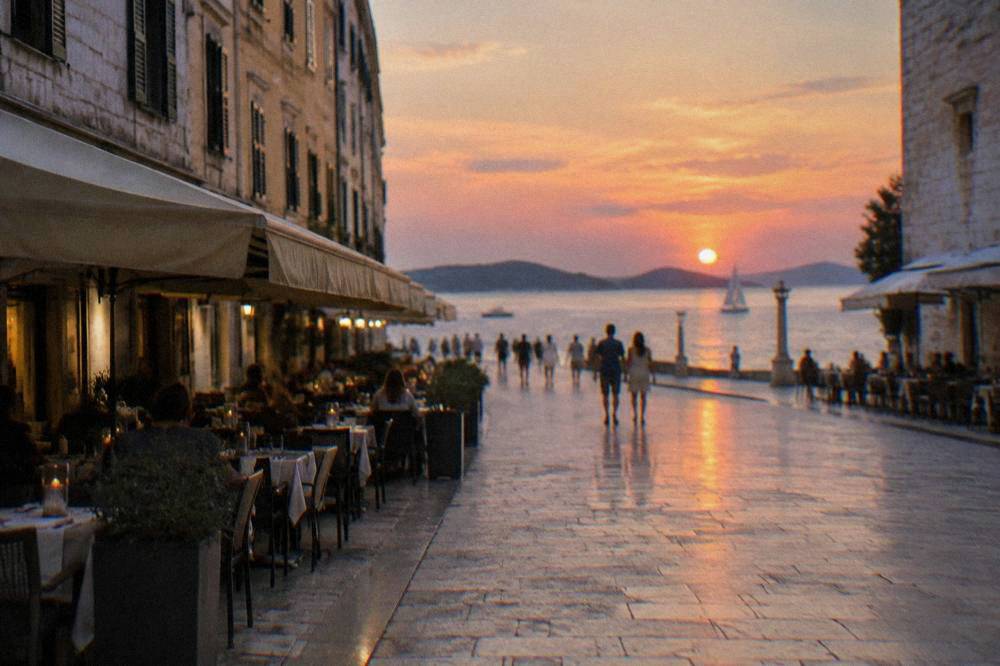
One evening structure works well: the food walk first, dinner after. A guided walk that pairs the Old Town's history with stops for wine, cheese and other local products covers the peninsula's geography in the same loop a diner would walk anyway, and it does the introduction to Pag cheese and Dalmatian ham that a restaurant only does by the plate. The Old Town food and wine walk is the listing to check for that; details, price and availability render on its page.
What Does A Guided Food Experience In Zadar Include?
Guided food experiences in Zadar generally cover a walk through the Old Town with several tasting stops, local wine, Pag cheese, pršut, and sometimes maraschino, led by a guide who folds the city's history into the route. Formats range from short tasting walks to longer gastro walks built around a full evening of stops, and the exact inclusions, price and duration are always on the operator's live listing rather than in any general guide.
What can be said is what the experiences cover, because that is stable. The gastro walks visit the market area and the squares, taste the region's cheese and cured products, pour local whites and reds, and usually end near the Riva at sunset, which in Zadar is the whole point of the evening. Walking tours with a food angle, including one sponsored by a well-known Pag cheese producer, mix the tasting stops with the Roman and Venetian layers of the peninsula.
Tip-based walks also run locally, on a pay-what-you-want basis; confirm the arrangement with the guide at the start. And if the evening is already spoken for, the tasting can be moved to a boat: several island trips from Zadar pour wine and serve local products on board, which turns the tasting into a coastline.
The same logic extends to the day-trip layer of a food trip. A day in the lakes or on the islands ends back in Zadar in time for dinner, and the guided options with pre-booked tickets remove the one logistic (park entry) that otherwise eats the morning.
What Is Maraschino And Where Did It Come From?
Maraschino is a dry cherry liqueur made from marasca cherries, including the crushed stones, and its historic production is tied to Zadar. It is drunk neat, as a digestif, in cocktails, and with the local tradition of pouring it over dessert; every serious bar in the Old Town pours it, and it remains the city's signature bottle.
The story is the one piece of food history Zadar owns outright. The marasca cherry grew on this coast; the distilling knowledge lived in the monastery; the liqueur travelled the ports of Europe and became a bar fixture from Italy to the Americas. Production in Zadar has changed hands and buildings across the centuries, but the bottle with the woven straw wrapper is still made in the city, and the distillery stands as the local landmark of that history.
How to drink it: cold, small, after the meal. In cocktails it appears in the classics that call for cherry liqueur; the bartenders of the Zadar nightlife scene know the list. For the deeper background, the dedicated maraschino and drinks guide carries it.
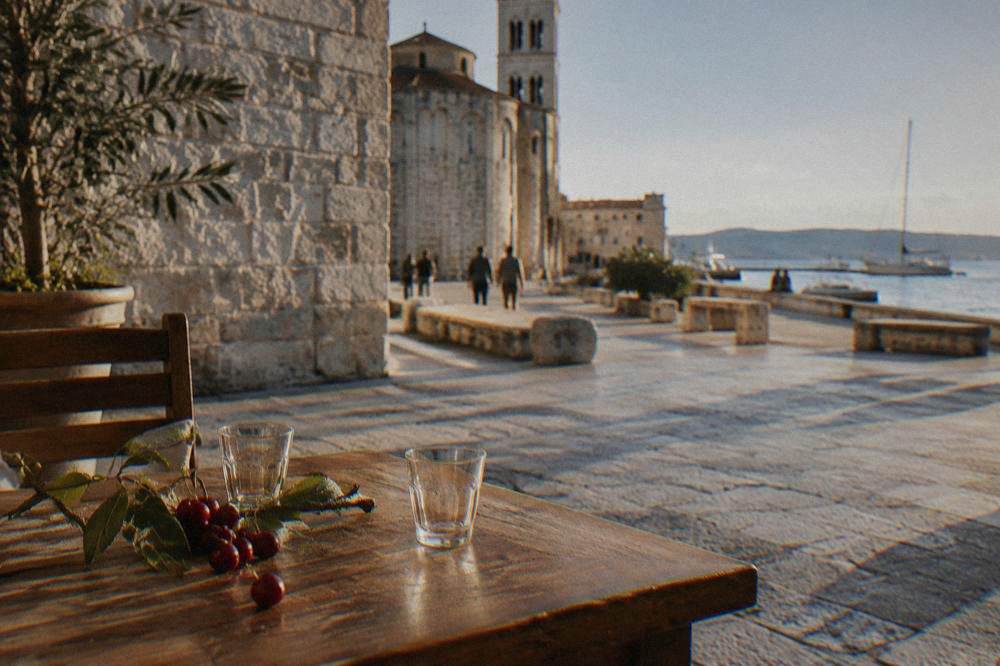
Beyond maraschino, the drinking map of North Dalmatia runs through white wines from local and regional varieties, reds built on plavac, and rakija in its several fruit forms, with travarica, herb-infused grape brandy, the traditional opener of a long meal. Olive oil is the quiet third pillar: the stony hills behind Zadar produce oil that shows up on every table, and tasting rooms in the region pour it beside the wine.
How Do The Seasons Change The Table In Zadar?
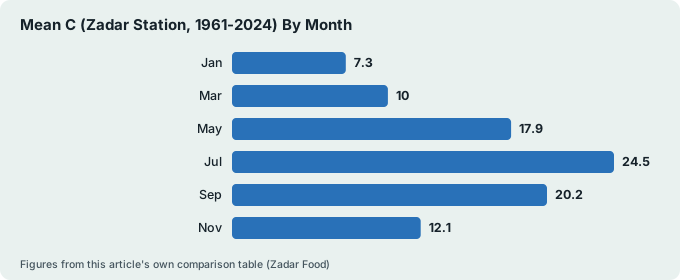
The seasons rewrite the menu more than the map does: spring brings lamb, young cheese and wild herbs into the restaurants, summer is grilled fish, tomatoes and eating late, autumn is the grape and olive harvest with squid and hearty dishes, and winter is bakalar, fritule and the Advent food stalls. The underlying driver is coastal and mild, with July the warmest month at a 24.5 C mean and January the coldest at 7.3 C, Zadar station, 1961-2024.
The DHMZ station table for Zadar shows the year running from 7.3 C in January to 24.5 C in July, with rainfall peaking in November at 123 mm and bottoming out in July at 35.4 mm. Eating follows: the terrace season stretches from April into October, and the kitchen shifts under it.
| Month | Mean C (Zadar station, 1961-2024) | Rainfall mm | What The Kitchen Is Doing |
|---|---|---|---|
| Jan | 7.3 | 76.4 | Bakalar, hearty stews, fritule |
| Mar | 10.0 | 66.3 | First lamb, wild herbs |
| May | 17.9 | 64.4 | Grilled squid, fresh cheese |
| Jul | 24.5 | 35.4 | Whole grilled fish, tomatoes, late dinners |
| Sep | 20.2 | 110.9 | Grape harvest, squid returning |
| Nov | 12.1 | 123.0 | Olive harvest, truffle dishes, Advent prep |
Autumn deserves a special word. September and October are the months when the harvest overlaps with warm sea and emptying terraces: new olive oil arrives later in the autumn, the wine festivals sit on the calendar, and the restaurants return to slow cooking.
Winter eating in Zadar is now an event programme, not just a menu. Zadar Advent runs from 24 November 2026 to 2 January 2027, expanded to three locations with an ice rink on the Forum, concerts and daily programmes; the announced calendar includes opening night at Trg Petra Zoranića on 24 November and further dates into January. The Christmas Run on 27 December 2026 is part of the same programme. The stalls mean fritule, mulled wine, roasted chestnuts and, for the brave, a cold maraschino afterwards.
| Event | Dates | Food Angle |
|---|---|---|
| Tuna Sushi & Wine Festival | 1 to 4 April 2027 | Tuna from the region, wine pourings |
| Zadar Night Run | 3 April 2027 | Spring restaurant terraces open |
| Zadar Advent | 24 November 2026 to 2 January 2027 | Stalls, fritule, mulled wine, ice rink on the Forum |
| Zadar Christmas Run | 27 December 2026 | Part of Advent programme |
What Should A Food-Led Trip To Zadar Look Like?
A food-led trip works best as a loop: a morning at the green market, a walking or gastro tour on the first evening to calibrate, one long konoba dinner with peka ordered ahead, a day trip to Pag for the cheese or to the islands for the seafood, and a sunset on the Riva with maraschino to close. Two to three days covers the peninsula's table comfortably, with more days adding the parks and islands rather than more restaurants.
The first evening belongs to the food walk, because it answers the questions a diner would otherwise ask the waiter one plate at a time: which cheese, which ham, which wine, what is in season. The second evening belongs to a booked konoba and a dish cooked under the bell. The days in between belong to the water: the islands of Ugljan, Dugi Otok and the Kornati archipelago are a short trip away, and their seafood culture is the same one the city kitchens draw on. The Zadar islands guide and the day trips guide lay out the routes.
Pag is the single most food-relevant excursion. The island's sheep cheese is the region's flagship product, its lamb is the lamb of the Dalmatian table, and the salt works at Nin on the way, an old salt-producing town a short drive north, tie the whole pantry back to the sea. Salt, sheep and sage in one afternoon is a fair summary of the North Dalmatian palate.
Is Eating Out In Zadar Expensive?
Eating in Zadar sits in the middle of the Dalmatian range: cheaper than Dubrovnik and the prime stretch of the Split waterfront, comparable to Šibenik, with the price driven mainly by whether fish is ordered by the kilo. Pasta, risotto, pizza and meat dishes keep the bill modest, while whole fish and shellfish move it up sharply; the honest planning move is to decide in advance which nights are fish nights.
Croatia has used the euro since 1 January 2023, which removes the arithmetic layer for eurozone visitors. A tourist tax exists and is collected by the accommodation; its amount is confirmed at booking. The broader cost picture, including how food sits inside a total Zadar budget, is covered in the cost of Zadar guide.
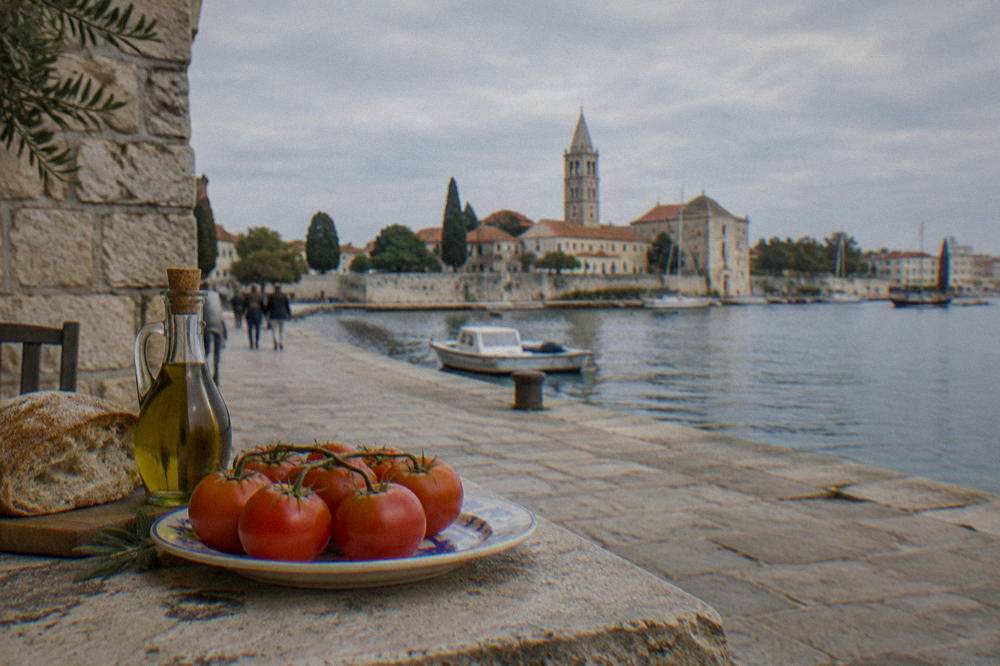
Three structural money-savers hold everywhere on this coast. The market fixes lunch: cheese, bread, tomatoes and a knife. The konoba lunch, when fish is sold by the kilo, costs less than the same fish at dinner in the same room. And the tasting walks compress five introductions, wine, cheese, ham, oil and liqueur, into one paid outing that would otherwise be five separate bills.
What Local Rules Shape Dinner In The Old Town?
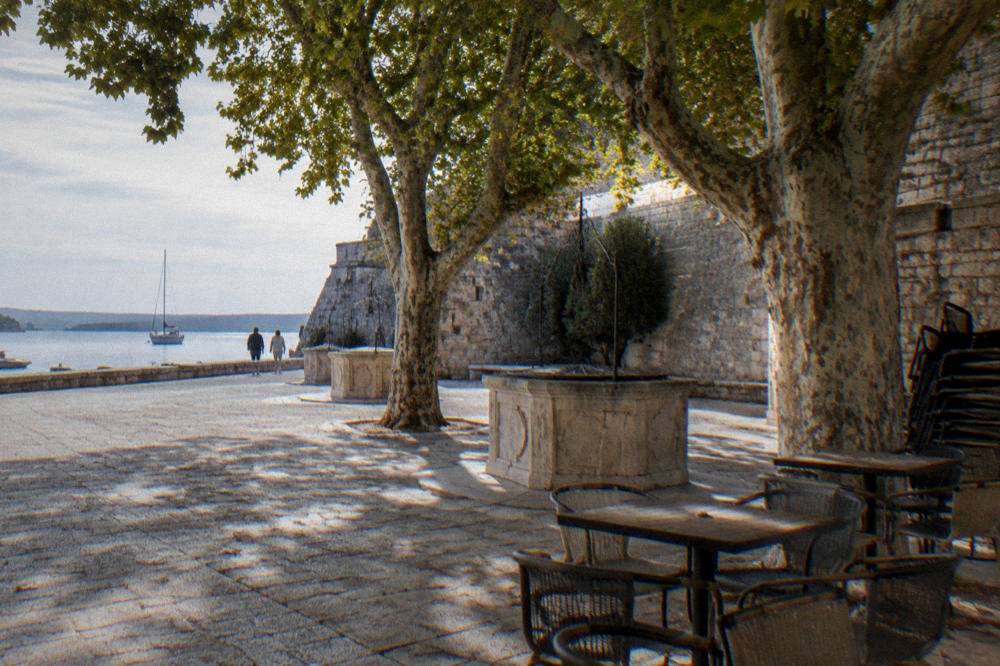
Three local rules matter at the table's edge: the dress code on the historic peninsula, which since summer 2026 bans swimwear with fines up to 130 EUR after a warning; the reported plan to restrict night-time retail alcohol sales in Old Town shops and kiosks for the 2026 season, leaving bars and restaurants unaffected; and Croatia's country basics, the euro since 1 January 2023, Schengen membership, and 112 as the emergency number.
The dress-code signs were installed at the peninsula's access points in July 2026, based on the city's existing communal order decision, and they are informative signs backed by fines rather than a gate. The alcohol restriction is a national enabling law applied locally: the mayor confirmed the intent for the old town, aimed at night noise, with the limits falling on shops, kiosks and delivery rather than on restaurants and bars. Both should be treated as reported rules of the 2026 season and confirmed locally on arrival.
None of this complicates a normal dinner. It complicates the impulse to walk from the beach to the Forum in a swimsuit, and the 23:00 shop run for another bottle. Restaurants, konobas and bars operate as before, and the terrace culture that defines the Zadar evening, dinner, then the Riva, then the Sea Organ, runs on nothing but sunset and stamina. For the wider frame, the things to do in Zadar page collects the rest of the city.
Which Wines And Oils Should You Look For Around Zadar?
The North Dalmatian glass leans white: local and regional white varieties carry most lists, while the red side is anchored by plavac, the great variety of the Dalmatian coast. Olive oil from the Zadar hinterland is the equal partner, poured on everything and increasingly tasted on its own; look for oils from the Benkovac and Nin side of the county, and drink local first, because the good regional bottles rarely export.
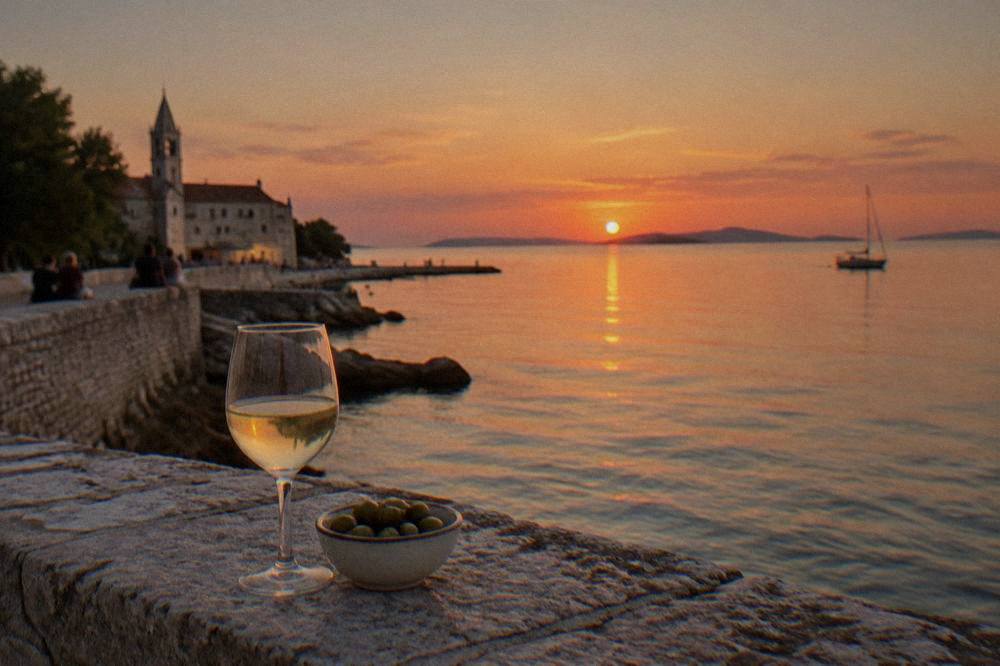
The practical ordering advice is short. Ask for the house white in a konoba before asking for the wine list, because the house pour is often a small local producer whose bottles never leave the county. With grilled fish, white; with peka and lamb, a plavac red; with Pag cheese, either, which is the one pairing argument the region has never settled. The food and wine answers page collects the shorter version of all this in question form.
The tasting vocabulary that helps on any menu:
| Term | Meaning |
|---|---|
| Konoba | Traditional tavern, fish-led, usually family run |
| Riblji meni | Fish menu, often by the day's catch |
| Na žaru | Grilled |
| Pod pekom | Cooked under the ember-covered bell |
| Domaće | House, homemade or local |
| Malo vino | A small carafe of wine, the flexible local measure |
| Račun, molim | The bill, please |
Common Questions About Eating In Zadar
What food is Zadar known for?
Grilled Adriatic fish, crni rižot (black cuttlefish risotto), bakalar (salted cod), Pag sheep cheese, pršut, peka baked under embers, and maraschino, the cherry liqueur historically tied to the city. The dedicated answers page covers the list in detail.
Is Zadar good for food tours?
Yes. Several guided walks pair the Old Town's sights with tastings of local wine, cheese and ham, and gastro walks run most of the year. Check the operator's live listing for inclusions, price and current schedule.
What is maraschino?
A dry cherry liqueur made from marasca cherries and their crushed stones, historically distilled in Zadar. It is drunk neat as a digestif, in cocktails, or poured over dessert.
Where do locals eat in Zadar?
Mostly in the konobas one street back from the harbour front and the picture-menu strip, and at the green market for produce, cheese and fish. The restaurant guide maps the neighbourhoods.
Is there a dress code in Zadar restaurants?
Restaurants set their own norms, but since summer 2026 the Old Town itself posts signs requiring appropriate clothing, no swimwear or nudity, with fines up to 130 EUR after a warning. Evening wear is casual everywhere.
When is the best season for eating in Zadar?
Late spring for lamb and young cheese, summer for grilled fish and tomatoes, autumn for harvest dishes, squid and new olive oil, and winter for bakalar and the Advent stalls from 24 November 2026 to 2 January 2027.
The table in Zadar is the city's other attraction, and it costs less attention than the sunset does: a market in the morning, a walk with a glass in it, a konoba at night, and a maraschino on the Riva while the Sea Organ plays. Everything on this page sits within a peninsula that takes ten minutes to cross, which is exactly the right size for a food town.