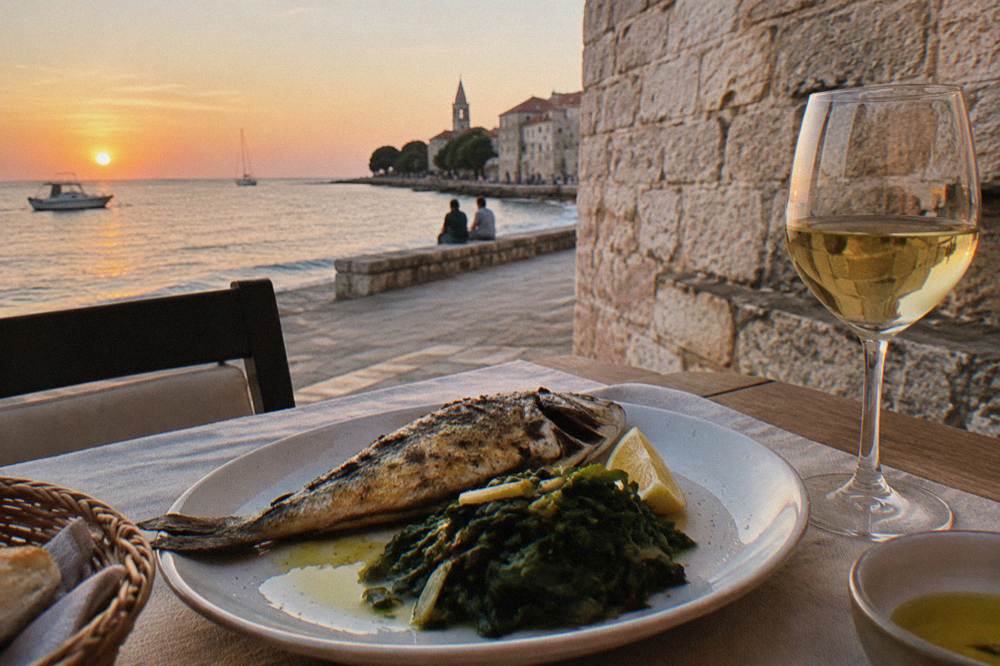
What Food Is Zadar Known For?
Zadar is known for Adriatic seafood, Pag cheese, maraschino liqueur and the Dalmatian ham-and-olive table. Here is what to eat, where to taste it and which tours cover it.
Zadar eats the way a small Adriatic port eats: the sea supplies the fish, the limestone pastures just across the water supply the cheese and lamb, and the city's distilleries supply a cherry liqueur that has travelled further than the town itself. The food story here is Dalmatian rather than ornate. Grilled fish, shellfish, air-dried ham, olive oil, sourdough and simple vegetables dominate, and the historic peninsula concentrates enough konobas, market stalls and tasting walks that the eating can be planned like any other part of the trip. This page sets out the short list, where each thing comes from and how to taste it, with the wider background in the Zadar food guide.
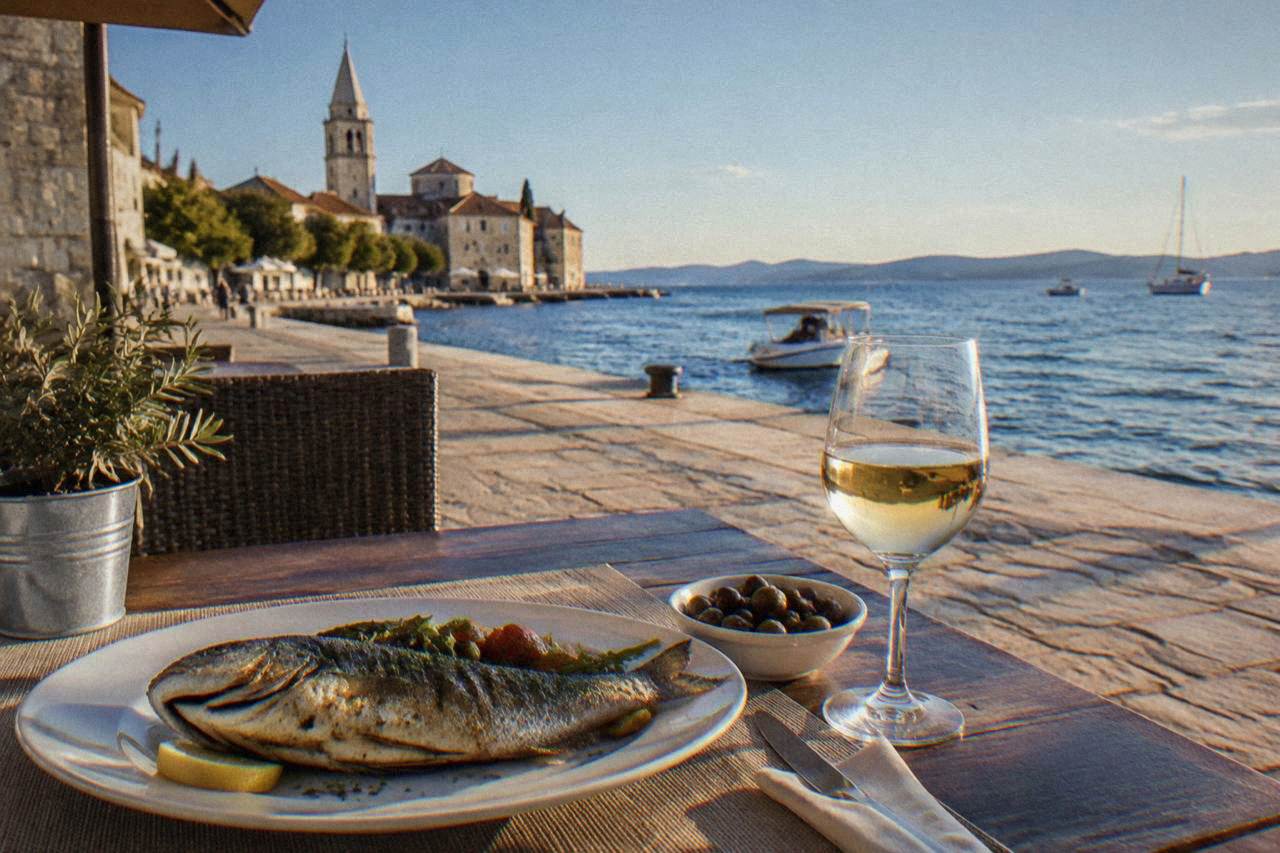
What Food Is Zadar Known For?
Zadar is known for Adriatic seafood grilled simply with olive oil, for lamb and cheese from the island of Pag across the channel, for pršut and olives from the Dalmatian hinterland, and above all for maraschino, the cherry liqueur that has carried the city's name around the world since the distilleries of the old port began shipping it abroad. Black risotto, grilled squid, brudet and fresh white fish anchor the restaurant menus, and Pag sheep cheese is the one item that appears on nearly every table in town.
Those are the headlines, and each has a reason it landed here. The sea on three sides of the peninsula means the fish on a Zadar plate is usually local and simply treated, grilled over embers with oil, parsley and lemon rather than sauced. Pag, the bare, wind-scoured island north of the city, gives the region its most distinctive dairy product: a hard, salty sheep cheese made from milk of flocks that graze on salt-carrying bora winds, and its lamb, which Dalmatians treat as a category of its own. Maraschino, distilled from marasca cherries, is the item with the city's name stamped on the bottle, and a tasting of it is built into at least one listed Old Town walk.
The olive oil deserves a place on the same list. Northern Dalmatia around Zadar and Šibenik is a productive olive region, and oil appears on Zadar tables the way butter appears further north, poured rather than dolloped. Beyond that, the standard Dalmatian repertoire applies: fresh bread, swiss chard and potato, pasticada with homemade pasta on festive menus, and fritule or kroštule in the sweet season.
Which Dishes And Drinks Define The Zadar Table?
The dishes that define eating in Zadar are grilled white fish and squid, black cuttlefish risotto, brudet fish stew, Pag lamb, Pag sheep cheese, pršut, olives and olive oil, and handmade pasta such as gnocchi with brudet sauce; the defining drink is maraschino, the Zadar cherry liqueur, alongside local red and white wines from the hinterland. Together they form a menu that changes with the catch and the season rather than with fashion.
The through-line is restraint. Dalmatian cooking treats good ingredients as finished products: fish is graded by the piece and priced by the kilo, grilled and served with nothing but oil and lemon, and the konoba, the traditional tavern, is still the default setting for dinner. The city's green and fish markets on the peninsula supply the raw end of the same chain, and the stalls are where the restaurant menus begin their day.
For orientation, the short table below maps each food to what it is and where its centre of gravity sits.
| Food or drink | What it is | Where it comes from |
|---|---|---|
| Pag sheep cheese (Paški sir) | Hard, salty cheese from sheep milk | Pag island, directly north of Zadar |
| Pag lamb | Milk-fed lamb, simply roasted | Pag island flocks |
| Maraschino | Cherry liqueur distilled from marasca cherries | Zadar's own distilleries |
| Grilled fish and squid | Whole fish and calamari over embers | The Adriatic around the city |
| Black risotto | Cuttlefish risotto coloured with its ink | Standard Dalmatian coast dish |
| Brudet | Fish stew with tomato and wine | Coastal home cooking |
| Pršut and olives | Air-dried ham and salted olives | Dalmatian hinterland |
Maraschino earns its separate paragraph because it is the one item that is unambiguously Zadar's own rather than the region's. The liqueur's history runs through the city's distilling families, and the bottle became an export that carried the name of Zadar into European courts and cocktail books. Today an Old Town walk with a maraschino tasting is a listed product on its own, a sign of how tightly the drink is bound to the city's identity; the listing says the tasting is part of a guided walk of the peninsula.
Where Do You Taste These Foods In Zadar?
The tastings cluster in three places: the market and konobas of the Old Town peninsula, the dedicated food-and-wine walks that run through it, and the boat trips that pair swimming stops with local wine and olive-oil tastings on the islands offshore. The Museum of Ancient Glass, for context, charges 7.00 EUR for an adult ticket, and several guided tasting products cover the Old Town's food stalls, so eating well and sightseeing can share one itinerary.
Inside the city, the practical route is to start at the green and fish markets on the peninsula, where the catch and the produce set the day's menu, then move to a konoba for the cooked version of the same ingredients. The listed walking tours formalise this. One Old Town walk is sponsored by Gligora, the Pag dairy, and builds a cheese tasting into the route; another walks the peninsula through food, wine and history; a third pairs the highlights, including the Sea Organ, with local tastings. The listings describe what each covers, and current prices and ratings sit on the live listings rather than on this page.
On the water, several boat products make food part of the trip. A traditional boat tour runs with unlimited wine and three stops, a speedboat tour includes organic food, oil and wine tasting, and the luxury island trips combine snorkeling with wine service on board. These overlap with the sightseeing they bundle, so the choice is really between a walking tasting in town and a floating one.
The first selection below pulls together the three tours this site features alongside the food theme.
Can You Plan A Food-Focused Day Around Zadar?
A food-focused day in Zadar works best as a morning at the peninsula's markets, a walking tour with tastings around midday, an afternoon on the water with wine included, and a konoba dinner finishing with maraschino; the city is compact enough that all four fit between the Sea Organ at one end and the Land Gate at the other without transport beyond your feet.
The peninsula makes this possible. Zadar's Old Town is a walkable spine, and the questions visitors ask about the city's size and pacing, such as how many days in Zadar is enough, usually resolve in favour of two or three, with food filling the evenings of each. The broader case for the city as a base is covered in what Zadar is famous for, where the food sits alongside the Sea Organ, the Greeting to the Sun and the UNESCO-listed defences.
For visitors who want the food and the landscape in one trip, the standard pattern is a day of eating in town, a day on or beside the sea, and a day inland at the national parks. The Plitvice day trip from Zadar is the biggest single draw of that third kind, and a guided version with the park's boat and train rides included runs from the city; read more on the Plitvice Lakes tour page or Check availability for live dates.
Which Season Eats Best In Zadar?
Late spring through early autumn eats best in Zadar, when the fish markets run fullest, the Advent season from late November compensates with its own food stalls, and the weather supports both the market mornings and the boat-based tastings; by the numbers, July is the warmest month at a 24.5 C mean and November the wettest at 123 mm of rain, Zadar station, 1961-2024, so the outdoor food calendar follows that curve.
The seasonal logic matters more here than in inland cities because so much of the eating happens outdoors: riva tables, market stalls, wine on deck. Summer brings the full boat-tour season and the heaviest grill menus, while the shoulder months trade crowds for cooler walking weather. From 24 November 2026 to 2 January 2027, Zadar Advent takes over the peninsula with concerts, a new ice rink on the Forum and the festive stalls that go with them, and the Christmas Run on 27 December 2026 sits inside that window.
Winter eating shifts indoors to the konobas, and that is when the heavy Dalmatian dishes, pasticada, braised meats and the lamb, do their work. The question of the best time to visit Zadar covers the trade-offs in more detail.
Common Questions About Food In Zadar
What food is Zadar known for?
Grilled Adriatic fish and squid, black risotto, brudet, Pag sheep cheese and lamb, pršut, olives and olive oil, and maraschino, the cherry liqueur distilled in the city itself.
Where can I taste Pag cheese in Zadar?
Several Old Town walking tours include Pag cheese tastings, one of them sponsored by the Gligora dairy; the markets and konobas of the peninsula also stock it. Check the current listings for dates and prices.
What is maraschino?
A cherry liqueur distilled from marasca cherries, historically produced by Zadar's distilleries and exported under the city's name. A guided Old Town walk with a maraschino tasting is among the listed products in town.
Are food tours in Zadar worth it?
They are a practical way to cover the market, the stalls and the tastings in one guided loop, with listings covering cheese, wine, maraschino and full meals. Prices, ratings and durations are on the live listings, and free cancellation terms are usually shown there too.
Is Zadar expensive for food?
Eating in Zadar spans cheap market bread and produce up to whole-fish restaurant dinners priced by the kilo, so the budget is set by the table rather than the town. Croatia uses the euro, and a tourist tax collected by accommodation is confirmed at booking.
The eating in Zadar rewards the same approach as the sightseeing: start on the peninsula, follow the market, and let the sea decide the rest. For everything beyond the table, the things to do in Zadar round-up carries the full picture, and the Zadar Croatia Travel Guide holds the deeper pages on every dish's home island.