What Is The Best Time To Visit Zadar?
Month-by-month guidance on the best time to visit Zadar, from DHMZ station climate data and park seasonal pricing to crowds, sea swimming and Advent.
Zadar, a coastal city in Dalmatia on the Adriatic, has two sweet spots in the calendar: late May and June, and September into early October. Both sit outside the July and August peak, both carry mean temperatures between roughly 18 and 24 C at the Zadar station (1961-2024 record), and the autumn window comes with a further advantage, because the national park price lists step down from 1 October. This page lays out what the station data, the park tariffs and the events calendar say, so the choice can rest on figures rather than on impressions. The Zadar Croatia Travel Guide editorial desk reports only what the primary sources state.
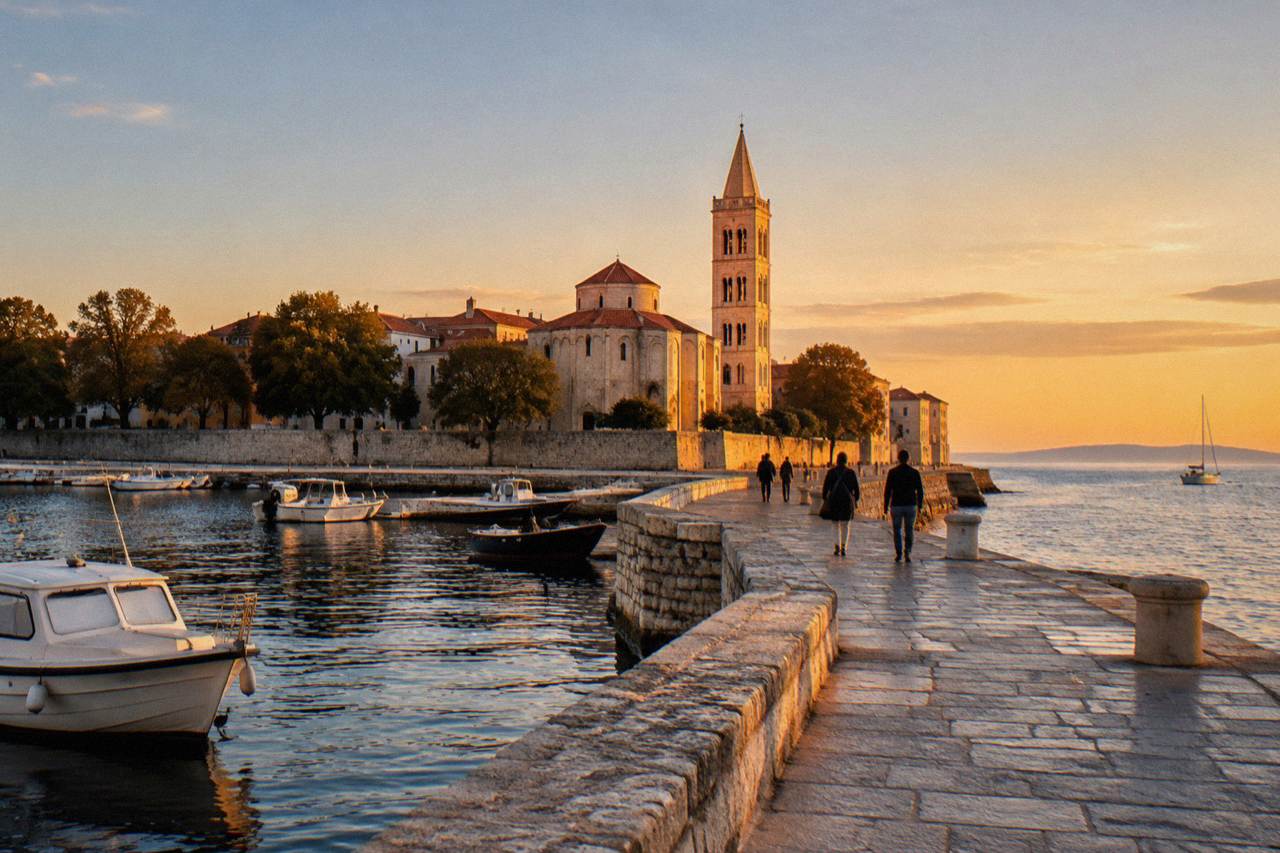
What Is The Best Time To Visit Zadar?
The best time to visit Zadar is late May to June or September to early October, when mean temperatures sit between roughly 18 and 24 C, rainfall stays under the November peak of 123 mm, and the summer crowds on the Poluotok peninsula have thinned. From 1 October the Krka and Plitvice entrance tariffs also drop, and the sea remains warm enough for swimming well into the autumn.
July and August are not wrong, they are simply the compressed peak. The station record shows July means of 24.5 C and about 10 days at or above 30 C in each of July and August, with July also the driest month at 35.4 mm. That combination pulls the season's crowds onto a narrow peninsula, and the city's dress-code signs and noise rules from 2026 exist precisely because of that compression. Anyone whose dates are fixed to the school holidays should plan around the peak rather than against it: early morning for the Roman Forum and the Kalelarga, evening for the Sea Organ and the Riva.
The shoulder months trade a few degrees of warmth for lower pressure on everything else. September still averages 20.2 C, October 16.3 C, and the rainfall figures, 110.9 mm and 106.8 mm respectively, are real but concentrated in fewer rain days than November's twelve. The DHMZ live sea reading stood at 21.3 C at Zadar on 11 October 2026, which is the only kind of sea-temperature figure this site prints: a live official reading, not a monthly normal. For the fuller month-by-month treatment, see the best time to visit Zadar guide.
What Does The Zadar Climate Data Say Month By Month?
The Zadar station record (1961-2024) shows July as the warmest month at a 24.5 C mean and January the coldest at 7.3 C, with July also the driest at 35.4 mm of rain and November the wettest at 123.0 mm. Sunshine totals about 2,600 hours a year across the whole record.
| Month | Mean temp (C) | Rainfall (mm) | Rain days |
|---|---|---|---|
| Jan | 7.3 | 76.4 | 10 |
| Feb | 7.8 | 67.0 | 9 |
| Mar | 10.0 | 66.3 | 9 |
| Apr | 13.4 | 61.4 | 10 |
| May | 17.9 | 64.4 | 10 |
| Jun | 21.9 | 48.5 | 8 |
| Jul | 24.5 | 35.4 | 5 |
| Aug | 24.1 | 52.8 | 6 |
| Sep | 20.2 | 110.9 | 9 |
| Oct | 16.3 | 106.8 | 9 |
| Nov | 12.1 | 123.0 | 12 |
| Dec | 8.6 | 99.6 | 12 |
Two patterns in that table shape the whole answer. First, the rainfall curve is not gentle: it jumps from 52.8 mm in August to 110.9 mm in September, so September's warmth comes with a genuine chance of a wet day. Second, the rain-day counts matter more than the totals in a city built around walking a peninsula and watching sunsets. November's twelve rain days and 123 mm make it the least reliable month of the year for an outdoor itinerary.
The wind also has a seasonal signature. The bora, a cold, dry, gusty north-easterly, belongs mainly to the winter half of the year, while the jugo, a warm, humid south-easterly, brings grey, damp spells. Neither is a reason to cancel a trip, but the bora can cut sharply into a January or February stroll along the Riva, and boat trips are the first thing a strong wind reschedules.
How Crowded And Expensive Is Zadar In July And August?
July and August are the peak: the station record shows the year's warmest, driest weather, but also the season's highest accommodation demand, the 40 EUR summer entrance tariff at Krka and Plitvice, and the thinnest space on the peninsula, the boats and the Riva. Late June and late August edges soften each of those pressures slightly.
The price signal is easiest to document. Both major national parks charge their top adult rate only from June to September: Krka at 40 EUR and Plitvice at 40 EUR before about 16:00, against 20 to 23 EUR in the shoulder months and 7 to 10 EUR in deepest winter. Kornati charges per vessel by length and season, again peaking June to September. Telašćica's land entrance rises from 6 EUR to 8 EUR for the same window. A two-week shift in dates can cut the park bill for a family by half.
What can be said is structural: the Old Town sits on a narrow peninsula with a limited number of streets, the 2026 rules on dress and on night-time retail alcohol in the historic core were introduced in response to peak-season pressure, and the boats leave from a small number of city berths. Booking ahead matters in the peak; in October it matters far less. On how much time to allow overall, the how many days in Zadar answer covers it.
Is Spring Or Autumn Better For A Zadar Trip?
Autumn edges spring on price and sea temperature, spring edges autumn on rainfall: September and October bring the October park-price drop and a sea still holding warmth, while April and May bring the year's most reliable dry, mild stretch before the summer tariffs start in June. May, at a 17.9 C mean with 64.4 mm of rain, is the standout spring month.
April's 13.4 C mean is jacket weather in the evening, but the rain-day count, ten, matches May's, and the crowds have not arrived. The sea in April is genuinely cold for swimming, and this site prints no monthly sea normal, so the honest line is to check the live DHMZ reading close to travel. By late May the balance shifts: warm afternoons, the islands of Ugljan and Dugi Otok fully reachable, and the ferry and boat season running.
September is the mirror image with one extra card: from the first of October the park tariffs drop, and September itself still averages 20.2 C. The trade is the rainfall step-up, 110.9 mm over nine rain days. An October visit at 16.3 C mean is a walking-and-sunset trip rather than a beach trip, but it is also the month when Plitvice costs 23 EUR and Krka 20 EUR, and when the peninsula breathes again. For sea swimming specifically, the can you swim in the sea in Zadar answer goes through the season in detail.
A panoramic loop of the city is one of the formats that works across both shoulders, since it does not depend on sea temperature. The panoramic cabrio bus tour covers the peninsula and the viewpoints from open seating, and its live listing carries the current price and calendar.
What Is Zadar Like In Winter?
Winter in Zadar is mild rather than warm, with January means of 7.3 C and December's at 8.6 C, and the year's wettest months, November at 123.0 mm and December at 99.6 mm, plus the bora wind, but the city runs a full Advent programme from 24 November 2026 to 2 January 2027 with a new ice rink on the Forum.
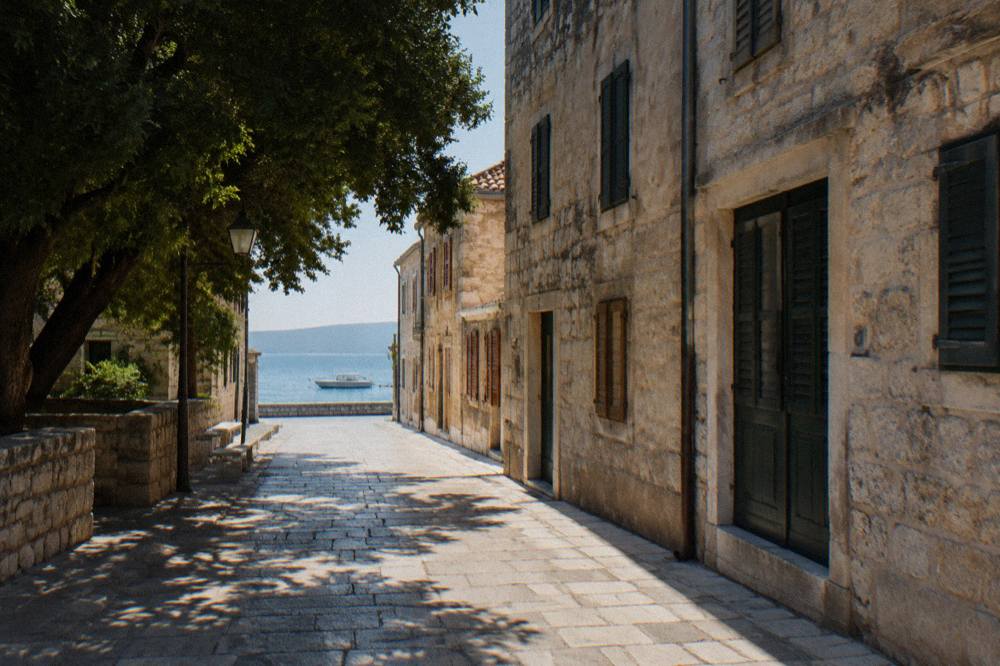
The Advent programme is the reason to pick December over November. Alongside the rink on the Roman Forum, the 2026 edition spans three locations with concerts and daily programmes, and the Zadar Christmas Run falls on 27 December 2026. The Sea Organ and the Greeting to the Sun are free, open installations that work in any month, which is why the what time is the light show in Zadar question comes up even in winter; the honest answer there is that no start time is published, so the advice is to be in place for the sunset itself.
Winter is also the cheapest park season of the year. Krka's adult tariff falls to 7 EUR in January, February, March, November and December, Plitvice to 10 EUR in the same months, and Paklenica to 5 EUR. The trade-offs are real: shorter days, twelve rain days in each of November and December, and the possibility of a bora gust that closes boat lines. Some smaller operators and island services pause entirely, so confirm locally before locking a winter island itinerary.
Which Season Suits Boat Trips And Day Trips From Zadar?
Boat trips and island day trips run to the summer season, roughly June to September, when the sea is warm and the Kornati and Telašćica boat tariffs are at their peak; the guided boat formats that include wine, food or snorkelling stops cluster in that window, while land day trips to Krka, Plitvice and Paklenica work in every season at seasonal prices.
The pattern comes straight from the operators' calendars and the park tariffs. The Kornati entry is charged per vessel, by length, with the higher summer rate applying June to September, and the Telašćica land entrance follows the same shape. Anything that swims, snorkels or anchors for lunch effectively belongs to the warm half of the year. Speedboat and traditional-boat formats from the Zadar berths fill that window, and their listings carry the live calendar.
The land parks do not. Krka is 91 km and about 73 minutes of driving from the Old Town, Plitvice 145 km, and both are reachable year-round by guided tour or own car, with the winter tariffs as the quiet bonus. One rule to carry into any Krka plan: swimming at Skradinski Buk has been banned since 2021, and swimming is allowed only at designated spots such as Roški slap, Stinice and Pisak, from 1 June to 30 September. Kayaking on the Zrmanja and the interior trails of Paklenica likewise favor the warmer months, when the rivers are full and the hiking temperatures are reasonable.
Common Questions About The Best Time To Visit Zadar
What is the best time to visit Zadar?
Late May to June, and September to early October. The station record puts those months between roughly 18 and 24 C means, the summer peak crowds are absent or easing, and from 1 October the Krka and Plitvice tariffs drop.
Is Zadar too hot in August?
The August mean is 24.1 C with about 10 days at or above 30 C, and the record high is 39.0 C from 6 August 2022. It is warm but coastal, and the sea and the evening Riva are the standard relief.
What is the rainiest month in Zadar?
November, at 123.0 mm over about twelve rain days in the Zadar station record (1961-2024). July is the driest at 35.4 mm over five rain days.
Is Zadar worth visiting in winter?
Yes, for Advent: the programme runs 24 November 2026 to 2 January 2027 with an ice rink on the Forum and a Christmas run on 27 December, and the national parks charge their lowest tariffs. Pack for 7 to 9 C means and the bora wind.
When do park prices drop near Zadar?
From 1 October. Krka steps from its 40 EUR summer tariff to 20 EUR in October and 7 EUR in the later winter months; Plitvice goes to 23 EUR in October and 10 EUR from November.
The short version: pick June or September for the balanced trip, July and August for full heat and full season, October for prices and walking, and December for Advent. Whatever the month, the sunset on the Riva costs nothing, and that part of Zadar keeps no calendar.
