Where To Stay In Zadar
Zadar, a coastal city in Dalmatia on the Adriatic, splits its sleeping options between the walled Old Town peninsula and the mainland beach suburbs. This guide compares every area with verified transport, climate and fee facts.
Short answer
Stay on the Old Town peninsula (Poluotok) for walkable sightseeing and sunsets, in Borik or Puntamika for beaches and resorts, in Diklo for quiet family stays, in Arbanasi for local life across the bay, or near Kolovare for beach access close to the centre.
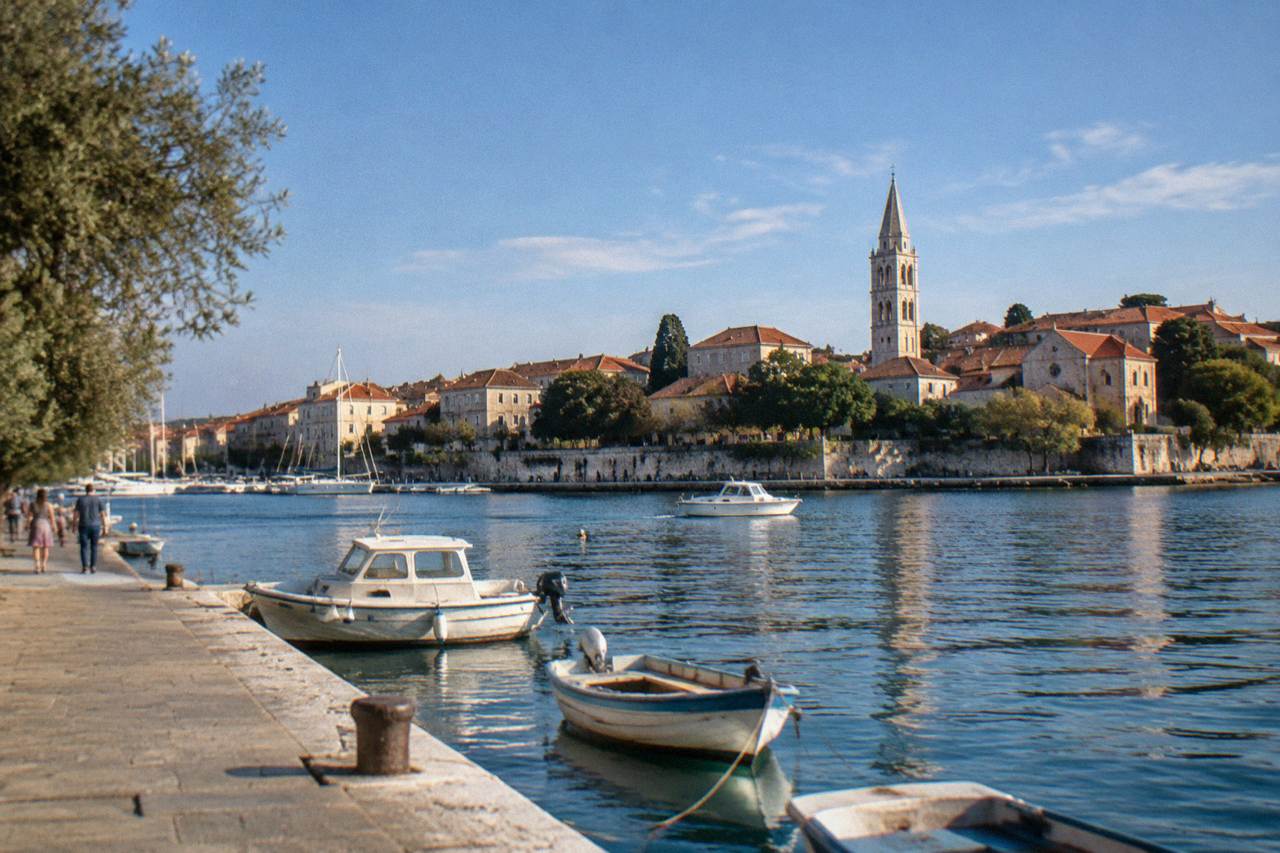
Zadar, a coastal city in Dalmatia on the Adriatic Sea, keeps its historic heart on a narrow peninsula called Poluotok, and spreads outward into beach suburbs that run along the mainland shore. Where you sleep changes the shape of the whole trip: a stay inside the walls puts the Roman Forum, the Sea Organ and the evening crowds on your doorstep, while a stay in Borik or Diklo trades that for sand, sea and a bus ride into town. This guide from the Zadar Croatia Travel Guide editorial desk compares each area using what the primary sources actually say, from the airport's own distance figures to the DHMZ station record.
Which Part Of Zadar Should You Stay In?
The choice in Zadar comes down to five areas: the Old Town peninsula (Poluotok) for walkable history and sunsets, Borik and Puntamika to the northwest for resort beaches, Diklo further out for quiet family stays, Arbanasi across the bay for a local residential feel, and Kolovare southeast of the centre for a beach within walking distance of the walls. Each area trades convenience against space, price and noise in a different way.
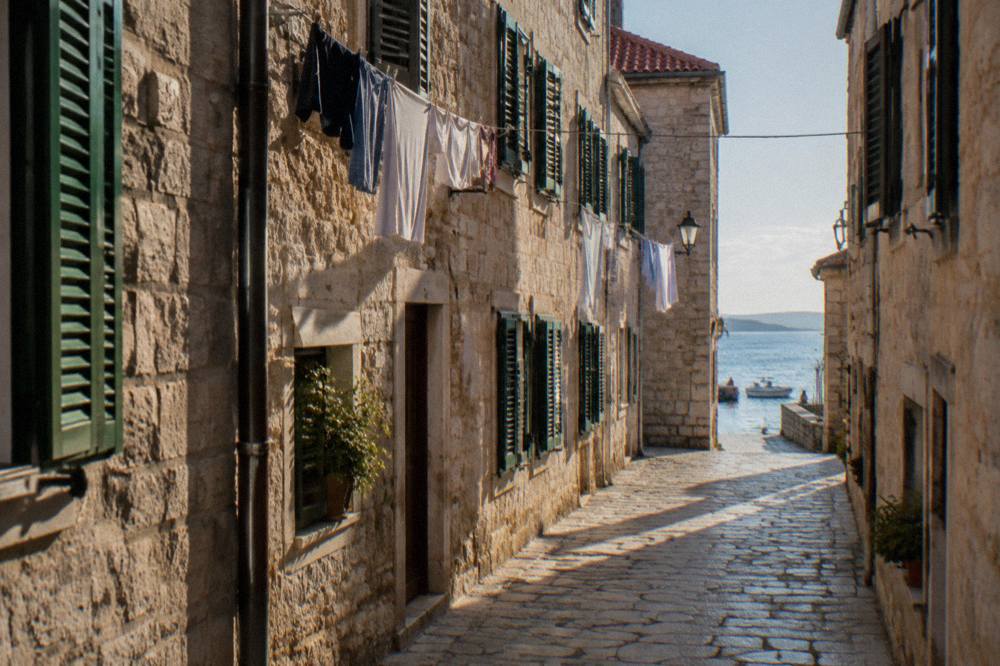
The peninsula is small enough that an address anywhere on it reaches every major sight on foot. That concentration is its strength and its drawback: summer evenings bring the crowds that the narrow streets were never designed to hold, and the city has responded with new rules. Dress-code signs posted at the key access points in summer 2026 require appropriate clothing, with no swimwear, and the local press reports fines of up to 130 EUR after a verbal warning. The municipality also signalled its intent to restrict night-time retail alcohol sales in the Old Town for the 2026 season, a change reported in local coverage of the national law that allows it. Bars and restaurants are not covered.
A stay outside the peninsula reverses the equation. Borik, Puntamika and Diklo line the coast to the northwest, Kolovare sits a short walk southeast of the walls, and Arbanasi lies across the bay to the east. All of them put you near water and away from the late-night noise, at the price of a bus or a longer walk into the historic core.
| Area | Character | Best for | Trade-off |
|---|---|---|---|
| Old Town (Poluotok) | Walled historic peninsula | Sightseeing, sunsets, restaurants | Summer crowds, noise, no beaches |
| Borik | Resort strip northwest of centre | Beach holidays, families | Bus ride to sights |
| Puntamika | Quiet end of the same coast | Beaches, calm | Furthest from the centre of the beach areas |
| Diklo | Residential coastal suburb | Long quiet stays, self-catering | Bus or car needed for everything |
| Arbanasi | Residential area across the bay | Local life, space | Bus ride around the bay |
| Kolovare | Beachside southeast of the walls | Beach plus walkable centre | Limited Old Town atmosphere |
For a deeper look at the question from the reader's side, the site's own answer page on the best part of Zadar to stay in works through the same trade-offs in question form.
Is The Zadar Old Town The Best Place To Stay?
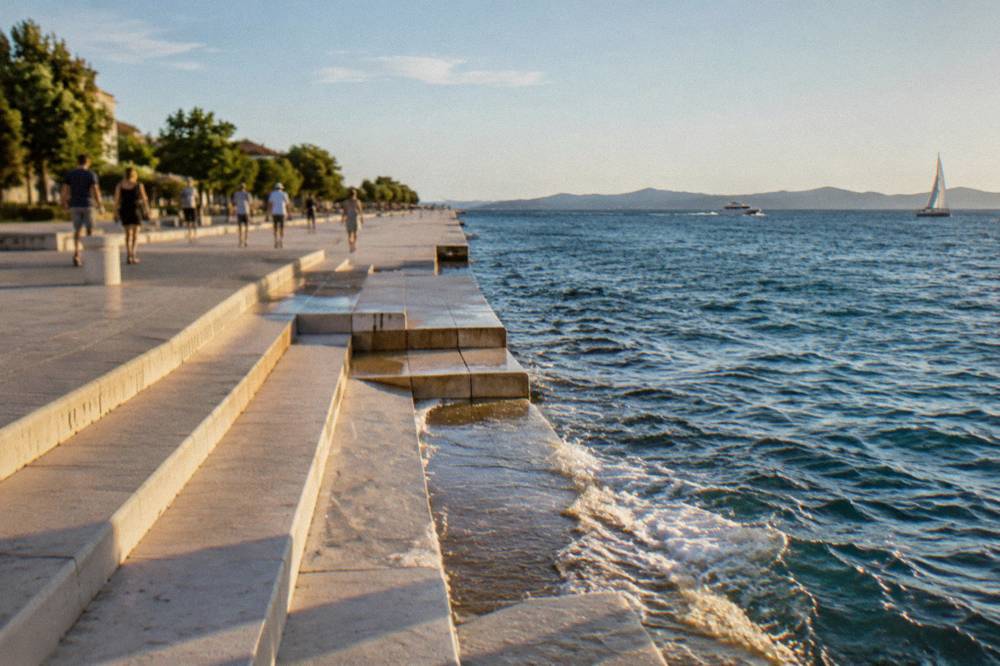
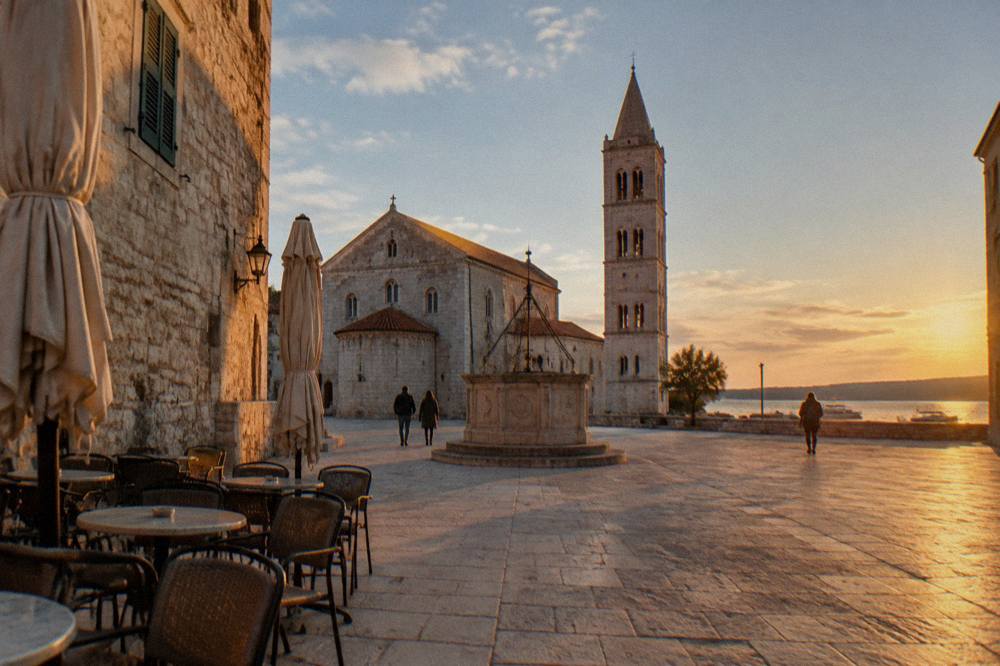
For a first visit of one to three nights, the Old Town peninsula is the strongest base in Zadar: the Roman Forum, Kalelarga, the Land Gate of 1543, the Sea Organ of 2005 and the Greeting to the Sun of 2008 are all within a few minutes on foot, and the evening sunset from the western quay is the reason many people come at all. The cost of that convenience is summer crowding, thinner beach access and a dress code now signposted at the entrances.
The peninsula's sights are free and open. The city's own pages describe the Sea Organ and the Greeting to the Sun, both by architect Nikola Bašić, as free public installations open at all hours. Zadar is also one of six components of the UNESCO Venetian defence property, inscribed in 2017, though the Old Town as a whole is not itself a World Heritage Site. Staying inside the walls means all of this sits outside the door.
Two practical caveats come from 2026 reporting. St Donatus Church faces a roof restoration: a public tender was launched at the end of August 2026 for a full replacement of the wooden roof structure, with works planned from autumn 2026 for about six months, and reporting says group visits are suspended during the works while individual access depends on the phase. Check before planning a visit. And the Museum of Ancient Glass, a short walk away, lists its adult ticket at 7.00 EUR on its own price page, but its opening hours conflict between sources, so confirm them on the museum's hours page before going.
The peninsula is genuinely walkable, and the site's one day in Zadar and how many days in Zadar guides both assume no car inside the walls. Nobody needs one there.
| Old Town sight | Status | Cost |
|---|---|---|
| Sea Organ (2005, Nikola Bašić) | Free, open at all hours | 0 EUR |
| Greeting to the Sun (2008, Nikola Bašić) | Free, open at all hours | 0 EUR |
| Roman Forum | Free public site | 0 EUR |
| Land Gate (1543) | Free public site | 0 EUR |
| Museum of Ancient Glass | Ticketed museum | 7.00 EUR adult |
| Archaeological Museum and St Donatus | Ticketed, AMZD tariff | Around 7 EUR full price |
Where To Stay In Zadar For Beaches And Swimming?
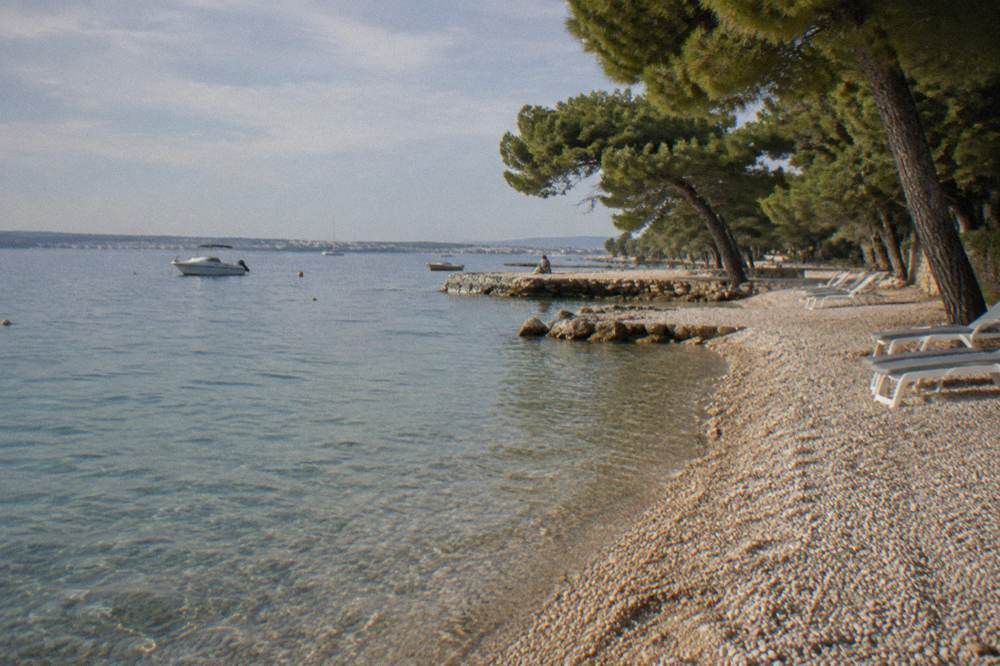
For a beach-centred stay, Borik and Puntamika to the northwest and Kolovare to the southeast are the areas to look at: Kolovare beach sits within walking distance of the Old Town, while Borik and Puntamika offer the resort strip with more sand, more facilities and a bus ride into the centre. New county concession rules for the 2026 season forbid fencing and entry fees on concession beaches, so access stays public and free everywhere.
The concession rules matter for planning. Zadar County's assembly adopted decisions in April 2026 that keep beach access fully public and free, limit commercial sunbed operations to at most 40 to 60 percent of a beach's surface depending on the site, and leave the rest free for visitors with their own towels. No beach in the county can now charge for entry or fence itself off. The practical effect for a stay: a hotel beach strip in Borik and the public sand at Kolovare both cost the same to enter, which is nothing.
Kolovare is the compromise choice. The beach lies southeast of the peninsula, close enough that the Old Town's walls stay in walking range, which makes it the one area where a swim before breakfast and a museum after lunch both work without transport. The site's Zadar beaches guide covers each stretch of coast in detail, and the question of whether you can swim in the sea in Zadar has its own answer page.
Borik and Puntamika, further northwest, host the bulk of the resort stock. Diklo beyond them is quieter and more residential, better suited to longer self-catering stays than to a two-night sightseeing dash. For sea temperature, only an official live reading exists: the DHMZ marine feed showed 21.3 to 21.4 C at Zadar on 11 October 2026, and no monthly sea-temperature normal is published, so any month-by-month sea figure on another site is an estimate rather than a station record.
A stay near the water also opens the boat and kayak side of the region. The listing for the Dugi Otok half-day kayaking trip covers paddling off the island with an optional cave swim, and it can be booked at Check availability. For a shorter water outing that still leaves the afternoon free, the 4-stop island speedboat tour combines swim stops with wine, and the site's Zadar boat tours guide compares the whole category.
Where To Stay In Zadar For Day Trips And Island Hopping?
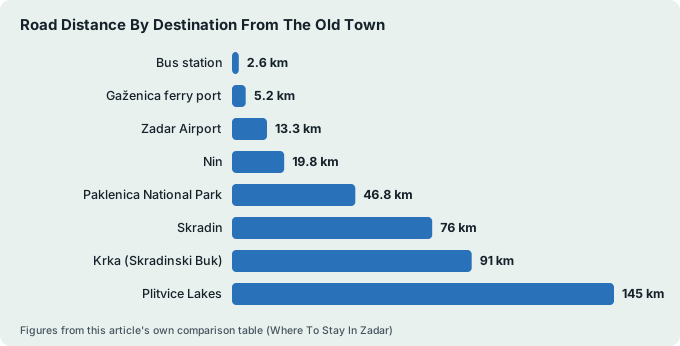
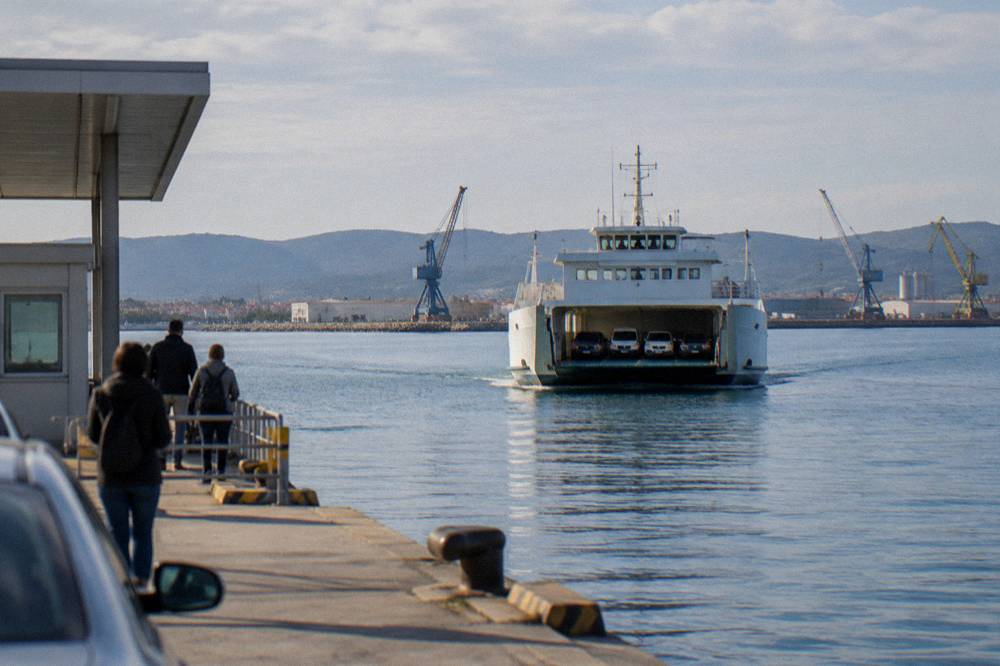
For day trips, the practical base is anywhere with fast access to the Gaženica ferry port and the bus station rather than the peninsula itself: Gaženica lies 5.2 km and about 10 minutes' drive from the Old Town, the bus station sits 2.6 km and about 6 minutes away, and the airport is about 13 km and 22 minutes by road. The islands of Ugljan and Dugi Otok, and the national parks at Krka, Plitvice and Paklenica, all start from these departure points.
The ferry geography decides this one. Jadrolinija's route page shows the Zadar (Gaženica) to Brbinj crossing on Dugi Otok taking 1 hour 40 minutes, and the crossing to Preko on Ugljan takes about 25 to 30 minutes, though no price for the Preko ferry could be verified. Staying on the peninsula means a drive or bus to Gaženica for every island sailing; staying in Arbanasi or along the southeastern side shortens the run to the port. The site's guides to Zadar ferry and Zadar islands cover the sailings in full.
The national park day trips run mostly by road. Computed driving times from the Old Town put Skradin at 76 km and about 62 minutes, the Krka waterfalls at 91 km and 73 minutes, Paklenica at 46.8 km and 57 minutes, Nin at 19.8 km and 28 minutes, and Plitvice at 145 km and about two and a half hours. A car makes all of these straightforward; without one, the guided day tours are the realistic route, and the Zadar day trips and Zadar national parks guides lay out the options.
| Destination from the Old Town | Road distance | Driving time |
|---|---|---|
| Bus station | 2.6 km | 6 min |
| Gaženica ferry port | 5.2 km | 10 min |
| Zadar Airport | 13.3 km | 22 min |
| Nin | 19.8 km | 28 min |
| Paklenica National Park | 46.8 km | 57 min |
| Skradin | 76 km | 62 min |
| Krka (Skradinski Buk) | 91 km | 73 min |
| Plitvice Lakes | 145 km | 153 min |
Park entry is seasonal and per person at Krka, Plitvice, Paklenica and Telašćica, but Kornati charges per vessel by length and season, with tickets bought outside the park. The 2026 price lists put Krka at 7, 20 or 40 EUR by season, Plitvice at 10, 23 or 40 EUR, Paklenica at 5, 8 or 10 EUR, and Telašćica at 6 or 8 EUR. Both Krka and Plitvice dropped to their winter-shoulder rates from 1 October 2026.
The kayak option deserves a mention here because it combines a day trip with a water experience. The Zrmanja River kayaking tour near Zadar and the Dugi Otok paddle both leave from points outside the peninsula, which is one more argument for a mainland base if water days dominate the plan.
Where To Stay In Zadar With A Car, Or Without One?
Without a car, the Old Town peninsula or Kolovare is the right base, because everything inside the walls is on foot and the beach sits in walking range; with a car, Arbanasi, Diklo or anywhere along the mainland shore works better, since parking on the peninsula is scarce and the driving distances to the parks, the ferry port and the airport all start from the mainland side.
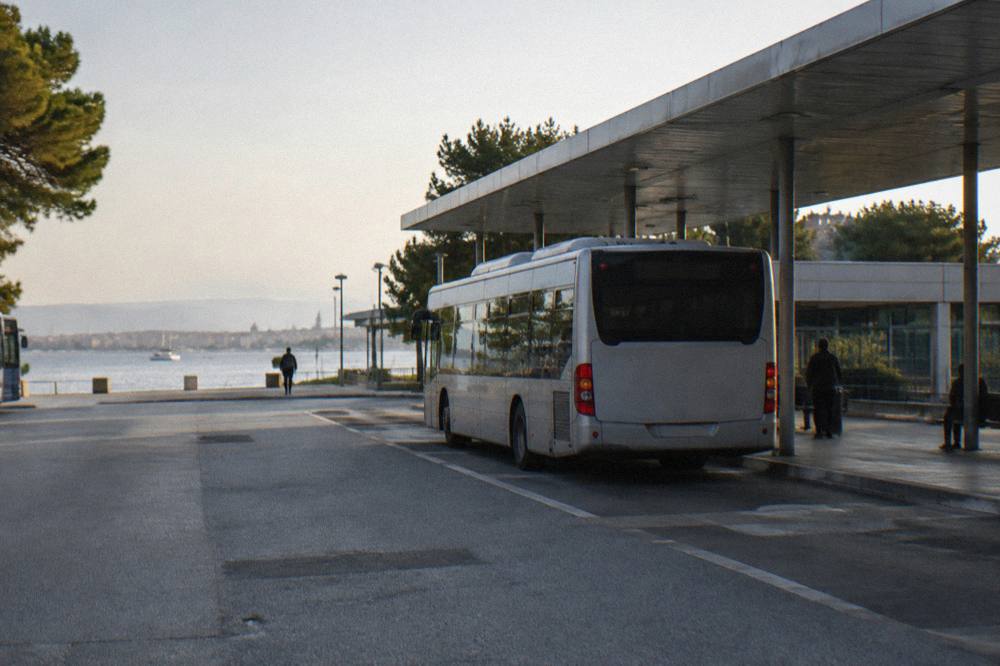
The airport connection frames the choice. The airport's own how-to-get-here page puts it about 8 km from the city, and its shuttle, run by operator Liburnija, costs 5.00 EUR one way including luggage, takes about 20 minutes to the Old Town, and the ticket stays valid 90 minutes on city buses. The route runs airport to Gaženica ferry port to the bus station to the Old Town. A traveller staying in Diklo or Arbanasi still reaches that shuttle at the bus station, so the car-free case is strongest for the peninsula and Kolovare, where the shuttle's final stop is the doorstep.
City buses cover the mainland suburbs, and one recent change matters for late returns: local reporting says the evening Poluotok-Arbanasi-Kolodvor departures at 21:00 and 22:00 were rerouted from 12 October 2026 because of recurring traffic problems in Arbanasi. Anyone staying in Arbanasi and relying on the late buses should check the current route. The site's Zadar public transport and Zadar parking guides carry the detail, and the Zadar airport to city centre guide covers the transfer end.
Parking tariffs are not printed on this site because the figures come from a newspaper report rather than an official tariff. What can be said is structural: the peninsula is largely pedestrianised, street parking there is limited, and the mainland areas are where a rental car is easy to keep. The Zadar airport car rental guide covers hiring at the terminal.
What Does It Cost To Stay In Zadar?
The honest answer is that this site prints no nightly hotel rate, because no verified rate source exists for Zadar lodging: what can be stated is that Croatia uses the euro since 1 January 2023, that a tourist tax exists and is collected by the accommodation with the amount confirmed at booking, and that no Zadar City Card price was found for 2026, so no card is described here. Every bookable product price on this page renders from the operator listings, not from this text.
The tourist tax is the item every booking flow raises and no guide should invent. This site says only that the tax exists, that the accommodation collects it, and that the amount appears when you book.
The figures cover the spending around the stay. Museum entry runs at 7.00 EUR adult at the Museum of Ancient Glass per its own price list, with 5.00 EUR for groups of five or more and 4.00 EUR for schoolchildren, and guided tours at 20 EUR in Croatian or 30 EUR in other languages. The Archaeological Museum and St Donatus sit on the AMZD tariff, around 7 EUR at full price. The Sea Organ, the Greeting to the Sun, the Forum and the Land Gate cost nothing. The Zadar cost guide assembles the full budget picture.
| Item | Price | Notes |
|---|---|---|
| Museum of Ancient Glass, adult | 7.00 EUR | Museum price list |
| Museum of Ancient Glass, group of 5+ | 5.00 EUR | Museum price list |
| Museum of Ancient Glass, schoolchildren | 4.00 EUR | Museum price list |
| Guided museum tour (Croatian) | 20 EUR | Museum price list |
| Guided museum tour (other languages) | 30 EUR | Museum price list |
| Sea Organ and Greeting to the Sun | Free | City pages |
| Tourist tax | Collected by accommodation, amount at booking | Check the amount when booking |
Eating out is covered separately on Zadar restaurants and Zadar food, and the food-and-walk side of the city is worth folding into a stay of two nights or more. The listing for the Zadar food tour with local dishes covers local dishes with city stories, and the Old Town food, wine and history walk does something similar inside the walls.
When Is The Best Time To Book A Stay In Zadar?
July and August are the warmest months at 24.5 and 24.1 C mean, July is the driest at 35.4 mm of rain, and November is the wettest at 123 mm, all from the Zadar station, 1961-2024, the DHMZ weather-station record: the shoulder months of May, June, September and October offer warm means of 17.9 to 21.9 and 20.2 C with fewer rain days than autumn, and summer stays should be booked early because the season concentrates demand.
The station table rewards a close read rather than a glance. September warms to a 20.2 C mean but carries 110.9 mm of rain across 9 rain days, while June hits 21.9 C on just 48.5 mm and 8 rain days, which makes June the statistically better bet of the two. October still averages 16.3 C. The site's best time to visit Zadar and Zadar weather guides carry the month-by-month detail.
| Month | Mean temperature (C) | Rainfall (mm) | Rain days |
|---|---|---|---|
| May | 17.9 | 64.4 | 10 |
| June | 21.9 | 48.5 | 8 |
| July | 24.5 | 35.4 | 5 |
| August | 24.1 | 52.8 | 6 |
| September | 20.2 | 110.9 | 9 |
| October | 16.3 | 106.8 | 9 |
| November | 12.1 | 123.0 | 12 |
A winter stay is a different product from a summer one, and the station record supports it: January averages 7.3 C with 76.4 mm of rain, and the city compensates with the Advent programme. The Zadar events and festivals guide tracks the calendar. Whatever the season, the emergency number in Croatia is 112, the country is a Schengen member, and the currency is the euro.
Common Questions About Staying In Zadar
Is it better to stay in Zadar Old Town or outside?
The Old Town wins for a short first visit because every major sight, the Sea Organ, the Forum and the restaurants sit on foot. Outside areas such as Borik, Diklo, Kolovare and Arbanasi win for beach access, space, quiet and easier parking, at the cost of a bus or walk into the centre.
Which Zadar area is closest to the beach?
Kolovare, southeast of the peninsula, is the area where the beach sits in walking range of the Old Town walls. Borik and Puntamika to the northwest hold the main resort beaches, and Diklo beyond them is the quietest coastal stretch.
Do I need a car to stay in Zadar?
Not for a stay based on the peninsula or Kolovare: the sights are walkable and the airport shuttle reaches the Old Town in about 20 minutes for 5.00 EUR. A car earns its keep for the national park day trips and island ferries, and the mainland areas are where keeping one is easiest.
How far is Zadar Airport from the city?
The airport's own how-to-get-here page gives about 8 km from the city; driving from the Old Town computes to about 13 km and 22 minutes. The Liburnija shuttle costs 5.00 EUR one way including luggage and the ticket stays valid 90 minutes on city buses.
Is there a tourist tax in Zadar?
Yes, a tourist tax exists and the accommodation collects it. Check the current rate with your accommodation at booking.
When should I book a Zadar stay?
Book early for July and August, when means reach 24.5 and 24.1 C and rain is at its lowest. June offers a 21.9 C mean on only 48.5 mm of rain, making it a strong shoulder choice, and the Advent programme from 24 November 2026 gives winter stays their own draw.
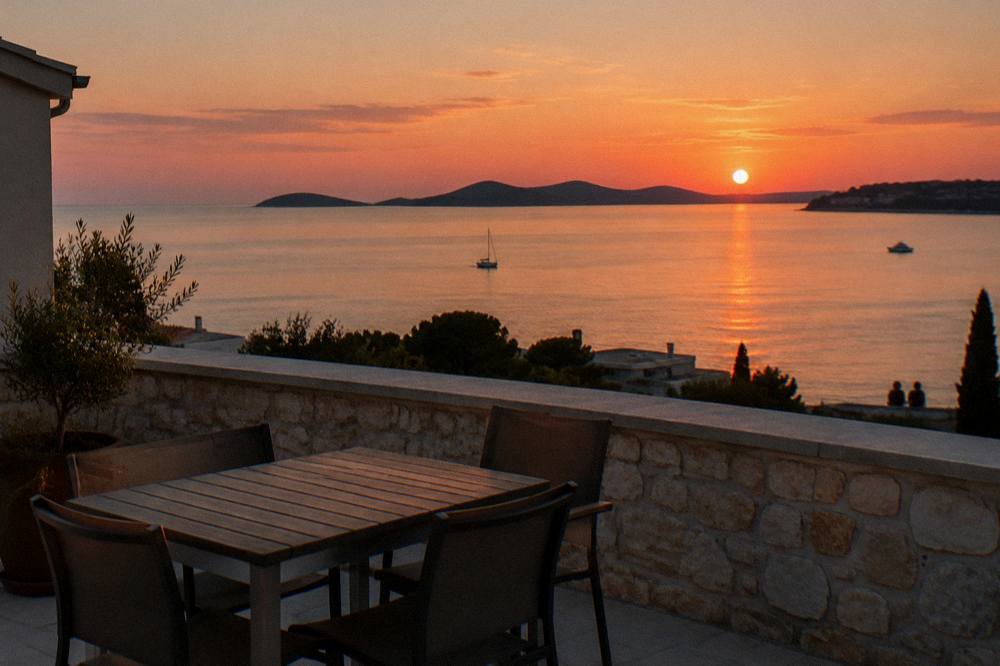
The short version: sleep inside the walls for a short, sightseeing-first visit; sleep in Kolovare to add a walkable beach; sleep in Borik, Puntamika or Diklo for a beach holiday; sleep in Arbanasi for space and local quiet. Every one of those choices works with the verified transport links, the station climate record and the 2026 rules described above, and the rest of the itinerary, from things to do in Zadar onward, can be built from any of them.