How Many Days In Zadar
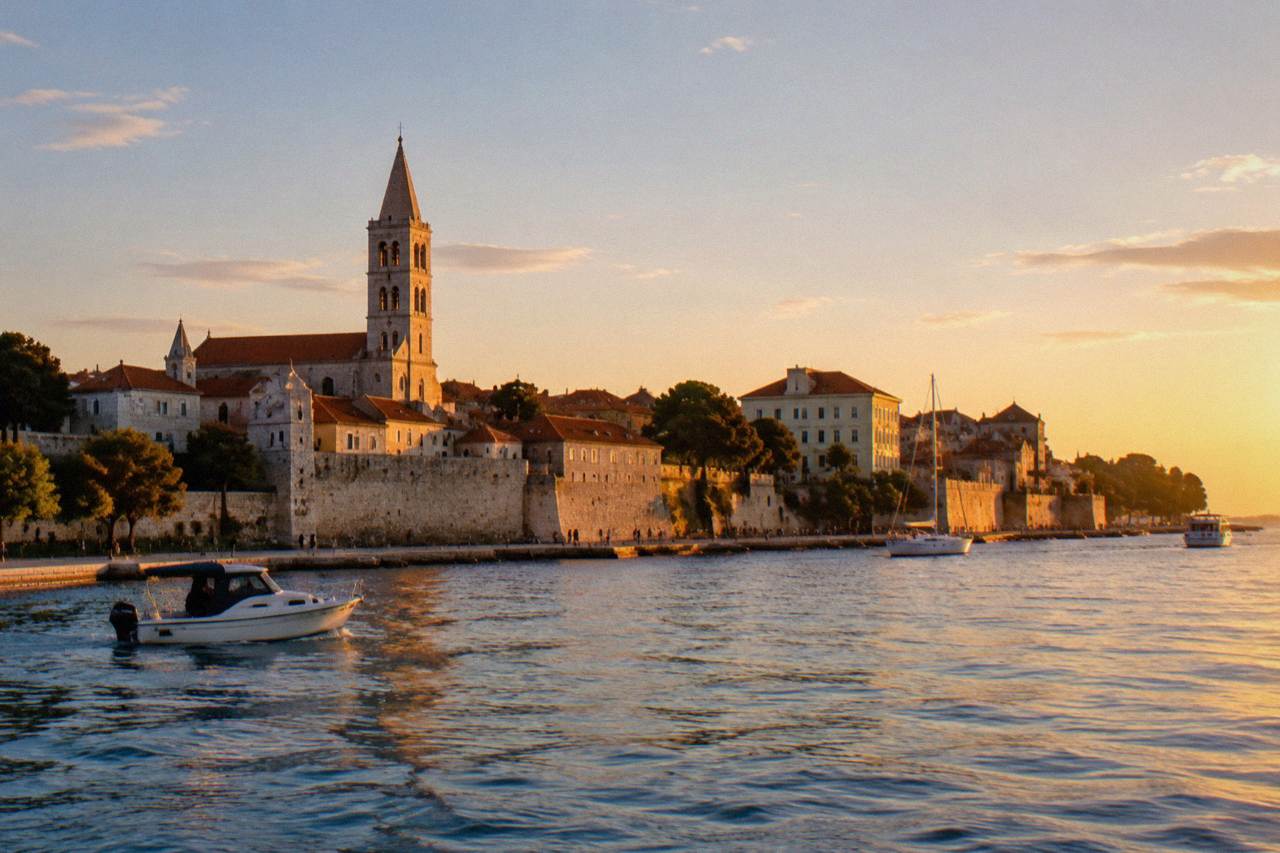
Zadar sits on a narrow peninsula on the Dalmatian coast, small enough to walk end to end and surrounded by islands and national parks that stretch any stay by a day at a time. Here is how the arithmetic actually works.
Short answer
Two days cover Zadar's Old Town, the Sea Organ and the nearest beaches. Three days add one island or park day trip. Four to five days let you combine Plitvice or Krka with the Kornati islands and still keep slow evenings on the riva.
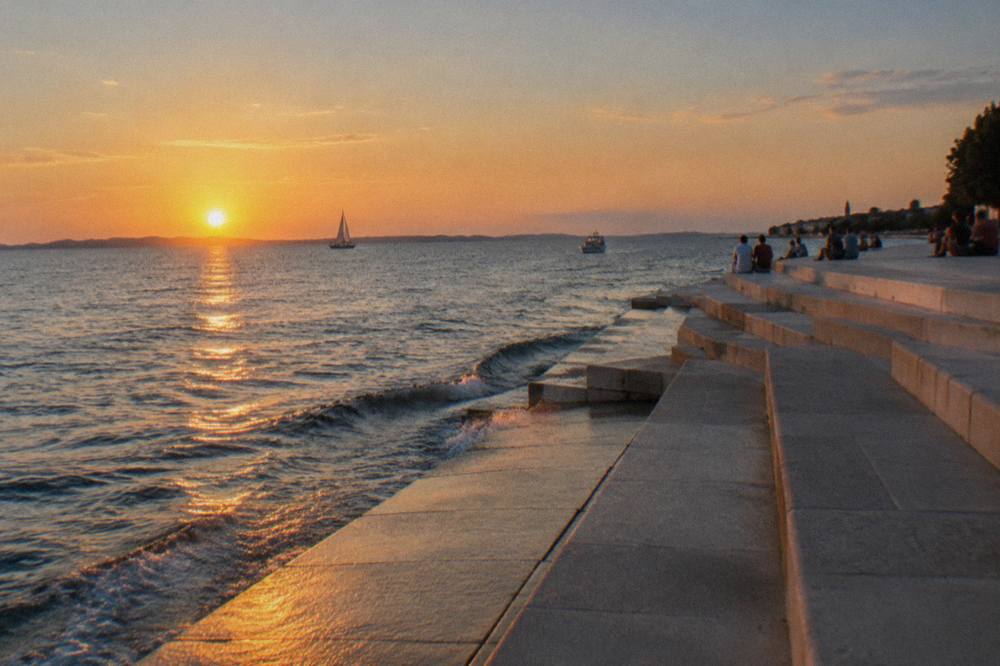
Zadar is a coastal city in Dalmatia, Croatia, built on a narrow peninsula that juts into the Adriatic, with the islands of Ugljan and Dugi Otok sitting offshore and the national parks of Krka, Plitvice, Paklenica and Kornati all reachable on a day trip. That geography is the whole answer to the length-of-stay question. The city itself is compact, the Old Town is a walkable cluster of Roman and medieval streets, and the Sea Organ and Greeting to the Sun, the two installations by Nikola Bašić from 2005 and 2008, sit free and open at the northwestern tip. What stretches a stay is everything on the horizon.
The honest arithmetic: one long day sees the peninsula, two days add beaches and a boat, three days absorb one big park, and four to five days let you string together two or more without rushing. The site's itinerary pages break this down day by day, starting with one day in Zadar and stretching to three days in Zadar and a four-day Zadar itinerary. This guide works through the decision itself, in the order a reader actually makes it.
How Many Days In Zadar Is Enough For A First Visit?
Two full days are enough for a first visit to Zadar itself: the Old Town peninsula, the Sea Organ, the Greeting to the Sun, the Roman Forum, the Land Gate of 1543 and the Cathedral of St Anastasia can all be walked in that window, with time for a swim and a slow evening on the riva. Anything shorter compresses the city, and anything longer only pays off if you spend the extra days on the islands and parks offshore.
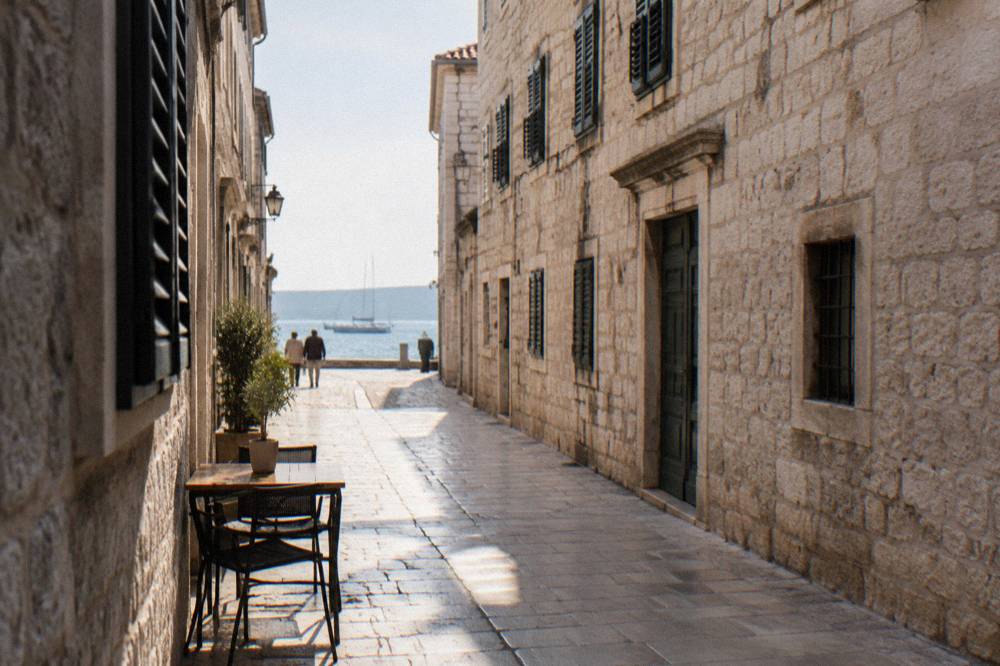
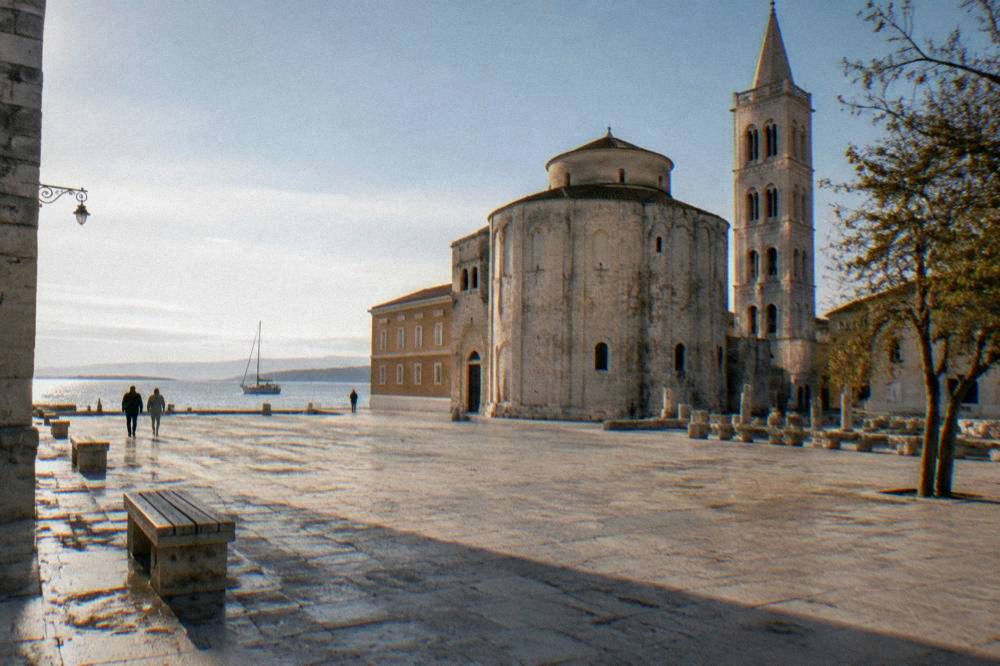
The peninsula, called Poluotok, is roughly a kilometre of streets. The Roman Forum, the Church of St Donatus, the Kalelarga main street and the Five Wells Square sit within a few minutes' walk of one another, and the Sea Organ and Greeting to the Sun line the same northwestern edge. A first-time visitor does not need transit time inside the Old Town; the distances are short.
Two days also absorb the things that need time rather than distance. The sunset over the Adriatic is the city's signature event, and it repeats nightly. The beaches at Kolovare, Puntamika and Borik sit close to the peninsula, so a swim does not require a dedicated expedition. A boat trip of a few hours, and the city's core is genuinely done.
The calculation changes the moment a day trip enters the plan. Krka National Park is about 91 km from Zadar by road to Skradinski Buk, and Plitvice Lakes about 145 km, so each of those is a full day out of the city. If the trip's purpose includes either park, the honest minimum becomes three days, and the answer to is Zadar worth visiting as a base rather than a stop is yes precisely because of those radiuses.
Is One Day In Zadar Too Short?
One day is not too short for Zadar's core, and a well-run single day covers the Old Town peninsula on foot: the Roman Forum, St Donatus, the Kalelarga, the Five Wells Square, the Land Gate, the riva and the Sea Organ at sunset, plus a museum such as the Museum of Ancient Glass at 7.00 EUR adult entry. It is too short for any island or national park, all of which demand a full day.
A single day works on a strict west-to-east line. Start at the peninsula tip: the Sea Organ and the Greeting to the Sun are free, open public installations, accessible at all hours. Walk inland past the Forum and St Donatus, up the Kalelarga, out to the Land Gate built in 1543 to Michele Sanmicheli's design, then back through the People's Square. The whole loop is a morning.
Two caveats apply in 2026 and 2027. St Donatus faces roof restoration: the public procurement record shows a tender launched at the end of August 2026 for a full roof sanation worth an estimated 1.3 million euros, with works planned from autumn 2026 over about six months and group visits suspended during the works, so access may be limited and should be checked before going. And the Archaeological Museum and St Donatus run on the AMZD tariff, whose page shows 7.00 EUR and 5.00 EUR rows, so budget around 7 EUR at full price rather than the "free or cheap" figure that circulates online.
Cruise passengers effectively live this one-day version, and the site's Zadar cruise port day page is built around it. Arriving by ferry from one of the islands works the same way: the Zadar ferry connections at Gaženica and Preko both land close enough to make a single afternoon count.
What Does A Two-Day Zadar Itinerary Cover?
Two days cover Zadar completely at a human pace: day one for the Old Town sights, the museums and the sunset at the Sea Organ, day two for a beach morning at Kolovare, Borik or Puntamika, an afternoon boat trip among the near islands, and an evening of food and maraschino in the old streets. Nothing inside the city is left over, and no internal transport is needed at any point.
The split works because the city divides cleanly by mood rather than by distance. Day one is stones and history. Day two is water: Zadar's beaches are a short hop from the peninsula, and the Zadar beaches guide maps the band from Kolovare east of the Old Town to Borik and Puntamika to the northwest. A several-hour boat trip with snorkeling stops fills the middle of the day without consuming it.
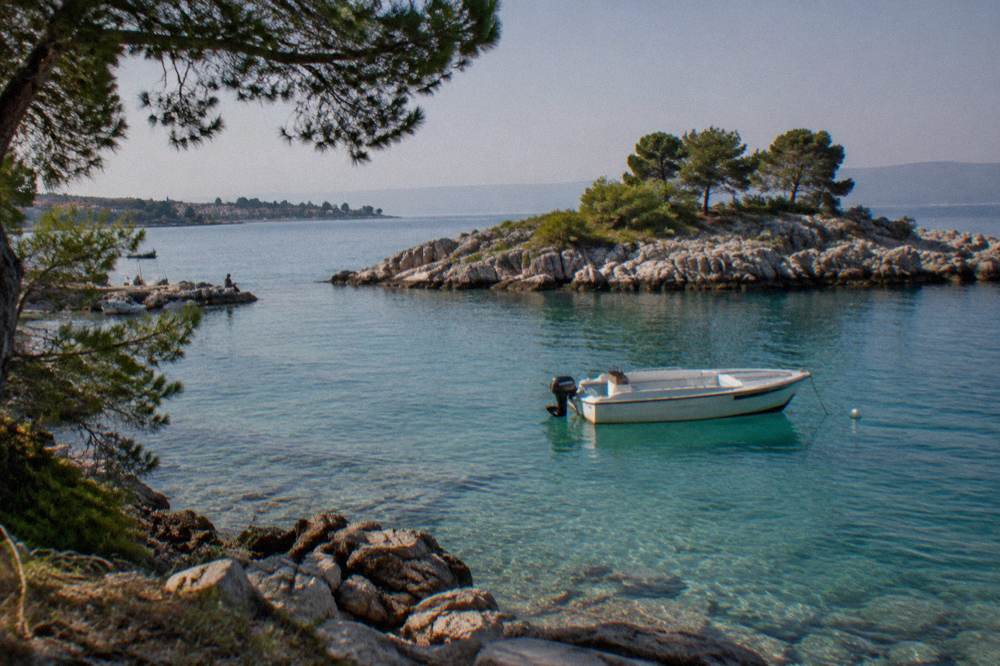
Evenings repeat. The Sea Organ at dusk, dinner in the old streets, and a nightcap built around maraschino, the cherry liqueur Zadar is known for, fill the second evening as well as the first. The site's sunset and evening route page lays out the sequence from the peninsula tip.
One practical note from the 2026 rules: the Old Town now has dress-code signs at key access points requiring appropriate clothing, no swimwear, based on the city's communal order decision, with fines up to 130 EUR reported. Cover up between beach and dinner and the question never arises.
When Does A Third Day In Zadar Start To Pay Off?
A third day pays off the moment one full-day excursion joins the plan, because every major trip from Zadar, to Plitvice Lakes, Krka National Park, the Kornati islands, Paklenica or the Zrmanja river, consumes a whole day and cannot be compressed. With three days you keep two in the city and spend one outside it, which is the first length at which Zadar works as a base rather than a destination.
This is where the park fees and distances start to matter, and they are seasonal. Plitvice charges 10 EUR adult in the January-to-March and November-to-December window, 23 EUR in April, May and October, and 40 EUR in the June-to-September peak before about 16:00. Krka charges 7 EUR in the January-to-March and November-to-December months, 20 EUR in April, May and October, and 40 EUR from June to September. Both parks dropped to their winter-shoulder rates on 1 October 2026, so an October or November visit buys the same trails for a fraction of the summer price.
| Day trip from Zadar | Road distance | Entry fee (adult, EUR) | Notes |
|---|---|---|---|
| Plitvice Lakes NP | about 145 km | 10 / 23 / 40 by season | Fee is per person, seasonal |
| Krka NP (Skradinski Buk) | about 91 km | 7 / 20 / 40 by season | No swimming at Skradinski Buk; designated spots only, 1 Jun to 30 Sep |
| Paklenica NP | about 46.8 km | 5 / 8 / 10 by season | Velebit hiking and climbing |
| Nin | about 19.8 km | n/a (town) | Salt works and shallow lagoon beaches |
| Pag Town | about 54 km | n/a (town) | Cheese and lunar landscape |
| Šibenik | about 89 km | n/a (town) | En route toward Krka |
The distances in that table come from route-computed figures for driving from the Old Town. The fee column shows only what the park price lists state; anything else, a guide fee, a boat supplement, a lunch, sits on top and is confirmed at booking.
For the Plitvice day, a guided option with tickets included removes the one variable that is hardest to control from a Zadar base, the park's own ticketing. The site's Plitvice Lakes guide covers the park in depth, and the tour page at Plitvice guided day tour with tickets explains what the day includes, with live pricing and availability on the operator's live listing.
Do You Need Four Or Five Days In Zadar?
Four or five days are not needed for the city, but they are the right length for a Zadar-centred holiday that combines the Old Town, a beach day, a boat day and two different full-day excursions, for example Plitvice plus Krka, or Plitvice plus the Kornati islands. Beyond five days you are choosing a slow stay, not adding sights, unless you add island overnights on Ugljan or Dugi Otok.
The second big excursion is what defines day four. Krka and Plitvice are different enough to justify both, and the site's Krka vs Plitvice comparison works through the choice in detail. The alternative is the sea: the Kornati National Park and Telašćica Nature Park sit offshore toward Dugi Otok, and full-day boat trips run there from Zadar through the season.
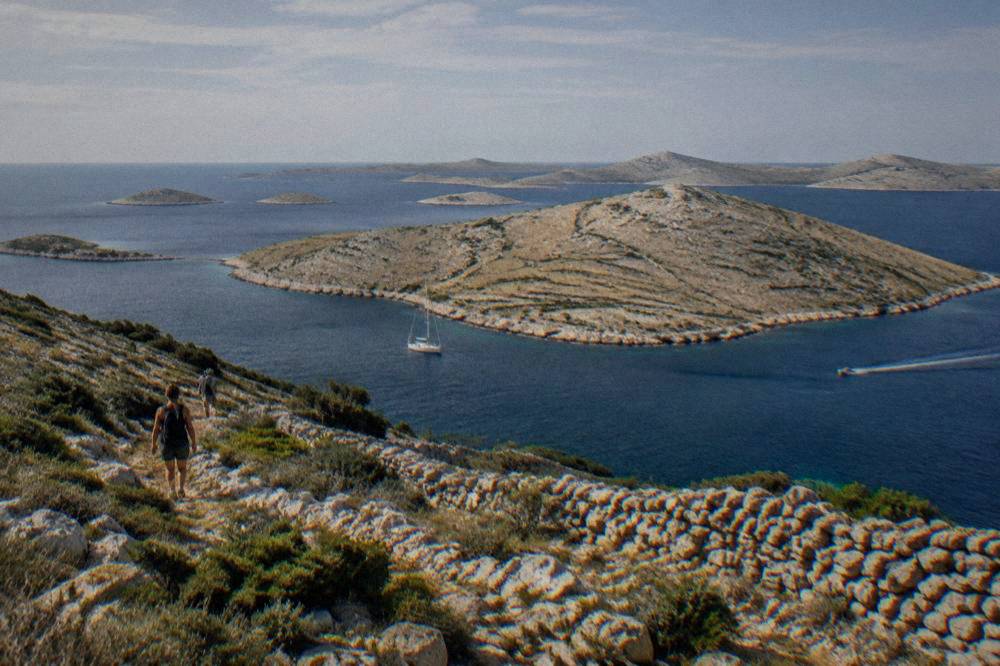
A fee detail that trips up planners: Kornati charges per vessel, not per person, and the entry is bought outside the park. The 2026 price list sets 25 EUR for a boat up to 6.99 metres for one day in the January-to-May and October-to-December window, rising to 45 EUR from June to September, with higher bands for longer vessels. On an organised boat trip that cost is inside the ticket, which is one reason guided Kornati days from Zadar price differently from land parks.
Telašćica, the nature park at the southern end of Dugi Otok, charges 6 EUR at the Dolac land entrance outside the summer season and 8 EUR from June to September. Vransko jezero, the lake park south of the city, charges 6 EUR adult, 3 EUR for children 7 to 18, and 15 EUR for a family ticket.
| Park or protected area | Adult entry (EUR) | Season pattern | Charged per |
|---|---|---|---|
| Plitvice Lakes | 10 / 23 / 40 | Winter / shoulder / summer | Person |
| Krka (all land sites) | 7 / 20 / 40 | Winter / shoulder / summer | Person |
| Paklenica | 5 / 8 / 10 | Winter / shoulder / summer | Person |
| Telašćica | 6 / 8 | Off-season / Jun-Sep | Person, Dolac entrance |
| Vransko jezero | 6 (child 3, family 15) | Flat | Person |
| Kornati | 25 to 45 for a boat under 7 m, 1 day | Off-season / Jun-Sep | Vessel |
Day five, if it exists, belongs to the water or to the close islands. Ugljan is a ferry ride of roughly 25 to 30 minutes from Zadar to Preko (the fare is confirmed at the Jadrolinija counter or on its route page). Dugi Otok is served by the Gaženica to Brbinj car ferry, a crossing of about an hour and 40 minutes. Both are covered in the site's Zadar islands guide.
How Do Season And Weather Change The Number Of Days?
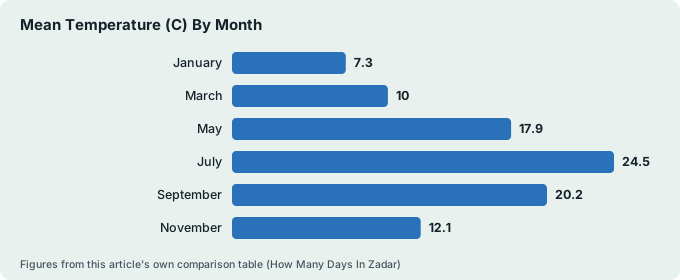
Season changes the answer by about a day: from June to September the sea and the long evenings reward three or more days, while in the November-to-March window two days cover everything comfortably, since Zadar station, 1961-2024, records a July mean of 24.5 C against 7.3 C in January, and November is the wettest month at 123 mm of rain against July's 35.4 mm.
| Month | Mean temperature (C) | Rainfall (mm) | Character for planning |
|---|---|---|---|
| January | 7.3 | 76.4 | Quiet, cool, short days |
| March | 10.0 | 66.3 | Shoulder, museums and walks |
| May | 17.9 | 64.4 | Warm, sea still cool |
| July | 24.5 | 35.4 | Peak season, driest month |
| September | 20.2 | 110.9 | Warm sea, rain returning |
| November | 12.1 | 123.0 | Wettest month, park fees at winter rates |
Those figures are Zadar station, 1961-2024, from the Croatian national meteorological service, and they carry two planning lessons. First, the wet months cluster from September through December, so an autumn stay should keep a rainy day itinerary in reserve. Second, sunshine totals about 2,600 hours a year, so even the shoulder months deliver long bright stretches between the rain.
Winter travel has one strong card: the events calendar. Zadar Advent runs 24 November 2026 to 2 January 2027, expanded to three locations including a new ice rink on the Forum, with concerts and daily programmes. The Zadar Christmas Run is on 27 December 2026. A winter city break of two or three days lands well inside that programme, and the best time to visit Zadar guide weighs the trade month by month.
Should You Stay In Zadar And Day-Trip, Or Split The Stay?
Stay in Zadar and day-trip if the trip is city-first, because Zadar's position, 145 km from Plitvice, 91 km from Krka, about 46.8 km from Paklenica and a boat ride from Kornati, makes it a workable single base for four or five days. Split the stay only if the itinerary leans heavily on Split or Dubrovnik, which sit 158 km and well beyond to the south, or if you want overnights on the islands rather than day visits.
The base-city case is arithmetic. Every major destination except Dubrovnik sits within a two-and-a-half-hour radius, and organised tours cover the same radius without a car. The site's Zadar day trips guide lists the full set, and Zadar vs Split covers the base choice against the region's larger city.
Accommodation location matters more than stay length inside a city this size. The where to stay in Zadar guide separates the Old Town, Borik, Puntamika, Diklo and Arbanasi, and the differences are about beach access and parking rather than sightseeing distance. Zadar charges a tourist tax collected by the accommodation; the amount is confirmed at booking.
Arrival logistics barely affect the day count. The airport is about 8 km from the city by its own how-to-get-here page, the Liburnija shuttle costs 5.00 EUR one way including luggage and takes about 20 minutes to the Old Town, and the ticket stays valid for 90 minutes on city buses. Those connections are detailed on the Zadar airport and airport to city centre pages, and a late flight still leaves a full first morning.
A Sample Day Count For Every Trip Style
Match the day count to the trip style rather than to a fixed rule: two days for a city break, three for a city break plus one park, four to five for a base-and-excursion holiday, and one only for a port day or a ferry stop. The table below converts each style into a concrete shape.
| Trip style | Days | Shape of the stay |
|---|---|---|
| Cruise or ferry stop | 1 | Old Town loop, Forum, Sea Organ at sunset |
| City break | 2 | Old Town plus beaches and a short boat trip |
| City plus one park | 3 | Two city days, one Plitvice or Krka day |
| Base-and-excursion holiday | 4 to 5 | City, beach, boat day, two park days |
| Slow coastal stay | 6+ | Add island overnights on Ugljan or Dugi Otok |
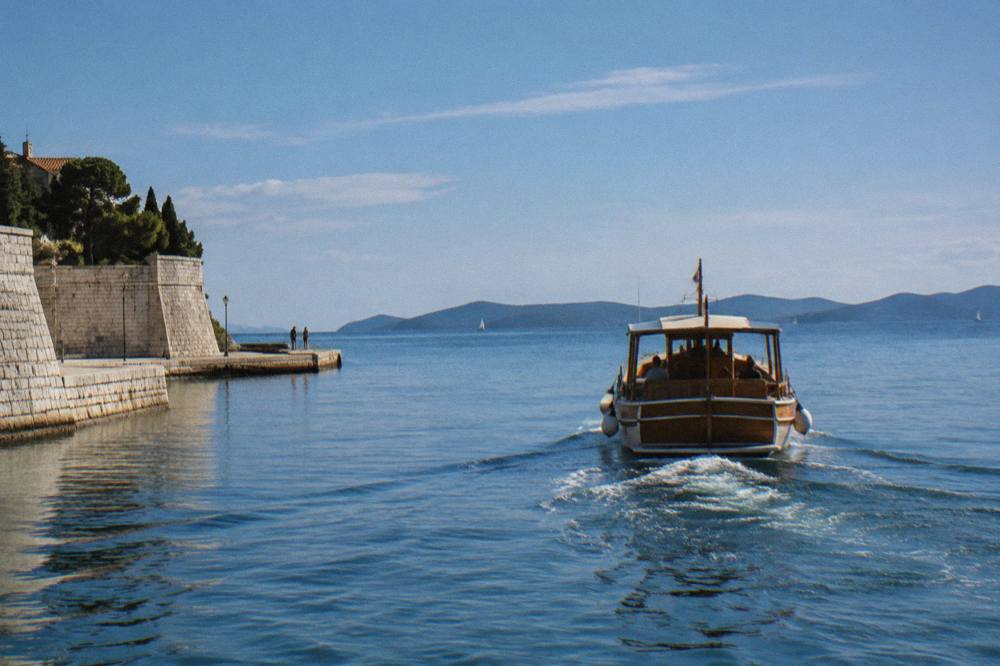
The water day deserves its slot in almost every shape. The near islands off Zadar hold swimming and snorkeling stops within a short run of the harbour, and half-day versions leave the afternoon free, which is why they slot into a two-day plan as easily as a five-day one. The Zadar boat tours guide sorts the options by length and route.
For a river alternative, the Zrmanja sits inland northeast of the city and runs guided kayaking trips with transfer options from Zadar. It fills the same single-day slot as a park and suits a stay that already has enough stone and wants moving water instead.
Common Questions About Days In Zadar
How many days in Zadar is enough?
Two days are enough for the city itself, and three is the first length that fits a full day trip to Plitvice, Krka or the Kornati islands. Four to five days let you combine two excursions with city time and a beach day.
Is one day in Zadar enough?
One day covers the Old Town peninsula on foot, including the Roman Forum, St Donatus, the Kalelarga, the Land Gate and the Sea Organ at sunset. It is not enough for any island or national park, all of which need a full day.
Can you visit Plitvice and Krka from Zadar on the same trip?
Yes, with at least four days, giving each park its own day. Plitvice is about 145 km from Zadar and Krka about 91 km to Skradinski Buk, so neither combines with the other inside a single day.
Is Zadar a good base for day trips?
Yes. Krka, Paklenica, Nin, Pag, the Kornati islands, Telašćica and Plitvice all sit within reach of a day trip from the city, by road or by boat, which is why a stay of four or five days works well without changing accommodation.
Does the season change how many days you need?
It changes what the days are worth. Summer days from June to September stretch with swimming and boat trips, while the November-to-March window suits a two- or three-day city stay built around museums, Advent events and winter park prices.
The final rule is the simple one this Zadar Croatia Travel Guide keeps returning to: count the excursions first, add two days for the city, and the total is the trip. For everything that fills those days, the answers page on how many days in Zadar is enough restates the case in short form.