Zadar 3 Day Itinerary
Three days is enough to cover the peninsula on foot, get out on the water to the islands, and take one of the big national park day trips from Zadar, in Dalmatia, Croatia.
Short answer
Spend day one on the Old Town peninsula, day two on a boat among the islands off Zadar, and day three at a national park such as Krka or Plitvice. Park fees are seasonal and drop sharply from 1 October 2026.
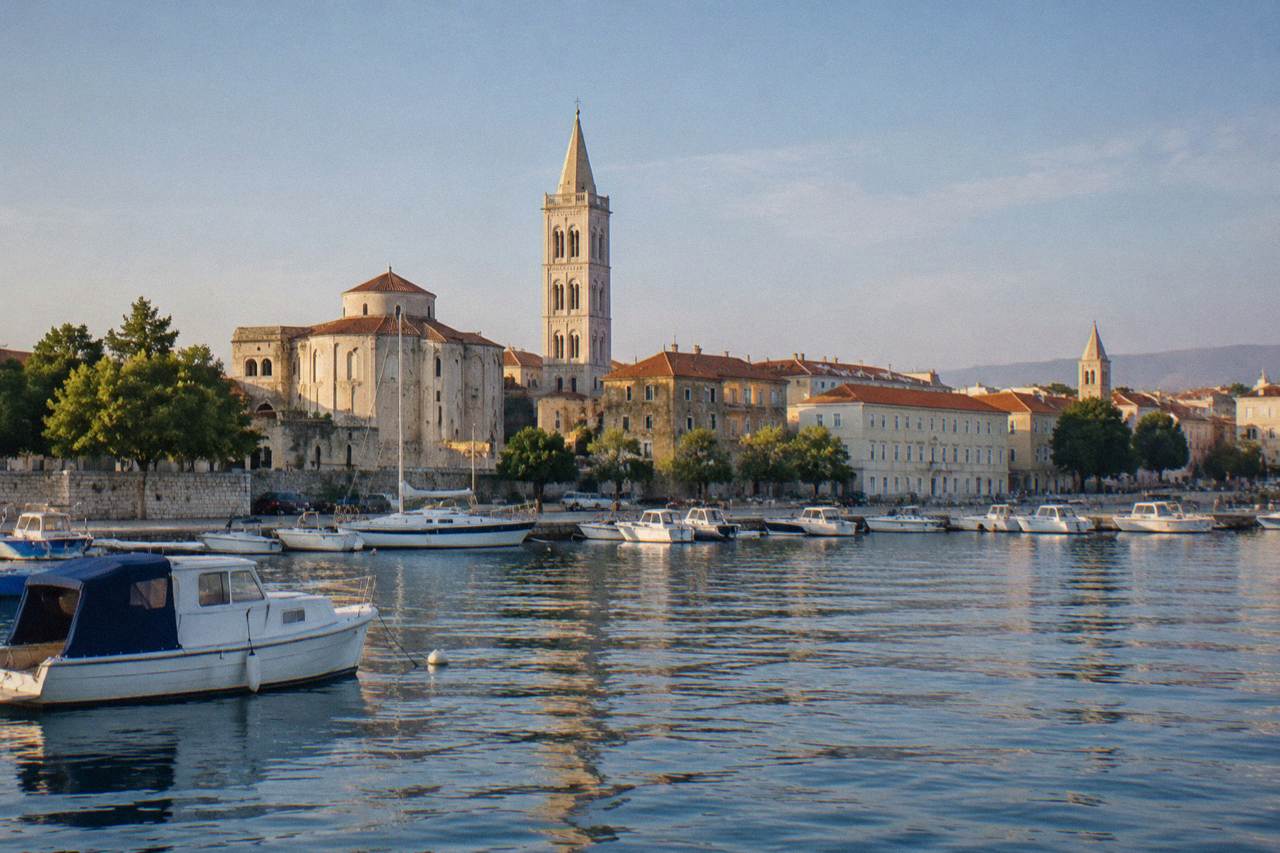
Zadar is a coastal city in Dalmatia, Croatia, built on a narrow peninsula that holds the entire Old Town, with the islands of Ugljan and Dugi Otok sitting just offshore and the national parks of Krka, Plitvice, Paklenica and Kornati all reachable as day trips. That geography is what makes a Zadar 3 day itinerary work so cleanly: day one is a walking day, day two is a water day, and day three is a park day. This page lays out all three days with the verified entry prices, distances and opening facts, and flags the few things that need to be confirmed at booking or on arrival.
How Should You Split Three Days In Zadar?
Split the stay into a peninsula day, a boat day and a park day: day one covers the Old Town on foot from the Land Gate to the Sea Organ, day two goes out to the islands by tour boat or ferry, and day three travels inland or along the coast to Krka, Plitvice, Paklenica or Nin. This order puts the shortest walking day first, rests the legs at sea on day two, and saves the longest drive for last.
The peninsula is small enough that everything on it can be reached on foot, and the Old Town area guide covers it street by street. The pattern also matches how transport actually runs from Zadar: tour boats leave from the peninsula's waterfront, the national park day trips pick up in the city, and the ferry port at Gaženica sits about 5.2 km and ten minutes' drive from the Old Town according to the route distances computed for this site. Nothing in the three days requires a car of your own, though having one widens the day trip options on day three.
A caution for anyone travelling from late autumn 2026: St Donatus Church, the pre-Romanesque landmark at the centre of the peninsula, is entering a roof restoration that the tender documents schedule from autumn 2026 for about six months, as the first phase of a wider two-year restoration. Individual access depends on the phase of the works, so the church's own guide page and local notice boards should be checked before you count on going inside.
What Does Day One In Zadar Look Like, From The Land Gate To The Sea Organ?
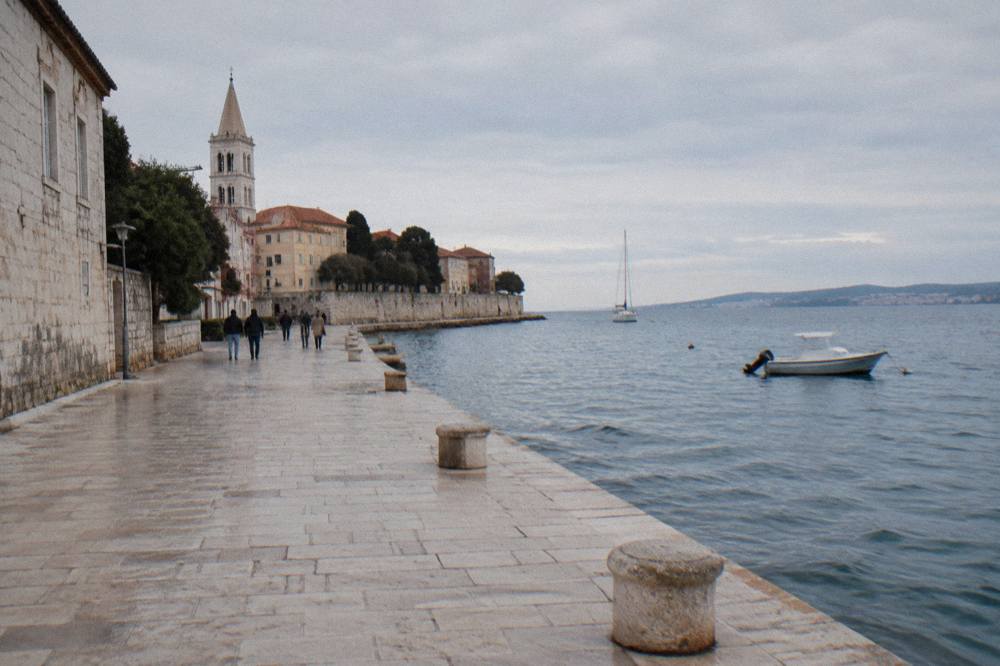
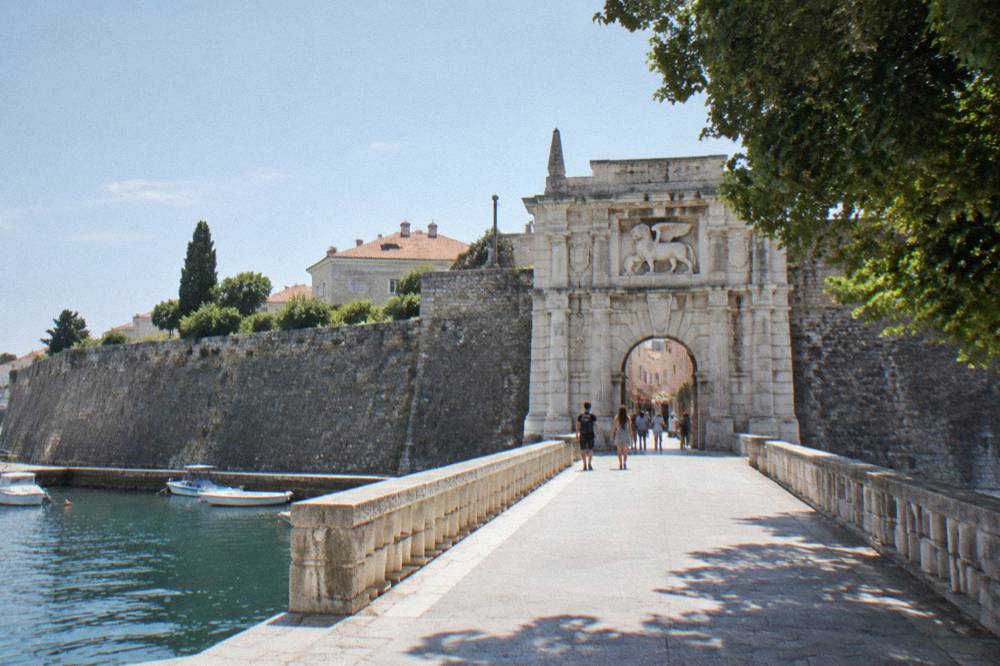
Day one is a loop of the peninsula on foot: start at the Land Gate of 1543 on the harbour side, walk the main street Kalelarga to the People's Square and the Five Wells Square, cross to the Roman Forum and St Donatus, then finish on the western waterfront at the Sea Organ and the Greeting to the Sun for the sunset. Every one of those stops is free public space, with no ticket needed for any of them.
The Land Gate was built in 1543 to a design by Michele Sanmicheli, and it is the formal entrance to the peninsula from the harbour side. From there Kalelarga, the main street, runs the length of the Old Town; the Kalelarga guide describes the Roman Forum in detail, and the Five Wells Square guide covers its neighbouring squares. The Roman Forum itself is open ground beside the sea, free to walk at any hour.
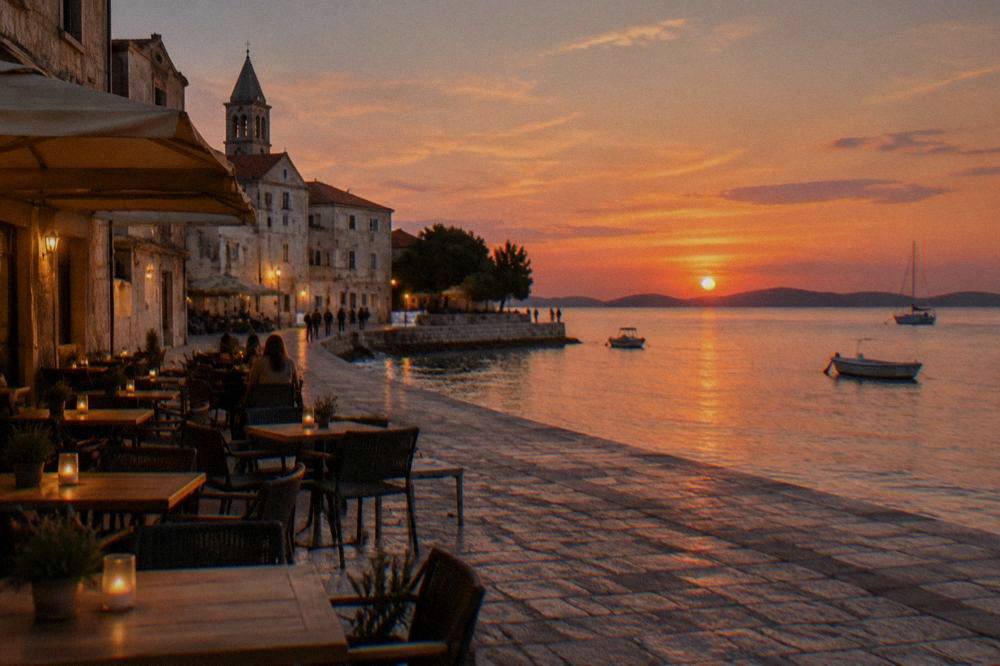
The two waterfront installations that close the day are both by the architect Nikola Bašić: the Sea Organ from 2005, a set of wave-driven pipes built into the sea steps, and the Greeting to the Sun from 2008, a solar-powered light circle beside it. The zadar.hr city page confirms both years and both are free, open public installations with no opening hours at all. The Sea Organ guide and Greeting to the Sun guide explain how each one works.
If you want a guide for this first day rather than a self-directed walk, the city has a roster of guided walks and tastings to choose from, including tip-based walks that run locally; for those, confirm the arrangement directly with the guide.
What Museums Fill A Rain Hour On Day One, And What Do They Cost?
The Museum of Ancient Glass charges 7.00 EUR for an adult ticket, with 5.00 EUR for groups of five or more and 4.00 EUR for schoolchildren, while the Archaeological Museum and St Donatus run on a shared tariff showing 7.00 and 5.00 EUR rows, so around 7 EUR at full price each. All three sit within a few minutes' walk of the Forum, and the ancient glass museum's own price page is the source for its figures.
The Museum of Ancient Glass guide covers what the collection holds. The Archaeological Museum's tariff is on the AMZD page linked from the archaeological museum guide, and it also lists free entry for children up to age 10 and on Museum Night days.
| Museum or site | Adult full price | Source status |
|---|---|---|
| Museum of Ancient Glass | 7.00 EUR | Verified on the museum's own price page |
| Archaeological Museum Zadar | around 7 EUR | Tariff page shows 7.00 and 5.00 EUR rows |
| St Donatus Church | around 7 EUR | Same AMZD tariff as the Archaeological Museum |
| Sea Organ | free, open at all hours | City page, open public installation |
| Greeting to the Sun | free, open at all hours | City page, open public installation |
| Roman Forum, Kalelarga, Five Wells Square | free public space | No ticketing exists |
Two entries need a caveat. The bell tower of the Cathedral of St Anastasia has no verified price or hours on any official page this site could open, so nothing is quoted here; the cathedral guide points to the sources to check. For a fuller museum day or a wet afternoon, the rainy day itinerary builds a whole day around the indoor options.
Why Should Day Two Be An Island Day On The Water?
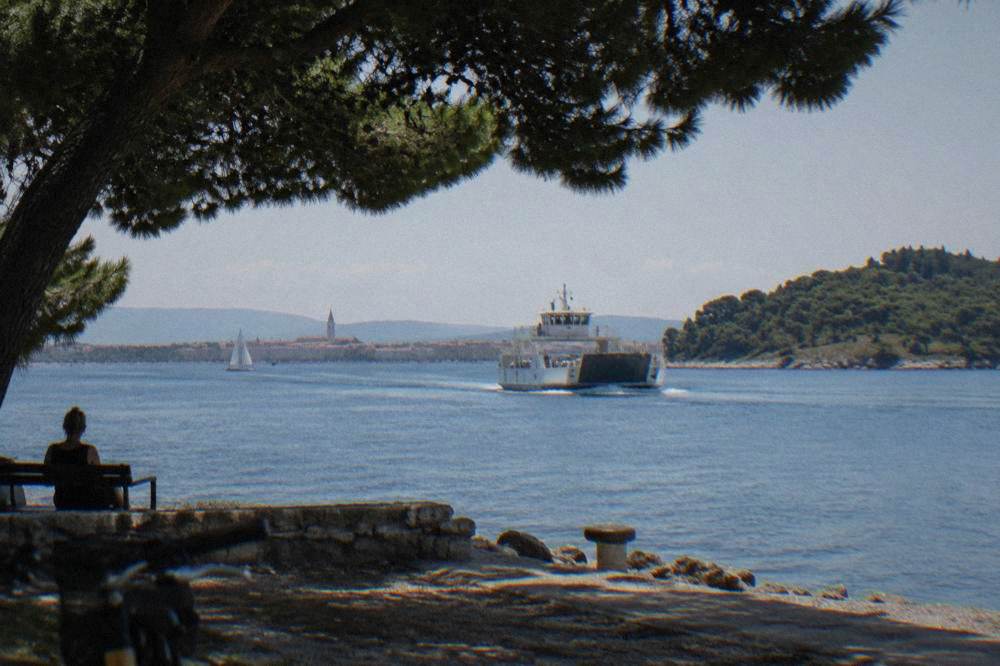
Day two belongs to the sea because the islands sit directly offshore: Ugljan is a ferry crossing of roughly 25 to 30 minutes from Zadar, Dugi Otok is a ferry run of about an hour and forty minutes from the Gaženica port, and tour boats leave from the peninsula's waterfront for shorter snorkelling and island circuits. A boat day also splits the itinerary's effort sensibly, sitting between two walking-heavy days.
The ferry operator Jadrolinija's route page shows the Zadar (Gaženica) to Brbinj crossing on Dugi Otok at one hour and forty minutes, line 434. The Zadar to Preko crossing to Ugljan takes about 25 to 30 minutes; no verified fare for that route was found, so confirm the price at the port or on the operator's page. The full picture, including the Italy route, is in the Zadar ferry guide.
The alternative is a skippered trip. The related tour for this itinerary, the Dugi Otok shipwreck, beach and sea cave route, covers the island's highlights in one packaged day: Check availability to see the current dates and stops. Its dedicated page on this site, the Dugi Otok shipwreck tour, describes what the route includes.
Which Island Or Beach Fits Day Two If You Stay Closer To Zadar?
If a full island day is too much, the close-in options are Ugljan by the short ferry crossing, the city beaches of Kolovare, Borik, Puntamika and Diklo along the shore, or a shorter boat circuit among the nearer islets, all of which keep you within sight of the peninsula. Kolovare is the nearest beach walking east from the Old Town, while Borik and Puntamika sit to the northwest and Diklo beyond them.
Each beach strip has its own character, and the Kolovare, Borik and Puntamika guides compare them in detail. Under the 2026 concession rules adopted by Zadar County, no concession beach may fence itself off or charge entry: access stays fully public and free, with commercial sunbed use capped on a share of each beach's area and the rest left free for people with their own towels. That rule was adopted for the 2026 season and applies county-wide.
One city-centre curiosity worth the detour on a calm day: the Barkajoli, the traditional rowing boats that shuttle the roughly 75 metres across the harbour in a crossing of about a minute and a half to two minutes. Other pages covering the same trip are gathered on Zadar Croatia Travel Guide.
| Day two option | Getting there | Time each way | Fare status |
|---|---|---|---|
| Ugljan (Preko) | Ferry from Zadar | about 25-30 minutes | Check the current fare at the port |
| Dugi Otok (Brbinj) | Ferry from Gaženica | 1 h 40 min | Buy from the operator |
| Kolovare beach | Walk east from the Old Town | on foot | Free public beach |
| Barkajoli boat | Harbour crossing | about 1.5-2 minutes | A euro or two, no official fare |
What Should Day Three Be, Krka, Plitvice Or Paklenica?
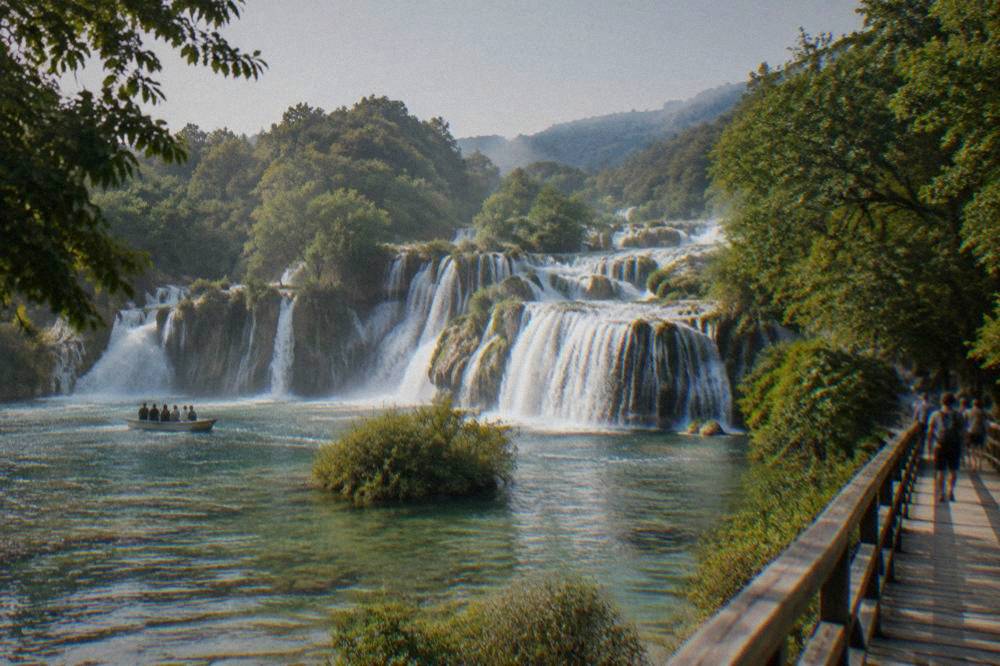
Day three should be Krka National Park for waterfalls at the shortest driving distance, Plitvice Lakes for the largest lake system at a longer round trip, or Paklenica for hiking in the Velebit mountains at 46.8 km and 57 minutes from the Old Town, and all three charge seasonal adult entry: Krka 7, 20 or 40 EUR, Plitvice 10, 23 or 40 EUR, and Paklenica 5, 8 or 10 EUR depending on the month.
From 1 October 2026 the two big parks dropped to their lower shoulder and winter rates.
The computed road distances from Zadar's Old Town put Skradin, the classic Krka gateway, at 76 km and about 62 minutes, Skradinski Buk itself at 91 km and 73 minutes, Paklenica at 46.8 km and 57 minutes, and Plitvice at 145 km and roughly two and a half hours. The Krka guide and Plitvice guide break down the routes, and the national parks overview compares them.
| Park | Adult entry by season (2026) | Drive from Zadar Old Town |
|---|---|---|
| Krka NP | 7 EUR Jan-Mar, Nov-Dec; 20 EUR Apr, May, Oct; 40 EUR Jun-Sep | 91 km to Skradinski Buk, about 73 min |
| Plitvice Lakes NP | 10 EUR Jan-Mar, Nov-Dec; 23 EUR Apr, May, Oct; 40 EUR Jun-Sep | 145 km, about 153 min |
| Paklenica NP | 5 EUR Jan, Feb, Nov, Dec; 8 EUR Mar, Apr, Oct; 10 EUR May-Sep | 46.8 km, about 57 min |
| Telašćica Nature Park | 6 EUR Jan-May, Oct-Dec; 8 EUR Jun-Sep at the Dolac land entrance | Reached by boat from Sali |
| Kornati NP | Charged per vessel by length and season, bought outside the park | Reached by boat |
Two rules matter more than the prices. Swimming at Skradinski Buk in Krka has been banned since 2021 to protect the travertine formations; swimming in the park is allowed only at the designated spots of Roški slap, Stinice and Pisak, from 1 June to 30 September and weather permitting. And Kornati's fee is charged per boat by length, not per person, which is one reason a packaged Kornati boat day often makes sense over sailing yourself.
For a guided park run, the day trip options collected under Zadar tours include Krka and Plitvice departures with tickets handled in the package.
What If You Prefer An Active Day Three Instead Of A Park?
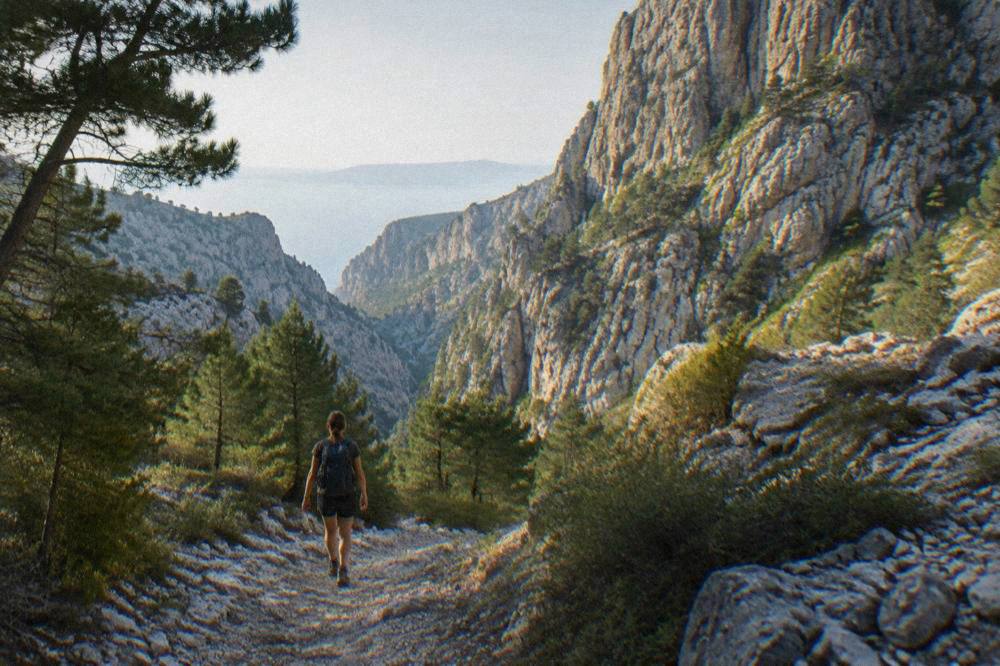
An active day three can pair the Zrmanja River by kayak, a guided half-day paddle on a karst river canyon within reach of Zadar with an optional transfer from the city, with a quad ride on the back trails of Dalmatia, or with a hike in Paklenica's gorges; the kayak route is the one this site's data shows with a transfer option, which removes the need to arrange a car for the day.
The Zrmanja trip suits a day three because it runs on a river rather than the open sea, so weather that would spoil a boat day matters less. The Velebit Northern Paklenica price list shows a 7 EUR one-day entry for the wider Velebit area for anyone building their own hiking day. The Zrmanja rafting guide covers the river's geography and access.
A quieter alternative for day three is Nin, the small historic town on the lagoon about 19.8 km and 28 minutes' drive from the Old Town by the computed route distance, covered in the Nin day trip guide. Pair it with Pag island, about 54 km and an hour's drive, using the Pag guide for the route; the answers page on the best day trips ranks all the options side by side.
What Should You Budget For Three Days In Zadar?
Budget three cost blocks: entry fees that are fixed and published (7.00 EUR for the ancient glass museum, the seasonal park fees of 5 to 40 EUR, and free access to every public monument on the peninsula), transport that is partly published (the 5.00 EUR airport shuttle and the ferry fares to be confirmed at the port), and food and accommodation, whose prices this site does not quote.
The tourist tax exists and is collected by your accommodation, and its amount is confirmed at booking.
The airport shuttle from Zadar Airport, run by Liburnija, is 5.00 EUR one way including luggage, takes about 20 minutes, and the ticket stays valid for 90 minutes on city buses; the airport sits about 8 km from the city by its own how-to-get-here page. Croatia uses the euro since 1 January 2023, is a Schengen member, and the emergency number is 112.
| Cost item | Figure | Where it comes from |
|---|---|---|
| Museum of Ancient Glass, adult | 7.00 EUR | Museum's own price page |
| Archaeological Museum and St Donatus | around 7 EUR full price | AMZD tariff page |
| Airport shuttle to the city | 5.00 EUR one way, luggage included | Airport's how-to-get-here page |
| Krka adult entry | 7 / 20 / 40 EUR by season | Park's 2026 price list |
| Plitvice adult entry | 10 / 23 / 40 EUR by season | Park price list |
| Tourist tax | Collected by the accommodation | Amount confirmed at booking |
For food planning, the Zadar food guide and restaurants guide name the dishes and the areas worth eating in, from the city's maraschino cherry liqueur tradition to the seafood around the peninsula, without quoting unverifiable prices.
When Is The Best Month To Run This Zadar 3 Day Itinerary?
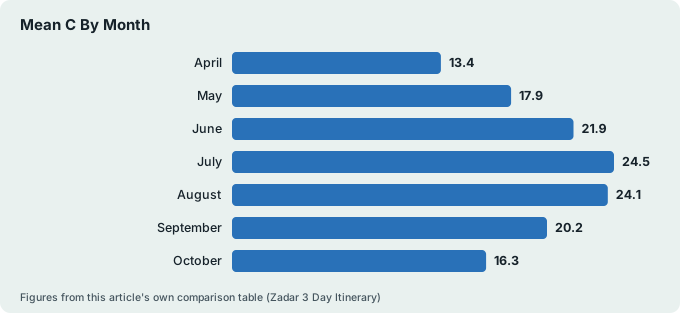
The Zadar station record for 1961-2024 shows July as the warmest month at a 24.5 C mean with the least rain at 35.4 mm, and November as the wettest at 123 mm, so the itinerary's three outdoor days fit best in the June-to-September window, with May and October as quieter shoulder months; September averages 20.2 C and still carries 48.5 mm less rain than November.
Park fees reward the shoulder too: October 2026 entry at Krka is 20 EUR against the 40 EUR of July.
The full monthly picture from the DHMZ station table, labelled Zadar station, 1961-2024:
| Month | Mean C | Rain mm |
|---|---|---|
| April | 13.4 | 61.4 |
| May | 17.9 | 64.4 |
| June | 21.9 | 48.5 |
| July | 24.5 | 35.4 |
| August | 24.1 | 52.8 |
| September | 20.2 | 110.9 |
| October | 16.3 | 106.8 |
Sunshine across the year runs to about 2,600 hours by the station record. If your three days land in late November or December, Zadar Advent runs from 24 November 2026 to 2 January 2027 across three locations including a new ice rink on the Forum, and the Zadar Christmas Run falls on 27 December 2026, as listed on the city's events pages. The events guide collects the calendar.
What Local Rules Should You Know Before The Trip?
Three rules shape a 2026 visit: the Old Town has dress-code signs at its access points requiring clothing over swimwear, with fines up to 130 EUR reported after a warning; the municipality has signalled night-time restrictions on retail alcohol sales in the Old Town under a national law change, reported for the 2026 season and applying to shops rather than bars and restaurants; and beach concessions county-wide may not charge entry or fence off access.
Each was reported in mid-2026 local coverage, so confirm the current enforcement locally.
None of these rules should deter anyone; they mostly formalise ordinary courtesy in a lived-in historic centre. They do mean the day one plan should include a change of clothes if a beach morning comes first, and that late-night bottle shopping on the peninsula may not be possible.
For the practical spine of the trip, the airport to city centre guide, the where to stay guide and the one day in Zadar itinerary cover the arrival and lodging decisions, and the two days in Zadar itinerary shows what this plan looks like compressed. The Zadar Croatia Travel Guide site maintains all of these, and each price on this page traces to the museum, park or airport source named beside it.
Common Questions About Three Days In Zadar
Is three days enough for Zadar?
Three days is enough to see the entire Old Town peninsula, take one island or boat day, and visit one national park, which is the split this itinerary follows. Add a fourth day, as the Zadar 4 day itinerary does, only if you want a second park or a second island.
Do you need a car for three days in Zadar?
No. The Old Town is entirely walkable, boat trips and park day trips depart from the city with pickups, and the airport shuttle runs to the centre. A car widens day three options such as Nin or Pag, at 28 and 62 minutes' drive respectively by the computed route distances.
What is the most expensive day of this itinerary?
Day three, the park day, carries the highest entry fees: Krka charges adults 40 EUR in the June-to-September peak against 7 EUR in the winter months, and Plitvice runs 40 EUR peak against 10 EUR. Every monument on day one is free.
Can you swim during this itinerary?
Yes, on day two at the island and beach stops, and at the city beaches of Kolovare, Borik, Puntamika and Diklo. Note that swimming at Skradinski Buk in Krka is banned, and swimming in Krka is allowed only at Roški slap, Stinice and Pisak from 1 June to 30 September.
What happens if it rains on one of the three days?
Swap the affected day with the museum block on day one: the Museum of Ancient Glass at 7.00 EUR adult and the Archaeological Museum at around 7 EUR are both on the peninsula. The rainy day itinerary on this site builds a full wet-weather plan.
Is St Donatus Church open during a late-2026 visit?
Access may be limited: the roof restoration tender schedules works from autumn 2026 for about six months, group visits are suspended during the works, and individual access depends on the phase. Check locally before planning an interior visit.
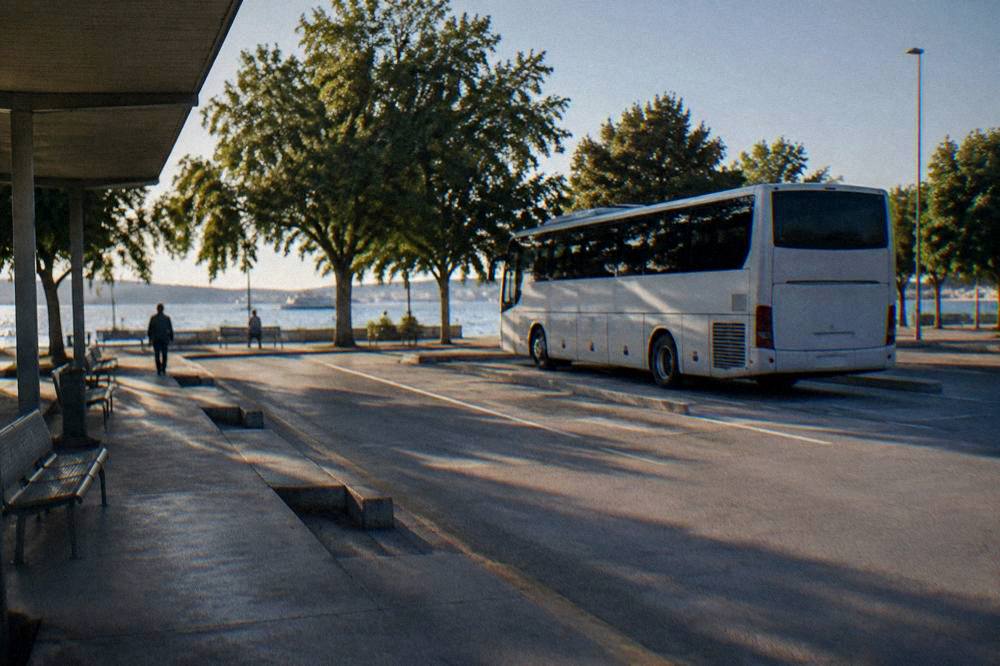
Three days in Zadar, run in this order, covers the peninsula, the sea and one of Croatia's great parks without ever needing more than a pair of walking shoes and a single early start for day three.
