Zadar Old Town
The Zadar Old Town sits on the narrow Poluotok peninsula, a walkable core of Roman ruins, medieval churches and two seafront installations by Nikola Bašić, all within a few hundred metres of each other.
Short answer
The Zadar Old Town is the historic peninsula (Poluotok) at the heart of Zadar, Dalmatia, Croatia. Entry is free and unrestricted: the Roman Forum, Kalelarga, the Land Gate of 1543, the Sea Organ and the Greeting to the Sun cost nothing, and only the museums and St Donatus Church carry tickets, around 7 EUR full price at the city museums.
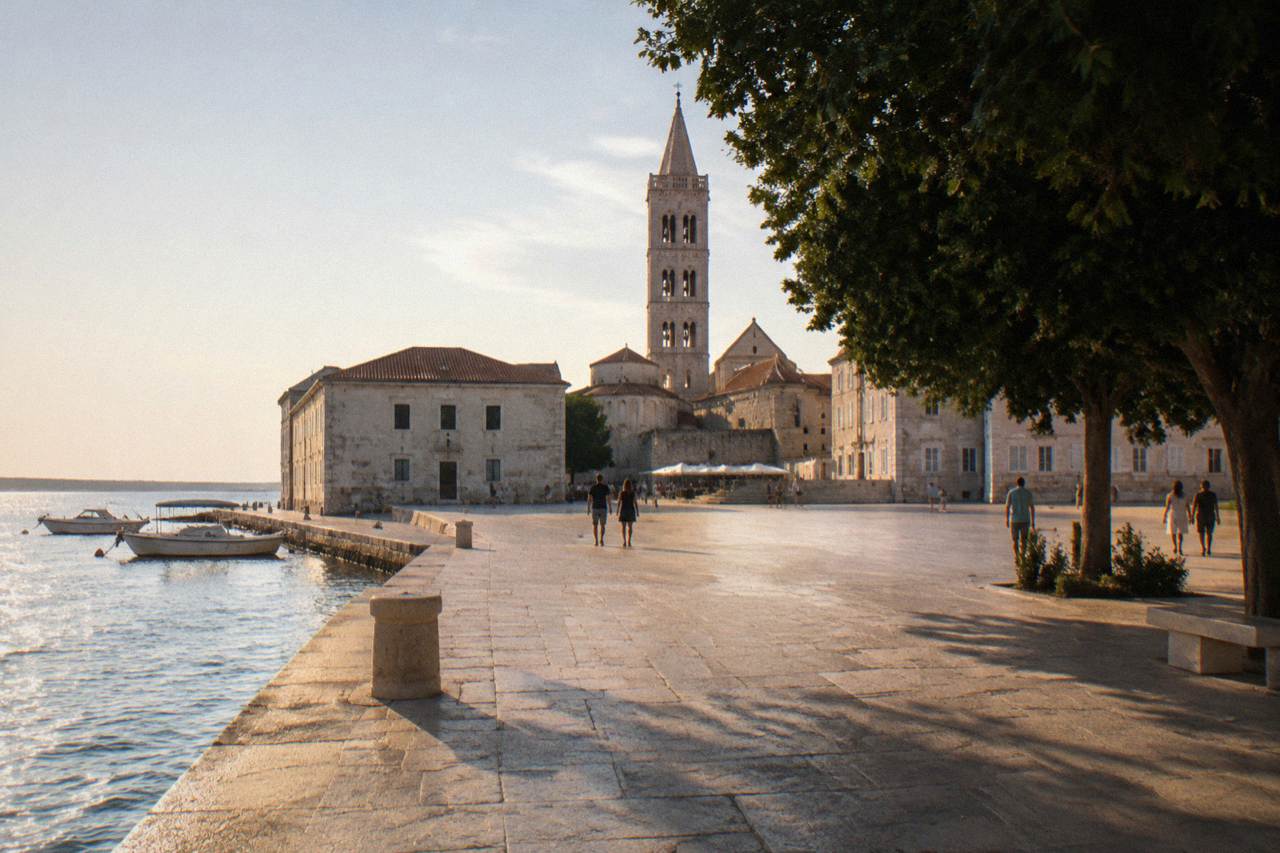
The Zadar Old Town, known locally as Poluotok, is the narrow peninsula that carries the entire historic core of Zadar, a coastal city in Dalmatia, Croatia, on the Adriatic Sea. Everything on it is within walking distance: the Roman Forum, the Sea Organ, the Cathedral of St Anastasia and the quays from which the island day trips leave. The peninsula is free to enter at any hour, no gate, no ticket, no wall beyond the fortifications themselves, and it holds both the city's oldest stones and its two modern seafront installations. This guide sets out what the peninsula contains, what each part costs or does not cost, how to reach it, the rules that apply there in 2026, and what lies beyond it across the water.
What Is The Zadar Old Town And Where Exactly Does It Sit?
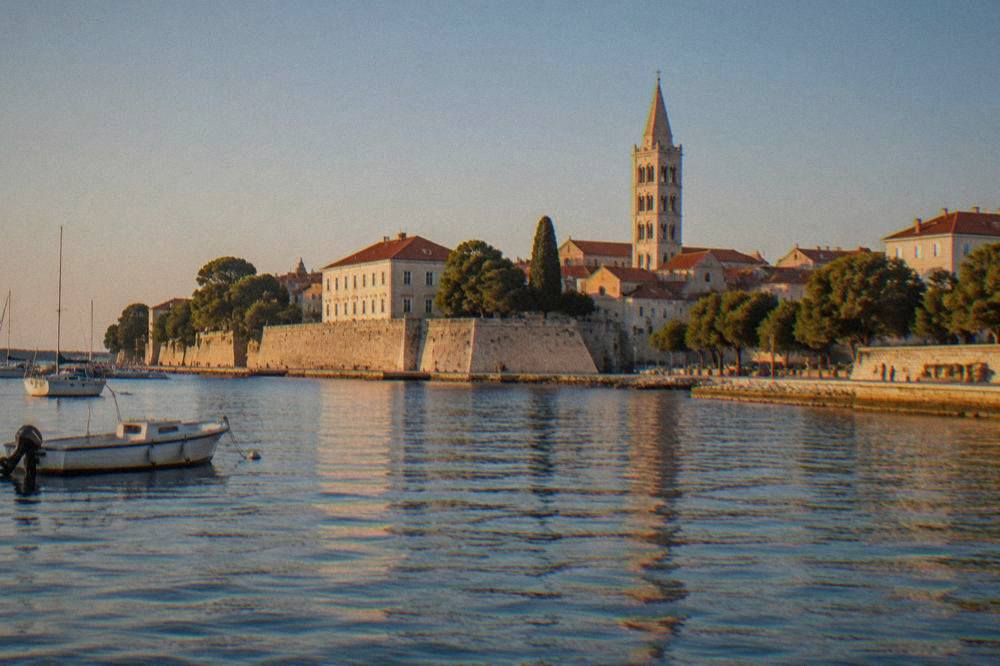
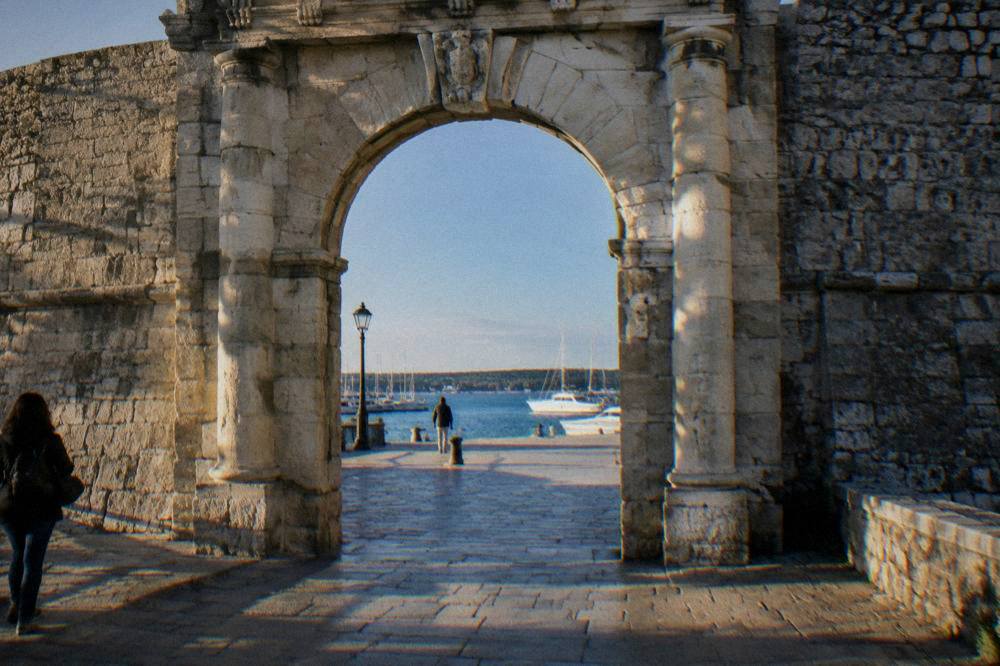
The Zadar Old Town is the historic peninsula called Poluotok, roughly triangular, joined to the mainland by a short neck of land at the Land Gate built in 1543 to a design by Michele Sanmicheli. It sits between the harbour quays on one side and the open Adriatic on the other, with the islands of Ugljan and Dugi Otok directly offshore. Zadar itself is a coastal city in Dalmatia, Croatia, with a recorded population of 67,309 at the 2021 census, and the peninsula is its administrative and cultural centre.
The peninsula is small enough that distances stop mattering. From the Land Gate at its neck to the northwestern tip where the Sea Organ plays, the walk is a matter of minutes along the seafront, and every major sight sits off the two principal streets, Kalelarga running lengthwise and the rib of lanes that cross it. The city's bus station lies 2.6 km away by road, about six minutes, and the Gaženica ferry port 5.2 km, about ten minutes, figures computed from road-routing data rather than guessed.
What gives the peninsula its standing is the layering. Roman paving sits under medieval churches, the Venetian defence works ring the whole, and Zadar is one of six components of a UNESCO property of Venetian defence works inscribed in 2017. That inscription covers the defensive system, not the Old Town as a whole, a distinction worth knowing because guidebooks often blur it.
For orientation, the answers page is Zadar Old Town worth visiting covers the value question directly, and the itineraries at one day in Zadar and two days in Zadar build routes around the peninsula itself.
Which Sights Anchor A Walk Through The Zadar Old Town?
Six free sights anchor the peninsula: the Roman Forum, Kalelarga, the Five Wells Square, the Land Gate of 1543, the Sea Organ of 2005 and the Greeting to the Sun of 2008, the last two being open public installations by the architect Nikola Bašić with no ticket and no closing time. The paid sights are St Donatus Church and the museums, around 7 EUR full price at the Archaeological Museum and 7.00 EUR at the Museum of Ancient Glass.
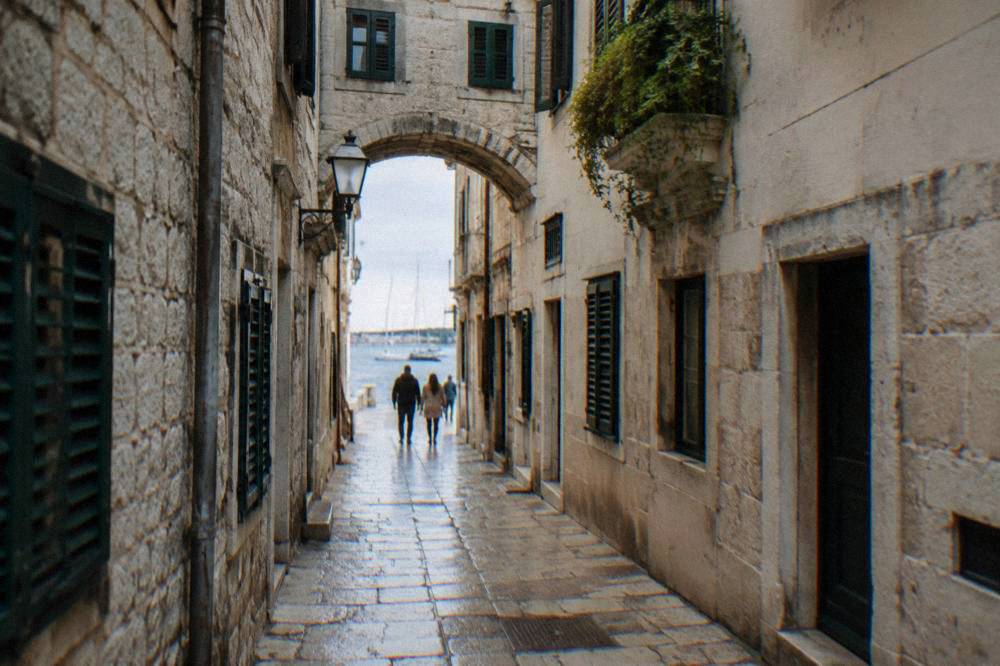
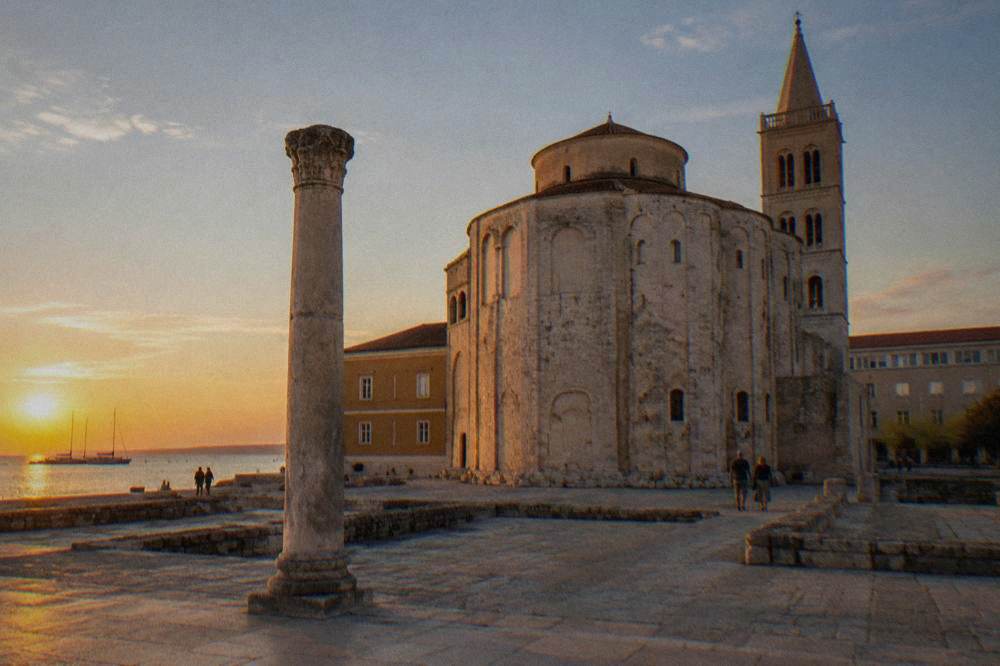
The Roman Forum is the open heart of the peninsula, a paved rectangle with column stumps and a standing pillar, all free and accessible at any hour. The Roman Forum guide covers what survives and how to read it. A short walk along Kalelarga, the main street that has carried Zadar's public life for centuries, brings you to the People's Square and the Five Wells Square, both free public spaces.
At the tip of the peninsula the two modern installations sit side by side. The Sea Organ, built in 2005, converts wave movement into sound through pipes set in the seawall steps, and the Greeting to the Sun, from 2008, is a solar-powered light installation in the paving beside it. Both are open around the clock, and no light-show start time is published on an official page, so plan the sunset itself rather than a scheduled display.
| Sight | Built | Admission |
|---|---|---|
| Roman Forum | Roman period | Free, open access |
| Kalelarga and Five Wells Square | Medieval core | Free, open access |
| Land Gate | 1543, Michele Sanmicheli | Free, open access |
| Sea Organ | 2005, Nikola Bašić | Free, open at all hours |
| Greeting to the Sun | 2008, Nikola Bašić | Free, open at all hours |
| St Donatus Church | Medieval | Ticketed, around 7 EUR full price |
| Archaeological Museum and St Donatus share a tariff | City tariff | 7.00 EUR and 5.00 EUR rows on the tariff page |
| Museum of Ancient Glass | Modern museum | 7.00 EUR adult |
One flag for 2026: the Church of St Donatus faces a roof restoration planned from autumn 2026, about six months of works as the first phase of a roughly two-year restoration, with individual access depending on the phase. The tender for the roof, estimated at about 1.3 million euros, drew seven bids by early October 2026. Check access before counting on an interior visit.
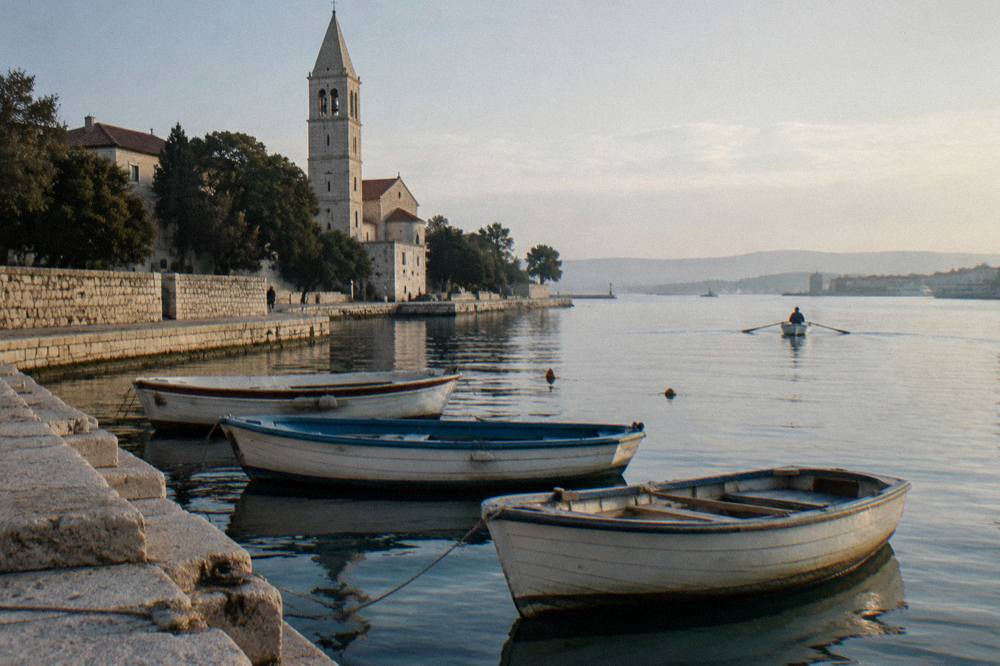
The peninsula's quays are also where the sea side of a Zadar stay begins, and a guided speedboat trip with organic food, olive oil and wine tasting is one of the tours that leaves from this shoreline.
The three tours above are the ones this site pairs most often with a stay built around the Old Town: a speedboat tasting trip on the water, a quad ride into the Dalmatian hinterland, and a Krka waterfalls day with the ticket included.
What Do The Museums In The Zadar Old Town Cost?
The Museum of Ancient Glass charges 7.00 EUR for an adult ticket, 5.00 EUR for groups of five or more and 4.00 EUR for schoolchildren, with preschoolers free, on its published price list. The Archaeological Museum and St Donatus Church run on the same city tariff, whose page shows 7.00 EUR and 5.00 EUR rows, so around 7 EUR at full price is the honest figure. The bell tower of St Anastasia has no official published price or hours at all.
The Museum of Ancient Glass is the one Zadar museum whose full tariff is verified line by line: 7.00 EUR adult, group and school reductions, and a guided tour at 20 EUR in Croatian or 30 EUR in another language for a group of about thirty. The Museum of Ancient Glass guide and the Archaeological Museum guide carry the detail.
What the peninsula does not have is a verified city card. No Zadar City Card price for 2026 could be found in official sources, so any figure quoted for one elsewhere should be treated with caution. The tourist tax, charged per night and collected by the accommodation, is confirmed at booking rather than printed here. The Gold and Silver of Zadar exhibition in the Church of St Mary likewise has no verified price and should be confirmed on site.
| Museum or sight | Adult price | Notes |
|---|---|---|
| Museum of Ancient Glass | 7.00 EUR | Groups of five or more 5.00 EUR, schoolchildren 4.00 EUR |
| Museum of Ancient Glass guided tour | 20 EUR Croatian / 30 EUR other languages | Group of about 30 |
| Archaeological Museum Zadar | 7.00 EUR full price | Reduced price 5.00 EUR |
| St Donatus Church | 7.00 EUR full price | Same city tariff; restoration from autumn 2026 may limit access |
| Gold and Silver of Zadar | Check on site | Ask for the current price |
| Cathedral of St Anastasia bell tower | Check on site | Ask for the current price at the tower |
Museum Night days bring free entry to the city museums under their own tariff, and children up to 10 enter the Archaeological Museum free.
Where Do You Eat And Drink In The Zadar Old Town?
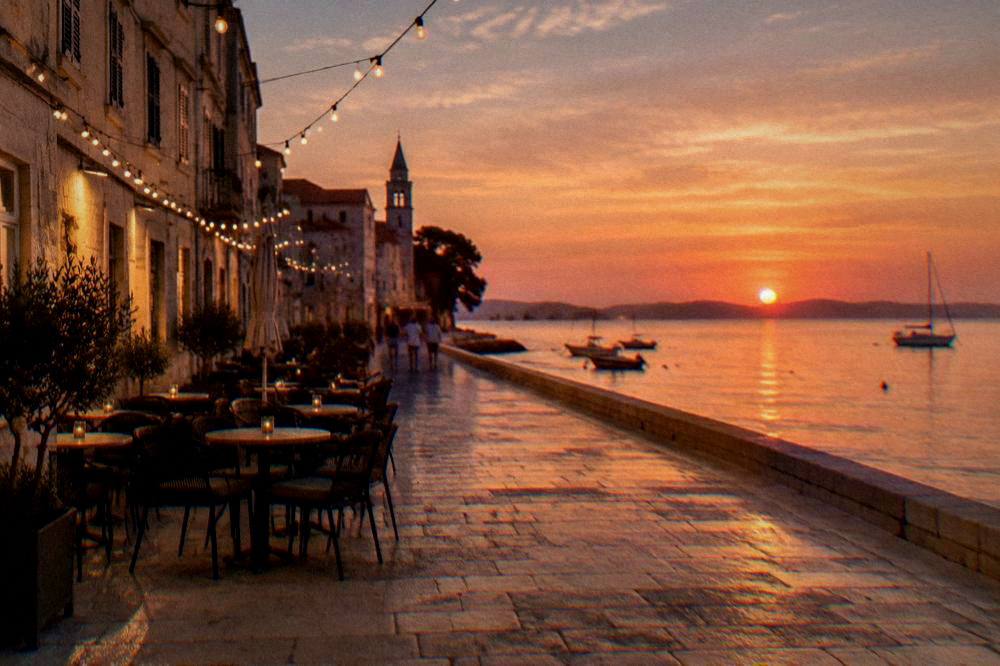
Eating on the peninsula means konoba-style kitchens around the People's Square and Kalelarga, seafood at the harbour edge, and the local specialties that Zadar is known for: fresh Adriatic fish, lamb, pag cheese, maraschino liqueur and the surrounding region's olive oil. Prices are not published in any official source this site can verify, so the figure to check is always the menu in front of you, and the food pages hold what is known rather than invented numbers.
The peninsula's food identity is tied to its position. The fish comes off the same Adriatic the Sea Organ sits above, the cheese arrives from Pag across the water, and maraschino, the cherry liqueur Zadar has produced for centuries, is the local pour. The Zadar food guide, the restaurants guide and the page on maraschino and drinks cover the ground in detail, including where the local kitchens cluster.
Two 2026 changes touch eating and drinking on the peninsula. The first is behavioural: dress-code signs installed in summer 2026 at key access points require appropriate clothing, no swimwear or nudity, with warnings followed by fines of up to 130 euros under the existing communal order decision. The second is regulatory: the municipality signalled intent to restrict night-time retail alcohol sales in shops and kiosks in the Old Town for the 2026 season, following a national law change; bars and restaurants were not the target. Both are reported measures, so treat them as the current frame rather than permanent law.
For the taste of the region without the legwork, a food and wine walk through the Old Town is one option, and the guided speedboat tour this site features pairs the shoreline with organic food, oil and wine tasting on the water.
How Do You Get To And Around The Zadar Old Town?
The peninsula is reached on foot, by city bus or by shuttle from Zadar Airport, whose own page puts the airport about 8 km from the city, with the Liburnija shuttle at 5.00 EUR one way including luggage, about 20 minutes to the Old Town, and the ticket valid 90 minutes on city buses.
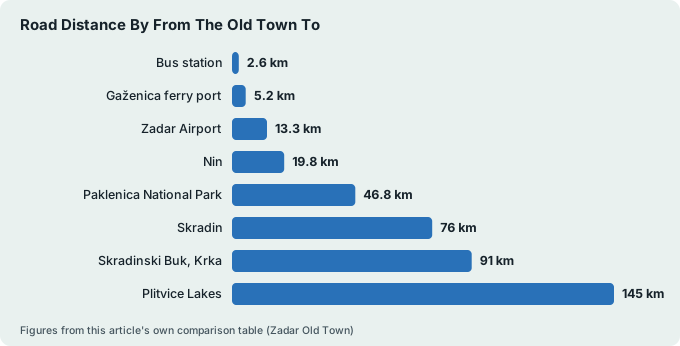
The bus station on Ante Starčevića 1, operated by Liburnija, sits 2.6 km from the peninsula, about six minutes by road. The Gaženica ferry port, where Jadrolinija's island and international lines dock, is 5.2 km away, about ten minutes. From the old town, driving distances computed by road routing are 13.3 km to the airport (22 minutes), 19.8 km to Nin (28 minutes), 46.8 km to Paklenica (57 minutes), 91 km to Skradinski Buk in Krka (73 minutes) and 145 km to Plitvice (153 minutes).
Within the peninsula, walking is the only sensible mode. Drivers are better advised to park outside the core; the Zadar parking guide and the airport to city centre guide carry the verified detail.
| From the Old Town to | Road distance | Driving time |
|---|---|---|
| Bus station | 2.6 km | 6 min |
| Gaženica ferry port | 5.2 km | 10 min |
| Zadar Airport | 13.3 km | 22 min |
| Nin | 19.8 km | 28 min |
| Paklenica National Park | 46.8 km | 57 min |
| Skradin | 76 km | 62 min |
| Skradinski Buk, Krka | 91 km | 73 min |
| Plitvice Lakes | 145 km | 153 min |
For arrivals by sea, the page on getting from the port to the Old Town covers the practical step, and the Zadar ferry guide holds the lines.
What Rules And Conditions Apply In The Zadar Old Town In 2026?
Three reported 2026 measures frame a visit: dress-code signs at peninsula access points banning swimwear, with fines up to 130 euros after a warning; a planned night-time restriction on retail alcohol sales in Old Town shops and kiosks for the 2026 season; and the start of the St Donatus roof restoration in autumn 2026, about six months of works that may limit interior access. County-wide, new concession rules keep beach access free, with commercial use capped at 40 to 60 percent of a beach.
None of these closes the peninsula. The Sea Organ and Greeting to the Sun remain free and open at all hours, and no closures or renovations were reported for either installation or for the city walls and bell tower in the 2026 season. The Old Town's rules are about conduct and capacity, not access.
Weather planning uses the official station record. The DHMZ table for the Zadar station, 1961-2024, gives a July mean of 24.5 C against 7.3 C in January, with July the driest month at 35.4 mm of rain and November the wettest at 123.0 mm. Sunshine totals about 2,600 hours a year across the same record. The full breakdown sits in the Zadar weather guide and the best time to visit guide.
| Month | Mean C | Rain mm |
|---|---|---|
| January | 7.3 | 76.4 |
| March | 10.0 | 66.3 |
| May | 17.9 | 64.4 |
| July | 24.5 | 35.4 |
| September | 20.2 | 110.9 |
| November | 12.1 | 123.0 |
Where Can You Stay Near The Zadar Old Town?
The peninsula itself holds a limited stock of rooms inside historic buildings, while the named resort areas around the city each offer a different trade-off: Borik and Puntamika to the northwest for beaches and hotels, Diklo further out for a quieter family stretch, Arbanasi across the bay for a local feel, and Kolovare to the southeast for the nearest sandy beach to the centre.
The choice is really between being on the peninsula and being near it. On the peninsula, you trade car access and space for the ability to reach the Sea Organ on foot at midnight. Off it, the areas listed above each have their own character, and the where to stay in Zadar guide compares them properly.
| Area | Direction from peninsula | Character |
|---|---|---|
| Borik | Northwest | Hotel and beach resort strip |
| Puntamika | Northwest | Beaches close to the centre |
| Diklo | Northwest, furthest out | Quieter family stretch |
| Arbanasi | Across the bay | Local, residential |
| Kolovare | Southeast | Nearest sandy beach to the centre |
The area guides at Borik, Puntamika, Diklo, Arbanasi and Kolovare carry each one in detail.
What Day Trips Start From The Zadar Old Town?
The peninsula is the departure hub for the region's day trips: Krka National Park 91 km away by road, Plitvice Lakes 145 km, Paklenica 46.8 km, Nin 19.8 km, and the islands of Ugljan and Dugi Otok directly offshore by ferry, with Dugi Otok reached from Gaženica in 1 hour 40 minutes on Jadrolinija's line 434. Park entry is charged per person at Krka, Plitvice, Paklenica and Telašćica, but per vessel by length and season at Kornati, where tickets are bought outside the park.
The price ladder matters more than the distances. Krka charges adults 7 EUR in the January-to-March and November-to-December window, 20 EUR in April, May and October, and 40 EUR from June to September, on the park's 2026 price list. Plitvice runs 10, 23 and 40 EUR across the same seasonal shape. Paklenica runs 5, 8 and 10 EUR, Telašćica 6 EUR off-season and 8 EUR in summer at its land entrance, and Vransko jezero 6 EUR with a 15 EUR family ticket. Since 2021 swimming has been banned at Krka's Skradinski Buk to protect the travertine, and is permitted only at designated spots such as Roški slap, Stinice and Pisak from 1 June to 30 September.
The dedicated guides hold the rest: Krka National Park, Plitvice Lakes, Kornati Islands, Paklenica, Nin and Ugljan Island, with the full round-up in the day trips guide and the wider picture on the things to do in Zadar page.
For trips with a guide, the boat, quad and Krka options below all collect from the Zadar side.
How Does The Zadar Old Town Fit Into A Longer Stay?
Two full days are enough to cover the peninsula's sights at a walk's pace and add one sea trip; three days allow one inland park, typically Krka or Paklenica; and four days open the full circle of Plitvice, Kornati and the northern islands. The site's itinerary guides are built on exactly that ladder, and nothing on the peninsula itself requires more than a day of walking to see in full.
The reasoning is geographic. The peninsula is compact, and everything beyond it is a half-day or full-day excursion measured in boat hours or motorway kilometres. A stay that mixes one peninsula day, one island day and one park day hits the three registers Zadar offers: Roman and medieval stone, open Adriatic water, and the karst hinterland with its rivers and canyons.
The itineraries are set out at one day in Zadar, two days, three days and the four-day itinerary, with a rainy day itinerary built around the museums and the covered spaces of the peninsula.
Common Questions About The Zadar Old Town
Is the Zadar Old Town free to enter?
Yes. The peninsula has no gate, wall ticket or entry charge, and the Roman Forum, Kalelarga, Five Wells Square, the Land Gate, the Sea Organ and the Greeting to the Sun are all free public spaces open at any hour. Only the museums and St Donatus Church charge, around 7 EUR full price at the city museums.
How long do you need for the Zadar Old Town?
The peninsula is compact enough that its sights fit into one unhurried walking day. Add a second day for a boat trip from the quays and a third for an inland park, following the itineraries on this site.
Can you see the Sea Organ and the Greeting to the Sun at night?
Both installations are open public spaces accessible at all hours, and the Greeting to the Sun is a solar-powered light installation, so the hours after dusk are part of the point. No official light-show start time is published, so time the visit to the sunset itself.
Is the Zadar Old Town walkable?
Entirely. The peninsula is flat, its streets are pedestrian in practice, and the distance from the Land Gate to the Sea Organ is a short stroll. Wheelchair and pram access is easiest along the Riva seafront, which runs level and unobstructed.
Can you swim from the Zadar Old Town?
The peninsula's seawalls are not beaches, and the nearest real sandy stretch is Kolovare beach to the southeast, covered in the site's beaches guide. County concession rules in force for the 2026 season keep beach access free and unfenced, with commercial sunbed areas capped at 40 to 60 percent of a beach.
Is St Donatus Church open in 2026?
Access may be limited. A roof restoration planned from autumn 2026, about six months of works, is the first phase of a roughly two-year restoration, and individual visits depend on the phase. Check before going.
The peninsula rewards exactly the pace it imposes: slow, on foot, and timed to the evening when the Sea Organ plays and the Greeting to the Sun lights the paving beside it, all of it free and open to anyone standing there. The Zadar Croatia Travel Guide holds the rest of the city around it, from the beaches at Kolovare to the parks a bus ride inland.
