Zadar Parking
Zadar's historic centre sits on a narrow pedestrian-led peninsula, so parking is really a question of where to leave the car and how to reach Poluotok on foot or by bus. This guide sets out what the verified sources say, with no invented tariffs.
Short answer
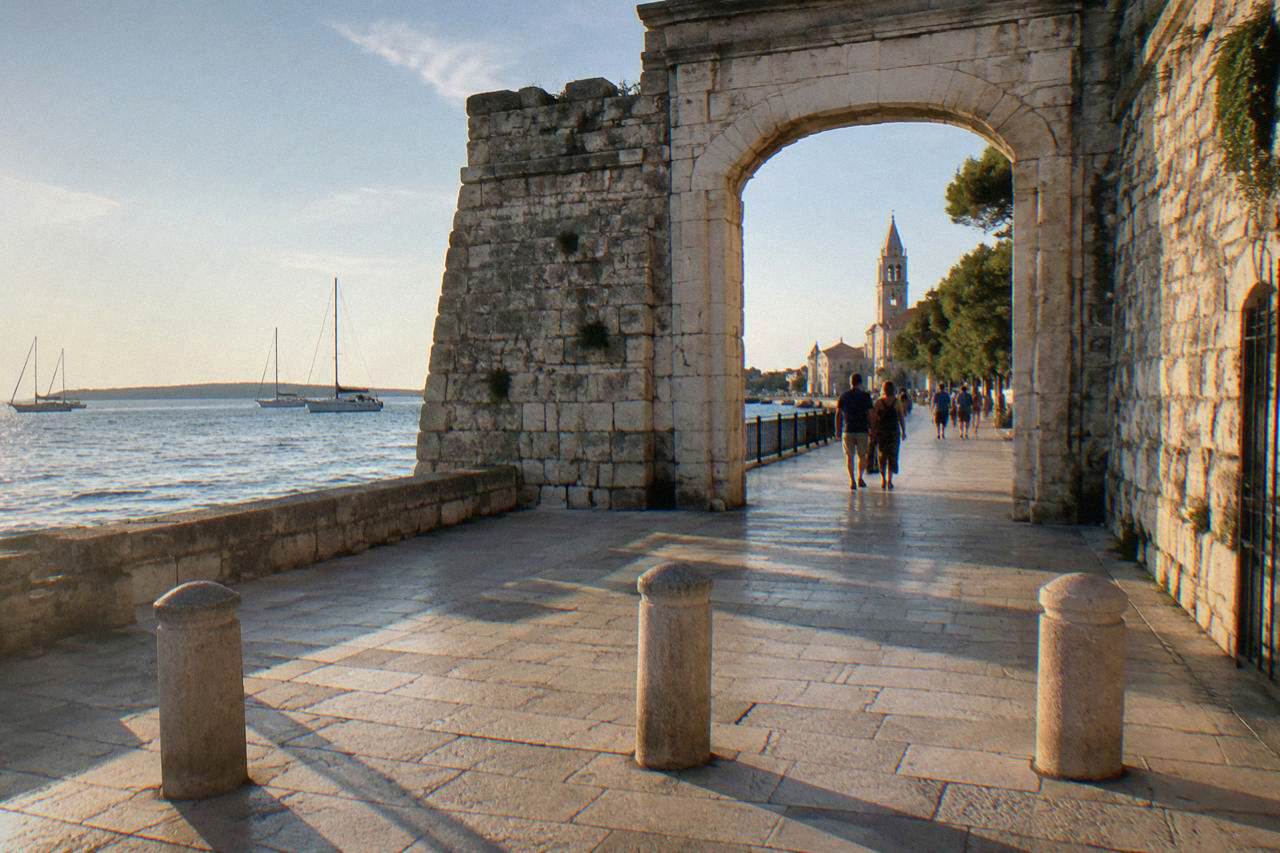
Zadar's Old Town (Poluotok) is a restricted, pedestrian-led peninsula where ordinary street parking is not a realistic plan; the verified approach is to park on the mainland edge of the centre, walk in, or use city buses, and to confirm current local rules and rates on arrival.
Zadar, a coastal city in Dalmatia on the Adriatic, keeps its historic centre on a narrow peninsula called Poluotok, and that single geographic fact shapes everything about parking here. The peninsula is a restricted, pedestrian-led zone, so the real question for a driver is not "where in the Old Town can I park" but "where on the mainland edge do I leave the car, and how do I cover the last stretch on foot or by bus". For the wider picture of what awaits once the car is parked, see things to do in Zadar and the planning pages on this site such as Zadar Croatia Travel Guide.
Where Can You Park When Visiting The Zadar Old Town?
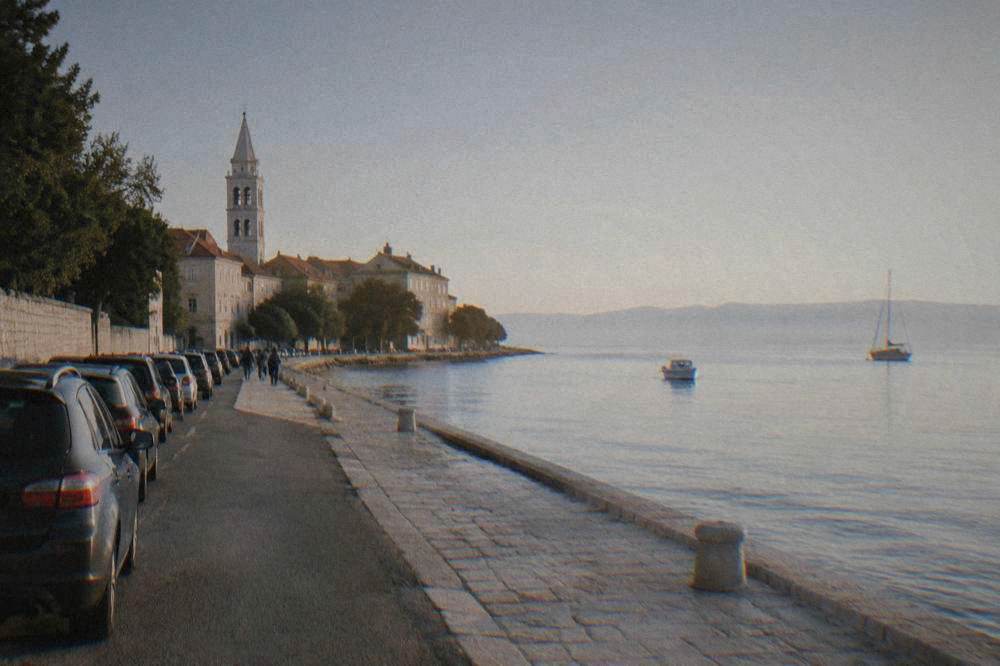
There is no realistic public parking plan inside Zadar's Old Town itself, because Poluotok is a restricted, pedestrian-led peninsula; the practical approach is to park on the mainland edge of the centre, within walking distance of the Land Gate and the Riva, and cross onto the peninsula on foot. Check the current tariff with the parking operator.
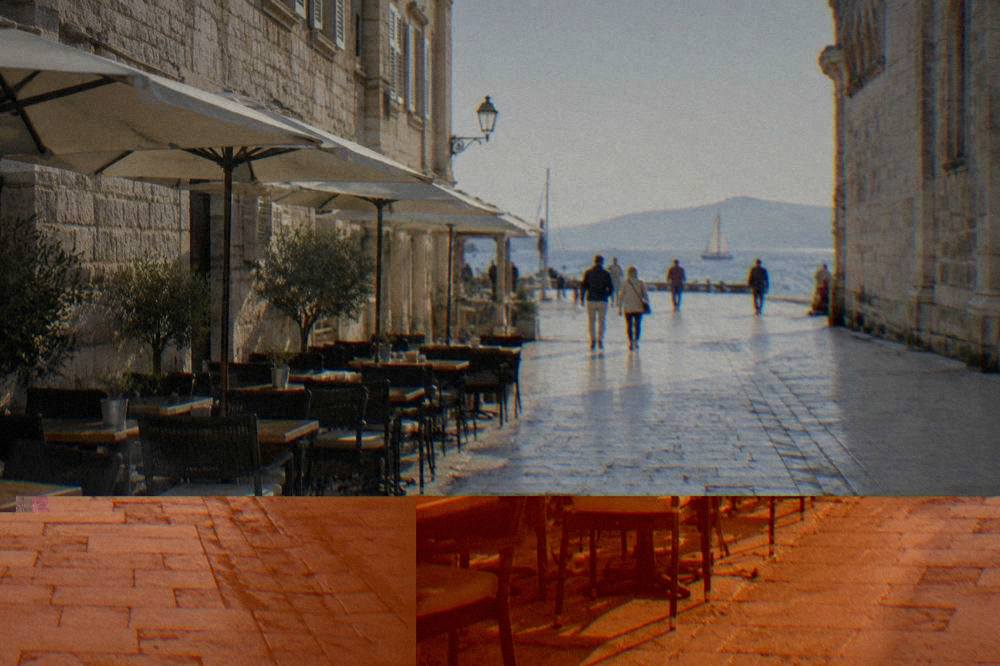
The peninsula is small enough that once you are on it, a car is a burden rather than a help. Kalelarga, the Roman Forum, the Cathedral of St Anastasia and the Sea Organ are all a short walk apart, and the streets between them are narrow, stone-paved and largely given over to pedestrians. The verified geography is straightforward: the Old Town sits on a finger of land with the mainland bus station 2.6 km away by road and the Gaženica ferry port 5.2 km away, both figures computed from OpenStreetMap routing.
What that means in practice is a park-and-walk pattern. Drivers arrive on the mainland side, leave the car in a public car park or on-street space near the peninsula's base, and walk across. Distances involved are short; the peninsula is roughly a kilometre from end to end at walking pace.
A few planning notes worth holding onto:
- The centre is pedestrian-led: expect to walk the final stretch regardless of where you park.
- Zadar's own pages on where to stay in Zadar help if you would rather book accommodation within walking distance and skip the car entirely.
- If you are arriving by air, the airport to city centre guide covers the shuttle alternative.
Is Driving Into The Zadar Peninsula Practical For Visitors?
Driving into the Zadar peninsula is not practical for ordinary visitor traffic, because Poluotok functions as a restricted historic zone where through-driving and ordinary street parking are not realistic options; access rules are enforced locally, delivery and resident traffic is managed separately, and the verified advice from every official angle points the same way: park on the mainland edge and walk in, and confirm the current local restrictions rather than relying on secondhand summaries.
This is normal for Dalmatian old towns and Zadar is a firm example of the pattern. The peninsula's street plan predates cars by many centuries, and the city has progressively pedestrianised it. Reports from summer 2026 add that the municipality posted dress-code signs at key access points to the historic core, requiring appropriate clothing with fines of up to 130 EUR for swimwear or nudity after a verbal warning, which is one more sign of how the peninsula is treated as a managed pedestrian space rather than a driving one.
There is also a night-time angle reported for 2026: the municipality signalled intent to restrict retail alcohol sales in shops and kiosks in the Old Town during evening hours, under a national law change, as a noise and overtourism measure. That does not affect drivers directly, but it underlines the direction of travel for the peninsula: managed, walkable, and regulated at the local level, with the details confirmed on site.
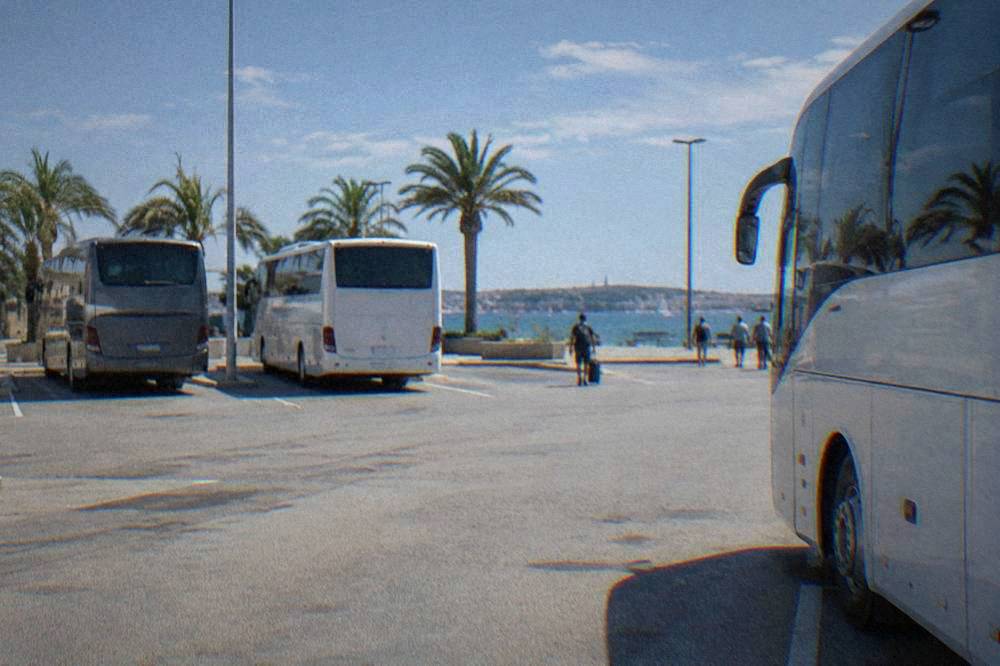
For movement within the city, buses fill the gap. One fresh, dated detail: from 12 October 2026 the evening departures at 21:00 and 22:00 on the Poluotok, Arbanasi and Kolodvor line were rerouted because of recurring traffic issues in Arbanasi, a reminder that even the bus network adjusts around the peninsula's constraints. The bus station itself sits at Ante Starčevića 1, 2.6 km by road from the Old Town, and city buses connect the two; see the site's public transport and how to get to Zadar pages for the fuller picture.
If you would rather not think about zones, restrictions or evening reroutes at all, guided alternatives remove the driving question entirely. The Zrmanja River kayaking trip with optional transfer from Zadar is one such option, collecting you in the city and taking the logistics off your hands, and the picks below cover a city walk and an Old Town food and wine walk that both start on foot in the centre.
How Far Is Zadar Airport, And Should You Park There Or In The City?
Zadar Airport sits about 8 km from the city by its own how-to-get-here page, with the drive from the Old Town computed at 13.3 km and roughly 22 minutes in free-flow conditions, so the airport is not a sensible place to base a car while visiting Zadar; the airport's own page documents a shuttle bus at 5.00 EUR one way including luggage, about 20 minutes to the Old Town, which makes a car-free transfer straightforward.
The airport page also gives longer-distance context that drivers use for planning: Zagreb is 297 km by road, Split 158 km and Rijeka 305 km. Those are the three great axes of Croatian driving, and all of them end on the A1 motorway approaching Zadar. Check the current toll at the plaza or with your rental company.
Two airport facts matter for parking decisions. First, the airport has been expanding: a new departures terminal was presented on 24 July 2026, part of a plan that doubles capacity toward three million passengers a year, and new Wizz Air routes to Budapest and Warsaw began on 7 June 2026 at four flights weekly. An airport in growth is an airport with changing drop-off and parking arrangements, so the Zadar airport guide is the right place to check details before you fly-drive.
Second, the shuttle undermines the case for collecting a car purely for the transfer. At 5.00 EUR one way including luggage, about 20 minutes, with the ticket valid for 90 minutes on city buses afterwards, the airport-to-Old-Town movement is cheap and simple without a vehicle. Rental cars still make sense for park-heavy itineraries, and the site's airport car rental guide weighs that up.
Do You Even Need A Car In Zadar?
A car is genuinely optional in Zadar itself: the Old Town is walkable end to end, city buses connect the peninsula with the bus station and district beaches, the airport shuttle covers the transfer, and Jadrolinija ferries run to the nearby islands, so a car only earns its keep for multi-stop day trips such as Krka, Plitvice, Paklenica or Pag, where public connections are thinner and the verified road distances are long.
This is the honest arithmetic of the destination. Inside the city, everything a short-break visitor wants, the Sea Organ, the Greeting to the Sun, the Forum, the museums, the Riva, sits on or beside the peninsula. The climate supports walking too: Zadar station, 1961-2024 (DHMZ), records a July mean of 24.5 C and a January mean of 7.3 C, with about 2,600 hours of sunshine a year, so even midwinter walking is a reasonable plan with a jacket.
The car-free case is strongest for these scenarios:
| Car-free scenario | Verified support |
|---|---|
| Airport transfer | Shuttle 5.00 EUR one way incl. luggage, about 20 min, ticket valid 90 min on city buses |
| Old Town sightseeing | Peninsula is pedestrian-led; Sea Organ and Greeting to the Sun are free, open installations |
| Island hopping | Jadrolinija runs from Gaženica (5.2 km from Old Town) and Zadar to Ugljan and Dugi Otok |
| Guided day trips | Krka, Plitvice and Kornati tours depart from Zadar with transport arranged |
| City orientation | Tuk tuk and bus sightseeing rides operate without any parking question |
Where a car stops being optional is the inland and long-range day trips. Krka's Skradinski Buk is 91 km by road, Plitvice 145 km, Paklenica 46.8 km. Those are computed OpenStreetMap driving distances from the Old Town, and they add up over a week. A driver doing three such trips has a clear case for a rental; a visitor doing one can often match it with a guided tour and skip the wheel entirely.
For a middle path, guided sightseeing rides cover Zadar without any parking overhead at all, and the pick below is one of the local options.
What Are The Verified Driving Distances From Zadar's Old Town?
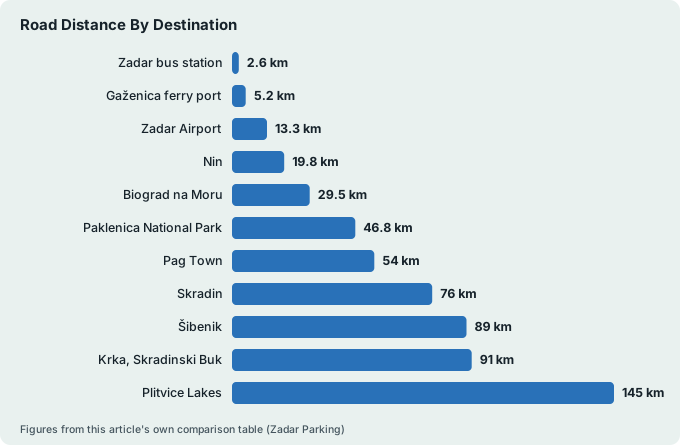
The verified driving distances from Zadar's Old Town, computed on OpenStreetMap car routing in free-flow conditions, are: bus station 2.6 km, Gaženica ferry port 5.2 km, airport 13.3 km, Nin 19.8 km, Biograd 29.5 km, Paklenica 46.8 km, Pag Town 54 km, Skradin 76 km, Šibenik 89 km, Krka's Skradinski Buk 91 km and Plitvice 145 km, with the airport page separately giving Zagreb 297 km, Split 158 km and Rijeka 305 km.
Those figures are the spine of any driving plan for the region, and they deserve a table of their own because parking decisions flow from them. A trip to Nin is a twenty-minute run; Plitvice is a commitment of a few hours each way. The distances below are all one-way from the Old Town.
| Destination | Road distance | What it means for parking |
|---|---|---|
| Zadar bus station | 2.6 km | Mainland side; buses to the peninsula |
| Gaženica ferry port | 5.2 km | Car ferries to Dugi Otok |
| Zadar Airport | 13.3 km | Shuttle alternative exists |
| Nin | 19.8 km | Short salt-pan and beach run |
| Biograd na Moru | 29.5 km | Gateway to Kornati boat trips |
| Paklenica National Park | 46.8 km | Hiking and climbing day trip |
| Pag Town | 54 km | Bridge-linked island, no ferry needed |
| Skradin | 76 km | River port for Krka |
| Šibenik | 89 km | Full-day town visit |
| Krka, Skradinski Buk | 91 km | Waterfall day trip |
| Plitvice Lakes | 145 km | Longest standard day trip |
Notice what the table quietly says about parking in Zadar itself: the two nearest rows, the bus station and Gaženica, are both on the mainland, and both are natural places to be on foot or in transit rather than hunting for a space on the peninsula. Pag is the one island destination that needs no ferry at all, since the road reaches it by bridge, which is why it appears in the site's day-trip planning pages including day trips from Zadar.
What Do National Park Entry Fees Add To A Driving Day From Zadar?
Every major park around Zadar charges an entry fee that varies by season, on the parks' own current price lists: Krka runs 7, 20 or 40 EUR for adults by month, Plitvice 10, 23 or 40 EUR, Paklenica 5, 8 or 10 EUR, Telašćica 6 or 8 EUR at its land entrance and Vransko jezero 6 EUR, while Kornati is the exception, charging per vessel by boat length and season rather than per person, with entry bought outside the park.
That fee layer sits on top of the fuel and time in the distance table above, and it changes the arithmetic of seasonality. A family driving to Krka in August pays the 40 EUR summer rate per adult; the same drive in November pays 7 EUR per adult, with the drop to winter-shoulder rates effective from 1 October 2026. The full pattern by park:
| Park | Adult entry by season (2026, EUR) | Basis |
|---|---|---|
| Krka NP | 7 (Jan-Mar, Nov-Dec) / 20 (Apr, May, Oct) / 40 (Jun-Sep) | Per person, all accessible land sites |
| Plitvice Lakes NP | 10 (Jan-Mar, Nov-Dec) / 23 (Apr, May, Oct) / 40 (Jun-Sep) | Per person, timed online tickets advised |
| Paklenica NP | 5 (Jan, Feb, Nov, Dec) / 8 (Mar, Apr, Oct) / 10 (May-Sep) | Per person, one day |
| Telašćica Nature Park | 6 (Jan-May, Oct-Dec) / 8 (Jun-Sep) | Per person at Dolac land entrance |
| Vransko jezero Nature Park | 6 adult, 3 child 7-18, 15 family | Per person |
| Kornati NP | e.g. 25-45 EUR for one day for boats up to 6.99 m, rising with vessel length | Per vessel, bought outside the park |
The Kornati row deserves a second look because it catches drivers out. Arriving by boat, the fee is charged on the vessel, not the passengers, scaled by length and season, and it is purchased before or outside the park rather than at a gate. A driver who parks in Zadar or Biograd and boards a Kornati boat tour has handed that whole calculation to the operator, which is one of the quiet arguments for boat-based visits to that park. The site's Kornati islands page unpacks the mechanics.
One rule that belongs in any Krka driving plan: swimming at Skradinski Buk has been banned since 2021 to protect the travertine, and swimming in the park is permitted only at designated spots, Roški slap, Stinice and Pisak, from 1 June to 30 September, conditions permitting. Plan the day around viewpoints and walkways at the main site, not a dip.
For drivers who want the park experience without the parking research, guided options bundle transport, and the kayak pick below is a river-based alternative that collects in Zadar.
What If You Want To Take The Car To The Islands From Zadar?
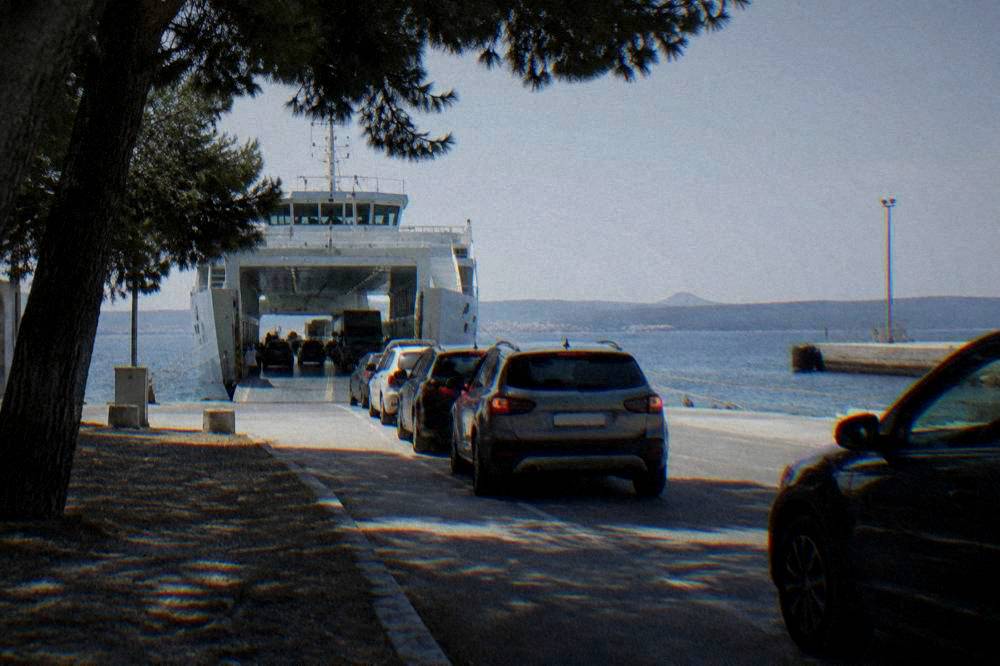
Jadrolinija runs car and passenger ferries from Zadar's Gaženica port and the city waterfront to the near islands: the Dugi Otok crossing to Brbinj on line 434 takes 1 h 40 min, the crossing to Preko on Ugljan takes about 25 to 30 minutes, and both are year-round lifeline services, though no fare could be verified for either route and none is printed here, so confirm prices with the operator before travel.
Gaženica is the vehicle-ferry hub, 5.2 km by road from the Old Town, and that distance is itself a parking consideration: ferry travellers drive out of the centre to the port, and the port's own parking arrangements should be confirmed with the operator or the port authority rather than assumed. The Zadar ferry guide and the site's page on Gaženica carry the fuller operational detail.
| Route | Operator detail | Verified crossing time |
|---|---|---|
| Zadar (Gaženica) to Brbinj, Dugi Otok | Jadrolinija line 434 | 1 h 40 min |
| Zadar to Preko, Ugljan | Jadrolinija | About 25-30 min |
| Zadar to Ancona, Italy | Fast catamaran, passenger-only | About 4 h (2026 season ended 6 Sep 2026) |
The Ancona line comes with a caveat for drivers: the fast catamaran is passenger-only, so no car crosses on it, and the 2026 season ran to 6 September 2026; check with the operator for 2027 dates. Cars heading to Italy would need a different routing entirely.
For the near islands, the car question is genuinely open. Ugljan at a 25 to 30 minute crossing is close enough that a car is easy but not necessary; Dugi Otok's beaches and Sakarun are the draw that tempts drivers over on the 1 h 40 min Brbinj sailing. The counter-argument is the boat-tour network out of Zadar, which reaches Dugi Otok, the sunken ship and the sea caves without any ferry timetable at all, as the site's Zadar boat tours pages describe.
What Local Rules Should A Driver In Zadar Know About?
The rules a Zadar driver should know in 2026 are: the Old Town peninsula is a restricted pedestrian-led zone with dress-code enforcement at its access points and fines up to 130 EUR for swimwear after a warning, retail alcohol sales in the Old Town face reported night-time limits, county beach concessions must keep access free with no fencing or entry fees, evening bus routes around the peninsula were rerouted from 12 October 2026, and drivers should check the current parking tariffs and motorway tolls locally.
Each of those comes with an attribution worth respecting, because none is a bare official fact sheet item. The dress-code signage was reported installed in summer 2026 at key access points to the historic core, resting on the city's existing communal order decision. The alcohol restriction was confirmed as municipal intent under a national law change allowing municipalities to limit night-time retail sales, aimed at noise on the peninsula, with bars and restaurants unaffected. Both are reported measures, and both should be sanity-checked on arrival.
The beach concession rules matter for a different reason: they kill a recurring worry. Zadar County's assembly adopted rules for the 2026 season under which concession beaches cannot fence themselves off or charge entry, and commercial use such as sunbeds is capped at 40 to 60 percent of a beach's area, leaving the rest free for people with their own towels. A driver touring the coast's beaches, from Kolovare westward, is never paying to step onto the sand.
A small practical table of the rules in force:
| Rule | Status | Effective |
|---|---|---|
| No swimwear in the Old Town core | Reported, fines up to 130 EUR after warning | Signs posted Jul 2026 |
| Night-time retail alcohol limits, Old Town | Reported municipal intent, national law basis | 2026 season |
| Beach access must stay free and unfenced | County assembly decision | 2026 season |
| Evening bus rerouting, Arbanasi | Local report, municipal change | From 12 Oct 2026 |
The last row is deliberate. Plenty of pages quote Zadar parking zone prices; the figures trace to a newspaper report rather than an official tariff, and this site does not repeat them. The honest instruction is to check the machine, the signage or the accommodation host on arrival.
How Does Parking Fit Into A Longer Zadar Itinerary?
Parking fits into a longer Zadar itinerary as a bookend, not a daily chore: arrive, park on the mainland edge or at your accommodation outside the peninsula, and then live car-light for the city days, reserving the car for at most a few long day trips, with the verified distances (Nin 19.8 km, Paklenica 46.8 km, Krka 91 km, Plitvice 145 km) and seasonal park fees setting the rhythm of which days are driving days and which are walking days.
A two-night visitor, following the site's one day in Zadar or two days in Zadar routes, may never move the car at all. The peninsula absorbs a full day by itself: the Roman Forum, the Land Gate of 1543, the Cathedral, the Museum of Ancient Glass at 7.00 EUR adult on its verified price list, and the evening sequence of Sea Organ and Greeting to the Sun, both free, both by Nikola Bašić, from 2005 and 2008 respectively. A week-long visitor following the four-day itinerary will want two or three driving days, and the fee table above shows why October and November are the cheap months to take them.
Seasonality deserves the last word on planning. Zadar station, 1961-2024 (DHMZ), records November as the wettest month at 123 mm and July as the driest at 35.4 mm, with July also the warmest at a 24.5 C mean. A driving trip in July buys near-guaranteed sun and peak park fees; the same roads in November buy 10 EUR Plitvice tickets and the wettest month of the year. The best time to visit Zadar and Zadar weather pages work that trade-off out in detail.
Whichever season you choose, the parking question resolves the same way: leave the car on the mainland edge, walk onto the peninsula, and spend the hours you would have spent circling for a space on the Riva instead. These picks cover three ways to spend them.
Common Questions About Zadar Parking
Can you park inside Zadar Old Town?
No. The Old Town (Poluotok) is a restricted, pedestrian-led peninsula, and ordinary visitor parking there is not a realistic plan. Park on the mainland edge of the centre and walk on; the peninsula is compact and walkable end to end.
How much does parking cost in Zadar?
This site prints no Zadar parking tariff because the figures circulating online trace to newspaper reporting rather than an official price list. Confirm the current rate at the machine or with your accommodation on arrival.
Is there parking at Zadar Airport?
The airport's own pages document its location about 8 km from the city and a shuttle bus at 5.00 EUR one way including luggage, about 20 minutes, with the ticket valid 90 minutes on city buses. Current airport parking arrangements should be confirmed with the airport, especially after the new departures terminal presented on 24 July 2026.
Do I need a car in Zadar?
Not for the city itself. The Old Town is walkable, buses link the peninsula with the bus station 2.6 km away, and ferries and tours cover the islands. A car earns its keep mainly for multi-stop day trips such as Krka (91 km), Plitvice (145 km) or Paklenica (46.8 km).
Can I take my car to the islands near Zadar?
Yes. Jadrolinija runs car ferries from Gaženica port (5.2 km from the Old Town) to Brbinj on Dugi Otok, a 1 h 40 min crossing on line 434, and a crossing to Preko on Ugljan of about 25 to 30 minutes. No fare could be verified for either route, so confirm with the operator.
Is the A1 motorway toll to Zadar expensive?
Check the current toll at the toll plaza or with your car rental company before a long drive such as the 297 km trip from Zagreb.