Zadar In One Day
One day is enough to walk Zadar's Old Town peninsula, visit a museum or two, swim or kayak off the Riva, and stand at the Sea Organ for the sunset Alfred Hitchcock called the most beautiful in the world, all without rushing.
Short answer
Spend the morning walking the Old Town peninsula from the Land Gate to the Forum, visit the Museum of Ancient Glass or the Archaeological Museum after lunch, swim or take a boat out in the afternoon, and finish at the Sea Organ and Greeting to the Sun for sunset.
Zadar is a coastal city in Dalmatia, Croatia, built on a narrow peninsula that juts into the Adriatic, and its compact Old Town means a single well-planned day covers the Roman Forum, the churches, two worthwhile museums, a swim, and the sunset installation the city is now known for. Everything in this itinerary is walkable, the peninsula is roughly flat, and the islands of Ugljan and Dugi Otok sit close enough offshore that a boat trip fits into a longer stay. This page lays out one full day hour by hour, with verified ticket prices, walking distances and the seasonal catches that catch out arriving visitors.
What Can You Realistically See In Zadar In One Day?
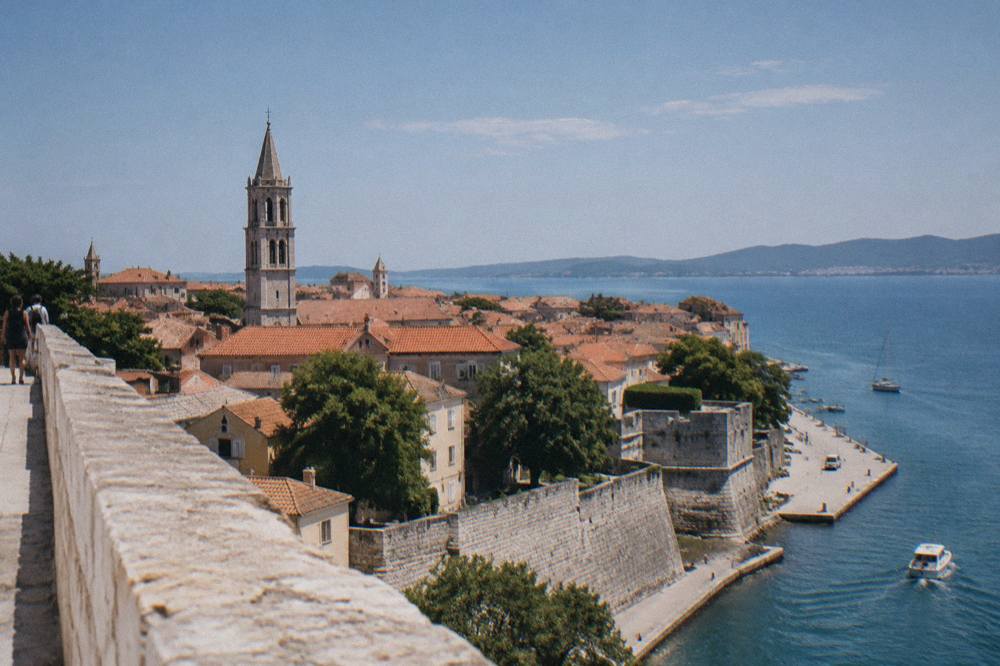
One day in Zadar covers the whole Old Town peninsula on foot: the Land Gate, Kalelarga, the Roman Forum, St Donatus Church, the Cathedral of St Anastasia, the Five Wells Square, the Riva promenade, the Sea Organ and the Greeting to the Sun, plus one museum and either a swim or a short boat trip, all inside a 12-hour window from morning coffee to the evening lights. The peninsula, called Poluotok, is small enough that no single stop is more than a 15-minute walk from any other, and the two installations that anchor the evening, the Sea Organ and the Greeting to the Sun, sit side by side on the western tip.
The shape of the day matters more than the list of sights. The Zadar station record, 1961-2024, puts the July mean at 24.5 C and the January mean at 7.3 C, so summer afternoons are for shade and sea, not for climbing bell towers.
| Time | Stop | What It Is | Entry Cost |
|---|---|---|---|
| 08:30 - 09:30 | Land Gate and Five Wells Square | 1543 Venetian gate, public square | Free |
| 09:30 - 11:00 | Kalelarga, Roman Forum, St Donatus | Main street, Roman ruins, pre-Romanesque church | Around 7 EUR at full price for St Donatus |
| 11:00 - 12:00 | Cathedral of St Anastasia | Dalmatian cathedral, bell tower | Confirm the tower climb price locally |
| 12:00 - 14:00 | Lunch in the Old Town | Konobas and pizzerias off Kalelarga | Varies by dish |
| 14:00 - 16:00 | Museum of Ancient Glass | Roman glassworking collection | 7.00 EUR adult |
| 16:00 - 18:30 | Swim at Kolovare or a boat trip | Beach east of the Old Town | Free at the beach |
| 18:30 - 20:30 | Riva, Sea Organ, Greeting to the Sun | Sunset promenade and installations | Free, open at all hours |
The schedule above assumes a summer day. In winter the same route compresses, because the sunset arrives hours earlier and the museum afternoon shifts forward. The one-day route on the main things-to-do page carries more detail on individual stops, and anyone with a second day should read the two-day Zadar itinerary rather than squeeze.
How Do You Spend The Morning In Zadar's Old Town?
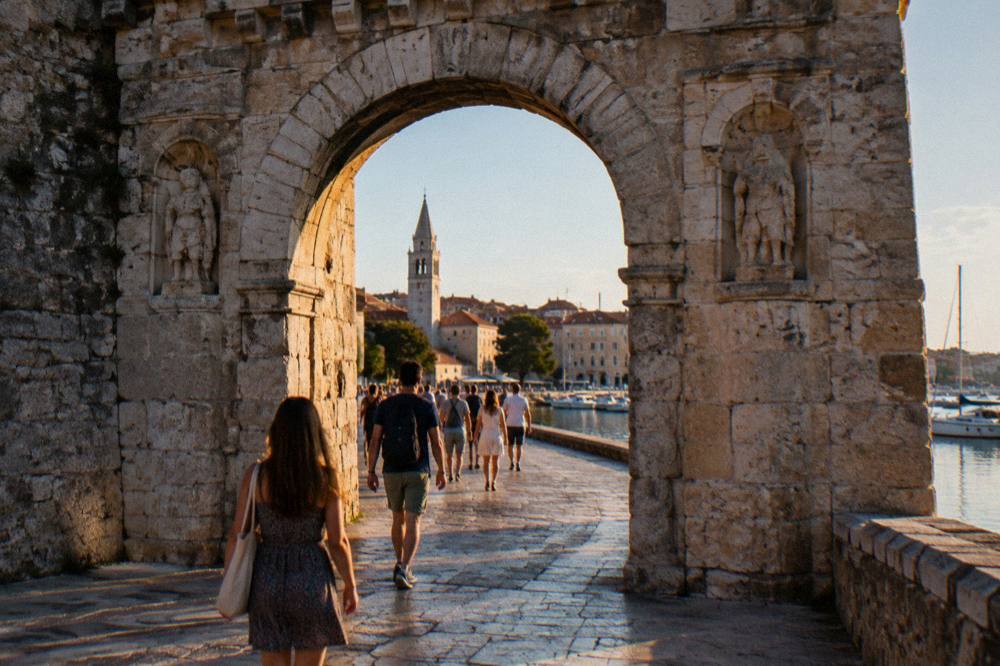
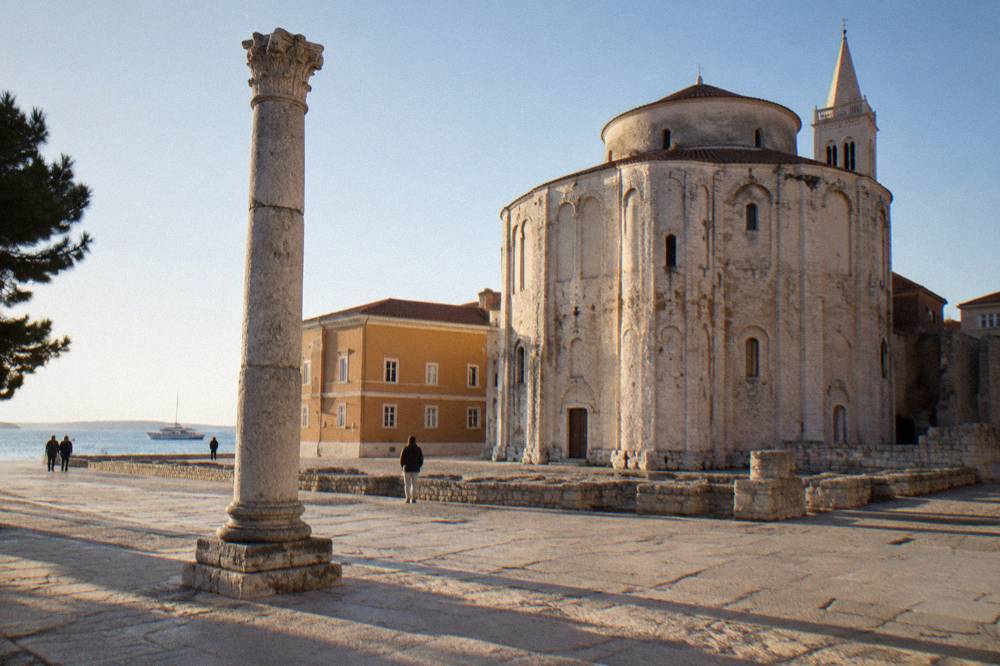
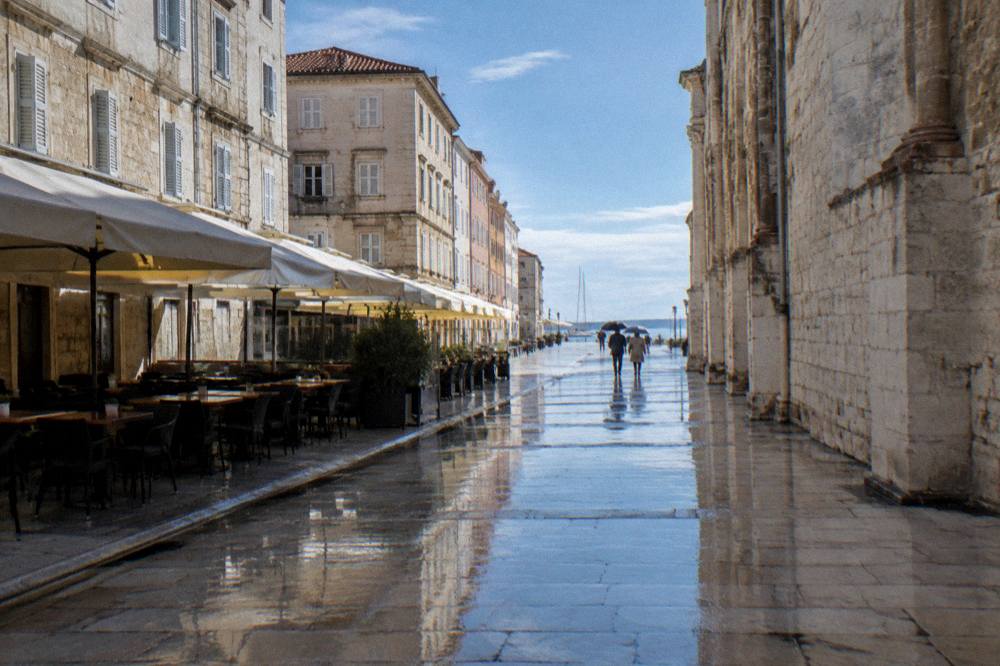
Start at the Land Gate, the Venetian gate built in 1543 beside the harbour, walk up Široka ulica, the street locals call Kalelarga, to the Roman Forum and St Donatus Church, then loop past the Cathedral of St Anastasia and the Five Wells Square, a route of roughly 1.5 km that takes a relaxed two to three hours with every stop free except St Donatus, which is around 7 EUR at full price on the museums' tariff. The gate, the Forum and the squares are public space with no tickets and no opening hours, so the morning needs no bookings at all.
The Land Gate was built in 1543 to a design attributed to Michele Sanmicheli, and it still frames the moat and harbour at the foot of the peninsula. From there the route runs straight up Kalelarga, the main street that has been the city's spine since the Roman layout, and opens onto the Roman Forum, the largest forum on this side of the Adriatic, where columns and paving slabs sit in the open air beside the Archaeological Museum. The Forum and Old Town walk needs no guide, though a guided walk adds the stories the stones do not carry.
Two catches matter in 2026. St Donatus Church, the circular pre-Romanesque building that is Zadar's most photographed monument, faces a roof restoration: the tender for a full replacement of the wooden roof structure was launched at the end of August 2026, with works planned from autumn 2026 over about six months, so access may be limited and the St Donatus page should be checked before going. And the Old Town now carries dress-code signs at key access points: no swimwear or nudity in the historic core, with reported fines up to 130 EUR after a verbal warning, so the morning walk needs normal street clothes, not beachwear.
| Morning Stop | Note | What To Look For | Cost |
|---|---|---|---|
| Land Gate (Kopnena vrata) | Built 1543 | Venetian arch, moat, harbour view | Free |
| Kalelarga (Široka ulica) | Roman street line | Cafes, shops, People's Square | Free |
| Roman Forum | Roman-era ruins | Columns, paving, altar base | Free |
| St Donatus Church | Circular pre-Romanesque form | Monolithic stone walls, interior echo | Around 7 EUR full price, access may be limited during 2026 roof works |
| Cathedral of St Anastasia | Romanesque Dalmatian cathedral | Nave, bell tower | Tower price and hours not published, confirm locally |
| Five Wells Square | Renaissance wellheads | Five wellheads, open terrace | Free |
A guided walk compresses the morning and adds context the plaques skip. The Zadar Highlights walk pairs the Old Town and the Sea Organ with local tastings, and the roster carries a Zadar Highlights tour page with full details. Tip-based free walks also run in the city; confirm the arrangement with the guide directly, since the tip level is set on the spot.
Where Should You Eat Lunch In Zadar?
Lunch in Zadar means a konoba, a traditional Dalmatian tavern, in the lanes off Kalelarga or on the Riva, where the local menu runs on grilled fish, black cuttlefish risotto, pašticada, sheep cheese from the island of Pag and the city's own maraschino cherry liqueur, with the daily catch priced per kilogram at the chalkboard rather than fixed on a menu. The Old Town holds enough konobas, pizzerias and bakeries that no single address needs booking at lunchtime, and a bakery burek is a legitimate budget option between the Forum and the Riva.
The dishes worth knowing by name: fresh Adriatic fish grilled simply, crni rižot, the black risotto coloured with cuttlefish ink, pašticada, beef slow-cooked in a wine and prune sauce served with gnocchi, and pršut and paški sir, dry-cured ham and the salted sheep cheese of Pag island, which sits just up the coast. Maraschino, the cherry liqueur distilled in Zadar since the Venetian period, appears as a digestif; the food and maraschino guide on this site covers the dishes and the drink in more depth than a one-day page can.
The food-and-walk tours fold lunch and the Old Town into a single block, which suits a one-day visit where every hour counts. The Discover the Old Town Through Food, Wine and History walk stops at several tasting points while covering the main sights, and its tour page lists what the tastings cover. The food tour with local dishes runs longer and goes deeper, for readers whose one day is built around eating.
What Should You Do In Zadar In The Afternoon?
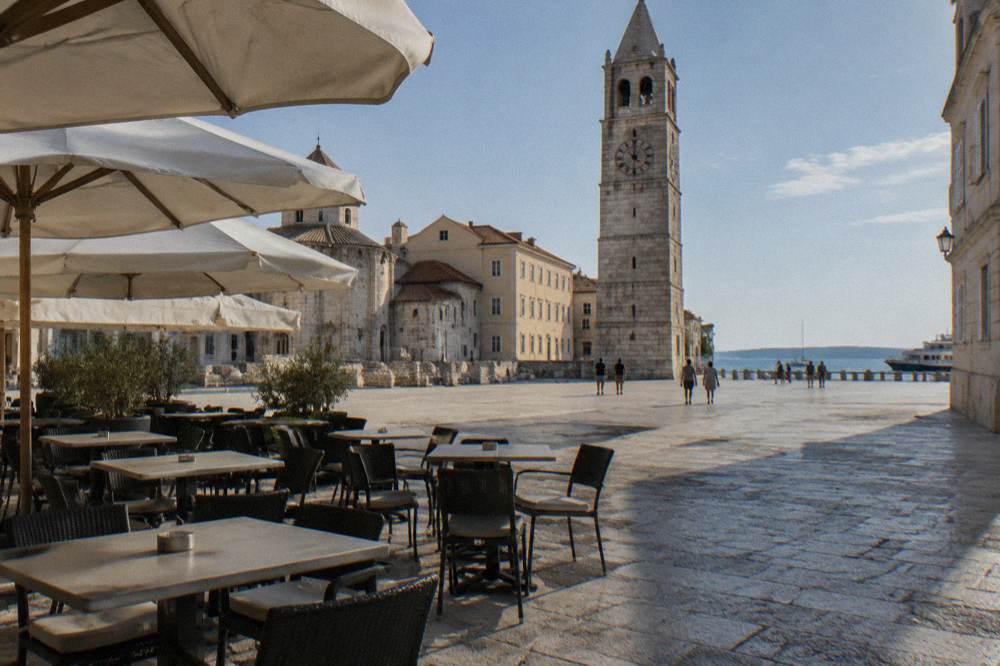
The afternoon belongs indoors or in the water: the Museum of Ancient Glass at 7.00 EUR for an adult, the Archaeological Museum at around 7 EUR at full price, or a swim at Kolovare Beach a 20-minute walk east of the Old Town, and on a summer day the museum hours from 14:00 to 16:00 dodge the strongest sun before the beach or a boat trip takes over. Both museums sit on or beside the Forum, so the pairing is a 100-meter walk, and the glass museum's live glassblowing demonstrations run on the museum's own schedule, which its hours page carries.
The Museum of Ancient Glass holds the Roman glass recovered from Zadar's waters and graves, displayed over two floors, and its ticket page lists 7.00 EUR for adults, 5.00 EUR for groups of five or more, and 4.00 EUR for schoolchildren, with guided tours at 20 EUR in Croatian or 30 EUR in other languages for a group. The museum's opening hours have been reported inconsistently across sources, so the hours should be confirmed on the museum's own hours page rather than assumed. The Archaeological Museum, on the Forum itself, covers Zadar's layers from prehistory through the Roman and medieval periods, and the joint tariff with St Donatus shows 7.00 and 5.00 EUR rows, so "around 7 EUR at full price" is the figure to plan on.
| Museum | Adult Ticket | Reduced | Notes |
|---|---|---|---|
| Museum of Ancient Glass | 7.00 EUR | 5.00 EUR groups of 5+, 4.00 EUR schoolchildren | Guided tour 20 EUR in Croatian, 30 EUR in other languages |
| Archaeological Museum Zadar | Around 7 EUR full price | 5.00 EUR per the tariff | Free for children up to 10 |
| St Donatus Church | Around 7 EUR full price | 5.00 EUR per the tariff | Roof works from autumn 2026 may limit access |
| Gold and Silver of Zadar | Price at the door | Price at the door | Check the current tariff at the entrance |
| Sea Organ and Greeting to the Sun | Free | Free | Open at all hours, no tickets |
After the museums, the water. Kolovare Beach lies east of the peninsula, within easy walking distance of the Forum, and the county's 2026 concession rules keep every concession beach fully public and free to access, with commercial sunbeds limited to at most 40 to 60 percent of the surface and the rest free for towels. For readers with a car and a longer afternoon, the beaches at Borik to the northwest stretch the options, but for one day Kolovare keeps the route on foot.
Where Is The Best Sunset In Zadar?
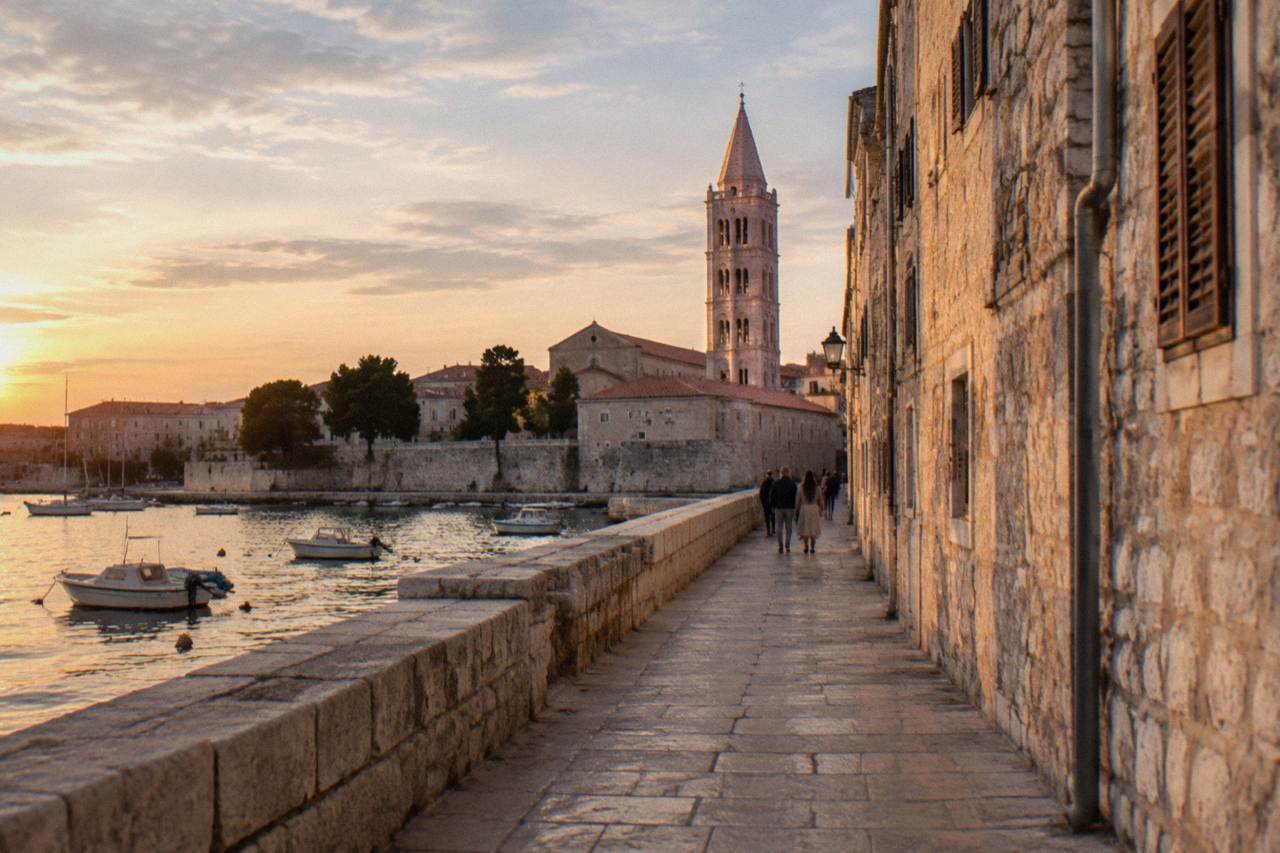
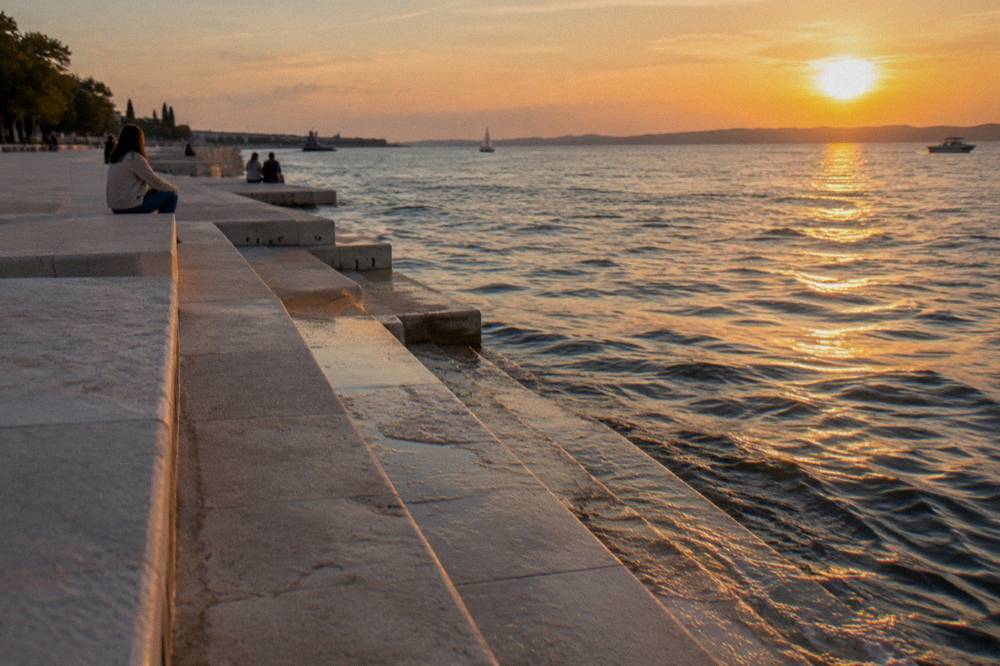
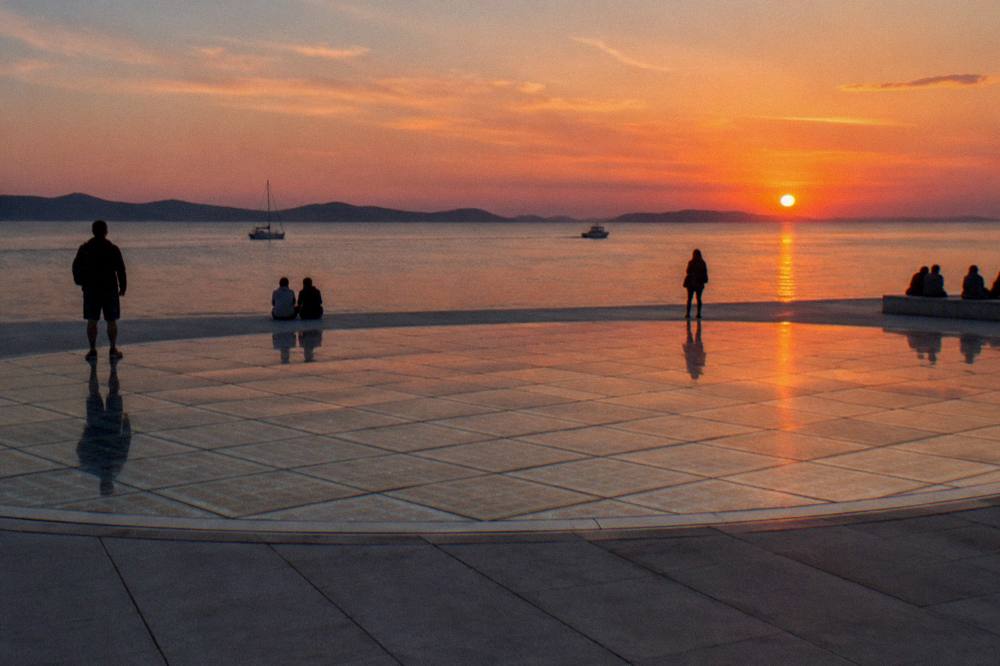
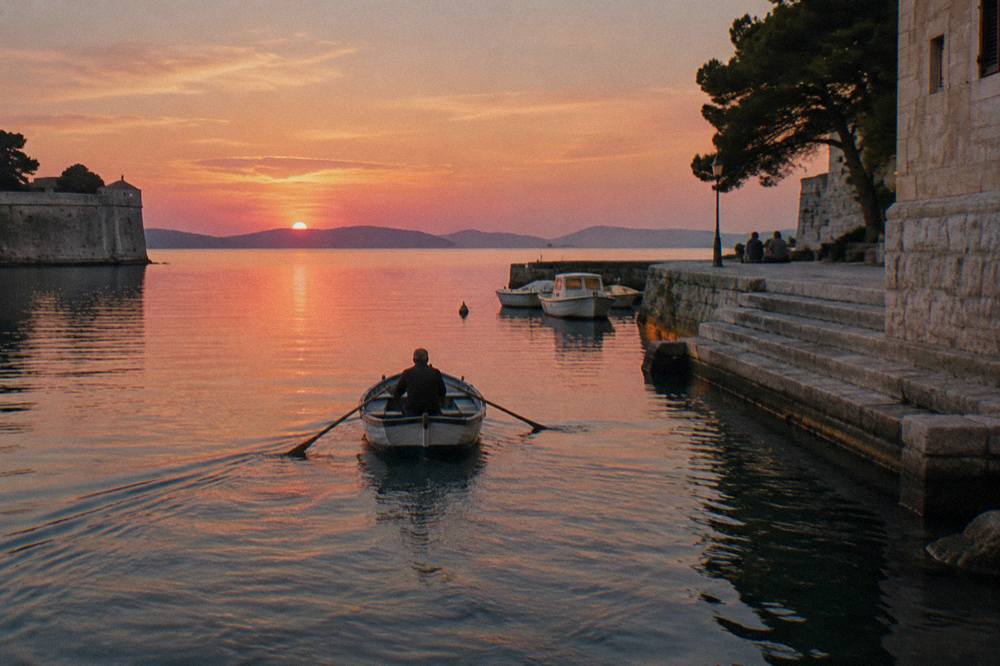
Zadar's sunset is watched from the western tip of the peninsula, where the Sea Organ, the wave-driven sound installation by Nikola Bašić completed in 2005, plays through 35 pipes laid under the steps, and the Greeting to the Sun, Bašić's 22-meter solar light disc from 2008, glows on the pavement beside it, both free and open at all hours. Alfred Hitchcock visited Zadar in May 1964 and called its sunset the most beautiful in the world, and the Riva promenade faces the sunset directly across open water to the islands of Ugljan and Dugi Otok.
The Sea Organ works without electricity or a performer: sea movement pushes air through tuned pipes under the stone steps, so the sound changes with every swell, and the city's page on the installation confirms the 2005 date and Bašić's authorship. The Greeting to the Sun sits a short walk north along the promenade, a circle of photovoltaic panels that stores daylight and releases it as a light pattern after dark; the installation underwent an electronics reconstruction in April 2026, and no light-show start time is published, so the glow simply follows sunset. No ticket exists for either, and no start time needs checking.
The Sea Organ page and the Greeting to the Sun page on this site cover how both installations work, and the sunset and evening route extends this stretch into a full evening. The steps fill up in the hour before sunset in summer, so arriving 45 minutes early secures a seat on the stone.
Can You Watch The Sunset From The Water In Zadar?
Yes, and a transparent LED kayak tour runs at sunset along the peninsula, paddling past the Sea Organ steps while the organ plays and returning after dark with the hull lit from below, an experience the listing covers as a guided paddle with all equipment included, bookable through the operator's live listing. The transparent-hull design means the water is visible through the boat, and the LED lighting turns the return leg into a night paddle against the Old Town skyline.
This is the tour this site features for the one-day itinerary, because it lands exactly on the hour the city is built around: the Sea Organ sounds best from the water, where the swell that drives the pipes is the same swell the kayak sits on, and the Riva lights come on during the return. The transparent LED kayak sunset tour page on this site carries the full description, and Check availability shows current times and prices from the listing. Sunset boat trips with an Aperol spritz also run from the Riva, for readers who prefer a deck to a paddle.
The practical notes: the tour runs on the sea, so it depends on weather and swell, and the operator decides on the day; the departure point sits on the peninsula within walking distance of the Sea Organ, so the dinner that follows needs no transport. The Zadar station record, 1961-2024, shows July and August means of 24.5 and 24.1 C, so an evening on the water in summer is comfortable without a wetsuit.
Can You Fit A Day Trip Into One Day In Zadar?
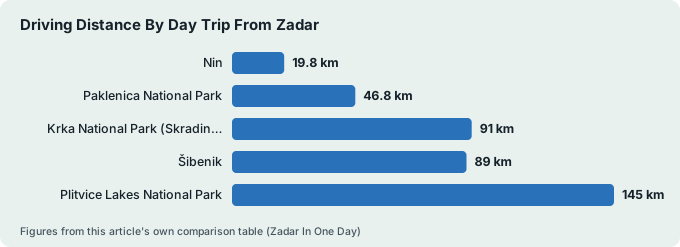
Not alongside the city itself, but a one-day visit can be swapped entirely for a day trip: Krka National Park lies 91 km from the Old Town, about 73 minutes by car, with entry at 40 EUR in summer and 20 EUR in April, May and October on the park's 2026 price list, and guided day tours from Zadar handle the transport and the ticket, so the swap costs the city day but gains the waterfalls. Plitvice Lakes sits further, 145 km and about 153 minutes of driving, which makes a guided tour the realistic option for a day trip.
The trade-off is real. Krka's Skradinski buk, the main waterfall cascade, cannot be swum: swimming at Skradinski buk has been banned since 2021 to protect the travertine, and the designated swim spots at Roški slap, Stinice and Pisak open only from 1 June to 30 September, conditions permitting. The Krka National Park page on this site covers the routes and the rules, and the Krka versus Plitvice comparison helps a reader choose between the two parks when only one day is available.
| Day Trip From Zadar | Driving Distance | Drive Time | 2026 Adult Entry |
|---|---|---|---|
| Nin | 19.8 km | About 28 min | Free to wander, museum extra |
| Paklenica National Park | 46.8 km | About 57 min | 10 EUR May-Sep, 8 EUR Mar, Apr, Oct, 5 EUR Jan, Feb, Nov, Dec |
| Krka National Park (Skradinski buk) | 91 km | About 73 min | 40 EUR Jun-Sep, 20 EUR Apr, May, Oct, 7 EUR Jan-Mar, Nov, Dec |
| Šibenik | 89 km | About 71 min | Free to wander |
| Plitvice Lakes National Park | 145 km | About 153 min | 40 EUR Jun-Sep before about 16:00, 23 EUR Apr, May, Oct, 10 EUR Jan-Mar, Nov, Dec |
The distances and drive times above come from route calculations on the road network, and the entry prices come from the parks' own 2026 price lists. Guided tours from Zadar to Krka run with a Skradin boat ride, and the Krka day tour with Skradin boat ride is the one this site lists for the swap; the wider day trips from Zadar guide covers Nin, Pag, the islands and the parks for readers with more days.
What If The Weather Turns On Your One Day In Zadar?
Rain in Zadar is heaviest in late autumn, with the Zadar station record, 1961-2024, showing November at 123 mm of rain against July's 35.4 mm, so a wet day is most likely from October to December, and the indoor fallback is the Museum of Ancient Glass, the Archaeological Museum and the Gold and Silver of Zadar collection, three indoor stops within a few minutes' walk of each other on the peninsula. The museums fill an afternoon, and the Sea Organ, which needs no ticket and no dry weather to be interesting, actually sounds stronger in a swell.
The rain-day kit on this site is the Zadar rainy day itinerary, which sequences the museums, the covered lanes and the cafes. Two figures frame the planning: the station record counts 12 rain days in November and December against 5 in July, and the annual sunshine total is about 2,600 hours, so wet days are the exception rather than the rule in the main season. Rainfall in September and October still runs above 100 mm a month on the same record, so shoulder-season visitors should keep the museum list handy.
| Month | Mean Temperature (Zadar station, 1961-2024) | Rainfall (mm) | One-Day Planning Note |
|---|---|---|---|
| January | 7.3 C | 76.4 | Museums and walls, sunset before 17:00 |
| April | 13.4 C | 61.4 | Full route comfortable on foot |
| July | 24.5 C | 35.4 | Swim stop essential, evening on the water |
| September | 20.2 C | 110.9 | Warm sea, first heavy-rain risk returns |
| November | 12.1 C | 123.0 | Wettest month, museum-first plan |
How Much Does One Day In Zadar Cost?
A one-day Zadar budget on this itinerary runs about 7 EUR of museum entry, since the Sea Organ, the Greeting to the Sun, the Forum, the Land Gate and the beaches are all free, plus lunch and drinks at konoba prices and an optional evening tour booked through the operator's listing, with the only add-ons being St Donatus at around 7 EUR full price and any guided walk or boat trip taken. The city itself is unusually cheap to see, because its headline sights are public space.
The tourist tax exists and is collected by accommodation providers, but its amount is not published on this site: it is confirmed at booking, per the county's decision, and it applies to overnight stays rather than day visits. Croatia uses the euro since 1 January 2023 and is a Schengen member, so no currency exchange is needed for a day visit from elsewhere in the zone, and the emergency number is 112.
| Item | Cost | Basis |
|---|---|---|
| Old Town walking route (Land Gate, Kalelarga, Forum, Five Wells) | Free | Public space |
| Sea Organ and Greeting to the Sun | Free | Open public installations, all hours |
| St Donatus Church | Around 7 EUR | Museum tariff, access may be limited during 2026 roof works |
| Museum of Ancient Glass | 7.00 EUR | Museum ticket page |
| Archaeological Museum | Around 7 EUR | Museum tariff |
| Kolovare Beach | Free | 2026 county rules keep access public |
| Evening kayak or boat tour | From the listing | Price renders on the tour page, never assumed |
For readers turning one day into more, the three-day Zadar itinerary and the four-day Zadar itinerary add the islands and the parks, and the cruise port day itinerary covers the compressed version for passengers docking at Gaženica. This page, the Zadar Croatia Travel Guide one-day route, holds to the peninsula and the water around it, because that is what one day in this city actually fits.
Common Questions About One Day In Zadar
Is one day in Zadar enough?
One day covers the entire Old Town peninsula, one or two museums, a swim or a boat trip, and the Sea Organ sunset, because the peninsula is compact and its headline sights are free public space. It is not enough for the islands or the national parks, which need their own days.
What is the one thing not to miss in Zadar?
The Sea Organ and the Greeting to the Sun at sunset, on the western tip of the peninsula. Both are free, open at all hours, and were designed by Nikola Bašić, in 2005 and 2008 respectively.
Is Zadar walkable in one day?
Yes. The Old Town is a flat peninsula where no stop on this itinerary is more than about 15 minutes' walk from another, and Kolovare Beach is roughly 20 minutes on foot from the Forum.
Can you swim in Zadar on a day trip?
Yes, at Kolovare Beach east of the Old Town or from the boat-tour swim stops. County rules in force for the 2026 season keep concession beaches fully public and free, with sunbeds limited to part of the surface.
Where do you watch the sunset in Zadar?
On the western Riva, by the Sea Organ steps and the Greeting to the Sun. The steps fill up in the hour before sunset in summer, so arrive early, or watch it from the water on an evening kayak or boat tour.
Do you need to book anything ahead in Zadar?
The walking route, the museums and the sunset need no booking. Guided walks, boat trips and the evening kayak tour should be checked on the operator's live listing for times and availability, and St Donatus access should be confirmed because of the roof works planned from autumn 2026.