Borik Zadar
Borik is the hotel-and-beach quarter on Zadar's northwestern seafront, a strip of pine-shaded coves and resort hotels a short bus or taxi ride from the Old Town peninsula, and this guide covers what it offers, how to move between it and the sights, and what a stay there involves in practice.
Short answer
Borik is Zadar's main resort quarter, sitting on the coast northwest of the Old Town, built around pine-backed beaches and large hotels, with regular city buses and a short drive linking it to the peninsula's sights.
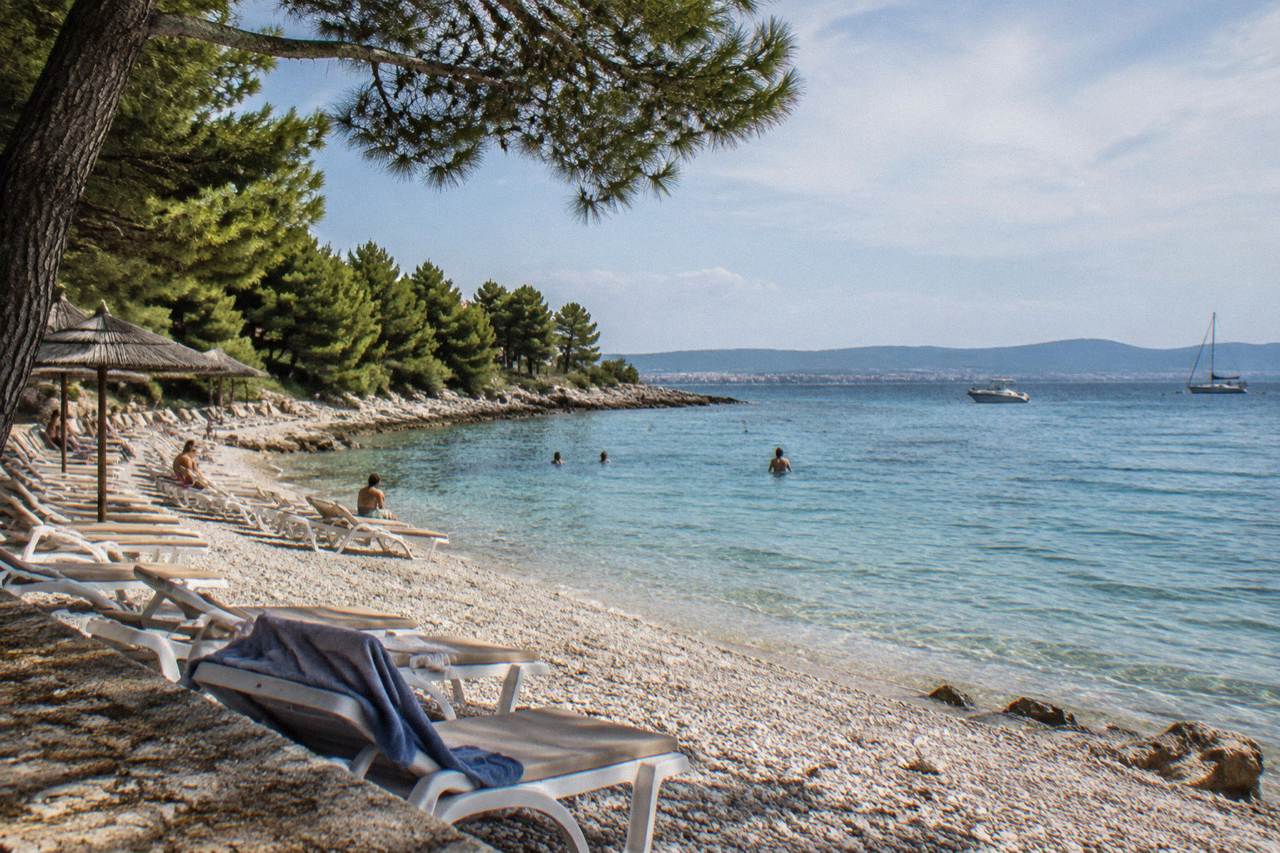
Borik is the resort quarter of Zadar, the coastal city in Dalmatia, Croatia, that sits on a narrow peninsula jutting into the Adriatic. While the peninsula itself holds the Roman Forum, the Sea Organ and the tangled stone streets of the Old Town, Borik is where much of the city's hotel capacity and its classic beach holidays live: a low, green strip along the shore to the northwest, built around pine trees, pebble coves and a cluster of larger hotels. It is a base rather than a sight, and it works best for travellers who want a swim-and-sun holiday with the Old Town an easy bus ride or a pleasant coastal walk away. This guide sets out what Borik is, what its beaches and hotels involve, how to move between Borik and the rest of Zadar, and which day trips pair naturally with a stay there. Croatia uses the euro since 1 January 2023, is a Schengen member, and the emergency number is 112.
What Is Borik In Zadar And Where Exactly Is It?
Borik is Zadar's principal hotel-and-beach district, a coastal strip lying northwest of the Old Town peninsula between the marina end of the city and the Puntamika and Diklo quarters further out, built around pine-shaded pebble beaches, resort hotels and seaside walkways rather than monuments. It belongs to Zadar, the coastal city in Dalmatia on the Adriatic, and it exists to host swimmers and sunbathers within easy reach of the peninsula's sights.
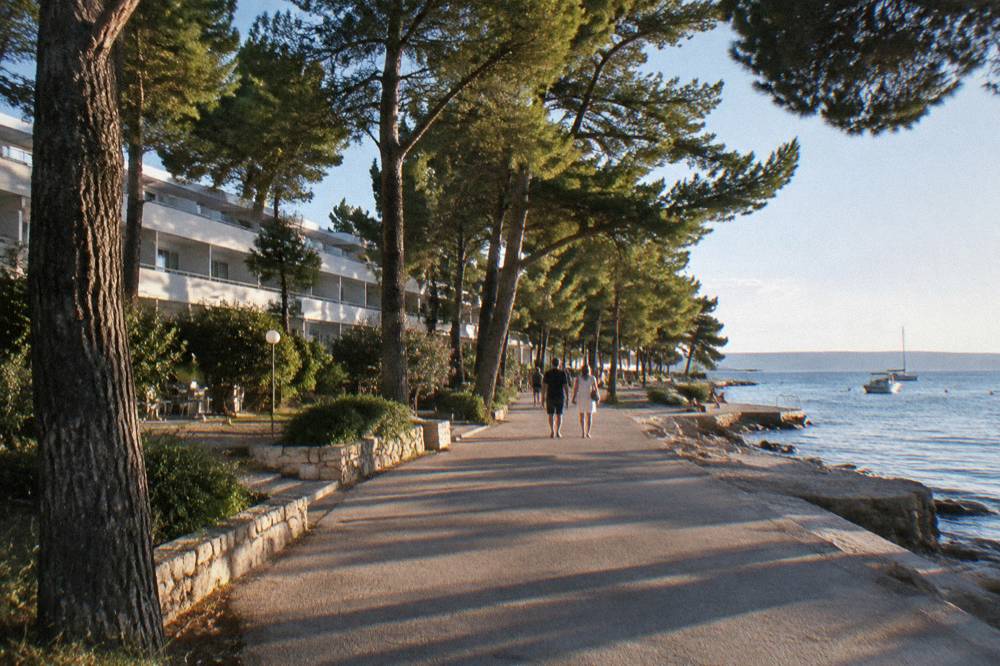
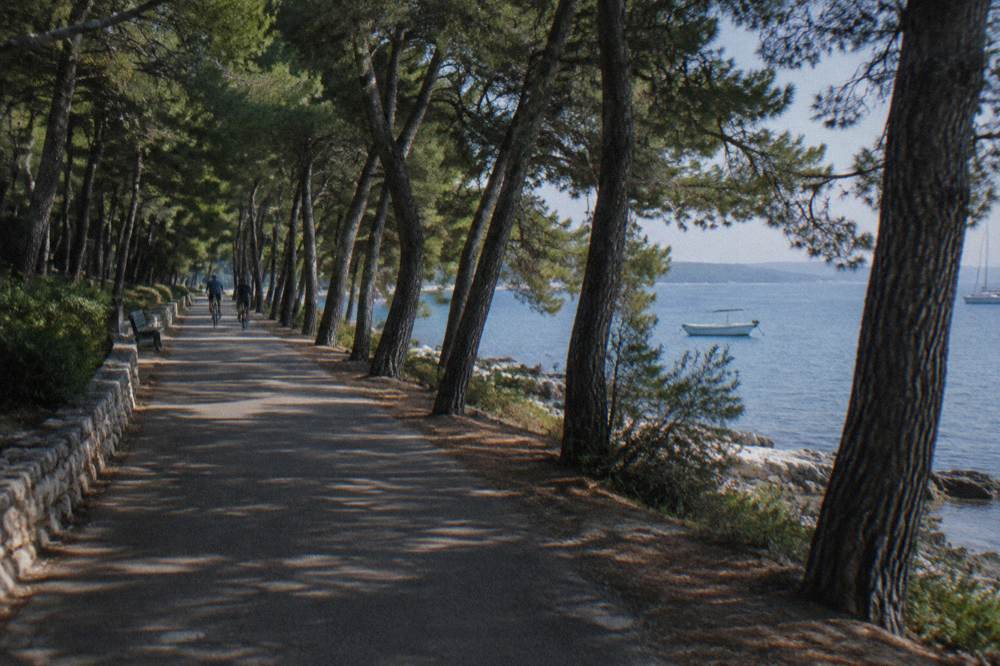
The district grew as Zadar's package-holiday zone, and that is still its core identity. Hotels sit behind the pines a few steps from the water, and between them run paved waterfront paths that connect the beaches to one another and continue along the shore toward neighbouring quarters. The character is deliberately relaxed: mornings revolve around the beach, evenings around the walk or the bus into the Old Town for dinner and the sunset on the riva.
Geographically, the layout of Zadar helps. The city's historic core is a peninsula (Poluotok), and from it the coastline runs northwest through a series of residential and resort quarters. Borik sits in that chain, between Kolovare on the southeast side of the city, which serves a similar beach function closer to the Old Town, and Diklo, which continues the same shoreline further north. Understanding this chain matters for choosing a base: the further northwest you go, the quieter and more resort-like the feel, and the longer the trip into the peninsula for sightseeing.
For orientation purposes, the practical anchors are simple. The Old Town holds nearly everything a first-time visitor comes to see, from the Roman Forum to the Sea Organ. Borik holds the beaches and the beds. The airport sits about 8 km from the city by its own how-to-get-here page, with the airport shuttle costing 5.00 EUR one way including luggage, taking roughly 20 minutes to reach the city with a ticket valid 90 minutes on city buses. A traveller landing at Zadar can therefore reach a Borik hotel without a car, using the shuttle and a city bus or a short onward taxi leg, though the airport's own page is the place to confirm the current shuttle timetable, which is published a few days before each month ends.
| Coastal quarter | Position relative to Old Town | Character | Best suited to |
|---|---|---|---|
| Old Town (Poluotok) | The peninsula itself | Historic core, sights, restaurants, no real beach | Sightseeing, short stays |
| Kolovare | Southeast of the peninsula | City beach, promenade, parks | Swimmers who want to walk everywhere |
| Borik | Northwest of the marina | Hotel strip, pine-backed pebble beaches | Beach-and-base holidays |
| Puntamika | Northwest, beyond Borik | Quieter beaches near the marina side | Calmer swimming, boat departures |
| Diklo | Furthest northwest | Residential and family beach quarter | Quiet long stays |
Which Beaches Can You Swim From In Borik?
Borik's beaches are pebble and concrete bathing platforms set among pine trees along the district's shoreline, with swimming straight off the shore into the Adriatic, and the 2026 concession rules reported for Zadar County mean public beaches can carry no fencing and no entry fee, with commercial use such as sunbeds limited to a share of each beach and the rest left free for anyone with a towel.
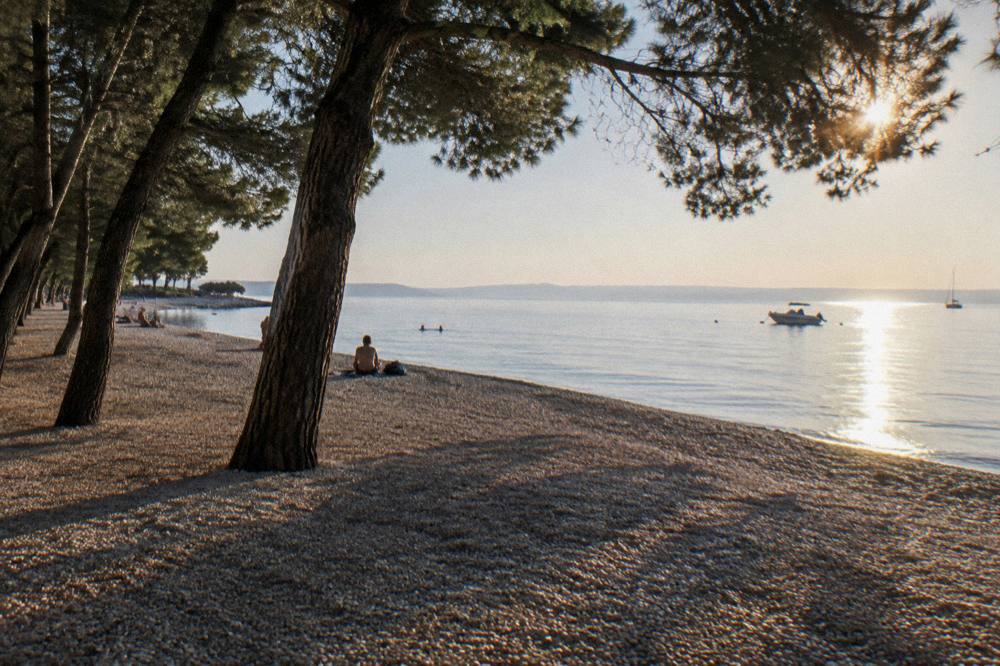
The beaches here are not sand. Zadar's shoreline in Borik is a mix of smooth pebble and worked stone sections, and the sea shelves fairly quickly into clear water, which is the normal Dalmatian setup. Shoes for pebbles are a common packing note for Croatia, and Borik is a typical case: the stones are rounded rather than sharp, but wet pebble is still pebble. The pines matter as much as the shoreline, because they give shade through the middle of the day in a way few Croatian beaches can match, and the waterfront path stitches the separate bathing spots into one walkable stretch.
The rules side is worth knowing because it changed recently. County assembly decisions adopted in April 2026, reported on the county's own pages, introduced new concession terms for the 2026 season: no fencing, ramps, barriers or entry fees on concession beaches, with concessionaires paying fees on the whole area but commercial activity capped at 40 to 60 percent of a beach's surface depending on the site, leaving the remainder free for public use. In practice that means a Borik beach can have a paid sunbed zone and a free towel zone side by side, and no operator can charge for access to the sea itself. The same shoreline logic continues into Puntamika and Diklo for anyone who wants a change of scene.
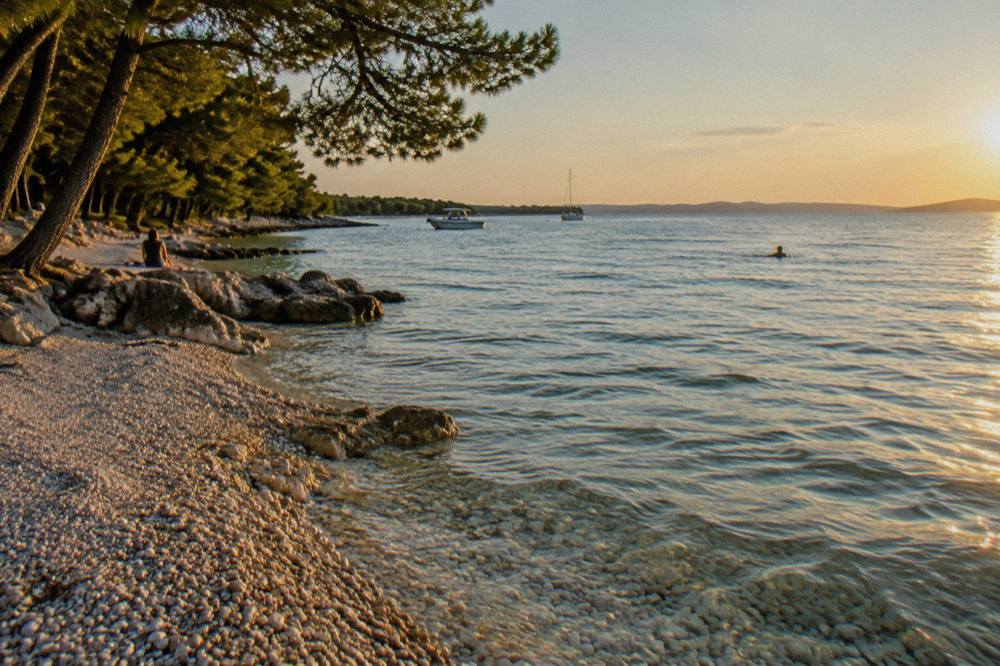
Two cautions apply anywhere along this coast. First, sea temperature: only an official live reading exists for Zadar (published by the national weather service), so no monthly normal is quoted here, and swimmers should simply check the current reading or the water itself. Second, the dress code runs one way only: swimwear belongs on the beach, not in the Old Town, where the city posted signage in summer 2026 requiring appropriate clothing in the historic core, with reported fines up to 130 EUR after a warning. Cover up for the bus into town.
For a change from shore swimming, the boat tours that leave from the city open up the islands offshore, which is where the water is at its clearest.
A morning on a snorkeling boat out toward the islands, and an evening walk of the peninsula with a tasting stop, is the standard Borik day done well. Between those two, the waterfront path and a book under the pines fill the afternoon on their own.
How Far Is Borik From Zadar Old Town And How Do You Get There?
Borik lies along the shore northwest of the Old Town peninsula, connected to it by the city's coastal bus routes and a seafront walking and cycling path, with the airport reachable by the 5.00 EUR shuttle that runs about 20 minutes into the city and whose ticket stays valid 90 minutes on city buses. A car is useful but not required for a Borik holiday, since the beach is at the door and the sights are a bus ride away.
The bus is the workhorse of this corridor. Zadar's city network, operated by Liburnija from the bus station at Ante Starčevića 1, links the peninsula with the northwestern quarters, and one practical note from October 2026: evening departures on the Poluotok-Arbanasi-Kolodvor route were rerouted from 12 October 2026 because of recurring traffic problems in Arbanasi, a reminder that late-night routes shift and the operator's current timetable is the authority. Tickets and fare details should be confirmed with the operator or driver.
Walking the coast is the alternative, and for many visitors the better one. The waterfront path from the marina area northwest through Borik toward Puntamika and Diklo is flat, paved and shaded in stretches, which makes the district one of Zadar's more pleasant quarters for a morning run or an evening stroll. The distance is walkable but not trivial in summer heat, so the bus outbound and a walk back at sunset is a sensible pattern.
Taxis and ride-hailing exist in Zadar; agree the fare with the driver or check the app before setting off, particularly from the airport with luggage. Driving distances from the city are worth knowing for the day-trip network: Nin is 19.8 km, Paklenica 46.8 km, Skradin 76 km, Krka's Skradinski Buk 91 km and Plitvice 145 km from the Old Town by road, which frames how a hire car expands the map from a Borik base. The car hire question at the airport is covered in its own guide.
Where To Stay In Borik?
Borik concentrates much of Zadar's hotel capacity in a compact seaside strip, ranging from large resort hotels behind the pines to smaller apartment accommodation in the surrounding streets, with the beach as the shared amenity; the tourist tax that applies across the city is collected by the accommodation and confirmed at booking.
The hotel story is straightforward: this is the quarter built for people who want services on site, meaning pools, restaurants and organized beach facilities within a few minutes' walk of each other. The apartment story runs in parallel, in the residential blocks just back from the shore, where self-catering stays put visitors a short walk from the same pebble beaches at a different price point. Which of the two suits a given traveller depends on whether evenings are planned in the hotel or in the Old Town, since dinner on the peninsula means a bus or taxi back afterward.
Booking practicalities in Zadar are stable and simple. Croatia is in the euro zone and in Schengen, so there is no currency exchange or border friction for most European travellers, and the tourist tax is added by whatever accommodation you book rather than paid at a municipal desk; check the current amount when booking. Anyone weighing Borik against a stay inside the historic core can compare it against the Old Town directly: sights and atmosphere on the peninsula, space and shoreline in Borik, and no wrong answer between them.
A few planning rules of thumb, none of them secret but all of them load-bearing:
| Question | Borik answer | Old Town answer |
|---|---|---|
| Beach access | Immediately outside the door | None on the peninsula itself |
| Sights access | Bus, taxi or a coastal walk | On foot |
| Evening dining | Hotel restaurants and local konobas | Densest choice in the city |
| Car usefulness | Useful for day trips, not for the district | A hindrance |
| Noise level | Resort-quiet | Livelier, later |
The sunset is the one thing both locations share, and it is worth the trip whichever base wins. The Sea Organ and the Greeting to the Sun, the two waterside installations by Nikola Bašić from 2005 and 2008, sit at the peninsula's western tip and are free, open public installations at all hours, exactly where the evening light lands.
What Can You Do In Borik Beyond The Beach?
A Borik stay divides naturally into three currents: water-based trips out to the islands of Ugljan, Dugi Otok and the Kornati archipelago; sightseeing days in the Old Town and its museums; and inland day trips to the national parks, with Krka 91 km and Plitvice 145 km from the Old Town by road and park entry priced seasonally, from 7 EUR in Krka's winter months to 40 EUR in peak season for an adult.
The sea is the district's front garden, so it makes sense to use it. Boat tours from the city run the spectrum from short island-hopping and snorkeling circuits to full-day trips out toward Dugi Otok's beaches and the Kornati National Park, and the marina and harbor departure points sit between Borik and the peninsula. The Kornati islands and Dugi Otok have their own guides on this site. One structural fact that surprises planners: Kornati entry is charged per vessel by length and season, not per person, and the ticket is bought outside the park, which is why boat tours that include fees are priced the way they are.
The parks are the second pillar. Krka National Park's 2026 price list sets adult entry at 7 EUR in January, February, March, November and December, 20 EUR in April, May and October, and 40 EUR from June to September, with reduced rates for children and students; swimming at Skradinski Buk has been banned since 2021 to protect the travertine, and is allowed only at designated spots such as Roški slap, Stinice and Pisak between 1 June and 30 September. Plitvice runs a parallel seasonal ladder: 10 EUR in the winter months, 23 EUR in April, May and October, 40 EUR in summer before about 16:00. Both parks dropped to their shoulder rates from 1 October 2026, which is why autumn is quietly the value season for a Borik base. More of these guides are collected on Zadar Croatia Travel Guide.
In the city itself, the sightseeing list is compact and walkable. The Church of St Donatus faces the Forum and carries one live caveat: a roof restoration with works planned from autumn 2026 for about six months, the first phase of a wider restoration, means access may be limited and should be checked before going. The Museum of Ancient Glass lists its adult ticket at 7.00 EUR on its own price page. The Archaeological Museum and St Donatus run on a shared tariff showing 7.00 and 5.00 EUR rows, so "around 7 EUR at full price" is the honest phrasing.
| Day trip from Zadar | Road distance from Old Town | Adult park entry (2026) | Notes |
|---|---|---|---|
| Nin | 19.8 km | n/a | Historic small town, salt pans |
| Paklenica NP | 46.8 km | 5 EUR winter / 8 EUR shoulder / 10 EUR summer | Hiking and climbing |
| Skradin | 76 km | n/a (Krka gateway town) | Boat ride into Krka |
| Krka NP (Skradinski Buk) | 91 km | 7 / 20 / 40 EUR by season | No swimming at Skradinski Buk |
| Plitvice Lakes NP | 145 km | 10 / 23 / 40 EUR by season | Timed online tickets recommended |
For a first visit structured around these choices, the site's three-day Zadar itinerary maps the same material into a day-by-day plan, and the shorter one-day and two-day versions exist for tighter stays.
Where To Eat And Drink Around Borik?
Eating around Borik splits between the hotel restaurants and terraces inside the resort strip and the konobas, pizzerias and café bars scattered through the surrounding streets and along the waterfront path, with the Old Town remaining the densest concentration of restaurants in the city for a dinner trip.
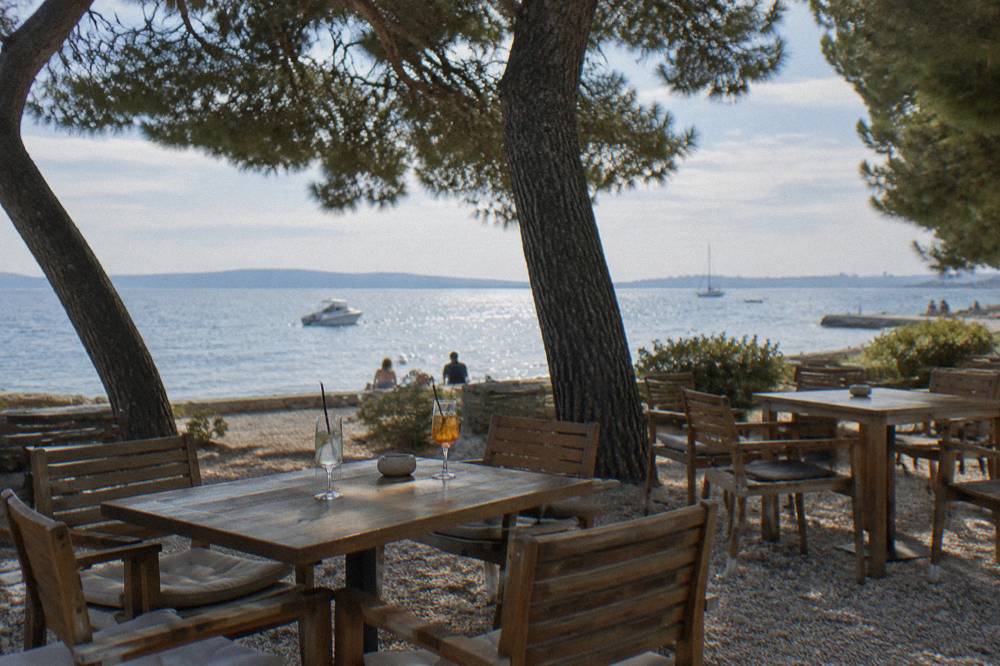
The district feeds itself in summer. Waterfront terraces do breakfast coffee, beach-side bars do the lunch hours, and the evening splits between hotel dining and the walk-out options on the streets behind the shore. The honest description is that Borik's food scene is functional and pleasant rather than a destination in itself: the reason to stay here is the beach, and the reason to eat in the Old Town is the setting, the Roman stones and the lantern-lit squares.
The Old Town dinner run is a Borik ritual. The bus or a taxi in, dinner on or near the Kalelarga or around the Forum, and then the walk west along the riva to the Sea Organ while the sky does its work. Local specialties worth knowing by name rather than by price: fresh Adriatic fish and shellfish, ham and cheese boards, and the city's own maraschino, the cherry liqueur Zadar has been associated with for centuries. A tasting walk of the peninsula that includes maraschino is one of the site's featured tours, and it slots into an evening from Borik without disturbing the day.
Two practical notes on drinks. The first is the reported night-time restriction on retail alcohol sales in the Old Town: national law changes allow municipalities to restrict shop and kiosk sales in the evening, and Zadar's mayor confirmed the intent to apply this on the peninsula for the 2026 season, though bars and restaurants are unaffected, so the rule touches beach-cooler logistics rather than dinner. The second is the same dress-code point from the beach section: the Old Town signage means swimwear stays in Borik.
What Is The Weather Like In Borik?
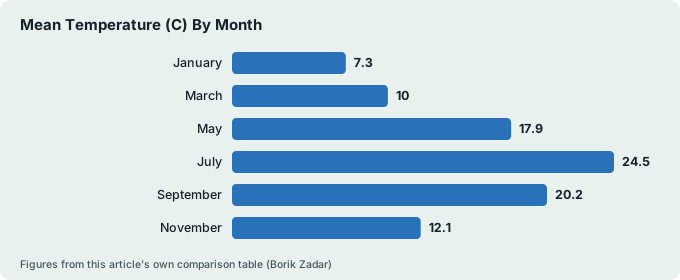
Borik shares Zadar's Mediterranean coastal climate as recorded at the city's weather station: a July mean of 24.5 C against a January mean of 7.3 C, July the driest month at 35.4 mm of rain and November the wettest at 123 mm, with about 2,600 hours of sunshine a year across the record, figures drawn from the Zadar station's 1961-2024 table published by the national meteorological service.
The shape of the year is the standard Dalmatian one. A hot, dry core from June through August, when the sea and the beaches earn their keep and the days at or above 30 C cluster; a warm shoulder in May, September and October, when the sea is still swimmable and the parks drop toward their shoulder prices; and a mild but genuinely wet winter, with November, December and October the three wettest months on the station record. The bora, a cold dry northeasterly wind, blows hardest in winter and can make a sunny January day feel far colder than the thermometer says.
| Month | Mean temperature (C) | Rainfall (mm) |
|---|---|---|
| January | 7.3 | 76.4 |
| March | 10.0 | 66.3 |
| May | 17.9 | 64.4 |
| July | 24.5 | 35.4 |
| September | 20.2 | 110.9 |
| November | 12.1 | 123.0 |
For planning purposes the September and October numbers are the interesting ones. September still averages 20.2 C with the sea at its warmest after summer, and October holds a 16.3 C mean, but both months carry over 100 mm of rain on the station record, so an autumn Borik stay trades crowds and peak prices for a real chance of wet days. The site's best time to visit Zadar discussion and its weather pages treat this in more depth; the summary for Borik specifically is that the quarter is built for June through September and settles into off-season quiet outside it.
Zadar Advent, the city's Christmas programme, runs from 24 November 2026 to 2 January 2027 and expands to three locations including a new ice rink on the Forum, with the Zadar Christmas Run on 27 December 2026, so a winter stay is not empty, but it is a city-break pattern rather than a beach one.
Is Borik The Right Base For A Zadar Holiday?
Borik is the right base for a traveller whose priority is a beach-and-swim holiday with comfortable hotels and easy bus access to the sights, and the wrong base for a traveller who wants to sleep inside the historic core and walk everywhere, since the district trades atmosphere and immediacy for shoreline, space and resort services, and everything on the peninsula stays reachable by bus, taxi or a coastal walk.
The trade is a clean one, and the decision usually makes itself. Families and swimmers gravitate to Borik because the beach is the holiday and the Old Town is an excursion. City-break travellers and short-stay visitors gravitate to the peninsula because two nights of sights do not need a beach and evenings end late. A week-long stay splits the difference well: several nights in Borik for the water, the boat trips and the sunset routine, folded around day trips to Krka or Plitvice, with the evenings spent across the peninsula among the stones.
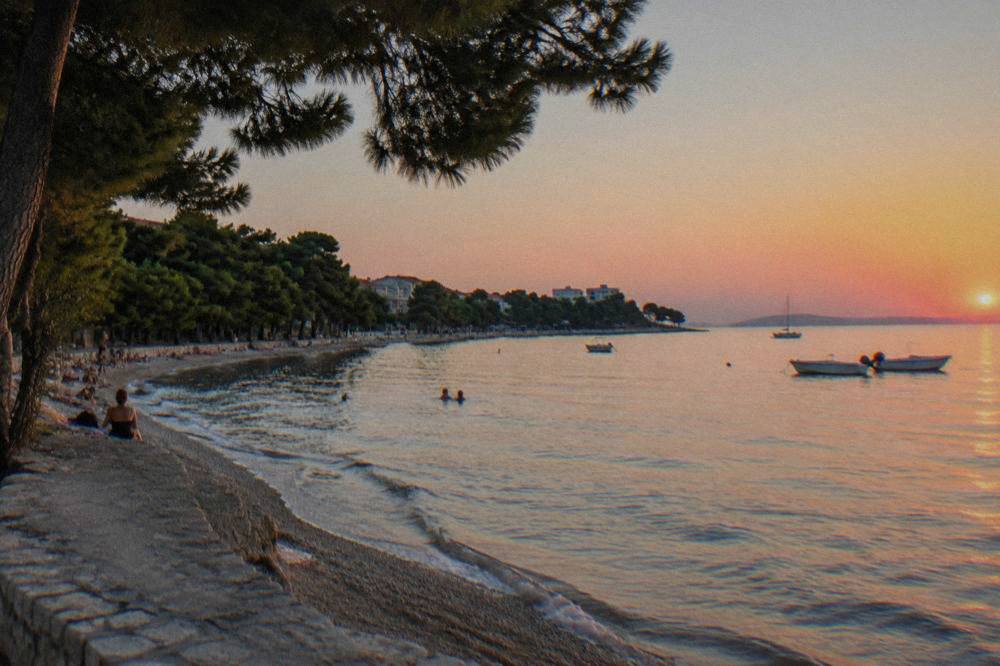
The sunset deserves its own sentence, because it is the hinge of every Borik day. The Sea Organ's tones and the Greeting to the Sun's light circle sit exactly where the day ends over the islands, both free and open at all times, and the walk from dinner to that western tip is the one thing every visitor, whatever their base, ends up doing.
For wider reading, the root things to do in Zadar page indexes the whole city, and this site's day-trip guides cover the towns and parks within reach. The essentials for any Zadar stay, per this site's standing facts: euro currency, Schengen membership, emergency number 112, a tourist tax confirmed at booking, and swimwear that stays at the beach.
Common Questions About Borik In Zadar
Is Borik close to Zadar Old Town?
Borik sits along the shore northwest of the Old Town peninsula, linked by city bus routes and a flat coastal walking and cycling path. No single verified walking time for the full stretch appears in this site's facts, so plan on the bus for the outbound leg and check the operator's current timetable, particularly for evening departures, which were adjusted in October 2026.
Can you swim in Borik?
Yes. Borik's beaches are pebble and stone bathing spots among pine trees with direct sea access. Under the 2026 concession rules reported for Zadar County, beaches carry no fencing and no entry fee, with commercial sunbed zones limited to a share of each beach and the rest free for public use.
Do the beaches in Borik charge entry?
No. The county decisions reported for the 2026 season prohibit entry fees and fencing on concession beaches across Zadar County, and free public areas must remain on every beach. Paid services such as sunbeds can occupy at most 40 to 60 percent of a beach's surface depending on the site.
How do I get from Zadar airport to Borik?
The airport is about 8 km from the city by the airport's own page, and the Liburnija shuttle runs 5.00 EUR one way including luggage, about 20 minutes into the city, with the ticket valid 90 minutes on city buses. The shuttle's timetable is published a few days before each month ends, so confirm it on the airport page before flying.
Is Borik or the Old Town better for a stay in Zadar?
Borik suits beach holidays and hotel-based stays; the Old Town suits sightseeing and short city-break visits. The quarters complement rather than compete, and the bus and coastal path connect them through the day. The site's guide to the Old Town lays out the peninsula-side case in full.
What day trips work from Borik?
All the standard Zadar day trips: Krka National Park at 91 km, Plitvice at 145 km, Paklenica at 46.8 km, Nin at 19.8 km and the offshore islands by boat. Park entry is seasonal, from 7 EUR in Krka's winter months to 40 EUR in peak season for adults, and both major parks dropped to shoulder rates from 1 October 2026.