Diklo Zadar
Diklo is one of Zadar's city-side beach districts, sitting on the Adriatic coast of Dalmatia, Croatia, away from the peninsula Old Town but close enough to walk, cycle or ride into it. This page covers what Diklo is, where its beaches sit, where to stay, how to reach the Old Town, and which day trips and tours work well from this side of the city.
Short answer
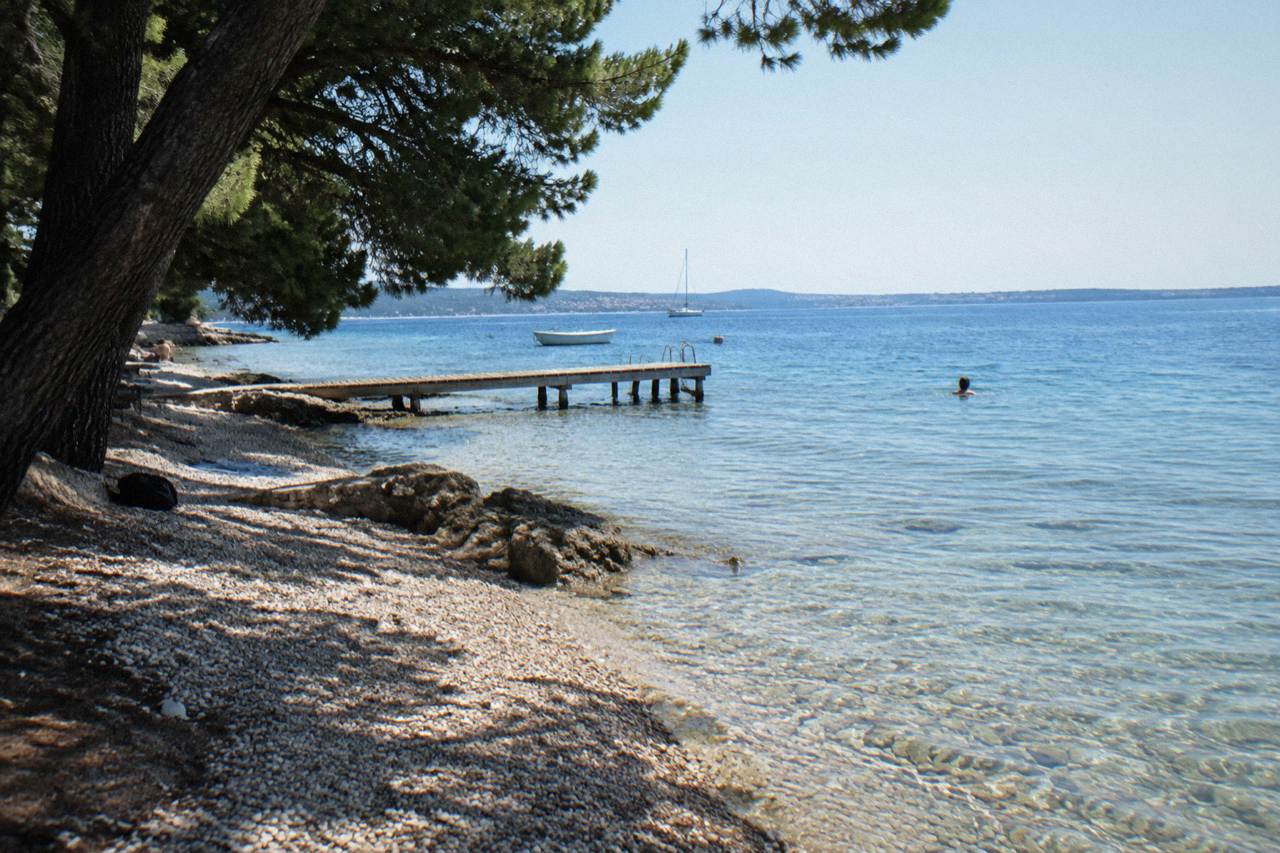
Diklo is a coastal district of Zadar, Croatia, known for its city-side beaches and quieter residential pace. It sits on the mainland shore away from the Old Town peninsula, and it works well as a base for beach days plus ferry, bus and tour connections into the rest of Dalmatia.
Diklo is the quiet end of Zadar, the coastal city in Dalmatia, Croatia, whose Old Town sits on a narrow peninsula with the islands of Ugljan and Dugi Otok offshore. While the peninsula carries the Roman Forum, the Sea Organ and the crowds, Diklo spreads along the mainland shore as one of the city's named beach districts, alongside Kolovare, Borik and Puntamika. It is a place people stay in rather than travel to, and this guide treats it that way: what the district offers, what it does not, and how the rest of Zadar and Dalmatia connect to it.
One caution before anything else. Diklo is a residential and resort shore, and practical details such as beach facilities, lifeguard cover and water quality are best checked locally. For the broader picture, see the Zadar Croatia Travel Guide main coverage.
What Is Diklo In Zadar And Where Exactly Does It Sit?
Diklo is one of the named city-side beach districts of Zadar, the coastal city in Dalmatia, Croatia, sitting on the mainland Adriatic shore rather than on the Old Town peninsula. It belongs to the string of seaside areas, with Kolovare, Borik and Puntamika, that the city's own content map names as the shore districts where swimming and apartment stays cluster, and it is treated here as a base area, not a sightseeing destination in its own right.
The Old Town, the Poluotok, is the part of Zadar almost every visitor pictures: the peninsula with the Land Gate of 1543, the Church of St Donatus and the waterfront Sea Organ of 2005 and Greeting to the Sun of 2008, both by architect Nikola Bašić. That peninsula is small and walkable, and it is where the Old Town guide concentrates its detail. Diklo is deliberately not that. It is the shore beyond it, and its appeal is the reverse of the peninsula's: quiet, residential, oriented to the water rather than to monuments.
Zadar as a whole is a city of 67,309 people at the 2021 census, a figure attributed to the census via secondary demographic sites, and its urban shore stretches along the mainland facing Ugljan. The country basics matter for planning and are worth setting out once: Croatia uses the euro since 1 January 2023, it is a Schengen member with no hedging needed, and the single European emergency number 112 applies.
| Zadar basic | Figure | Note |
|---|---|---|
| Population | 67,309 | 2021 census, attributed via secondary demographic sources |
| Currency | Euro | Since 1 January 2023 |
| Schengen | Member | Land and sea borders 2023, air borders March 2023 |
| Emergency number | 112 | Single EU-wide number |
| Language | Croatian | English is common in tourism contexts |
The district's character also comes from what surrounds it. Diklo sits alongside the other beach areas the site covers separately: Kolovare, Borik and Puntamika. Each has its own page, and this one does not repeat their detail. What unites them is that they are shore areas of the same city, served by the same buses, the same airport and the same day-trip network that fans out to Krka, Plitvice, Kornati, Paklenica, Nin and Pag.
Which Beaches And Swimming Spots Does Diklo Offer?
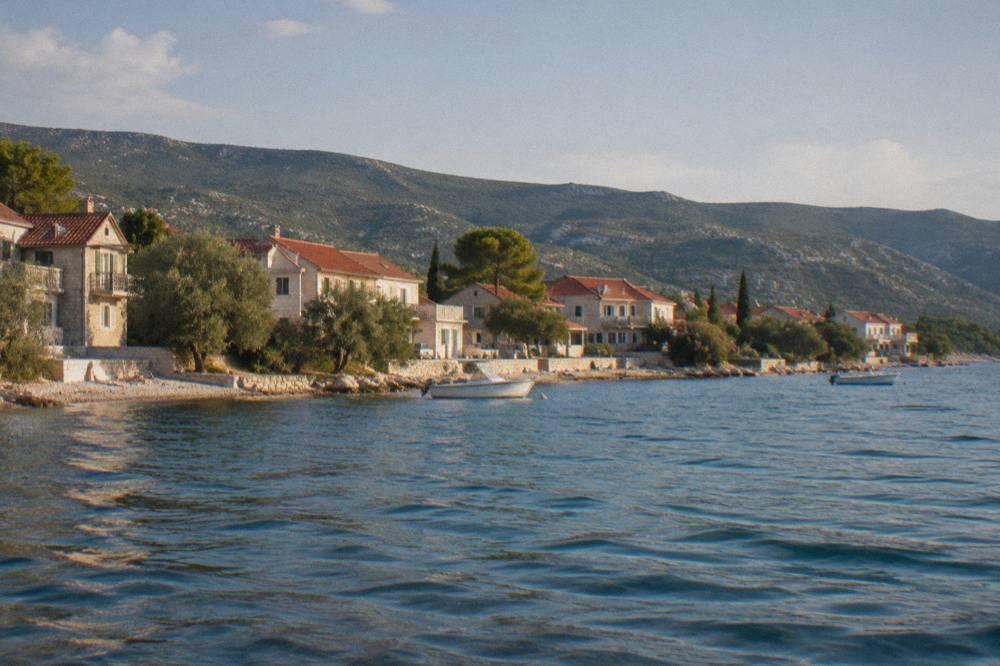
Diklo's beaches are public city-side beaches on the Adriatic, and under the county concession rules reported for the 2026 season, concession beaches in Zadar County may not fence themselves off or charge entry: access stays free and public, with commercial activity such as sunbeds limited to part of the beach area. No specific facility, lifeguard service, price or water-quality rating for Diklo is verified on this site, so those details should be confirmed on the spot.
That concession rule deserves its own sentence because it answers the question arriving swimmers actually ask. County assembly decisions adopted in April 2026, as reported, align local beaches with the national Law on Maritime Domain: no fencing, ramps, barriers or entry fees on concession beaches, and sunbed-and-parasol commerce capped at a share of the surface, variously reported at 40 to 60 percent depending on the beach. The rest of every beach stays free for people with their own towels. Attribute it as reported, and expect the free zone to be real.
What the sea itself is doing is a different matter, and here the official data is thin by design. Croatia's meteorological service publishes an official live sea reading rather than a monthly normal, so this site prints no monthly sea-temperature table at all. The live DHMZ reading for Zadar stood at 21.3 to 21.4 C on 11 October 2026, which tells you the shoulder-season Adriatic here is still swimmable in autumn, but it says nothing guaranteed about next July. Check the live reading near your dates rather than trusting a normal that does not officially exist.
Swimming rules matter more on the day trips than in Diklo's own water. At Krka National Park, swimming has been banned at Skradinski Buk since 2021 to protect the travertine, and it is allowed only at designated spots, Roški slap, Stinice and Pisak, from 1 June to 30 September, weather permitting. On Zadar's own city beaches, including Diklo's, the card gives no local swimming ban, but two Old Town rules ripple outward and are worth knowing: dress-code signs posted at the historic peninsula in summer 2026 ask for appropriate clothing, no swimwear, with reported fines up to 130 EUR after a warning, and a reported municipal plan restricts night-time retail alcohol sales in the Old Town for the 2026 season.
| Zadar city-side beach area | Where this site covers it | What the facts say |
|---|---|---|
| Diklo | This page | Public shore district; 2026 concession rules keep access free |
| Kolovare | Separate area guide | City-side beach named on the content map |
| Borik | Separate area guide | City-side beach named on the content map |
| Puntamika | Separate area guide | City-side beach named on the content map |
For a beach day with a boat under it rather than a towel, the tour roster runs several island and snorkeling trips out of Zadar, and the water off Dugi Otok and the Kornati archipelago is what they sell.
Where To Stay In Diklo Zadar: Hotels, Apartments And Campsites?
Diklo belongs to Zadar's apartment-and-small-stay shore rather than its hotel core, and the practical booking facts are these: Croatia charges a tourist tax collected by the accommodation itself, the amount is confirmed at booking.
The tourist tax point is the one piece of hard logistics that survives every stay. Zadar charges a tourist tax, boravisna pristojba, and it is collected by the accommodation provider. Confirm the exact amount with your provider when you book, and treat any nightly rate you see quoted elsewhere with the same scepticism.
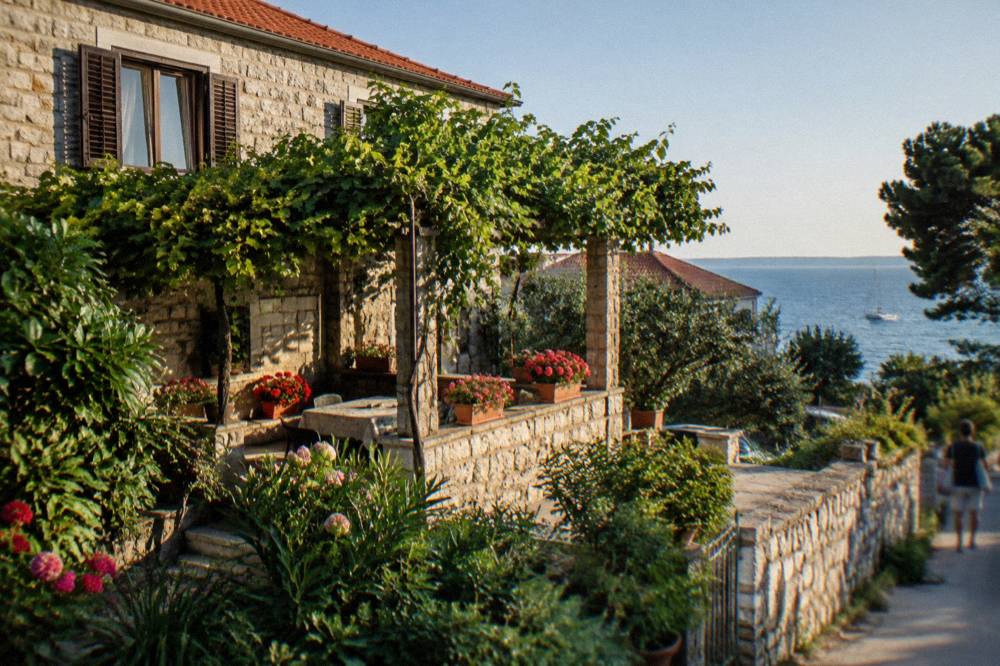
Where Diklo sits among Zadar's stay options is best understood by comparison. The site's where-to-stay coverage and the area pages for Borik and Puntamika cover the resort-flavoured end of the shore, while the Old Town page covers the peninsula's apartment stock inside the historic streets. Diklo fits between them as a quieter, residential choice: the trade is distance from the sights against space, calm and immediate beach access.
Airport logistics shape a Diklo stay more than a peninsula one, because the shore districts mean a transfer rather than a walk. Zadar Airport sits about 8 km from the city by the airport's own how-to-get-here page, and its shuttle, run by Liburnija, costs 5.00 EUR one way including luggage, takes about 20 minutes toward the city on the route Airport, Gaženica ferry port, bus station, Old Town, with the ticket valid 90 minutes on city buses. From the bus station the connection continues along the shore. The airport guide carries the full detail.
For travellers weighing the shore against the peninsula, the honest summary is this. Diklo suits longer stays, families and anyone whose holiday is built around the sea and day trips rather than evening wandering among monuments. The Old Town suits short stays built around the Sea Organ, the Forum and restaurants. The two-days-in-Zadar itinerary shows how tight a peninsula-based visit can be, and by contrast how relaxed a Diklo week can afford to be.
Check availability for the Dugi Otok boat day that pairs naturally with a Diklo base, and read the tour's own page for what the route covers before committing.
How Do You Get From Diklo To The Zadar Old Town?
The verified transport facts for reaching central Zadar are these: the city bus station stands at Ante Starčevića 1 and is operated by Liburnija, the same operator as the airport shuttle, and one reported October 2026 change rerouted the 21:00 and 22:00 evening departures of the Poluotok, Arbanasi, Kolodvor line away from Arbanasi.
The road geography of the wider city is set out precisely, and it is useful for planning any day out of Diklo by car. These figures run from the Old Town rather than from Diklo itself, and leave out the additional shore distance, but they frame every trip you are likely to make.
| Destination from Zadar Old Town | Road distance | Driving time |
|---|---|---|
| Bus station | 2.6 km | 6 min |
| Gaženica ferry port | 5.2 km | 10 min |
| Zadar Airport | 13.3 km | 22 min |
| Nin | 19.8 km | 28 min |
| Biograd | 29.5 km | 39 min |
| Paklenica National Park | 46.8 km | 57 min |
| Pag Town | 54 km | 62 min |
| Skradin | 76 km | 62 min |
| Krka, Skradinski Buk | 91 km | 73 min |
| Šibenik | 89 km | 71 min |
| Plitvice Lakes | 145 km | 153 min |
Two of those lines deserve emphasis for a Diklo reader. The Gaženica ferry port, ten minutes' drive from the centre, is where Jadrolinija's line 434 leaves for Brbinj on Dugi Otok, a crossing of one hour and forty minutes, and where the Preko ferry to Ugljan leaves from the city side, a crossing of roughly 25 to 30 minutes; check the current fare with the operator.
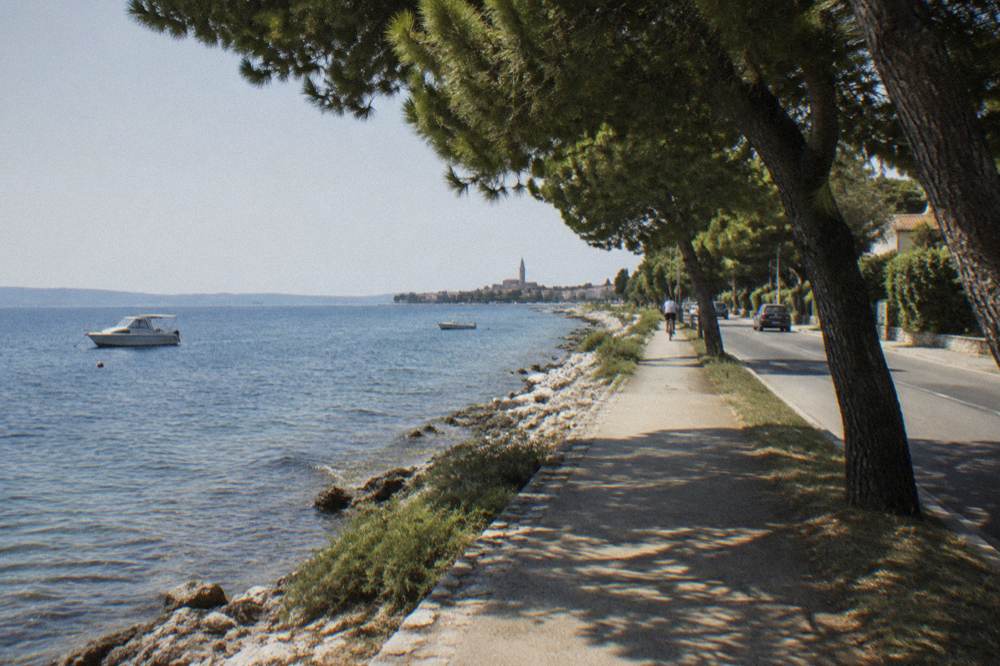
Cycling and walking are the natural answers to the Diklo-to-centre question in season, and while no verified route time exists for that exact trip, the flat shore between the districts makes it the obvious choice on a bike. The public transport guide carries how fares are handled. For late evenings, note the reported bus change above and check the last departures with the operator rather than assuming.
What Is The Weather Like In Diklo Zadar Through The Year?
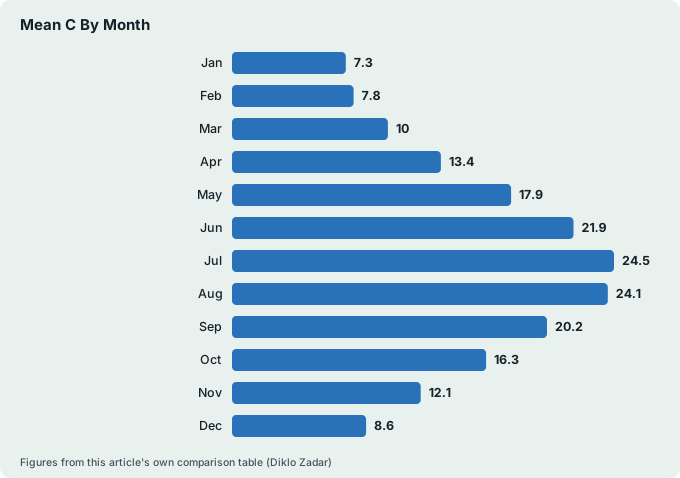
Diklo shares Zadar's Mediterranean coastal climate as recorded at the city's weather station, and the verified numbers, labelled Zadar station, 1961-2024 and published by Croatia's meteorological service, show July as the warmest month at a 24.5 C mean, January the coldest at 7.3 C, July the driest at 35.4 mm of rain and November the wettest at 123.0 mm, with about 2,600 hours of sunshine a year.
The full monthly record is worth reading rather than summarised, because Zadar's rainfall pattern surprises people who expect a simple dry-summer curve. September and October both jump back above 100 mm after the summer trough, and November peaks.
| Month | Mean C | Rain mm | Rain days |
|---|---|---|---|
| Jan | 7.3 | 76.4 | 10 |
| Feb | 7.8 | 67.0 | 9 |
| Mar | 10.0 | 66.3 | 9 |
| Apr | 13.4 | 61.4 | 10 |
| May | 17.9 | 64.4 | 10 |
| Jun | 21.9 | 48.5 | 8 |
| Jul | 24.5 | 35.4 | 5 |
| Aug | 24.1 | 52.8 | 6 |
| Sep | 20.2 | 110.9 | 9 |
| Oct | 16.3 | 106.8 | 9 |
| Nov | 12.1 | 123.0 | 12 |
| Dec | 8.6 | 99.6 | 12 |
Sunshine is where the city's reputation comes from, and the honest figure is the station's own sum: 2,590.8 hours a year, computed from the twelve monthly values in the official table, which this site writes as about 2,600 hours and never as the 3,000 that circulates in tourist copy.
| Period | Sunshine pattern from the Zadar station table |
|---|---|
| December | 106.8 hours, the annual low |
| January | 115.6 hours |
| July | 358.6 hours, the annual peak |
| August | 324.7 hours |
| Whole year | About 2,600 hours in total |
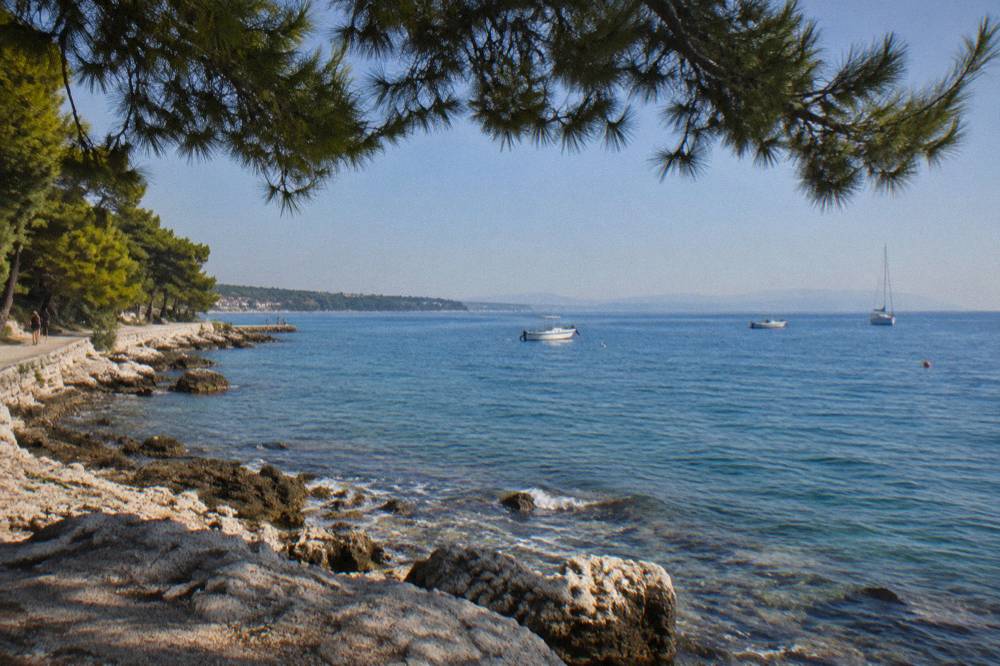
Two extremes sit in the record and are worth knowing without drama: the station's record high is 39.0 C, recorded on 6 August 2022, and its record low is -9.1 C from January 1963. Days at or above 30 C cluster in July and August, ten each, with three in June. None of this is a forecast, and a shore district like Diklo will feel the sea's moderating hand differently from an inland town, but the station record is the verified baseline.
Winter in a beach district is its own consideration. The sea reading of 21.3 to 21.4 C on 11 October 2026 shows how late the water stays warm, but November is the wettest month and the shore quietens hard. The offset is the calendar: Zadar Advent runs from 24 November 2026 to 2 January 2027, expanded to three locations including a new ice rink on the Forum, with the Zadar Christmas Run on 27 December 2026. All of it happens on the peninsula, a bus or bike ride from Diklo.
What Day Trips Work From Diklo And Zadar's Shore?
The verified day-trip spine from Zadar runs to five fee-charging parks, Krka, Plitvice, Kornati, Paklenica and Telašćica, plus the towns of Nin, Pag and Biograd and the islands of Ugljan and Dugi Otok, with adult park entry in 2026 ranging from 5 EUR at Paklenica in winter to 40 EUR at Krka and Plitvice in peak summer, all figures from the parks' own published price lists.
The park fees are seasonal, and the season names matter more than the averages. The table below carries the adult one-day figures exactly as the parks publish them for 2026. Note that Kornati is the exception to every rule: it charges per vessel by length and season, not per person, and the ticket is bought outside the park.
| Park | Adult fee, EUR, 2026 | Season detail |
|---|---|---|
| Krka | 7 / 20 / 40 | 7 in Jan-Mar and Nov-Dec, 20 in Apr, May and Oct, 40 in Jun-Sep |
| Plitvice Lakes | 10 / 23 / 40 | 10 in Jan-Mar and Nov-Dec, 23 in Apr, May and Oct, 40 in Jun-Sep, 25 after about 16:00 |
| Paklenica | 5 / 8 / 10 | 5 in Jan, Feb, Nov and Dec, 8 in Mar, Apr and Oct, 10 in May-Sep |
| Kornati | 25 to 95 per vessel | By boat length and season, bought outside the park |
| Telašćica | 6 / 8 | 6 off-season, 8 in Jun-Sep, at the Dolac land entrance |
A dated detail worth flagging: both Krka and Plitvice dropped to their winter-shoulder rates on 1 October 2026, Plitvice to 23 EUR through October and 10 EUR in November and December, Krka to 20 and then 7 EUR. Anyone staying in Diklo in late autumn is travelling in the cheap season for the two headline parks, and the Krka guide and Plitvice guide carry the full tariff detail.
For the water-based trips, which suit a Diklo base best, the islands are the story. Ugljan sits directly offshore, a ferry crossing of roughly 25 to 30 minutes from the city side, with no verified fare printed here. Dugi Otok lies further out, reached by the Brbinj ferry of one hour and forty minutes or by the many boat tours that leave from the peninsula, several of which stop at the Dugi Otok sights this site covers separately.
The Plitvice option deserves one honest line for shore-based travellers: it is the longest drive on the table, 145 km and about two and a half hours each way from the centre, so a guided day trip with tickets handled removes the parking and timing question entirely. The inland lakes also break the beach rhythm of a Diklo week, which is exactly why some people book it.
How Does Diklo Fit Into A Longer Zadar Itinerary?
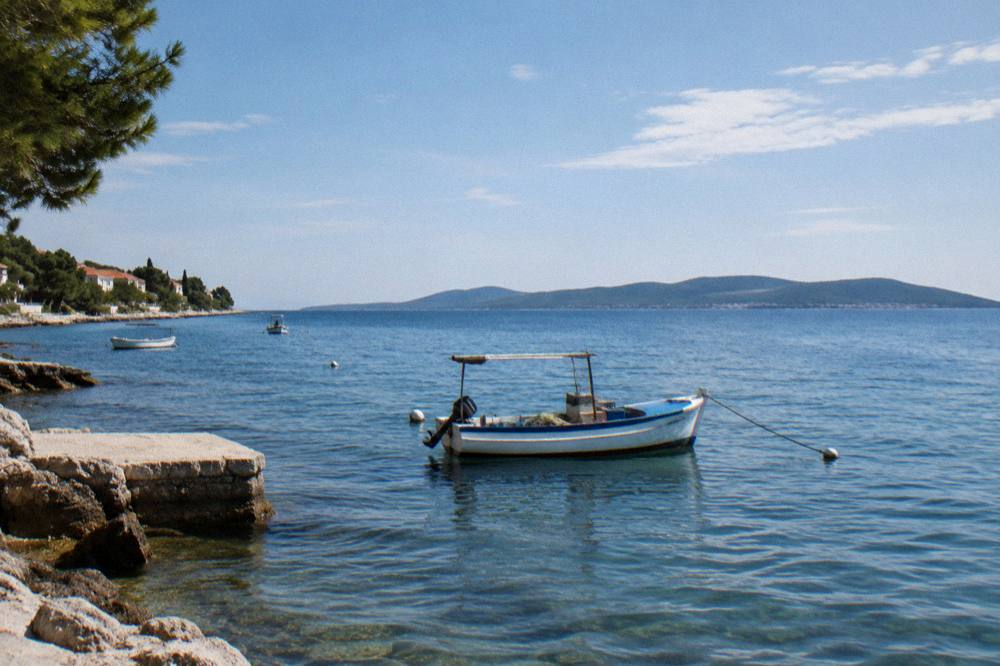
Diklo works as the stay-put half of a split itinerary: two or three days on the peninsula and seafront seeing the Sea Organ, the Roman Forum, the Church of St Donatus and the Museum of Ancient Glass, whose verified adult ticket is 7.00 EUR, then the remaining days as beach days in Diklo itself with one or two day trips to the parks and islands threaded between, which is the pattern the site's one-day and multi-day itineraries are built to serve.
The peninsula half is compact enough to hold in one long day, and the one-day itinerary walks it. The essentials are free: the Sea Organ and the Greeting to the Sun are open public installations with no ticket and no hours, the Roman Forum, Five Wells Square and Kalelarga are public streets and squares, and the Land Gate of 1543 stands at the edge of it all. Zadar's UNESCO status is specific and worth getting right: the city is one of six components of the Venetian Works of Defence UNESCO property, inscribed in 2017, and the Old Town as a whole is not a World Heritage Site.
The paid sights are few and cheap. The Museum of Ancient Glass charges 7.00 EUR for an adult, 5.00 for groups of five or more and 4.00 for schoolchildren, per its own price list. The Archaeological Museum and St Donatus run on a shared tariff showing 7.00 and 5.00 EUR rows, so around 7 EUR at full price is the honest phrasing, and the Church of St Donatus faces roof restoration from autumn 2026 that may limit access.
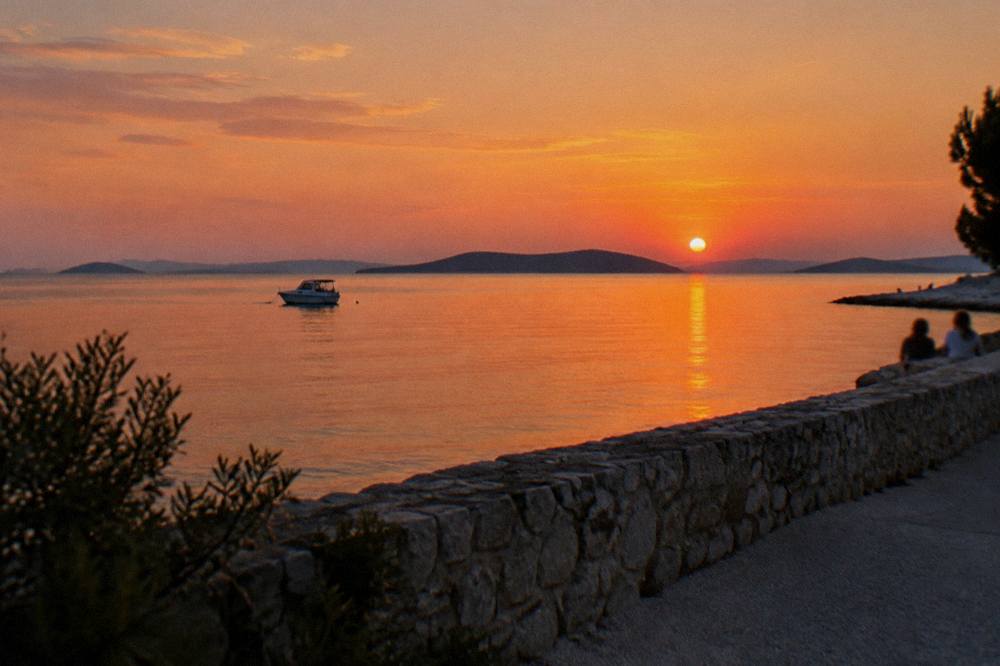
The second half, the Diklo half, is where the itinerary loosens. Beach mornings, a bike ride or bus into the peninsula for the evening installations, and one big day trip a week is a rhythm the district is built for. Boat tours leave from the city waterfront, so the morning commute from Diklo is short and flat. Kayaking and quad options also run from the Zadar area for anyone who wants the coast under their own power.
Wet days are the last piece of the plan, and the rainy-day options concentrate on the peninsula: the museums above, the churches, and the restaurants and maraschino traditions the site's food coverage details. September and October both average above 100 mm of rain at the Zadar station, so a shoulder-season Diklo week should carry a plan B, and the rainy-day itinerary pattern shows how to flex one.
Common Questions About Diklo Zadar
Is Diklo Zadar good for a beach holiday?
Diklo is one of Zadar's named city-side beach districts, alongside Kolovare, Borik and Puntamika, and 2026 county concession rules reported for Zadar County keep public beach access free and unfenced. Check specific facilities, lifeguard cover and water-quality ratings on the spot.
How far is Diklo from Zadar Old Town?
Diklo sits on the mainland shore away from the Old Town peninsula. Distance figures for the area are measured from the Old Town itself rather than from Diklo, so check the route and journey time with the bus operator or a mapping tool for your exact address.
Can you swim in the sea at Diklo?
Yes, the district is a shore area of a coastal Adriatic city and no local swimming ban is recorded. Croatia's meteorological service publishes an official live sea reading rather than a monthly normal, and the live Zadar reading stood at 21.3 to 21.4 C on 11 October 2026.
Is there a bus from Diklo to central Zadar?
Zadar's city buses are operated by Liburnija from the station at Ante Starčevića 1, and one reported change from 12 October 2026 rerouted the 21:00 and 22:00 evening departures of one line. No verified Diklo-specific timetable or fare appears in this site's facts, so confirm times and fares with the operator.
Which day trips are easiest from Diklo?
All the standard Zadar day trips work from the shore districts: Nin at 19.8 road kilometres from the Old Town, Paklenica at 46.8 km, Krka's Skradinski Buk at 91 km, Plitvice at 145 km, and the islands of Ugljan and Dugi Otok by ferry or boat tour from the city waterfront.
What is the best time of year to stay in Diklo?
By the Zadar station record, 1961-2024, July is the warmest month at a 24.5 C mean and also the driest at 35.4 mm, while November is the wettest at 123.0 mm. Late autumn brings park ticket prices down, with Krka and Plitvice at winter-shoulder rates from 1 October 2026, and Zadar Advent runs from 24 November 2026.