Krka National Park From Zadar
Krka National Park sits about an hour and a quarter's drive from Zadar, and its waterfalls are the single most requested day trip on the Dalmatian coast after the Plitvice lakes. Here is what the park's own price list says, what the drive involves, and where swimming is actually allowed.
Short answer
Krka National Park is 91 km from Zadar by road, about 73 minutes of driving to the Skradinski Buk entrance. Adult entry to the accessible land sites costs 7 euro in January to March and November to December, 20 euro in April, May and October, and 40 euro in June to September. Swimming at Skradinski Buk has been banned since 2021; swimming is allowed only at Roški slap, Stinice and Pisak from 1 June to 30 September.
Krka National Park, the waterfall park on the Krka river in central Dalmatia, is the day trip from Zadar that puts travertine cascades, a lake-drowned canyon and a boat ride to an island monastery within reach of a single morning's drive. Zadar is a coastal city on the Adriatic in northern Dalmatia, and the park lies inland to the southeast, close to the town of Skradin and the city of Šibenik. The park's own price list sets three seasonal ticket tiers, and the rules on swimming changed in 2021 in a way that still catches out travellers who read older guides. This page sets out what the primary sources say: the verified fees, the measured driving times, the bus question, and how Krka compares with the other park day trips that start from Zadar.
Where Is Krka National Park And How Far Is It From Zadar?
Krka National Park lies on the Krka river in central Dalmatia, roughly between Skradin and Šibenik, and the Skradinski Buk entrance is 91 km from Zadar by road, about 73 minutes of driving. The gateway town of Skradin is 76 km away, about 62 minutes, and Šibenik itself is 89 km from Zadar, about 71 minutes. All three figures are measured road routes, not straight-line distances.
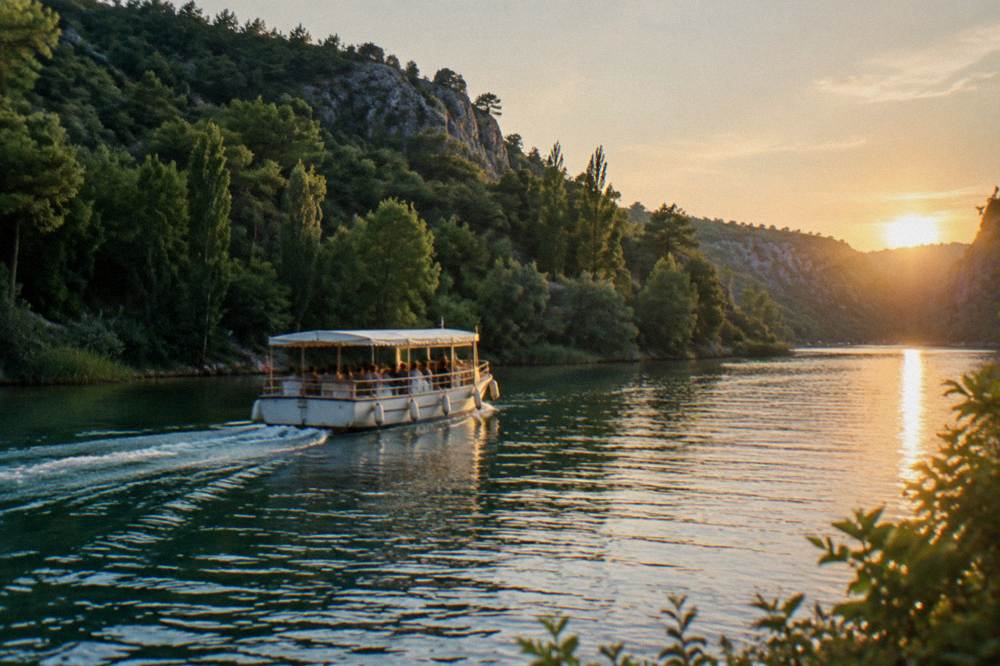
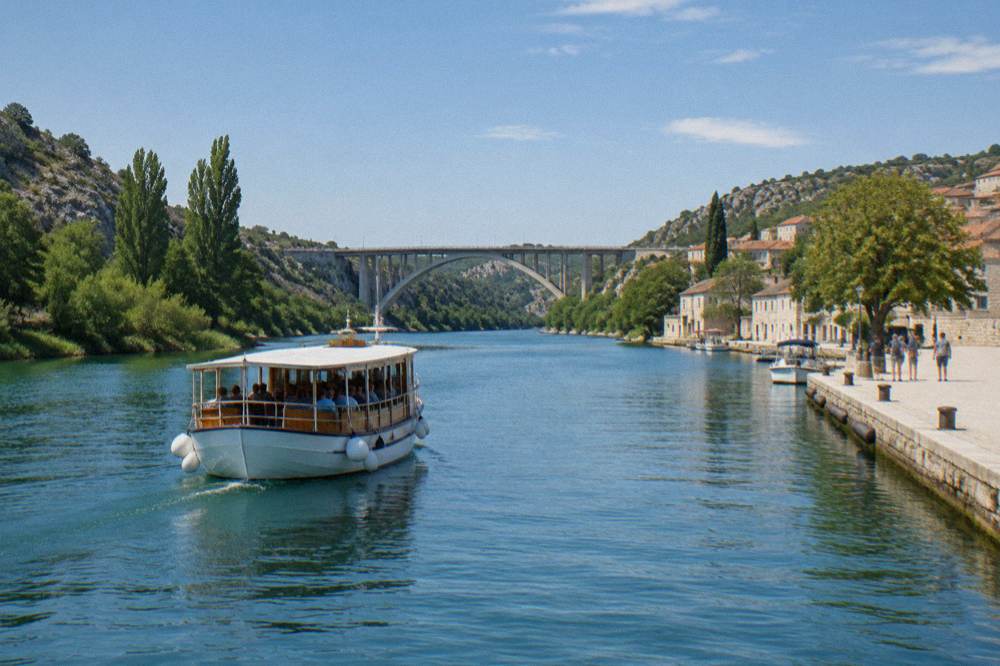
The drive leaves Zadar on the coastal road and joins the motorway network south-east towards Šibenik before dropping back onto local roads around Skradin. There are two main entrances a visitor cares about: Skradin, from which a park boat runs up the river to the Skradinski Buk falls, and Lozovac, which sits directly above the falls and has a footpath down to the viewing trails. The park's material describes Skradinski Buk as its centrepiece, a chain of travertine barriers across the river, and the boat ride from Skradin is part of the experience for anyone arriving through that entrance.
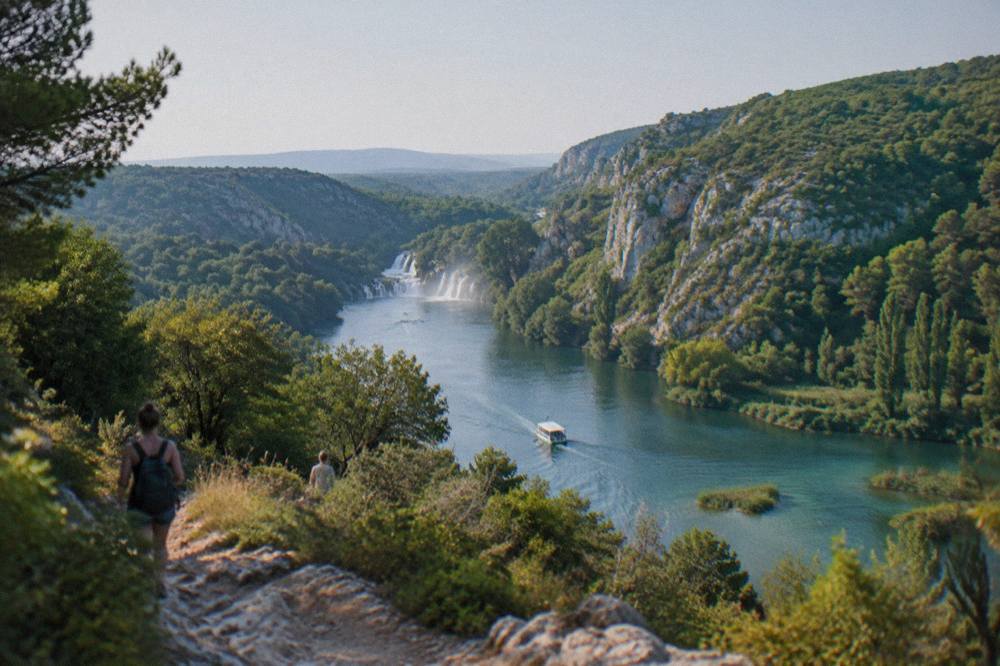
Skradin itself deserves the stop. It is a small river town at the point where the Krka becomes navigable, and every description of the park's western approach runs through it. If the plan is to build a wider southern-Dalmatian route, Skradin and Šibenik pair naturally with Krka, and both are covered in this site's day-trip pages.
For anyone weighing the region's other park options, the same measured set of routes gives Paklenica at 46.8 km from the old town, about 57 minutes, and Plitvice at 145 km, about two and a half hours. The full comparison lives in the Zadar national parks guide.
| Destination from Zadar | Road distance | Driving time |
|---|---|---|
| Skradin | 76 km | about 62 minutes |
| Skradinski Buk (Krka) | 91 km | about 73 minutes |
| Šibenik | 89 km | about 71 minutes |
| Paklenica National Park | 46.8 km | about 57 minutes |
| Plitvice Lakes National Park | 145 km | about 153 minutes |
How Much Does It Cost To Enter Krka National Park?
Adult entry to Krka's accessible land sites is 7 euro in January to March and November to December, 20 euro in April, May and October, and 40 euro in June to September, per the park's official price list. Children aged 7 to 18 and students pay 4, 12 and 15 euro across the same three seasons. The 40 euro summer tier also has an after-15:00 option at 30 euro in the peak months.
The three-tier structure is the single most important thing to understand about budgeting the trip, because the gap between the cheapest and the most expensive month is a factor of nearly six. A family arriving in February pays a fraction of what the same family pays in July for the same trails. The park's list also prices the satellite land sites separately: Roški slap, Kistanje, Manojlovac, Burnum and the Eco Campus run at 7, 12 and 20 euro by the same season bands, so a visit built around the quieter eastern falls costs less than the headline Skradinski Buk tier in every season.
| Season | Months | Adult, land sites | Child 7-18 / student |
|---|---|---|---|
| Winter | January, February, March, November, December | 7 euro | 4 euro |
| Shoulder | April, May, October | 20 euro | 12 euro |
| Summer | June, July, August, September | 40 euro (30 euro after 15:00) | 15 euro |
| Satellite site | Winter | Shoulder | Summer |
|---|---|---|---|
| Roški slap | 7 euro | 12 euro | 20 euro |
| Kistanje | 7 euro | 12 euro | 20 euro |
| Manojlovac | 7 euro | 12 euro | 20 euro |
| Burnum | 7 euro | 12 euro | 20 euro |
| Eco Campus | 7 euro | 12 euro | 20 euro |
The price question is asked often enough that this site keeps a dedicated answer page: how much it costs to enter Krka National Park, with the same figures broken out season by season. There is also a separate page on whether you need to pre-book Krka, which matters most in the 40 euro months when the daily caps bite.
How Do You Get From Zadar To Krka Without A Car?
The realistic car-free options from Zadar are a scheduled coach towards Šibenik or Skradin, or an organised day tour that bundles transport with the entry ticket. The site's dedicated answer page on the bus question carries the current detail.
Driving is straightforward, and the measured times above make it a shorter round trip than Plitvice by a wide margin. But a hire car is not the only sensible route. This site's Zadar airport car hire page covers the rental side for travellers flying in, and the Zadar parking guide covers what happens at the Zadar end of the trip.
For travellers who would rather not drive, a guided day tour is the other main route, and the operator listings from Zadar include several Krka options that pair the falls with the Skradin boat ride. The listing shows what each one covers, and the cancellation terms are worth reading before committing to a fixed date in a hot month.
The bus question has enough moving parts, timetables and drop-off points that it gets its own page: is there a bus from Zadar to Krka National Park. In short, the coach network runs down the coast towards Šibenik daily, and the connection onward to Skradin or the park entrance is the part to confirm before setting out, because schedules change with the season.
What Can You Actually See Inside Krka National Park?
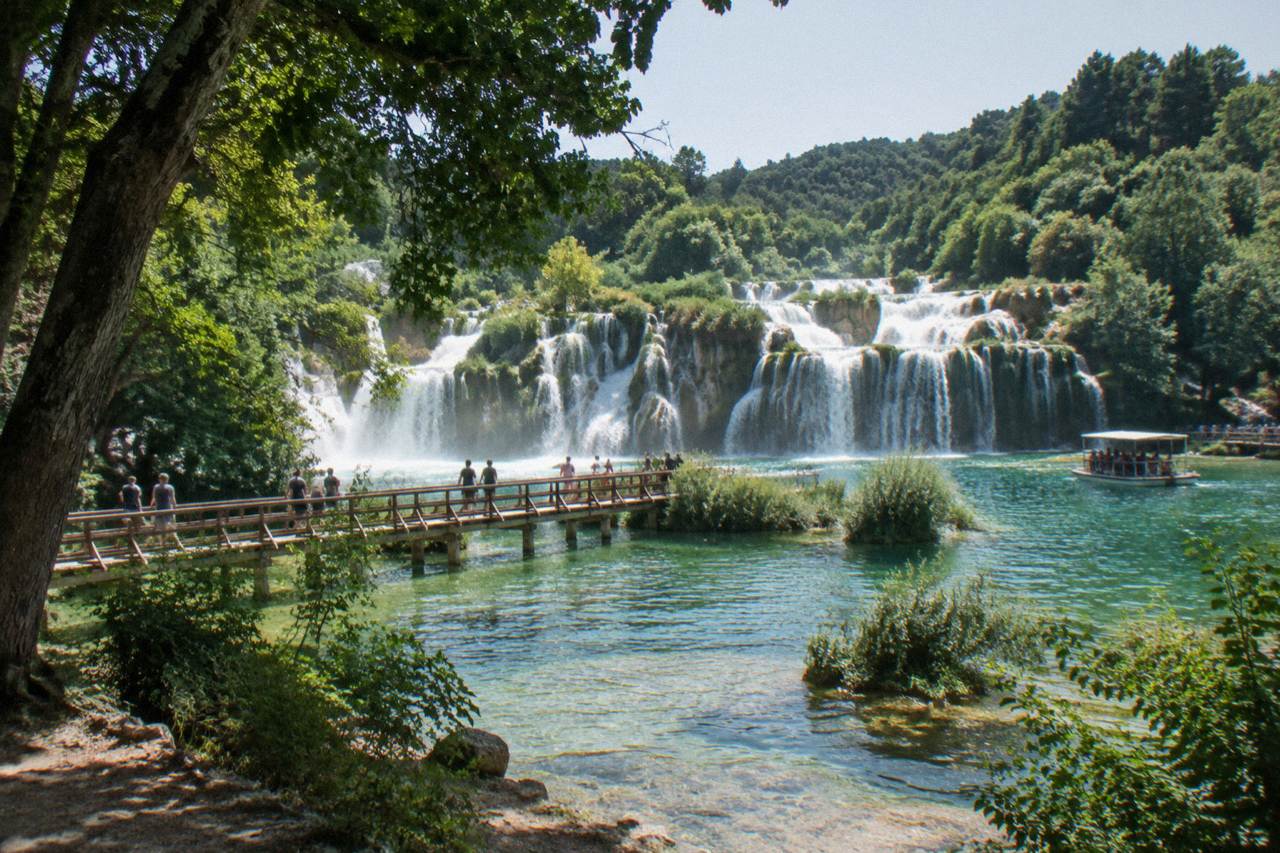
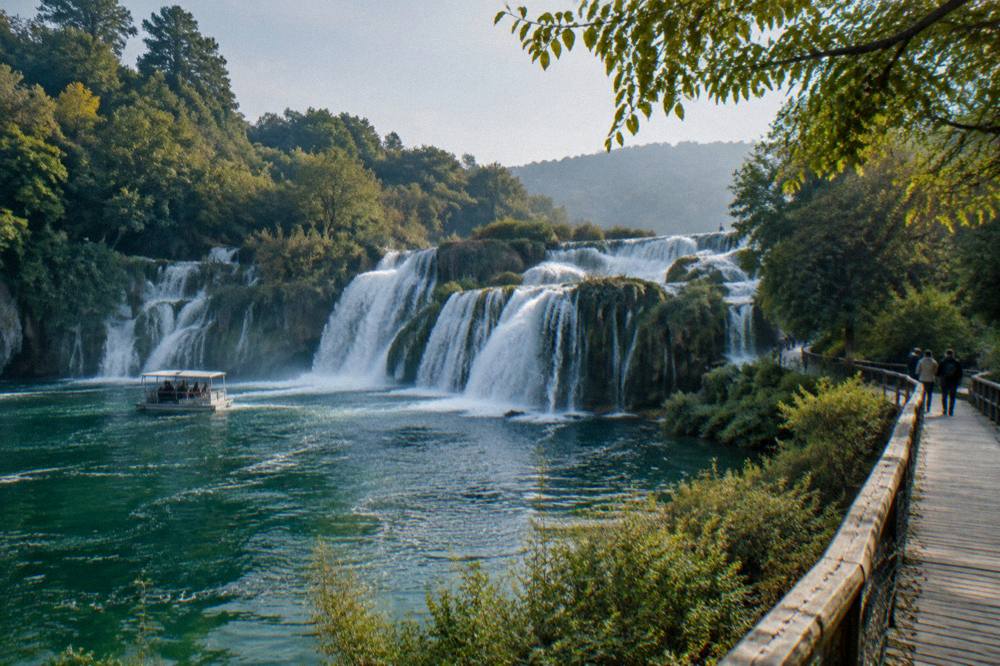
The park's centrepiece is Skradinski Buk, a broad chain of travertine waterfalls and pools on the Krka river, reached on foot from Lozovac or by park boat from Skradin. The other named sights are Roški slap with its series of smaller cascades, the Visovac island Franciscan monastery on the river lake, the Burnum Roman-site area, and the Manojlovac waterfall section upstream. The river boat connections between them are part of the park's own offering.
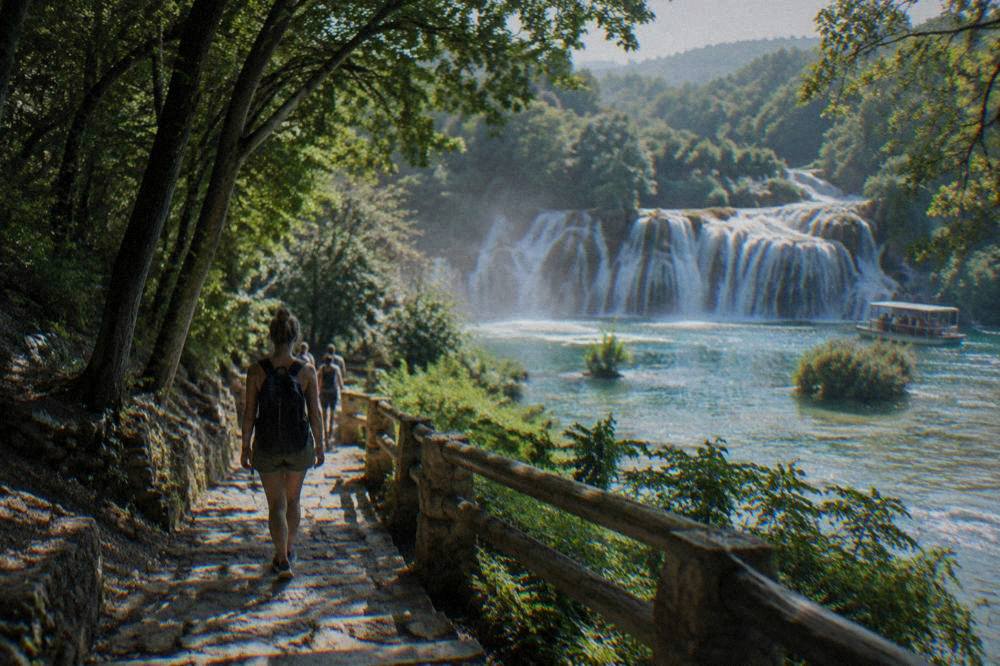
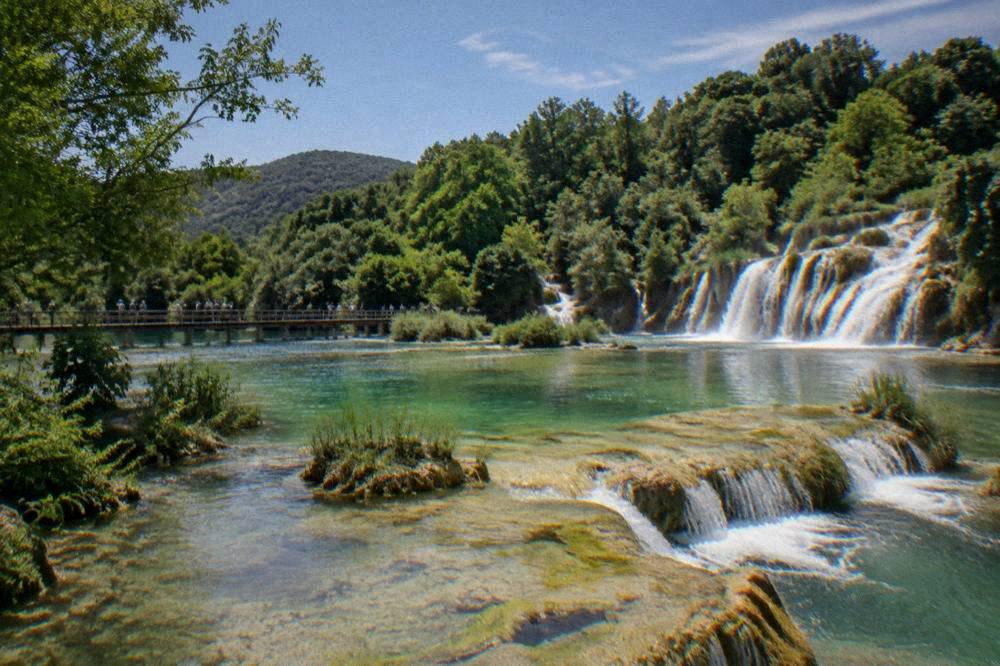
Skradinski Buk is the sight that fills the photographs: water spreading across a wide travertine barrier and dropping in overlapping curtains into a green pool. The viewing trails loop along both banks, and the park's material describes the wooden walkways over the barriers themselves. The boat from Skradin up the river canyon to the falls is a short crossing, and it is the arrival most first-time visitors remember, the falls appearing round the last bend of the canyon rather than from a car park.
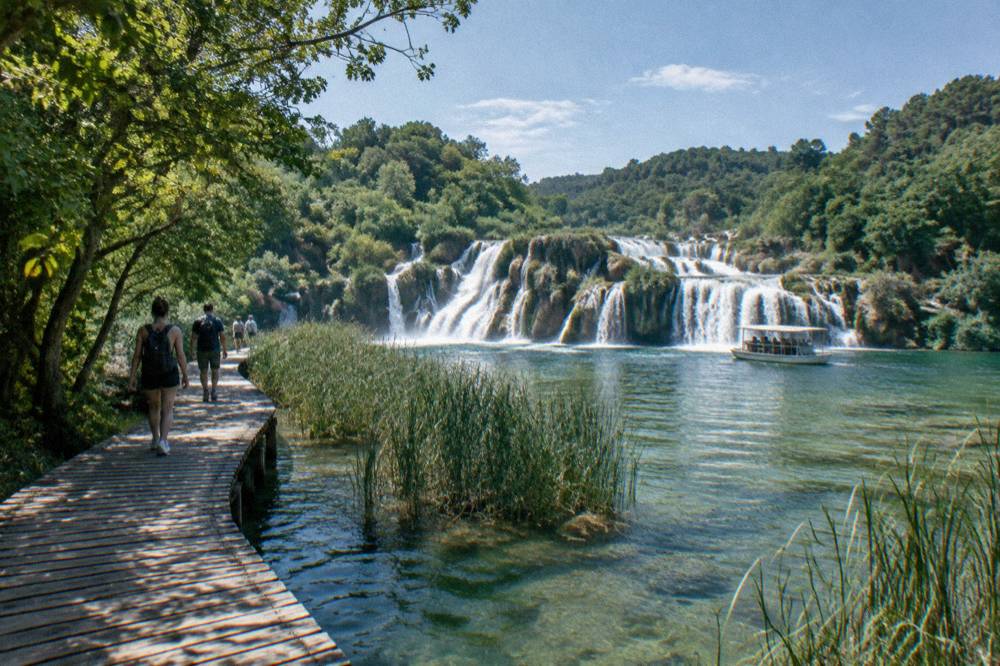
Roški slap, upstream, is a different character of place: a series of lower cascades spread across the river, quieter than the main falls, and priced on its own cheaper tier. The Visovac monastery sits on a small island in the river lake between the two falls and is reached by park boat. The Burnum area holds the remains of a Roman military camp, and Manojlovac is the park's tallest waterfall section, though access there is more limited than at the headline sites.
A day built around Skradinski Buk alone is a full one, and adding the boat to Visovac or the run to Roški slap turns it into a two-entrance plan. Travellers who want the river and waterfall experience but closer to the water itself sometimes prefer the Zrmanja river day trip, which is a different river and a different kind of day: kayaking rather than viewing.
For the falls themselves with a guide and the boat ride included, this Krka day tour from Zadar is one of the listings worth a look:
Between the two falls sections, the river runs through a lake stretch that the park's boats cross, and the whole Skradin-to-Roški slap corridor can be done by water in season. The park's own pages are the place to confirm which boat lines are running on a given date, because the timetables are seasonal and this site does not carry them.
Where Can You Swim In Krka National Park?
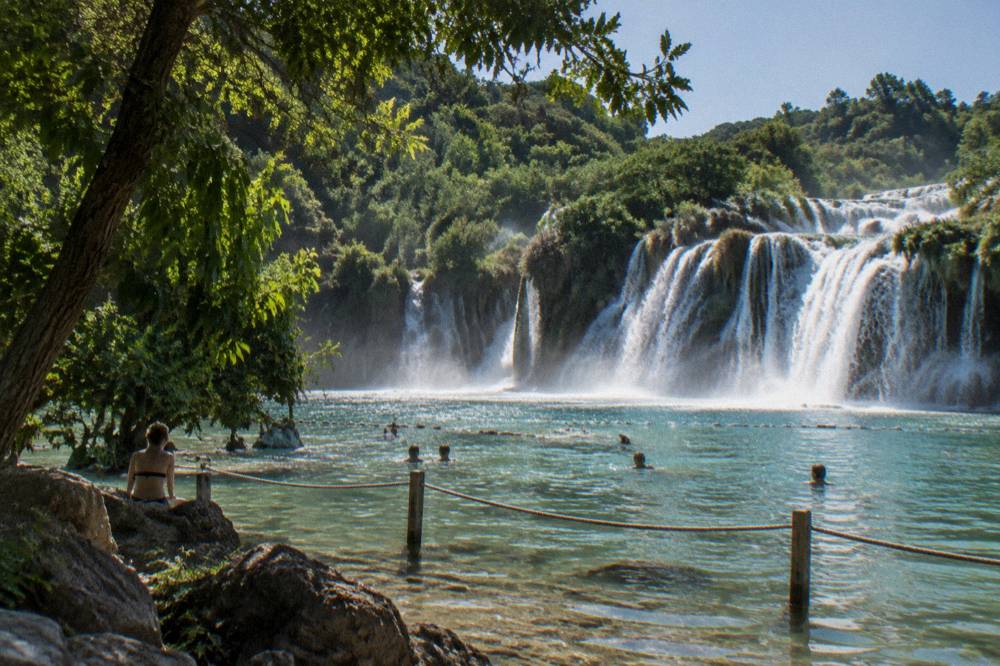
Swimming at Skradinski Buk has been banned since 2021, when the park prohibited it to protect the travertine barriers, and no swimming happens at the main falls at any time of year. Swimming is allowed only at three designated spots, Roški slap, Stinice and Pisak, and only from 1 June to 30 September, weather and water conditions permitting.
This is the rule that outdated guides get wrong. For years Skradinski Buk was famous precisely for swimming beneath the falls, and photographs of people in the pool date from before the ban. The park now enforces the prohibition across the travertine section, and the designated swim areas are separate, upstream and downstream locations with their own access. The season window matters too: a traveller in May or October arrives outside the permitted dates even at the designated spots. Other pages covering the same trip are gathered on Zadar Croatia Travel Guide.
For a day trip where swimming is the point rather than a side option, the coast around Zadar does that job better than the park. The Zadar beaches guide covers the city's own swimming spots, and the island day trips, Ugljan and Dugi Otok with its Sakarun lagoon, are built around the water. A Krka trip is better planned as a walking and viewing day, with a swim somewhere else before or after.
Krka Or Plitvice: Which Day Trip Is Better From Zadar?
Krka is the shorter day: 91 km and about 73 minutes of driving against Plitvice's 145 km and about 153 minutes, and Krka's entry is cheaper in every season, 7, 20 and 40 euro against Plitvice's 10, 23 and 40 euro. Plitvice is the bigger park with the larger lake-and-fall system. The honest answer is that they are different experiences, and the full comparison lives on this site's dedicated page.
The two parks share the travertine geology and the seasonal pricing logic, and both dropped to their winter-shoulder rates on 1 October 2026. But they distribute the day differently. Krka concentrates its spectacle at one reachable point, Skradinski Buk, and lets a short drive and a boat ride do the rest. Plitvice spreads a full lake system across a longer walking network, and from Zadar it is nearly double the drive each way. That difference is why the Krka vs Plitvice guide and the answer page which one is better, Plitvice or Krka exist as separate pages: the question is asked constantly and the answer depends on the season, the legs in the group and how much of the day you want on a bus.
| Krka | Plitvice | |
|---|---|---|
| Road distance from Zadar | 91 km | 145 km |
| Driving time | about 73 minutes | about 153 minutes |
| Winter adult entry | 7 euro | 10 euro |
| Shoulder adult entry | 20 euro | 23 euro |
| Summer adult entry | 40 euro (30 euro after 15:00 at Krka; 25 euro late at Plitvice) | 40 euro |
| Swimming | banned at Skradinski Buk; designated spots in season | not a swimming park |
Travellers who decide Plitvice is the one that fits, and who would rather not drive it, have a set of guided listings from Zadar to compare, including this one that pairs the lakes with the park's own boat and train:
The Plitvice day-trip page on this site carries the full planning detail for that route, including the seasonal tickets and the two-day option.
When Is The Best Time Of Year To Visit Krka From Zadar?
The cheapest and quietest months are January to March and November to December at 7 euro adult entry, and the shoulder months of April, May and October at 20 euro combine lower prices with full water flow. The 40 euro months, June to September, are the warmest and the busiest. Water flow is strongest in spring after the winter rains.
The Zadar-side climate gives a useful frame for planning, and the figures below are the Zadar station's own record, Zadar station, 1961-2024, published by the Croatian national meteorological service. The coast is warm from May and the rainfall climbs sharply in the autumn months: November is the wettest month at 123 mm and July the driest at 35.4 mm. Krka lies inland of the coast, so the park runs a little warmer in summer and a little colder in winter than these coastal numbers, but the seasonal shape is the same.
| Month | Mean temperature (C) | Rainfall (mm) |
|---|---|---|
| January | 7.3 | 76.4 |
| February | 7.8 | 67.0 |
| March | 10.0 | 66.3 |
| April | 13.4 | 61.4 |
| May | 17.9 | 64.4 |
| June | 21.9 | 48.5 |
| July | 24.5 | 35.4 |
| August | 24.1 | 52.8 |
| September | 20.2 | 110.9 |
| October | 16.3 | 106.8 |
| November | 12.1 | 123.0 |
| December | 8.6 | 99.6 |
The practical reading of that table for a Krka trip: May and June offer the best combination of flow, warmth and, in May, the 20 euro ticket. September is warm but carries the summer price and the year's first heavy rain. October drops the price back to 20 euro while the coast still averages 16.3 C, and from November the 7 euro rate applies, the falls are at their fullest after the autumn rain, and the trade is the shorter day and the wetter weather.
What Should You Know Before You Go?
Bring water shoes or proper walking shoes rather than flip flops, buy the ticket online in the summer months when daily limits apply, and plan the day around one entrance rather than trying to cover Skradinski Buk and Roški slap on a tight schedule. Croatia uses the euro, it is a Schengen member, and the emergency number is 112. Confirm the boat timetables and the swim-spot status on the park's own pages before setting out.
The park's trails are stone, wood and gravel, and the walkways over the travertine are wet by design. The Skradin boat and the shuttle arrangements between entrances run on seasonal timetables that this site does not carry, so the park's own pages are the authority for the day's logistics. In the peak months the timed-ticket recommendation exists for a reason: the daily limits are real and the midday queue at Lozovac is the place they bite.
One more Zadar-side note for the summer months: the city has posted dress-code signs at the entrances to the historic peninsula asking for appropriate clothing, no swimwear, with fines reported at up to 130 euro. That is a city rule, not a park rule, but it matters on a day that starts with a swim stop in town and ends with dinner in the old town. The things to do in Zadar page carries the city-side planning.
How Does Krka Compare With Zadar's Other Park Day Trips?
Krka is the closest big-name park day trip from Zadar after Paklenica, and it is the only one of the set built around waterfalls reachable on foot. Paklenica is a hiking and climbing canyon at 46.8 km, the Kornati islands and Telašćica are boat-only marine parks, and Vransko jezero is a small lake park inland of Biograd. Each charges per person except Kornati, which charges per vessel.
The fee structures differ enough that they are worth putting side by side, because a week based in Zadar can plausibly include several of these. Krka's per-person tiers are shown above. Paklenica's price list sets a one-day adult ticket at 5 euro in January, February, November and December, 8 euro in March, April and October, and 10 euro from May to September. Telašćica charges 6 euro at its land entrance outside the summer and 8 euro in June to September. Vransko jezero charges 6 euro adult, 3 euro for a child aged 7 to 18, and 15 euro for a family ticket. Kornati is the outlier: it is charged per vessel by length and season, from 25 euro for a boat up to 6.99 metres in the off-season months to 45 euro for the same boat in summer, with larger boats paying more, and the ticket is bought outside the park.
| Park | Adult fee | Type of day |
|---|---|---|
| Krka | 7 / 20 / 40 euro by season | Waterfalls and river boats |
| Paklenica | 5 / 8 / 10 euro by season | Canyon hiking and climbing |
| Telašćica | 6 / 8 euro by season | Cliffs and lake, usually by boat |
| Vransko jezero | 6 euro, 3 euro child, 15 euro family | Lake and birdlife |
| Kornati | per vessel, 25 to 95 euro by size and season | Island archipelago by boat |
The dedicated pages carry the detail for each: Paklenica, Telašćica and the Kornati islands. For the wider picture of what fits in a Zadar week, the Zadar day trips guide is the hub page.
Common Questions About Krka National Park From Zadar
How far is Krka National Park from Zadar?
The Skradinski Buk entrance is 91 km from Zadar by road, about 73 minutes of driving, and the gateway town of Skradin is 76 km, about 62 minutes. These are measured road routes.
How much does it cost to enter Krka National Park?
Adult entry to the accessible land sites is 7 euro in January to March and November to December, 20 euro in April, May and October, and 40 euro in June to September per the park's official price list. Children aged 7 to 18 and students pay 4, 12 and 15 euro across the same seasons.
Can you swim at Skradinski Buk?
No. Swimming at Skradinski Buk has been banned since 2021 to protect the travertine. Swimming is allowed only at the designated spots of Roški slap, Stinice and Pisak, and only from 1 June to 30 September, weather and water conditions permitting.
Is there a bus from Zadar to Krka National Park?
Coaches run from Zadar down the coast towards Šibenik, and the onward connection to Skradin or the park entrance is the part to confirm before travelling, because schedules change with the season. This site's dedicated answer page carries the current detail.
Is Krka or Plitvice the better day trip from Zadar?
Krka is the shorter drive at 91 km against Plitvice's 145 km, and its entry is cheaper in every season. Plitvice is the larger lake system. The comparison depends on the season and how much walking the group wants, and the site's Krka vs Plitvice page works through it in full.
When did Krka's prices drop for winter?
From 1 October the park moved to its shoulder and winter rates: 20 euro adult entry in October and 7 euro from November through March. The summer rate of 40 euro applies June to September.
Krka rewards the traveller who reads the seasonal price list before booking anything else: the same waterfalls cost 7 euro in February and 40 euro in July, and the difference funds a very good dinner back in Zadar. Plan the drive or the coach, buy the ticket in the right month, keep the swim for the designated spots in their season, and the falls do the rest.