Zadar Beaches
Zadar, a coastal city in Dalmatia on the Adriatic Sea, lines its mainland shore with pebble and concrete swimming spots and puts island beaches a short boat ride away. This guide covers the four named city beaches, what the climate record says about swimming weather, and the local rules that apply on the sand in 2026.
Short answer
Zadar's main swimming beaches are Kolovare, Borik, Puntamika and Diklo, all on the mainland coast within the city. Entry is free, the shore is pebble and stone rather than sand, and island beaches on Ugljan and Dugi Otok are reachable by ferry or boat tour. Sea temperature has an official live reading only, so check conditions before swimming.
Zadar, a coastal city in Dalmatia on the Adriatic Sea, keeps its swimming close to home. The Old Town sits on a narrow peninsula, and the mainland shore stretching northwest from it holds the four beaches the city is known for: Kolovare, Borik, Puntamika and Diklo. None of them is a wide sandy stretch; the Adriatic here is a pebble, stone and concrete shoreline, and the swimming happens off smoothed rocks, gravel bands and purpose-built bathing platforms. Across the water, the islands of Ugljan and Dugi Otok hold quieter coves and the pale sand of Sakarun, reachable by ferry or by one of the boat trips described on the Zadar boat tours overview. This guide walks through each beach, what the climate record says about when to swim, the access rules reported for 2026, and how to plan a beach day around the rest of a trip.
What Are The Best Beaches In Zadar?
The four named city beaches are Kolovare, Borik, Puntamika and Diklo, running from the peninsula's southeast corner along the northwest shore, and all four are free to enter with pebble, stone or concrete bathing surfaces rather than sand. Entry fees and fencing are not permitted on concession beaches under rules reported for the 2026 season, so access stays public along the waterline. For sand and island coves, the ferries and boat trips to Ugljan and Dugi Otok extend the choice well beyond the city.
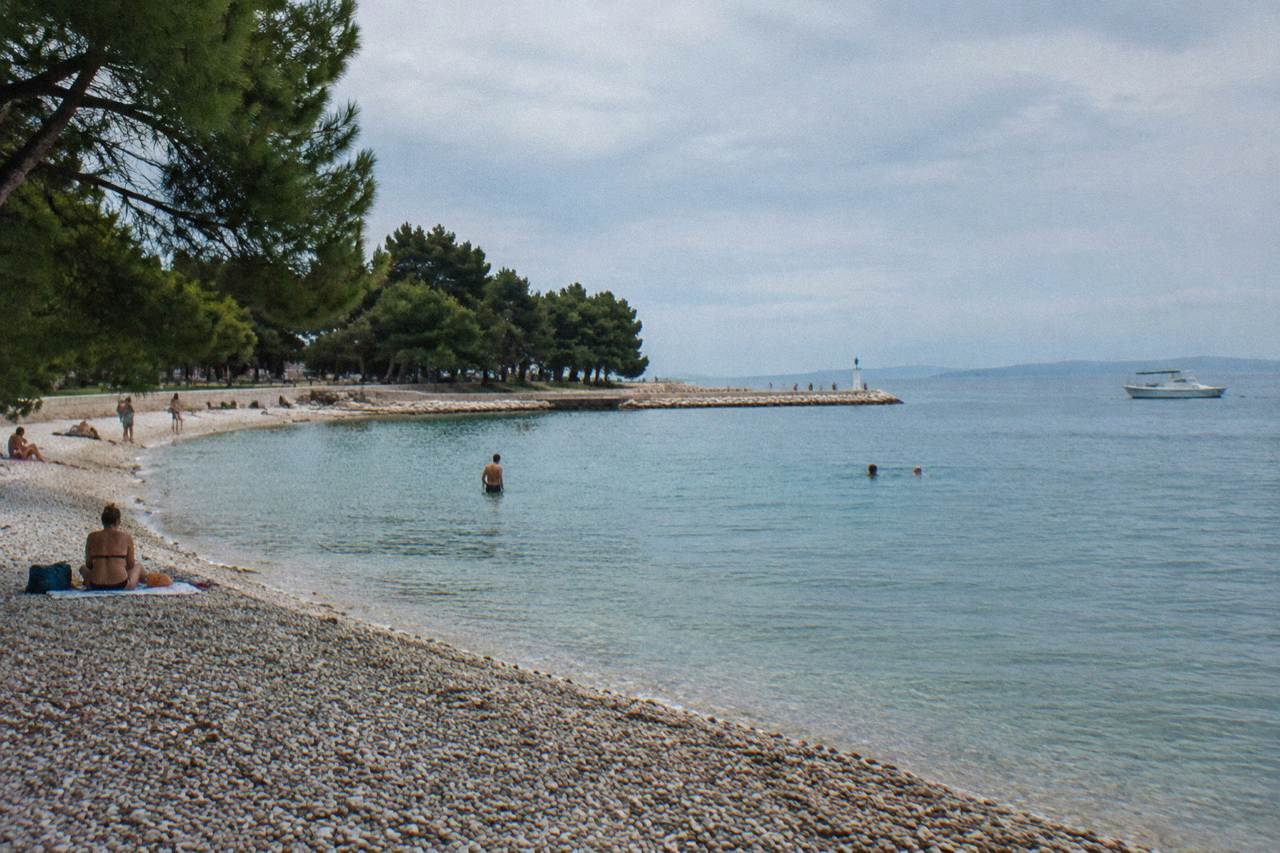
Kolovare sits closest to the Old Town, southeast of the peninsula, a long band of gravel and concrete bathing plateaus shaded by pines. It is the beach a visitor reaches on foot from the centre, and the one that fills first on summer afternoons. Borik lies about three kilometres northwest, in the hotel zone, with a mix of gravel coves and man-made platforms along a shore lined with accommodation. Puntamika continues that strip on the Puntamika headland, where the peninsular shoreline faces the open sea and the islands at once. Diklo is the furthest of the four, a residential quarter whose shore holds a sequence of small gravel coves and concrete bathing spots, quieter by simple geometry, because fewer visitors stay that far out.
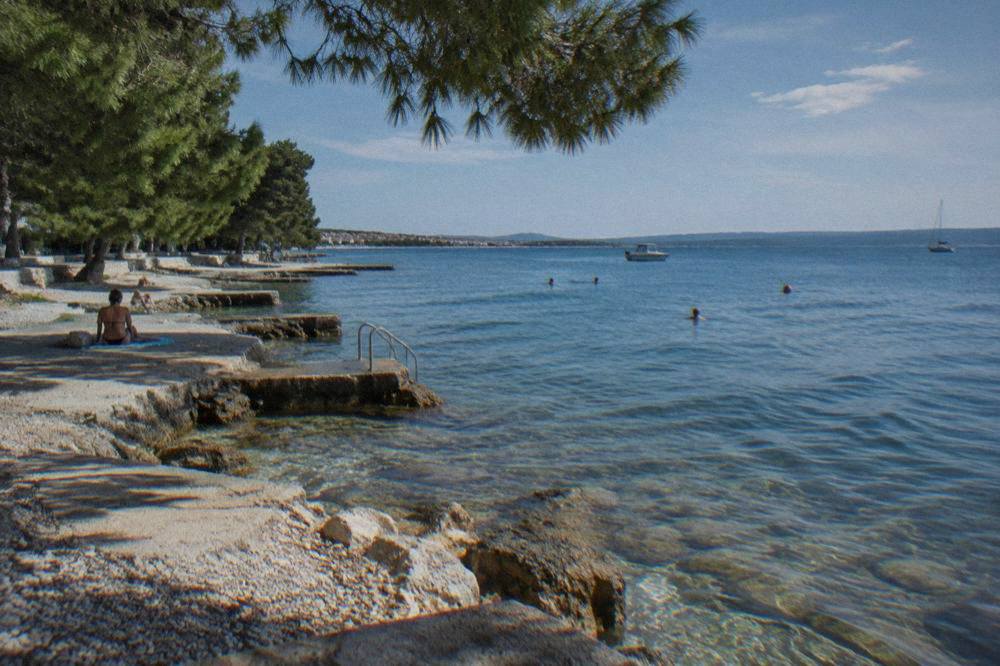
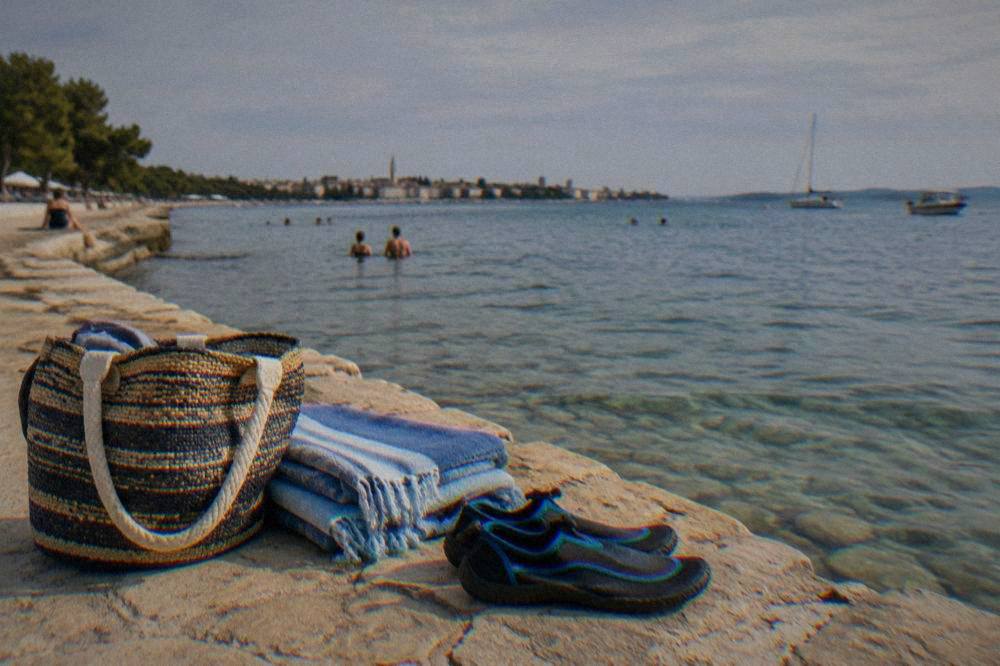
What none of the four offers is deep sand. The Adriatic around Zadar is a stone coast, and the swimming entry is over pebbles and rock slabs. Water shoes are the single piece of kit that changes a beach day here, more than any towel or chair. The payoff is water clarity: over pale stone in shallow water, the sea reads turquoise close to shore and deep blue within a few metres.
| Beach | Position relative to Old Town | Shore type | Character |
|---|---|---|---|
| Kolovare | Southeast of the peninsula, walkable | Pebble and concrete plateaus, pine shade | The city's closest full beach |
| Borik | Northwest, hotel zone | Gravel coves and built platforms | Resort shore with accommodation along it |
| Puntamika | Northwest, on the headland | Stone and pebble, open-sea aspect | Quieter, exposed to the breeze |
| Diklo | Furthest northwest, residential | Small gravel coves, concrete entry | Local and low key |
For readers weighing Zadar against the region's bigger city, the Zadar vs Split comparison covers how the two shores differ, and the where to stay in Zadar guide maps which districts put you nearest which stretch of water.
Is The Sea Warm Enough For Swimming In Zadar?
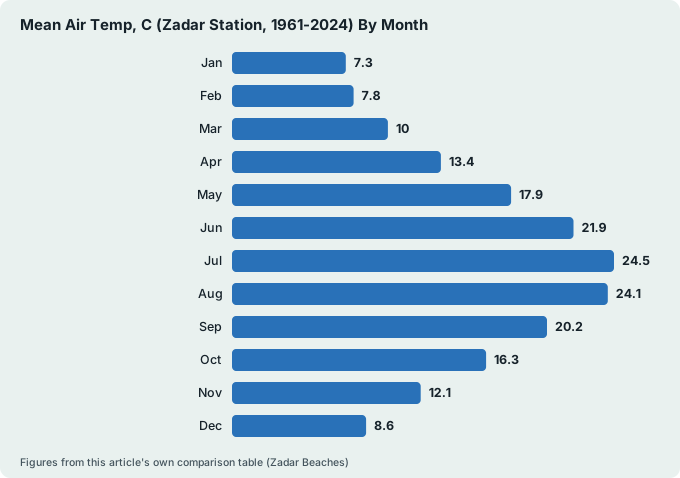
Croatia's meteorological service publishes a live sea reading for Zadar rather than a monthly temperature normal, so there is no official month by month sea figure this guide can print; the live DHMZ reading stood at 21.3 to 21.4 C on 11 October 2026, and the air temperature record, Zadar station 1961-2024, shows July means of 24.5 C and January means of 7.3 C, which frames the swimming season without inventing water numbers.
Check the live reading or the beach itself before committing to a swim.
The DHMZ station table that anchors every climate figure on this site covers air temperature, rainfall and sunshine, and the sea is published as a live value only. What the air record does establish is the shape of the season. July, at a mean of 24.5 C, and August, at 24.1 C, are the two warmest months, with ten days at or above 30 C in each, and the sea in a shallow stone bay in those months is warm enough for long swims on the Adriatic coast. June and September sit at 21.9 C and 20.2 C means, and May at 17.9 C, which marks the shoulder: swimmable on a good day, brisk on others.
| Month | Mean air temp, C (Zadar station, 1961-2024) | Rainfall, mm | Rain days |
|---|---|---|---|
| Jan | 7.3 | 76.4 | 10 |
| Feb | 7.8 | 67.0 | 9 |
| Mar | 10.0 | 66.3 | 9 |
| Apr | 13.4 | 61.4 | 10 |
| May | 17.9 | 64.4 | 10 |
| Jun | 21.9 | 48.5 | 8 |
| Jul | 24.5 | 35.4 | 5 |
| Aug | 24.1 | 52.8 | 6 |
| Sep | 20.2 | 110.9 | 9 |
| Oct | 16.3 | 106.8 | 9 |
| Nov | 12.1 | 123.0 | 12 |
| Dec | 8.6 | 99.6 | 12 |
Two details in that table matter more for a beach plan than the headline temperatures. July is the driest month at 35.4 mm of rain over five rain days, which is why it anchors the swimming season. November is the wettest month at 123.0 mm, and September jumps to 110.9 mm even as its mean stays a pleasant 20.2 C: early autumn swimming days in Zadar are genuinely warm but can be interrupted by a heavy shower, so a September beach plan should hold an indoor alternative. The Zadar weather guide and the best time to visit Zadar guide expand on this record month by month.
Sunshine backs the case for a long season. The station sums to about 2,600 hours of sunshine a year, with 358.6 hours in July and 324.7 in August, and still 243.1 hours in September and 189.8 in October. That October figure is the quiet argument for an autumn visit: the air mean of 16.3 C is no longer swimming weather for everyone, but the light on the water and the empty bathing platforms are part of what the season's end offers. For travellers deciding how long to give the city overall, how many days in Zadar works through the arithmetic.
When the sea itself is the point rather than the shore beside it, a kayak puts you on the water at the hours the beaches are at their best. The transparent LED kayak sunset tours run from the city waterfront, and the listing shows what each departure covers: Check availability. The same thinking applies to a bigger boat day: the luxury island trips stop at swimming and snorkelling spots the shore cannot reach.
Can You Swim Right By The Zadar Old Town?
Swimming happens off the peninsula's outer edges and at Kolovare rather than in the Old Town's harbour basins, and 2026 brought a dress code that matters on the walk back: signs posted at the historic core's access points require appropriate clothing, no swimwear or nudity, with a verbal warning first and fines reported up to 130 EUR for non compliance. Dry off and dress before crossing back into the historic streets, and keep beachwear for the beach.
The peninsula is a working historic core, not a bathing zone, and the sea walls around it are mooring and promenade rather than swimming entry. The practical swim within walking distance is Kolovare, southeast of the peninsula, or the stone edges further along the shore. The dress code signs, reported installed in summer 2026 at the key access points, formalise what the Old Town's communal rules already said, and they apply exactly to the beach-to-town flow: a wet towel and swimwear through Kalelarga is now a warning and then a fine. The signs are informative rather than a barrier, and the fine figure is a reported one, so treat it as the upper bound rather than a tariff.
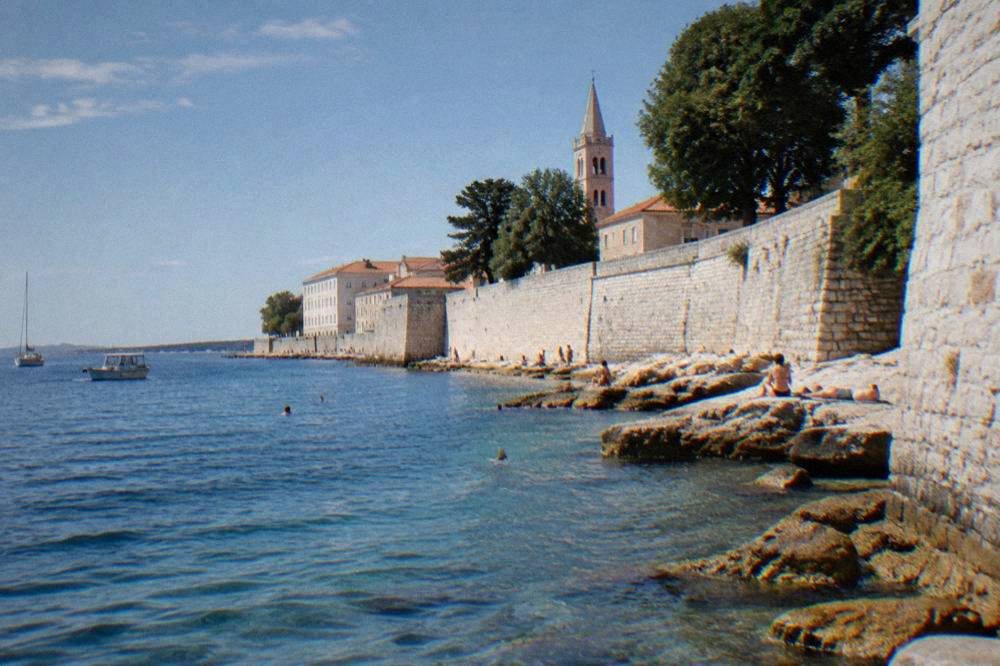
A second reported rule for 2026 touches the evening rather than the beach itself: the municipality signalled an intent to restrict night time retail alcohol sales in the Old Town, shops and kiosks rather than bars and restaurants, under a national law change. For a beach day that ends with a sunset at the Sea Organ and a drink after, the bar and restaurant terraces are unaffected by that reported plan, but a late evening shop for supplies in the historic core may not be. Confirm locally, since implementation details rest with the city.
The beach side of the rulebook is friendlier. Concession rules reported for the 2026 season in Zadar County prohibit fencing, barriers and entry fees on concession beaches: access stays public and free along the whole waterline. A concessionaire may run sunbeds and similar commercial services on part of a beach, up to roughly 40 to 60 percent of its area depending on the site, and the remainder stays open for towels and own chairs. In practice that means no beach in the Zadar stretch charges for entry, and paid comfort is optional.
| Rule or norm | What applies | Where it bites |
|---|---|---|
| Beach access | Free, unfenced public access reported for 2026 | All Zadar County concession beaches |
| Commercial zones on a beach | Limited to roughly 40 to 60 percent of the area | Sunbed and service operations |
| Old Town dress code | No swimwear or nudity in the historic core, fines reported up to 130 EUR | Signs at peninsula access points |
| Night retail alcohol | Restriction signalled for Old Town shops, not bars | Reported for 2026, confirm locally |
| Emergency number | 112 anywhere in Croatia | Whole country |
After a day on the stones, the evening route through the Old Town is part of the ritual anyway: the Sea Organ plays from the northwest corner as the light drops, the Greeting to the Sun installation sits beside it, and both are free, open public installations. The full evening walk is mapped in the city's things to do overview.
Which Zadar Beach Suits Families With Children?
Kolovare and Diklo are the two mainland stretches that suit families best, Kolovare because it is walkable from the Old Town with pine shade and long shallow plateaus, Diklo because its residential coves stay calmer and less crowded by distance alone; Borik adds hotel proximity, and all four beaches share free, unfenced access under the 2026 county rules, so the choice comes down to where you sleep and how far you want to walk rather than any ticket or entry difference.
What can be said from the shore itself: Kolovare's plateaus shelve gently and the pines give shade through the middle of the day, which are the two features families notice first. Diklo's coves are smaller and sit in a lived in quarter, which spreads people out. Puntamika's open aspect brings the breeze, welcome in the July heat but a factor with an inflatable or a nervous swimmer. Borik sits among the hotels, which shortens the walk from bed to water if the accommodation is there.
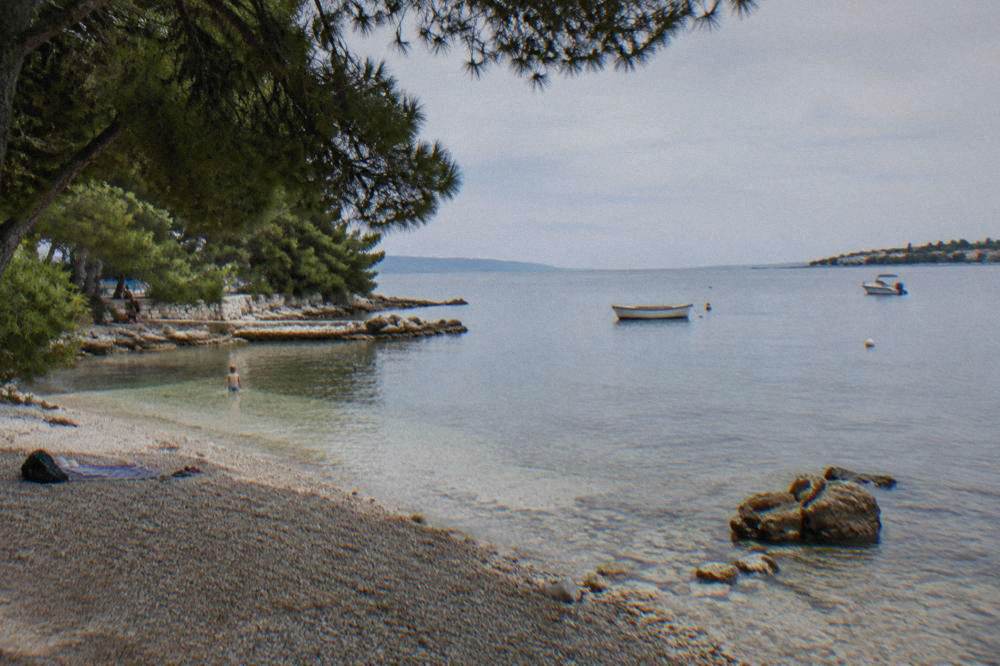
Water shoes again: children and bare pebbles are a poor combination, and every one of these beaches is a stone entry. A snorkel mask pays for itself on the same shore, since the water clears quickly over pale rock and small fish hold close to the stones.
For families planning the whole trip rather than one beach day, the islands near Zadar guide covers the Ugljan crossing, and the Zadar day trips guide ranks the park and island options by travel time. Nin, with its famous sand, is the nearest sandy alternative to the city's pebbles and has its own page in the day trips guide.
Freshwater breaks up a salt heavy week. The Krka waterfalls day trip from Zadar runs to the river country inland, with a guide and a boat ride on the Skradin stretch of the Krka: Check availability. Note the river rule before promising anyone a swim: swimming at Skradinski Buk itself is banned since 2021, and swimming in the park is allowed only at designated spots, Roški slap, Stinice and Pisak, from 1 June to 30 September, conditions permitting.
Where Do Borik And Puntamika Fit On The Shore?
Borik and Puntamika are the northwest pair, Borik in the hotel zone with gravel coves and built bathing platforms, Puntamika on the headland beyond it with stone entry and an open sea aspect, and together they form the stretch where staying by the beach and swimming outside the door are the same thing; both keep free public access along the waterline under the 2026 concession rules, with commercial sunbed zones limited to a share of each beach.
The northwest shore is the classic beach holiday base for Zadar. Accommodation lines it, the bathing platforms sit below it, and the pine and gravel pattern repeats from cove to cove. Puntamika's headland position changes the swimming: the shore faces both the channel and the open water, the breeze arrives more often, and the view runs out across the islands rather than back at the city. On a July afternoon with ten days at or above 30 C in the month, that breeze is a feature. The rest of the planning pages sit on Zadar Croatia Travel Guide.
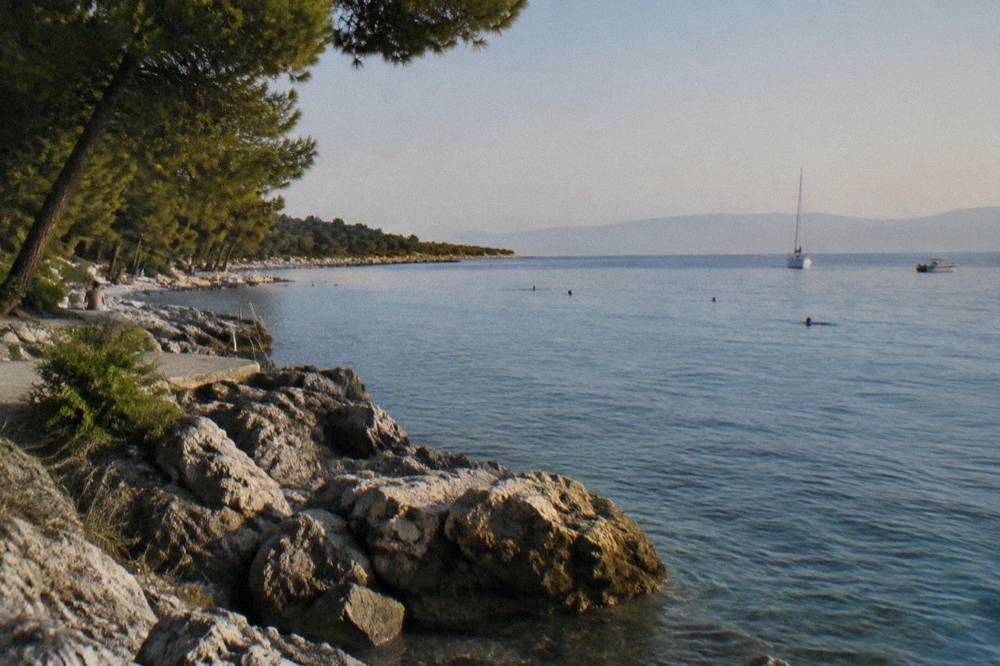
Getting between the beaches and the centre is a city bus matter, covered with the rest of the local network in the transport write ups, and a car opens the wider shore: Nin sits under 20 km away by road and Pag town about 54 km, per the driving distances computed for this site. The airport car hire guide covers the rental side of that plan, and the flights and airport pages the getting in.
Is It Worth Going To An Island Beach From Zadar?
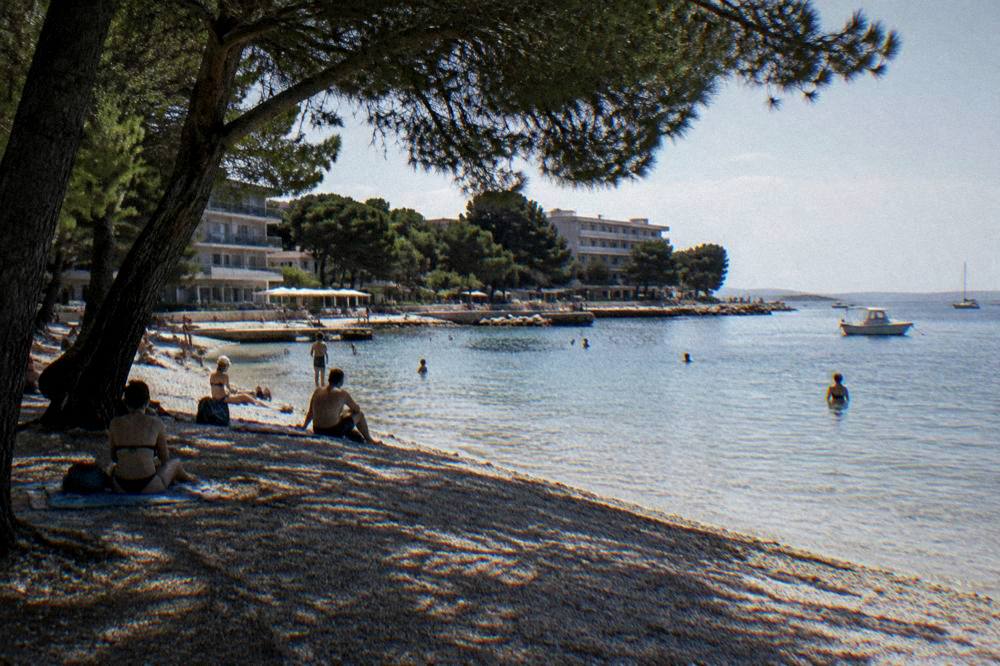
Yes, if sand matters: the islands hold what the city shore does not, pale sand at Sakarun on Dugi Otok and quiet gravel coves across Ugljan, both reachable by scheduled ferry or by boat tour, with the Ugljan crossing at Preko running roughly 25 to 30 minutes and the Dugi Otok car ferry to Brbinj taking 1 hour 40 minutes on Jadrolinija's line 434. Check current ferry fares at booking or on the operator's route pages.
Ugljan is the near island, the first ridge across the channel, and Preko its ferry port: a short crossing to a town whose name means "across", with coves within walk of the quay. Dugi Otok is the long island further out, and Sakarun at its northwest end is the region's signature sandy lagoon, the beach people mean when they say the good sand is not in the city. Telašćica nature park shares the island's southern end, and the Telašćica and Dugi Otok pages sit within the day trip guide's coverage.
| Island destination | Crossing from Zadar | Approximate time | Shore at the far end |
|---|---|---|---|
| Preko, Ugljan | Passenger ferry from the city | About 25 to 30 minutes | Gravel coves by the quay |
| Brbinj, Dugi Otok | Car ferry from Gaženica port, line 434 | 1 hour 40 minutes | Base for Sakarun and Telašćica by road |
| Kornati islands | Boat tour or own vessel | Full day trip | Stone coves, park entry by vessel |
| Sakarun lagoon | Via Dugi Otok | Half day door to door | Pale sand in a sheltered bay |
The Kornati archipelago is the far end of that logic, a national park of stone islands where the entry fee is charged per vessel by length and season, not per person, and bought outside the park boundary. Scheduled tours from Zadar handle all of that: the Kornati and Telašćica full day trips include the crossings, and the listing states exactly what each fare covers, lunch included on some departures. For the difference between that archipelago and the island beaches nearer in, the Zadar islands guide lays out each option.
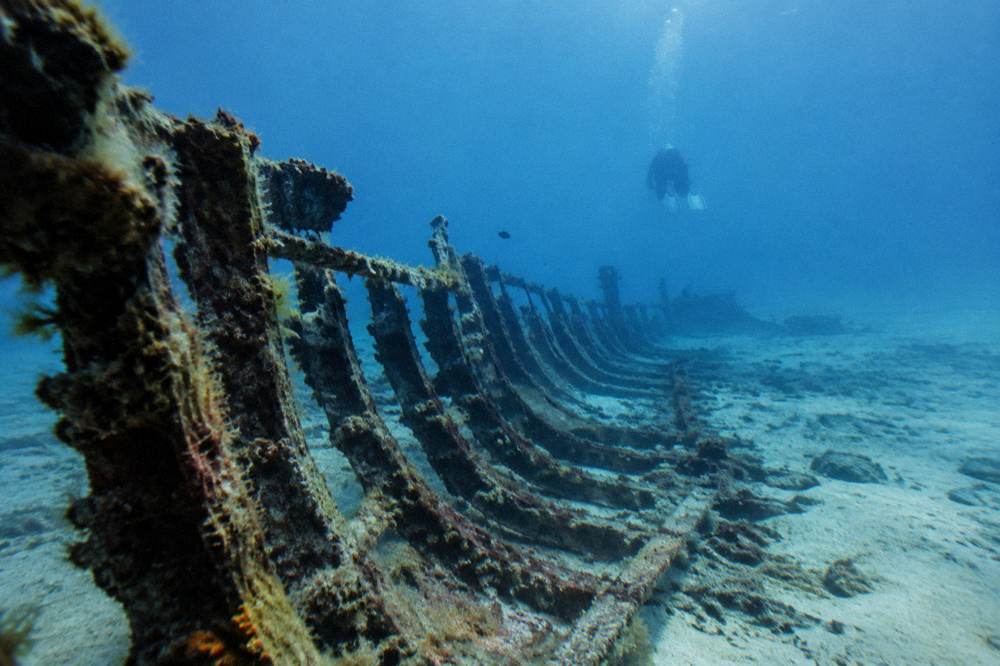
A gentler island afternoon runs on the small group boat trips that hop three islands with an aperitif poured on board, or the traditional wooden boat runs with wine and swim stops. Both families of tours are described on the boat tours page, and the luxury island snorkelling trips with wine on board are among the roster's highest rated products: Check availability. The 4 Jewels of Dugi Otok half day reaches a sunken ship and a tunnel as well as swimming stops, and the listing shows each route.
What Should You Pack For A Zadar Beach Day?
Pack for stone, sun and shoulder season swings: water shoes and a snorkel mask for the pebble entry, more water than feels necessary for July and August means of 24.5 C and 24.1 C, a layer for the bora wind that blows from the northeast in the colder months, and shade of your own if you want to avoid the paid sunbed zones, since the free public share of each beach holds towels and own chairs but no guarantee of shade.
The bora deserves its line in the packing list even in a beach guide. It is the cold, dry, gusty northeast wind of the Adriatic winter, and its summer cousin can still rough up an afternoon on an exposed headland like Puntamika; the jugo, the warm humid south easter, brings a different, heavier feel ahead of rain. Neither wind can be pinned to a single figure, but both shape which cove is pleasant on a given day, and the live forecast matters more than any monthly mean when choosing between a sheltered city beach and an open island one.
| Season | Air mean, C (Zadar station, 1961-2024) | What the shore is like | What to pack |
|---|---|---|---|
| June to August | 21.9 to 24.5 | Full swim season, five to six rain days a month | Water shoes, mask, shade, water |
| September | 20.2 | Warm sea, 110.9 mm of rain possible | Same, plus a rain layer |
| October | 16.3 | Empty platforms, 189.8 sunshine hours | Wetsuit tolerance varies, layer |
| November to March | 7.3 to 12.1 | Walking coast, wettest months | Storm watching gear, warm layers |
| April to May | 13.4 to 17.9 | First swims for the hardy | Shorty wetsuit for children |
Food between swims is a city strength rather than a beach one. The restaurant and food guides cover the Old Town tables and the local dishes worth ordering after a salt day, from fresh Adriatic fish to the maraschino cherry liqueur Zadar is known for: see the Zadar restaurants guide and the food overview. Note the reported night retail alcohol restriction in the Old Town when planning an evening picnic supply run, and the beach concession rule that keeps the waterline itself free and unfenced.
Can You Combine A Beach Holiday With Sightseeing In Zadar?
Yes, and the geography does the combining: the beaches sit on the same compact shoreline as the Old Town, so a morning at Kolovare, an afternoon among the Roman Forum, St Donatus and the Land Gate, and a sunset at the Sea Organ fit one day without a car, with the park day trips to Krka, Plitvice and Paklenica available on alternate days and the airport about 8 km from the city for arrivals and departures.
That compactness is the quiet argument for Zadar as a beach base. The city's swimming, dining and sightseeing share one shore, and the answers page what are the best beaches in Zadar collects the same question in short form. Alternating beach days with inland ones also dodges the July heat: a Krka day trades the stones for river country, and the tour options pair the waterfalls with a Skradin boat ride or a swim stop in Skradin itself on some departures, within the designated swimming rules the park sets. The classic comparison of the two big waterfall parks is settled in Krka vs Plitvice, and both winter at lower entry prices: from 1 October 2026 Krka's adult ticket dropped to 20 EUR in October and Plitvice's to 23 EUR, with the deeper winter rates of 7 EUR and 10 EUR following in November and December, per the parks' own seasonal lists.
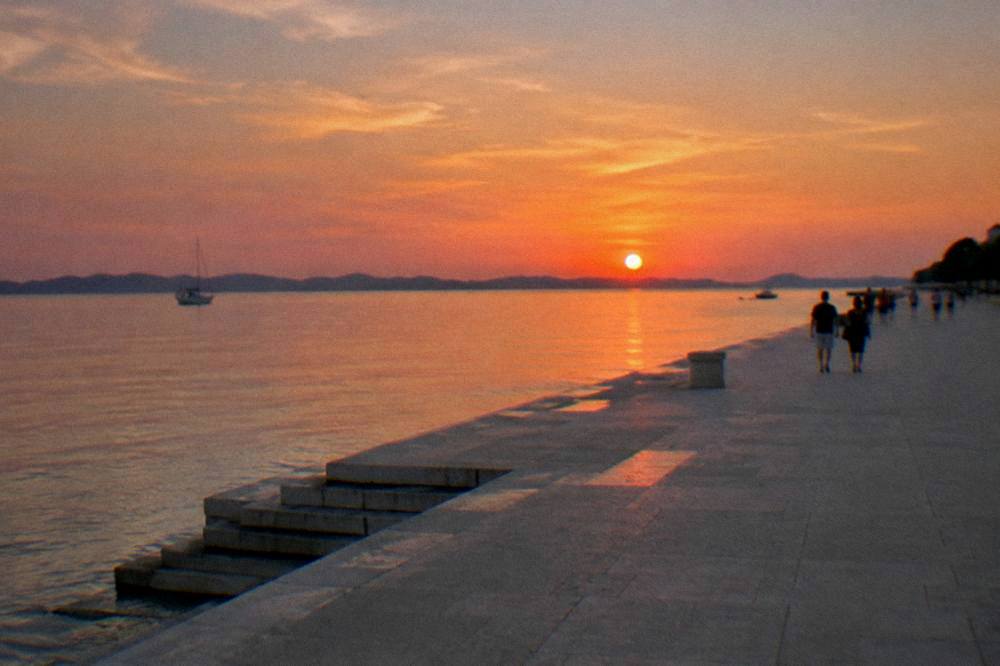
The evening end of a beach day belongs to the peninsula's northwest corner, where the Sea Organ, built in 2005 by Nikola Bašić, sounds with the waves and the Greeting to the Sun, its 2008 companion installation, lights the pavement after dark. For whether the city earns its place on a Dalmatian itinerary at all, the is Zadar worth visiting guide makes the case with the same sourcing discipline as this one.
The Krka day tours remain the roster's most bookable freshwater pairing for a Zadar stay, and the Skradin boat ride variant gives the river a second stretch of water: Check availability.
Common Questions About Zadar Beaches
Are Zadar beaches sandy or pebble?
The city beaches, Kolovare, Borik, Puntamika and Diklo, are pebble, stone and concrete bathing shores, not sand. Pale sand exists at Sakarun on Dugi Otok and at Nin on the mainland, both reachable as day trips.
Do you have to pay to enter a beach in Zadar?
No. Concession rules reported for the 2026 season in Zadar County prohibit fencing, barriers and entry fees on concession beaches, keeping the waterline public and free. Paid sunbeds and services may occupy part of a beach, with the remainder open for own towels and chairs.
Can you swim in the Old Town in Zadar?
Swimming happens at Kolovare and along the shore edges rather than in the Old Town's harbour basins. Signs posted in 2026 at the historic core's access points require appropriate clothing, no swimwear or nudity, with fines reported up to 130 EUR, so dry off and dress before walking back in.
Which is the closest beach to Zadar Old Town?
Kolovare, southeast of the peninsula, is the walkable city beach, with pine shade and long pebble and concrete plateaus. Borik, Puntamika and Diklo stretch northwest along the shore in that order.
Can you swim at Krka National Park on a day trip from Zadar?
Not at Skradinski Buk, where swimming has been banned since 2021 to protect the travertine. Swimming in the park is allowed only at designated spots, Roški slap, Stinice and Pisak, from 1 June to 30 September, conditions permitting, and the sea beaches remain the reliable swim on a Zadar trip.