Zadar 4 Day Itinerary
Four days is enough to see Zadar's peninsula, swim off its islands and reach two national parks, and this itinerary sequences all of it around verified opening prices, ferry crossings and daylight.
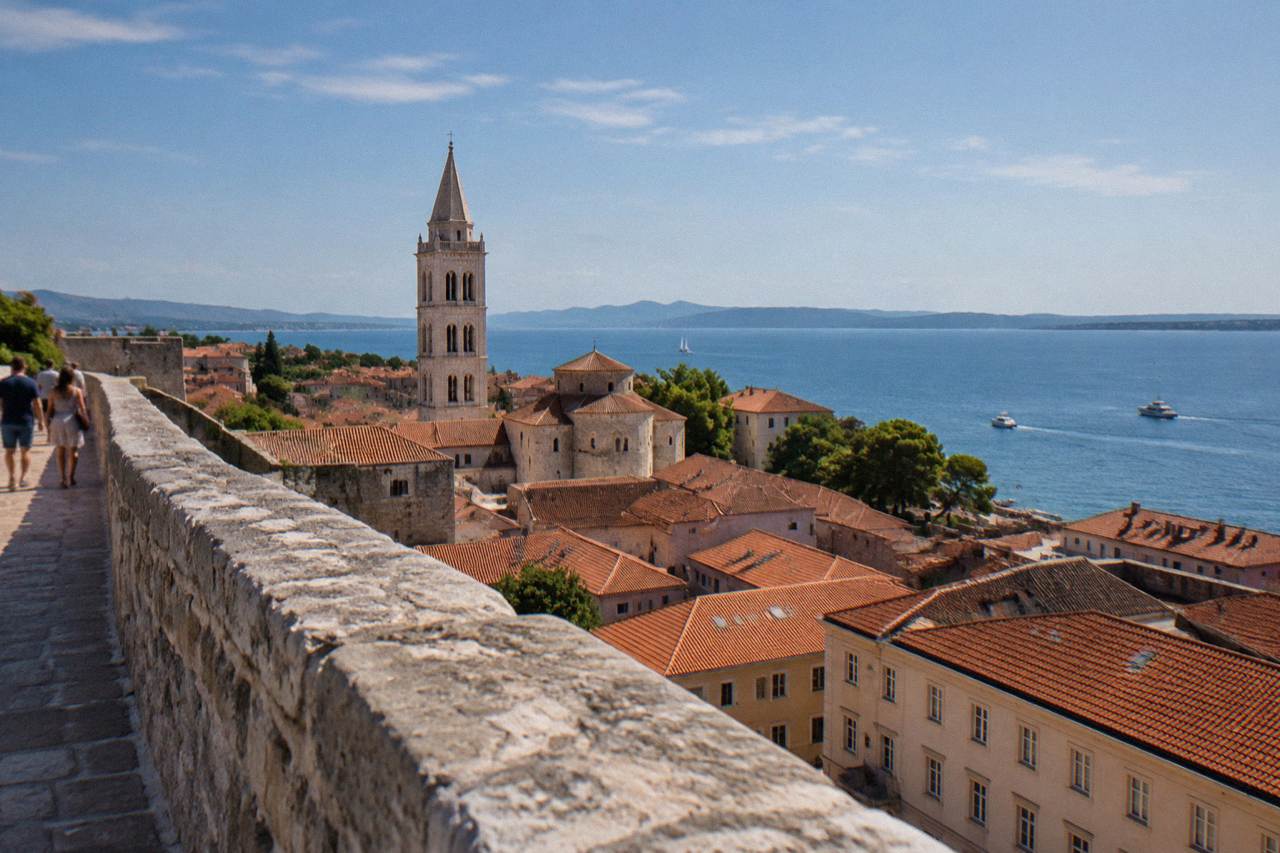
Short answer
Spend day one on the Old Town peninsula, day two between the museums and the Riva, day three on an island or Kornati boat trip, and day four at Krka or Plitvice, whose winter tickets drop to 7 and 10 EUR respectively from the 2026 shoulder season.
Zadar is a coastal city in Dalmatia, Croatia, sitting on a narrow peninsula that juts into the Adriatic, with the islands of Ugljan and Dugi Otok a short boat ride offshore. Four days is the point where the city itself, its islands and at least one national park all fit without rushing, and this itinerary is built around figures the sources actually publish: the park tariff sheets, the museum price lists, the ferry operator's route pages and the Zadar weather-station record. Everything below was assembled by the Zadar Croatia Travel Guide editorial desk from those primary sources, day by day, with the decisions that shape each one called out as they come up.
What Does A Zadar 4 Day Itinerary Cover, And In What Order?
A Zadar 4 day itinerary splits cleanly into four blocks: day one walks the Old Town peninsula from the Land Gate to the Sea Organ, day two pairs the city museums with the Riva and a sunset at the water's edge, day three goes to sea around Dugi Otok or the Kornati islands, and day four heads inland to Krka or Plitvice, whose adult tickets run 7 and 10 EUR in the winter months. The order matters less than the arithmetic: two days anchor you to the peninsula, one day needs a boat, and one day needs a bus or a car, and reversing that sequence is the only reshuffle that changes the plan much.
The logic behind the sequence is transport. The Old Town, the museums and the Riva waterfront are all within a short walk of each other, so the first two days need nothing booked beyond a dinner table. Day three depends on a boat departure, and day four depends on a road journey: the driving distances computed for this site put Skradin at 76 km from the Old Town, the Krka Skradinski Buk entrance at 91 km, and Plitvice at 145 km. Grouping the two flexible days first keeps the schedule absorbent if a bora wind cancels a sailing.
Here is the shape of the four days at a glance:
| Day | Base | Theme | Key Move | Booked Item Needed |
|---|---|---|---|---|
| 1 | Old Town peninsula | Roman and medieval Zadar | Land Gate to Sea Organ walk | None |
| 2 | Old Town peninsula | Museums and the waterfront | Museum of Ancient Glass, evening on the Riva | Optional food walk |
| 3 | Sea | Islands and swimming | Dugi Otok or Kornati boat trip | Boat tour or ferry ticket |
| 4 | Inland | Waterfalls or lakes | Krka or Plitvice | Bus, tour or park ticket |
Readers with only a weekend should start with the two days in Zadar plan and steal day three from here, and anyone adding days can graft on the three days in Zadar sequence instead.
How Do You Spend Day One In Zadar's Old Town?
Day one belongs entirely to the Old Town peninsula: enter through the Land Gate of 1543, walk Kalelarga to the People's Square and the Roman Forum, step into St Donatus Church and the Cathedral of St Anastasia, and finish on the western quay at the Sea Organ and the Greeting to the Sun, both free, both open around the clock. None of the outdoor sights on this day charges entry, and the whole route is flat and walkable end to end, which is why it goes first, before any boat or bus schedule constrains the clock.
The peninsula, known locally as Poluotok, concentrates everything day one needs. The Land Gate was built in 1543 to a design attributed to Michele Sanmicheli, and it remains the ceremonial way in from the harbour side. From there Kalelarga, the main street, runs west toward the Roman Forum and the People's Square, all free public space with no tickets and no set hours. The Forum's paving and column stumps are out in the open, so a first-time visitor loses nothing by arriving early or late in the day.
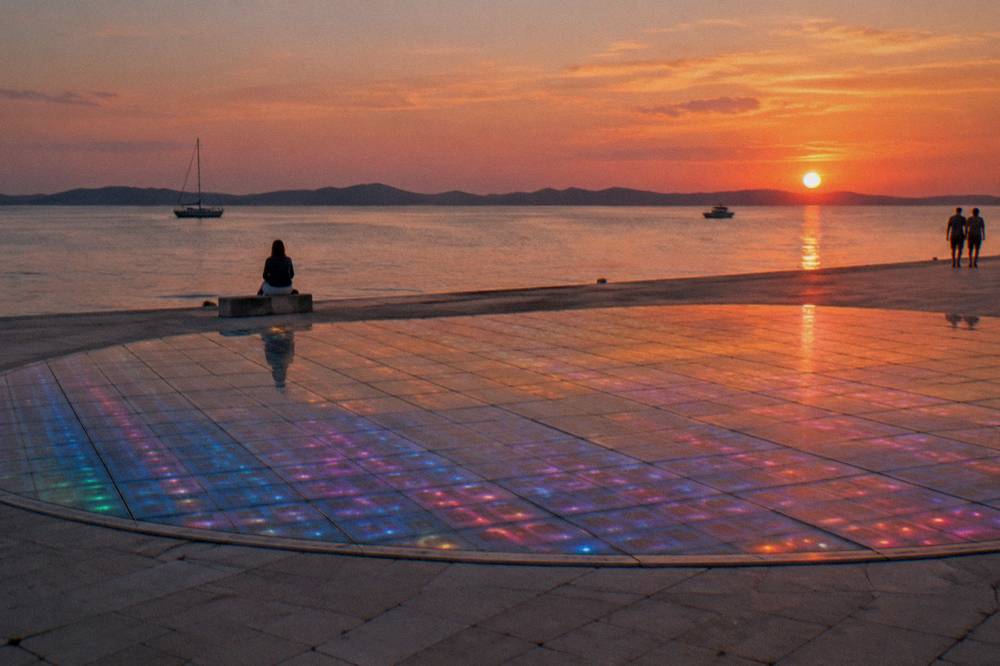
The two headline sights of modern Zadar sit at the tip of the peninsula. The Sea Organ, built in 2005 to Nikola Bašić's design, is a set of steps with tuned pipes under them that sound when waves push air through, and the Greeting to the Sun, from 2008, is a 22 m circle of solar-powered glass panels beside it, according to the figures this site carries from the city's own pages. Both are free public installations with no closing time.
| Day One Sight | Entry Cost | Notes |
|---|---|---|
| Land Gate (1543) | Free | Public city gate, always accessible |
| Kalelarga and People's Square | Free | Main street and square, no tickets |
| Roman Forum | Free | Open-air ruins, no set hours |
| St Donatus Church | Around 7 EUR full price | Admission 7.00 and 5.00 EUR; roof works planned from autumn 2026 may limit access |
| Cathedral of St Anastasia | Check on site | Ask about the bell-tower climb price and hours on site |
| Sea Organ (2005) and Greeting to the Sun (2008) | Free | Open public installations, no closing time |
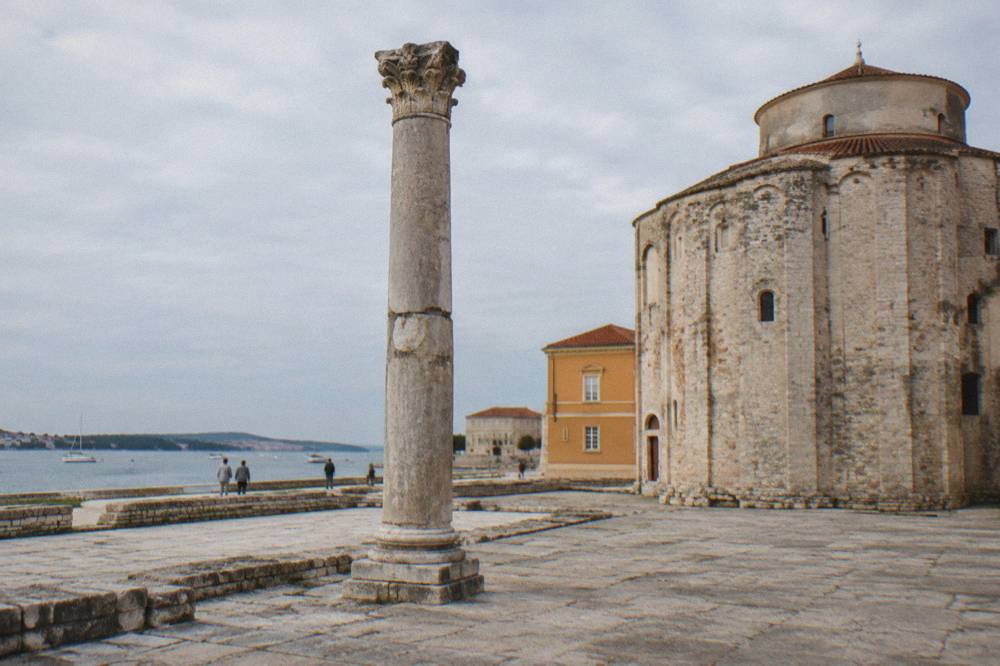
One caution carries a date. St Donatus faces a roof restoration: a public tender for the full replacement of the wooden roof structure was launched at the end of August 2026, with works planned from autumn 2026 over roughly six months as the first phase of a wider restoration, and group visits are suspended during the works. Access for individual visitors depends on the phase, so check before building a whole morning around the interior. A guided walk saves the guessing on a first day, and the options below cover the same peninsula ground with a local voice.
If a self-guided pace wins out, the Old Town area guide maps the same ground in more depth, and the evening version of day one is its own itinerary in the Zadar sunset and evening route, which ends where this day does, on the Sea Organ steps.
What Should Day Two In Zadar Look Like?
Day two is the museum and waterfront day: the Museum of Ancient Glass at 7.00 EUR for an adult ticket, the Archaeological Museum and St Donatus at around 7 EUR full price on the same city tariff, and an afternoon that spills onto the Riva and into the markets and lanes between them, with the evening free for the harbour or a food-and-wine walk through the peninsula.
The Museum of Ancient Glass publishes its prices plainly: 7.00 EUR adult, 5.00 EUR for groups of five or more, 4.00 EUR for schoolchildren, and guided tours at 20 EUR in Croatian or 30 EUR in other languages for a group. The Archaeological Museum and St Donatus share a tariff page showing 7.00 and 5.00 EUR rows, which is why this site writes "around 7 EUR full price" rather than a single verified split.
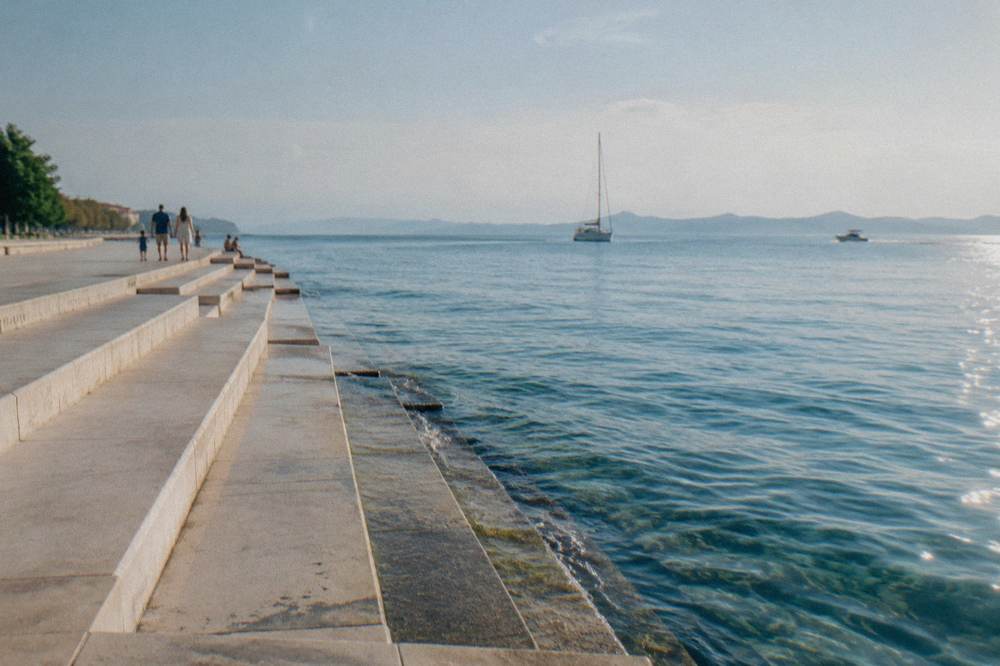
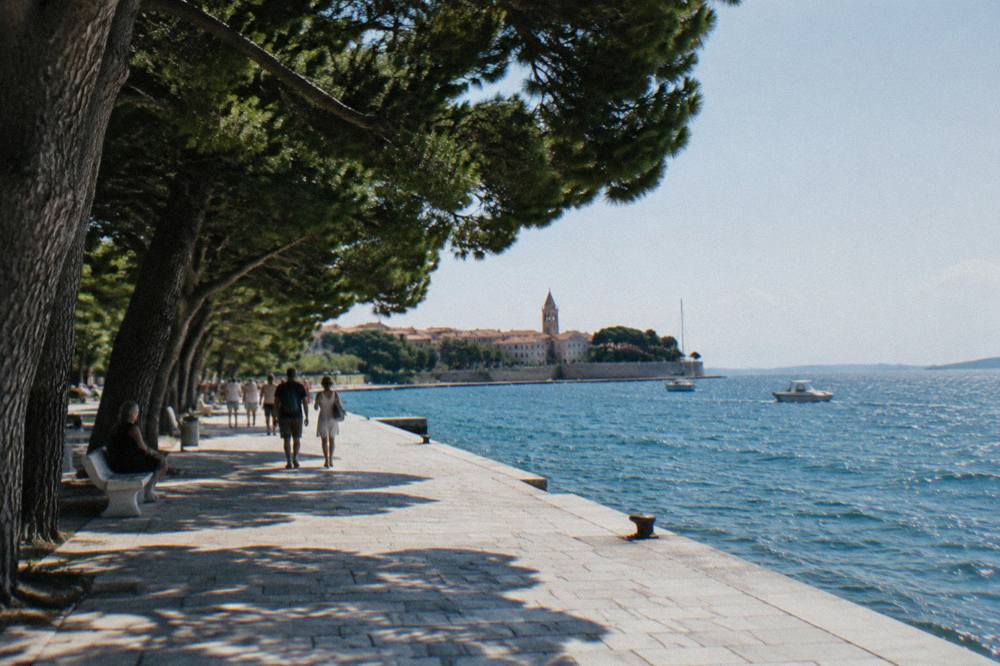
The afternoon needs no ticket at all. The Riva, the long waterfront promenade on the mainland side of the peninsula, is free public space, and the Greeting to the Sun installation beside the Sea Organ gives the evening its close. Two local rules reported in 2026 are worth knowing before the evening: dress-code signs now posted at the entrances to the historic core ask for appropriate clothing, with no swimwear, and carry fines up to 130 EUR after a warning, and the city has signalled a plan to restrict late-night retail alcohol sales in the Old Town, with bars and restaurants unaffected. Both were reported by local media, so treat them as reported rules rather than lines from a statute.
A food walk turns the evening into the day's main event, and the gastro version of the peninsula walk is the one this site features:
If the weather turns instead, the Zadar rainy day itinerary is built around exactly this problem, and it leans on the same museums day two already uses.
Which Island Or Park Day Trip Fits Day Three In Zadar?
Day three should go to sea: the featured option is a boat circuit of Dugi Otok taking in the sunken ship and the tunnel with swim stops, the Kornati national park lies directly south of the archipelago, and the car ferry from Gaženica to Brbinj on Dugi Otok runs the crossing in 1 h 40 min on the operator's route page, so the day works either as a booked tour or as a self-driven ferry day. Kornati's entry fee is charged per vessel by length and season, not per person, and it is bought outside the park, a quirk that catches self-planners.
The island choice shapes the whole day. Dugi Otok holds Sakarun beach and the Telašćica nature park on its southern end; Telašćica's land entrance at Dolac is 6 EUR outside the summer months and 8 EUR from June to September on the park's own price list. The Kornati islands, a national park of some 89 islands in the archipelago this site's day-trip guide covers in detail, are reached by booked boat tour from Zadar.
| Day Three Option | Getting There | Cost Point | Season Note |
|---|---|---|---|
| Dugi Otok by ferry | Gaženica to Brbinj ferry, 1 h 40 min | Check the ferry fare with the operator | Telašćica land entry 6 EUR, or 8 EUR Jun-Sep |
| Dugi Otok by boat tour | Booked tour from Zadar harbour | Price shown on the booking page | Swim stops depend on weather |
| Kornati national park | Boat tour or own vessel | Per-vessel fee by length, e.g. 25 EUR up to 6.99 m off-season, 45 EUR in summer, bought outside the park | Seasonal scale on the park's 2026 price list |
| Ugljan and Preko | Ferry to Preko, about 25-30 min crossing | Check the fare with the operator | Year-round local route |
The featured boat day is the four-jewels circuit, which this site rates as the natural day three because it bundles the shipwreck, the tunnel and the swim stops into one departure and removes the ferry-timetable puzzle entirely. Read more about it in the Dugi Otok day trip context or check it directly:
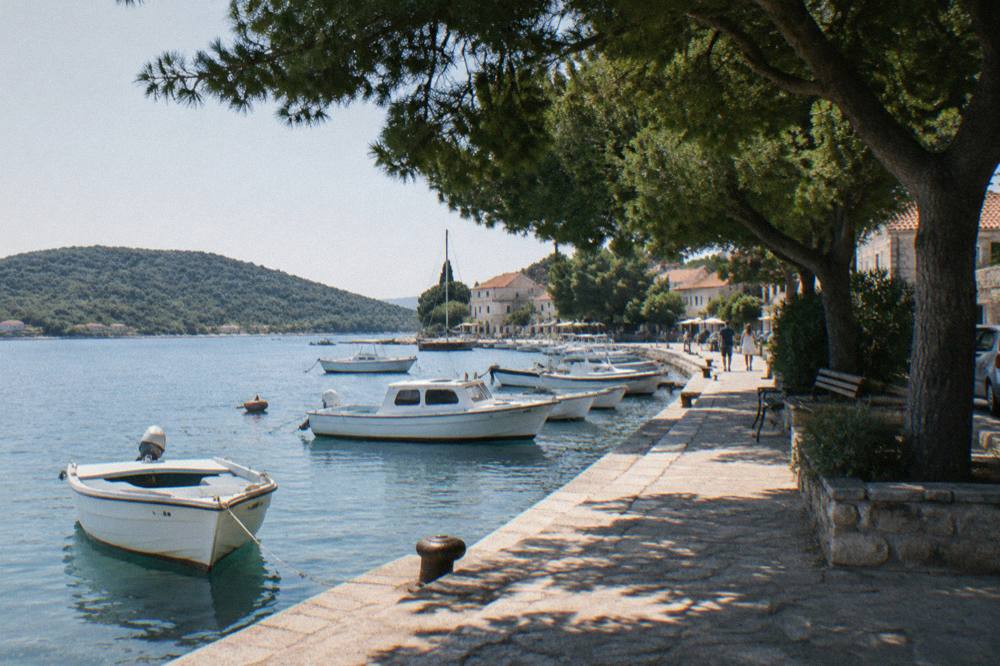
Inline with that decision, the live listing shows current dates and availability: Check availability. For readers who prefer dry land on the third day, the Zadar day trips guide lays out the full menu, and Šibenik works as a town-and-drive alternative.
How Do You Spend Day Four In Zadar, Krka Or Plitvice?
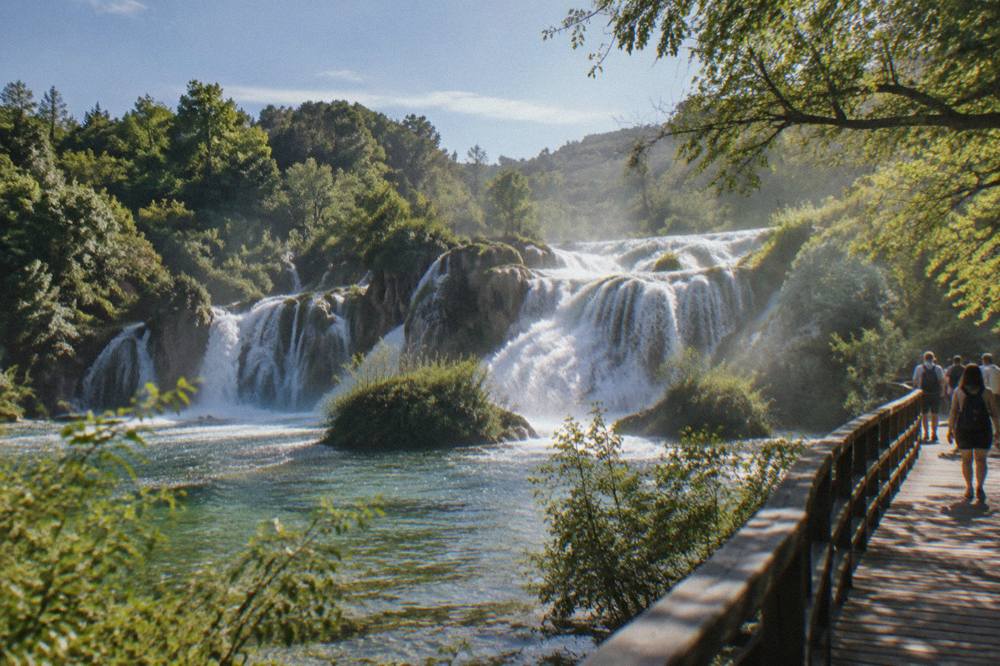
Day four is the waterfall or lakes day: Krka's adult ticket for all accessible land sites is 7 EUR in January, February, March, November and December, 20 EUR in April, May and October, and 40 EUR from June to September, while Plitvice charges 10, 23 and 40 EUR across the same seasonal bands, and both parks dropped to their shoulder rates on 1 October 2026, so the calendar decides which park is cheaper on any given date. Skradin, the Krka gateway town, is 76 km from Zadar's Old Town by road, and Plitvice is 145 km.
The two parks reward different temperaments. Krka's Skradinski Buk is the classic boat-and-waterfall sight, with one rule this site states firmly because it is widely got wrong: swimming at Skradinski Buk has been banned since 2021, and swimming in the park is allowed only at the designated spots of Roški slap, Stinice and Pisak, from 1 June to 30 September, conditions permitting. Plitvice is the longer drive and the lake-and-boardwalk day, with timed online tickets recommended and daily limits applying.
| Park | Adult Ticket By Season (2026) | Driving Distance From Zadar Old Town | Key Rule |
|---|---|---|---|
| Krka NP | 7 EUR Jan-Mar, Nov-Dec; 20 EUR Apr, May, Oct; 40 EUR Jun-Sep | 91 km to Skradinski Buk (76 km to Skradin) | No swimming at Skradinski Buk; designated spots only, 1 Jun-30 Sep |
| Plitvice Lakes NP | 10 EUR Jan-Mar, Nov-Dec; 23 EUR Apr, May, Oct; 40 EUR Jun-Sep before about 16:00, 25 EUR later | 145 km | Timed online tickets recommended, daily limits apply |
| Paklenica NP | 5 EUR Jan, Feb, Nov, Dec; 8 EUR Mar, Apr, Oct; 10 EUR May-Sep | 46.8 km | Mountain park, hiking focus |
A booked coach tour from Zadar removes the driving and usually bundles the park ticket, which matters at Plitvice in particular, where the timed-entry system makes a pre-booked ticket the safer play in the busy months. Independent travellers drive or take the bus toward Skradin; the Krka guide and the Plitvice guide on this site carry the full price ladders and the seasonal notes. If a fourth day of towns appeals more than waterfalls, Split at 158 km is the outer edge of a day trip, and the one day in Zadar plan explains what to cut if the holiday shrinks instead of growing.
When Is The Best Time Of Year To Follow This Zadar Itinerary?
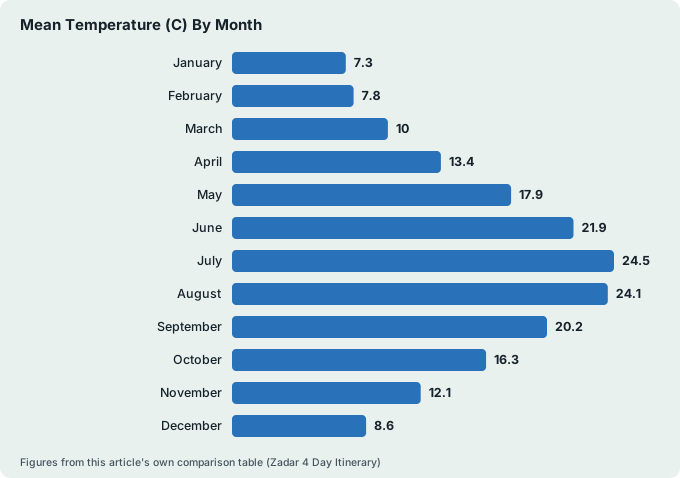
The Zadar station record for 1961-2024 shows July as the warmest month at a 24.5 C mean and January the coolest at 7.3 C, with November the wettest month at 123 mm and July the driest at 35.4 mm, so the itinerary runs warmest and driest from June through August, mildest in May and October, and cheapest for the parks from November through March. Sunshine across the year totals about 2,600 hours on the same station record.
The climate table below is the station truth for the sequence above. Boat days need the sea calm and the bora absent; the bora is a dry northeasterly gusting hardest in winter, and it is the wind most likely to move a day-three sailing. The museum-heavy day two is the natural swap for any wet or windy day, which is why this itinerary keeps it flexible rather than pinning it to a date.
| Month | Mean Temperature (C) | Rainfall (mm) | Rain Days |
|---|---|---|---|
| January | 7.3 | 76.4 | 10 |
| February | 7.8 | 67.0 | 9 |
| March | 10.0 | 66.3 | 9 |
| April | 13.4 | 61.4 | 10 |
| May | 17.9 | 64.4 | 10 |
| June | 21.9 | 48.5 | 8 |
| July | 24.5 | 35.4 | 5 |
| August | 24.1 | 52.8 | 6 |
| September | 20.2 | 110.9 | 9 |
| October | 16.3 | 106.8 | 9 |
| November | 12.1 | 123.0 | 12 |
| December | 8.6 | 99.6 | 12 |
Zadar station, 1961-2024, DHMZ. The same record counts ten days at or above 30 C in both July and August, which is the number to weigh against a Plitvice boardwalk day. Winter visitors trade swimming for Advent: Zadar Advent runs from 24 November 2026 to 2 January 2027, expanded to three locations including a new ice rink on the Forum, and the Zadar Christmas Run falls on 27 December 2026.
What Does A Four Day Zadar Trip Cost To Plan?
A four-day Zadar plan prices out mostly through park and museum tariffs: the Old Town sights are free, the two big museums cost around 7 EUR each at full price, Krka adds 7 to 40 EUR and Plitvice 10 to 40 EUR per adult depending on month, Telašćica's land entry is 6 to 8 EUR, and Paklenica is 5 to 10 EUR, with boat tours, food walks and the airport shuttle priced on their own listings. The tourist tax exists, is collected by the accommodation, and its amount is confirmed at booking rather than published on this site.
The planning table below collects the figures covered here. For anything not on it, including the bell-tower climb, the Barkajoli rowing-boat fare and the Preko ferry fare, check the current price on the spot.
| Item | Verified Price | Source Type |
|---|---|---|
| Museum of Ancient Glass, adult | 7.00 EUR | Museum ticket page |
| Archaeological Museum and St Donatus | Around 7 EUR full price | City tariff page |
| Krka NP, adult | 7 / 20 / 40 EUR by season | Park price list 2026 |
| Plitvice Lakes NP, adult | 10 / 23 / 40 EUR by season | Park price list |
| Telašćica land entrance | 6 / 8 EUR by season | Park price page |
| Paklenica NP, adult | 5 / 8 / 10 EUR by season | Park price list 2026 |
| Airport shuttle to city | 5.00 EUR one way, about 20 minutes | Airport how-to-get-here page |
| Sea Organ and Greeting to the Sun | Free | City pages |
Getting in and out frames the rest of the budget. The airport is about 8 km from the city on the airport's own how-to-get-here page, and the Liburnija shuttle runs 5.00 EUR one way including luggage, about 20 minutes to the Old Town, with the ticket valid 90 minutes on city buses. Croatia uses the euro, has been a Schengen member since 2023, and the emergency number is 112.
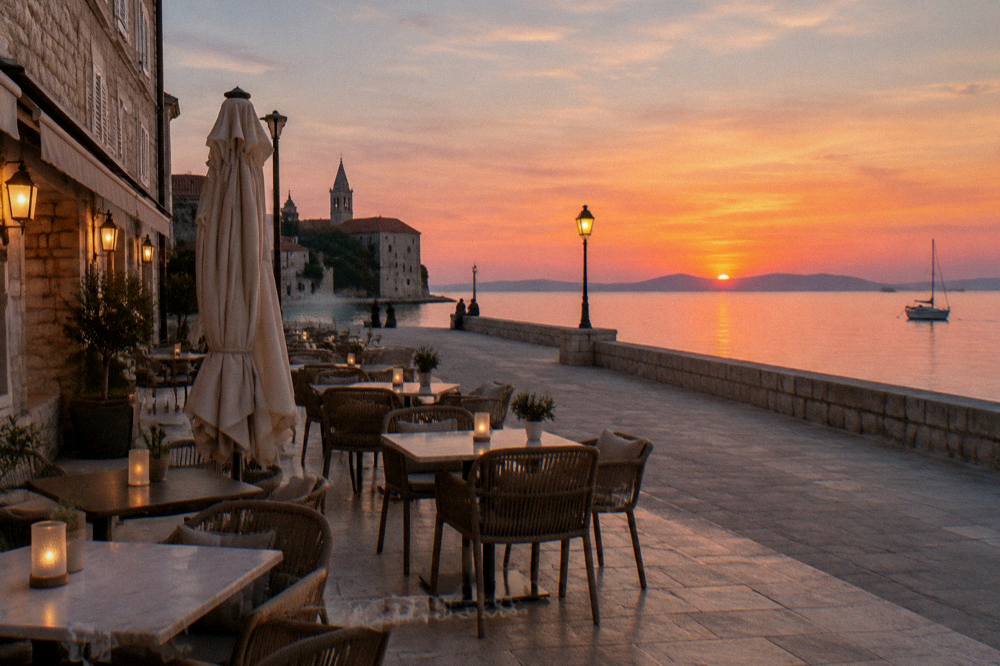
For readers turning this plan into a booking week, these are the three products this site pairs with it:
Common Questions About A Zadar 4 Day Itinerary
Is four days in Zadar enough?
Four days covers the Old Town, a museum day, an island or Kornati boat trip and one national park, which is the full set of Zadar's headline experiences. A fifth day would add a second park or the towns of Nin or Pag rather than anything missing from this plan.
Do I need a car for a Zadar 4 day itinerary?
No. Days one and two are on foot, day three works as a booked boat tour, and day four can be a coach tour to Krka or Plitvice with the park ticket bundled. A car adds flexibility for Nin, Pag or Paklenica, at 46.8 km the nearest park, but no part of this itinerary requires one.
Which national park should day four go to, Krka or Plitvice?
By price the parks are close: Krka runs 7, 20 and 40 EUR by season and Plitvice 10, 23 and 40 EUR. Krka is much closer, 91 km against 145 km. Swimming is not allowed at Krka's Skradinski Buk, only at designated spots from 1 June to 30 September, so pick Plitvice if the day is about the lakes and boardwalks, Krka if the drive and waterfalls matter more.
What does the Sea Organ cost, and when is it open?
The Sea Organ and the Greeting to the Sun are free public installations by the western quay, open at all hours. No light-show start time is published on a verified source, so plan for sunset rather than a fixed show time.
Can day three be a beach day instead of a boat trip?
Yes. County concession rules for 2026 keep beach access free and unfenced, with commercial zones capped at part of each beach, and the city's own beaches are covered in this site's beach areas. The ferry to Preko on Ugljan crosses in roughly 25 to 30 minutes, though no verified fare exists for that route, so confirm with the operator.
Is Zadar walkable enough for this itinerary?
The Old Town peninsula is flat and compact, and days one and two need no transport at all. The bus station is 2.6 km from the Old Town and the Gaženica ferry port 5.2 km, so the only wheels this itinerary requires are on days three and four.
