Zadar Museum Of Ancient Glass
The Zadar Museum Of Ancient Glass sits inside the Old Town peninsula and holds the city's dedicated collection of ancient glasswork, with a verified adult ticket at 7.00 EUR and guided tours in several languages.
Short answer
The Zadar Museum Of Ancient Glass charges 7.00 EUR for an adult ticket, 5.00 EUR for groups of five or more and 4.00 EUR for schoolchildren, with guided tours at 20 EUR in Croatian or 30 EUR in other languages. Opening hours conflict between sources, so confirm them on the museum's own page before going.
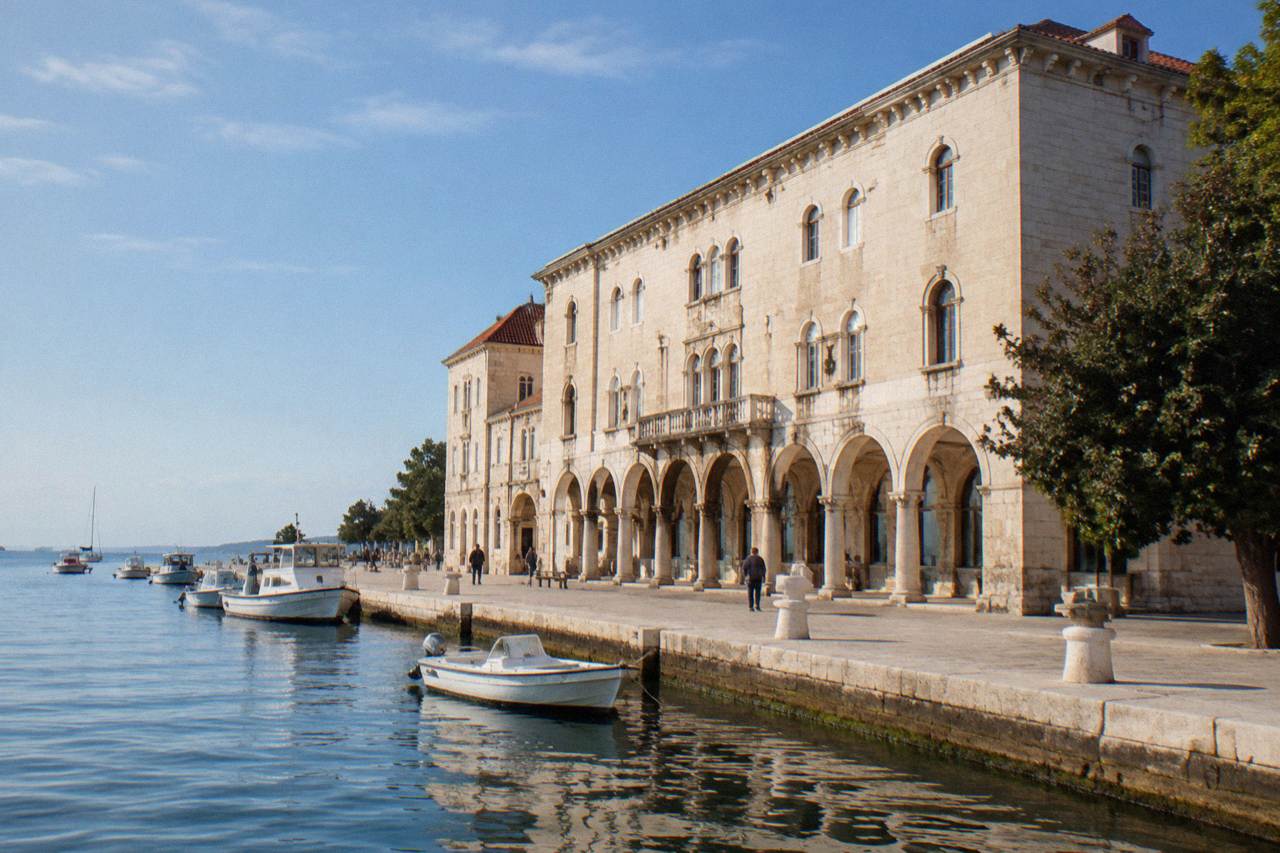
Zadar, a coastal city in Dalmatia on the Adriatic Sea, keeps its Old Town on a narrow peninsula, and among the stone lanes of that peninsula sits one of the city's more specialised cultural stops: the Zadar Museum Of Ancient Glass. The museum's own ticket page lists an adult ticket at 7.00 EUR, a group rate of 5.00 EUR for five or more visitors, and 4.00 EUR for schoolchildren, with guided tours priced separately at 20 EUR in Croatian or 30 EUR in other languages. This guide sets out what the sources actually say about the museum, what a ticket covers, how the visit fits into a day on the peninsula, and which details still need to be confirmed directly with the museum before you go.
What Is The Zadar Museum Of Ancient Glass?
The Zadar Museum Of Ancient Glass is a specialised museum in Zadar's Old Town dedicated to glass from antiquity, presenting ancient glasswork alongside live craft displays, with a verified adult ticket of 7.00 EUR and a dedicated guided-tour programme of 20 EUR in Croatian or 30 EUR in other languages. The museum's own site is the source for every price on this page, and its opening hours are the one detail that conflicts between sources and needs confirming directly.
The clue is in the name. Where Zadar's larger institutions cover broad sweeps of archaeology and church art, this museum concentrates on a single material and the story of how it was worked in antiquity. The museum's own pages describe a collection built around ancient glass vessels, decorative pieces and the techniques used to make them, together with glassblowing demonstrations that show those techniques in motion.
That specialisation matters for planning. A traveller with one morning on the peninsula can pair the museum with the Roman Forum, the Church of St Donatus and the Kalelarga, all within a short walk of each other, and still reach the riva for the afternoon. The one day in Zadar itinerary is built around exactly that kind of compressed peninsula circuit, and a museum stop slots into it without any rearranging.
It also matters for the weather. Zadar's rainfall is not evenly spread: the DHMZ station table for Zadar, covering 1961-2024, shows November as the wettest month at 123 mm and July as the driest at 35.4 mm. A museum whose whole visit happens indoors is a useful entry in any rainy-day plan, and the rainy day planning page treats it exactly that way.
How Much Do Tickets To The Zadar Museum Of Ancient Glass Cost?
A full adult ticket to the Zadar Museum Of Ancient Glass is 7.00 EUR, with 5.00 EUR for groups of five or more people and 4.00 EUR for schoolchildren, while preschool children and listed categories enter free, according to the museum's own ticket and price-list page. Guided tours cost extra: 20 EUR in Croatian or 30 EUR in other languages for a group.
The museum's price page is unusually clear, which is not always the case in Zadar. The tariff in force, which the page anchors to September 2026, reads as follows.
| Ticket type | Price | Notes |
|---|---|---|
| Adult | 7.00 EUR | Full individual ticket |
| Group (5 or more) | 5.00 EUR | Per person, group rate |
| Schoolchildren | 4.00 EUR | Reduced rate |
| Preschool children | Free | As listed on the tariff |
| Listed groups | Free | Categories named on the museum's page |
The guided-tour tariff sits alongside it and is worth reading carefully, because the two prices are not alternatives to the ticket but additions to the planning.
| Guided tour option | Price | Notes from the museum's page |
|---|---|---|
| Tour in Croatian | 20 EUR | Priced for the group |
| Tour in other languages | 30 EUR | Priced for a group of around 30 |
| Language availability | Confirm with the museum | The page names the option, not the schedule |
Two warnings belong here.
For context, the museum sits at the affordable end of Zadar's indoor attractions. The Archaeological Museum and the Church of St Donatus run on a shared tariff page showing 7.00 and 5.00 EUR rows, which this site reports as "around 7 EUR at full price" because the split between the two rows was not read line by line. The comparison is fair: the peninsula's main indoor stops cluster at a similar level.
| Zadar indoor attraction | Verified price position | Source status |
|---|---|---|
| Museum Of Ancient Glass | 7.00 EUR adult | Verified on the museum's ticket page |
| Archaeological Museum Zadar | Around 7 EUR at full price | Tariff page opened, rows not fully read |
| Church of St Donatus | Around 7 EUR at full price | Same tariff page as above |
| Gold and Silver of Zadar | Not published in a verified source | Confirm on site |
| Cathedral bell tower climb | Price and hours not found | Confirm on site |
A walking tour is the natural companion to a museum visit here, and the peninsula has several. The Zadar Croatia Travel Guide reviews the verified options, including the food-and-walk format that pairs Old Town history with local tasting stops; you can read about the Old Town food and wine walk and Check availability if that format suits your group.
What Can You See Inside The Zadar Museum Of Ancient Glass?
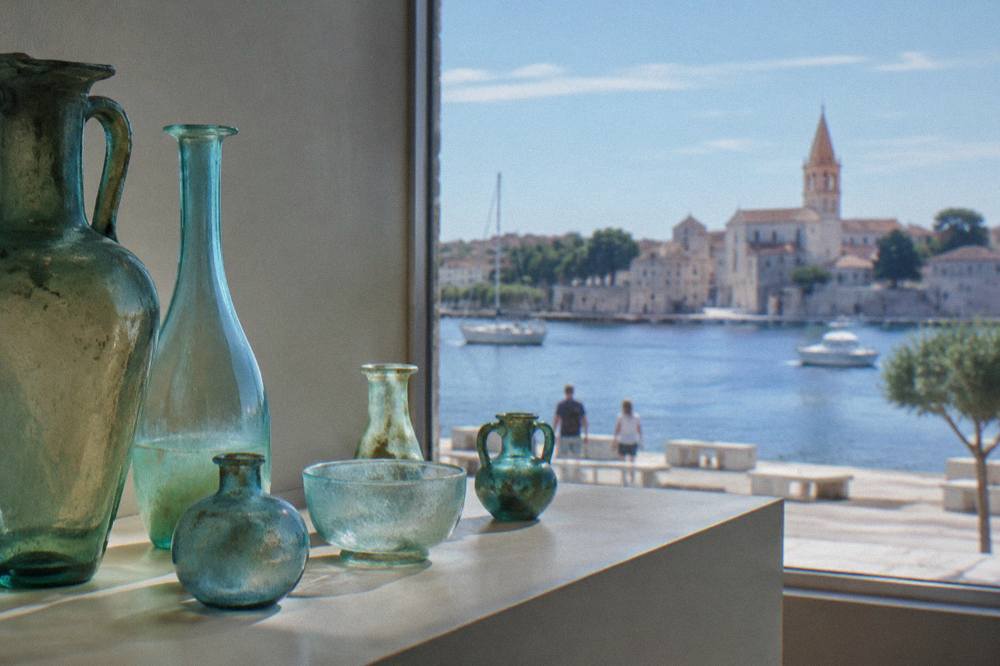
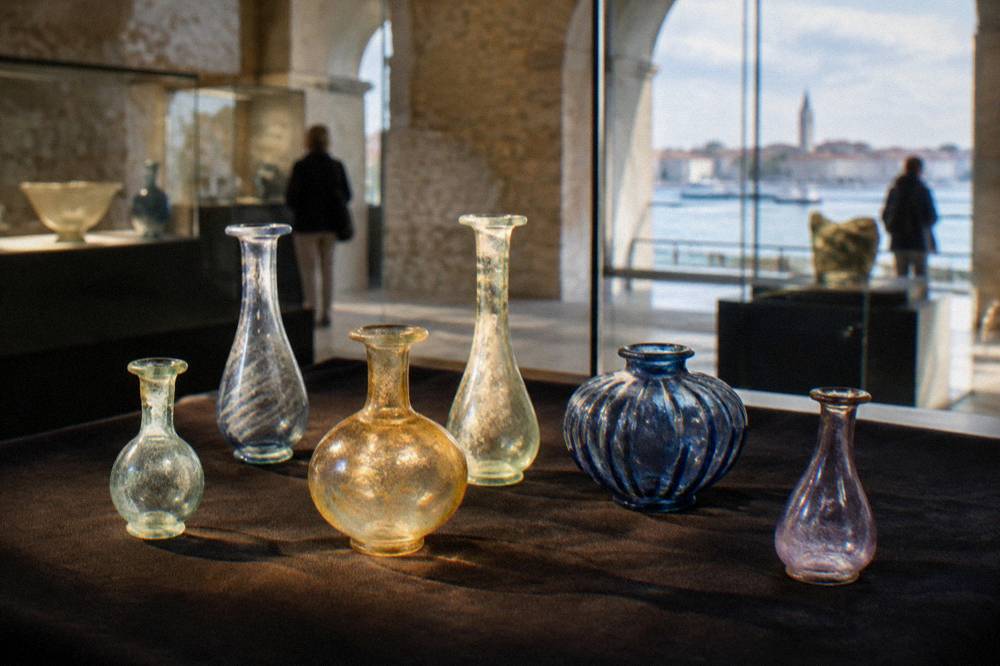
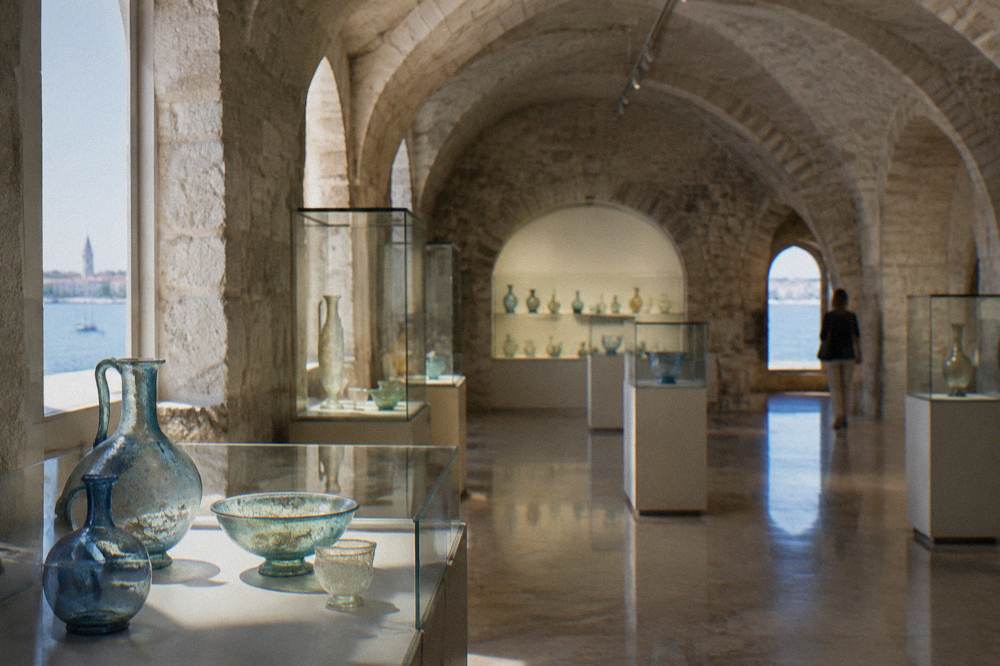
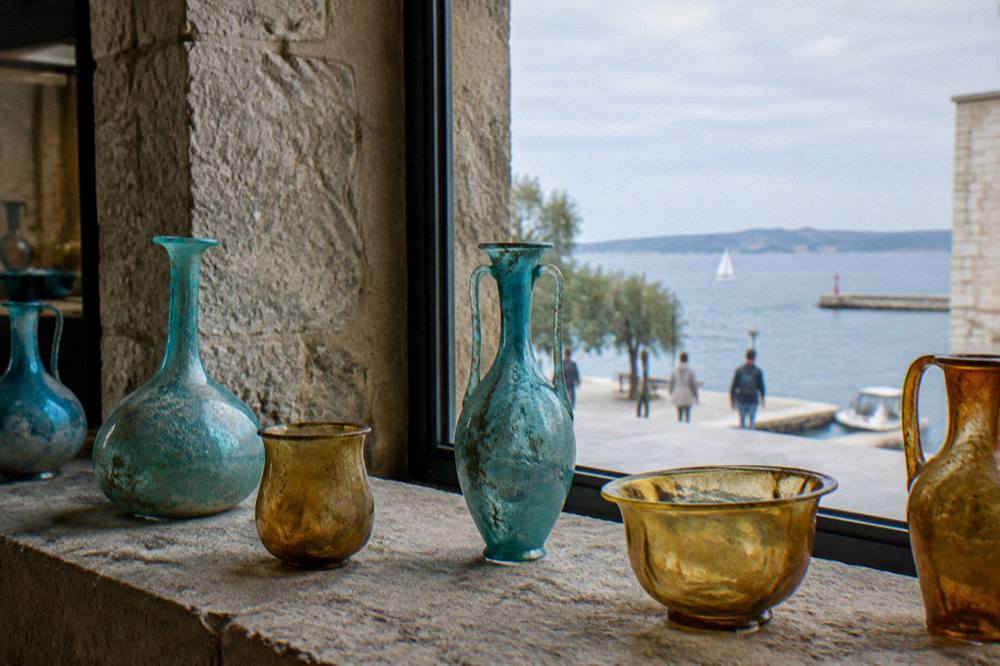
The Zadar Museum Of Ancient Glass presents ancient glass vessels and decorative pieces, the techniques used to produce them, and live glassblowing demonstrations of those techniques, according to the museum's own descriptive pages.
The museum's own material frames the visit around three things: the surviving glasswork of antiquity, the craft knowledge needed to make it, and the demonstration furnace where that knowledge is shown live. Ancient glass survives in quantity around the Adriatic, and a museum devoted to it can display pieces whose shapes, colours and manufacture methods would otherwise need a specialist book to explain. The demonstration is the part that separates this museum from a static display case: molten glass being shaped in front of an audience turns the collection from artefacts into a working process.
The museum's own site is the primary source for current exhibitions, and any seasonal or temporary display should be confirmed there.
The museum also runs a shop function typical of craft museums, selling glass pieces made on site. That detail is reported by the museum's own pages, and prices for shop items are not part of the verified tariff, so treat any purchase as a separate decision from the entry ticket.
Where Is The Zadar Museum Of Ancient Glass And How Do You Get There?
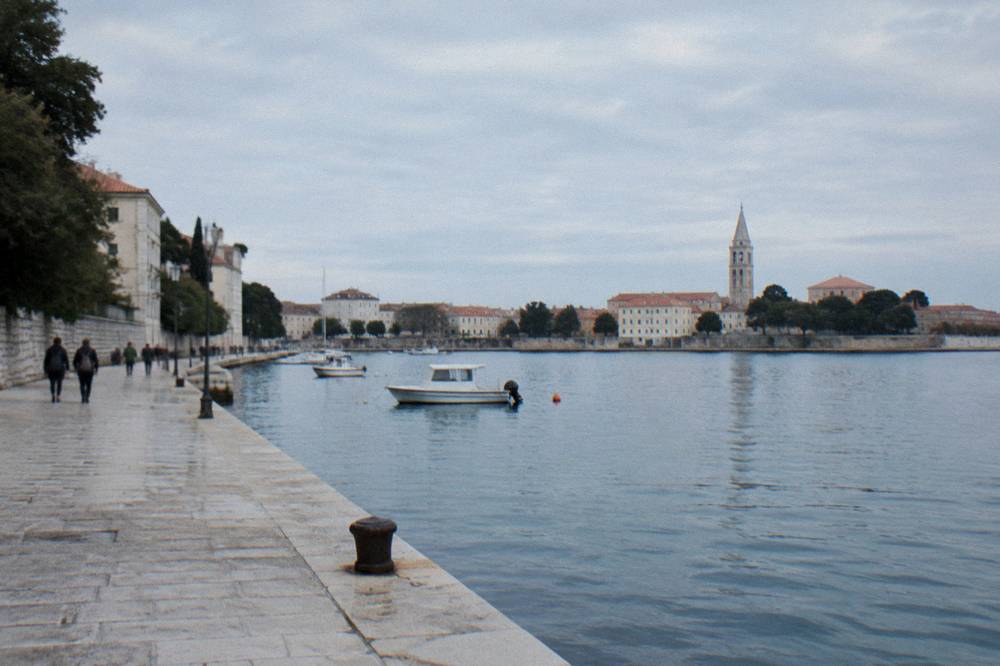
The Zadar Museum Of Ancient Glass stands on the Old Town peninsula (Poluotok), Zadar's historic core, within walking distance of the Roman Forum, the Church of St Donatus and the Sea Organ, so no transport is needed from anywhere inside the Old Town. The peninsula is compact and flat, and the museum's own address page gives the exact street location for anyone arriving from outside the centre.
Zadar's geography makes this simple. The Old Town is a narrow peninsula, and the whole of it is pedestrian-scale. The bus station sits 2.6 km from the Old Town, about a 6 minute drive, and the airport about 13 km, around 22 minutes by road. From inside the peninsula, everything is a walk.
Arriving from further out, the options are the ones the transport pages cover in detail. The Zadar public transport guide explains the city bus network, and the bus station guide covers arrivals from Zagreb, Split and elsewhere.
For cruise passengers the calculation is different again, and the cruise port day guide maps the walk from the berth into the peninsula. Once on the peninsula, the museum, the Forum and the waterfront installations form one continuous route with no transport leg at all.
How Long Does A Visit To The Zadar Museum Of Ancient Glass Take?
A visit to the Zadar Museum Of Ancient Glass is a short-morning or rainy-hour stop rather than a half-day commitment, because the museum is a single-topic collection on a compact peninsula site, though the desk prints no fixed duration figure since none is verified. Allow more time if a glassblowing demonstration is running, and confirm demonstration times with the museum directly, as no schedule appears in any verified source.
What the sources do support is the shape of the visit. A specialised collection in a single Old Town building is a different proposition from a national-scale museum, and the practical pattern reported across the peninsula's attractions is a stop of an hour or two combined with the surrounding sights.
The demonstration changes the arithmetic. Watching glass being blown and shaped is a seated, timed experience, and if the furnace is running when you arrive, the stop naturally stretches. Since no demonstration schedule is verified, the advice is to ask the museum when booking or on arrival, and to treat the demonstration as a bonus rather than the plan.
Pairing the museum with its neighbours fills the rest of the block comfortably. The Roman Forum is free public ground, the Church of St Donatus charges around 7 EUR at full price on the shared tariff, and the Sea Organ and Greeting to the Sun on the riva cost nothing at all. A realistic peninsula sequence looks like this.
| Peninsula stop | Cost position | Verified detail |
|---|---|---|
| Museum Of Ancient Glass | 7.00 EUR adult | Ticket page verified |
| Roman Forum | Free public access | No official price page exists |
| Church of St Donatus | Around 7 EUR full price | Shared tariff page; roof works planned from autumn 2026, access may be limited |
| Sea Organ | Free, open at all hours | 2005, by Nikola Bašić |
| Greeting to the Sun | Free, open at all hours | 2008, by Nikola Bašić |
Note the St Donatus caveat carefully. The church faces a roof restoration, with works planned from autumn 2026 for about six months, so access may be limited and it is worth checking the situation before a visit. That makes the museum a more reliable indoor anchor than the church over the coming winter season, something to weigh when the best time to visit Zadar discussion turns to shoulder-season travel.
Is The Zadar Museum Of Ancient Glass Good For Families And Children?
The Zadar Museum Of Ancient Glass is a workable family stop on its verified tariff alone: schoolchildren pay 4.00 EUR, preschool children enter free, and a live glassblowing demonstration gives children something moving to watch rather than only cases to read. The museum's own pages are the source for the child rates, and family demonstration times should be confirmed with the museum directly since no schedule is verified.
The pricing structure tells part of the story. A tariff that sets a specific schoolchild rate and free preschool entry is a tariff designed with groups and families in mind, and the group rate of 5.00 EUR for five or more people rewards exactly the kind of party a family with visiting grandparents forms. The guided-tour prices are per group, not per person, which again favours larger parties once the numbers add up.
The demonstration is the other part. Molten glass being gathered, blown and shaped is genuinely watchable at any age, and it is the element of the museum that does not depend on reading panels.
For the rest of the peninsula, families have free options on tap. The Sea Organ and the Greeting to the Sun are open at all hours and cost nothing, the Roman Forum is open public ground, and the Kolovare beach guide covers the nearest proper swimming option when the weather cooperates. A museum hour plus a waterfront hour is a realistic half-day for a family with school-age children, and the two days in Zadar itinerary shows how the pieces fit together across a longer stay.
What Else Is Near The Zadar Museum Of Ancient Glass?
The Zadar Museum Of Ancient Glass sits inside one of the densest sight clusters on the Adriatic coast: the Roman Forum, the Church of St Donatus, the Cathedral of St Anastasia, Kalelarga, Five Wells Square and the Land Gate are all on the same small peninsula, and the Sea Organ and Greeting to the Sun line the riva a few minutes' walk away. Every one of these is reachable on foot with no transport leg.
The Land Gate was built in 1543. The Sea Organ dates from 2005 and the Greeting to the Sun from 2008, both by Nikola Bašić. Zadar is one of six components of the UNESCO Venetian defence-works property inscribed in 2017, though the Old Town as a whole is not itself a World Heritage Site. Those are the historical facts this site will print, and they are enough to frame a walk.
| Nearby sight | Note | Cost |
|---|---|---|
| Roman Forum | Free public access | Free |
| Church of St Donatus | Roof works planned from autumn 2026, about six months | Around 7 EUR full price |
| Cathedral of St Anastasia | Bell-tower climb | Check the price and hours on site |
| Land Gate | Built 1543 | Free |
| Five Wells Square | Free public access | Free |
| Sea Organ | 2005, Nikola Bašić, free and open at all hours | Free |
| Greeting to the Sun | 2008, Nikola Bašić, free and open at all hours | Free |
Each of these has its own page on this site: the Roman Forum, the Church of St Donatus, the Land Gate and the Sea Organ among them. Reading one or two before arrival turns a vague wander into a route with a story attached, and the Old Town area guide ties the whole peninsula together.
The museum also pairs well with the Archaeological Museum, which covers the same ancient period in a broader way. The two make a natural double stop for anyone whose interest in antiquity outlasts a single building, and both sit at a similar price point on their respective tariffs.
When Is The Best Time To Visit The Zadar Museum Of Ancient Glass?
The best time to visit the Zadar Museum Of Ancient Glass is outside the July peak, when Zadar station's 1961-2024 record shows a 24.5 C July mean and the peninsula is at its busiest, with May, June and September offering warm means of 17.9, 21.9 and 20.2 C respectively, and November being the wettest month at 123 mm, which makes the museum a useful wet-weather stop. Confirm opening hours on the museum's page for any date.
The climate table is the honest basis for this answer. The DHMZ station table for Zadar, covering 1961-2024, gives monthly means from 7.3 C in January to 24.5 C in July, with rainfall peaking in November at 123 mm and bottoming in July at 35.4 mm. Sunshine runs to about 2,600 hours a year across the same record.
For a museum visit specifically, the calculus inverts. A rainy November day is a poor day for the riva and a good day for an indoor collection, and the museum's demonstration furnace adds warmth and spectacle that an outdoor walk cannot. Summer visitors, by contrast, get the demonstration as a shaded midday break between the Forum and the waterfront.
Seasonal pricing does not apply here the way it does to the parks. Krka and Plitvice both dropped to winter-shoulder rates from 1 October 2026, but the museum's tariff is flat on its own page, with no seasonal rows. What does change by season is the surrounding programme: Zadar Advent runs 24 November 2026 to 2 January 2027 with a new ice rink on the Forum, which puts a museum visit inside a fully dressed winter city rather than an empty off-season one.
How Does The Zadar Museum Of Ancient Glass Compare With Zadar's Other Museums?
The Zadar Museum Of Ancient Glass is narrower but deeper than the Archaeological Museum: it covers one material from antiquity rather than the whole archaeological record, at the same verified price level of 7.00 EUR against the Archaeological Museum's around 7 EUR full price, and it adds a live craft demonstration the broader museums do not offer. Choose it for glass and craft, choose the Archaeological Museum for the wider ancient story, or do both in one peninsula day.
The comparison is genuinely a matter of angle rather than quality. The Archaeological Museum holds the city's general ancient collection and shares a tariff page with the Church of St Donatus; the Museum Of Ancient Glass takes one strand of that same ancient world and follows it into the workshop. A visitor interested in how things were made will find the second approach more satisfying; a visitor mapping the whole Roman and medieval record will prefer the first.
The Zadar museums overview covers all of these in one place, and the honest planning advice is to treat the Gold and Silver price as a confirm-on-site item.
The museum also differs from the peninsula's churches in one practical respect: its tariff is published and verified, while the Cathedral of St Anastasia's bell-tower climb has no verified price or hours on any official page. A traveller who likes to plan around confirmed numbers will find the museum one of the easier stops to budget on the peninsula.
What Should You Confirm Before Visiting The Zadar Museum Of Ancient Glass?
Before visiting the Zadar Museum Of Ancient Glass, confirm whether a glassblowing demonstration is scheduled, since no timetable is verified; and confirm the St Donatus roof-works situation if that church is also on your list, as works planned from autumn 2026 may limit access. Ticket prices are verified and need no confirmation.
This is the section where the desk separates what it knows from what it does not, and the short table below is the whole picture.
| Detail | Status | What to do |
|---|---|---|
| Adult ticket 7.00 EUR | Confirmed | No action needed |
| Group and child rates | Confirmed | No action needed |
| Guided tours 20 / 30 EUR | Confirmed | Book ahead for a group |
| Opening hours | May vary | Check the museum's hours page |
| Demonstration schedule | May vary | Ask the museum directly |
| St Donatus access | Roof works planned from autumn 2026 | Check ahead of a visit |
| City card bundling | Price not published | Check with the card operator |
The tourist tax is the same category of confirm-at-booking detail. Zadar charges one, and it is collected by the accommodation, so check the current amount with your accommodation when booking.
For anyone building a wider plan, the day trips from Zadar guide and the things to do in Zadar overview cover the peninsula's surroundings, from Nin to the national parks. The museum is a city stop, but it sits at the start of routes that reach well out into Dalmatia.
Can You Buy Zadar Museum Of Ancient Glass Tickets In Advance?
The Zadar Museum Of Ancient Glass's own site is the place to check advance ticketing, because the verified tariff page lists prices without showing an online booking channel for individual entry, while guided tours at 20 EUR in Croatian or 30 EUR in other languages are clearly group products that need arranging with the museum ahead of time. Walk-up purchase is the default assumption until the museum's page says otherwise.
The distinction matters. The guided tour is different: it is priced per group, in a choice of languages, and a group product with a language requirement is booked by arrangement in any museum. Email or call the museum, state the group size and language, and the tariff above tells you what to expect on the invoice.
The national-park comparison is instructive in the other direction. Plitvice recommends online timed tickets with daily limits applying, and Krka publishes a full seasonal cjenik, but the peninsula's municipal museums run on a simpler model.
One planning note on timing: the museum's tariff page anchors its prices to September 2026. Tariffs do change between seasons, and the museum's own page remains the live authority. If a visit is planned far ahead, a quick check of that page costs nothing.
Common Questions About The Zadar Museum Of Ancient Glass
How much does the Zadar Museum Of Ancient Glass cost?
The museum's own ticket page lists 7.00 EUR for adults, 5.00 EUR for groups of five or more, and 4.00 EUR for schoolchildren, with preschool children and listed categories entering free. Guided tours cost 20 EUR in Croatian or 30 EUR in other languages.
Is the Zadar Museum Of Ancient Glass worth visiting?
For anyone interested in craft, antiquity or working demonstrations, the museum offers a focused collection at a verified 7.00 EUR adult price, plus glassblowing demonstrations described on the museum's own pages. Travellers with no interest in glass may prefer the broader Archaeological Museum at a similar price point.
Where is the Zadar Museum Of Ancient Glass located?
The museum stands on the Old Town peninsula (Poluotok) in Zadar, within a short walk of the Roman Forum, the Church of St Donatus and the Sea Organ. No transport is needed from anywhere inside the Old Town.
Can children visit the Zadar Museum Of Ancient Glass?
Yes. Schoolchildren pay 4.00 EUR, preschool children enter free, and the group rate of 5.00 EUR applies to parties of five or more. A live glassblowing demonstration, when running, gives children a moving spectacle rather than only display cases.
Does the Zadar Museum Of Ancient Glass run guided tours?
Yes. The tariff lists a guided tour at 20 EUR in Croatian and 30 EUR in other languages, priced for a group of around 30. Language availability and times should be confirmed with the museum directly.
The Zadar Museum Of Ancient Glass is one of the few peninsula stops whose entire price structure is published and verified, and that alone makes it easy to plan around. Pair it with the free waterfront installations, keep an eye on the St Donatus roof works if that church is on your list, and confirm the one detail the sources cannot agree on, the opening hours, directly with the museum before you set out.
