Zadar Cruise Port
Zadar, a coastal city in Dalmatia, Croatia, receives cruise ships at the Gazenica port, about 5.2 km from the Old Town peninsula. This guide covers the crossing, the walkable core, and how to order a short day ashore.
Short answer
Cruise ships dock at Zadar's Gazenica ferry and cruise port, about 5.2 km from the Old Town by road. Passenger trains do not currently run to Zadar; the crossing is by shuttle bus, city bus or taxi. The Old Town peninsula is compact and flat, and the Sea Organ, Greeting to the Sun, Roman Forum, Kalelarga and St Donatus Church all sit within a short walk of each other.
Zadar, a coastal city in Dalmatia on the Adriatic, is one of the few cruise calls where the famous sights are genuinely reachable on foot once you cross into the city. The ships berth at Gazenica, the modern port complex south of the peninsula, and the Old Town (Poluotok) that follows is a narrow, flat strip where the Sea Organ, the Roman Forum, Kalelarga and the Land Gate line up along an easy walking line. This page lays out what the port actually is, how the crossing works, and how to order a day of roughly six to nine hours ashore without guessing at a timetable.
One honest note before anything else. The site editorial desk has not been aboard a call here, and no one writing this has stood on the quay at Gazenica. Everything below is reported from primary sources: the port's own figures, the airport shuttle route that passes the ferry port, the city's climate station record and the parks' price lists. Where a detail is not verifiable, such as taxi fares or the exact cruise calendar, the page says so instead of inventing a number.
Where Do Cruise Ships Dock In Zadar?
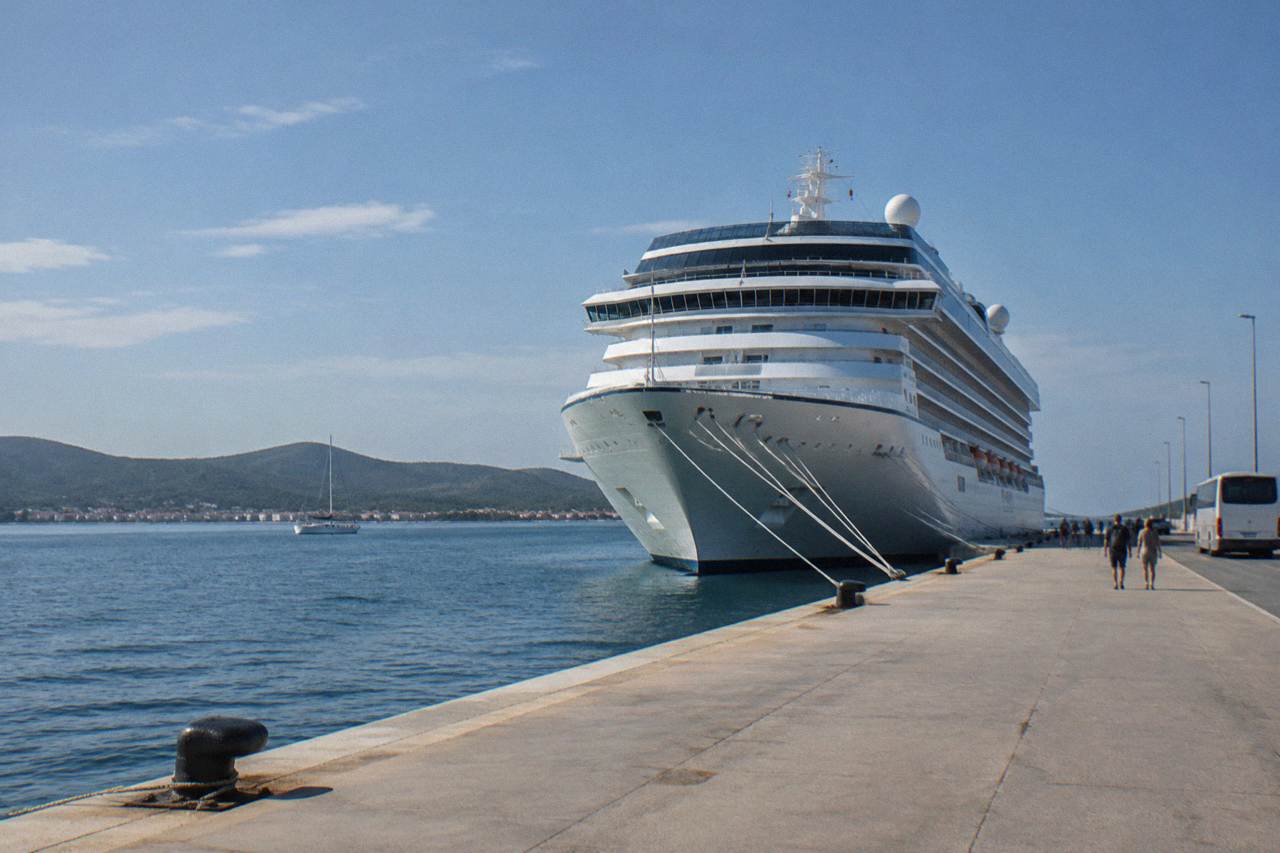
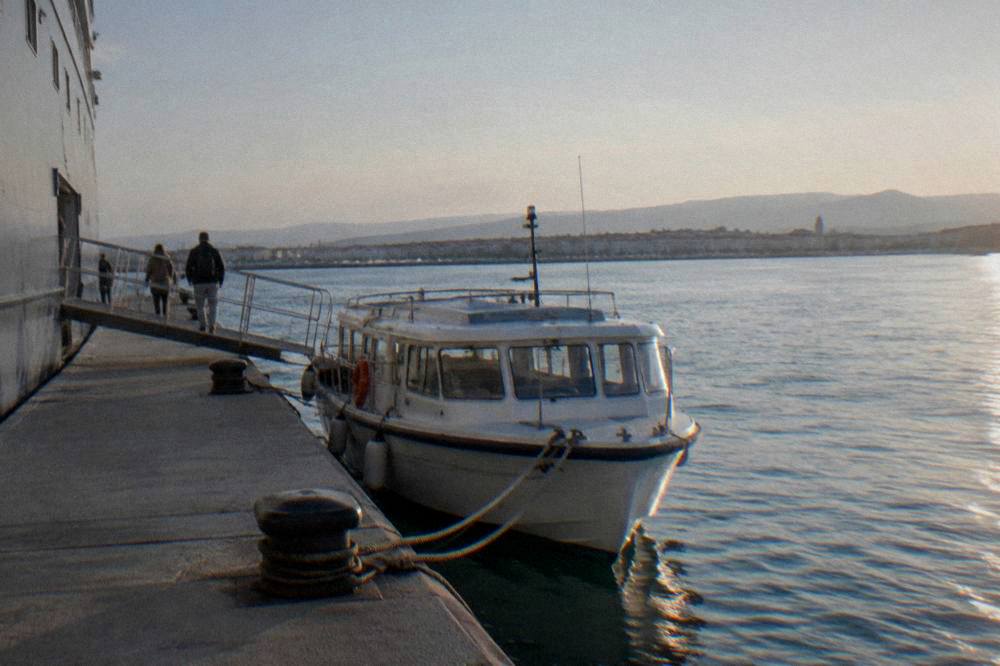
Cruise ships in Zadar berth at the Gazenica port, the combined ferry and cruise complex about 5.2 km by road from the Old Town peninsula, a drive of roughly 10 minutes. The terminal is shared with Jadrolinija's ferry operations, including the Dugi Otok line, so the quays handle both car ferries and visiting ships. The site's own guide to the port covers the layout in detail.
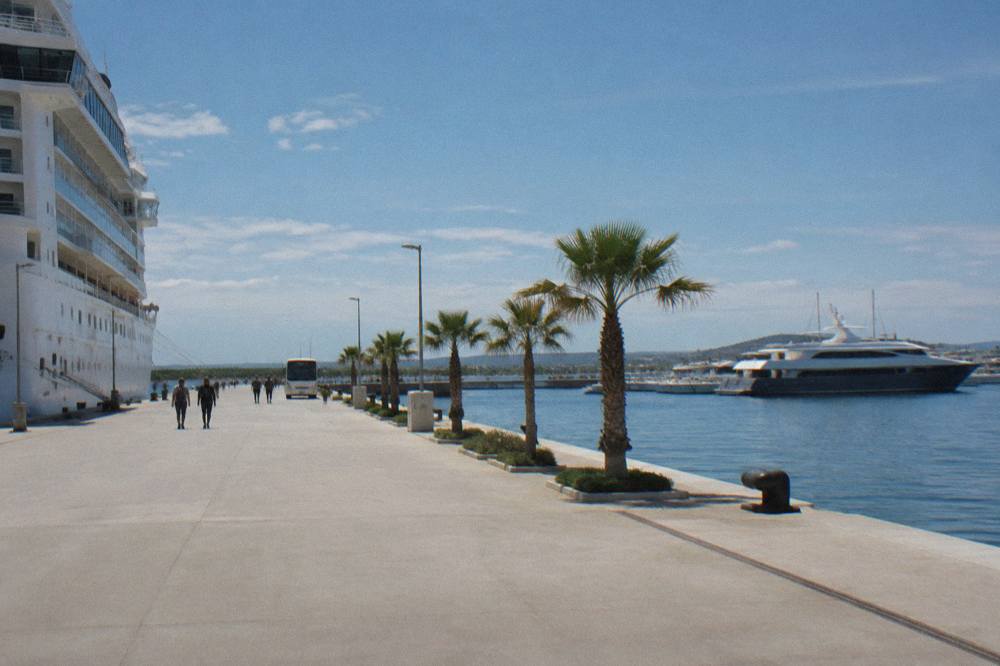
Gazenica replaced the old in-town ferry berths and now concentrates the region's sea traffic in one place. Jadrolinija's route pages show the lines that share the facility: line 434 to Brbinj on Dugi Otok, a crossing of 1 hour 40 minutes, and the seasonal fast catamaran to Ancona, a passenger-only service of about 4 hours that ran from 26 June to 6 September 2026. The 2027 season for the Ancona catamaran has not been announced, so anyone connecting onward to Italy should check Jadrolinija directly rather than assume dates.
The port guide on this site, Gazenica ferry port explained, goes deeper on the terminal itself. For a cruise passenger the essential point is simpler: you do not step off into the old city. You step off into a working port, and the city comes next.
For orientation, the distances the route data gives from the Old Town are: bus station 2.6 km, Gazenica 5.2 km, and the airport beyond that at 13.3 km, about 22 minutes by road.
| Place | Distance from Gazenica port | Notes |
|---|---|---|
| Old Town peninsula (Poluotok) | about 5.2 km by road | roughly 10 minutes by car |
| Zadar bus station | about 3 km | Ante Starčevića 1, operated by Liburnija |
| Kolovare beach | between port and Old Town | on the coastal road into the city |
| Airport (ZAD) | about 8 km from the city | 13.3 km from the Old Town by road |
How Do You Get From The Zadar Cruise Port To The Old Town?
The crossing from Gazenica to the Old Town runs by road: shuttle bus arranged by the ship, the Liburnija city bus network, or a taxi. The road distance is 5.2 km and the drive about 10 minutes. Confirm the taxi fare with the driver before getting in.
The airport shuttle route, verified on the airport's own how-to-get-here page, runs Airport, Gazenica ferry port, bus station, Old Town, which tells you the road corridor your transfer will use. A city bus ticket on that Liburnija network is validated for 90 minutes on city buses when bought for the airport run; check the current fare with the driver or at the station, because this site prints no bus fare.
A practical warning from the fresh transport file: from 12 October 2026 the evening departures of the Poluotok, Arbanasi, Kolodvor line were rerouted because of traffic problems in Arbanasi. A port-day visitor is unlikely to ride that exact line, but it illustrates why a printed bus route on a blog can be stale within a season. The public transport guide on this site is the safer reference.
If your ship runs its own shuttle, that is usually the calmest option, dropping at the edge of the peninsula. The answer page how to get from Zadar port to Old Town covers the choices step by step, including the walking entry points onto the peninsula.
Once across, you are on foot. The peninsula is car-restricted in its core, and everything in the next sections is within a walk of a few hundred metres to a couple of kilometres.
What Can You See In Zadar On One Port Day?
The realistic core of a Zadar port day is the peninsula itself: the Sea Organ and Greeting to the Sun on the northwestern tip, the Roman Forum and St Donatus Church beside it, Kalelarga as the main street, the People's Square, and the Land Gate of 1543 at the southern entry. All of these are free public spaces except the museums, and the whole set fits a walk of a couple of hours.
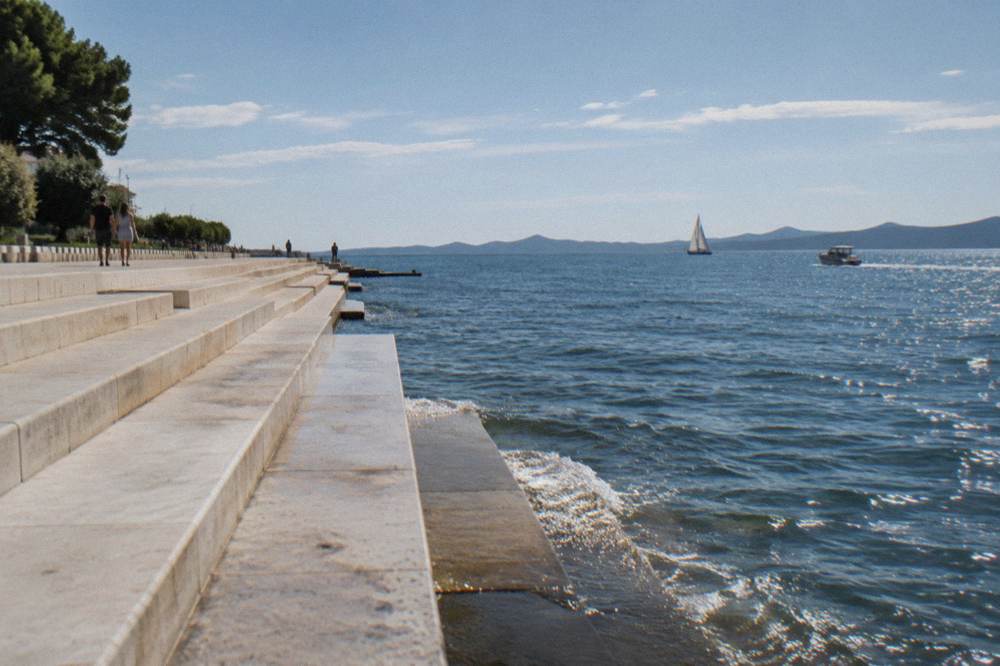
Start at the water. The Sea Organ, built in 2005 to the design of Nikola Bašić, is a set of steps with tuned pipes under them that sound when waves push air through, and the Greeting to the Sun, from 2008 and also by Bašić, is a 22-metre solar disc beside it that lights after dark. Both are free and open at all hours. The site's Sea Organ guide and Greeting to the Sun guide give the detail, including the honest note that no verified light-show start time exists, so do not plan around a published hour.
Inland from the steps sits the Roman Forum, and next to it the Church of St Donatus, the round stone church that is the city's signature silhouette. One fresh item matters here: the city launched a public tender at the end of August 2026 for a full roof restoration, with works planned from autumn 2026 for about six months as the first phase of a roughly two-year programme. Individual access during the works depends on the phase, so check before you count on going inside. The St Donatus guide tracks this.
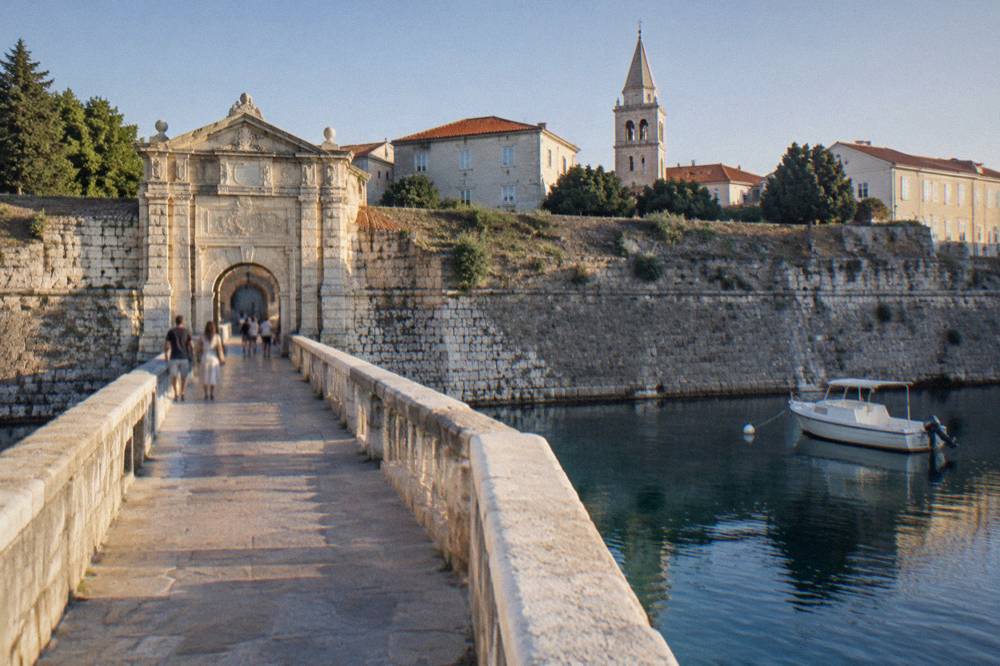
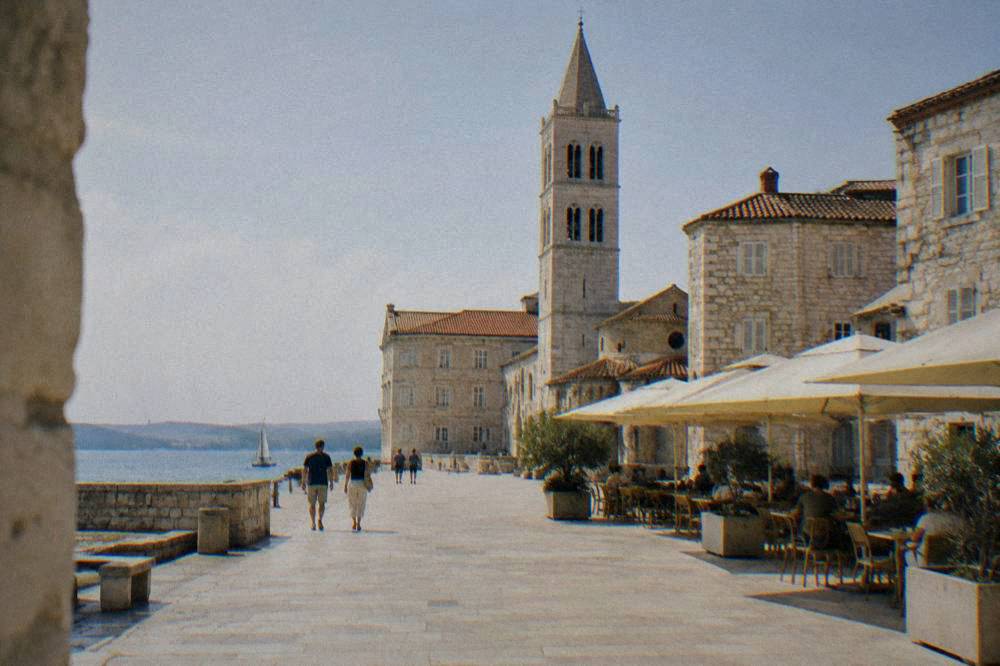
Kalelarga, the wide main street, runs from the People's Square toward the east, and the Land Gate, built in 1543 by Michele Sanmicheli, anchors the harbour side. The peninsula's UNESCO status is narrower than many articles imply: Zadar is one of six components of the UNESCO property of Venetian Works of Defence, inscribed in 2017, and the Old Town as a whole is not a World Heritage Site.
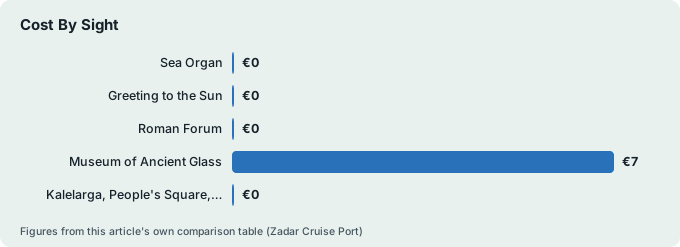
The Archaeological Museum and St Donatus run on a shared tariff whose page shows 7.00 and 5.00 EUR rows, so write "around 7 EUR at full price" and expect variation.
| Sight | Cost | Notes |
|---|---|---|
| Sea Organ | free | open at all hours, 2005, Nikola Bašić |
| Greeting to the Sun | free | open at all hours, 2008, 22 m disc |
| Roman Forum | free | open public space |
| Church of St Donatus | around 7 EUR full price | roof works from autumn 2026 may limit access |
| Museum of Ancient Glass | 7.00 EUR adult | hours conflict in sources, confirm on museum page |
| Kalelarga, People's Square, Land Gate | free | Land Gate dated 1543 |
How Long Do You Need For The Old Town On A Port Day?
The peninsula's core walk, from the Sea Organ steps through the Forum, Kalelarga and People's Square to the Land Gate, is a couple of hours at an unhurried pace, because the distances are short and the terrain is flat. Add time for a swim stop, a museum or a longer lunch and the day stretches to five or six hours without leaving the city.
That scale is the reason Zadar works as a call. There is no long transfer into a distant centre, and the whole sight line is one axis. The itineraries this site has already built map onto port hours cleanly: one day in Zadar for a full call, the sunset and evening route if your ship sails after dark and you can catch the Sea Organ and the Greeting to the Sun at the hour they were designed for.
For shorter calls, a half-day version is simply the walk above plus a tasting stop. A guided walk can compress the orientation problem: the featured option on this page covers the Old Town, the Sea Organ and the Forum with local tastings, and it can be checked here: Check availability.
Weather shapes the plan more than distance does. Zadar station, 1961-2024 (the DHMZ record), gives a July mean of 24.5 C and a January mean of 7.3 C, with November the wettest month at 123 mm and July the driest at 35.4 mm. A summer call is a hot one, with the station logging about ten days at or above 30 C in each of July and August, so the seafront walk is best done early and the shaded squares at midday. Other pages covering the same trip are gathered on Zadar Croatia Travel Guide.
| Month | Mean temperature (C) | Precipitation (mm) | What it means for a port day |
|---|---|---|---|
| January | 7.3 | 76.4 | cool, occasional rain, indoor stops useful |
| April | 13.4 | 61.4 | comfortable walking weather |
| July | 24.5 | 35.4 | hot and dry, swim stops and shade |
| September | 20.2 | 110.9 | warm sea, but the wettest autumn month begins |
| November | 12.1 | 123.0 | the wettest month, pack a layer |
Can You Swim Or Take A Boat Trip During A Zadar Port Day?
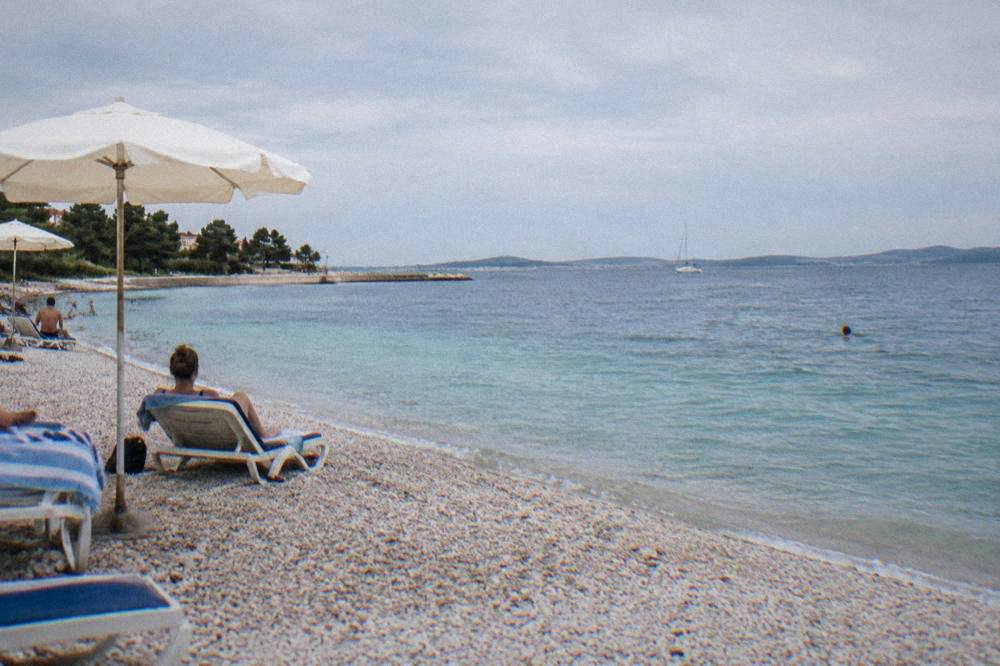
Yes, within limits. Kolovare beach sits on the coastal road between Gazenica and the Old Town, so a swim stop can sit on the transfer itself, and the boat tours that leave from the peninsula's harbour run to three or four hours, which fits a long call but not a short one. The Sea Organ and Greeting to the Sun sit at the water's edge if all you want is the sea air.
The swimming answer page on this site, can you swim in the sea in Zadar, covers the beaches. Kolovare is the practical one for a port day because of its position on the inbound road. One fresh rule worth knowing: Zadar County's 2026 beach concession decisions forbid fencing, ramps, barriers and entry fees on concession beaches, with commercial use capped at 40 to 60 percent of a beach's area and the rest free for public use with your own towel. Access is public.
Boat tours are the other water option, and the roster on this site is deep: island runs with snorkelling, sunset runs with a glass in hand, and the Dugi Otok trips that reach Sakarun and the shipwreck. The boat tours guide sorts them. The honest port-day caveat is time: an island trip only fits if the ship is in port long enough, and the return deadline is yours to manage, not the operator's.
For a tuk-tuk or panoramic alternative on land, the sightseeing rides page lists the eco tuk-tuk and cabrio-bus options, which cover ground the walking tours do not.
Is A Day Trip To A National Park Realistic From A Cruise Call?
Only for a long call. The verified road distances from the Old Town are 91 km and about 73 minutes to Krka's Skradinski Buk, and 145 km and about 153 minutes to Plitvice, so Plitvice in particular swallows a whole day. Krka is the closer of the two and the one a guided tour from Zadar can realistically serve, but both need the ship's hours to cooperate.
The park entry fees are seasonal and published. Krka's 2026 price list gives 7 EUR in January, February, March, November and December, 20 EUR in April, May and October, and 40 EUR from June to September for all accessible land sites. Plitvice runs 10 EUR in the winter months, 23 EUR in April, May and October, and 40 EUR in summer before about 16:00, with a lower late-afternoon price. From 1 October 2026 both parks dropped to their winter-shoulder rates for the season ahead. Paklenica, closer at 46.8 km, charges 5, 8 or 10 EUR by season.
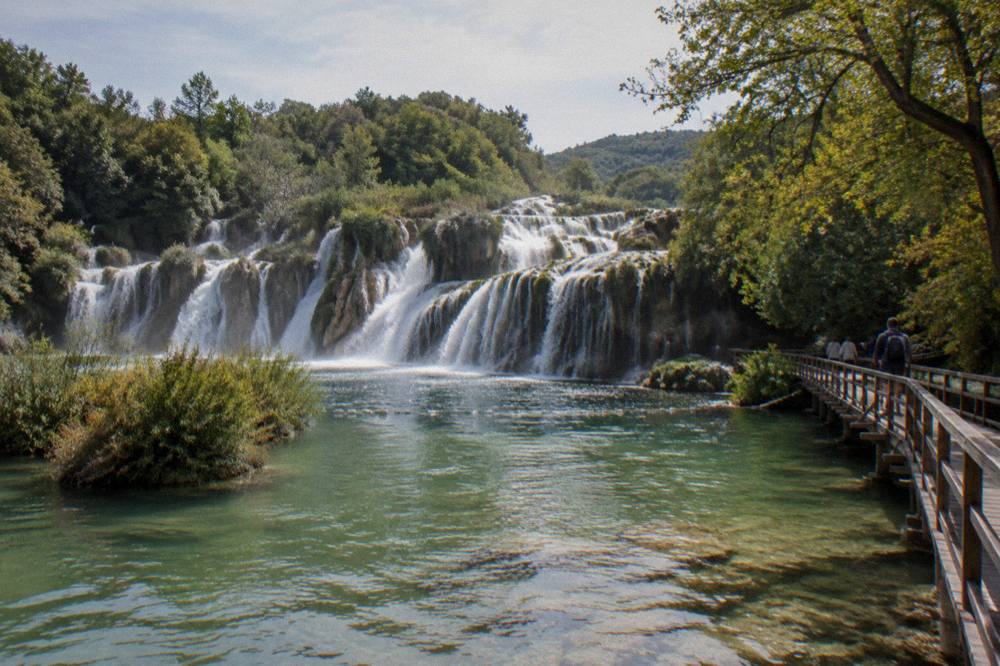
One rule to carry if you choose Krka: swimming at Skradinski Buk has been banned since 2021 to protect the travertine, and swimming is allowed only at designated spots, Roški slap, Stinice and Pisak, from 1 June to 30 September. The Krka guide and the Plitvice guide on this site hold the detail, and the Krka versus Plitvice comparison page answers the either-or question directly.
| Park | Road distance from Old Town | Drive time | Adult entry (by season) |
|---|---|---|---|
| Paklenica | 46.8 km | 57 min | 5 / 8 / 10 EUR |
| Krka (Skradinski Buk) | 91 km | 73 min | 7 / 20 / 40 EUR |
| Kornati (by boat) | offshore | boat trip | per vessel, by length and season |
| Plitvice Lakes | 145 km | 153 min | 10 / 23 / 40 EUR |
The rainy day itinerary is the fallback if the weather turns.
Where Should You Eat On A Zadar Port Day?
The peninsula's eating runs from konoba-style squares to the Riva waterfront, with the People's Square and Kalelarga holding the densest cluster, and the covered city market near the Five Wells Square end for a fast, cheap stop. Local dishes to look for include fresh Adriatic fish, pašticada, black risotto and the sheep cheese of nearby Pag, and Maraschino, the cherry liqueur, is the city's own drink.
The site's food pages do this properly: what to eat in Zadar, the restaurants guide and the Maraschino and drinks page. No hotel rate, fixed menu price or taxi fare to a restaurant is printed anywhere on this site, and none should be assumed from a blog.
Two fresh local rules touch a port day. The Old Town now has dress-code signs at key entry points requiring appropriate clothing, no swimwear or nudity, enforced with warnings and then fines up to 130 EUR, so cover up between the beach and the square. And the municipality has moved to restrict night-time retail alcohol sales in shops and kiosks in the Old Town for the 2026 season, bars and restaurants excluded, which matters only to a late-evening departure.
What Should You Know Before Heading Ashore In Zadar?
Croatia uses the euro (since 1 January 2023) and is a Schengen member, the emergency number is 112, and a tourist tax exists but is collected by accommodation providers, not day visitors, so it will not touch a cruise passenger. The climate figure worth remembering is about 2,600 hours of sunshine a year at the Zadar station, and the currency, the emergency number and the Schengen status are the only country facts you need in port.
Practicalities in one place:
- Money: euro, card acceptance is broad, cash for the market and small stops.
- Language: Croatian, with English widely used in tourism.
- Getting lost: hard. The peninsula is one axis, and the Sea Organ steps are the unmistakable landmark at the end of it.
- Access limits: St Donatus roof works from autumn 2026 may restrict entry, so check on the day.
- Water: the Barkajoli rowing boats cross the harbour in about 1.5 to 2 minutes year-round, weather permitting, for a euro or two, though no fixed fare is verified.
The final decision most port-day visitors face is whether to walk alone or take a guided orientation first. A walk with the Sea Organ, the Forum and tastings built in solves it in one booking, and the classic walking tour below is the leaner alternative.
Common Questions About A Zadar Cruise Port Day
How far is the cruise port from Zadar Old Town?
The Gazenica port is about 5.2 km by road from the Old Town peninsula, roughly 10 minutes by car, with shuttle, city bus and taxi as the options.
Can you walk from the cruise port into Zadar?
The road distance of 5.2 km makes a walk along the coastal road possible but slow, and the practical options are the ship's shuttle, the city bus or a taxi. Kolovare beach sits on that coastal road if you want a swim stop en route.
What is free in Zadar for a port day?
The Sea Organ, the Greeting to the Sun, the Roman Forum, Kalelarga, the People's Square and the Land Gate are all free public spaces, open at all hours for the two installations by Nikola Bašić.
Is Zadar Old Town walkable in a few hours?
Yes. The peninsula is flat and compact, and the core walk from the Sea Organ through the Forum and Kalelarga to the Land Gate takes a couple of hours at an unhurried pace.
Can you visit Krka or Plitvice from a cruise call in Zadar?
Krka is about 91 km and 73 minutes by road, Plitvice about 145 km and 153 minutes, so only a long call supports a park day trip, and Plitvice effectively takes the whole day. Entry at both parks is seasonal, 7/20/40 EUR at Krka and 10/23/40 EUR at Plitvice for adults.
What money and emergency numbers apply in Zadar?
Croatia uses the euro since 1 January 2023, is a Schengen member, and the emergency number is 112.
