Gazenica Zadar Port
Gazenica, south of Zadar Old Town, is the city's main ferry port for Jadrolinija routes to Dugi Otok and the seasonal Ancona catamaran. Here is what the operators' own pages say about getting there, crossing times and connections.
Short answer
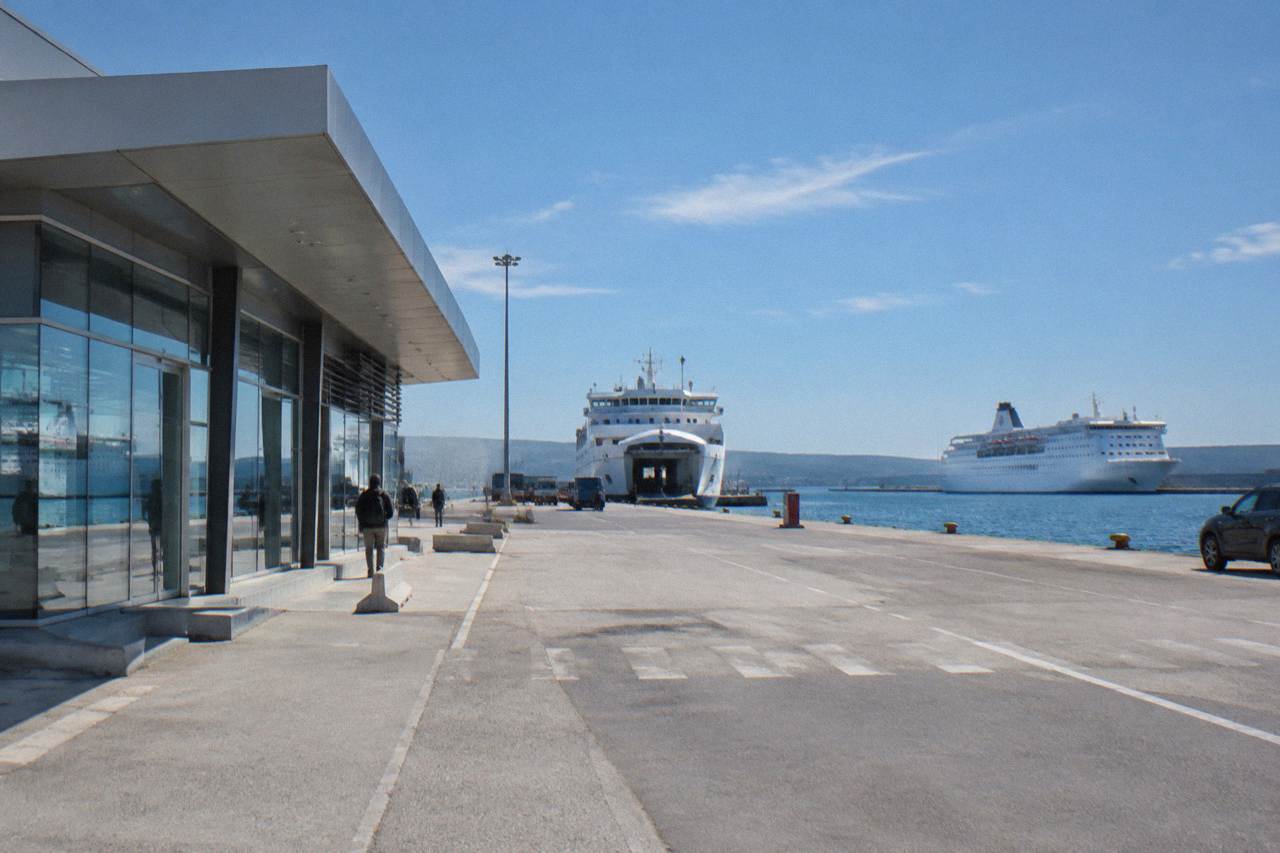
Gazenica Zadar Port sits about 5 km south of the Old Town and handles Jadrolinija's car ferry to Brbinj on Dugi Otok (1 h 40 min) plus the seasonal fast catamaran to Ancona, Italy. The local crossing to Preko on Ugljan takes roughly 25 to 30 minutes. City buses and taxis link the port to the peninsula, and the crossing itself is the easy part of any island day from Zadar.
Gazenica Zadar Port is the working ferry terminal that serves Zadar, the coastal city in Dalmatia on Croatia's Adriatic shore, standing on the mainland side of the channel roughly 5 km south of the Old Town peninsula. While the peninsula's small harbour handles rowing boats and excursion craft, the big Jadrolinija ships, the car ferries to Dugi Otok and the seasonal fast catamaran to Italy, all berth at Gaženica. This guide gathers what the operators' own pages and the verified local record say about the port: which routes leave from it, how long each crossing takes, how to reach it from the Old Town, and what is worth knowing before a ticket is bought.
What Is Gazenica Zadar Port And Where Is It?
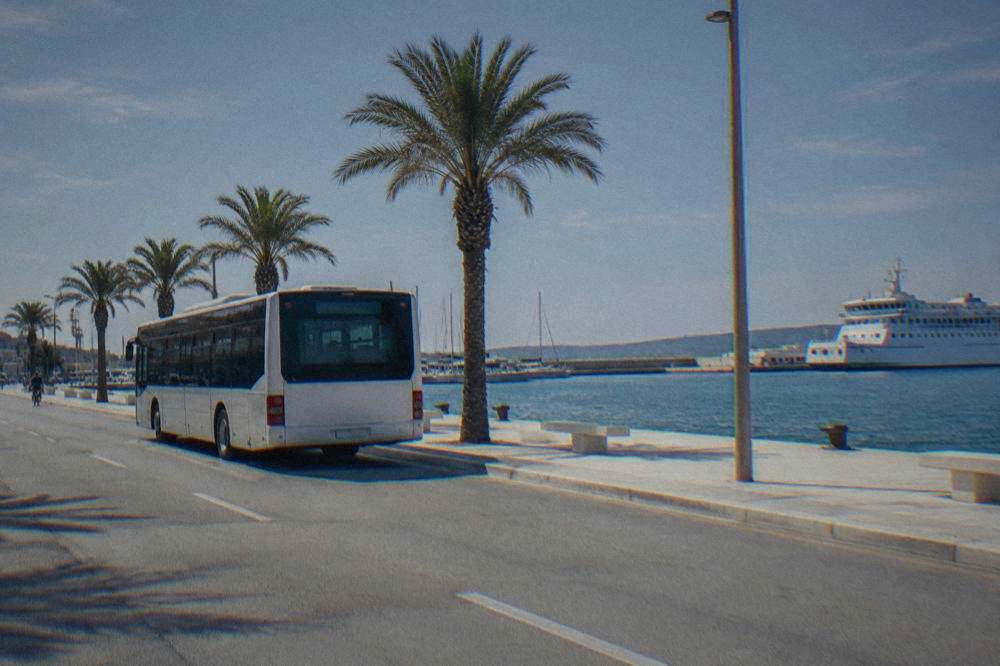
Gaženica is Zadar's main commercial and ferry port, sitting on the mainland shore about 5.2 km and roughly 10 minutes' drive south of the Old Town peninsula, and it is where Jadrolinija's vehicle ferries and the seasonal international catamaran berth instead of the small harbour inside the historic centre. The move of port operations away from the peninsula concentrated everything with wheels at Gaženica, which leaves the Old Town waterfront to pedestrians, the Sea Organ and the excursion boats. Anyone planning an island trip with a car, or an Italy crossing, starts here. The full transport picture around the city is covered in how to get to Zadar.
The port sits close to the industrial shore of the city, and the drive in from the peninsula is straightforward along the waterfront road. Jadrolinija's own route pages name Zadar (Gaženica) as the departure point for the Dugi Otok line, which is the detail that catches out visitors who head for the peninsula harbour expecting a car ferry. For context, the Zadar Croatia Travel Guide keeps a separate page on the Zadar ferry network for island-hopping plans.
Distances from the port that matter for planning:
| From Gaženica port to | Distance | Driving time |
|---|---|---|
| Zadar Old Town (Poluotok) | 5.2 km | ~10 min |
| Zadar bus station | ~3 km | ~5 min |
| Zadar Airport (Zemunik) | ~18 km | ~25 min |
| Borik hotel zone | ~9 km | ~15 min |
These road figures come from route calculations between the port and each destination; sea conditions and summer traffic can stretch them. The airport's own page gives the city distance as about 8 km from Zadar, and the airport guide covers that side of the trip in full. Accommodation choices interact with the port too: staying in Borik or Puntamika puts a car ferry morning slightly closer, while the peninsula keeps the evenings walkable, a trade-off the where to stay in Zadar guide works through area by area.
Which Ferry Routes Depart From Gazenica Zadar Port?
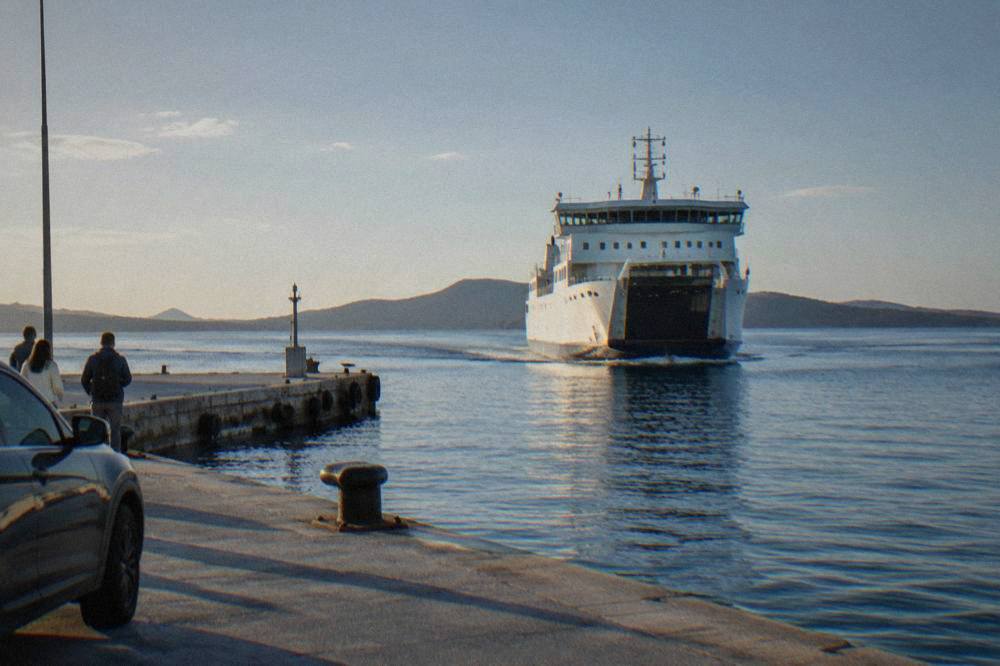
Jadrolinija operates the ferry routes from Gaženica: the vehicle ferry on line 434 to Brbinj on Dugi Otok, a crossing of 1 hour 40 minutes, and the seasonal fast catamaran on line 51 to Ancona in Italy, a passenger-only service of about 4 hours that ran up to five times weekly in the 2026 season. The shorter local crossing to Preko on Ugljan island takes roughly 25 to 30 minutes. Together these are the port's passenger lifelines, and each is documented on Jadrolinija's own route pages rather than on this site's say-so.
The routes at a glance:
| Route | Type | Crossing time | Season |
|---|---|---|---|
| Zadar (Gaženica) to Brbinj, Dugi Otok | Car ferry, line 434 | 1 h 40 min | Year-round, per Jadrolinija |
| Zadar to Ancona, Italy | Fast catamaran, line 51, passenger-only | ~4 h | Summer 2026 only, see below |
| Zadar to Preko, Ugljan | Local ferry | ~25-30 min | Per operator timetable |
Two cautions worth noting. First, the Ancona catamaran's 2026 season ran 26 June to 6 September 2026, extended from an earlier end date on demand, and the 2027 season has not been announced: treat it as seasonal and confirm on Jadrolinija's site before planning an Italy leg. The same honesty rule applies to ferry tickets generally, since Jadrolinija's tariffs shift by season and vehicle.
For travellers without a car, a different logic applies. Island day trips by excursion boat leave from the peninsula, not Gaženica, which removes the ferry timetable from the day entirely. That distinction decides many itineraries: a car owner with a booked deck space sails from Gaženica on their own schedule, while a visitor on foot often does better staying on the peninsula and boarding an excursion boat within walking distance of the hotels.
The boats above are the common alternative for visitors who want the islands without committing to a ferry crossing and a car, and the Zadar boat tours guide lists the wider selection.
How Do You Get From Gazenica Port To Zadar Old Town?
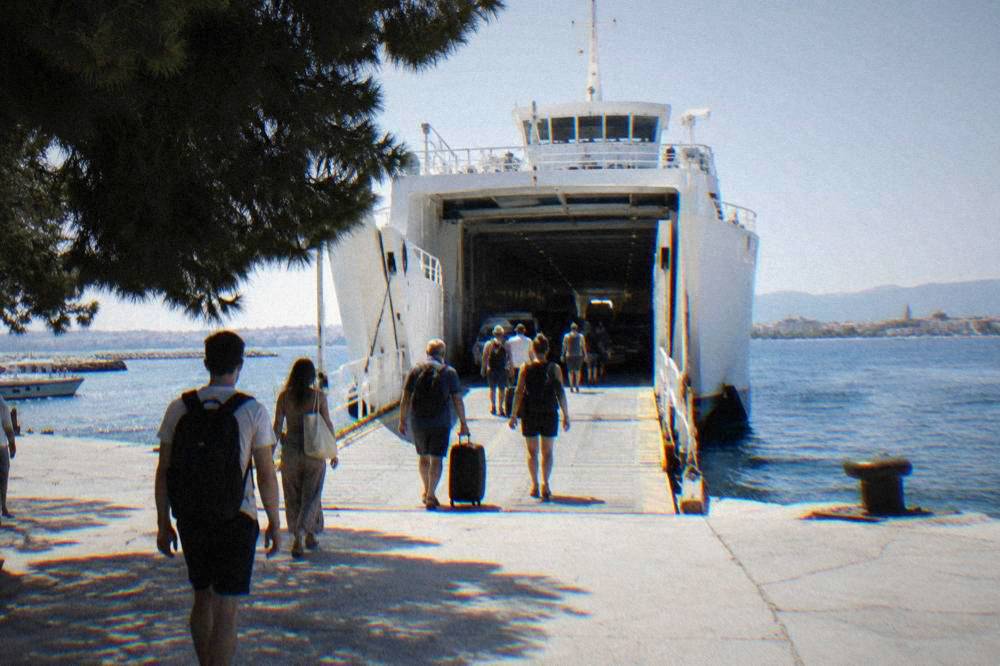
The Old Town peninsula lies about 5.2 km north of Gaženica, roughly 10 minutes by car, and city buses on Liburnija's network link the port area with the bus station at Ante Starčevića 1 and the peninsula, while taxis and rides from the port complete the options. The bus station itself stands 2.6 km, about 6 minutes' drive, from the Old Town, so a bus-to-walk combination lands a visitor on the peninsula without a vehicle. Printed fares for the city bus or a taxi from the port are not given here, so confirm prices on the spot or in the app at the time.
Practical points worth knowing:
- The bus station's address, Ante Starčevića 1, is verified from the operator's own services page.
- Drivers coming from the airport pass the port's side of the city; the airport to city centre route is covered separately, including the airport shuttle at 5.00 EUR one way with luggage.
- Ferry foot passengers should note the last stretch into the peninsula is a walkable zone, so luggage with wheels and cobblestones need a small plan.
- Parking near the Old Town is its own subject with tariffs that change by zone and season; confirm current rules on arrival rather than from memory of older guides.
One recent change affects late arrivals: from 12 October 2026, the evening departures on the Poluotok, Arbanasi and Kolodvor city bus line were rerouted owing to recurring traffic problems in Arbanasi, so anyone relying on a 21:00 or 22:00 bus after a late ferry should check the current route rather than an old map.
If the ferry schedule does not fit, an island boat tour leaving from the peninsula side may settle the day instead.
A related read on how to get from Zadar port to the Old Town answers the arrival-side version of this question, and cruise passengers have their own port day itinerary.
How Long Is The Ferry From Gaženica To Dugi Otok?
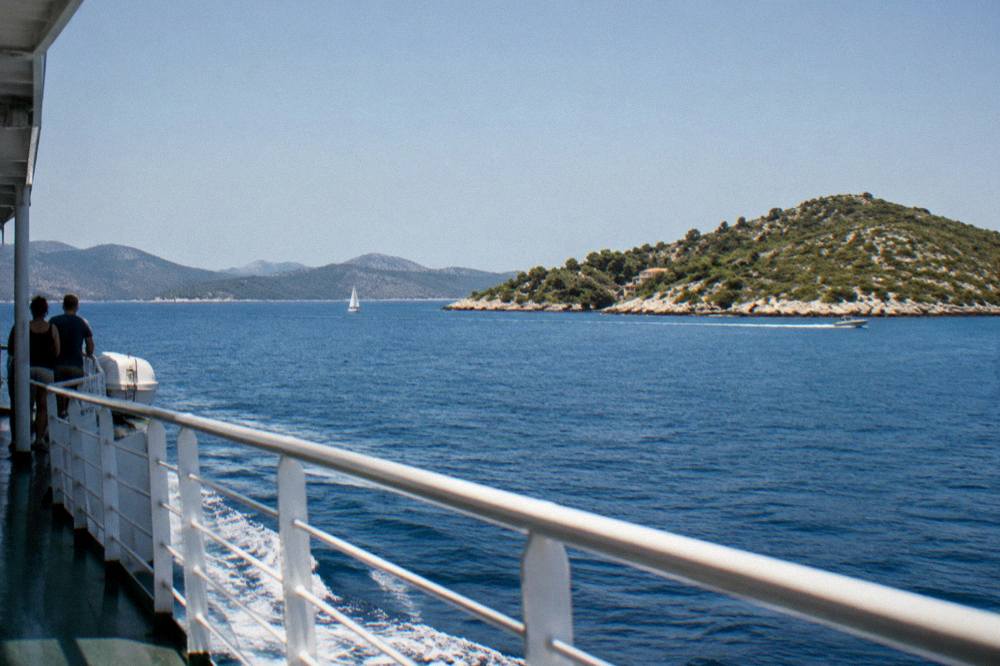
Jadrolinija's line 434 ferry from Zadar (Gaženica) to Brbinj on Dugi Otok takes 1 hour 40 minutes, according to the operator's route page, making it the longest scheduled crossing in the local network and the one that rewards an early start. Brbinj sits on Dugi Otok's eastern side, from where the island's beaches, notably Sakarun on the northern coast, are a drive or a local bus away. The crossing itself is sheltered for much of its length, threading the passage past Ugljan's western shore.
What Dugi Otok offers once the ferry docks is covered in the Dugi Otok guide: Sakarun beach, the village of Sali, and the entrance to Telašćica Nature Park at the island's southern end. Telašćica's land entrance at Dolac costs 6 EUR outside the summer months and 8 EUR from June to September, per the park's price list, while neighbouring Kornati National Park charges per vessel by length and season, a different system from every per-person park in the region. That per-vessel rule matters for sailors: a boat up to 6.99 m pays 25 EUR for a day outside high summer and 45 EUR from June to September, and the ticket is bought outside the park boundary, not at an office inside it.
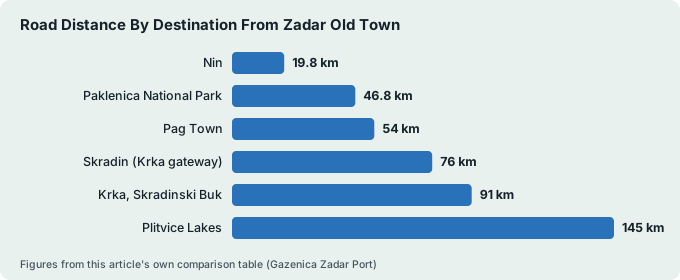
Day-trip distances from the Old Town, useful for combining a ferry with a road leg:
| Destination from Zadar Old Town | Road distance | Driving time |
|---|---|---|
| Nin | 19.8 km | 28 min |
| Paklenica National Park | 46.8 km | 57 min |
| Pag Town | 54 km | 62 min |
| Skradin (Krka gateway) | 76 km | 62 min |
| Krka, Skradinski Buk | 91 km | 73 min |
| Plitvice Lakes | 145 km | 153 min |
These figures are route calculations for the Old Town rather than the port; add the port-to-Old-Town leg from the first table when starting at Gaženica. The national parks each have their own pages, including Krka and Plitvice.
Can You Take A Ferry From Gazenica To Italy?
A fast catamaran ran between Zadar and Ancona in the 2026 season, a passenger-only service of about 4 hours operating up to five times weekly from 26 June to 6 September 2026, but the 2027 season has not been announced, so any Italy plan should be confirmed with Jadrolinija rather than assumed. The vessel, the Jelena, carried foot passengers only, no cars, which matters for anyone imagining a driving tour of Italy from a Dalmatian hire car. The season was extended beyond its original end date in 2026 because of demand, a sign the route performed, but performance is not a promise of renewal.
The full picture, including why this is the only Italy link and how it compares with Split's year-round overnight ferries, sits in the Zadar to Ancona ferry guide. For domestic hops, Ugljan island across from the city makes an easy half day on the Preko crossing, whose price is not printed here. Travellers heading down the coast after Zadar can also pair the port with the Zadar to Split connection, a road distance of 158 km.
A note on language: the port appears as Gaženica in Croatian with its diacritic, and as Gazenica in plenty of English text. Both point to the same place.
Is Gaženica The Same As The Old Town Harbour Where The Barkajoli Cross?
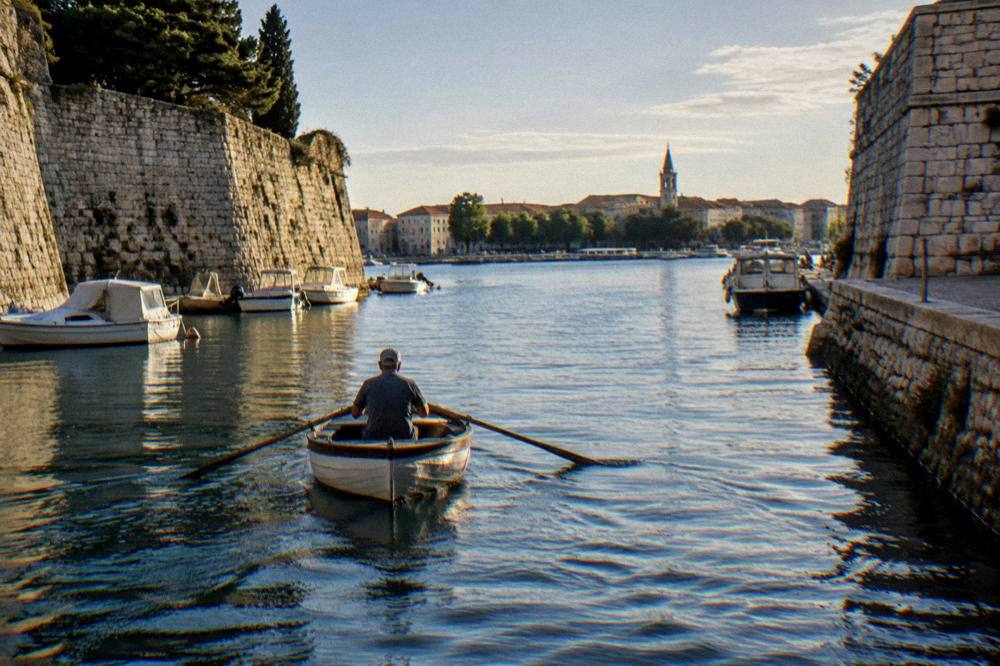
No, they are separate: Gaženica is the deep-water ferry port 5 km south of the centre, while the Old Town harbour on the peninsula is where the Barkajoli rowing boats shuttle passengers across the narrow city channel, a crossing of about 1.5 to 2 minutes that runs year-round, weather permitting, for a euro or two. The two watersides answer different needs. Gaženica moves cars, trucks and island traffic; the harbour outside the Land Gate, built in 1543, moves pedestrians a few hundred metres to the other bank.
The Barkajoli fare is deliberately vague on this page because no official price list was found. Treat it as small change and confirm with the boatman. The Old Town guide covers the peninsula side, and the wider island network is in the Zadar islands overview.
Do You Need To Book Ferry Tickets From Gaženica In Advance?
For the Dugi Otok car ferry in July and August, yes, booking ahead is the safe course, because summer vehicle space on Jadrolinija's island lines sells out while foot passengers usually board freely, and in the off-season tickets are rarely a problem on the day. Jadrolinija's own booking system shows live availability per sailing, and the operator's pages are the place to check rather than any third-party summary. For the Ancona catamaran, advance booking was effectively built into the 2026 season's demand, and the 2027 picture is unknown until Jadrolinija announces it.
A few planning habits help:
No printed ticket price appears on this page for the local crossings; the operator's booking flow shows the current tariff.
What Can You Do Near Gaženica Before Or After A Ferry?
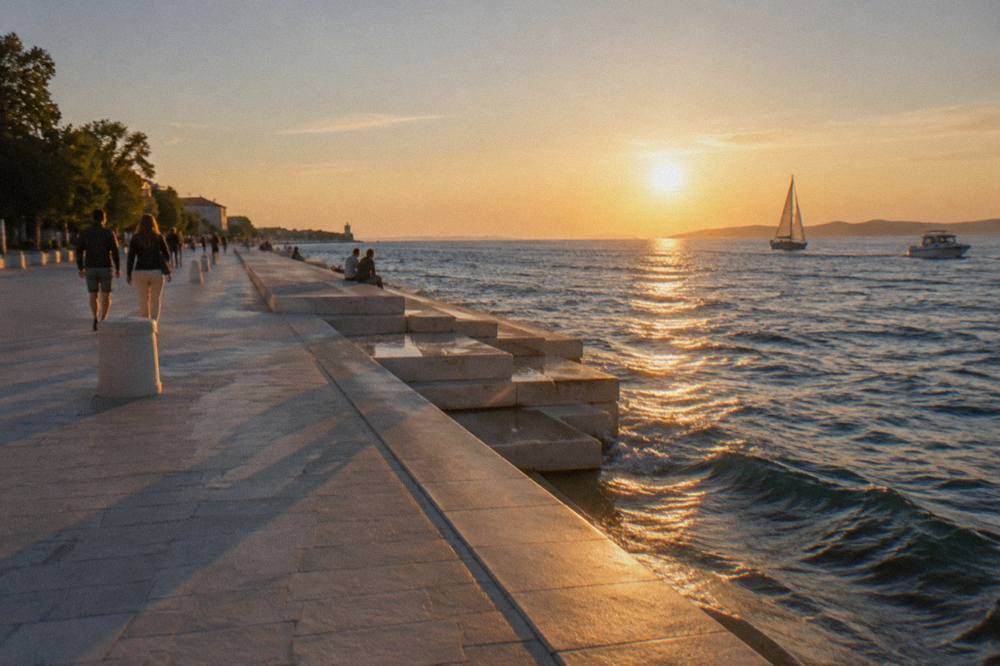
The port's immediate surroundings are working shore rather than sightseeing, so the practical move is to budget the waiting time for the peninsula 10 minutes north, where the Roman Forum, the Sea Organ from 2005 and the Greeting to the Sun from 2008, both by Nikola Bašić and both free and open at all hours, fill an hour without a ticket. Kolovare beach, the city's closest proper swimming stretch to the port, lies along the same shore road north, and the Kolovare guide details access. A meal plan fits the same logic: the peninsula's restaurants beat the port's sparse options, and the Zadar restaurants guide sorts them by budget and dish.
For a longer wait, the island day trips cover ground a ferry cannot:
One more comparison worth making before committing the day: Krka and Plitvice, both reachable by road from Zadar, each charge per-person seasonal entry, Krka at 7, 20 or 40 EUR by month and Plitvice at 10, 23 or 40 EUR, so a coach tour with tickets included can compete with a ferry day on value. The Krka vs Plitvice guide and the day trips overview work through the arithmetic.
When Is The Best Time Of Year To Use Gazenica Port?
The port runs year-round, but the crossings feel different by season: July, with a 24.5 C mean temperature and the driest month of the year at 35.4 mm of rain per the Zadar station, 1961-2024 record, is peak ferry demand, while November, the wettest month at 123 mm, means quiet decks and a jacket. Timetables thicken in summer and thin in winter, and the same seasonal logic drives the whole region, as the best time to visit Zadar guide lays out with the same station data.
The station's monthly means, worth a glance when choosing a ferry month:
| Month | Mean temperature (C) | Rainfall (mm) |
|---|---|---|
| January | 7.3 | 76.4 |
| April | 13.4 | 61.4 |
| July | 24.5 | 35.4 |
| September | 20.2 | 110.9 |
| November | 12.1 | 123.0 |
| Month | Mean temperature (C) | Rainfall (mm) |
|---|---|---|
| February | 7.8 | 67.0 |
| May | 17.9 | 64.4 |
| August | 24.1 | 52.8 |
| October | 16.3 | 106.8 |
| December | 8.6 | 99.6 |
Source for both tables: Zadar station, 1961-2024, DHMZ. Sunshine runs about 2,600 hours a year at the same station, a figure that shapes the deck-and-railing appeal of a summer crossing. Winter sailors should also expect the bora, the cold north-easterly wind that can delay small-craft schedules, a general property of the Adriatic rather than a Zadar-specific statistic. The wider weather picture, including what the same station record says about shoulder months such as May and September, is in the Zadar weather guide.
Common Questions About Gazenica Zadar Port
How far is Gazenica port from Zadar Old Town?
About 5.2 km by road, roughly a 10-minute drive, with city buses and taxis covering the link. Foot passengers can combine a bus toward the bus station at Ante Starčevića 1 with a short walk onto the peninsula.
Which islands can you reach by ferry from Gazenica?
Dugi Otok, via the car ferry to Brbinj on line 434, a crossing of 1 hour 40 minutes. Ugljan's crossing to Preko takes roughly 25 to 30 minutes; check the operator's timetable for the departure point and current schedule.
Is there a ferry from Zadar to Italy?
A passenger-only fast catamaran to Ancona, about 4 hours, ran from 26 June to 6 September 2026. The 2027 season has not been announced, so confirm with Jadrolinija before planning an Italy leg.
Can you walk from Gazenica port to the Old Town?
The distance of about 5 km makes it possible but unrewarding along a busy shore road. City buses, taxis and rides are the practical options, and fares should be confirmed on the spot.
Do you need to book the Dugi Otok ferry in advance?
In July and August, vehicle space should be booked ahead, since summer car decks sell out; foot passengers usually board without a reservation. Off-season sailings rarely sell out.
Is Gazenica the same port the cruise ships use?
Gaženica is the ferry and commercial port. Cruise passengers arriving in Zadar have their own arrival logistics, covered in the port day itinerary on this site.
For everything beyond the ferry dock, how many days to spend in Zadar and whether Zadar is worth visiting close the planning loop, and Croatia's emergency number, 112, applies everywhere on the waterfront.