Zadar To Split
The Zadar to Split route down the Dalmatian coast is 158 km by road, with national parks, river gorges and old towns on the way. Here is what the verified sources say about the drive, the stops and the practical details.
Short answer
The drive from Zadar to Split is 158 km on the coastal route, roughly two and a half hours without stops, and no passenger train currently links the two cities, so the practical overland options are coach or car. Krka National Park, Skradin, Šibenik and Paklenica all sit within reach of the road.
Zadar sits on a narrow peninsula on the Dalmatian coast of Croatia, and Split lies 158 km to the southeast, a figure the airport's own driving-distances page gives for the route. The road between them strings together some of the region's worthwhile stops: Paklenica's gorges, the Krka river at Skradin, and Šibenik, all within a single day's driving. The practical question for a lot of travellers is simpler than it looks: drive it in one go, or break it with a park or a town on the way down.
How Far Is Split From Zadar, And How Long Does The Drive Take?
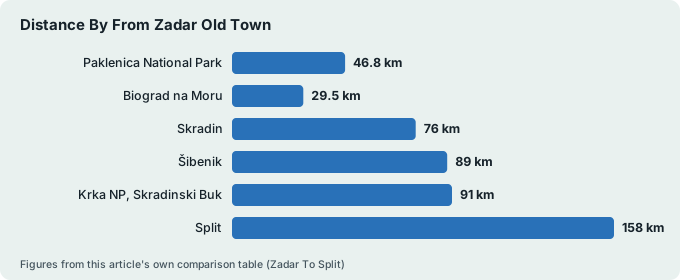
Split is 158 km from Zadar by road, and the coastal route between them takes roughly two and a half to three hours of pure driving without stops. Measured from Zadar's Old Town rather than the airport, Šibenik sits 89 km and about 71 minutes away, Skradin 76 km and about 62 minutes, and the Krka trailhead at Skradinski Buk 91 km and about 73 minutes of driving.
The 158 km figure comes from Zadar Airport's how-to-get-here page, which lists driving distances to Zagreb (297 km), Split (158 km) and Rijeka (305 km). It is a road distance, not a straight line, and it reflects the Adriatic coastal road rather than any inland shortcut. The per-journey times above are computed routings from the Old Town, so a traveller starting at the airport adds a small margin, the airport being about 8 km from the city by its own page.
Two practical things shape the drive. First, the coastal road runs through towns and past junctions, so real elapsed time depends on season and time of day rather than on the posted distance. Second, summer traffic on the coastal strip is heavy, and a stop or two is the usual reason the journey takes a full day anyway. More detail on timing sits in the dedicated answer page how long the drive from Split to Zadar takes.
| From Zadar Old Town | Distance | Driving time |
|---|---|---|
| Paklenica National Park | 46.8 km | ~57 min |
| Biograd na Moru | 29.5 km | ~39 min |
| Skradin | 76 km | ~62 min |
| Šibenik | 89 km | ~71 min |
| Krka NP, Skradinski Buk | 91 km | ~73 min |
| Split | 158 km | check the current estimate before setting out |
The distances in the table are routing computations from the Old Town, except the Split figure, which the airport page states. None of them includes stopping time, and none should be read as a promise about traffic.
There is no direct train between Zadar and Split. Zadar does have a railway station, next to the main bus station, but passenger trains do not currently run to it: the Zadar-Knin line is closed to passenger traffic and under renovation, and Zagreb-Split trains run via Knin without reaching Zadar. In practice the options are coach, car and ferry. For onward planning, the bus station in Zadar sits at Ante Starčevića 1 and is operated by Liburnija.
Travellers arriving from countries with dense rail networks often assume a coastal line to Zadar exists. The city does have a railway station, right next to the main bus station, but passenger trains do not currently run to it. The question of a train between Zadar and Split has its own answer page, and the short version is the one above: no passenger trains at present, so plan around coach, car and ferry.
If you are assembling the whole journey rather than just the transfer, the same logic applies at both ends. The general planning page on how to get to Zadar covers flights and arrivals, and the airport transfer guide handles the last few kilometres from ZAD to the city.
Should You Drive, Take The Bus, Or Break The Journey With Stops?
Driving gives full control over stops and is the only realistic way to visit Krka, Paklenica or Šibenik en route, since the distances, 91 km to Skradinski Buk and 89 km to Šibenik, put each within the first hour and a quarter of the drive. The bus covers the line as a single through journey but does not serve the park entrances as convenient hop-offs.
Confirm the bus fare and any road tolls with the operator when booking, or check locally before you travel.
The choice really hinges on whether the route is a transfer or a day of sightseeing. As a transfer, one drive of 158 km is straightforward. As a day, the routing data suggests a natural shape: leave Zadar early, reach Skradin or the Krka entrance in about an hour and 15 minutes, spend the middle of the day at the park, then continue through Šibenik to Split with the remaining distance still under two hours.
What can be stated is the shuttle economics at the Zadar end: the airport shuttle runs 5.00 EUR one way including luggage, about 20 minutes to the Old Town, with the ticket valid 90 minutes on city buses, all from the airport's own page.
| Option | Details | Best for |
|---|---|---|
| Own car or rental | 158 km route; stops at Paklenica, Skradin, Krka and Šibenik all reachable | Park visits, photography, flexible timing |
| Bus | Zadar bus station at Ante Starčevića 1, operated by Liburnija | Single through journey, no stops |
One more thing worth knowing before you commit to a car for the whole trip: Zadar's Old Town sits on a pedestrianised peninsula, and the wider question of whether a car earns its keep there is covered in where to stay in Zadar. Plenty of travellers pick up a vehicle on departure day specifically for this drive south.
What Can You Stop At On The Way From Zadar To Split?
The sourced stops in driving order are Paklenica National Park at 46.8 km and about 57 minutes from Zadar's Old Town, Skradin at 76 km, Šibenik at 89 km, and the Skradinski Buk entrance of Krka National Park at 91 km and about 73 minutes. Paklenica's 2026 price list gives adult day entry of 5 EUR in winter months, 8 EUR in shoulder months and 10 EUR from May to September.
Krka's official 2026 tariff gives 7 EUR in January, February, March, November and December, 20 EUR in April, May and October, and 40 EUR from June to September.
Both parks publish full seasonal lists, and the figures above are the adult one-day entries from those lists. At Krka the reduced tariff for the Roški slap and other outlying sites runs 7 / 12 / 20 EUR by season, and children from 7 to 18 and students pay 4 / 12 / 15 EUR on the main tariff. At Paklenica, children from 7 to 18 pay 2.50 / 4 / 5 EUR across the same three seasons. Group and multi-day options exist at both, on the parks' own price lists.
| Stop | Distance from Zadar Old Town | Entry, adult, 2026 |
|---|---|---|
| Paklenica NP | 46.8 km, ~57 min | 5 / 8 / 10 EUR by season |
| Skradin (Krka gateway town) | 76 km, ~62 min | free public access |
| Šibenik | 89 km, ~71 min | check locally for sights |
| Krka NP, Skradinski Buk | 91 km, ~73 min | 7 / 20 / 40 EUR by season |
One rule at Krka deserves its own warning because it is widely misunderstood: swimming at Skradinski Buk has been banned since 2021 to protect the travertine barriers, and swimming in the park is allowed only at the designated spots of Roški slap, Stinice and Pisak, from 1 June to 30 September and weather and water conditions permitting. A day trip that promises a swim under the main falls is promising something the park's rules do not allow.
Beyond the parks, the road passes Nin's side turn at 19.8 km if you doubled back, and Biograd na Moru at 29.5 km, but the through-route logic is Paklenica or Krka, rarely both in one day. The wider set of options, including the islands that do not touch this road at all, is collected in the Zadar day trips guide.
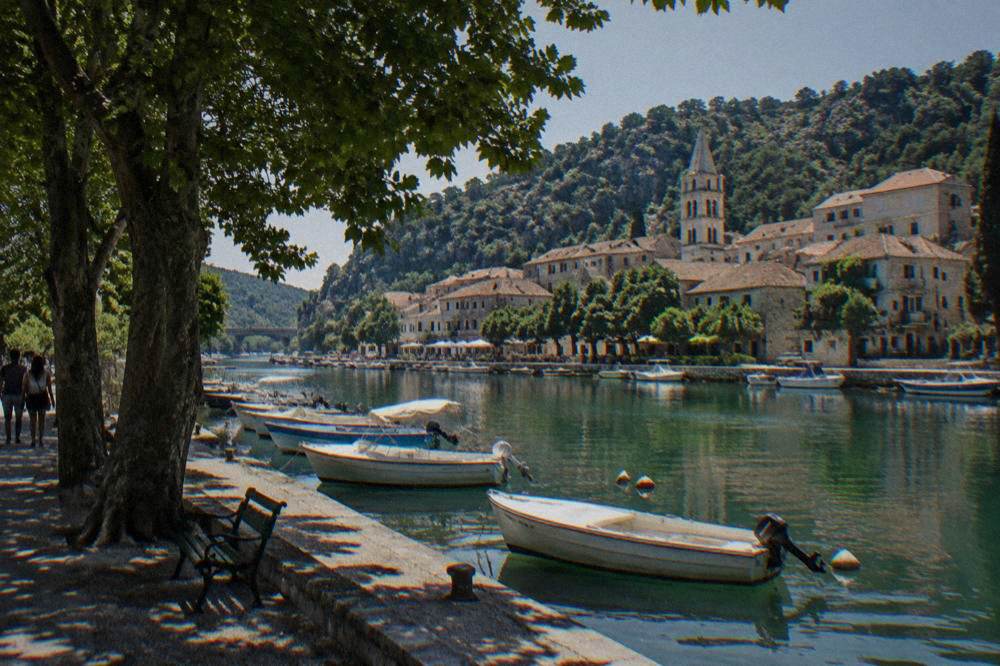
Before locking in a departure day, it is worth weighing what you give up by leaving Zadar early. The city's own headline sights, the Sea Organ from 2005 and the Greeting to the Sun from 2008, both by Nikola Bašić, are free public installations on the Riva, open at all hours. A morning boat trip on the water and an evening drive south is a pattern the timings make possible, and the Zadar boat tours guide lays out the options, including the featured luxury island boat tour with snorkeling with its Check availability link for live dates.
When Is The Best Month To Drive From Zadar To Split?
On the Zadar station record, 1961-2024, the warmest months are July at 24.5 C mean and August at 24.1 C, the driest is July at 35.4 mm of rain, and the wettest is November at 123 mm, so the drive is driest and warmest in high summer but busiest on the road, while May, June and September trade slightly cooler means, 17.9, 21.9 and 20.2 C, against thinner traffic and shoulder-season park prices at Krka and Paklenica.
The station table rewards a close read rather than a slogan. September still averages 20.2 C but carries 110.9 mm of rain across about 9 rain days, against July's 35.4 mm over about 5 days. October's 106.8 mm and November's 123 mm make late autumn the wettest stretch of the year on this record. For the parks specifically, the price lists give a concrete incentive: Krka drops to 20 EUR in October and 7 EUR in the November to March window, and Paklenica falls to 8 EUR in October and 5 EUR in the winter months. More of these guides are collected on Zadar Croatia Travel Guide.
| Month | Mean C, Zadar station 1961-2024 | Rain mm | Rain days |
|---|---|---|---|
| May | 17.9 | 64.4 | 10 |
| June | 21.9 | 48.5 | 8 |
| July | 24.5 | 35.4 | 5 |
| August | 24.1 | 52.8 | 6 |
| September | 20.2 | 110.9 | 9 |
| October | 16.3 | 106.8 | 9 |
Sunshine supports the case for the shoulder without any superlatives: the station sums to about 2,600 hours a year, with July the peak month at 358.6 hours on the monthly table, and June at 310.9, May at 279.1 and September at 243.1 all still strongly lit months on the same record. The fuller picture, including winter months and what they mean for a visit, is in Zadar weather and the best time to visit Zadar.
Do You Need To Book Krka Or The Stops Ahead When Driving From Zadar To Split?
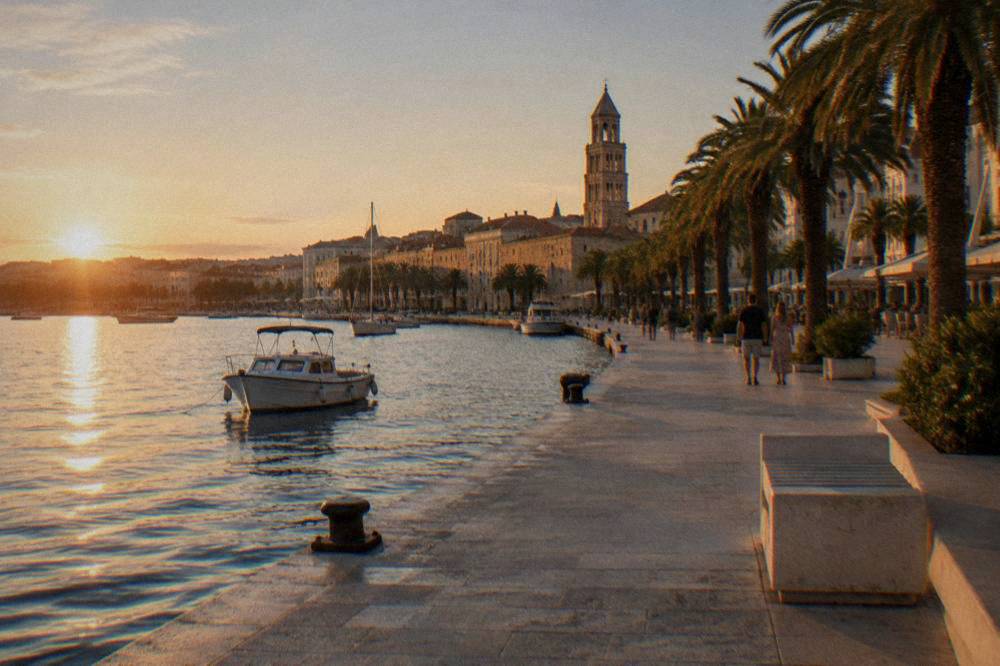
Krka's 2026 tariff runs online ticketing with timed online tickets and daily limits, so in the June to September window, when adult entry is 40 EUR, booking ahead is the safe plan; in the 7 EUR and 20 EUR seasons the pressure is lower but the online system is still the park's stated channel. Paklenica's price list carries no booking requirement.
St Donatus in Zadar itself faces roof restoration works planned from autumn 2026, about six months, so check access before any pre-departure sightseeing.
The Krka recommendation follows the park's own seasonal pricing notices, which pair the winter-shoulder drops from 1 October 2026 with the advice on online timed tickets. For a drive that reaches Skradin around mid-morning in August, the practical reading is simply that the ticket system exists and the peak season is when it matters.
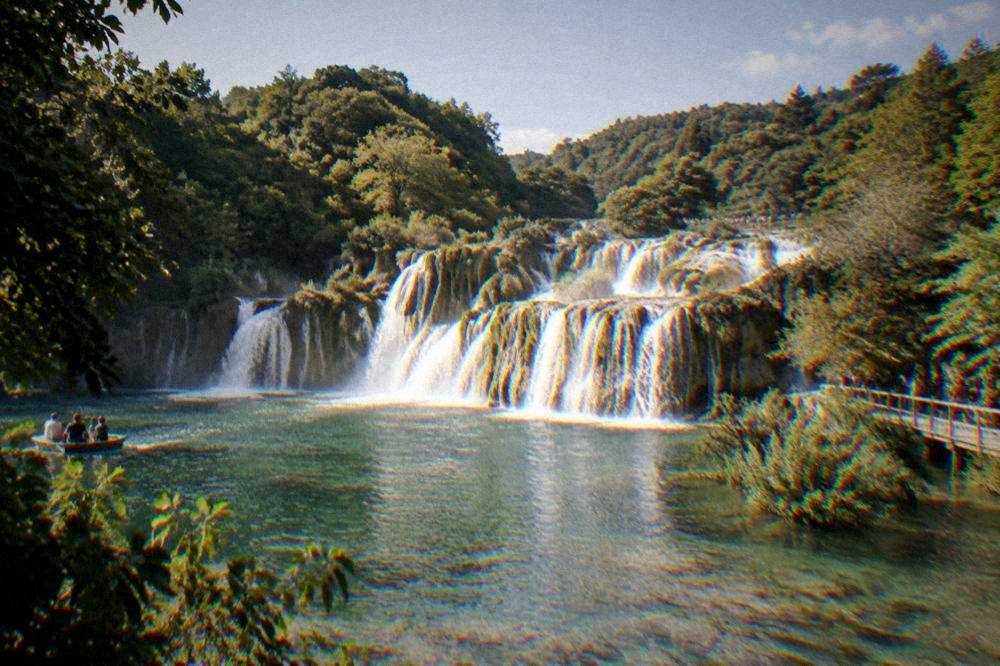
For the other components of the day, the Split day trip page and the Zadar versus Split comparison cover the two ends of the route from Zadar's side.
A note on sequencing if the boat calls: island trips leave from Zadar's harbour, so they belong at the start or end of the itinerary, not the middle of a transfer day. The traditional boat option above, with its three stops, is the kind of departure that pairs with an afternoon drive the following day.
Is Zadar Or Split The Better Base For A Dalmatian Trip?
Zadar's advantages are its position at the head of the island and park network, with Nin 19.8 km, Paklenica 46.8 km, Skradin 76 km and Krka 91 km away by road, its free waterfront installations, and an airport 8 km from the city with a 5.00 EUR shuttle, while Split's attractions and prices cannot be argued either way.
That is not a dodge; it is the difference between a sourced claim and a plausible one. The comparison is lopsided by design: this site verified Zadar in depth and did not verify Split's attractions, prices or character. The drive distances put every major mainland park within a morning of Zadar. The Sea Organ and Greeting to the Sun cost nothing and sit in public space at all hours. The airport's own page gives the 8 km distance and the Liburnija shuttle terms. Readers weighing the two cities as bases can work through the detailed treatment in is Zadar nicer than Split and the guide comparison linked above.
| Question | Answer |
|---|---|
| Road distance Zadar to Split | 158 km |
| Rail link | Zadar's railway station sits next to the main bus station, but passenger trains do not currently run to it; the practical overland routes are coach, car and ferry |
| Nearest park to Zadar on the route | Paklenica at 46.8 km, ~57 min |
| Krka entry, peak season adult | 40 EUR, June to September |
| Zadar airport to city | about 8 km, shuttle 5.00 EUR one way, ~20 min |
How Does The Zadar To Split Route Fit Into A Longer Itinerary?
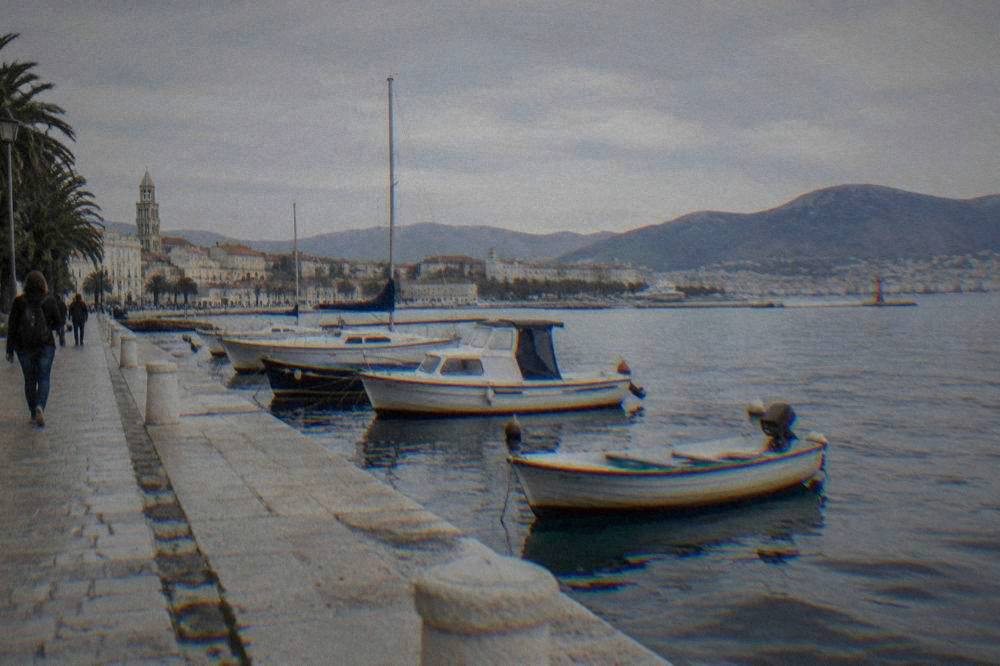
A common shape is two or three nights in Zadar, using it for the Old Town, the free Riva installations and one island or park day, then the 158 km drive south with a Krka or Šibenik stop, and the balance of the trip in Split; one day is enough for Zadar's core, while the transfer day can absorb Skradin, the park and Šibenik without exceeding about four hours of total driving.
The itinerary arithmetic comes from the site's own planning guides: how many days in Zadar frames the core visit, and is Zadar worth visiting addresses the prior question. Two to three days allow a park and an island alongside the city itself. On the route itself, the 76 km to Skradin, 91 km to Skradinski Buk and 89 km to Šibenik cluster within a quarter-hour of each other, so the stop order is a matter of opening times rather than geography: park first in hot weather, town first for lunch.
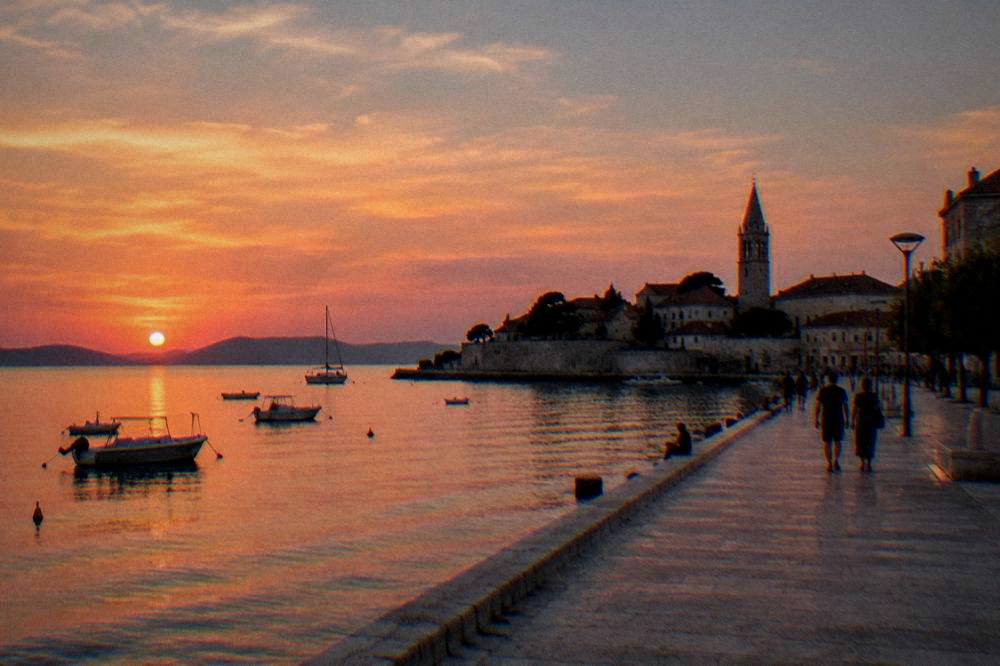
Two Zadar specifics shape the last evening before departure. The Old Town carries dress-code signage since summer 2026, requiring appropriate clothing with no swimwear, enforced after a verbal warning with fines up to 130 EUR, as reported. And the city has signalled an intention to restrict night-time retail alcohol sales on the peninsula for the 2026 season, excluding bars and restaurants, under a change in national law, again as reported rather than as a settled tariff. Neither changes a drive south; both are worth knowing if the final night runs late.
For the departure morning itself, the essentials are simple: the airport is about 8 km from the city, the shuttle costs 5.00 EUR one way with luggage and takes about 20 minutes, and the ticket stays valid 90 minutes on city buses. Croatia uses the euro, is a Schengen member, and the emergency number is 112. A tourist tax is collected by your accommodation; check the amount when you book. The rest of the route, the parks, the towns and the coast between them, is in the tables above.
Common Questions About Traveling From Zadar To Split
How far is Split from Zadar?
158 km by road, the figure given on Zadar Airport's own driving-distances page. Pure driving time without stops is roughly two and a half to three hours; routing data from the Old Town puts Šibenik at 89 km and Krka's Skradinski Buk entrance at 91 km along the way.
Is there a train between Zadar and Split?
Land travel between the two cities is by car or bus; the Zadar bus station is at Ante Starčevića 1, operated by Liburnija.
Can you stop at Krka National Park on the way from Zadar to Split?
Yes. The Skradinski Buk entrance is 91 km and about 73 minutes of driving from Zadar's Old Town, with the gateway town of Skradin at 76 km. Adult entry in 2026 is 7 EUR in winter months, 20 EUR in April, May and October, and 40 EUR from June to September, per the park's official tariff. Swimming at Skradinski Buk is banned; designated swim spots are Roški slap, Stinice and Pisak, from 1 June to 30 September.
What is the closest national park to Zadar on the route south?
Paklenica, at 46.8 km and about 57 minutes of driving from the Old Town. Its 2026 price list gives adult day entry of 5 EUR in January, February, November and December, 8 EUR in March, April and October, and 10 EUR from May to September.
Is there a ferry from Zadar to Split?
No. There is no direct ferry between Zadar and Split. Jadrolinija's Zadar operations are the Gaženica to Brbinj line on Dugi Otok and the seasonal Zadar to Ancona fast catamaran, which ran to 6 September 2026; its 2027 season has not been announced.