Passenger trains do not currently run to Zadar, so there is no direct train between Zadar and Split. This guide covers the coach, ferry and driving options that take its place.
There is no direct train between Zadar and Split. Zadar, a coastal city in Dalmatia on the Adriatic, does have a railway station, right beside the main bus station, but passenger trains do not currently run to it: the Zadar-Knin line is closed to passenger traffic and under renovation, with service planned to return around 2028. Split, by contrast, sits on Croatia's main coastal rail line, so travellers holding a rail pass can reach Split by train but cannot continue to Zadar on rails. Until trains return, the practical overland routes are coach, car and ferry: the intercity coach runs from Zadar's Liburnija-operated bus station to Split, and the drive covers roughly 158 km of coastal road.
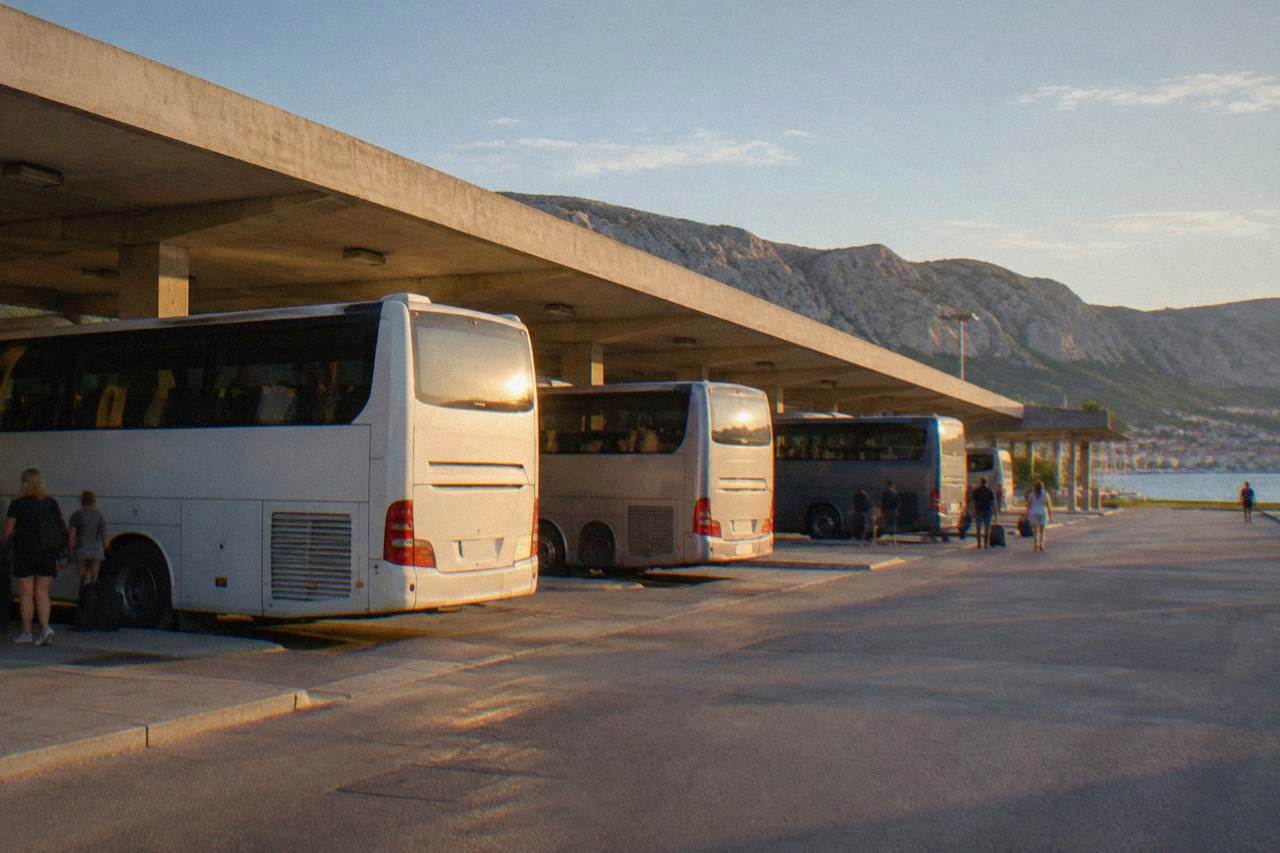
No, there is no direct train between Zadar and Split. Zadar does have a railway station, next to the main bus station, but passenger trains do not currently run to it: the Zadar-Knin line is closed to passengers for renovation, and Zagreb-Split trains run via Knin without reaching Zadar. Split is on the rail network, and local media have reported that passenger service to Zadar is planned to return around 2028. Until then, the practical connections are coach, car and ferry. Coaches leave from the bus station at Ante Starčevića 1, run by the operator Liburnija; check current timetables before travelling.
That answer surprises travellers who assume Croatia's coast is stitched together by rail the way other Adriatic countries are. Zadar does have a railway station, sitting right next to the main bus station, but passenger trains do not currently run to it, so in practice the city's transport identity is maritime and road-based: Jadrolinija ferries leave from the Gaženica port for the islands, and the bus station sits about 2.6 km from the Old Town. The airport, about 8 km from the city, feeds into the same road network with a 5.00 EUR shuttle that takes roughly 20 minutes and includes a 90-minute city-bus validity.
For trip planning, the lack of passenger trains means every overland itinerary through Zadar is a coach or car itinerary.
How Do You Travel From Zadar To Split Without A Train?
The working alternatives are the intercity coach along the coastal road, a private car or rental driving roughly 158 km, or a routed combination of ferry and bus through the islands. The drive distance of 158 km comes from the airport's own verified page of distances to other Croatian cities, and the coach timetables are confirmed at booking, since this site does not print fares or schedules it cannot verify. Split can also be reached by sea from points south of Zadar.
The coach is the default. It leaves from the Ante Starčevića 1 station that Liburnija operates, and it is the same station the airport shuttle delivers passengers to. Check the current fare at booking or at the operator's desk. The route south passes Šibenik, 89 km from Zadar by road, and Skradin, 76 km, which is also the jumping-off point for Krka National Park, where the 2026 adult entry is 7 EUR in the January-to-March and November-to-December window and 40 EUR from June to September.
Driving gives the same corridor with stops at will. The verified road figures for day trips out of Zadar include Šibenik at 89 km and roughly 71 minutes of driving, Skradin at 76 km, and Split at 158 km from the airport page. For a fuller comparison of the two cities as bases, the Zadar vs Split guide covers the trade-offs on what is sourced, and how long is the drive from Split to Zadar handles the road timing in detail.
What Does The Missing Train Mean For A Zadar To Split Itinerary?
**It means the two cities are linked by road and sea only, so an itinerary should be built around coach departures, a rental car, or a ferry-first plan that hops the islands before continuing south. Split lies roughly 158 km from Zadar by road, and the practical decision is whether to drive it in one go or break it at Šibenik or Skradin.
The break-at-Skradin option is worth a paragraph because Krka National Park sits directly on the corridor. The park's own 2026 price list, verified from the official PDF, charges adults 7 EUR in deep winter, 20 EUR in April, May and October, and 40 EUR from June to September, with a 30 EUR rate for later afternoon entry in the peak window. Swimming at Skradinski Buk has been banned since 2021 to protect the travertine, and swimming is permitted only at designated spots such as Roški slap, Stinice and Pisak, from 1 June to 30 September, conditions permitting. The Krka National Park guide unpacks the full day-trip logic from Zadar.
A sea-first plan is the more Dalmatian answer to the missing train. Jadrolinija's route pages show the car ferry from Gaženica to Brbinj on Dugi Otok taking 1 hour 40 minutes on line 434, and the short crossing to Preko on Ugljan taking about 25 to 30 minutes, though no fare for the Preko run was found and none is quoted. Island-hopping south by catamaran and ferry, then rejoining the coast road, turns a transfer into the best part of the trip. The where do ferries go to from Zadar answer maps the whole network.
Why Is There No Passenger Train To Zadar?
There is no direct train between Zadar and Split. Zadar does have a railway station, next to the main bus station, but no passenger trains currently run to it: the Zadar-Knin line is closed to passenger traffic and under renovation, and trains from Zagreb reach Split via Knin without continuing to Zadar. Local media reported in September 2026 that passenger service to Zadar is planned to return around 2028. Until then, the practical options are coach, car and ferry.
What the record does show is investment flowing into the modes that exist. Zadar Airport opened a new departures terminal presented on 24 July 2026, part of an expansion aimed at doubling capacity toward three million passengers a year. Wizz Air added Budapest and Warsaw routes from 7 June 2026, four times weekly, and year-round Zadar to Munich flights were confirmed for the winter of 2026-27. On the water, Jadrolinija's fast catamaran to Ancona, the passenger-only Jelena on line 51, ran its 2026 season from 26 June and was extended to 6 September; nothing about 2027 has been announced. In the city, the Poluotok, Arbanasi, Kolodvor bus line's 21:00 and 22:00 departures were rerouted from 12 October 2026.
None of that activity touches rail. The pattern a planner should take from it is that the coastal and island economy is being wired around rubber wheels and hulls, and the practical Zadar toolkit reflects that: the 5.00 EUR airport shuttle including luggage, roughly 20 minutes, with a ticket valid 90 minutes on city buses, and the Gaženica ferry port 5.2 km and about 10 minutes' drive from the bus station.
Should You Base Yourself In Zadar Or Split For A Coast Trip?
Choose on the essentials: drive distance and what each city itself offers. Split is 158 km from Zadar by road, and Split sits on the national rail network while passenger trains do not currently run to Zadar, though local media have reported plans for service to return around 2028; that difference matters only if a train forms part of a wider itinerary. Zadar's strengths are its free public installations, its park day trips and its island ferry network. No verdict about Split's attractions is offered here.
Zadar's car-free case rests on the peninsula. The Sea Organ from 2005 and the Greeting to the Sun from 2008, both by Nikola Bašić, are free and open at all hours, and the Roman Forum, Five Wells Square, Kalelarga and the 1543 Land Gate carry no admission either. Zadar is one of six components of the UNESCO property "Venetian Works of Defence", inscribed in 2017, a serial listing of fortification works of the Stato da Terra and the western Stato da Mar. The paid layer is thin and cheap: the Museum of Ancient Glass lists a 7.00 EUR adult ticket on its own price page, and the Archaeological Museum and St Donatus run on a tariff showing 7.00 and 5.00 EUR rows, so around 7 EUR at full price is the honest figure. St Donatus faces roof restoration works planned from autumn 2026 for about six months, so access may be limited and should be checked before a visit.
| Zadar Base, Verified Costs | Figure | Season Or Note |
|---|---|---|
| Sea Organ and Greeting to the Sun | Free, open at all hours | Public installations |
| Museum of Ancient Glass, adult | 7.00 EUR | Groups of five or more 5.00 EUR |
| Archaeological Museum and St Donatus | Around 7 EUR full price | Tariff shows 7.00 and 5.00 EUR rows |
| Krka National Park, adult | 7 / 20 / 40 EUR | Jan-Mar and Nov-Dec / Apr, May, Oct / Jun-Sep |
| Plitvice Lakes, adult | 10 / 23 / 40 EUR | Winter / shoulder / summer before about 16:00 |
| Paklenica National Park, adult | 5 / 8 / 10 EUR | Winter / shoulder / May-Sep |
The park table matters for the Zadar-versus-Split question because Plitvice sits closer to Zadar's reach at 145 km of driving, while Krka is a comfortable 76 km hop to Skradin. Deciding how many days the city itself deserves is easier with the how many days in Zadar is enough answer, and the broader Zadar to Split route guide covers the transfer in full.
Common Questions About Travel Between Zadar And Split
Is there a train between Zadar and Split?
No. Coaches, driving and ferry-based routing are the alternatives, with Split reachable by roughly 158 km of road.
Can you take a train from Zagreb to Zadar?
The overland arrival is by intercity coach to the Liburnija-operated station at Ante Starčevića 1, or by air into Zadar Airport, about 8 km from the city by its own page.
How do you get from Split to Zadar without a train?
By intercity coach, by car along the coastal road, or by a ferry-and-bus combination. The how do you get from Split to Zadar answer covers the options, and timetables are confirmed at booking because this site prints no schedules it cannot verify.
Is the Zadar to Split bus station easy to reach from the Old Town?
Yes, by road the station is about 2.6 km and six minutes from the Old Town, a figure computed from routing data. The airport shuttle from Zadar Airport also terminates at the station and its ticket is valid 90 minutes on city buses.
Can you island-hop from Zadar instead of driving straight to Split?
Yes. Jadrolinija's route pages show the Gaženica to Brbinj ferry on Dugi Otok taking 1 hour 40 minutes and the Preko crossing on Ugljan about 25 to 30 minutes, though no Preko fare was verified. A slower sea route south turns the missing train into an itinerary.
Where can a sunset boat tour from Zadar be booked?
The operator's live listing carries current times and availability for the Check availability link shown on this page, alongside the tour's own page with full details.
A final planning note: the missing train is not a gap to work around so much as a prompt to travel the way this coast actually moves, by boat, bus and the road between them. Nobody behind this Zadar Croatia Travel Guide has been to Zadar, so treat the figures here as a starting point and confirm anything that matters to you when you book.