Zadar Archaeological Museum
The Archaeological Museum in Zadar sits at the edge of the Roman Forum on the Old Town peninsula, sharing a tariff with the nearby Church of St Donatus. This guide sets out what the official pages actually say about tickets, access and planning.
Short answer
The Archaeological Museum in Zadar sits beside the Roman Forum in the Old Town. Its tariff page shows rows of 7.00 and 5.00 euro, so expect around 7 euro at full price, with free entry for children up to 10. Hours are not published consistently, so check the museum's own page before going.
The Archaeological Museum in Zadar, a coastal city in Dalmatia on the Adriatic, stands at the western edge of the Roman Forum on the Old Town peninsula, a few steps from the Church of St Donatus and the Kalelarga. It is the kind of museum that rewards a little planning: it shares its tariff with St Donatus, and the surrounding sights are all walkable within minutes. Check the current opening hours and tariff with the museum before you go.
Where Is The Archaeological Museum In Zadar And What Is It?
The Archaeological Museum in Zadar stands on the Old Town peninsula (Poluotok), beside the Roman Forum, with the Church of St Donatus and the Cathedral of St Anastasia within a short walk of its entrance. The peninsula is car-free in its core, so the museum is reached on foot from the Riva promenade, the Land Gate or any of the bus stops at the peninsula's edge.
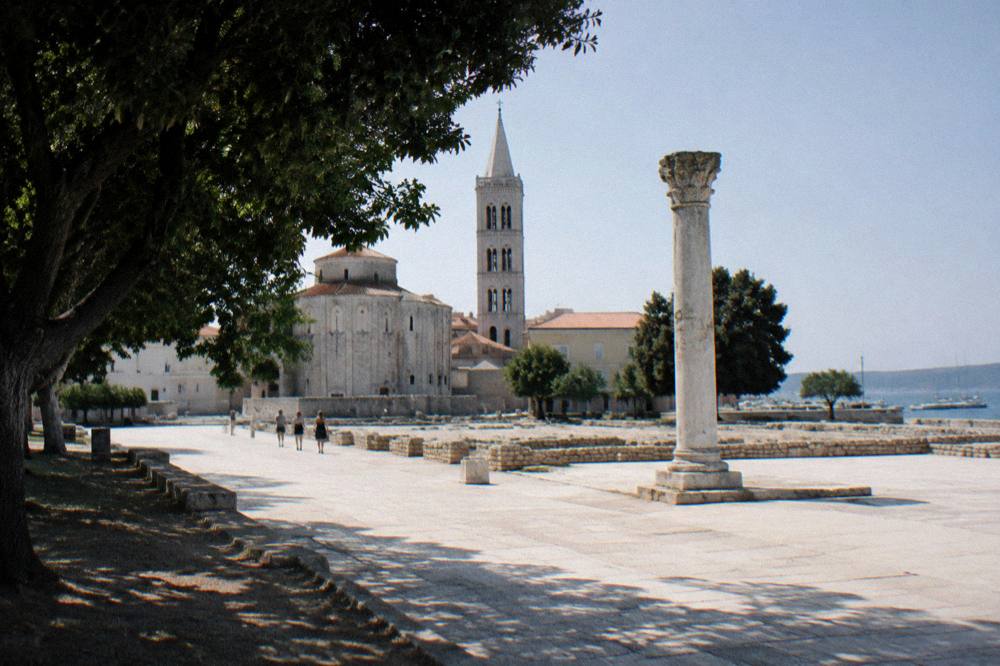
Zadar's Old Town occupies a narrow peninsula that juts into the Adriatic, and the museum sits in its historic heart. The Roman Forum, an open public space with free access at all hours, is directly adjacent, so a museum visit and a wander among the ancient stones combine naturally. The Roman Forum is the anchor: the museum's building looks onto it, and the two share a setting that has been the civic centre of the city for a very long stretch of its recorded past.
The immediate neighbourhood is dense with sights that cost nothing to enter. The Kalelarga, the city's main street, runs a couple of blocks south. The Land Gate, built in 1543 to a design attributed to Michele Sanmicheli, marks the historic entrance to the peninsula from the harbour side. The Sea Organ, installed in 2005 by Nikola Bašić, and the Greeting to the Sun, his 2008 companion installation, lie at the northwestern tip, roughly ten minutes on foot from the museum door. A realistic museum visit therefore slots into a wider Old Town loop rather than standing alone.
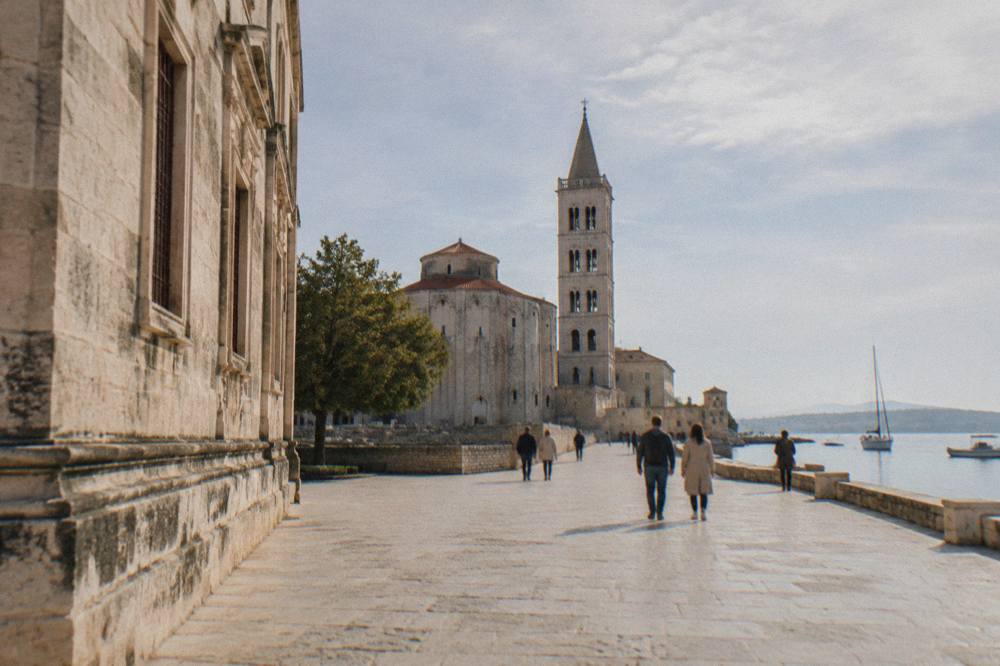
For orientation, the peninsula is small enough that walking is the only transport that matters inside it. The table below places the museum against its nearest neighbours.
| Sight | Relation To The Museum | Access Cost | Notes |
|---|---|---|---|
| Roman Forum | Directly adjacent | Free | Open public space, no ticket |
| Church of St Donatus | Beside the Forum | Around 7 euro at full price | Shares a tariff with the museum; roof restoration works planned from autumn 2026 may limit access |
| Cathedral of St Anastasia | Short walk south | Check the current price on site | Check the bell-tower climb price and hours with the cathedral |
| Kalelarga | Two blocks south | Free | Main street of the Old Town |
| Land Gate | Western edge of the peninsula | Free | Built 1543 |
| Sea Organ | Northwestern tip | Free | Installed 2005, by Nikola Bašić |
| Greeting to the Sun | Next to the Sea Organ | Free | Installed 2008, by Nikola Bašić |
How Much Does The Archaeological Museum In Zadar Cost?
The Archaeological Museum's tariff page shows rows of 7.00 and 5.00 euro, so expect around 7 euro at full price and 5.00 euro on a reduced row, with free entry for children up to age 10 and for listed groups, plus free entry on Museum Night days. The split between the 7.00 and 5.00 rows was not read line by line, so the exact eligibility for each row should be confirmed on the museum's own page before a visit.
The 7.00 and 5.00 euro figures come from the official tariff page that the Archaeological Museum of Zadar shares with the Church of St Donatus. The editorial desk opened that page and confirmed the two price rows and the free-entry conditions, but did not read which row applies to which visitor category. It is also why the figure of 3.50 euro, which circulates on secondary sites, does not appear here: the official page does not show it.
Two practical points follow. First, the same ticket system covers St Donatus, so a combined visit to the church and the museum is a single administrative affair, whatever the individual conditions turn out to be on the day. Second, the Church of St Donatus faces roof restoration with works planned from autumn 2026 for about six months, according to reports on the public procurement tender, and individual access during the works depends on the phase, so check the church's status before counting on a combined ticket.
For comparison, here is what the verified sources say about Zadar's museum tickets generally.
| Museum Or Site | Ticket | Status |
|---|---|---|
| Archaeological Museum Zadar | Around 7 euro at full price; 5.00 euro reduced rate; free for children up to 10 and listed groups | Check the current tariff with the museum |
| Church of St Donatus | Same tariff as the museum | Access may be limited during 2026 roof works |
| Museum of Ancient Glass | 7.00 euro adult; 5.00 euro groups of five or more; 4.00 euro schoolchildren; guided tour 20 euro in Croatian or 30 euro in other languages | Prices as listed by the museum |
| Gold and Silver of Zadar (Church of St Mary) | Check locally for the current price | Confirm locally |
| Zadar City Card | Check with the tourist board for the 2026 price | Confirm at the tourist board |
The Museum of Ancient Glass is the one Zadar museum whose whole price list is verified line by line, and it makes a useful second stop for anyone whose interest in the city's past runs deeper than a single building.
What Are The Archaeological Museum's Opening Hours In Zadar?
Museum hours in Zadar vary between summer and winter seasons and between regular days and event days, so check the Archaeological Museum's own working-hours page or ask at the tourist board desk before setting a fixed time.
This is an honest gap rather than a hidden fact. The tariff page that confirms the ticket rows does not carry a stable hours table the editorial desk could verify, and secondary sites disagree with one another. The same caution applies to the Museum of Ancient Glass, where two different summer closing times appear in different reports. Zadar's seasonal rhythm is real: the city's climate data, from the Zadar station, 1961-2024 (DHMZ), shows July means of 24.5 C against January means of 7.3 C, and cultural institutions across Dalmatia adjust their schedules around that swing.
The planning consequence is simple. Treat museum hours in Zadar as something to confirm the day before, not something to assume. The tourist board's events pages are updated regularly, and the museum's own site is the authoritative source for its own door. If a visit lands on a Museum Night day, the tariff page notes free entry, which is worth knowing even without a calendar.
A museum visit also pairs well with a guided introduction to the city. The Zadar Highlights: Old Town, Sea Organ, Forum & Tastings walk covers the peninsula's headline sights, and the Zadar Food Tour: Local Dishes & City Stories adds the local table between stops.
What Can You See Inside The Archaeological Museum In Zadar?
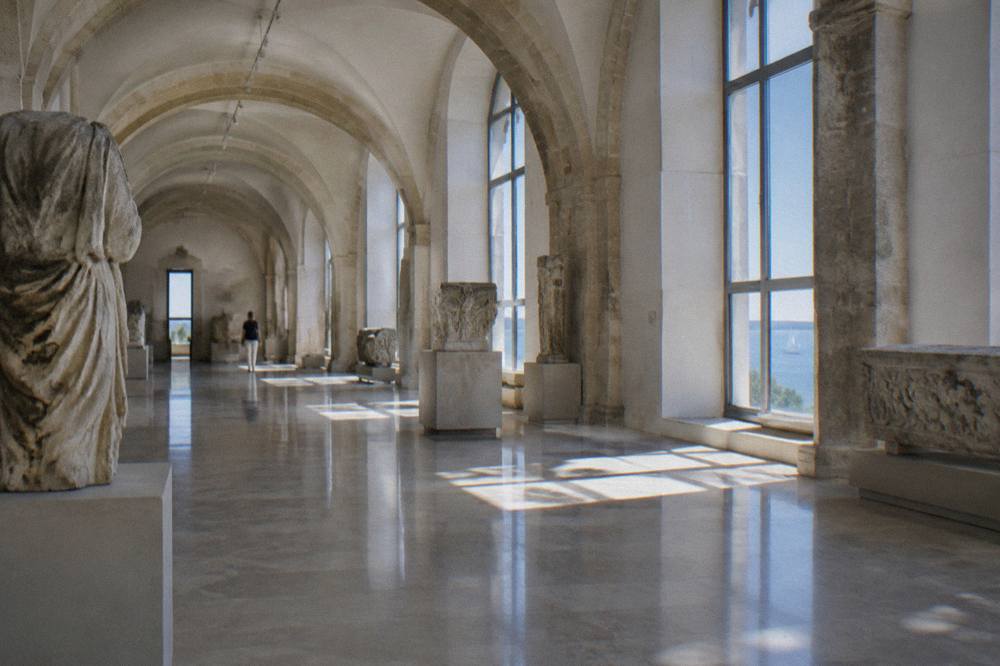
The Archaeological Museum presents the material record of Zadar and its region, from prehistoric finds through the Roman era to the medieval period, in galleries arranged around the building that faces the Roman Forum. Because the editorial desk reports only what sources confirm, the collection highlights below are described at the level the official material supports, and visitors should expect the usual mix of stone inscriptions, ceramics, coins and metalwork that a regional archaeological collection of this standing holds.
Zadar's setting explains the collection. The city sits on a peninsula that has carried a settlement continuously into the present, with the Roman Forum outside the museum's front door, the Liburnian and Roman past under the peninsula's paving, and medieval layers above them. A regional museum in this position assembles finds from the city and its hinterland: the Nin area to the north, the islands of Ugljan and Dugi Otok offshore, and the inland river valleys.
What can be said is how the visit feels in structural terms. The museum is compact, the galleries sit close to the Forum they interpret, and the whole circuit fits comfortably inside a morning or an afternoon with time left over for the surrounding sights. Families should note the free entry for children up to 10, which makes the museum a low-cost stop on a family day, and the tariff's reduced row, which applies to categories the museum's own page defines.
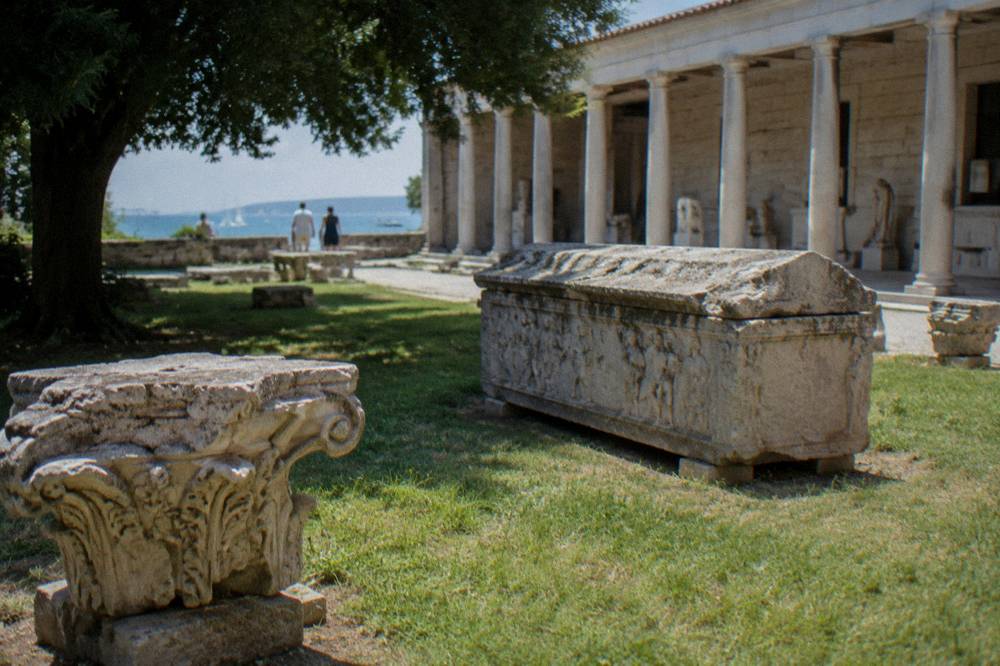
The surrounding block rewards the walk. The Church of St Donatus is the peninsula's most recognisable building, the Cathedral of St Anastasia stands behind it, and the People's Square and Five Wells Square lie a few minutes to the south. None of these requires more than a short stroll, and all of them are free to walk past even where interiors charge or close.
How Long Should You Spend At The Archaeological Museum In Zadar?
A visit to the Archaeological Museum itself fits inside one to two hours at a comfortable pace, but the sensible unit of planning is the half-day: the museum, the Roman Forum, St Donatus and the Cathedral block together fill a morning, and the Sea Organ and Greeting to the Sun at the peninsula's tip complete the loop at sunset. Anything less than an hour rushes the galleries; anything more than two hours is better spent outside among the stones the collection came from.
The reason is geography. The museum is not a destination in isolation; it is the interpretive centre of an open-air site that surrounds it. The Forum is free and open at all hours. St Donatus shares the museum's tariff. The cathedral stands a minute away. A visitor who treats the museum as a ticket and nothing else misses the point of its position, and a visitor who treats the whole peninsula as the exhibit gets the better day.
For a fuller structure, the site's itinerary pages do the sequencing work: One Day In Zadar fits the museum into a single-day sweep of the peninsula, and Two Days In Zadar adds the beaches or an island crossing. The Old Town area guide covers where to stay so the museum is a walk rather than a drive.
| Time Budget | What It Covers | Notes |
|---|---|---|
| Under 1 hour | Museum galleries only | Rushed; possible if hours are short on the day |
| 1 to 2 hours | Museum at a comfortable pace | The realistic core visit |
| Half day | Museum, Roman Forum, St Donatus, Cathedral block | The natural unit; add Kalelarga and People's Square |
| Full day | Everything above plus Sea Organ, Greeting to the Sun, Riva and the sunset | The peninsula's full circuit |
When Is The Best Time To Visit The Archaeological Museum In Zadar?
The best time to visit the Archaeological Museum in Zadar is in the shoulder months, from April to May and from late September to October, when the Zadar station's 1961-2024 means run from about 13 to 18 C, the summer crowds on the peninsula thin, and the outdoor stones of the Roman Forum are comfortable to linger over; in July and August, at 24.5 and 24.1 C means, an early-morning museum visit beats the midday heat, and in winter the museum makes a natural stop on a rainy day.
The climate record for the city, labelled Zadar station, 1961-2024 (DHMZ), gives the planning frame. July is the warmest month at a 24.5 C mean and the driest at 35.4 mm of rain; November is the wettest at 123 mm; January is the coldest at 7.3 C. Sunshine totals about 2,600 hours a year. None of this is extreme, but it shapes the day: summer visitors want shade by early afternoon, and the museum is the peninsula's most obvious shaded stop.
| Month | Mean Temperature (C) | Rainfall (mm) | Planning Note |
|---|---|---|---|
| January | 7.3 | 76.4 | Cool and quiet; museum as an indoor anchor |
| April | 13.4 | 61.4 | Shoulder season; comfortable Forum wandering |
| May | 17.9 | 64.4 | Warm, pre-peak; good balance of hours and crowds |
| July | 24.5 | 35.4 | Warmest and driest; visit the museum early |
| August | 24.1 | 52.8 | Peak season; indoor stops at midday |
| September | 20.2 | 110.9 | Warm sea, thinning crowds; rain returns |
| October | 16.3 | 106.8 | Mild shoulder; some rain |
| November | 12.1 | 123.0 | Wettest month; a museum city |
Zadar station, 1961-2024 (DHMZ), is the label for every figure in that table. The winter months are not a write-off: the museum, the Museum of Ancient Glass and the peninsula's churches make Zadar a workable short-break city in the rain, and the site's rainy-day itinerary exists for exactly this case. Advent in Zadar runs from 24 November 2026 to 2 January 2027, with a new ice rink planned on the Forum itself, which puts a seasonal event directly outside the museum's door.
What Else Should You Know Before Visiting The Archaeological Museum In Zadar?
Before visiting the Archaeological Museum in Zadar, know four things: the ticket runs around 7 euro at full price on the shared tariff page; the hours are not published consistently, so confirm them that week; the Church of St Donatus beside it faces roof restoration works planned from autumn 2026 for about six months, which may limit access; and Zadar charges a tourist tax collected by your accommodation, with the amount confirmed at booking rather than printed here.
The dress-code point matters on the peninsula in summer. Informative signs posted at key access points to the historic core in 2026 require appropriate clothing, with no swimwear or nudity, based on the city's existing communal order decision; reports describe a verbal warning followed by fines of up to 130 euro. The museum is a museum and normal city clothing is fine, but anyone walking over from Kolovare Beach should change first.
Beyond the peninsula, the museum visit is a natural anchor for a day-trip plan. The regional archaeology extends to Nin to the north, whose salt pans and historic churches sit about 28 minutes' drive from the Old Town, and the park day trips, Krka, Plitvice and Paklenica, all start from Zadar. The park fees are seasonal and per person: Krka charges 7 euro in the winter months, 20 euro in April, May and October, and 40 euro from June to September; Plitvice charges 10, 23 and 40 euro on the same seasonal pattern; Paklenica charges 5, 8 and 10 euro. Kornati, by contrast, charges per vessel by length and season, and the entry is bought outside the park.
| Day Trip From Zadar | Adult Entry (EUR) | Season Pattern | Source |
|---|---|---|---|
| Krka National Park | 7 / 20 / 40 | Jan-Mar and Nov-Dec / Apr, May, Oct / Jun-Sep | Park price list 2026 |
| Plitvice Lakes | 10 / 23 / 40 | Jan-Mar, Nov-Dec / Apr-May, Oct / Jun-Sep | Park price list |
| Paklenica National Park | 5 / 8 / 10 | Jan, Feb, Nov, Dec / Mar, Apr, Oct / May-Sep | Park price list 2026 |
| Telašćica Nature Park | 6 / 8 | Jan-May, Oct-Dec / Jun-Sep | Park price page |
| Vransko jezero | 6 adult, 3 child 7-18, 15 family | Flat | Park price list |
After a day of stones and galleries, the sea is the counterweight, and the Zadar: 4-Stop Island Speedboat Tour, Swim, Snokel & Wine is the site's featured pick for exactly that: island stops, swimming and snorkelling off the Ugljan-and-Dugi Otok coast, with wine poured on board. Check availability
Is The Archaeological Museum In Zadar Worth The Ticket?
The Archaeological Museum is worth its ticket for anyone whose interest in Zadar goes past the sunset, because it is the one indoor place on the peninsula that interprets the stones outside its door, it costs around 7 euro at full price on the official tariff, children up to 10 enter free, and it sits inside a five-minute walk of the Forum, St Donatus and the Cathedral, so the marginal effort of adding it to any Old Town day is close to zero.
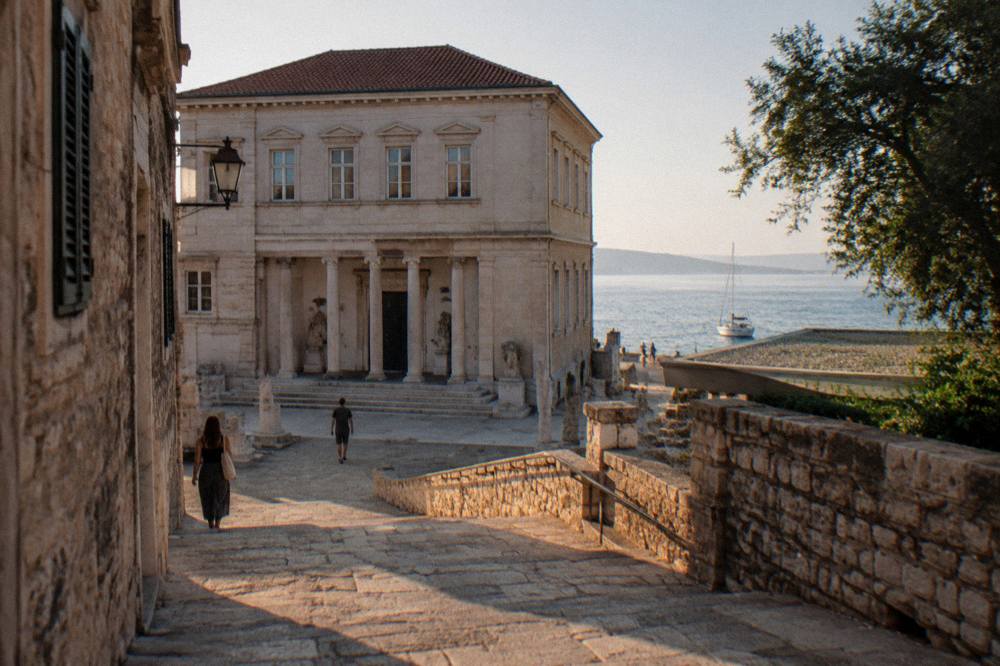
The honest comparison is with what surrounds it. The Forum, the Kalelarga, the Land Gate, the Sea Organ and the Greeting to the Sun are all free, and together they give away a great deal of the city's atmosphere. What they do not give away is context: why the Forum's columns stand where they stand, what the peninsula's layers hold, and how the region's islands and inland valleys connect to the city on the water. That is the museum's job, and at around 7 euro it is priced as an add-on rather than an event.
For a longer stay, the museum slots into a bigger sequence. Three Days In Zadar gives the peninsula a full day and frees the others for the islands or the parks, and the Kornati Islands trip is the natural maritime follow-up to a morning among Roman stones. The Zadar Croatia Travel Guide homepage collects the full set of guides, from Nin to Old Town and the beaches at Borik.
For travellers who want a guided layer over the self-guided one, the food-and-stories walk adds the local table to the city's history, and the highlights walk with tastings covers the Sea Organ and the Forum with a guide who can answer what a label cannot.
Common Questions About The Zadar Archaeological Museum
How much does the Archaeological Museum in Zadar cost?
The tariff page the museum shares with the Church of St Donatus shows rows of 7.00 and 5.00 euro, so expect around 7 euro at full price, with free entry for children up to 10 and for listed groups. The exact split between the rows should be confirmed on the museum's own page.
What are the Archaeological Museum's opening hours in Zadar?
Hours vary by season, so check the museum's own working-hours page or the tourist board before setting a fixed time.
Where is the Archaeological Museum in Zadar?
It stands at the western edge of the Roman Forum on the Old Town peninsula (Poluotok), a few steps from the Church of St Donatus and the Kalelarga, and about ten minutes on foot from the Sea Organ and the Greeting to the Sun.
Can you combine the Archaeological Museum with the Church of St Donatus?
Yes, the two share one official tariff page, and they stand beside each other on the Forum. Note that St Donatus faces roof restoration with works planned from autumn 2026 for about six months, and access during the works depends on the phase, so check before going.
Is the Archaeological Museum in Zadar good for children?
Children up to age 10 enter free on the published tariff, which makes it a low-cost family stop. The galleries are compact and sit next to the open Forum, so a short visit works well with young visitors.
How long does a visit to the Archaeological Museum in Zadar take?
One to two hours covers the galleries at a comfortable pace. The natural planning unit is a half-day that adds the Roman Forum, St Donatus and the Cathedral block, with the Sea Organ and the sunset to finish.
The Archaeological Museum in Zadar is a modest ticket beside a generous free city, and that ratio is the whole argument for going: around 7 euro at full price, a door that opens onto the Roman Forum, and a peninsula of stones that the collection exists to explain.
