Five Wells Square Zadar
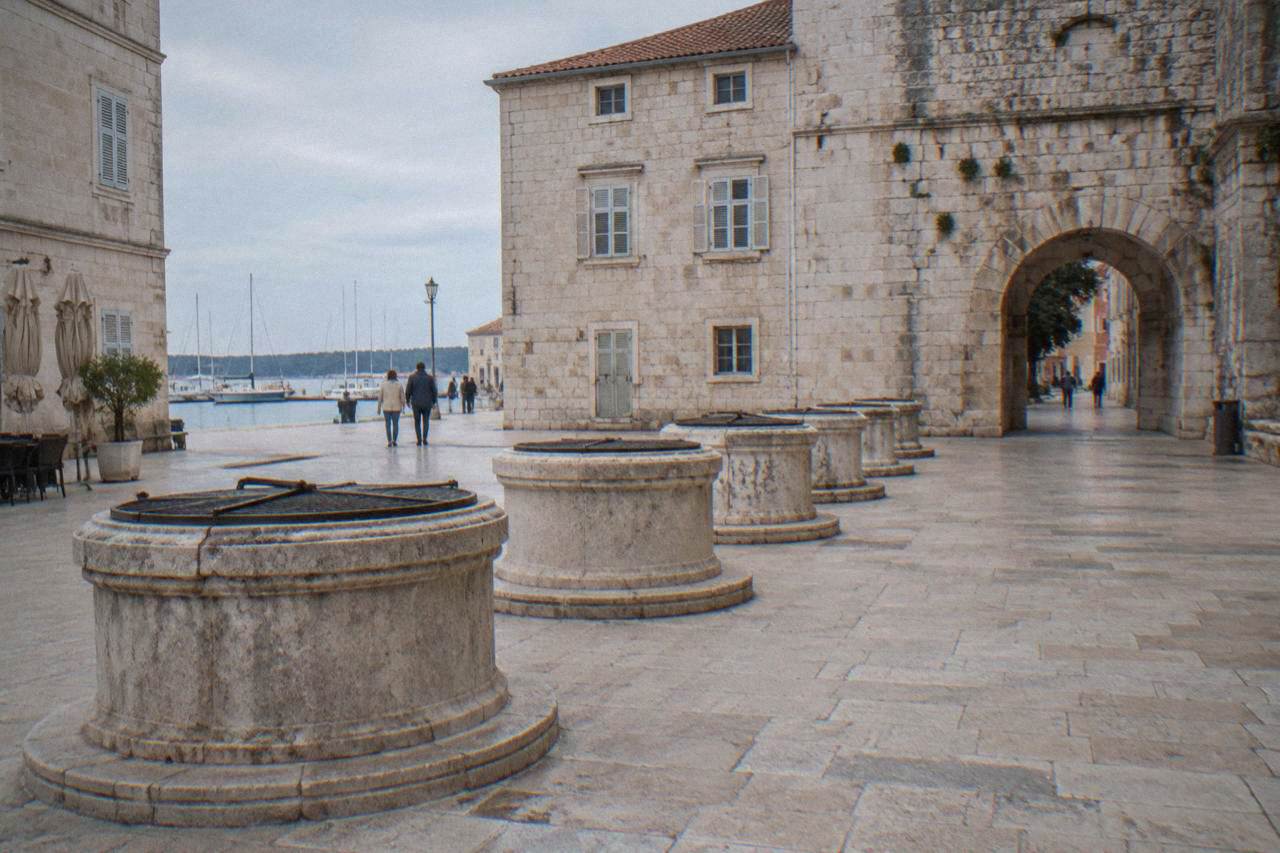
Five Wells Square sits at the western edge of Zadar's Old Town peninsula, a free public square built around a Renaissance cistern that once supplied the walled city with drinking water.
Short answer
Five Wells Square (Trg pet bunara) is a free public square in Zadar's Old Town, named for the five covered wells built over a large cistern during the Venetian fortification of the city. It lies between Kalelarga and the Queen Jelena Madijevka Park, a few minutes on foot from the Land Gate and the Riva.
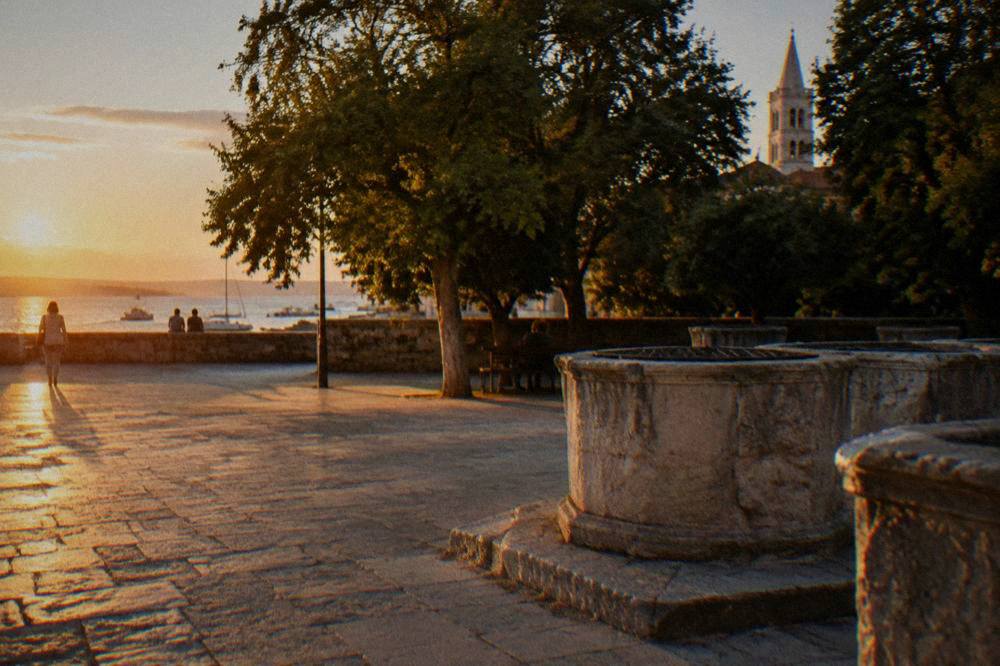
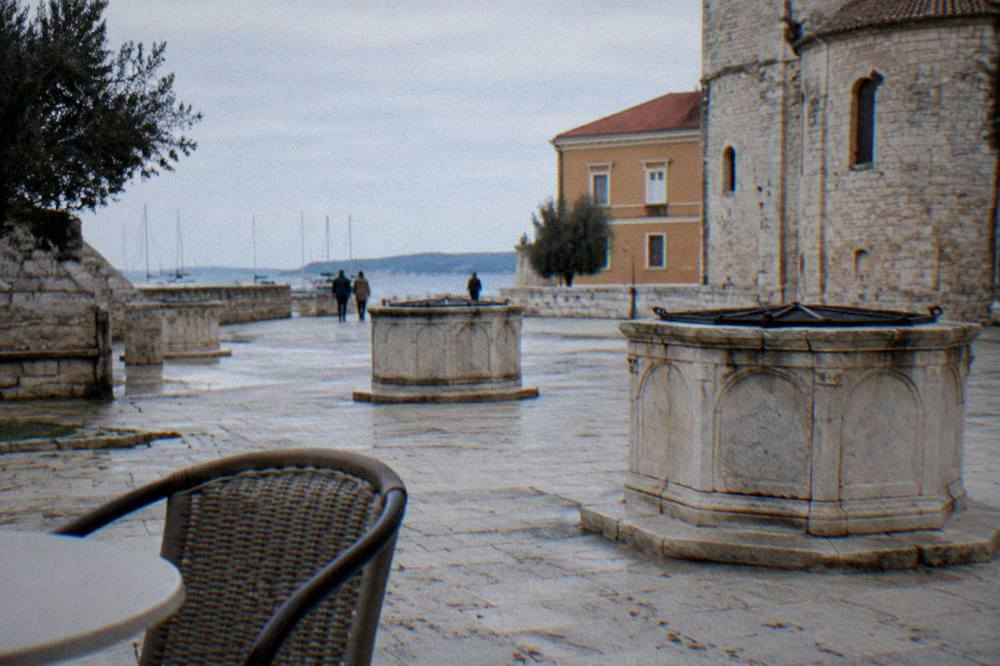
Five Wells Square, Trg pet bunara, is a free public square at the western side of Zadar's Old Town peninsula in Dalmatia, on the Adriatic coast of Croatia. The square takes its name from the five stone wellheads set in a row, built over a large cistern. Today it is one of the calmest corners of the Old Town, shaded by plane trees and framed by café terraces, and it sits on the natural walking line between Kalelarga, the main street, and the green park that now occupies the old city ramparts.
What Is Five Wells Square In Zadar?
Five Wells Square is a small free public square in Zadar's Old Town, named for the five stone wellheads that still stand in a line across it. The wells were built over a single broad cistern, and the site belongs to the layer of the city shaped by Venetian rule. Nothing here is ticketed: the square is open at all hours, sits between Kalelarga and the Queen Jelena Madijevka Park on the western edge of the peninsula, and works as a pause point on any walk through the Poluotok.
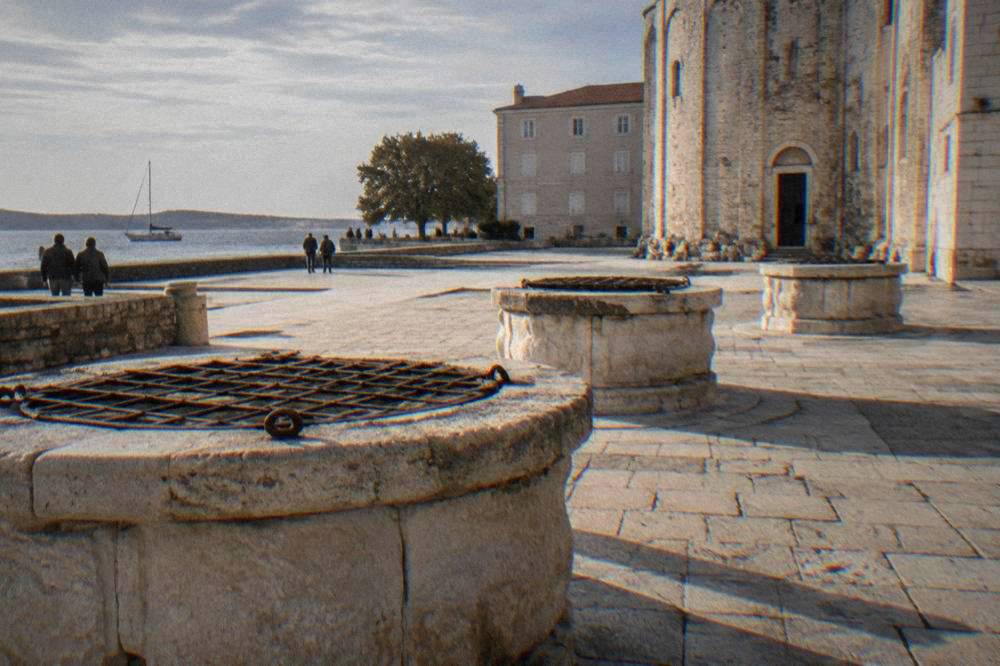
The wellheads are the whole reason the square exists. Each one is a covered stone rim, and the row of five sits above a cistern chamber that collected and stored rainwater for a city whose medieval water supply depended on what could be kept behind the walls. The form is utilitarian, but the execution is Renaissance stonework, and the canopy of plane trees above the square now makes it one of the shadiest public rooms in the Old Town. The square's Croatian name, Trg pet bunara, says exactly what it is: the square of five wells.
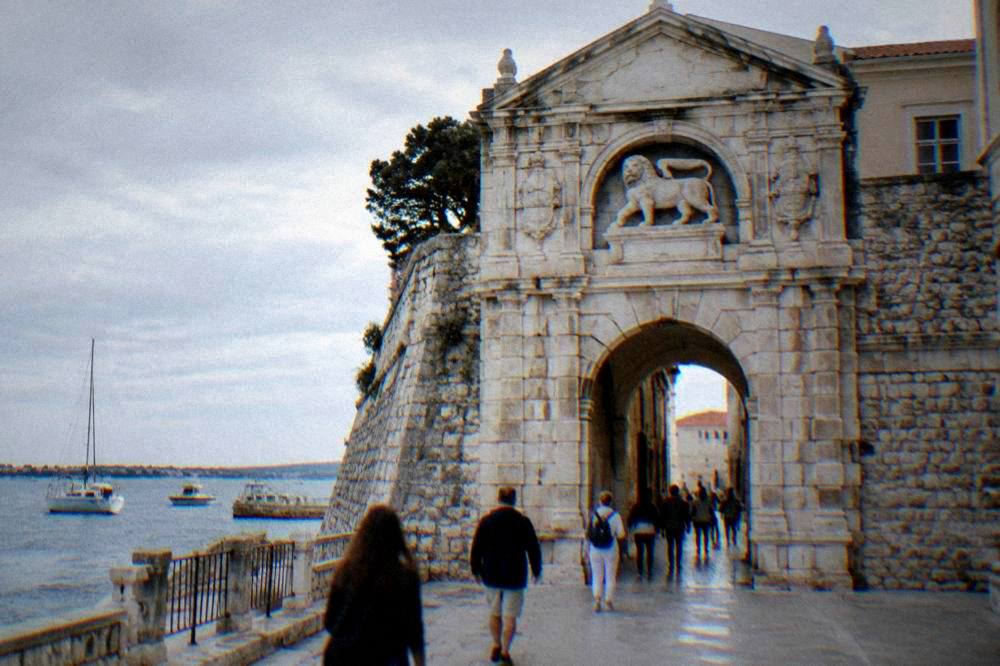
The space around the wells has changed function many times over the centuries, from a practical water point inside a fortified town to a residential and commercial block, and then to the café-lined square of the present day. Zadar's Old Town as a whole is not a World Heritage Site, a point the UNESCO listing itself makes clear: the city is one of six components of the transnational listing of Venetian defence works, inscribed in 2017, and the defensive system is what that inscription covers, not the whole peninsula. Five Wells Square belongs to the same Venetian era as those works, and the Land Gate of 1543, attributed to Michele Sanmicheli, stands a short walk away as the most visible monument of that programme.
Why Was Five Wells Square In Zadar Built?
The square was built as the visible top of a water system: a large cistern, dug and vaulted during the Venetian period, with five wells set in a row so that several people could draw water at once. Venice was refortifying Zadar in that era, the Land Gate dates to 1543, and a besieged garrison and population needed drinking water inside the walls rather than from outside them. The five wellheads are the surviving street furniture of that decision.
The logic of a cistern city is simple. A town enclosed by walls on a peninsula cannot rely on wells outside the line when a siege comes, and Zadar's position, flat, coastal and rocky, made rainwater collection the practical answer. A broad cistern under an open square, fed by rainfall from the surrounding surfaces, stored the supply, and the five mouths distributed it. The number of wells is not decorative: it is about throughput, letting a queue of buckets form along the row instead of a crush at a single opening.
What stands today is a square that has kept its name and its stones while losing its job. Running water ended the cistern's working life long ago, and the space became a place to sit rather than a place to queue. The plane trees that shade the wellheads now are part of that later life, as are the terraces along the edges. The essential diagram, however, is unchanged, and it is one of the clearer pieces of everyday Venetian-era engineering a visitor can read on the peninsula without entering a museum. For visitors who want the period put in context, the Zadar walking tour sponsored by Gligora Cheese and deli covers the Old Town's squares and history with a local guide, and its listing can be checked here: Check availability.
What Can You See Around Five Wells Square In Zadar?
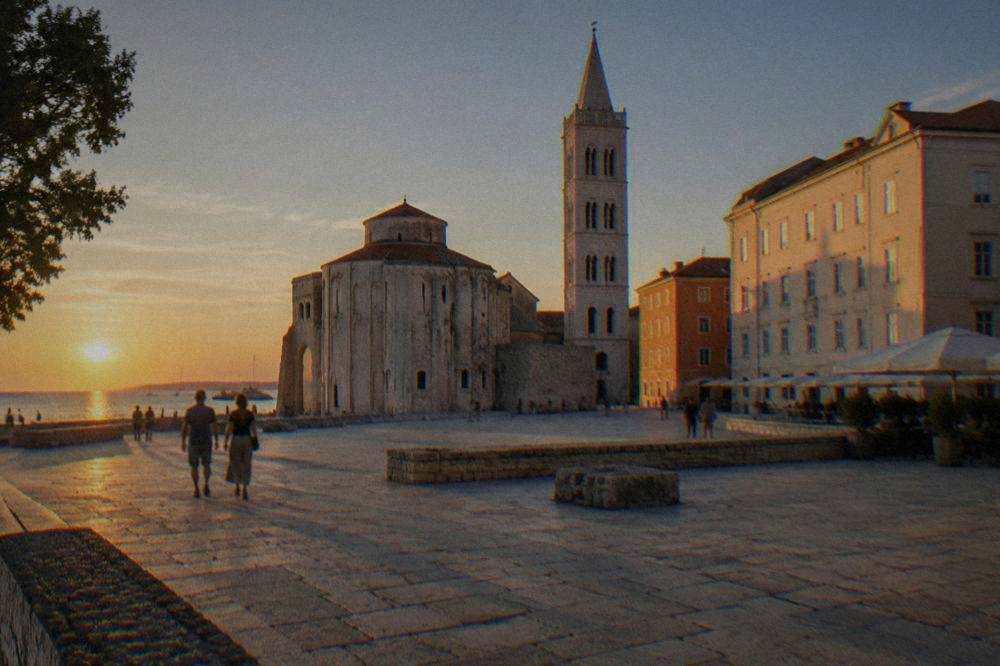
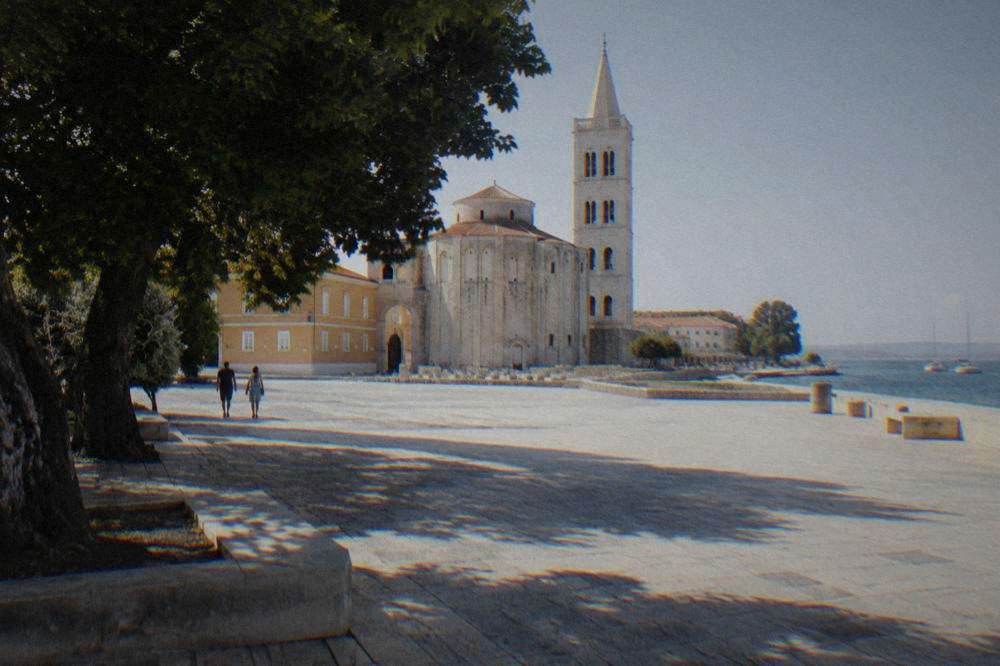
Within a few minutes on foot of the five wellheads you reach the Cathedral of St Anastasia, the Church of St Donatus, the Roman Forum, Kalelarga and the Riva seafront. The square sits at the western entrance to this cluster, so a single walk can take in the Venetian water system, the Roman remains and the two most recognisable churches of Zadar without backtracking. Every one of these spaces is free to enter or free to walk through, with the exception of museum interiors and church towers that charge.
The cluster is compact because the peninsula is compact. Heading east from the wells brings you onto Kalelarga, the main street, which runs toward the People's Square and the commercial heart of the Old Town. Heading north-east reaches the Roman Forum and the Church of St Donatus, standing next to the Cathedral of St Anastasia. Heading south from the square reaches the Riva, the seafront promenade where the Sea Organ and the Greeting to the Sun, both by Nikola Bašić and both free and open at all hours, face the sunset over Ugljan.
The table below shows what sits closest to the square and what, if anything, each site charges. Where no verified price exists, the entry says so plainly rather than guessing.
| Site near Five Wells Square | Direction from the square | Entry |
|---|---|---|
| Kalelarga (main street) | East | Free public street |
| Roman Forum | North-east | Free public space |
| Church of St Donatus | North-east | Around 7 EUR at full price, on the AMZD tariff |
| Cathedral of St Anastasia | North-east | Church free to enter; tower price not published on an official page, confirm locally |
| Museum of Ancient Glass | North-east, a short walk | 7.00 EUR adult on the museum's price list |
| Sea Organ and Greeting to the Sun | South, on the Riva | Free, open at all hours |
| Queen Jelena Madijevka Park | West, immediately beside | Free public park on the old ramparts |
One planning note belongs here. The Church of St Donatus faces a roof restoration: the tender for replacing the deteriorated wooden roof structure was launched at the end of August 2026, with works planned from autumn 2026 for about six months as the first phase of a wider, roughly two-year restoration, and group visits are suspended during the works while individual access depends on the phase. Anyone hoping to go inside should check access before setting out. The square's own five wells, by contrast, have no such complication: they are outdoor public stone, visible at any hour.
When Is The Best Time To Visit Five Wells Square In Zadar?
The square is open at all hours and free, so the question is comfort rather than tickets. The Zadar station record, 1961-2024 (DHMZ), shows July as the warmest month at a 24.5 C mean and January the coldest at 7.3 C, with November the wettest month at 123 mm and July the driest at 35.4 mm. Morning and early evening light suit the square best for photographs, and midday in July and August is when the stone is most exposed.
The climate table below is the official station record, and it rewards a close read. September stays warm at a 20.2 C mean but carries 110.9 mm of rain, more than three times July's total, while June combines a 21.9 C mean with only 48.5 mm. October, at 16.3 C and 106.8 mm, is mild but showery. Winter is real but gentle by continental standards, and the square's bare plane trees and empty terraces give it a quieter character between November and March.
| Month | Mean C (Zadar station, 1961-2024) | Precipitation mm | Rain days |
|---|---|---|---|
| Jan | 7.3 | 76.4 | 10 |
| Feb | 7.8 | 67.0 | 9 |
| Mar | 10.0 | 66.3 | 9 |
| Apr | 13.4 | 61.4 | 10 |
| May | 17.9 | 64.4 | 10 |
| Jun | 21.9 | 48.5 | 8 |
| Jul | 24.5 | 35.4 | 5 |
| Aug | 24.1 | 52.8 | 6 |
| Sep | 20.2 | 110.9 | 9 |
| Oct | 16.3 | 106.8 | 9 |
| Nov | 12.1 | 123.0 | 12 |
| Dec | 8.6 | 99.6 | 12 |
Sunshine is generous: the same station record sums to about 2,600 hours a year, with July the standout at 358.6 hours. Summer evenings are when the square and the streets around it are busiest, and winter has its own draw in the shape of Zadar Advent, which runs from 24 November 2026 to 2 January 2027 across three locations, with a new ice rink on the Forum and a concert programme on the peninsula, and the Zadar Christmas Run on 27 December 2026. The square, a few minutes from the Forum, sits inside that Advent footprint.
Which Zadar Tours Pass Five Wells Square?
Walking tours of the Old Town are the product category that covers this square, and the roster of verified Zadar tours includes several walks whose routes take in the peninsula's main squares, the Sea Organ and the Riva, all within a few minutes of the wellheads. Beyond walks, the square's position at the edge of the Old Town makes it a sensible meeting and finishing point for travellers who pair a city walk with a boat trip or a park day trip departing from the nearby waterfront.
The Gligora-sponsored walk already mentioned is the natural fit, since it treats the Old Town as a single story of squares, stones and local produce, and its live listing holds the current price, rating and departure details: Check availability. Tip-based walks also run locally; anyone considering one should confirm the arrangement directly with the guide, since this site does not verify those departures. For travellers allocating more than a day to the region, the boat and park day trips below are the strongest complements to a morning in the Old Town.
The logic of pairing is straightforward. A walk covers the peninsula in a couple of hours, and the rest of the region's weight, the Kornati archipelago, the Krka waterfalls, the Plitvice lakes, sits outside the city, reached by boat or bus. The two trips below are the classic pairings from Zadar, and both are verified products on this site's roster with their own pages.
How Does Five Wells Square Fit Into A Zadar Itinerary?
On a one-day visit, the square slots naturally into the middle of the day: Roman Forum and St Donatus in the morning, the walk down Kalelarga to the wells, then the Riva and the Sea Organ for the late afternoon and sunset. On a two- or three-day stay, the square works as the pivot between a full Old Town day and the island or park days that follow, since the ferry port at Gaženica and the day-trip departures all begin a short ride from the peninsula.
The site's itinerary pages set out the sequencing in detail: one day in Zadar, two days in Zadar and three days in Zadar. The square earns its place on every version of that route for two reasons. First, it is on the way, sitting between the two halves of the Old Town walk rather than off it. Second, it is free, instant and shaded, which matters in a July whose station record shows ten days at or above 30 C in that month alone.
For visitors building the park days, the fee table below gathers the verified adult entry prices for each park, seasonal and per person except where noted. Kornati is the exception in kind: it charges per vessel by length and season, and the ticket is bought outside the park, which is one reason a boat tour with fees handled by the operator is a common choice there.
| Park (day trip from Zadar) | Adult entry, EUR | Season detail |
|---|---|---|
| Krka NP, all accessible land sites | 7 / 20 / 40 | Jan-Mar and Nov-Dec / Apr, May, Oct / Jun-Sep |
| Plitvice Lakes NP, 1-day | 10 / 23 / 40 | Jan-Mar and Nov-Dec / Apr, May, Oct / Jun-Sep before about 16:00 |
| Paklenica NP, 1-day | 5 / 8 / 10 | Jan, Feb, Nov, Dec / Mar, Apr, Oct / May-Sep |
| Telašćica Nature Park, Dolac land entrance | 6 / 8 | Jan-May, Oct-Dec / Jun-Sep |
| Kornati NP | Per vessel, by length | Up to 6.99 m: 25 EUR off-season, 45 EUR Jun-Sep for 1 day |
Swimming at Krka's Skradinski Buk has been banned since 2021 to protect the travertine, and swimming in the park is allowed only at the designated spots, Roški slap, Stinice and Pisak, from 1 June to 30 September, weather and water conditions permitting. Anyone choosing a Krka day trip in the shoulder season should plan around that rule rather than around a swim under the main falls.
What Else Should You Know Before Visiting Five Wells Square In Zadar?
Three local rules shape any Old Town visit: dress-code signs at peninsula access points ask visitors not to walk the historic core in swimwear, with reported fines of up to 130 EUR after a warning; a night-time restriction on retail alcohol sales in the Old Town has been discussed and reported for the 2026 season, though bars and restaurants are not covered; and Croatia uses the euro, joined the Schengen area in 2023, and uses 112 as the emergency number.
The dress-code signs went up in summer 2026, based on the city's existing communal order decision, and they matter most for travellers coming straight from Kolovare beach or the other swimming spots and cutting through the peninsula in a towel. The tourist tax exists and is collected through your accommodation, and its amount is confirmed at booking rather than published on this site. Beaches in Zadar County operate under new concession rules for the 2026 season: no fencing and no entry fees on concession beaches, with commercial activity such as sunbeds limited to a share of each beach's area, so access to the sea itself stays free.
Practicalities around the square are simple. The Old Town is pedestrian in character and compact, the airport is about 8 km from the city by its own how-to-get-here page, and the airport shuttle runs to the bus station with a ticket also valid on city buses for 90 minutes. For a fuller rundown of what the city offers beyond this square, the root guide at things to do in Zadar is the site's own overview.
Common Questions About Five Wells Square In Zadar
Is Five Wells Square Free To Visit?
Yes. It is a free public square, open at all hours, like the Roman Forum, Kalelarga and the Land Gate around it. Nothing on the square itself is ticketed, and the wells are outdoor public stonework visible at any time of day.
How Far Is Five Wells Square From The Sea Organ?
Both sit on the same peninsula, with the square at its western side and the Sea Organ on the Riva to the south. The walk between them crosses only Old Town streets, and the whole route sits within the pedestrian core of the Poluotok.
Can You Drink From The Wells At Five Wells Square?
No. The wells are historic structures over a Renaissance cistern, not a working water point, and running water long ago replaced the cistern's function. Treat them as protected heritage stonework.
What Do The Five Wells Represent?
They are the draw points of a single broad cistern built to store rainwater inside the Venetian walls, so that the city had a supply it controlled during a siege. Five mouths let several people draw water at once, which is the practical reason for the row.
Is Five Wells Square Included On Zadar Walking Tours?
Walking tours of the Old Town cover the peninsula's main squares, and the square sits on the standard route between Kalelarga and the park on the old ramparts. The Gligora-sponsored walk is this site's featured option, and its listing carries the current details: Check availability.
Is Five Wells Square Open In Winter?
Yes, at all hours, and winter has its own appeal: Zadar Advent runs from 24 November 2026 to 2 January 2027 with a new ice rink on the Forum and concerts across three peninsula locations, so the square sits inside a busy seasonal programme.
Five Wells Square rewards exactly the kind of visit it was built against: unhurried, unticketed and in no queue at all. Walk it between Kalelarga and the Riva, read the five mouths as the engineering they are, and let the Zadar Croatia Travel Guide pages on the surrounding squares and day trips carry the rest of the plan.
