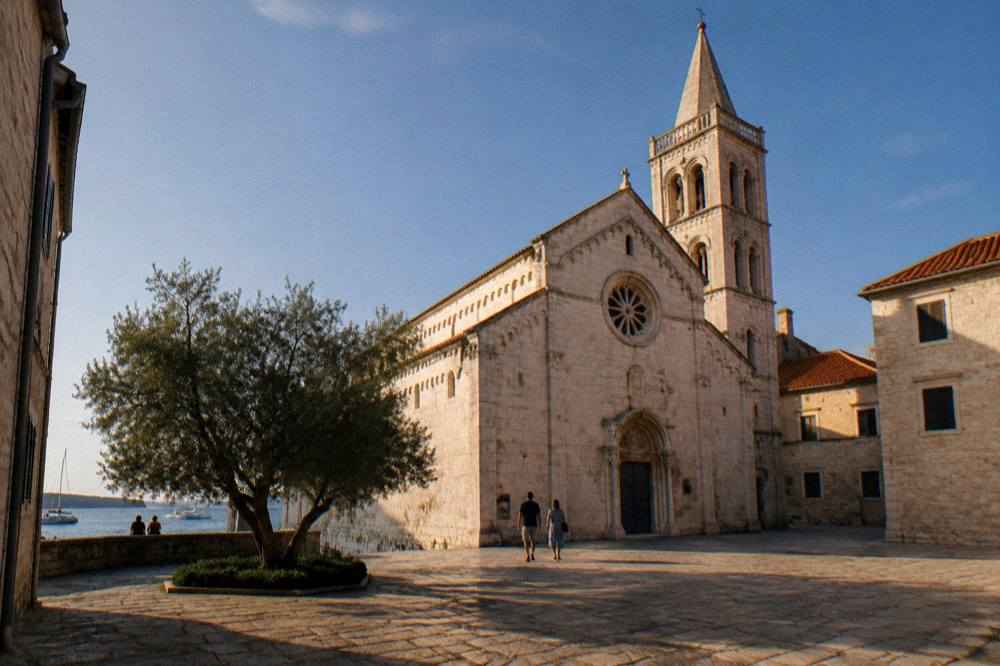
Cathedral Of St Anastasia Zadar
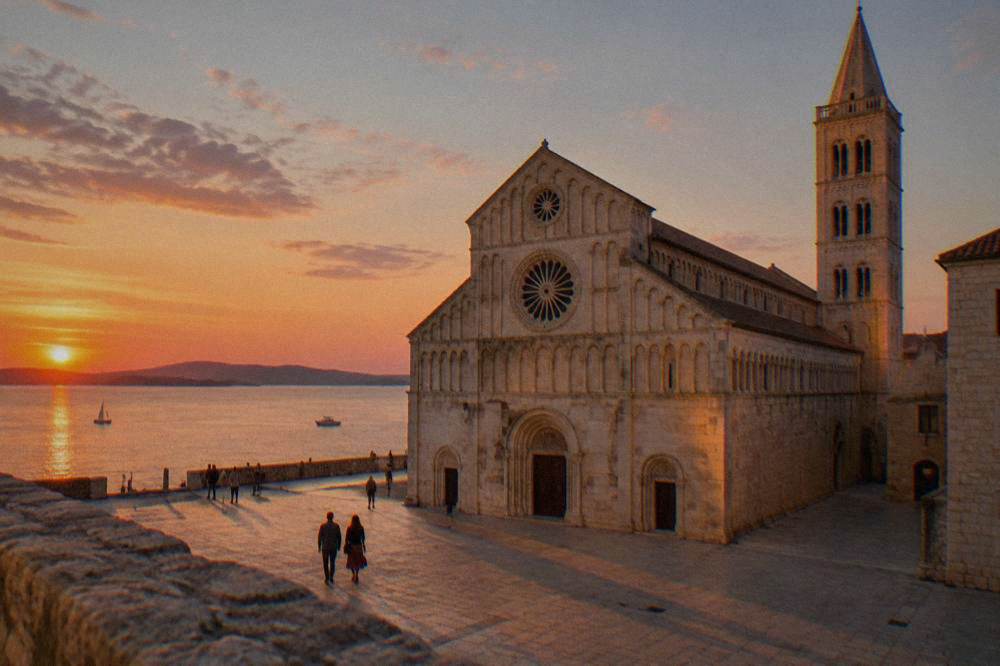
The Cathedral of St Anastasia is the landmark church of Zadar, a coastal city in Dalmatia, Croatia, and its bell tower is the single tallest structure on the Old Town peninsula. This page reports what the official and primary sources say about visiting it, what stands around it, and how to plan a visit.
Short answer
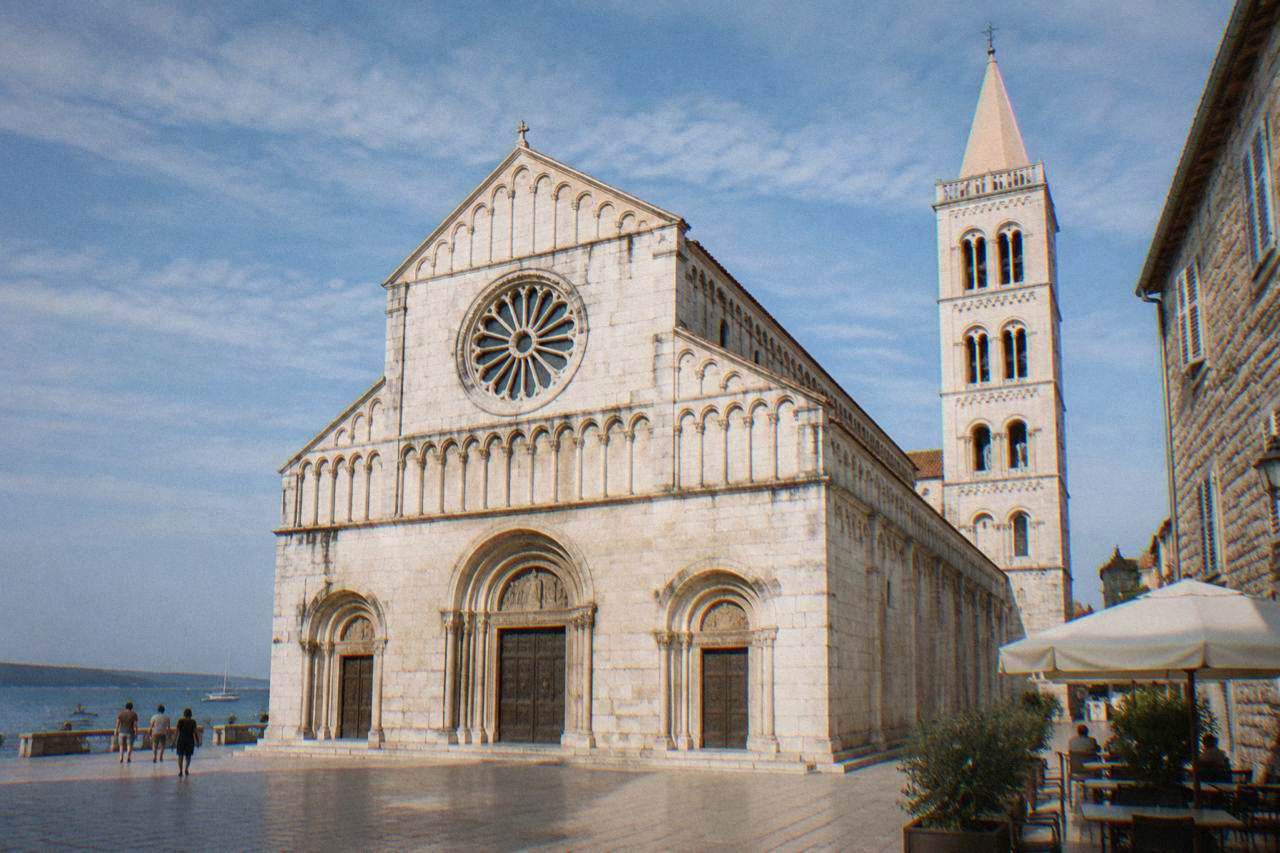
The Cathedral of St Anastasia stands on the Old Town peninsula of Zadar, beside the Roman Forum. The church is dedicated to the city's patron saint. No official page publishes a price or opening hours for the bell-tower climb, so confirm both on site. Entry to the surrounding Old Town sights is free or around 7 euro at full price.
The Cathedral of St Anastasia is the landmark church of Zadar, a coastal city on the Adriatic in Dalmatia, Croatia, and its bell tower is the tallest structure on the city's Old Town peninsula, the Poluotok. The church is dedicated to St Anastasia, the city's patron saint, and it stands only steps from the Roman Forum and the circular Church of St Donatus, in the oldest part of a peninsula that is walkable end to end. This guide covers the cathedral and its bell tower, what stands around it, how to reach it, and how to fit it into a wider Zadar plan.
What Is The Cathedral Of St Anastasia In Zadar?
The Cathedral of St Anastasia is the cathedral church of Zadar, dedicated to the city's patron saint, and it stands on the Old Town peninsula beside the Roman Forum, a few minutes' walk from the Sea Organ and the Riva waterfront. Its bell tower is the dominant landmark on the peninsula's skyline. Zadar is one of six components of a UNESCO serial property of Venetian defensive works, inscribed in 2017.
The Old Town of Zadar occupies a narrow peninsula, and the cathedral stands in its oldest quarter. The UNESCO listing matters for how you read the city: the inscribed property is the "Venetian Works of Defence between the 16th and 17th Centuries: Stato da Terra, western Stato da Mar", a serial nomination across Croatia, Italy and Montenegro, and Zadar's component is its defensive system. The Old Town as a whole is not a World Heritage Site, a distinction some second-hand guides blur. The Land Gate, built in 1543 and attributed to Michele Sanmicheli, is part of that defensive story and remains one of the principal ways walkers enter the peninsula.
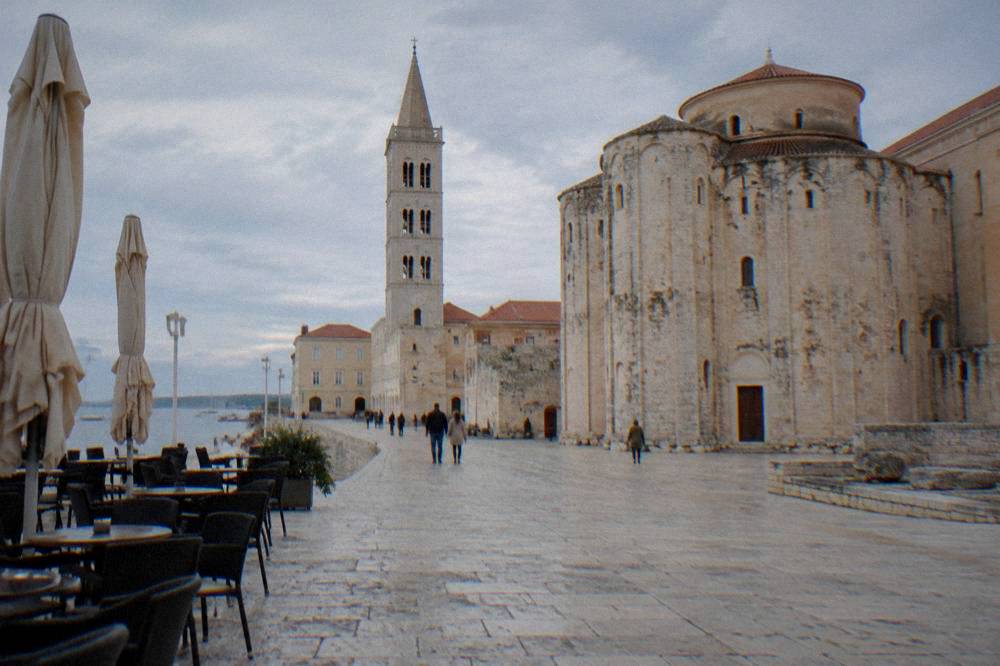
Around the cathedral the density of sights is unusually high. The Roman Forum lies immediately beside it, the Church of St Donatus stands a short walk away, and the main street, the Kalelarga, runs from there toward the People's Square. The Church of St Donatus deserves a separate visit, and the Roman Forum is free public ground you will cross anyway.
| Sight near the cathedral | Verified access status | Figure the sources support |
|---|---|---|
| Roman Forum | Free public access | No ticket, open ground |
| Church of St Donatus | Ticketed, around 7 euro at full price | Tariff page shows 7.00 and 5.00 euro rows |
| Archaeological Museum Zadar | Ticketed, around 7 euro at full price | Same tariff page, 7.00 and 5.00 euro rows |
| Museum of Ancient Glass | Ticketed | 7.00 euro adult, 5.00 euro groups of five or more |
| Sea Organ (2005, Nikola Bašić) | Free, open at all hours | No ticket exists |
| Greeting to the Sun (2008, Nikola Bašić) | Free, open at all hours | No ticket exists |
| Land Gate (1543) | Free public access | No ticket, open passage |
The Church of St Donatus faces roof restoration: a public procurement tender for the full replacement of the deteriorated wooden roof structure was launched at the end of August 2026, with works planned from autumn 2026 for about six months as the first phase of a wider restoration, so access may be limited and should be checked before going. For the wider peninsula context, the Old Town area guide covers the streets, squares and gates in detail, and the site's own Zadar Croatia Travel Guide homepage lists everything by category.
Can You Climb The Bell Tower Of The Cathedral Of St Anastasia Zadar?
The bell tower of the Cathedral of St Anastasia can be climbed and rewards the effort with the widest view over Zadar's peninsula and the islands beyond. Check the current ticket price and the day's opening hours at the tower itself or through the local tourist information before you climb.
That is an honest answer rather than an evasive one. The same discipline applies to the Gold and Silver of Zadar collection in the Church of St Mary, whose ticket price appears only in secondary sources, and to the Barkajoli rowing boats across the harbour mouth, where no official price list exists. In each case the instruction is the same: confirm locally.
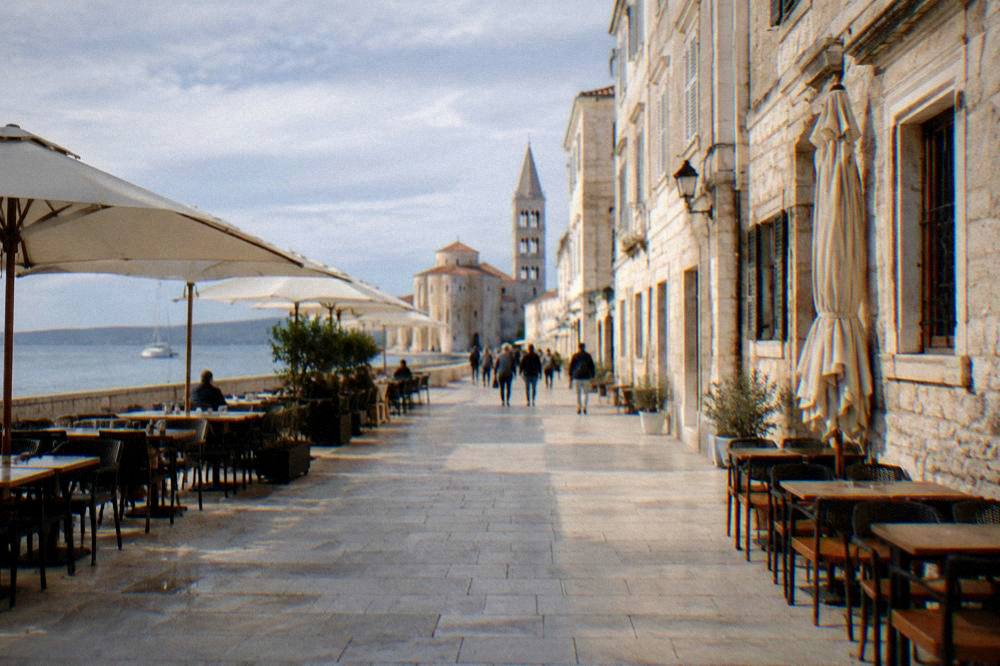
What the sources do support is the experience of the peninsula from above. The tower looks out over the rooftops of the Poluotok toward Ugljan and the Kvarner islands on one side and toward the Velebit mountain range inland on the other, and on clear evenings the viewing platform aligns with the Sea Organ and the Greeting to the Sun below, the two free installations by Nikola Bašić that made Zadar's western waterfront famous. The Sea Organ and the Greeting to the Sun are open at all hours and cost nothing, which makes them the natural bookends to a tower visit at sunset.
A climb also pairs naturally with a guided walk, because the peninsula's sights are close enough that a short tour covers the cathedral, the Forum, the Kalelarga and the Five Wells Square in one loop. The listing for the Zadar Walking Tour describes a classic Old Town circuit, and the Old Town walking guide explains the main street's role in the city's layout.
What Can You See Inside And Around The Cathedral Of St Anastasia Zadar?
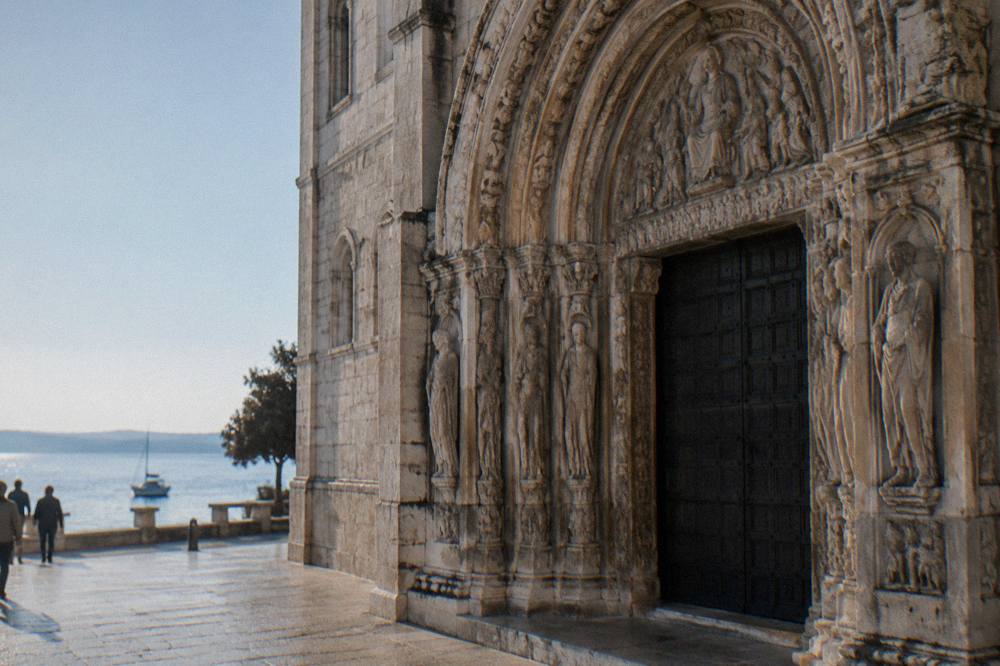
Inside and around the cathedral you can see the church interior dedicated to St Anastasia, the Roman Forum immediately beside it, the Church of St Donatus a short walk away, the Archaeological Museum Zadar at around 7 euro at full price, and the Museum of Ancient Glass at 7.00 euro for an adult ticket. The immediate quarter is the densest cluster of historic sights in Zadar, and every one of them lies within a few minutes' walk of the cathedral's west front.
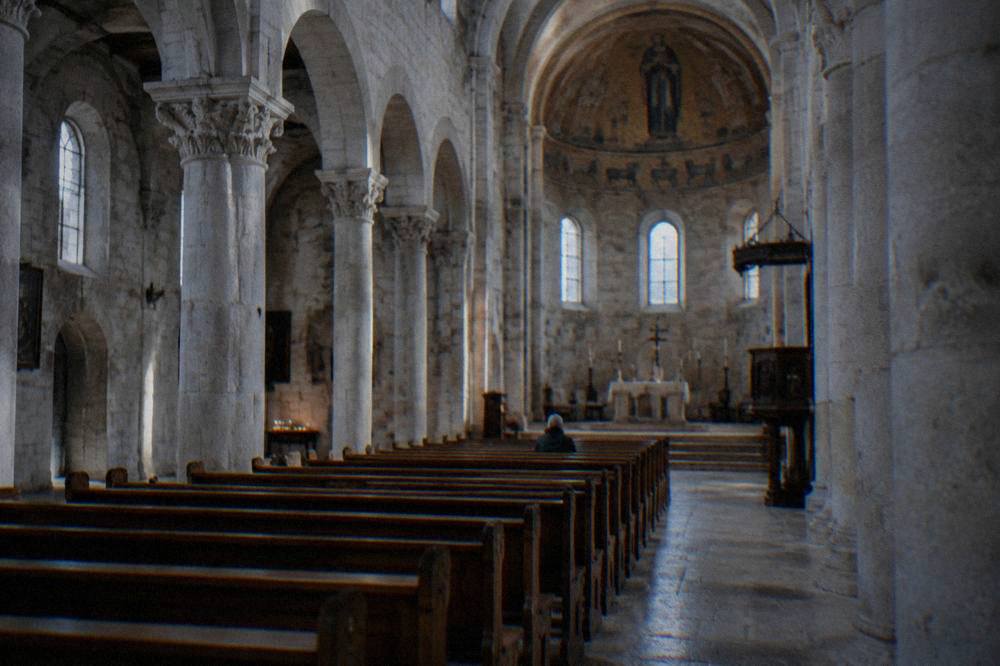
The cathedral's own interior is a working church space, and visiting it costs nothing in the way a museum does, though a tower ticket, when the climb is running, is a separate matter. The neighbouring Church of St Donatus is different: it runs on the Archaeological Museum's tariff, whose page shows 7.00 and 5.00 euro rows, so the honest phrasing is "around 7 euro at full price", never the "free or 3.50 euro" that circulates on second-hand pages. The Archaeological Museum Zadar itself sits on the Forum's edge and holds the Roman and medieval collections that give context to the stones you are standing among.
The Museum of Ancient Glass, a short walk into the peninsula, is the one Zadar museum with a fully verified price list: 7.00 euro for an adult, 5.00 euro for groups of five or more, 4.00 euro for schoolchildren, and guided tours at 20 euro in Croatian or 30 euro in other languages. Its opening hours conflict between sources, so check the museum's own hours page before planning a visit around it. The Museum of Ancient Glass guide and the Archaeological Museum guide both carry the detail.
| Ticketed sight in central Zadar | Adult price the sources support | What to confirm locally |
|---|---|---|
| Church of St Donatus | Around 7 euro at full price | Access during roof works from autumn 2026 |
| Archaeological Museum Zadar | Around 7 euro at full price | Seasonal hours |
| Museum of Ancient Glass | 7.00 euro adult | Opening hours, which conflict between sources |
| Cathedral bell-tower climb | Not published on an official page | Price and hours, at the tower |
| Gold and Silver of Zadar | Secondary sources only | Price at the door |
The free sights need no planning at all. The Roman Forum, the Five Wells Square, the People's Square and the Land Gate are open public ground, and the Sea Organ and the Greeting to the Sun run on the sea's own schedule, day and night. The Five Wells Square guide and the People's Square guide cover those spaces, and the Riva waterfront guide covers the promenade that connects the peninsula's western edge to the ferry port side.
If the tower climb is closed or the queue is long, the peninsula still gives you height and horizon for free: the western waterfront at sunset, with the Sea Organ sounding underfoot, is the view Zadar is now known for, and it costs nothing. For a half-day structure around all of this, the one day in Zadar itinerary sequences the cathedral, the Forum and the waterfront in a workable order.
How Do You Get To The Cathedral Of St Anastasia Zadar?
You reach the Cathedral of St Anastasia by walking into Zadar's Old Town peninsula, which is closed to through traffic and compact enough that no transport is needed once you are on it. Zadar Airport is about 8 km from the city, and its shuttle bus runs to the Old Town for 5.00 euro one way including luggage, in about 20 minutes.
The airport shuttle is operated by Liburnija and runs from the airport via the Gaženica ferry port to the bus station and the Old Town; the ticket is valid for 90 minutes on city buses, which makes onward movement simple. The bus station sits at Ante Starčevića 1, about 2.6 km and six minutes' drive from the Old Town by the computed OSRM road distances. Drivers should note that the peninsula itself is a pedestrian zone, and this guide prints no parking tariffs because the figures available come from a newspaper report rather than an official source; the Zadar parking guide is the place to check current rules.
| Route to Zadar | Verified figure | Source basis |
|---|---|---|
| Airport to the city | About 8 km | Airport's how-to-get-here page |
| Airport shuttle, one way | 5.00 euro including luggage, about 20 minutes | Airport page, operator Liburnija |
| Driving from Zagreb | 297 km | Airport page |
| Driving from Split | 158 km | Airport page |
| Driving from Rijeka | 305 km | Airport page |
| Ferry Zadar (Gaženica) to Brbinj, Dugi Otok | 1 h 40 min, line 434 | Jadrolinija route page |
The ferry port at Gaženica lies about 5.2 km and ten minutes' drive from the Old Town, and Jadrolinija's route page shows the Dugi Otok crossing taking an hour and forty minutes. The fast catamaran to Ancona ran only from 26 June to 6 September 2026 after a demand-driven extension, and the 2027 season has not been announced, so anyone planning an Italy link for next year should wait for Jadrolinija's own timetable rather than assume a repeat. The Zadar ferry guide and the airport to city centre guide carry the full transport detail.
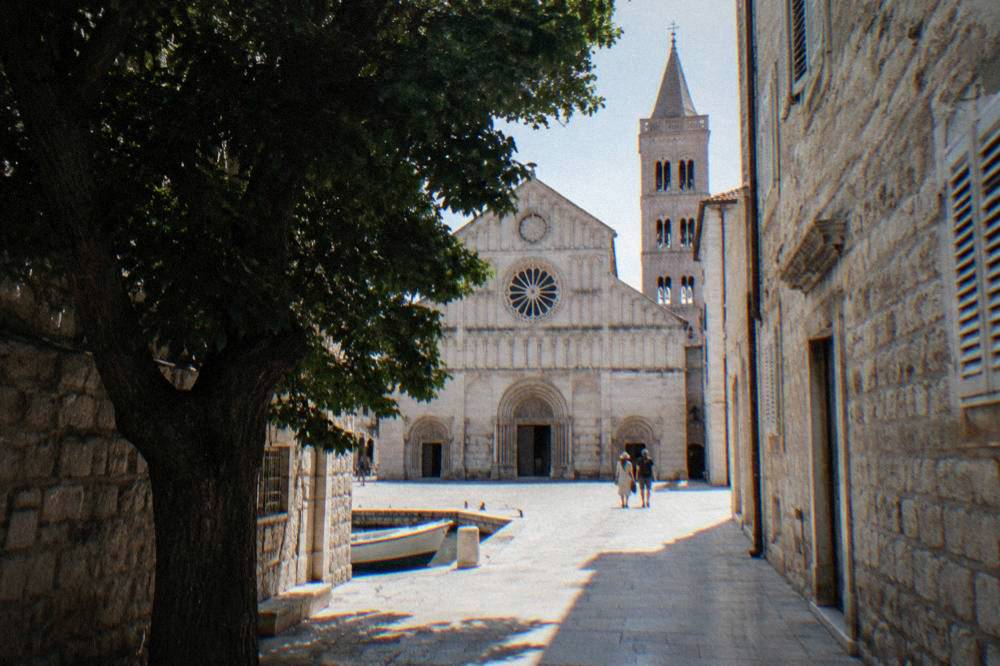
Once on the peninsula, everything is on foot. The cathedral sits a few minutes from the Land Gate, the 1543 entrance by Michele Sanmicheli, and the walk from there past the Five Wells Square and along the Kalelarga is the standard approach. The Land Gate guide describes that entrance, and the how to get to Zadar guide covers every arrival route in one place.
For travellers who prefer a guided introduction over self-navigation, a food and history walk through the peninsula pairs the cathedral quarter with local tasting stops; the listing for Discover the Old Town Through Food, Wine & History describes what the walk covers, and Check availability shows the current dates.
When Is The Best Time To Visit The Cathedral Of St Anastasia Zadar?
The best time to visit the Cathedral of St Anastasia in Zadar is late spring or early autumn, when the Zadar station's 1961-2024 means run 17.9 C in May and 20.2 C in September against July's 24.5 C peak. July is the warmest month at a 24.5 C mean and January the coldest at 7.3 C, so the choice is between heat and crowds in summer, or cool and quiet from November to March.
Those figures are the DHMZ station record for Zadar, the weather-station means for the period 1961-2024, and they describe a coastal Mediterranean climate moderated by the sea. Rainfall totals 912.5 mm across the year, with July the driest month at 35.4 mm and November the wettest at 123 mm, and rain days rising to twelve a month in November and December. Sunshine is generous, about 2,600 hours a year by the station's own monthly sums, a figure this guide states carefully because the "3,000 hours" claim that circulates about Zadar overstates the station record.
| Month | Mean temperature (C), Zadar station 1961-2024 | Precipitation (mm) |
|---|---|---|
| Jan | 7.3 | 76.4 |
| Feb | 7.8 | 67.0 |
| Mar | 10.0 | 66.3 |
| Apr | 13.4 | 61.4 |
| May | 17.9 | 64.4 |
| Jun | 21.9 | 48.5 |
| Jul | 24.5 | 35.4 |
| Aug | 24.1 | 52.8 |
| Sep | 20.2 | 110.9 |
| Oct | 16.3 | 106.8 |
| Nov | 12.1 | 123.0 |
| Dec | 8.6 | 99.6 |
Winter has its own draw. Zadar Advent runs from 24 November 2026 to 2 January 2027 and expands to three locations, including a new ice rink on the Forum, the square beside the cathedral, with concerts and daily programmes; the Zadar Christmas Run follows on 27 December 2026. A cathedral visit in late December therefore lands in the middle of the city's most animated fortnight, with the Forum transformed into the Advent's centrepiece. The best time to visit Zadar guide and the Zadar events guide carry the seasonal detail, and the Zadar weather guide explains the bora and jugo winds that shape winter days on the coast.
Which Day Trips From Zadar Pair Well With The Cathedral?
The day trips that pair best with a cathedral visit are the island and park routes that start from Zadar: Nin at 19.8 km and about 28 minutes by road, Paklenica National Park at 46.8 km and about 57 minutes, Krka's Skradinski Buk at 91 km and about 73 minutes, and Plitvice Lakes at 145 km and about 153 minutes, all by the computed OSRM road distances.
The islands of Ugljan and Dugi Otok sit offshore, with the ferry crossing to Brbinj on Dugi Otok taking an hour and forty minutes.
The pattern that works is a morning in the Old Town, the cathedral and the Forum included, then a boat or a drive. The boat option is the one this site features most heavily, because Zadar's offshore islands are its strongest day-out asset. The listing for Best of Dugi Otok: Shipwreck, Sandy Beach & Sea Cave describes a route taking in a shipwreck, a sandy beach and a sea cave, and Check availability shows the current dates and price. The Dugi Otok guide and the Kornati Islands guide cover the island geography.
| Day trip from Zadar | Road distance and time (computed, OSRM) | Entry fee basis, adult |
|---|---|---|
| Nin | 19.8 km, about 28 min | Town visit, no park fee |
| Biograd na moru | 29.5 km, about 39 min | Town visit, no park fee |
| Paklenica National Park | 46.8 km, about 57 min | 5 / 8 / 10 euro by season |
| Skradin | 76 km, about 62 min | Krka gateway town |
| Krka, Skradinski Buk | 91 km, about 73 min | 7 / 20 / 40 euro by season |
| Plitvice Lakes | 145 km, about 153 min | 10 / 23 / 40 euro by season |
The park fees in that table deserve their own note, because the seasonal bands are where second-hand guides go wrong. Krka charges 7 euro in January, February, March, November and December, 20 euro in April, May and October, and 40 euro from June to September for all accessible land sites. Plitvice charges 10 euro in the winter months, 23 euro in April, May and October, and 40 euro in summer before about 16:00, with a lower late-afternoon price. Paklenica charges 5, 8 or 10 euro by season. Kornati is different again: it is charged per vessel by length and season, from 25 euro for a boat up to 6.99 m in the off-season to 45 euro in summer for that size, and the ticket is bought outside the park. Swimming at Krka's Skradinski Buk has been banned since 2021 to protect the travertine, with swimming allowed only at the designated spots of Roški slap, Stinice and Pisak from 1 June to 30 September. The Krka guide, the Plitvice guide and the Nin guide carry all of this in full.
For active travellers, the Zrmanja River kayak routes sit inland of Zadar and are the region's other signature water day. The listing for Zrmanja River Kayaking with Optional Transfer from Zadar describes the river trip and the transfer option, and the Zrmanja guide covers the river itself. The Zadar day trips guide ranks every option, and the things to do in Zadar page lists the full set of tours and activities in one place.
How Much Should You Budget For A Zadar Visit Around The Cathedral?
Budget around 7 euro per ticketed museum in central Zadar, with the Museum of Ancient Glass at 7.00 euro for an adult and the Archaeological Museum and St Donatus around 7 euro at full price, free access to the Forum, the squares, the Land Gate, the Sea Organ and the Greeting to the Sun, and an airport shuttle at 5.00 euro one way. Croatia uses the euro since 1 January 2023, is a Schengen member, and charges a tourist tax collected by your accommodation.
The City of Zadar's tourist tax exists, is collected by the accommodation, and the amount is confirmed when you book. For the bell tower, check the current price for the climb and keep that line in your budget open until then. The paid sights add up quickly enough: a two-museum day with a St Donatus visit runs to roughly 21 euro per adult before food, and the free sights, from the Forum to the Sea Organ at sunset, cost nothing at all.
| Budget item | Verified figure | Note |
|---|---|---|
| Museum of Ancient Glass, adult | 7.00 euro | Groups of five or more 5.00 euro |
| Archaeological Museum / St Donatus | Around 7 euro full price | Tariff shows 7.00 and 5.00 euro rows |
| Guided tour, Museum of Ancient Glass | 20 euro Croatian, 30 euro other languages | Group basis, about 30 people |
| Airport shuttle | 5.00 euro one way | Includes luggage, valid 90 min on city buses |
| Sea Organ, Greeting to the Sun, Forum, Land Gate | Free | Open at all hours or public ground |
| Tourist tax | Confirmed at booking | Rate not published on an official page |
Food and drink budgets are harder to state with figures, because this site prints no invented ranges: a maraschino tasting walk, a food tour or a market lunch all price from their own listings, and the Zadar restaurants guide and the Zadar food guide describe what and where to eat without pretending to quote prices nobody verified. The Zadar cost guide is the dedicated page for budgeting the whole trip, and the is Zadar worth visiting guide answers the broader question honestly.
Common Questions About The Cathedral Of St Anastasia Zadar
Can you climb the bell tower of the Cathedral of St Anastasia Zadar?
The climb exists in principle, but no official page publishes a price or opening hours for it. Confirm both at the tower or through local tourist information before planning around the view.
How much does it cost to visit the Cathedral of St Anastasia Zadar?
The church interior is a working worship space, and the sights around it range from free public ground, such as the Roman Forum, to ticketed museums at around 7 euro at full price, with the Museum of Ancient Glass verified at 7.00 euro for an adult.
What is next to the Cathedral Of St Anastasia Zadar?
The Roman Forum stands immediately beside the cathedral, with the Church of St Donatus, the Archaeological Museum Zadar, the Kalelarga and the Five Wells Square all within a few minutes' walk on the Old Town peninsula.
Is the Church of St Donatus open in 2026?
Roof restoration works are planned from autumn 2026 for about six months, the first phase of a wider restoration, so access may be limited and should be checked before going.
How do you get to the Cathedral Of St Anastasia Zadar?
Walk in: the Old Town peninsula is a pedestrian zone. The airport is about 8 km from the city, its shuttle runs to the Old Town for 5.00 euro one way in about 20 minutes.
When is the best time to visit the Cathedral Of St Anastasia Zadar?
May and September combine mild means of 17.9 C and 20.2 C with manageable crowds, while Zadar Advent from 24 November 2026 to 2 January 2027 brings an ice rink to the Forum beside the cathedral for a winter visit of a different kind.
The Cathedral of St Anastasia rewards an unhurried approach: a morning inside the peninsula's cluster of sights, a tower climb if the day's hours allow it, and a sunset on the western waterfront where the Sea Organ plays for free. Confirm the small unverifiable items, the tower price, the museum hours and the tax at booking, and the rest of Zadar, from the Forum at your feet to the islands on the horizon, is documented well enough to plan with confidence. The two days in Zadar itinerary and the three days in Zadar itinerary both slot the cathedral into a full peninsula plan.