Kalelarga Zadar
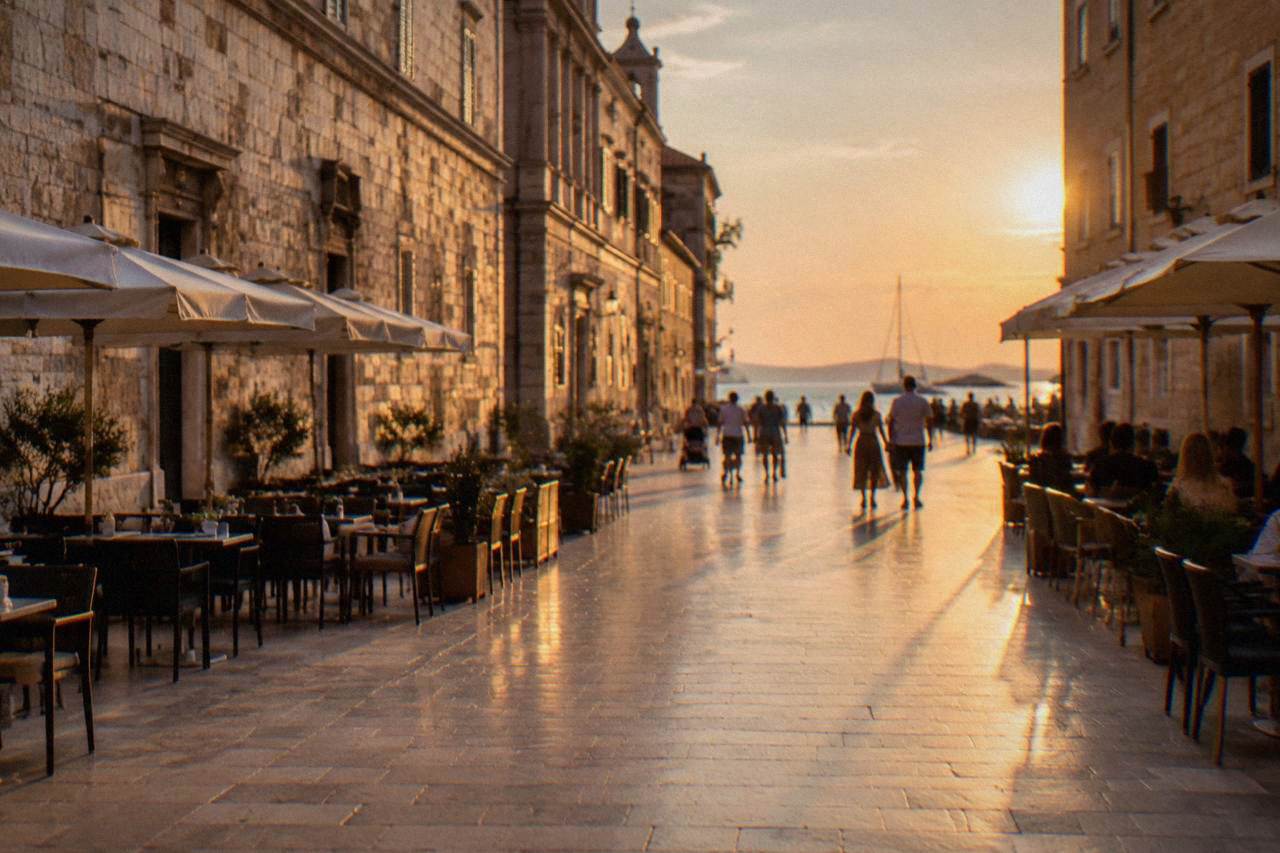
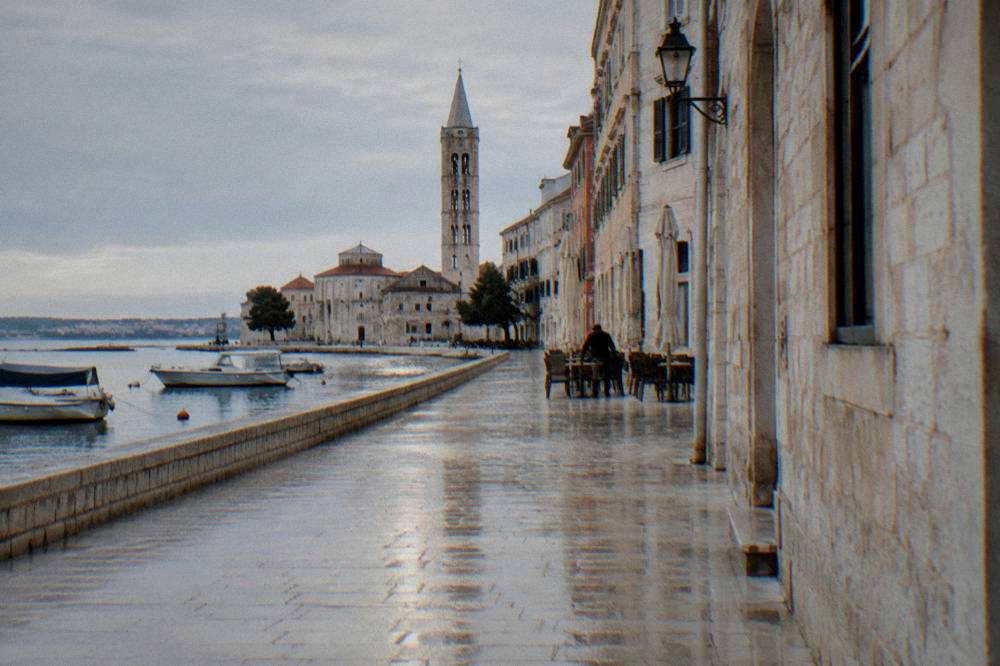
Kalelarga is the main street of Zadar's Old Town peninsula, a free public pedestrian axis running from the People's Square end of the peninsula toward the sea, lined with cafés, shops and centuries of rebuilding.
Short answer
Kalelarga is Zadar's central Old Town street, open to pedestrians at all hours and free to walk. It forms the spine of the peninsula's street plan, connects the squares at either end, and sits within walking distance of the Sea Organ, the Roman Forum and St Donatus Church.
Kalelarga is the main street of Zadar's Old Town in Dalmatia, Croatia, a coastal city on the Adriatic whose historic core sits on a narrow peninsula. The street is a free public space, open at all hours, and it works as the peninsula's spine: everything else in the Old Town, from the Roman Forum to the Sea Organ, sits a few minutes off it in one direction or another. This page, from the Zadar Croatia Travel Guide editorial desk, sets out what the street is, what you actually see along it, and how to plan a walk that uses it well rather than just passing through.
What Is Kalelarga In Zadar?
Kalelarga is the central and best-known street of Zadar's Old Town peninsula, a pedestrianised public space that is free to enter and open at all hours. It runs along the long axis of the peninsula, linking the squares at either end, and it is the street every route through the Old Town sooner or later crosses. Its name is the one locals use, not the formal street label, and it functions as the city's living room as much as its main road.
The street is the organising line of the Old Town's plan. Zadar's peninsula, Poluotok, is laid out in a grid that has been rebuilt many times over the centuries, and Kalelarga is the axis that ties the grid together. Walk it end to end and you have effectively walked the peninsula's length, with the Roman Forum, the cathedral, St Donatus and the riva all hanging off it to one side.
Two things shape the street today. First, it is pedestrian: tables, terraces and shopfronts occupy what was once a carriage road, and the stone surface is worn smooth. Second, it is a working street, not an open-air museum. Insurance offices, phone shops and pharmacies sit between the cafés, which is part of why it reads as genuinely urban rather than staged.
The street is also Zadar's default stage. Public celebrations, processions and the occasional protest gather on it, and on summer evenings the outdoor tables fill the full width of the carriageway. Nothing about that is scheduled or ticketed; it simply happens where the city is widest and flattest.
Where Does Kalelarga Start And End?
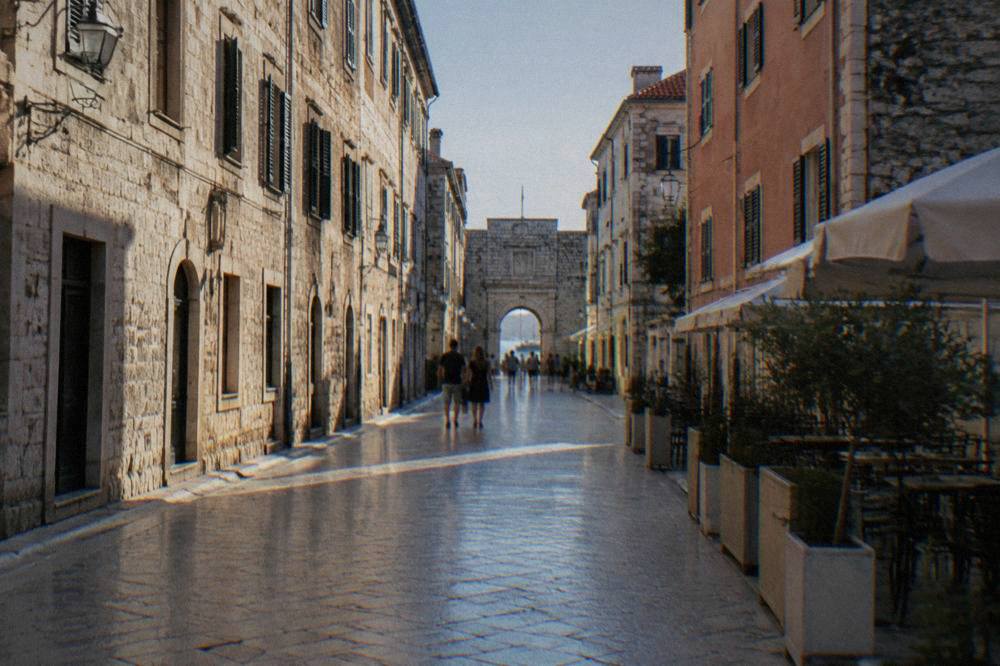
Kalelarga runs the length of Zadar's Old Town peninsula from People's Square at the landward end toward the western tip of the peninsula, where the street's axis meets the seafront near the Land Gate approach on the harbour side. The walk from one end to the other is a matter of minutes at a normal pace, since the whole peninsula is compact, but the street's full length with stops along the way fills an easy hour or more.
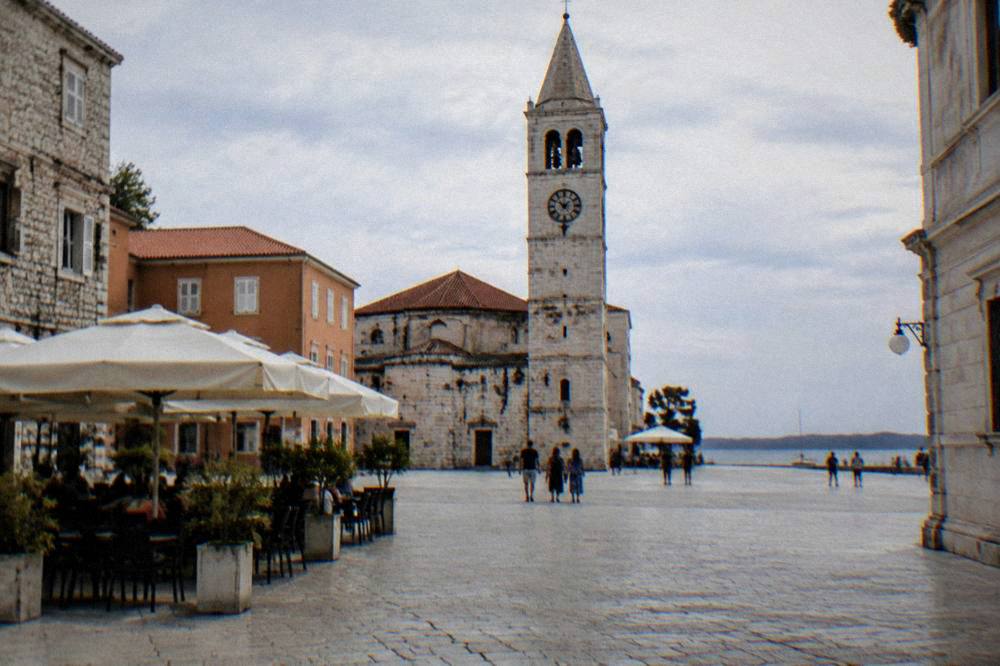
The landward starting point, People's Square, is the Old Town's civic heart, with the city clock and the historic municipal buildings around it. From there the street runs west, crossing the line of smaller transverse lanes that make up the grid, until the built-up fabric thins and the view opens to the water.
| End or landmark | What marks it | Direction from the other end |
|---|---|---|
| People's Square | City clock, historic municipal buildings, café terraces | Landward start |
| Transverse lane crossings | Narrow side streets of the peninsula grid | Mid-street |
| Seafront and Land Gate approach | Harbour-side opening toward the 1543 gate | Western end |
The gate itself is worth the extra two minutes. It dates to 1543 and is attributed to Michele Sanmicheli, and it stands as the formal ceremonial entrance to the peninsula from the harbour side. Walking Kalelarga to its end and stepping out to the gate gives you the street in its proper sequence: civic square, commercial spine, ceremonial threshold, sea. The Land Gate has its own page on this site with the full detail.
What Can You See Along Kalelarga On A Walk?
A walk down Kalelarga in Zadar delivers the street itself, its squares, and easy spurs to the Roman Forum, the Cathedral of St Anastasia, St Donatus Church and the Museum of Ancient Glass, all within a few minutes of the street's line. The street is free to walk, and the installations at the seafront end, the Sea Organ and the Greeting to the Sun, are likewise free and open at all hours. Museum entries carry their own tickets.
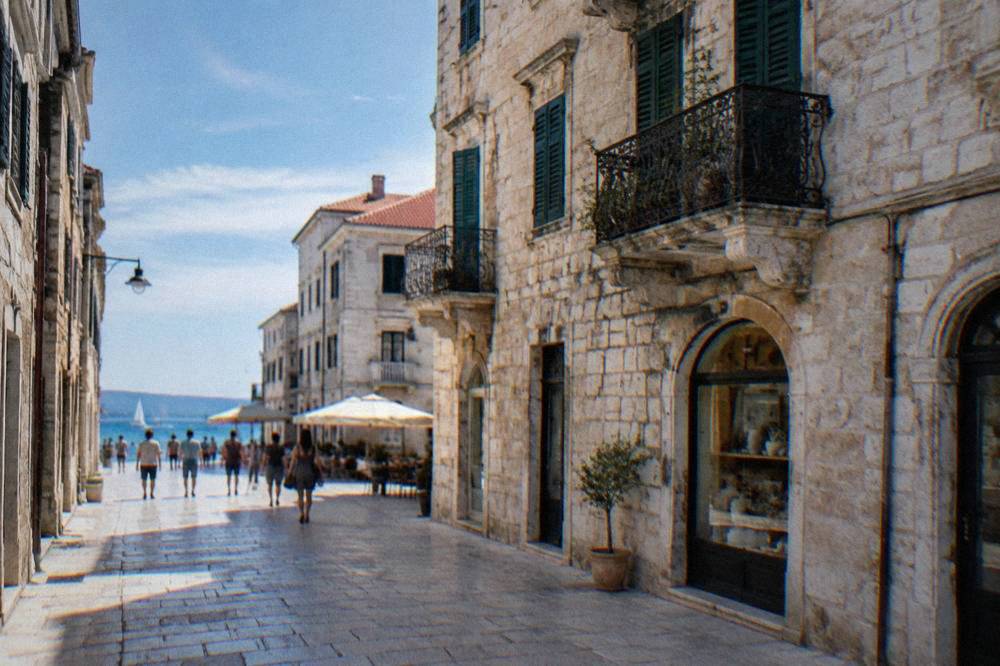
The honest description is that Kalelarga's individual buildings matter less than the sequence. The street has been rebuilt so often that its fabric is layered rather than pure, and its interest lies in the rhythm: a portal, a balcony, a lane opening, a terrace. The sights come on the spurs.
| Sight off Kalelarga | Segment | Access |
|---|---|---|
| Roman Forum | Short spur toward the sea side | Free public space |
| Cathedral of St Anastasia | Adjacent to the Forum | Church entry; check tower access details locally |
| St Donatus Church | Beside the Forum | Around 7 EUR full price; restoration works may limit access |
| Museum of Ancient Glass | Short walk from the street | 7.00 EUR adult |
| Five Wells Square | Toward the Land Gate side | Free public space |
| Sea Organ and Greeting to the Sun | Western seafront | Free, open at all hours |
One flag for the St Donatus spur: the church faces a roof restoration. The tender for replacing the wooden roof structure was launched in late August 2026, with works planned from autumn 2026 for roughly six months, the first phase of a wider restoration. During the works, group visits are suspended and individual access depends on the phase, so check before counting on entry.
Zadar is one of six components of the UNESCO property "Venetian Works of Defence between the 16th and 17th Centuries: Stato da Terra, western Stato da Mar", inscribed in 2017, but that inscription covers the defensive system, not the peninsula's street plan. Kalelarga itself is simply a protected, much-rebuilt public street, and no ticket or card covers it.
How Long Does A Walk Down Kalelarga Take?
Kalelarga in Zadar can be walked end to end in well under fifteen minutes, but a walk with the spurs included, the Forum, St Donatus, the cathedral close, Five Wells Square and the seafront installations, fills a relaxed half day, and with a museum stop it becomes a full morning or afternoon. The street itself asks for no ticket, no booking and no fixed route, so the duration is entirely a matter of how many spurs you take.
For sequencing, the natural line runs from People's Square westward, taking the Forum and St Donatus cluster on the spur, continuing to Five Wells Square, then finishing at the seafront where the Sea Organ and the Greeting to the Sun sit side by side. Ending there puts the day's finish at the water, which is also where the evening light lands.
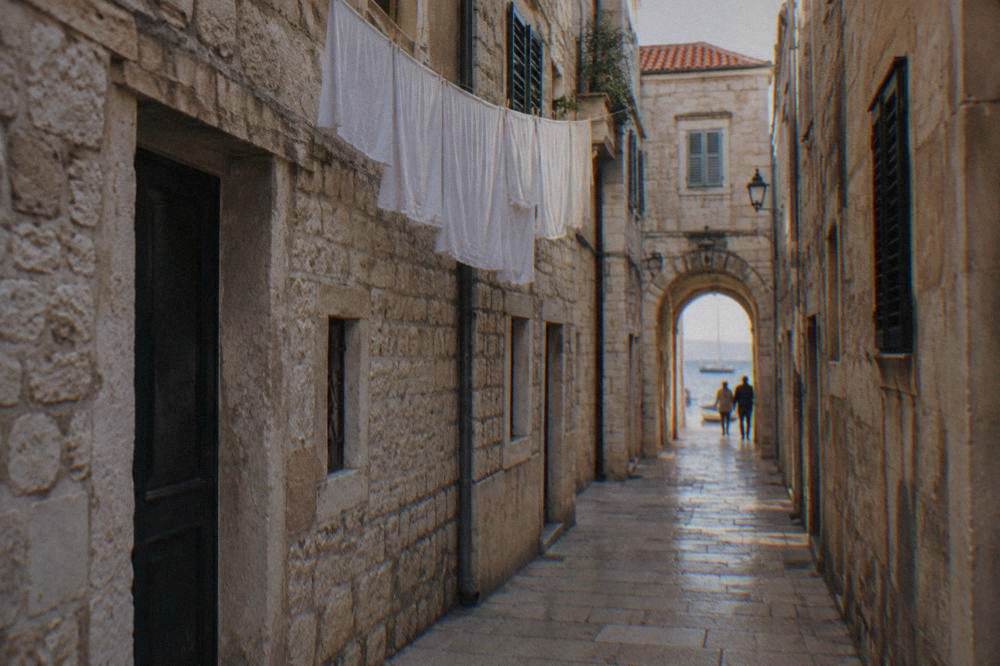
Walkers who want the street's context rather than just its stones have guided options that cover the Old Town layout with a local lead, and tip-based walks also run locally; if one appeals, confirm the arrangement directly with the guide. For visitors who prefer to go alone, the grid is forgiving: it is genuinely hard to get lost on a peninsula, and every lane eventually returns to either Kalelarga or the water.
When Is The Best Time Of Day To Walk Kalelarga?
Morning, roughly from opening time until midday, is the quiet window for photographing Kalelarga in Zadar, while early evening is when the street performs its main act, with terraces full and the walk naturally ending at the free Sea Organ installation for sunset. Midday in July and August is the hot, crowded stretch: the Zadar station record, 1961-2024, puts the July mean at 24.5 C, with ten days a month at or above 30 C.
The climate table below, from the Zadar station, 1961-2024 (DHMZ), gives the planner's version of the year on the peninsula. Note the shape: a dry, warm summer core, a wet November, and mild winter months that still sit above 7 C on average.
| Month | Mean temperature (C) | Precipitation (mm) |
|---|---|---|
| January | 7.3 | 76.4 |
| February | 7.8 | 67.0 |
| March | 10.0 | 66.3 |
| April | 13.4 | 61.4 |
| May | 17.9 | 64.4 |
| June | 21.9 | 48.5 |
| July | 24.5 | 35.4 |
| August | 24.1 | 52.8 |
| September | 20.2 | 110.9 |
| October | 16.3 | 106.8 |
| November | 12.1 | 123.0 |
| December | 8.6 | 99.6 |
Zadar station, 1961-2024, DHMZ. July is the driest month at 35.4 mm and November the wettest at 123.0 mm; the sun total works out to about 2,600 hours a year. The practical reading for the street: an evening walk in July needs no jacket, an evening walk in December does, and either way the Sea Organ at the end of the line plays in every season.
Where Should You Eat And Drink On Or Near Kalelarga?
Kalelarga and the lanes immediately off it carry the densest concentration of cafés, konoba-style restaurants and bars in Zadar's Old Town, with terraces on the street itself and quieter tables on the transverse lanes and squares one row back. Prices are not published by the street, so treat any figure here as a planning range and check the menu at the door; the street's convenience premium is real but one row off the axis it drops.
The pattern is consistent. Street-front tables on Kalelarga and People's Square trade on position: coffee, drinks, quick plates, people-watching. The lanes running off toward the Forum and the riva hold the smaller kitchens, and the side toward Five Wells Square mixes both.
| Stop type | Where it sits on the axis | What to expect |
|---|---|---|
| Street-front café terraces | Along Kalelarga itself | Coffee, drinks, all-day service, position premium |
| Konoba-style kitchens | Lanes one row off the street | Grilled fish and meat, local wine lists |
| Square-side tables | People's Square and Five Wells Square | Mix of café and restaurant seating |
| Evening bars | Street and harbour-side lanes | Busiest after dark in summer months |
Two local rules shape the evening. Dress-code signage introduced in summer 2026 asks for appropriate clothing in the historic core, no swimwear, with fines reported up to 130 EUR, so coming straight off the beach onto the street is no longer a neutral choice. Separately, the municipality signalled intent to restrict night-time retail alcohol sales in the Old Town for the 2026 season under a national law change; that applies to shops and kiosks rather than bars and restaurants, and enforcement details should be confirmed locally. The city's maraschino cherry liqueur is the traditional local pour and appears on most Old Town drinks lists.
How Does Kalelarga Fit Into A Day Or Two In Zadar?
Kalelarga is the spine of every Zadar itinerary, so the efficient plan walks the street once properly rather than crossing it repeatedly: one focused Old Town half day covering the street, the Forum cluster and the seafront, then a second block for the riva and beaches, and a full day for a park or island trip. The street sits at the centre of the peninsula, so every itinerary in the city passes it whether planned or not.
For a single day, the sequence works like this: morning on Kalelarga and its spurs with the museums open, afternoon at Kolovare beach or the riva, evening back on the street for dinner and then the seafront for sunset by the Sea Organ. The Sea Organ dates from 2005 and the Greeting to the Sun from 2008, both by Nikola Bašić, and both are free public installations beside each other at the water's edge.
For two or more days, the day trips take over, and here driving distances from the Old Town do the planning:
| Day trip destination | Driving distance from the Old Town | Driving time |
|---|---|---|
| Nin | 19.8 km | 28 min |
| Paklenica National Park | 46.8 km | 57 min |
| Skradin (Krka gateway) | 76 km | 62 min |
| Krka NP, Skradinski Buk | 91 km | 73 min |
| Plitvice Lakes NP | 145 km | 153 min |
The Plitvice run is the long one, which is why guided versions from Zadar, with transport and tickets handled, are a common choice. This site's featured option is the Plitvice Lakes day trip from Zadar, and the current listing shows live pricing and availability: Check availability. Park entry itself is seasonal and per person: Plitvice lists 10 EUR in the winter months, 23 EUR in April, May and October, and 40 EUR in the June-to-September peak, per the park's own price list. Krka runs a similar seasonal ladder at 7, 20 and 40 EUR.
Is Kalelarga Accessible, And What Rules Apply On It?
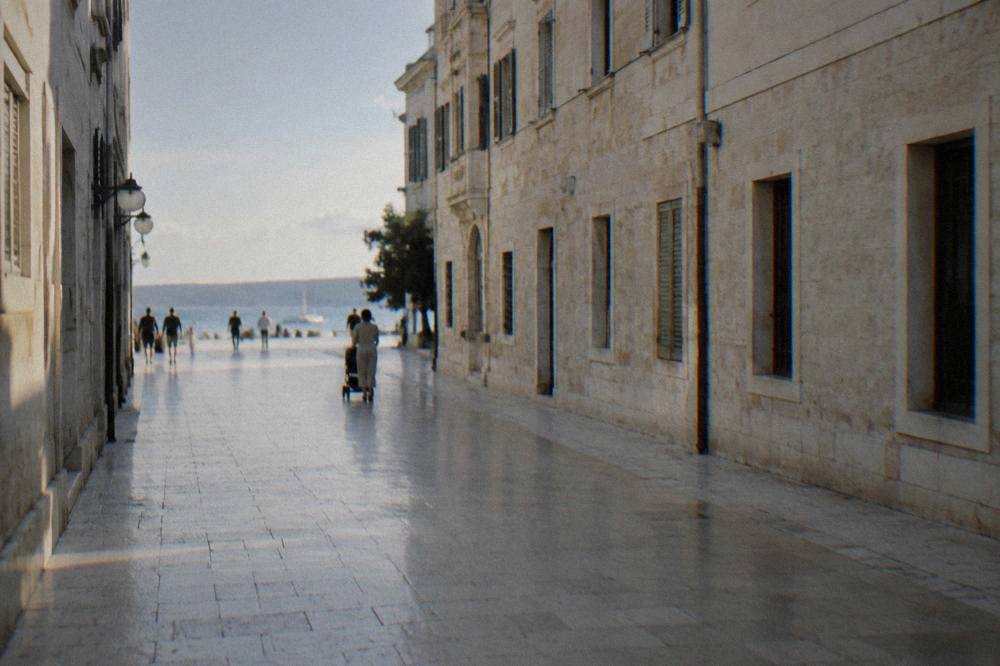
Kalelarga is a pedestrian street on a flat peninsula, level underfoot for wheels of most kinds and continuous with the squares at both ends, and it is free, unticketed and open around the clock. The rules that apply are the Old Town's public-space rules: the 2026 dress-code signage on swimwear, the night-time retail alcohol restriction signalled for the peninsula, and the general rule that this is a living neighbourhood, not a themed zone.
The peninsula's compactness is the accessibility story. There are no steps on the street's main line, the gradients are gentle, and the seafront at either end connects without barriers. Visitors with mobility equipment will find the main axis workable; the narrow transverse lanes are tighter but not stepped.
On money, be clear about what the street does and does not charge for. The street, the squares, the Forum, the riva, the Sea Organ and the Greeting to the Sun cost nothing at any hour. The museums on the spurs have their own tariffs, and no verified Zadar city card price exists for 2026, so if a card is offered to you, check what it actually covers at the point of sale. The tourist tax exists and is collected by accommodation, and its amount is confirmed at booking.
What Is Near Kalelarga Beyond The Old Town?
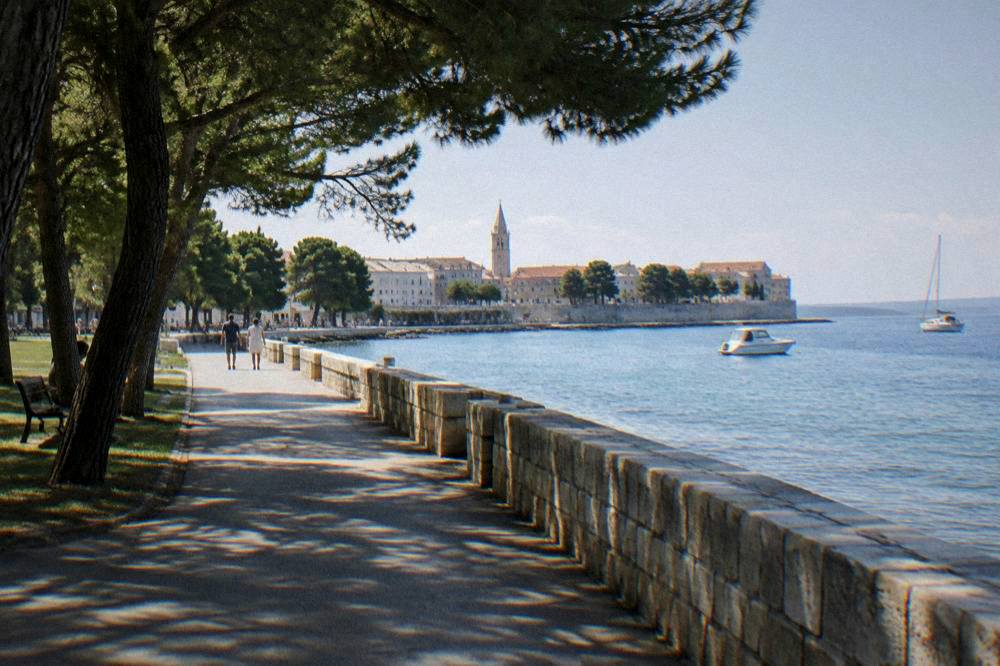
Beyond the Old Town streets around Kalelarga, Zadar's near field holds the Borik and Puntamika hotel-and-beach strips to the northwest, the residential Arbanasi coast to the east, the ferry port at Gaženica to the south, and the airport about 8 km from the city by its own how-to-get-here page. The islands of Ugljan and Dugi Otok sit directly offshore, reached by ferry from Gaženica and the town-side berths.
The practical geography: the bus station is 2.6 km away, the Gaženica ferry port 5.2 km, the airport 13.3 km by road at roughly 22 minutes. The airport shuttle into town is 5.00 EUR one way including luggage, about 20 minutes to the Old Town, with the ticket valid for 90 minutes on city buses, per the airport's own page. Ferries to Preko on Ugljan cross in roughly 25 to 30 minutes, and the Dugi Otok ferry to Brbinj runs line 434 with a crossing of 1 hour 40 minutes; fares are confirmed at booking.
For the boat day options out of the city, the listings below show live prices and availability for the routes this site features, including the sunset cruise that pairs naturally with a Kalelarga evening:
For planning the wider stay, the site's one-day itinerary sequences the Old Town, and two days and three days add the islands and parks. The full list of options is on the site's things to see and do in Zadar page, and the Old Town area guide covers where to sleep near the street.
Common Questions About Kalelarga In Zadar
What is Kalelarga in Zadar?
Kalelarga is the main pedestrian street of Zadar's Old Town peninsula, running along the peninsula's long axis from People's Square toward the seafront and the Land Gate approach. It is a free public space, open at all hours, and it serves as the city's central street and gathering place.
Is Kalelarga free to visit?
Yes. The street, the squares at either end, the Roman Forum, the riva, the Sea Organ and the Greeting to the Sun are all free public spaces. Only the museums on the spurs off the street, such as the Museum of Ancient Glass at 7.00 EUR adult per its ticket page, carry entry tickets.
How long does it take to walk Kalelarga?
The street itself takes well under fifteen minutes end to end. A walk including the Forum, St Donatus, Five Wells Square and the seafront installations fills a relaxed half day, and adding a museum stop makes it a full morning or afternoon.
Where does Kalelarga start and end?
It starts at People's Square at the landward end of the peninsula and runs west toward the seafront, finishing near the approach to the Land Gate, which dates to 1543 and is attributed to Michele Sanmicheli.
What is the best time of day for Kalelarga?
Morning is the quiet window for photos. Early evening is when the terraces fill and the walk can end at the free Sea Organ installation for sunset.
Can you wear swimwear on Kalelarga?
No. Dress-code signage installed in summer 2026 asks for appropriate clothing in the historic core, with no swimwear, and reports say fines can reach 130 EUR after a warning. Cover up before leaving the beach for the Old Town.
Kalelarga asks nothing of you but the walk: no ticket, no schedule, no gate. Walk it once slowly with the spurs, come back for the evening tables, and end at the water where the Sea Organ plays whatever the weather brings.
