Is Zadar Safe
Zadar is a small coastal city in Dalmatia with a walkable Old Town, and the safety questions worth preparing for are swimming conditions, sun, and a few local rules rather than crime.
Short answer
Zadar is generally considered a low-risk destination: the emergency number is 112, the Old Town is walkable and pedestrian-focused, and the main practical risks are sea and sun. New 2026 rules add dress-code signs in the historic core with fines up to 130 EUR.
Zadar is a coastal city in Dalmatia, Croatia, on the Adriatic Sea, with a population of 67,309 at the 2021 census (a figure from the Croatian Bureau of Statistics reported via a secondary site). Its Old Town sits on a narrow peninsula, the Poluotok, which keeps daily life compact and mostly on foot. Croatia has used the euro since 1 January 2023 and is in the Schengen area, and the single European emergency number, 112, works everywhere in the country. This guide reports what the official sources say about the situations that actually matter here: the sea, the summer sun, a handful of local rules introduced in 2026, and the practical questions of getting around safely.
Is Zadar Safe For Visitors Overall?
Zadar is a small, walkable coastal city where the realistic safety concerns are environmental rather than criminal: heat, sea conditions and sun exposure, with the emergency number 112 available for police, fire and medical help anywhere in Croatia. The situations worth preparing for are swimming, boating and a set of local rules introduced in 2026.
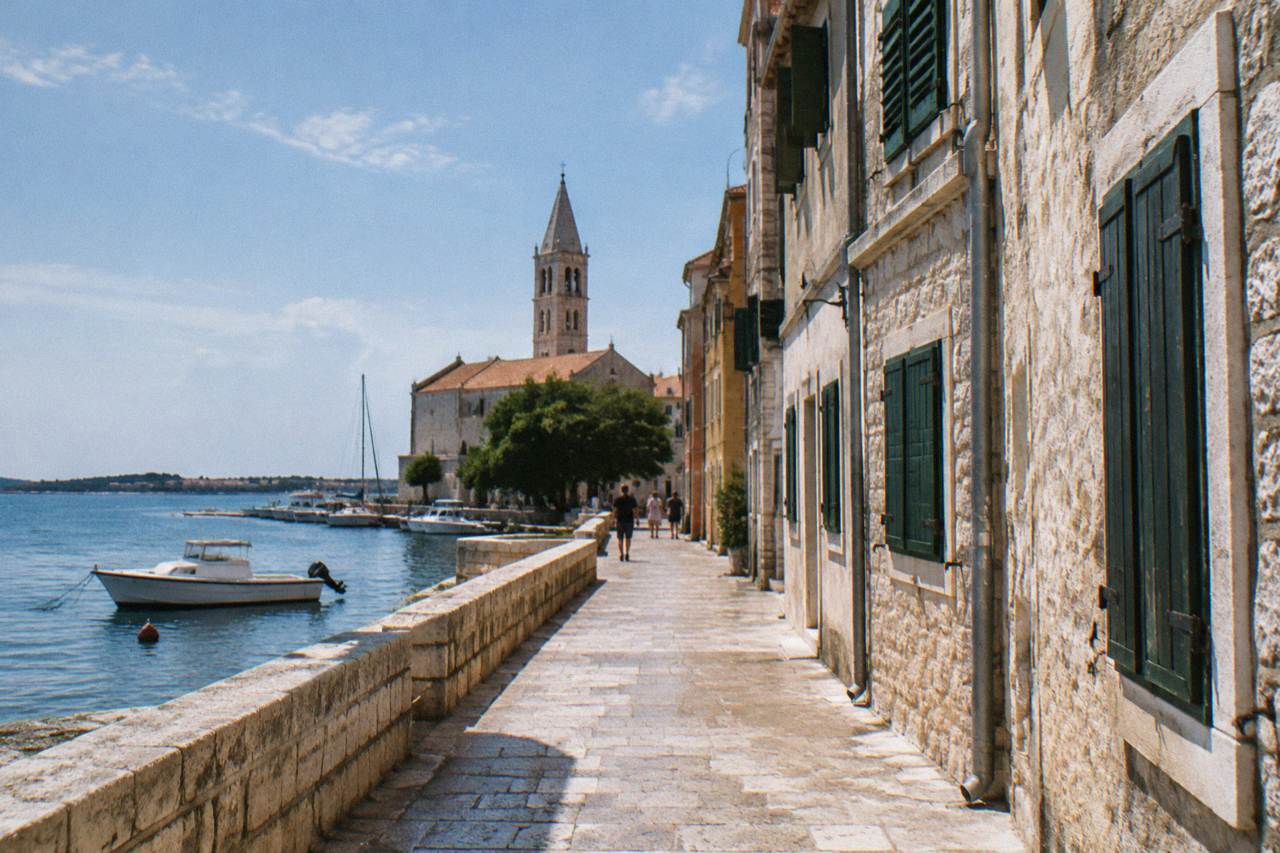
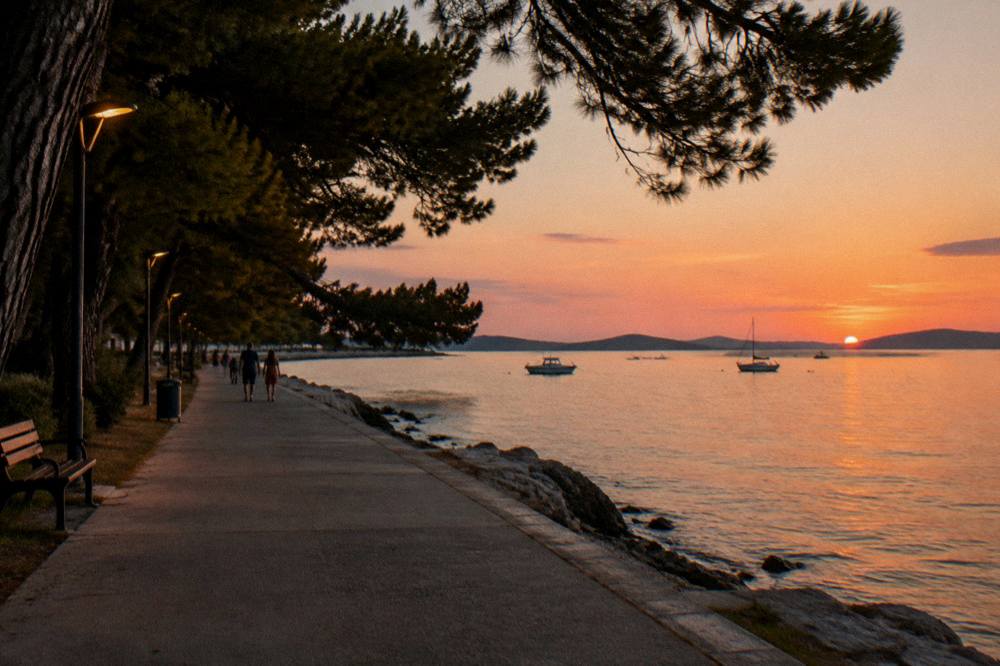
What can be said from the city's own shape: the historic core is a peninsula where the streets are narrow and the car has a limited role, the seafront promenade is open and lit, and the island day trips that define a stay here run as organised, crewed operations. The Riva and the Sea Organ area stay busy into the evening in season, and the walk back to accommodations in areas around the peninsula is short by design.
The country-level basics are stable and simple. Croatia is in the Schengen area and uses the euro, so there is no border formalities dance on arrival from neighbours and no currency arithmetic to get wrong at a pharmacy. The emergency number 112 covers police, fire and ambulance. For health specifically, visitors should carry the European Health Insurance Card where their country issues one, and travel insurance for anything beyond that, since repatriation and private treatment are not covered by the card.
Is It Safe To Walk Around Zadar At Night?
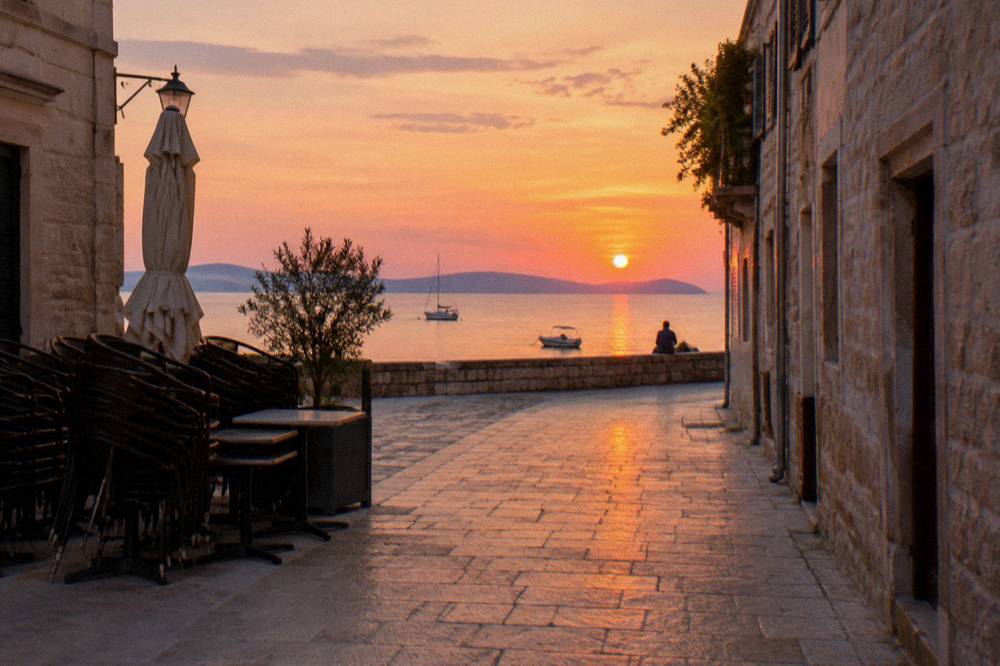
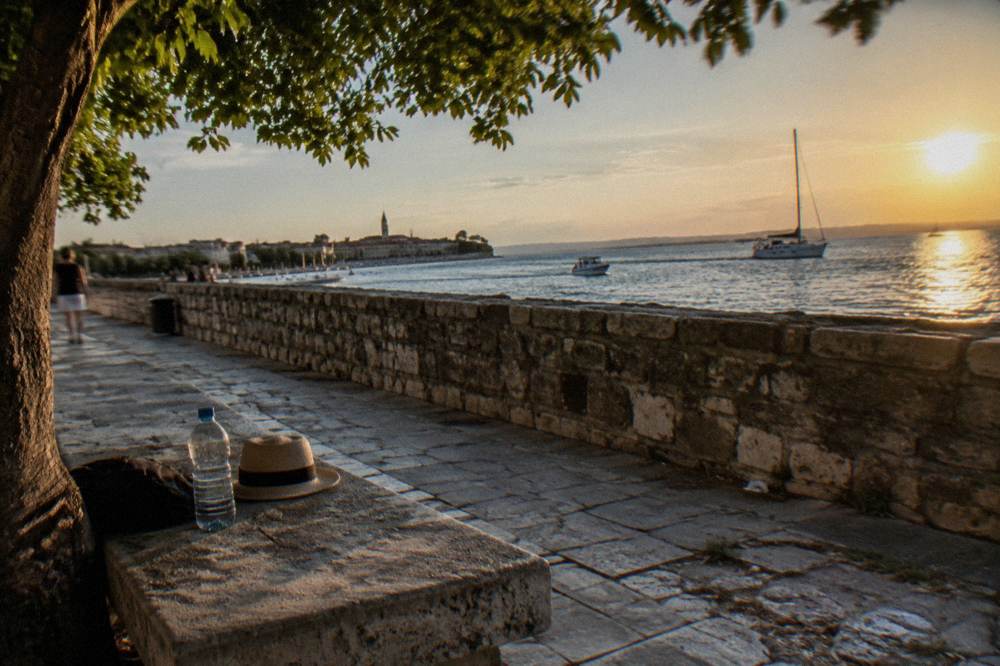
Night walking in Zadar is, in the plain structural sense, low-risk: the Old Town is a compact peninsula, the Riva promenade along the western shore is open, stone-paved and lit, and the distances between the evening's landmarks, the Sea Organ, the Greeting to the Sun and the Forum, are a few minutes on foot. The city's own event calendar runs open-air programmes late into summer nights, which keeps public space populated.
The same geography that makes the peninsula pleasant makes it worth watching your step. Old Town paving is polished stone, smooth underfoot for centuries, and summer footwear choices matter on it. The western edge along the Riva is a low quay with open water beyond it, so children and anyone leaving an evening at the nightlife spots should keep the harbour edge in view. The city has signalled its own concern about late-night street drinking rather than street crime: national law changes now allow municipalities to restrict retail alcohol sales at night, and Zadar's mayor confirmed an intent to apply such a restriction in the Old Town, in shops and kiosks but not bars and restaurants, for the 2026 season. Treat that as a reported measure and expect late-night bottle purchases in the historic core to be limited rather than banned outright; bars are unaffected.
Two free installations anchor the evening and neither carries a ticket or a closing time. The Sea Organ (2005) and the Greeting to the Sun (2008), both by architect Nikola Bašić, are open public works beside the Riva, accessible at all hours, and the city's page for them lists no charge. No verified light-show start time exists, so confirm any evening timing locally rather than from a fixed schedule.
For structure after dark, an evening route is easy to plan around the sunset and evening walk, and the wider question of how long to stay and how the days fit together is covered in how many days in Zadar.
Is Swimming In Zadar Safe, And What Are The Beach Rules?
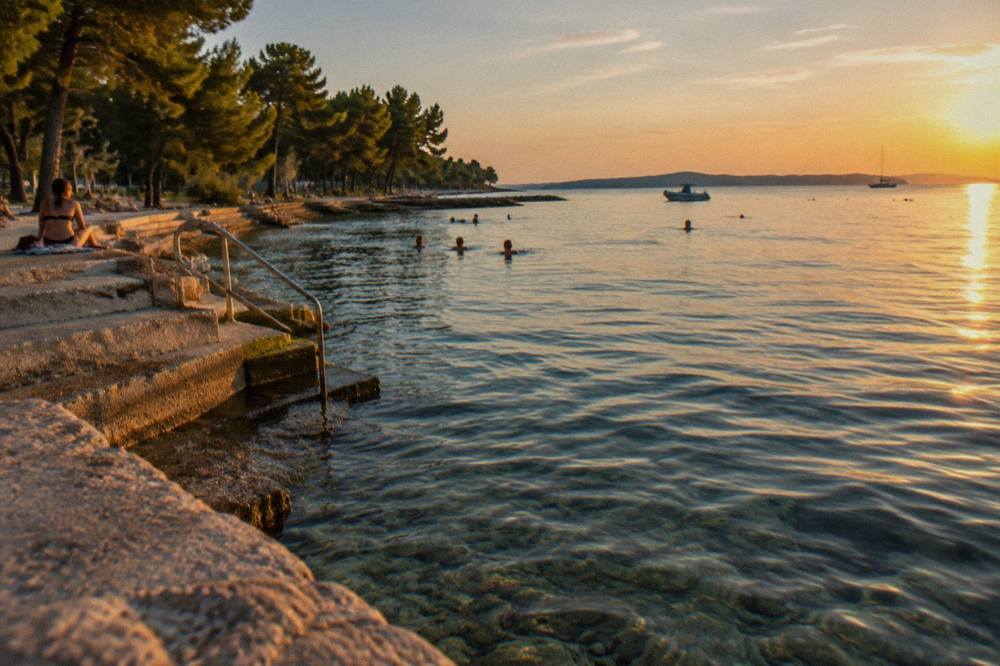
Swimming around Zadar is generally safe at organised beaches with the usual sea cautions, and a 2026 county decision guarantees free public access: concession beaches in Zadar County may not install fencing, ramps, barriers or entry fees, and commercial activity such as sunbed rental is capped at 40 to 60 percent of a beach's area, leaving the rest free for visitors with their own towels. The real risks are sun, sea urchins on rocky sections, and swimming alone or after dark.
The county-level rules matter because they settle the question of whether you must pay to reach the water: you do not. Access to the sea at any concessioned beach in Zadar County is fully public and free under the rules adopted by the county assembly for the 2026 season, aligned with the national Law on Maritime Domain. What a concessionaire may charge for is the commercial layer, sunbeds and umbrellas, and only on a capped share of the beach. The remaining stretch is for anyone with a towel.
The practical cautions are ordinary Adriatic ones. Rocky sections carry sea urchins, so water shoes are a cheap fix. The beaches of Zadar, from Kolovare to Borik and Puntamika, are mostly concrete or gravel rather than sand, which changes footing but not safety. The bora, a cold, dry north-easterly wind, can raise chop quickly in cooler months; the jugo, a warm southerly, brings humid and unsettled weather. Neither is a reason to avoid the sea, but both are reasons to look at the water rather than the calendar before a long swim.
| Beach safety topic | What the sources say |
|---|---|
| Beach access | Free and public at all Zadar County concession beaches from the 2026 season, no fencing or entry fees allowed |
| Commercial area | Sunbeds and similar capped at 40-60 percent of beach surface depending on the beach |
| Sea temperature | Only a live official reading exists (DHMZ); no monthly normal is published, check the current reading in season |
| Wind caution | Bora (north-east, gusty) and jugo (south, warm) can change sea conditions quickly |
| Rocky footing | Sea urchins on stone sections; water shoes are the standard precaution |
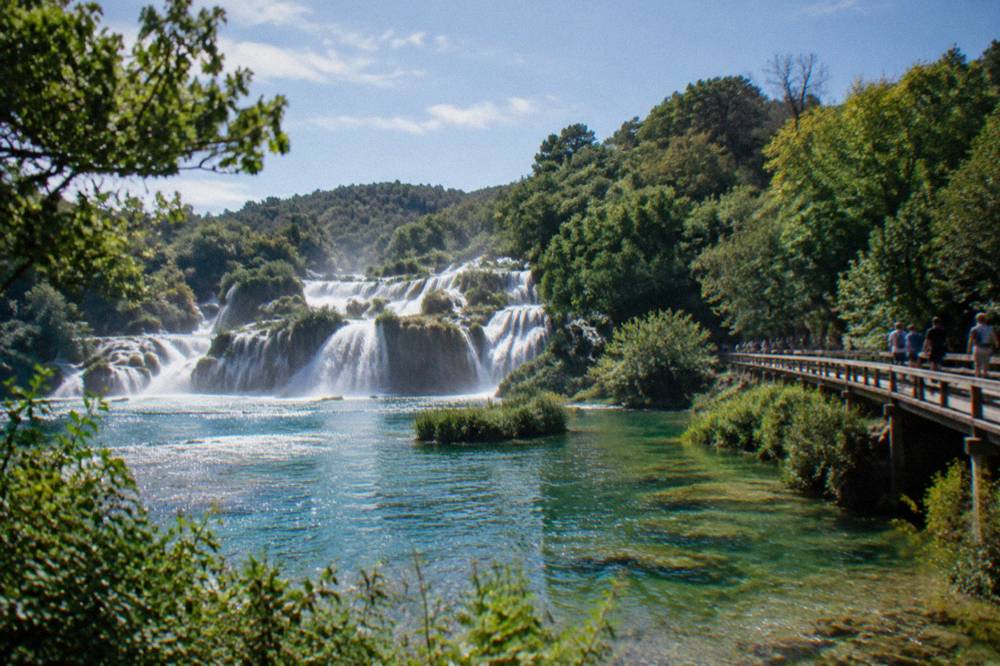
One national-park point that trips people up: swimming at Skradinski Buk in Krka National Park has been banned since 2021 to protect the travertine formations. Swimming inside the park is allowed only at designated spots, Roški slap, Stinice and Pisak, and only from 1 June to 30 September, weather and water conditions permitting. If a Krka day trip is on the list, plan the swim for the coast or the designated park areas, never the main waterfall pool.
What Are The New Old Town Rules In Zadar?
Two rules reported in 2026 affect behaviour in Zadar's historic core: dress-code signs posted at key access points requiring appropriate clothing, with no swimwear or nudity, enforced by a verbal warning first and fines up to 130 EUR; and a planned night-time restriction on retail alcohol sales on the peninsula, in shops and kiosks but not in bars and restaurants. Both are reported measures from mid-2026 local sources, so confirm current enforcement locally.
The dress-code signage, installed in summer 2026, rests on the city's existing communal order decision. In practice it means covering swimwear before walking into the peninsula's streets, which the Old Town guide covers from the sightseeing side. The signs are informative rather than a gate: no one checks clothing at a boundary, but enforcement can follow a warning. The alcohol measure responds to noise and overtourism concerns and, as reported, targets retail sales at night rather than licensed venues, so a late glass of wine on a restaurant terrace is not the target of the rule.
Everything else in the banned-facts category, taxi fares, parking tariffs, the tourist tax rate, is either not published in a form this site can verify or is collected by accommodation and confirmed at booking rather than paid on the street.
How Safe Are Boat Trips And Water Activities From Zadar?
Boat trips from Zadar run as crewed, licensed operations, and the safety burden sits with the operator rather than the visitor: trips to the islands and the Kornati archipelago are skippered, the gear is provided, and the sea between Zadar and islands such as Ugljan and Dugi Otok is sheltered compared with open ocean. The visitor's job is honest self-assessment about sea state and sun, and reading the operator's own listing for what is included.
The roster of trips from Zadar is broad enough that the choice is about the water, not the risk profile. The boat tours guide covers the categories: short snorkelling and wine trips around the near islands, traditional-boat runs with swim stops, and full-day crossings to Kornati National Park and Telašćica Nature Park, both day trips outside the city. A trip such as the luxury island boat tour with snorkelling covers the equipment and the route as part of the package, and the operator's live listing states what is and is not included.
For kayaking, guided options run both in the city's own harbour and as day trips on the Zrmanja river, where a guide handles the river reading. Independent sea kayakers should treat the bora with respect: it arrives from the north-east with little warning in the wrong season and can push a light craft offshore. The same wind logic applies to renting small boats; the Kornati entry fee is charged per vessel by length and season, which is worth knowing before an independent charter, as the Kornati guide explains.
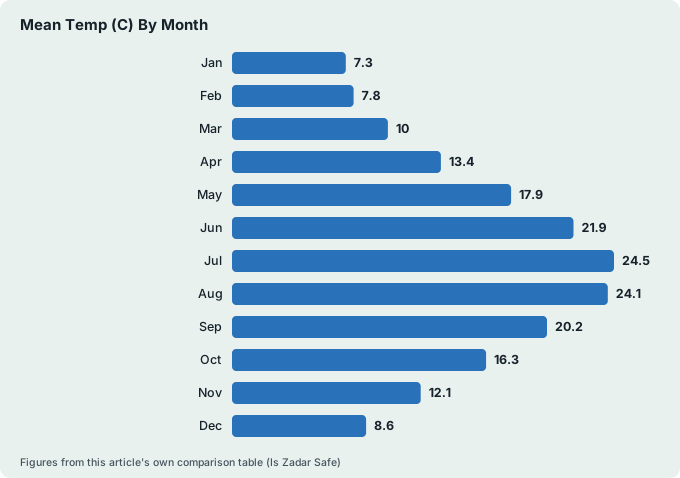
Between conversion blocks, the sea itself deserves a paragraph. In practice the swimming season tracks the air: July and August means of 24.5 and 24.1 degrees Celsius (Zadar station, 1961-2024, DHMZ) come with the year's warmest water, and by late autumn the sea is a serious commitment. Cold water is not dangerous to a prepared swimmer, but it changes the calculus for distance and for children, and a live check beats a calendar assumption.
Is The Sun And Heat A Real Risk In Zadar?
Yes, in a measurable way: the Zadar weather station, 1961-2024 (DHMZ), records a July mean of 24.5 degrees Celsius with 358.6 hours of sunshine in an average July, about 2,600 hours across the year, and ten days per July at or above 30 degrees, so heat and UV are the most statistically likely source of a ruined day. The record high is 39.0 degrees, set on 6 August 2022. Shade, water and timing are the controls.
The climate table tells the story month by month. Summer is dry as well as bright: July averages 35.4 mm of rain across just five rain days, so a hot spell does not break. The standard precautions are the ones that work anywhere on the Adriatic: do the walking before midday, use the sea for cooling in the afternoon, and keep the evening for the Riva. Heat risk is real for the young, the old and anyone hiking, and the best time to visit guide and the Zadar weather guide cover the shoulder months when the numbers soften.
| Month | Mean temp (C) | Rain (mm) | Rain days | Sunshine (hours) |
|---|---|---|---|---|
| Jan | 7.3 | 76.4 | 10 | 115.6 |
| Feb | 7.8 | 67.0 | 9 | 137.2 |
| Mar | 10.0 | 66.3 | 9 | 188.5 |
| Apr | 13.4 | 61.4 | 10 | 217.3 |
| May | 17.9 | 64.4 | 10 | 279.1 |
| Jun | 21.9 | 48.5 | 8 | 310.9 |
| Jul | 24.5 | 35.4 | 5 | 358.6 |
| Aug | 24.1 | 52.8 | 6 | 324.7 |
| Sep | 20.2 | 110.9 | 9 | 243.1 |
| Oct | 16.3 | 106.8 | 9 | 189.8 |
| Nov | 12.1 | 123.0 | 12 | 119.2 |
| Dec | 8.6 | 99.6 | 12 | 106.8 |
November is the wettest month at 123.0 mm and July the driest at 35.4 mm, a reminder that autumn walks can be genuinely wet rather than merely grey. The sea moderates winter cold: the record low for the station is -9.1 degrees, from January 1963, and such values are rare on a coast that rarely leaves the single digits in mean terms.
Are Day Trips From Zadar Safe, And What Do The Parks Charge?
Day trips from Zadar to Krka, Plitvice, Paklenica, Nin and Pag are road or boat journeys on normal Croatian infrastructure, with no safety advisory attached to any of them in official sources; the practical planning facts are the parks' own seasonal fees and rules, all published in the 2026 price lists. Krka charges adults 7, 20 or 40 EUR by season, Plitvice 10, 23 or 40 EUR, and both dropped to their lower rates from 1 October 2026.
The driving distances are moderate and the roads are the ordinary Croatian network: Krka's Skradinski Buk is about 91 km from the Old Town (roughly 73 minutes), Plitvice about 145 km (roughly 153 minutes), Paklenica about 46.8 km, Nin about 19.8 km, all computed from routing data. This site prints no bus fare it has not sourced; organised tours, including the Plitvice trips with tickets included, remove the driving and the queueing in one decision.
| Park | Adult fee 2026 (EUR) | Season pattern | Notes |
|---|---|---|---|
| Krka NP | 7 / 20 / 40 | Jan-Mar and Nov-Dec / Apr, May, Oct / Jun-Sep | No swimming at Skradinski Buk; designated spots only, 1 Jun-30 Sep |
| Plitvice Lakes NP | 10 / 23 / 40 | Jan-Mar, Nov-Dec / Apr, May, Oct / Jun-Sep before about 16:00 | Late-afternoon summer price 25 EUR; daily limits apply |
| Paklenica NP | 5 / 8 / 10 | Jan, Feb, Nov, Dec / Mar, Apr, Oct / May-Sep | Hiking park; children 7-18 pay 2.50 / 4 / 5 |
| Kornati NP | Per vessel, 25-95 for 1 day by length and season | Cheaper Jan-May and Oct-Dec | Entry bought outside the park |
| Telašćica NP | 6 / 8 | Jan-May, Oct-Dec / Jun-Sep | Land entrance at Dolac, or by boat from Sali |
The one park rule that matters for safety planning is the Krka swimming ban covered above. For Paklenica, the activity itself is the risk: it is a hiking and climbing park, so footwear, water and a weather check are the preparation, and the park's own price list confirms the seasonal fees. The national parks guide and the Krka versus Plitvice comparison cover which park suits which trip.
Is Zadar's Transport Safe, And How Do You Move Around Safely?
Zadar's transport risks are low and mostly logistical: the city runs on foot, local buses and ferries, and the airport link is a 5.00 EUR shuttle taking about 20 minutes to the Old Town, according to the airport's own how-to-get-here page, which places the airport about 8 km from the city. The sea crossings to the islands are routine car-ferry and passenger routes operated year-round, weather permitting.
The airport's own page gives the shuttle detail: operated by Liburnija, 5.00 EUR one way including luggage, about 20 minutes, running airport to Gaženica ferry port to bus station to Old Town, with the ticket valid for 90 minutes on city buses. The airport guide and the airport-to-centre guide cover the fuller picture, including car rental. This site prints no taxi fare and no rideshare price, since none could be verified; the taxis and rideshare guide explains what to confirm locally.
On the water, Jadrolinija's route page shows the Dugi Otok crossing (Zadar, Gaženica, to Brbinj) taking 1 hour 40 minutes, and the Ugljan crossing to Preko about 25 to 30 minutes. The little Barkajoli rowing-boat link across the harbour takes a minute or two, and reports put the fare at a euro or two, with no official price list published. For Italy, the fast catamaran to Ancona ran in the 2026 season, extended to 6 September 2026; the 2027 season has not been announced, so the ferry guide is the place to check before planning. Ferry safety is unremarkable in the statistical sense: these are scheduled domestic services with vehicle decks and life rafts, and the only realistic disruption is weather, the same bora and jugo that affect the beaches.
| Transport link | Time | Source detail |
|---|---|---|
| Airport shuttle to Old Town | About 20 minutes | Airport's own page, 5.00 EUR incl. luggage |
| Ferry Zadar (Gaženica) to Brbinj (Dugi Otok) | 1 h 40 min | Jadrolinija route page |
| Ferry Zadar to Preko (Ugljan) | About 25-30 min | Reported crossing time; no verified fare |
| Barkajoli harbour crossing | About 1.5-2 min | Reported; fare not officially published |
| Drive to Krka (Skradinski Buk) | About 73 min, 91 km | Computed routing data |
| Drive to Plitvice | About 153 min, 145 km | Computed routing data |
What Should You Know About Health, Money And Emergencies In Zadar?
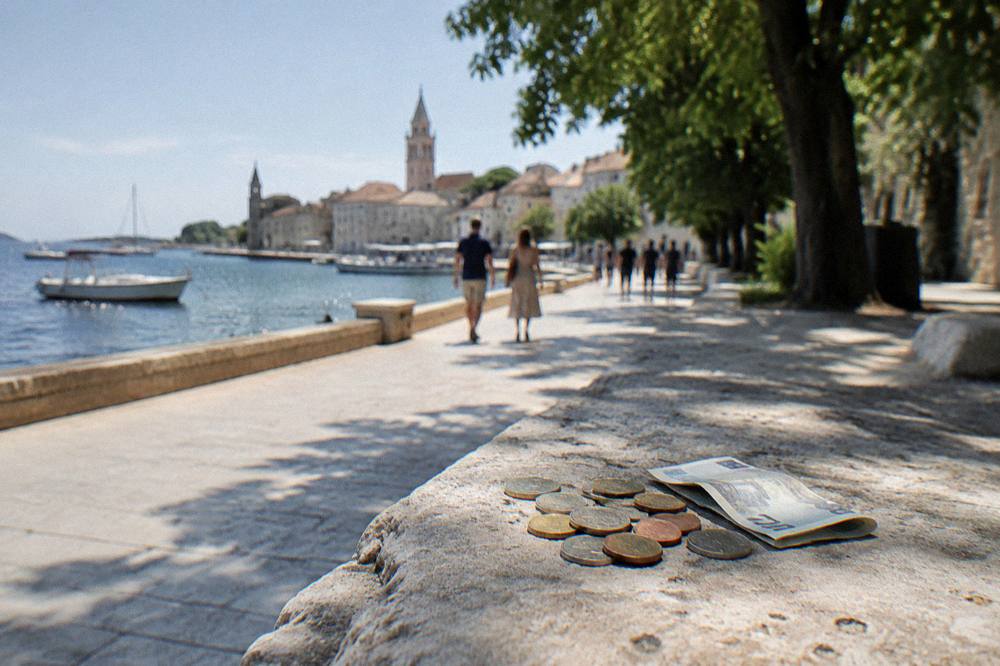
The emergency number in Zadar, as everywhere in Croatia, is 112, and it reaches police, fire and ambulance; the country uses the euro, so there is no currency risk at a pharmacy, and the tourist tax is collected by accommodation with the amount confirmed at booking rather than paid in cash on arrival. Health cover for EU visitors rests on the European Health Insurance Card, with travel insurance the sensible layer above it.
A few practical notes fill out the picture. Pharmacies (ljekarna) are marked with a green cross and concentrated around the peninsula and the wider city; the food guide and restaurants guide cover eating safely and well, and tap water in Croatia is potable. For weather warnings, the national meteorological service (DHMZ) publishes alerts, and its Zadar station data underlies every climate figure on this site.
St Donatus Church, the landmark at the heart of the Roman Forum, faces roof restoration: works are planned from autumn 2026 for about six months, the first phase of a wider restoration, with group visits suspended and individual access dependent on the phase. The St Donatus guide covers it; the safety-relevant point is simply to check access before planning a visit around it, since scaffolding will be present.
For the islands, the same advice as the boat section applies, and the full picture of which islands sit offshore is in the Zadar islands guide. Ugljan, Dugi Otok and the Kornati archipelago are all regular, scheduled or tour-served destinations, not expeditions.
Is Zadar Safe For Solo Travellers And Families?
The family-specific cautions are the sea edge on the Riva, polished stone underfoot, sun exposure at the beach, and the bora's effect on small craft and kayaks.****
Solo travellers get the same environment: short walks home, populated public space in season, and an evening centred on the Sea Organ and the Greeting to the Sun, both free and both open at all hours. Families should note the beach-access rules again in their favour: no beach in the county may charge for entry or fence off access, so a family beach day costs nothing beyond what is chosen to rent, and only on the capped commercial share of a beach.
The itineraries on this site are built for exactly this planning: one day in Zadar, two days and three days each keep the walking distances short and the sea within sight. For a rainy alternative, the rainy day itinerary leans on the museums, whose verified entry prices this site reports where they are confirmed.
The closing summary is short because the subject allows it. Zadar's safety profile is the profile of a small, pedestrian-friendly coastal city: the numbers that matter are sunshine hours and sea temperature, not crime statistics. Call 112 for anything urgent, drink water in July, respect the dress-code signs and the Skradinski Buk swimming ban, check the live sea reading before a long swim, and let the skipper handle the boat. The Zadar Croatia Travel Guide covers every one of these topics in depth, from the costs of a trip to the full day-trip list, all built on the same sourced figures as this page.
Common Questions About Zadar Safety
Is Zadar safe at night?
The Old Town is a compact, pedestrian peninsula with an open, lit promenade along the Riva, and the evening's landmarks are minutes apart on foot. A reported 2026 measure restricts night-time retail alcohol sales in the historic core, in shops and kiosks but not bars and restaurants. The practical cautions are polished stone underfoot and the open sea edge on the quay.
What is the emergency number in Zadar?
112, the single European emergency number, reaches police, fire and ambulance anywhere in Croatia, including Zadar.
Can you get fined for swimwear in Zadar Old Town?
Yes, as reported: dress-code signs posted in summer 2026 at key access points to the historic peninsula require appropriate clothing, with no swimwear or nudity. Enforcement starts with a verbal warning, and fines can reach 130 EUR.
Is it safe to swim in Zadar?
Swimming at the city's beaches is generally safe with ordinary cautions: sea urchins on rocky sections, sun exposure, and wind. A 2026 county rule guarantees free public access to every concession beach, with commercial sunbed areas capped at 40 to 60 percent of the beach.
Are Zadar's day trips safe?
Day trips to Krka, Plitvice, Paklenica, Nin and Pag run on ordinary Croatian roads and scheduled or tour boats, with no safety advisory in official sources. The park-specific rule to know is that swimming at Skradinski Buk in Krka has been banned since 2021; designated swimming spots apply from 1 June to 30 September.
