Arbanasi Zadar
Arbanasi is the mainland quarter of Zadar, the coastal city in Dalmatia, Croatia, that sits directly across the narrow mouth of the harbour from the Old Town peninsula, close enough that a rowing boat crosses in about two minutes.
Short answer
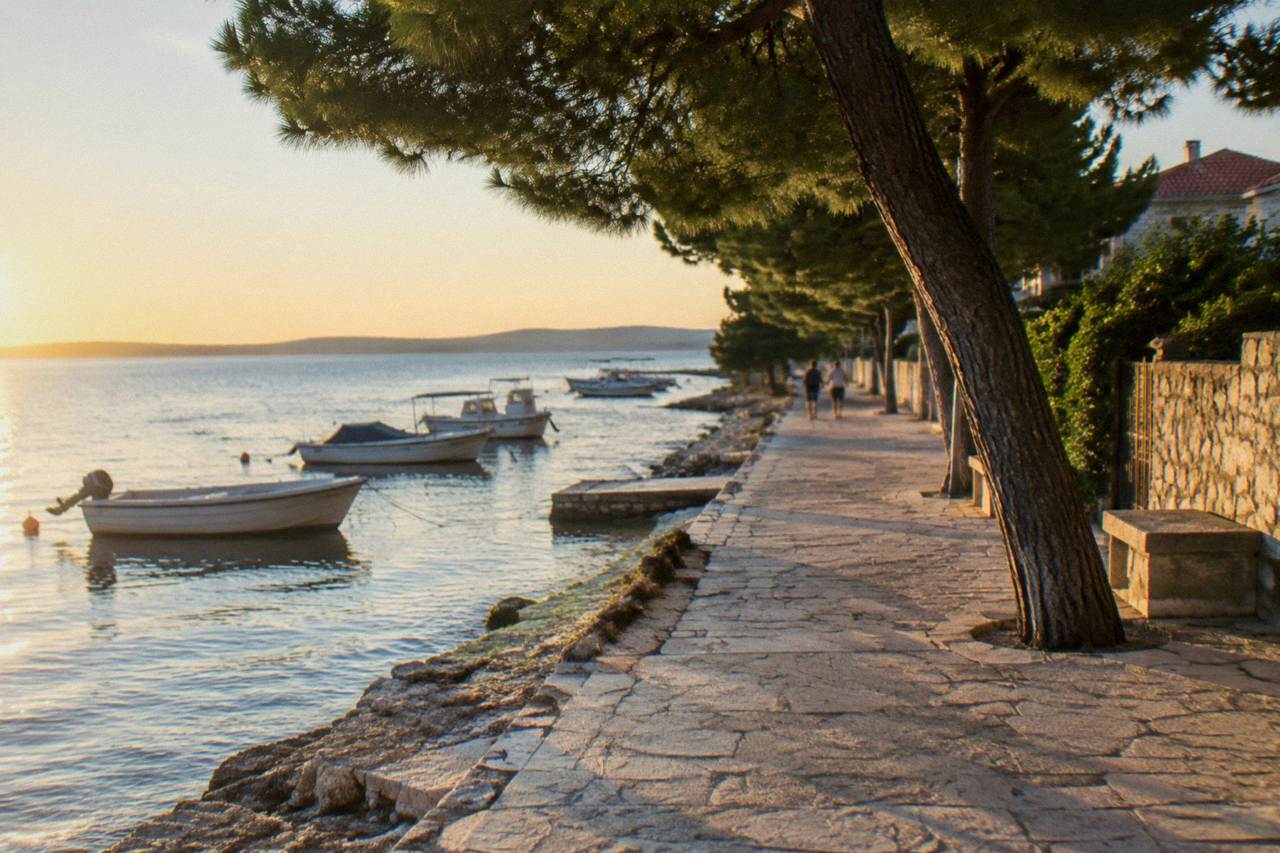
Arbanasi sits across the bay from Zadar Old Town, a short walk or a two-minute Barkajoli rowing-boat crossing away, with local beaches, sea views toward Ugljan and a calmer, more residential base than the peninsula.
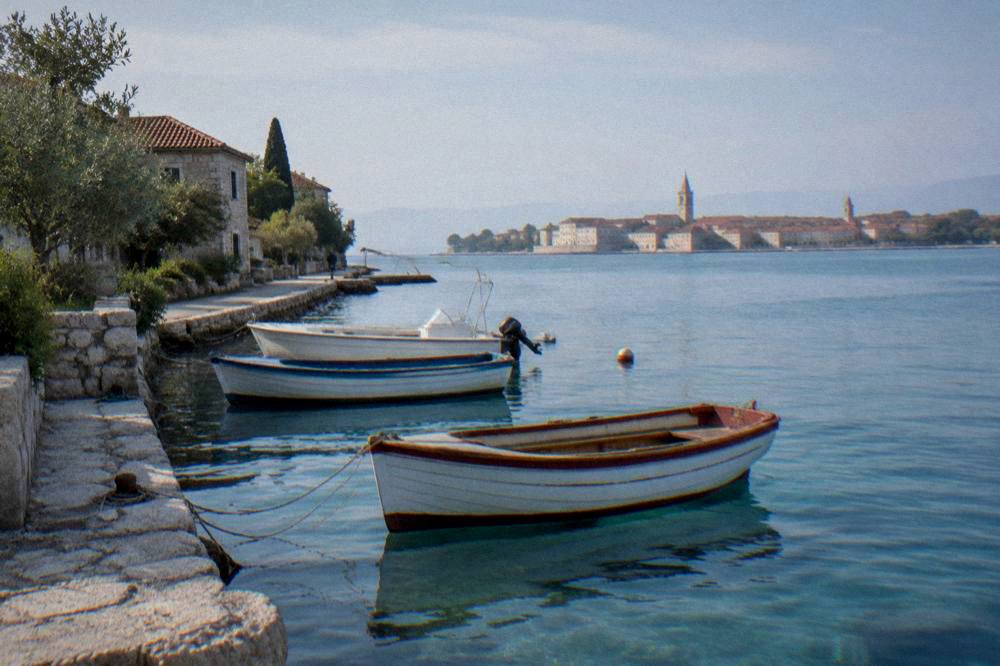
Arbanasi is the mainland quarter of Zadar, the coastal city in Dalmatia, Croatia, that faces the Old Town peninsula across the narrow mouth of the harbour. The two shores sit so close that a rowing-boat service, the Barkajoli, has crossed between them for generations, a trip of roughly 75 metres that takes about a minute and a half to two minutes when the weather allows. The quarter climbs a low hill from the water, holds a mix of old stone houses and modern apartment blocks, and looks north across the channel toward the island of Ugljan.
Where Is Arbanasi In Zadar?
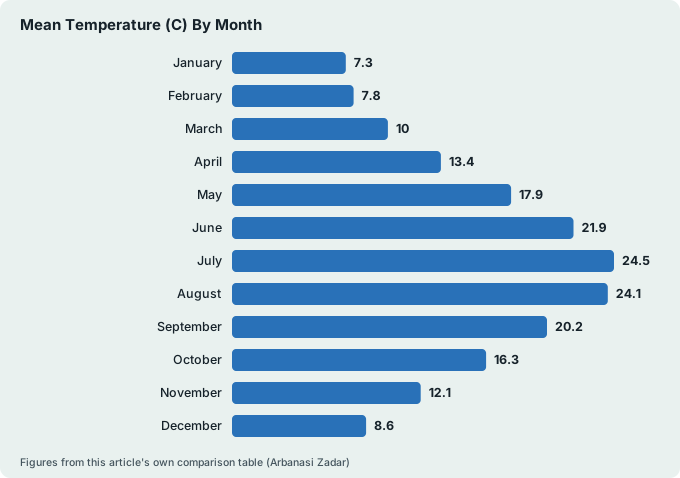
Arbanasi lies on the mainland side of Zadar, directly across the mouth of the harbour from the Old Town peninsula, in the coastal city of Zadar in Dalmatia, Croatia, on the Adriatic Sea. The quarter faces the island of Ugljan across a narrow channel and sits within easy reach of the peninsula on foot, by city bus or by the Barkajoli rowing boat, which makes the crossing of roughly 75 metres in about a minute and a half to two minutes, weather permitting, year-round.
The geography is the whole point of the place. Zadar's Old Town, the Poluotok, is a thin finger of land, and Arbanasi sits on the opposite bank where the mainland opens out toward the north-eastern suburbs. From the Arbanasi shore the towers of the peninsula, including the Cathedral of St Anastasia's bell tower, sit close enough to read across the water. The island of Ugljan fills the northern view, and the Jadrolinija route page shows a ferry of roughly 25 to 30 minutes connecting Zadar with Preko on Ugljan, so the island sits near enough to be part of the everyday view from Arbanasi rather than a distant silhouette.
The quarter is residential first and visitor-facing second. Streets run up the hillside from the water, local shops and bakeries sit among the houses, and the shoreline below holds small concrete swimming platforms and pebble patches rather than resort beaches. For travellers weighing it against the peninsula, the trade is straightforward: quieter nights, more space, sea views, and a short crossing or a modest walk each time you want the Roman Forum, the Kalelarga or the Sea Organ.
How Do You Get From Arbanasi To Zadar Old Town?
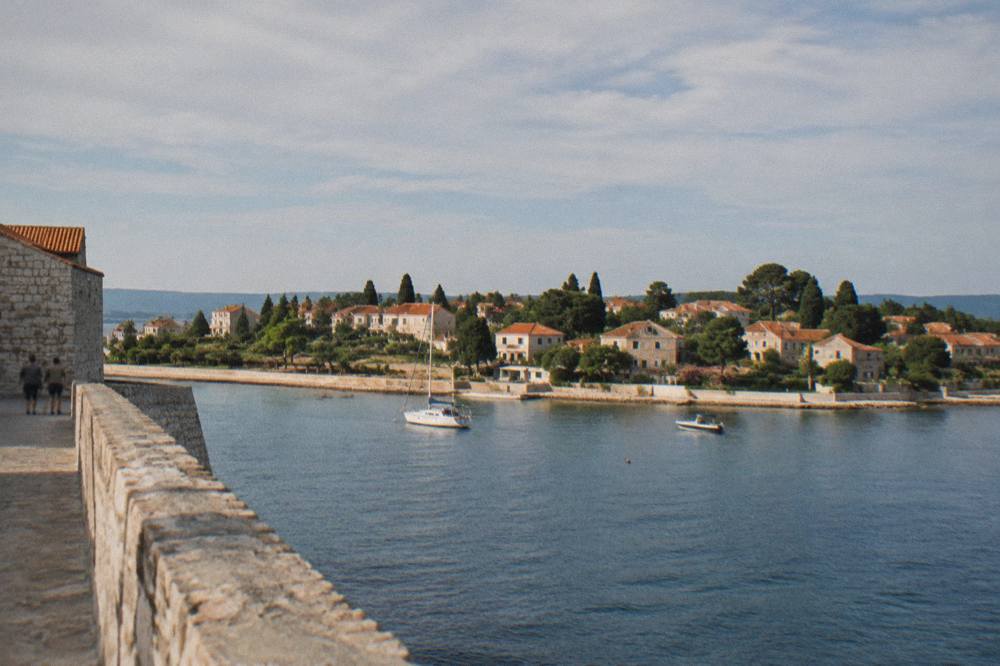
There are three ways across: on foot over the bridge road that loops around the harbour mouth, by city bus on the line that serves the Arbanasi shore, and by the Barkajoli rowing boat, a hand-rowed service that makes the roughly 75 metre crossing in about a minute and a half to two minutes, runs year-round weather permitting, and costs a euro or two, since no official fare table exists and reports of the exact price vary.
The Barkajoli are the romantic answer and the practical shortcut. The service is one of the small continuities of everyday Zadar: boats cross between the two shores on demand through the day, and the crossing time of about 1.5 to 2 minutes is a reported figure rather than a published timetable item. The fare is genuinely unsettled in the sources: reports range up to 2 EUR for visitors, and no official price list was found. Treat it as a euro or two carried in cash, and confirm with the boatman before you board. In strong wind, above all the winter bora that blows from the north-east, the boats stop, and the bridge road takes over.
The land route is the dependable one. The road bridges the harbour mouth upstream of the channel, so walking from Arbanasi to the peninsula means a loop of the bay rather than a straight line, a stroll of perhaps twenty minutes depending on where in the quarter you start. City buses connect the quarter with the centre, and one detail from the transport file is worth knowing: the Poluotok-Arbanasi-Kolodvor line's evening departures, at 21:00 and 22:00, were rerouted from 12 October 2026 because of recurring traffic problems in Arbanasi, so late-evening riders should check the posted stops rather than assume the daytime route. Tickets and timetables are confirmed locally with the operator, Liburnija, whose station sits at Ante Starčevića 1.
| Way Across | Rough Character | Runs | Notes From The Sources |
|---|---|---|---|
| Barkajoli rowing boat | Direct water crossing, about 75 m | Year-round, weather permitting | Crossing about 1.5 to 2 minutes |
| On foot via the bridge road | Loop around the harbour mouth | Always open | Roughly a twenty-minute walk depending on start point; no published figure for the Arbanasi stretch |
| City bus | Fixed-route service to the centre | Daily schedule with the operator | Evening departures on the Poluotok-Arbanasi-Kolodvor line rerouted from 12 October 2026 |
Once you are across, the peninsula rewards the trip. The Greeting to the Sun and the Sea Organ, both free public installations by Nikola Bašić, built in 2005 and 2008 respectively, sit on the western riva, and the Five Wells Square, the Roman Forum and the Kalelarga run inland from there, all in free public space.
Is Arbanasi A Good Place To Stay In Zadar?
Arbanasi suits travellers who want a calmer, more local base within sight of the Old Town: it offers sea views toward Ugljan, small local beaches, residential quiet and a crossing or a walk to the peninsula, in exchange for fewer hotels, restaurants and sights within the quarter itself. It compares with Borik to the north-west for a seaside stay outside the centre, and with the peninsula itself for atmosphere and walkability.
The honest framing is what Arbanasi is not. It is not the peninsula, where every step lands on a Roman stone, a café or a church, and it is not Borik or Puntamika, the hotel-and-beach strip to the north-west with the larger resorts. Arbanasi is the middle option: a lived-in quarter with apartments, holiday lets and guesthouses rather than a defined hotel zone, and a shoreline that belongs to swimmers and fishermen in the morning. Croatia charges a tourist tax collected through the accommodation, and the amount is confirmed at booking rather than published on this site.
What the quarter does offer is proximity with breathing room. The view across the channel changes with every hour of the day, the evening walk along the water looks back at the peninsula's floodlit walls, and the morning swim happens before the boat ride into town. Families and longer-stay travellers tend to do well here; anyone whose priority is stepping out of a hotel directly onto the Kalelarga does not. The wider question of how the quarters stack up is covered in the site's Old Town guide for the peninsula itself.
| Zadar Quarter | Character | Best For | Trade-Off |
|---|---|---|---|
| Old Town peninsula | Historic core, sights, cafés | Short visits, atmosphere | Busier, pricier, car-unfriendly |
| Arbanasi | Residential, sea views, local feel | Longer stays, quiet nights | Fewer hotels and restaurants in the quarter |
| Borik and Puntamika | Hotel and beach strip | Beach holidays | Farther from the historic core |
| Kolovare | Quiet seafront south-east of the peninsula | Beach days near the centre | Less character than the peninsula |
What Is The Weather Like In Arbanasi?
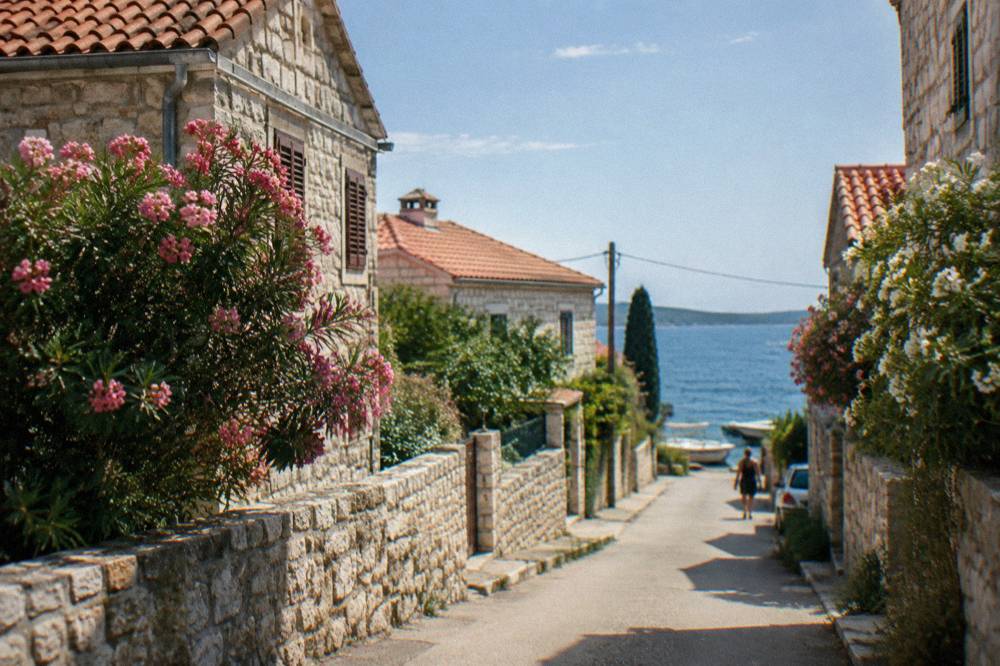
Arbanasi shares the climate recorded at the Zadar station, 1961-2024 (DHMZ): a coastal Mediterranean pattern with a July mean of 24.5 C, a January mean of 7.3 C, July the driest month at 35.4 mm of rain, November the wettest at 123 mm, and roughly 2,600 hours of sunshine a year, figures that hold for the whole city including this quarter, which sits on the same sea-moderated shore.
The station record is the one to quote because it measures exactly this shore. The sea keeps winter mild and summer a shade cooler than the inland plain, and the two named winds shape everyday life in Arbanasi more than in the sheltered peninsula streets: the bora, a cold, dry gusty north-easterly that mostly bites in winter and can stop the Barkajoli boats, and the jugo, a warm, humid south-easterly that brings grey, heavy weather. Rain falls on roughly five days in July and twelve in November, so the swimming season and the coat season are both real here, just as they are across the bay.
| Month | Mean Temperature (C) | Rainfall (mm) |
|---|---|---|
| January | 7.3 | 76.4 |
| February | 7.8 | 67.0 |
| March | 10.0 | 66.3 |
| April | 13.4 | 61.4 |
| May | 17.9 | 64.4 |
| June | 21.9 | 48.5 |
| July | 24.5 | 35.4 |
| August | 24.1 | 52.8 |
| September | 20.2 | 110.9 |
| October | 16.3 | 106.8 |
| November | 12.1 | 123.0 |
| December | 8.6 | 99.6 |
No monthly sea-temperature normal is published for Zadar on an official page; DHMZ publishes a live reading, which stood at 21.3 to 21.4 C at Zadar on 11 October 2026. Swimmers should check the live figure near their travel date rather than rely on a monthly average.
Can You Swim From Arbanasi?
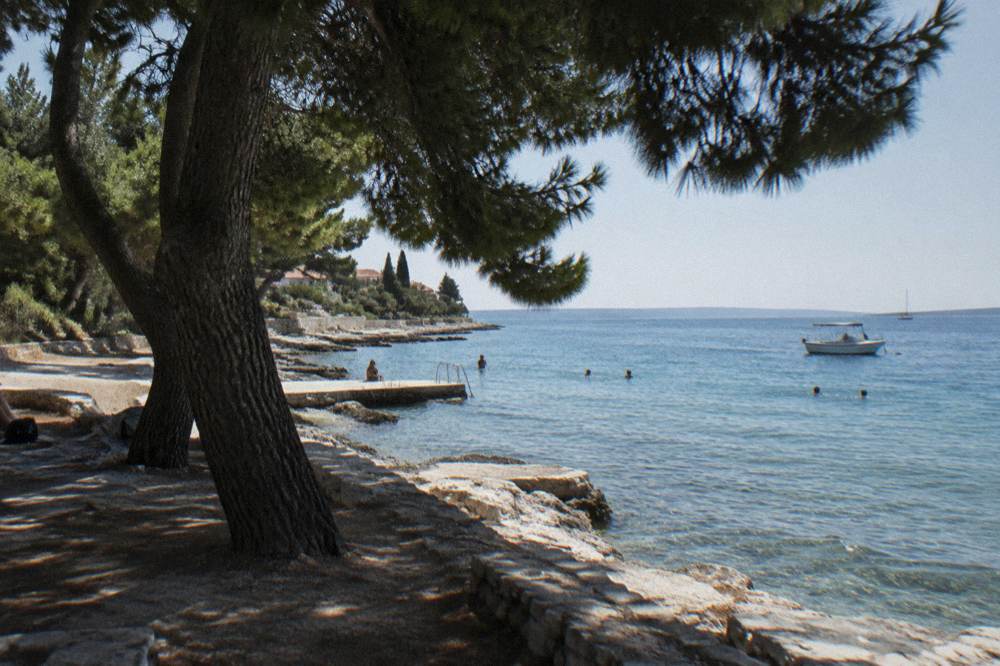
Yes, swimming from the Arbanasi shore is normal and free: the quarter's waterfront holds small local beaches and concrete bathing platforms in the channel between the mainland and Ugljan, and Zadar County's 2026 beach rules keep access fully public and free on concession beaches, with no fencing, ramps, barriers or entry fees allowed, and commercial layouts such as sunbeds limited to a share of each beach.
That county rule is the freshest and least-known fact on this page. Adopted by the Zadar County Assembly and in force for the 2026 season, it means that even where a beach has a concessionaire running sunbeds or a café, the concessionaire cannot fence the beach off or charge for entry, and a substantial part of the sand or rock must stay free for people with their own towels. For the small Arbanasi swimming spots it mostly confirms what was already true: the shore here is local, informal and open.
The water in the channel is sheltered from open-sea swell, which makes the bathing easy, though the same shelter means the surface can go flat-still in high summer. The bigger, better-known city beaches sit elsewhere: Kolovare, the long seafront beach a walk south-east of the peninsula, and the Borik-Puntamika stretch to the north-west, each with its own guide on this site. From Arbanasi, the quiet local option is the one out of the door, and the larger ones are a bus ride or a walk away.
What Can You See From Arbanasi?
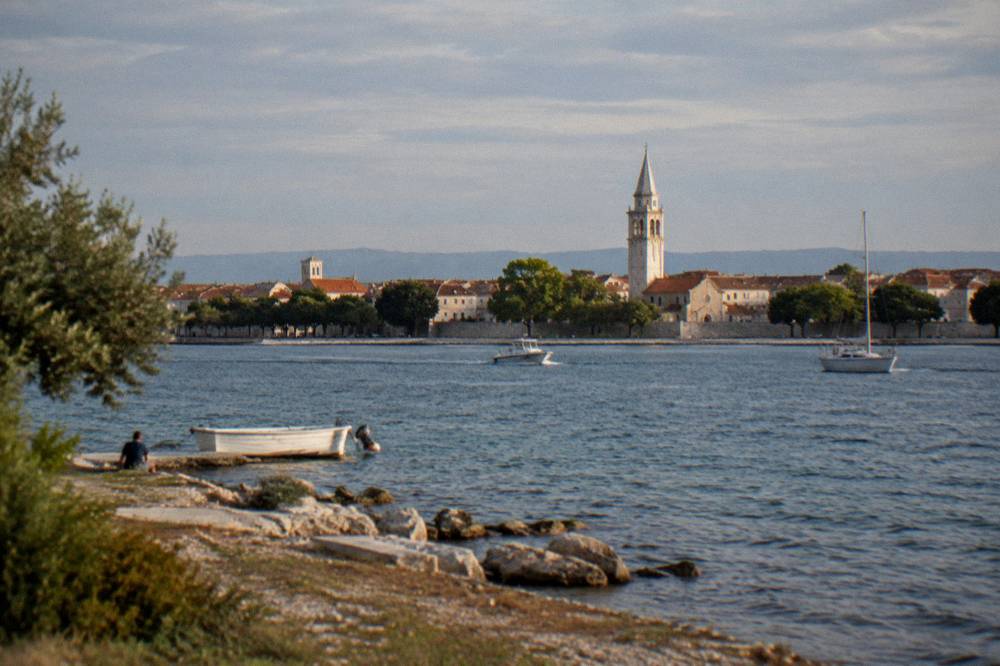
The view from the Arbanasi shore takes in the whole western face of the Old Town peninsula, including the Cathedral of St Anastasia's bell tower, the island of Ugljan directly opposite across the channel, and the open Adriatic sunset to the west, the same sunset the peninsula's Sea Organ and Greeting to the Sun installations were built to face, so the quarter watches the famous view from across the water rather than from inside it.
That reversal is Arbanasi's quiet advantage. The riva on the peninsula looks west over the sea; Arbanasi looks back at the riva, with the sun setting behind the peninsula's silhouette. Ugljan sits opposite, close enough that the Jadrolinija ferry to Preko makes the crossing in roughly 25 to 30 minutes, and on clear evenings the lights of the island string along the horizon. The foreground is working water: small boats, the Barkajoli when they run, and the occasional ferry sliding out toward Gaženica, the vehicle ferry port, which sits about 5.2 km from the Old Town by road.
Two things worth knowing sit inside that view. The first is that Zadar's UNESCO status is narrower than the brochures suggest: the city is one of six components of the Venetian Works of Defence property inscribed on the World Heritage List in 2017, and the Old Town as a whole is not a World Heritage Site. The second is the Land Gate of 1543, built to Michele Sanmicheli's design, which faces the harbour side of the peninsula and so is seen at its best from the water or the Arbanasi-facing shore, not from inside the walls.
What Day Trips Work From Arbanasi?
Arbanasi works as a base for the same day trips the rest of Zadar serves, since the boat-trip departures leave from the peninsula waterfront minutes across the bay and the road network starts from the mainland side: Ugljan by ferry in roughly 25 to 30 minutes, Paklenica National Park 46.8 km away by road, Krka's Skradinski Buk 91 km, and Plitvice Lakes 145 km, each with entry fees that change by season.
The road distances come from routing data held by this site, measured from the Old Town, and the Arbanasi start adds only the short hop around the harbour mouth. The parks, in fee order at 2026 prices: Paklenica charges adults 5 EUR in deep winter, 8 EUR in the shoulder months and 10 EUR from May to September; Krka charges 7 EUR from January to March and in November and December, 20 EUR in April, May and October, and 40 EUR from June to September; Plitvice charges 10 EUR in deep winter, 23 EUR in spring and October, and 40 EUR in the summer peak, with a lower late-afternoon summer price. Swimming at Krka's Skradinski Buk has been banned since 2021 to protect the travertine; swimming is allowed only at the designated spots of Roški slap, Stinice and Pisak, from 1 June to 30 September.
Kornati is the exception in kind: entry there is charged per vessel, by boat length and season, and is bought outside the park, which is one reason the organised Kornati boat trips remain the simple way in. Ugljan, directly opposite Arbanasi, needs no park ticket at all, just the ferry.
| Destination From Zadar | Road Or Sea | Distance Or Time (Site Data) | 2026 Adult Entry |
|---|---|---|---|
| Ugljan (Preko) | Jadrolinija ferry | About 25 to 30 minutes | No park fee |
| Nin | Road | 19.8 km | Town, no park fee |
| Paklenica National Park | Road | 46.8 km | 5 / 8 / 10 EUR by season |
| Skradin | Road | 76 km | Town, no park fee |
| Krka NP (Skradinski Buk) | Road | 91 km | 7 / 20 / 40 EUR by season |
| Plitvice Lakes NP | Road | 145 km | 10 / 23 / 40 EUR by season |
Guided versions of the big two run from the Zadar waterfront, and the site's Plitvice day trips and Krka pages break down how tickets, timing and season interact.
Where Does Arbanasi Fit In A Zadar Itinerary?
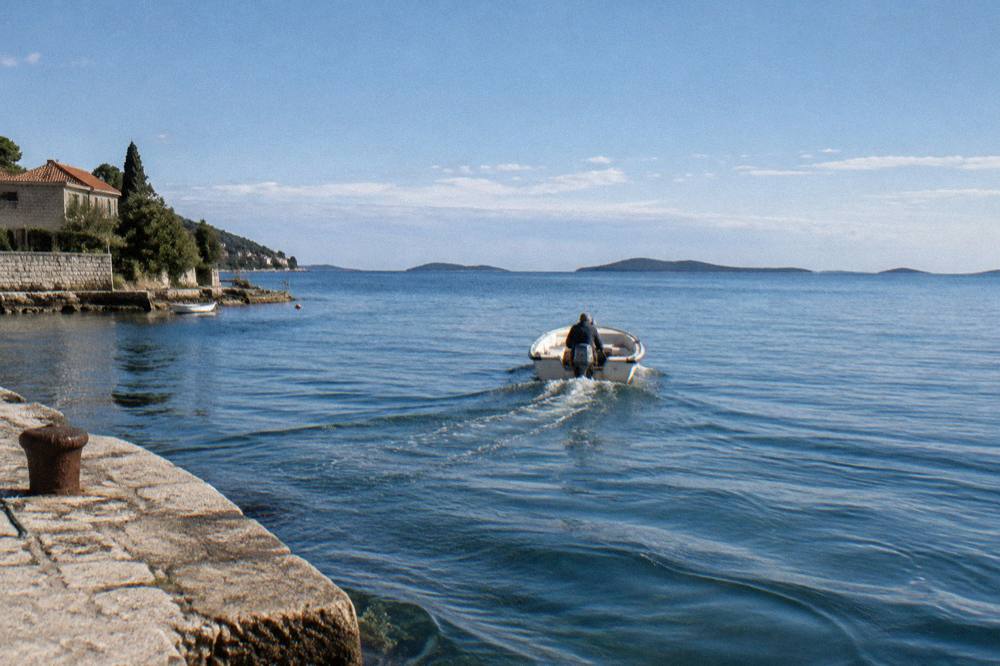
Arbanasi fits Zadar itineraries as either the base or a single morning: as a base it suits the two-day and longer plans, giving a quiet night and an easy crossing into the sight-heavy peninsula days, while as a stop it earns a half-day of swimming, shoreline walking and a Barkajoli crossing, slotting naturally into a one-day plan that otherwise concentrates on the Old Town, the riva and the sunset installations.
For a short visit, the arithmetic matters. The site's one day in Zadar plan keeps you almost entirely on the peninsula, and that is defensible: the Roman Forum, the Church of St Donatus, the Kalelarga and the Sea Organ stack up within a few hundred metres. Arbanasi enters that plan as the evening alternative, a swim and a meal on the quiet shore with the lit peninsula opposite. From two days onward, the two days in Zadar plan frees a half-day for the water, and a morning on the Arbanasi side or a boat trip from the waterfront next door fills it well.
One caveat belongs in any plan that names St Donatus: the church faces roof restoration, with works planned from autumn 2026 for about six months as the first phase of a wider restoration, and group visits are suspended during the works, so access may be limited and should be checked before going. The rest of the peninsula's open-air core, from the Forum to the riva, is unaffected.
| Itinerary Length | Arbanasi's Role | What Fills The Rest |
|---|---|---|
| One day | Optional evening swim and crossing | Old Town core, riva, sunset at the installations |
| Two days | Half-day on the shore or a boat trip | Peninsula day plus one water or island half-day |
| Three days | Full base or a relaxed morning | Add one national park day trip |
What Rules Should You Know On The Zadar Shores?
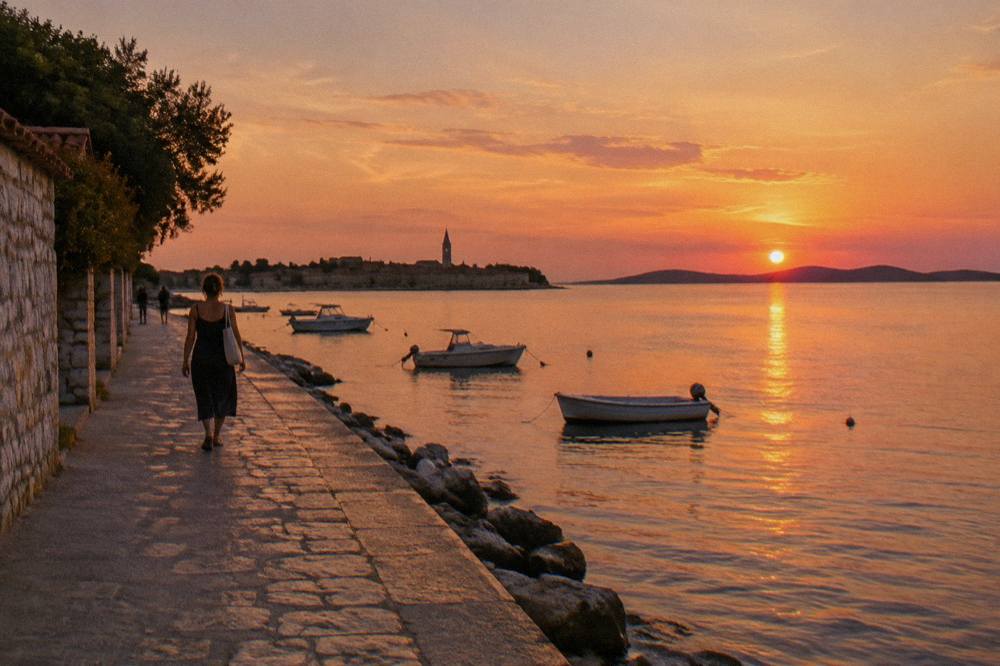
Three local rules matter around Arbanasi and the Old Town in 2026: beach access on Zadar County concession beaches must stay public and free, with no fencing or entry fees; the historic peninsula has posted dress-code signs requiring appropriate clothing, with no swimwear or nudity and fines reported up to 130 EUR after a warning; and the city has moved to restrict night-time retail alcohol sales in the Old Town, while bars and restaurants are unaffected.
The beach rule is the county's, in force for the 2026 season and aligned with the national Law on Maritime Domain, and it settles the sunbed-versus-towel question on any beach you meet from Arbanasi to Borik: commercial layouts such as sunbeds are capped at 40 to 60 per cent of a beach's area, and the rest stays free for people with their own towels. The dress-code signs went up at the key access points to the historic peninsula in summer 2026 under the existing communal order decision: cover up off the beach, in short, before crossing to the Old Town. The alcohol restriction, reported through 2026 as the city applied new national powers, targets shops, kiosks and delivery in the Old Town, not terrace drinking, and its exact hours should be confirmed locally during your stay.
None of this is burdensome, but it explains a pattern a visitor will notice: the peninsula behaves like a town centre, and the shores around it, Arbanasi included, behave like the seaside. Keep the swimwear on the Arbanasi side of the channel. The emergency number across Croatia is 112.
What Boat Trips Leave Near Arbanasi?
The Zadar boat-trip fleet leaves from the peninsula waterfront, minutes from where the Arbanasi crossings land, and covers the Ugljan-channel islands, the Dugi Otok coast with Sakarun beach, and the Kornati archipelago with Telašćica, while kayaking runs closer in along the city shore, so staying in Arbanasi puts every departure point within one short crossing of the door.
The traditional boat trips in the channel suit an Arbanasi stay particularly well: they swim and snorkel among the islands you can see from the quarter's shore, and the operator's live listing carries current prices, dates and departure points. The Kornati and Telašćica full-day trips go farther out to the national park where entry is charged per vessel, and lunch is included on that departure. A reader planning the water days can compare the whole field in the site's Zadar boat tours overview, or go straight to the listings.
For independent water travel, Jadrolinija's route pages carry the Gaženica to Brbinj ferry for Dugi Otok, a crossing of 1 hour 40 minutes, and the Preko ferry for Ugljan at roughly 25 to 30 minutes; fares are confirmed on the operator's pages. The fast catamaran to Ancona that ran in the 2026 season ended on 6 September 2026, and no 2027 season has been announced.
Common Questions About Arbanasi Zadar
Where is Arbanasi in Zadar?
Arbanasi is the mainland quarter directly across the harbour mouth from the Old Town peninsula, in the coastal city of Zadar in Dalmatia, Croatia, facing the island of Ugljan across a narrow channel.
How long does the Barkajoli boat take from Arbanasi to the Old Town?
About a minute and a half to two minutes for the roughly 75 metre crossing, weather permitting, year-round.
Is Arbanasi a good place to stay in Zadar?
It suits travellers who want a quiet, residential base with sea views and local beaches within a short crossing or walk of the Old Town. It has fewer hotels and restaurants than the peninsula or the Borik strip, and the tourist tax is confirmed at booking.
Can you swim in Arbanasi?
Yes. The waterfront holds small local beaches and bathing platforms, and Zadar County's 2026 rules keep access to concession beaches fully public and free, with no entry fees or fencing allowed.
How do you get to Ugljan from Arbanasi?
Ugljan sits directly opposite. The Jadrolinija ferry from Zadar to Preko takes roughly 25 to 30 minutes; the fare is confirmed on the operator's page.
What rules apply around Arbanasi and the Old Town?
Dress-code signs on the historic peninsula ban swimwear and nudity, with fines reported up to 130 EUR after a warning, and night-time retail alcohol sales in the Old Town face restriction. Beaches stay free and open. The emergency number is 112.
