Zagreb To Zadar
The route from Zagreb to Zadar covers 297 km of Croatian road and ends on a peninsula in the Adriatic. Here is what the verified sources say about driving it, busing it and flying it.
Short answer
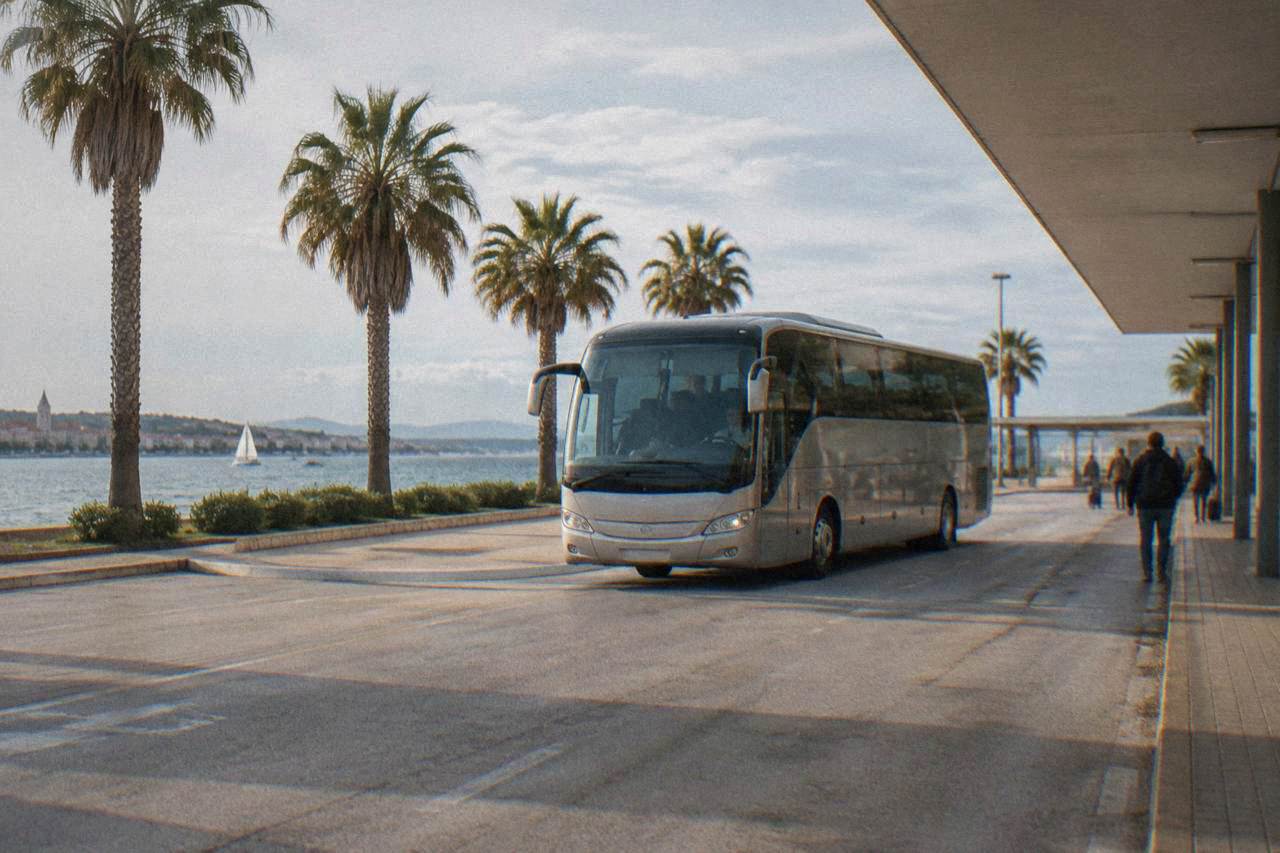
The drive from Zagreb to Zadar is 297 km, mostly on the A1 motorway, and the airport's own page lists Split and Rijeka distances alongside it. Passenger trains do not currently run to Zadar, so the journey is by road or by air, and the city sits about 8 km from Zadar Airport in Zemunik.
Zadar sits on a narrow peninsula in Dalmatia, on the Adriatic coast of Croatia, and the capital Zagreb sits 297 km away in the continental interior, a distance the airport's own how-to-get-here page lists among its driving directions. That single figure frames every decision on this route: it is short enough to drive in an afternoon, too far for a casual commute. This guide sets out what the primary sources say about each option, and what actually happens when the road ends at the sea.
How Do You Get From Zagreb To Zadar?
You get from Zagreb to Zadar either by road, using the A1 motorway for 297 km, or by flying into Zadar Airport at Zemunik, which lies about 8 km from the city. The airport's own how-to-get-here page is the authority on the road distance and the shuttle connection into town.
The 297 km figure comes straight from Zadar Airport's directions page, which also lists Split at 158 km and Rijeka at 305 km from the same junction of Croatian geography. The road south drops off the inland plateau and through the Velebit foothills before the coast opens up, and the last stretch delivers you onto the peninsula where the Old Town, the Sea Organ and the ferry port at Gaženica all sit within a few kilometres of each other.
For orientation once you arrive, the site's how to get to Zadar overview collects every approach in one place, and the Zadar airport guide covers the terminal itself, which gained a new departures building presented on 24 July 2026 according to the airport's own news page. If you are weighing the capital against the coast as a base at all, the comparison page is Zadar or Zagreb better works through the differences.
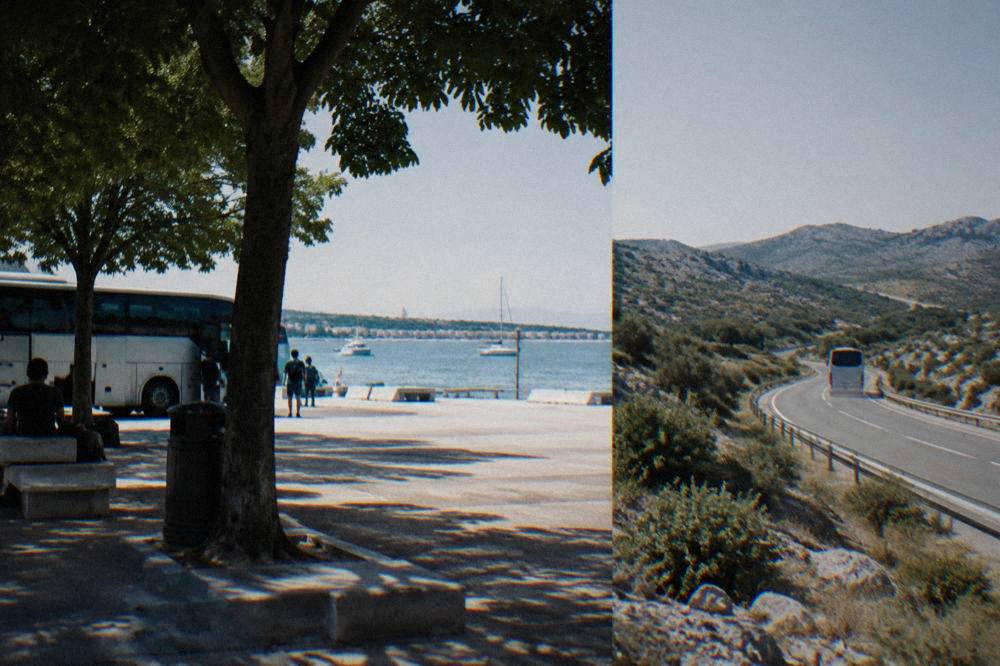
Practically, the decision between car and coach comes down to flexibility. A hire car lets you stop and gives you the day-trip radius around Zadar, which reaches Krka, Plitvice, Nin, Pag and the islands. A coach drops you at Zadar's bus station at Ante Starčevića 1, operated by Liburnija, which the operator's own services page confirms; from there the Old Town is a short hop onward.
How Long Does The Drive From Zagreb To Zadar Take?
The Zagreb to Zadar road distance is 297 km, and the airport's directions page, which publishes the figure, treats it as a motorway run to the coast. Drivers should expect the A1 to carry the bulk of the distance and the final descent to the coast to be slower.
What the sources do give is the arrival geometry. Zadar Airport at Zemunik is the landmark on the approach: the airport's how-to-get-here page says about 8 km to the city, and route computation puts the drive from the Old Town to the airport at roughly 13 km and about 22 minutes, a useful sanity check when your mapping app disagrees.
The road distances the airport page does verify, alongside the Zagreb figure:
| Route (airport's own page) | Distance |
|---|---|
| Zagreb to Zadar | 297 km |
| Split to Zadar | 158 km |
| Rijeka to Zadar | 305 km |
Once you are past Zadar itself, the same road network opens the day-trip radius. Distances computed from the Old Town:
| Destination from Zadar Old Town | Road distance | Drive time |
|---|---|---|
| Bus station (Ante Starčevića 1) | 2.6 km | 6 min |
| Gaženica ferry port | 5.2 km | 10 min |
| Zadar Airport (Zemunik) | 13.3 km | 22 min |
| Nin | 19.8 km | 28 min |
| Paklenica National Park | 46.8 km | 57 min |
| Skradin | 76 km | 62 min |
| Krka, Skradinski Buk | 91 km | 73 min |
| Plitvice Lakes | 145 km | 153 min |
A stop on the way south is worth planning if you have the whole day. Krka National Park's official 2026 price list shows adult entry of 7 euro in January to March and November to December, 20 euro in April, May and October, and 40 euro from June to September, and both Krka and Plitvice dropped to their winter-shoulder rates on 1 October 2026. The Krka versus Plitvice comparison breaks down which one earns your detour.
Note that if you skip driving entirely and ride a coach in, the Krka logic still holds: guided tours from Zadar handle the park entry and the transfer, including the Krka waterfalls day tour with boat ride and guide, whose listing shows the from-price, rating and duration on the operator's live listing. The tour covers the falls, the Skradin boat leg and the guide commentary, which is the part that turns a transport day into a sightseeing one.
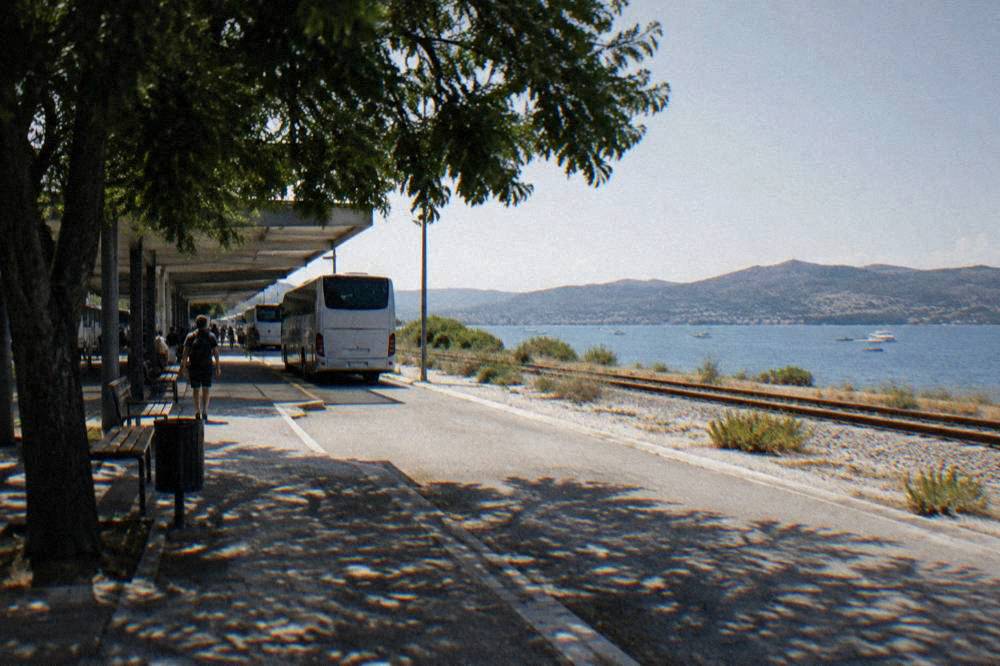
Zadar does have a railway station, right next to the main bus station, but passenger trains do not currently run to it: the Zadar-Knin line is under renovation, and Zagreb-Split trains run via Knin without reaching Zadar. Travelers from central Europe therefore finish the journey by coach, car or ferry, most often by long-distance coach into Zadar's bus station at Ante Starčevića 1, the terminus for operator Liburnija's services.
Croatia's rail map simply does not reach this stretch of the Dalmatian coast, a fact that surprises travelers used to European coastal railways. The coach network fills the gap, running the same A1 corridor the cars use, and the bus station's position 2.6 km from the Old Town, about six minutes by road per route computation, keeps the last leg short. No coach fare is printed here; check the operator or ticket desk for the current price.
The station also anchors local transport. A separate report notes that from 12 October 2026 the evening departures on the Poluotok, Arbanasi and Kolodvor city line were rerouted owing to recurring traffic problems in Arbanasi, a reminder that the city network adjusts and that the Zadar public transport picture rewards a fresh look close to travel. For the arrival logistics in detail, including the airport shuttle, the airport to city centre guide is the site's dedicated page.
Should you drive instead of ride, parking is the one genuinely hard problem in the arrival plan.
Is Flying From Zagreb To Zadar A Real Option?
Flying into Zadar is a real option, and Zadar Airport at Zemunik, about 8 km from the city by its own how-to-get-here page, is the arrival point. What the airport's own pages do confirm is fast growth: a new departures terminal was presented on 24 July 2026, and year-round Munich flights are confirmed for winter 2026-27.
The airport's shuttle settles the last kilometre question reliably. Operated by Liburnija, it costs 5.00 euro one way including luggage, takes about 20 minutes to the Old Town on the Airport, Gaženica ferry port, bus station and Old Town routing, and the ticket stays valid for 90 minutes on city buses, all per the airport's own page. That is one of the few ground-transport prices in this region that an official source publishes outright.
| Zadar Airport fact | Figure | Source type |
|---|---|---|
| Distance to the city | about 8 km | Airport's how-to-get-here page |
| Shuttle operator | Liburnija | Airport page |
| Shuttle fare, one way | 5.00 euro incl. luggage | Airport page |
| Shuttle run time to Old Town | about 20 min | Airport page |
| Ticket validity on city buses | 90 minutes | Airport page |
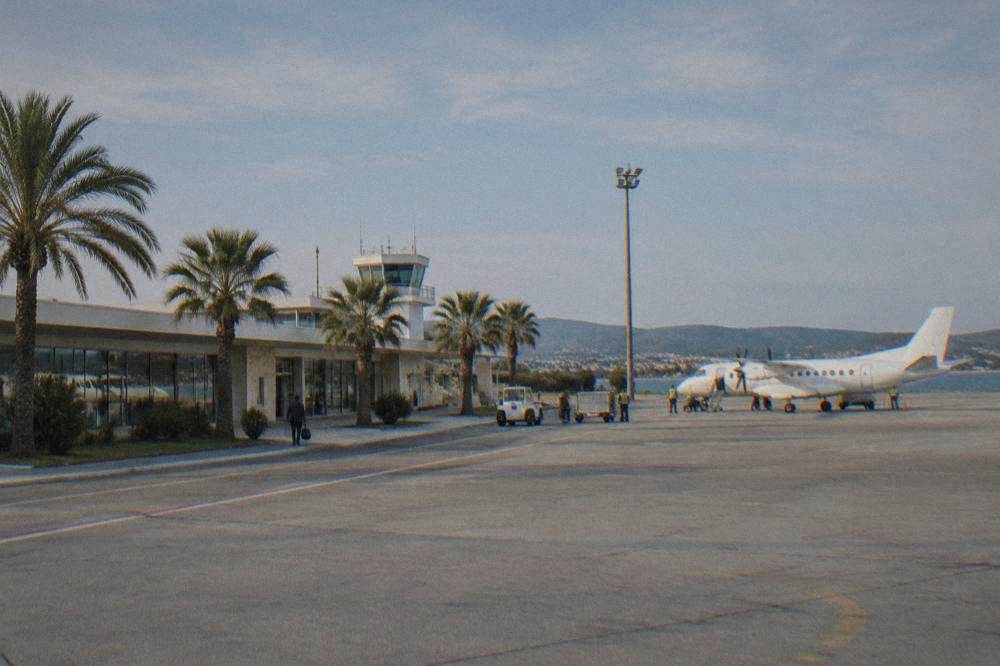
For anyone assembling the whole journey, the practical comparison is rarely plane versus car for this distance alone; it is plane versus car for the week that follows. A hire car from the airport unlocks Paklenica, Nin and Pag on your own clock, and the site's airport car rental page covers that decision, while the flights to Zadar guide tracks who actually flies the route network.
What Should You Expect From Zadar When You Arrive?
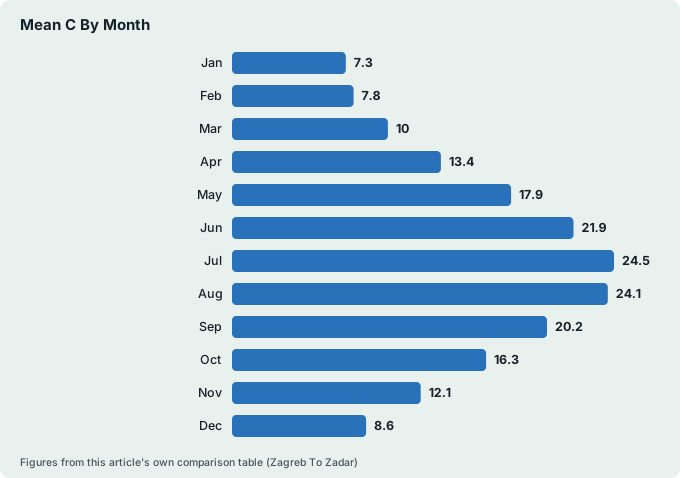
Zadar is a coastal Dalmatian city of 67,309 people at the 2021 census, a figure attributed to the census through secondary compilation, with its Old Town on the narrow Poluotok peninsula and the islands of Ugljan and Dugi Otok offshore. The climate is Mediterranean: the DHMZ station table for Zadar, 1961 to 2024, shows July averaging 24.5 C and January 7.3 C, with November the wettest month at 123 mm and about 2,600 hours of sunshine a year.
The arrival month matters more here than on most routes, because the coast sharpens the seasons. July brings 10 days at or above 30 C on the long-run station record and only 5 rain days; November brings 12 rain days and 123 mm. The full station picture:
| Month | Mean C | Rain mm | Rain days |
|---|---|---|---|
| Jan | 7.3 | 76.4 | 10 |
| Feb | 7.8 | 67.0 | 9 |
| Mar | 10.0 | 66.3 | 9 |
| Apr | 13.4 | 61.4 | 10 |
| May | 17.9 | 64.4 | 10 |
| Jun | 21.9 | 48.5 | 8 |
| Jul | 24.5 | 35.4 | 5 |
| Aug | 24.1 | 52.8 | 6 |
| Sep | 20.2 | 110.9 | 9 |
| Oct | 16.3 | 106.8 | 9 |
| Nov | 12.1 | 123.0 | 12 |
| Dec | 8.6 | 99.6 | 12 |
Zadar station, 1961-2024, DHMZ. The site's Zadar weather guide and best time to visit guide turn those numbers into planning advice, and the how many days in Zadar page answers the follow-up question.
Money is simple on arrival: Croatia has used the euro since 1 January 2023 and is a Schengen member, so there are no border formalities for most European travelers and no currency exchange beyond the eurozone's own. A tourist tax exists and is collected by your accommodation, with the amount confirmed at booking, which is the honest limit of what this site can state about it. The emergency number, for completeness, is 112. The rest of the planning pages sit on Zadar Croatia Travel Guide.
Where Should You Sleep After The Long Ride South?
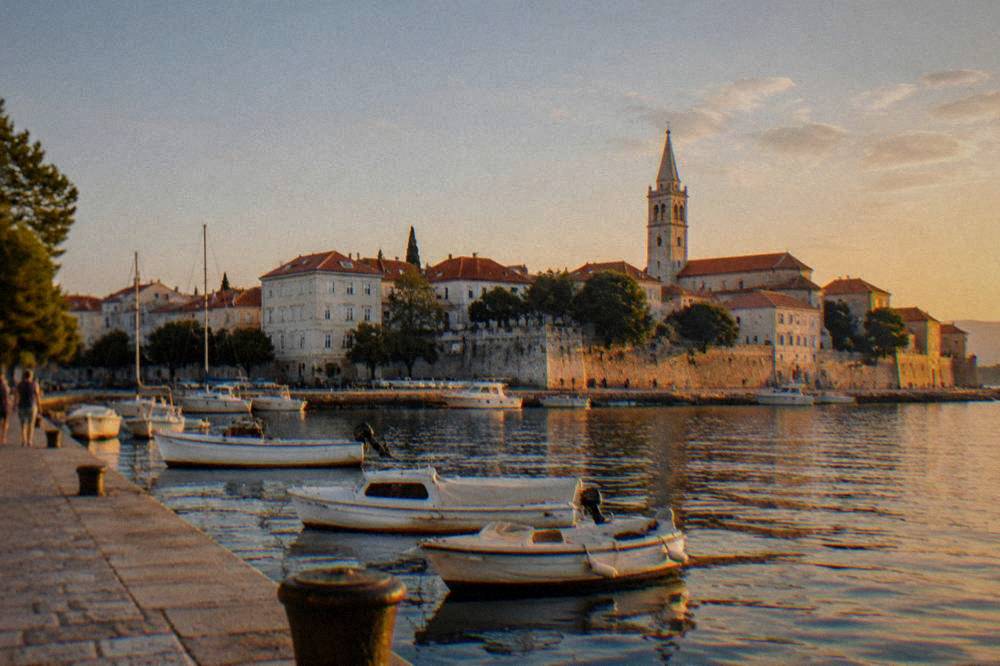
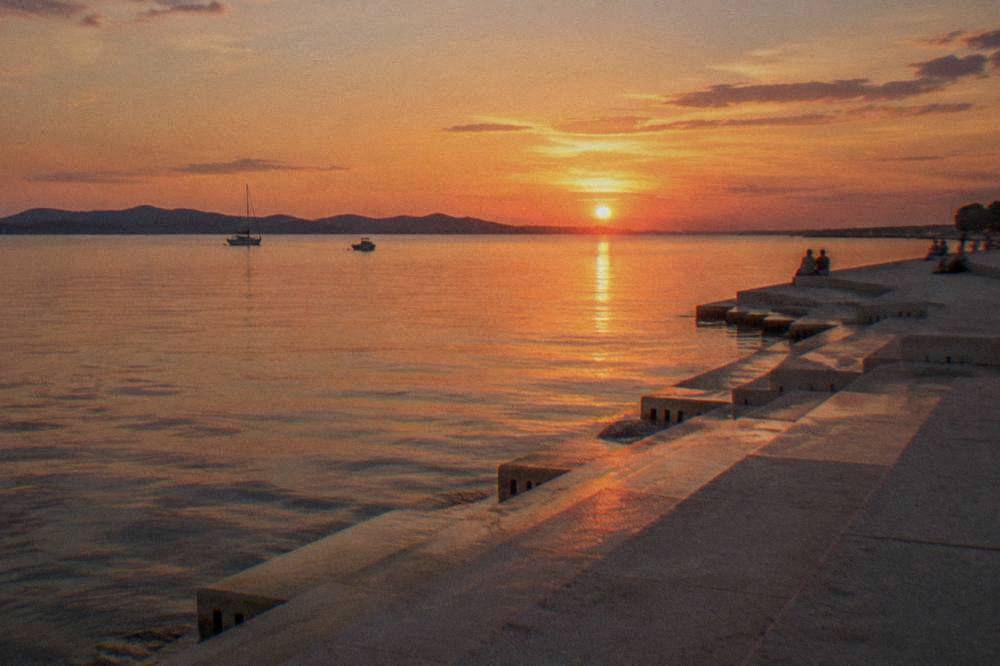
The honest answer is that the peninsula puts you inside the walkable core and the mainland districts trade atmosphere for space and parking. The Old Town itself runs on pedestrian rhythms: the Sea Organ and Greeting to the Sun, both by Nikola Bašić and both free and open at all hours, sit at its western tip, and the Roman Forum, Five Wells Square and Kalelarga are all free public spaces within a short walk of each other.
The site's dedicated where to stay in Zadar guide maps the trade in full. Choosing the peninsula means choosing the Sea Organ at dusk and the Land Gate of 1543 as your daily landmarks, but it also means the parking constraints noted above and summer crowds on Kalelarga. The mainland side, Borik and Puntamika to the north, Diklo further out, puts you near beaches and hotels with easier car access, at the price of a bus or drive into the evening core. No hotel rate is printed anywhere on this site because none is verified.
A practical note for arrival day: dress-code signage now stands at key access points to the historic peninsula, requiring appropriate clothing and banning swimwear, with fines reported up to 130 euro after a verbal warning. Cover up between beach and Old Town. Plans reported in 2026 also aimed to restrict night-time retail alcohol sales on the peninsula, affecting shops rather than bars and restaurants, another reason to confirm locally.
For the rest of the first evening, the site's things to do in Zadar overview collects the essentials, and the food pages, from Zadar restaurants to what Zadar food actually means, handle dinner.
Is The Trip Worth It Once You Are There?
Zadar rewards the journey with a compact peninsula of Roman, medieval and contemporary layers, and the UNESCO listing is specific: the city is one of six components of the Venetian Works of Defence property, inscribed in 2017, not a World Heritage Site as a whole. Entry costs are modest where they exist, from 7.00 euro at the Museum of Ancient Glass per its own ticket page to the seasonal park fees outside town, and the Sea Organ and Greeting to the Sun, from 2005 and 2008, cost nothing.
One access caveat belongs in any 2026 or 2027 plan. St Donatus Church faces a roof restoration: a public tender launched at the end of August 2026 for work estimated at 1.3 million euro, with seven bids received by early October, roof works planned from autumn 2026 over about six months, and group visits suspended during the works. Check access before counting on an interior visit; the site's St Donatus page tracks what is known.
| Site or park | Adult entry | Source |
|---|---|---|
| Sea Organ and Greeting to the Sun | free, open at all hours | City of Zadar page |
| Museum of Ancient Glass | 7.00 euro | Museum ticket page |
| Archaeological Museum and St Donatus | around 7 euro full price | AMZD tariff page |
| Krka NP | 7 / 20 / 40 euro by season | Official 2026 price list |
| Plitvice Lakes NP | 10 / 23 / 40 euro by season | Official price list |
| Paklenica NP | 5 / 8 / 10 euro by season | Official 2026 price list |
| Telašćica Nature Park | 6 / 8 euro by season | Park price page |
| Kornati NP | per vessel, by length and season | Official 2026 price list |
Beyond the museums, the arrival city works as a launch pad. The Zadar day trips guide lays out the full radius, the islands guide covers Ugljan, Dugi Otok and the Kornati archipelago, and Jadrolinija's route page shows the Gaženica to Brbinj ferry on line 434 at 1 h 40 min for Dugi Otok, with the Ugljan crossing to Preko at roughly 25 to 30 minutes. No ferry fares are printed because none are verified.
Evening options split cleanly between water and stone. A transparent LED kayak sunset and night glow tour runs from the city waterfront, and its from-price, rating and duration render on the operator's live listing rather than in prose here; Check availability if the Sea Organ at dusk and a glowing hull appeal in the same evening. The Zadar nightlife guide covers the bar side.
What Are The Best Ways To Use Zadar As A Base After Arriving?
The verified answer is that Zadar's position puts one national park within an hour and a half by road and a second within two and a half, with the islands directly offshore: Krka's Skradinski Buk is 91 km and about 73 minutes from the Old Town by route computation, Plitvice is 145 km and about 153 minutes, and Paklenica sits 46.8 km away at roughly 57 minutes. Guided tours compress the logistics of all three.
The island ferries run from Gaženica, 5.2 km and about 10 minutes from the peninsula. Plitvice deserves its own warning label: it is a long day trip, plainly stated, and the park's seasonal pricing means an off-season visit costs a fraction of the summer one. The Plitvice Lakes guide and the Krka versus Plitvice comparison handle the choice in depth. Swimming, for the record, is banned at Skradinski Buk and allowed only at designated spots such as Roški slap, Stinice and Pisak from 1 June to 30 September.
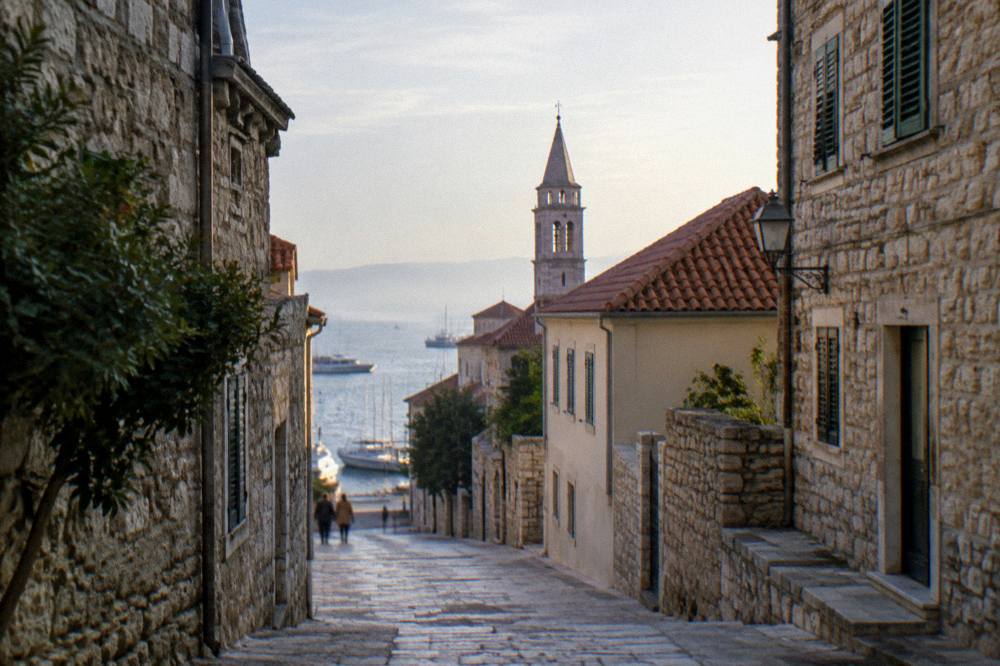
Tours that include the Skradin boat leg are the popular middle path between self-driving and full coach tours, since the river approach is part of the park's character. A Krka day tour with the Skradin boat ride covers the falls, the boat transfer and the entry coordination, with the from-price, rating and duration shown on the booking page; Check availability for the current season. The Zadar boat tours guide and the Zadar tours overview map the rest of the catalogue.
For a park-free day, Plitvice can also be booked as a guided day tour with tickets included, which spares the timed-entry webshop; the listing carries the price, rating and duration. Check availability if the lakes are the priority.
Budget-wise, the Zadar cost guide works through what a stay actually runs, and the is Zadar worth visiting page answers the underlying question. Travel safely, and dial 112 in an emergency.
Common Questions About Traveling From Zagreb To Zadar
How far is Zagreb from Zadar?
The road distance is 297 km, published on Zadar Airport's own how-to-get-here page alongside Split at 158 km and Rijeka at 305 km.
Is there a train from Zagreb to Zadar?
The coach network runs the route into Zadar's bus station at Ante Starčevića 1, operated by Liburnija.
What is the best way to get from Zagreb to Zadar?
By road, either driving the A1 corridor or riding a coach into the bus station, or by flying into Zadar Airport at Zemunik about 8 km from the city. The choice depends on whether you want a hire car for the day-trip radius around Zadar, which reaches Krka, Plitvice, Nin, Pag and the islands.
How do I get from Zadar Airport to the Old Town?
The airport shuttle, operated by Liburnija, costs 5.00 euro one way including luggage and takes about 20 minutes on its Airport, Gaženica, bus station and Old Town routing, with the ticket valid for 90 minutes on city buses, all per the airport's own page.
Do I need a car in Zadar once I arrive?
Not for the city itself, which is compact and walkable on the peninsula, but a car or guided tours make the surrounding parks and islands far easier. Krka, Paklenica, Plitvice, Nin and Pag all sit within the verified day-trip radius, and parking in the Old Town is the main friction of bringing a car in.