Zadar To Dubrovnik
Zadar sits near the top of the Dalmatian coast and Dubrovnik sits at its far southern end, so the journey between them is one of the longest a Croatia itinerary can include. Here is what to know about driving legs, ferries, flights and stops along the way.
Short answer
The verified legs of the route run Zadar to Šibenik at 89 km and Zadar to Split at 158 km, with the road continuing south along the coast toward Dubrovnik; there is no direct Zadar to Dubrovnik ferry, and the train does not exist, so the trip is made by road or by air via a connection.
Zadar, on the northern Dalmatian coast of Croatia, and Dubrovnik, at the far southern tip of the same coastline, sit at opposite ends of a long, mountain-hugging shore. The journey between them is not a hop: it is a full travelling day by road, a connection by air, and by sea it is simply not direct at all. For a wider comparison of the two cities as destinations, see Zadar Vs Dubrovnik, and for the southern half of the trip in detail, the Dubrovnik day trip guide covers the ground from the Zadar end.
How Far Is Zadar From Dubrovnik, And What Does The Verified Route Actually Say?
The figures cover the northern legs of the route, not the whole distance: Zadar to Šibenik is 89 km, Zadar to Skradin is 76 km, and Zadar to Split is 158 km, with the coastal road then continuing south toward Dubrovnik. For a door-to-door Zadar to Dubrovnik total, check a route planner on the day of travel.
The drive leaves Zadar heading south on the Adriatic coastal road, reaches Šibenik after 89 km, and reaches Split after 158 km, a figure the airport's own information page confirms from Zadar. South of Split the road hugs the coast again, crossing briefly through Bosnian and Herzegovinian territory at Neum before re-entering Croatia and dropping down to Dubrovnik. That Neum crossing is the detail itinerary planners care about most, because it means the drive involves two international borders even though both endpoints are in Croatia; with Croatia in the Schengen area since 1 January 2023, the crossings are normally straightforward, but they can add waiting time at the height of summer.
The alternative inland legs change the arithmetic. The A1 motorway runs well south of the coast, and the airport page gives long-distance figures in that system: Zagreb 297 km, Rijeka 305 km, Split 158 km. For a purely coastal run with stops in Šibenik, Skradin or Trogir, the older two-lane road is slower but passes through the towns themselves.
The table below gathers every driving figure this site's pack verifies, all of them from the Zadar end.
| Route from Zadar | Distance | Source |
|---|---|---|
| Skradin (Krka gateway) | 76 km | OSRM computed |
| Šibenik | 89 km | OSRM computed |
| Split | 158 km | Zadar Airport page |
| Zagreb | 297 km | Zadar Airport page |
| Rijeka | 305 km | Zadar Airport page |
| Bus station (from Old Town) | 2.6 km | OSRM computed |
Notice what is not on that list: Dubrovnik. A route planner gives the current total in minutes and kilometres on any given day, and that figure varies with the coastal versus motorway choice.
If the long drive south is booked for the middle of your stay, the days before it are better spent close to base. Plitvice Lakes sits inland from Zadar and is the country's most visited national park, and the Plitvice guided day trip with guide and boat tour covers the lakes, a guide and the park's own boat ride in one booked package, with Check availability showing the operator's live listing.
Is There A Ferry Or A Train From Zadar To Dubrovnik?
Jadrolinija's route pages show Zadar's ferries serving the nearby islands and Italy, not the far south of Croatia. The realistic choices are the road, covered above, or a flight with a connection, and a ferry to Dubrovnik would mean sailing out of Italy first.
The ferry situation confuses a lot of planners, so it is worth being precise. Zadar's ferry terminals operate two categories of route. The local network, run from the Gaženica port, serves the islands: the line to Brbinj on Dugi Otok is listed at 1 h 40 min, and the crossing to Preko on Ugljan takes about 25 to 30 minutes. The international network is the Jadrolinija fast catamaran to Ancona in Italy, a passenger-only service that ran from 26 June 2026 and was extended to 6 September 2026 because of demand; the 2027 season has not been announced. Nothing in any of those route pages connects Zadar with Dubrovnik, and the dedicated answer page on whether you can ferry from Zadar to Dubrovnik covers the workarounds, including the Italy routing.
That leaves the bus and the car as the surface options, and the plane as the fast one. Zadar Airport, about 8 km from the city by its own how-to-get-here page, runs a shuttle to the Old Town at 5.00 EUR one way including luggage, taking about 20 minutes, with the ticket valid for 90 minutes on city buses. Whether a flight from Zadar reaches Dubrovnik directly depends on the season's schedules; the airport's route list is the place to check, and its recent additions include Wizz Air services to Budapest and Warsaw from 7 June 2026. The Zadar Airport guide and the airport to city centre guide hold the transfer details.
Planning a trip south opens a bigger question about how to split the coast, and these three bookable options from Zadar each solve a different part of it.
Where Should You Stop Between Zadar And Dubrovnik?
The verified stops on the southern route are Skradin at 76 km, the gateway to Krka National Park, and Šibenik at 89 km, with Split at 158 km as the natural overnight point where the coast road and the motorway meet.
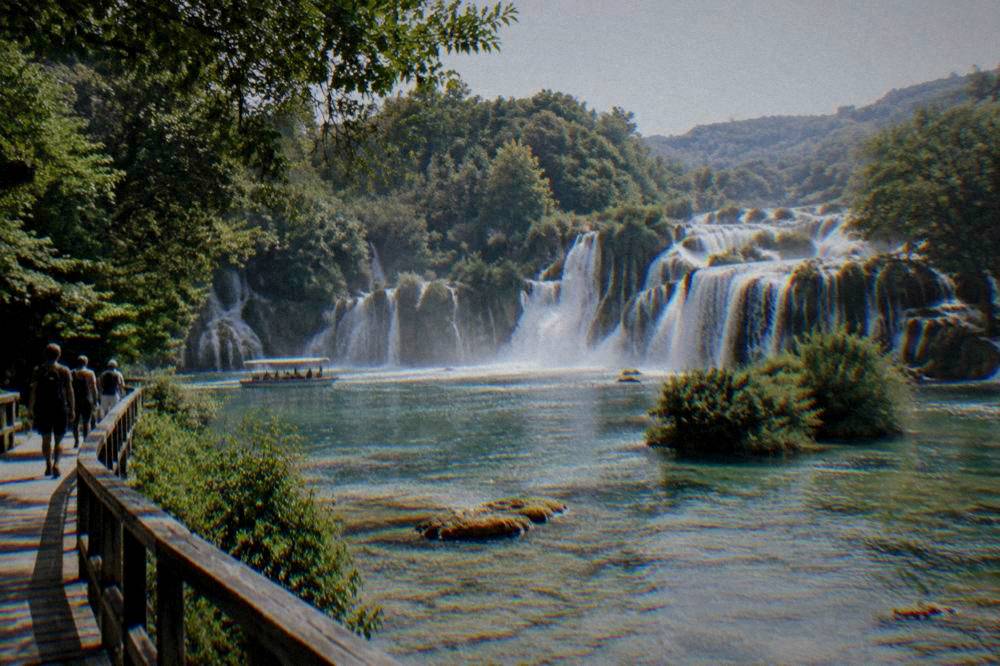
Skradin earns its stop for one reason: it is the boat-ride entrance to Krka National Park. The park's own 2026 price list sets adult entry at 7 EUR in January, February, March, November and December, 20 EUR in April, May and October, and 40 EUR from June to September, with an after-15:00 option at 30 EUR in the peak months. One rule matters more than the price: swimming at Skradinski Buk has been banned since 2021, and swimming is allowed only at the designated spots of Roški slap, Stinice and Pisak, from 1 June to 30 September. The Krka National Park guide holds the detail, and the Krka Vs Plitvice comparison helps if the itinerary has room for only one park.
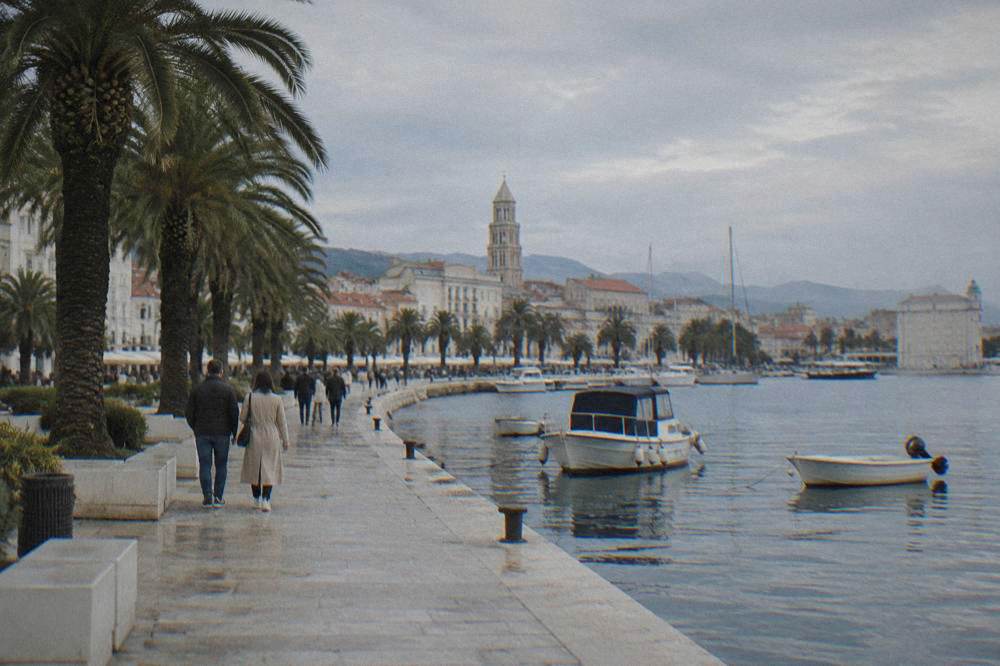
Šibenik, at 89 km, is close enough that its own day trip guide treats it as a half-day excursion from Zadar rather than a stop on the way south. Split, at 158 km, is the practical midpoint: the Zadar To Split guide covers that leg in full, and the Split guide describes what waits at the far end of it. South of Split, this site offers no distances, no attraction lists and no prices, so plan that stretch on its own rather than trusting a page that claims to know it.
A handful of the parks near Zadar can also slot into the day before departure, and their entry fees are all verified:
| Park | Adult entry | Season basis |
|---|---|---|
| Krka NP | 7 / 20 / 40 EUR | Winter / shoulder / summer |
| Plitvice Lakes NP | 10 / 23 / 40 EUR | Winter / shoulder / summer, 25 EUR late afternoon in peak |
| Paklenica NP | 5 / 8 / 10 EUR | Winter / shoulder / summer |
| Telašćica NP | 6 / 8 EUR | Land entrance, out-of-season / June to September |
| Vransko jezero | 6 EUR | Adult, any season |
| Kornati NP | 25 to 95 EUR per vessel | Charged by boat length and season, not per person |
Kornati is the odd one out on that list, and the difference matters for planners: entry is charged per vessel, by length and by season, and the ticket is bought outside the park itself. A booked boat tour from Zadar handles that paperwork, and the Kornati islands guide explains the structure.
How Many Days Should The Zadar To Dubrovnik Trip Take?
A sensible structure is two to four nights minimum: at least two full days in Zadar itself, a drive south with stops in Skradin, Šibenik and Split that absorbs another one or two days, and a block of time at the Dubrovnik end, so the whole route behaves like a week-long itinerary rather than a transfer. Anyone trying to do it in a single day is signing up for a full day of driving with the Neum border crossings on top.
The stopping pattern the numbers support is straightforward. Zadar's own sightseeing is compact: the Old Town on its peninsula holds the Sea Organ from 2005 and the Greeting to the Sun from 2008, both by architect Nikola Bašić, both free and open at all hours, alongside the Roman Forum, the Land Gate of 1543 and the Kalelarga. The Zadar itinerary guides suggest at least two full days in the city, and the is Zadar worth visiting guide answers the question honestly for anyone weighing the stop at all. Then the road south: Skradin and Krka, Šibenik, and a night in or near Split before the long southern leg.
The UNESCO detail is worth carrying into the itinerary. Zadar is one of six components of a UNESCO World Heritage property of Venetian defence works, inscribed in 2017; the Old Town as a whole is not a World Heritage Site. Dubrovnik's Old City is separately inscribed, but no facts about it sit in this site's pack, so the comparison page is where that discussion belongs.
One closure risk applies to any Zadar sightseeing on this itinerary: St Donatus Church faces roof restoration, with works planned from autumn 2026 for about six months as the first phase of a wider restoration. Access may be limited during the works, and the St Donatus guide is the place to check before counting on an interior visit.
What Should You See In Zadar Before Leaving For Dubrovnik?
The unmissable, fully sourced list is short and free: the Sea Organ and the Greeting to the Sun on the northwestern tip of the peninsula, the Roman Forum, the Five Wells Square, the Kalelarga and the 1543 Land Gate, all public spaces with no ticket, plus the paid museums, where the Museum of Ancient Glass's own price page lists 7.00 EUR for an adult and the Archaeological Museum runs at around 7 EUR full price.
That list is what a departure-morning walk can realistically cover, and it costs almost nothing. The Sea Organ's pipes are sounded by the waves themselves, and the Greeting to the Sun beside it stores daylight and returns it after dark; neither has a ticket, an opening hour or a gate. The claim that both are attractions you must pay for circulates on some pages and is simply wrong. The Sea Organ guide and the Greeting to the Sun guide give the mechanics and the history.
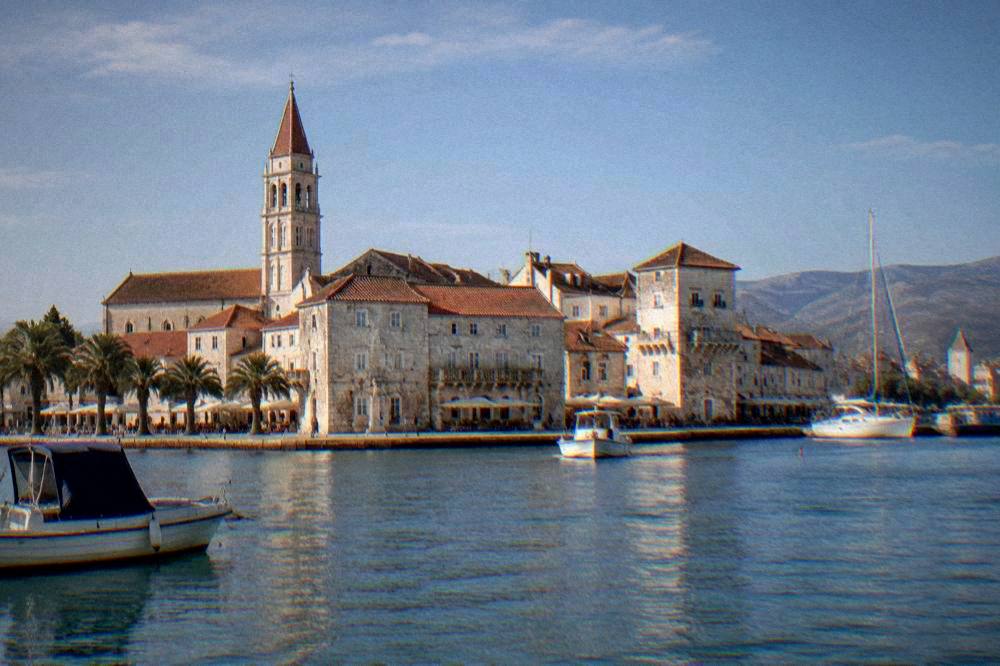
For the paid sights, the figures are these:
| Sight | Verified price | Note |
|---|---|---|
| Museum of Ancient Glass | 7.00 EUR adult, 5.00 EUR groups of 5+, 4.00 EUR schoolchildren | Own ticket page; guided tour 20 EUR in Croatian, 30 EUR in other languages |
| Archaeological Museum | around 7 EUR full price | Tariff page shows 7.00 and 5.00 EUR rows |
| St Donatus Church | around 7 EUR full price | Same tariff; roof works from autumn 2026 may limit access |
| Sea Organ | Free | Open at all hours |
| Greeting to the Sun | Free | Open at all hours |
| Roman Forum, Kalelarga, Land Gate | Free | Public spaces |
The bell tower of St Anastasia is open to climb, but no verified price or hours were found, so confirm locally at the door. A guided walk is a way to compress the Old Town before a long drive, and the Gligora cheese tasting walk pairs the standard landmarks with a tasting stop.
When Is The Best Time Of Year To Drive From Zadar To Dubrovnik?
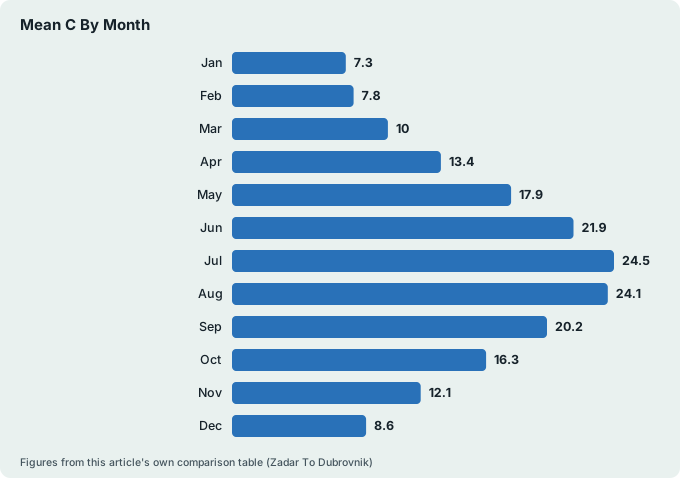
The Zadar station record, 1961-2024, shows July as the warmest month at a 24.5 C mean and January the coolest at 7.3 C, with July also the driest at 35.4 mm and November the wettest at 123 mm, so the drive is most comfortable from May to June or in September, when the heat has eased but the sea and the coastal towns are still fully in season; the record labels these as Zadar station figures, and they describe the northern end of the route.
The summer peak combines the year's warmest temperatures with the year's heaviest traffic, and the Neum crossings add queueing on top. September drops to a 20.2 C mean at the Zadar station while keeping the sea swimmable, and the national parks drop their prices at the same time: Krka falls to 20 EUR in October and 7 EUR from November, and Plitvice falls to 23 EUR in October and 10 EUR from November, a seasonal change that took effect on 1 October 2026. Anyone building the trip around park stops should read the best time to visit Zadar guide and the Zadar weather guide before fixing dates.
The full monthly record for the Zadar end of the route:
| Month | Mean C | Rain mm | Rain days |
|---|---|---|---|
| Jan | 7.3 | 76.4 | 10 |
| Feb | 7.8 | 67.0 | 9 |
| Mar | 10.0 | 66.3 | 9 |
| Apr | 13.4 | 61.4 | 10 |
| May | 17.9 | 64.4 | 10 |
| Jun | 21.9 | 48.5 | 8 |
| Jul | 24.5 | 35.4 | 5 |
| Aug | 24.1 | 52.8 | 6 |
| Sep | 20.2 | 110.9 | 9 |
| Oct | 16.3 | 106.8 | 9 |
| Nov | 12.1 | 123.0 | 12 |
| Dec | 8.6 | 99.6 | 12 |
Zadar station, 1961-2024, DHMZ. Sunshine across the year totals about 2,600 hours by the same station record, a figure worth knowing before any southern-drive planning that assumes grey shoulder months.
What Should You Pack For A Coastal Drive That Crosses Borders?
The practical list is short: the car's euro change for the toll-free alternatives and the crossings, documentation for two international border stops at Neum, layers for a route whose verified temperature range runs from a 7.3 C January mean to 24.5 C in July at the Zadar station, swimwear for the stops but never for the Old Town streets, where posted signs bar swimwear and fines run up to 130 EUR as reported, and a plan for the emergency number 112, which works across Croatia.
The dress-code point is easy to miss. Signs posted at the access points to Zadar's historic peninsula in summer 2026 ask for appropriate clothing, no swimwear or nudity, with a warning first and fines up to 130 EUR as reported in local coverage. The same reporting trail covers a planned night-time restriction on retail alcohol sales in the Old Town for the 2026 season, aimed at noise; bars and restaurants were not the target. Neither rule should shape a road trip much, but both are worth knowing before the first stop.
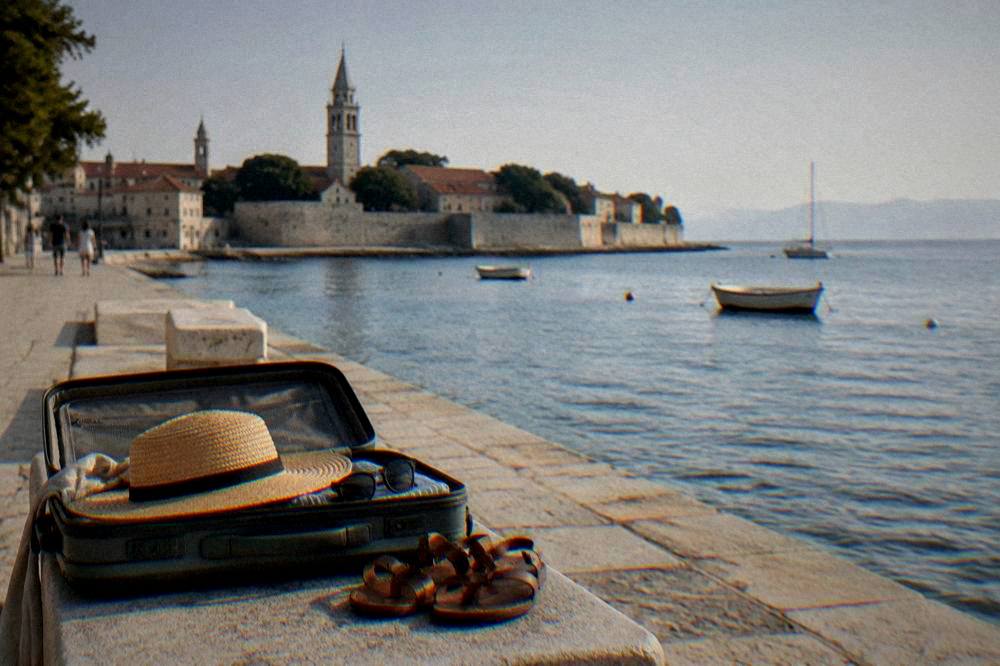
For the beach stops, the county's 2026 concession rules work in the visitor's favour: concession beaches can charge nothing for access, cannot fence themselves off, and must leave at least 40 percent of their area free for people with their own towels. The Zadar beaches guide maps which stretch suits which kind of stop, and the where to stay in Zadar guide positions the base before departure morning.
The final items on any pre-departure list are the ones this site cannot price. Zadar charges a tourist tax collected by the accommodation, and the amount is confirmed at booking. Parking tariffs are not printed here. The rule throughout is simple: where a number exists in a primary source, this page gives it; where it does not, the reader checks at the point of purchase, and the Zadar Croatia Travel Guide holds the fuller reference pages for every leg of the trip.
Before the drive south, these three bookable options each cover ground the road trip itself cannot:
Common Questions About Traveling From Zadar To Dubrovnik
How far is Zadar from Dubrovnik?
The verified legs are Zadar to Skradin at 76 km, Zadar to Šibenik at 89 km and Zadar to Split at 158 km, with the coastal road continuing south to Dubrovnik past the Neum crossings. No verified total for the whole route sits in this site's sources, so take the door-to-door figure from a route planner on the day.
Is there a ferry from Zadar to Dubrovnik?
No. Jadrolinija's route pages show Zadar's ferries serving the islands, including Brbinj on Dugi Otok at 1 h 40 min and Preko on Ugljan at about 25 to 30 minutes, plus the seasonal fast catamaran to Ancona in Italy, which ran until 6 September 2026. None of them reaches Dubrovnik.
Where should you stop on the drive?
Skradin at 76 km for Krka National Park, whose adult entry runs 7 EUR in deep winter, 20 EUR in shoulder months and 40 EUR in summer; Šibenik at 89 km; and Split at 158 km as the natural overnight point before the southern leg.
Can you swim at Krka on the way down?
Not at Skradinski Buk, where swimming has been banned since 2021. Swimming is allowed only at the designated spots of Roški slap, Stinice and Pisak, from 1 June to 30 September, weather permitting.
Do you need a passport for the Neum crossing?
Croatia is in the Schengen area, and the road to Dubrovnik crosses Bosnian and Herzegovinian territory at Neum twice. Carry valid travel documents for everyone in the car and allow extra time in peak season.