Zadar In Summer
Summer is Zadar's main season, and it comes with verifiable numbers: a July mean of 24.5 C at the city's weather station, about ten days at or above 30 C in each of July and August, and park fees at their annual peak. This guide sets out what the sources actually say about beaches, boat trips, heat, and the local rules that apply from June to September.
Short answer
Summer in Zadar runs hot and dry, with a July mean of 24.5 C (Zadar station, 1961-2024), sea swimming from the city's own beaches, boat trips to Ugljan, Dugi Otok and the Kornati islands, and peak-season national park fees of 40 EUR at Krka and Plitvice. Expect crowds in the Old Town and plan water time around the midday heat.
Zadar sits on a narrow peninsula on the Dalmatian coast of Croatia, with the Adriatic on one side, the islands of Ugljan and Dugi Otok offshore, and a summer season that shapes everything about how the city works between June and September. The light is long, the rain is scarce, and the whole machinery of the place, ferries, boat tours, beach concessions and park ticket desks, runs at full speed.
What Is Summer Actually Like In Zadar?
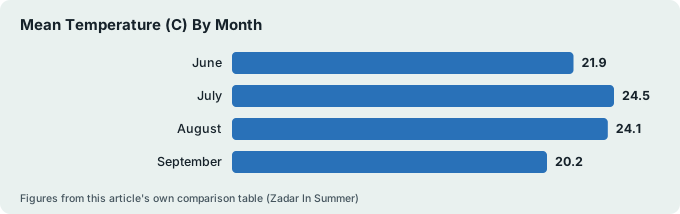
Summer in Zadar is hot, dry and bright, but not extreme by Dalmatian standards: the warmest month, July, averages 24.5 C at the Zadar weather station (1961-2024), August averages 24.1 C, and each of those months sees about ten days at or above 30 C. Rainfall collapses to 35.4 mm in July and 52.8 mm in August, and the station records about 2,600 hours of sunshine a year. The record high, 39.0 C, was set on 6 August 2022.
Those figures come from the Croatian national meteorological service's station table for Zadar, a sea-level record covering 1961-2024, which matters because the city's position on the water keeps it slightly milder than inland Dalmatia. The practical consequence is that a Zadar summer is a beach-and-boat summer rather than a sightseeing marathon. The hours between roughly 11:00 and 16:00 belong in the sea, in the shade, or out of the city entirely.
The summer also concentrates the calendar. Ferries to the islands run their full seasonal timetables, the boat tour fleet sails daily, and the national parks charge their peak prices. The broader seasonal picture, including why many writers here argue for May or September as the sweet spot, is covered in the site's guide to the best time to visit Zadar.
How Hot Does Zadar Get In July And August?
July is the warmest month at 24.5 C mean and August follows at 24.1 C (Zadar station, 1961-2024), with about ten days at or above 30 C in each. July is also the driest month at 35.4 mm of rain across roughly five rain days, and June averages 21.9 C with 48.5 mm. The all-time station record is 39.0 C, recorded on 6 August 2022, and the coldest month, January, sits at 7.3 C for contrast.
The heat in Zadar is a coastal heat: the sea moderates the peaks, and the two named winds that affect the region are the bora, a cold, dry, gusty north-easterly that is mainly a winter phenomenon, and the jugo, a warm, humid south-easterly. In summer the practical enemy is not the wind but the still, bright afternoon, which is when the beach or a boat is the right answer.
| Month | Mean temperature (C) | Rainfall (mm) | Rain days | Sunshine (hours) | Days at or above 30 C |
|---|---|---|---|---|---|
| June | 21.9 | 48.5 | 8 | 310.9 | about 3 |
| July | 24.5 | 35.4 | 5 | 358.6 | about 10 |
| August | 24.1 | 52.8 | 6 | 324.7 | about 10 |
| September | 20.2 | 110.9 | 9 | 243.1 | not tabled |
September deserves a note of its own: the mean stays at 20.2 C, the sea is at its warmest after a full summer of heating, but rainfall jumps to 110.9 mm, more than triple July's total. The first weeks of September can still feel like high summer, and the park operators drop toward shoulder pricing on 1 October, not before.
Where Should You Swim In And Around Zadar In Summer?
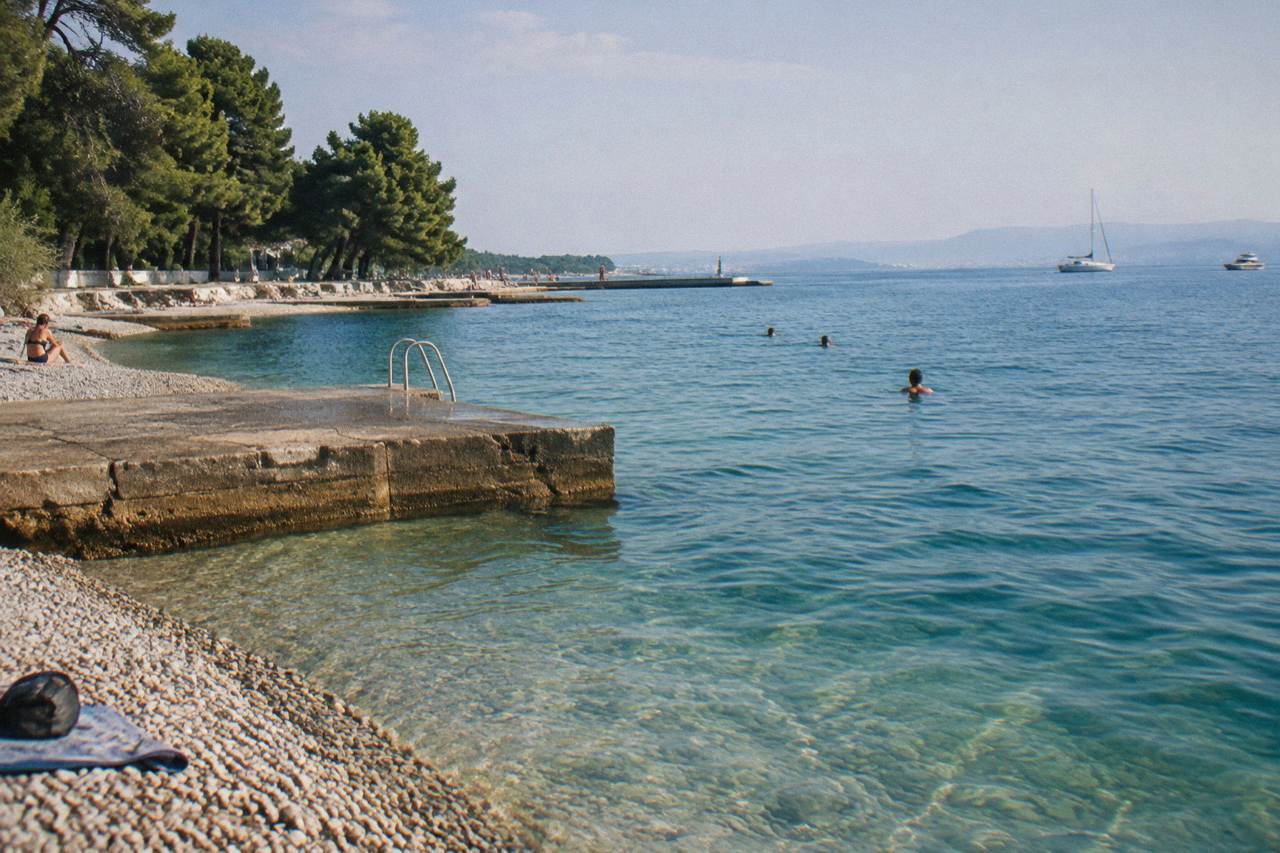
Swimming in Zadar happens on the city's own beaches, at Kolovare and Puntamika south-east of the peninsula and at Borik and Diklo further along the bay, with more sand-and-cove options on the offshore islands reached by ferry or boat tour.
Entry to Zadar County's concession beaches is public and free under rules adopted for the 2026 season: no fencing, no ramps, no entry fees, and commercial use such as sunbeds capped at 40 to 60 percent of a beach's area, leaving the rest free for own towels and chairs.
That beach rule is one of the least-known facts about a Zadar summer, and it is worth repeating plainly: a concessionaire cannot charge you to set foot on the sand. Paid sunbeds occupy only part of any managed beach, and the county assembly's decision aligns with the national Law on Maritime Domain, so the free zone is not a loophole, it is the design.
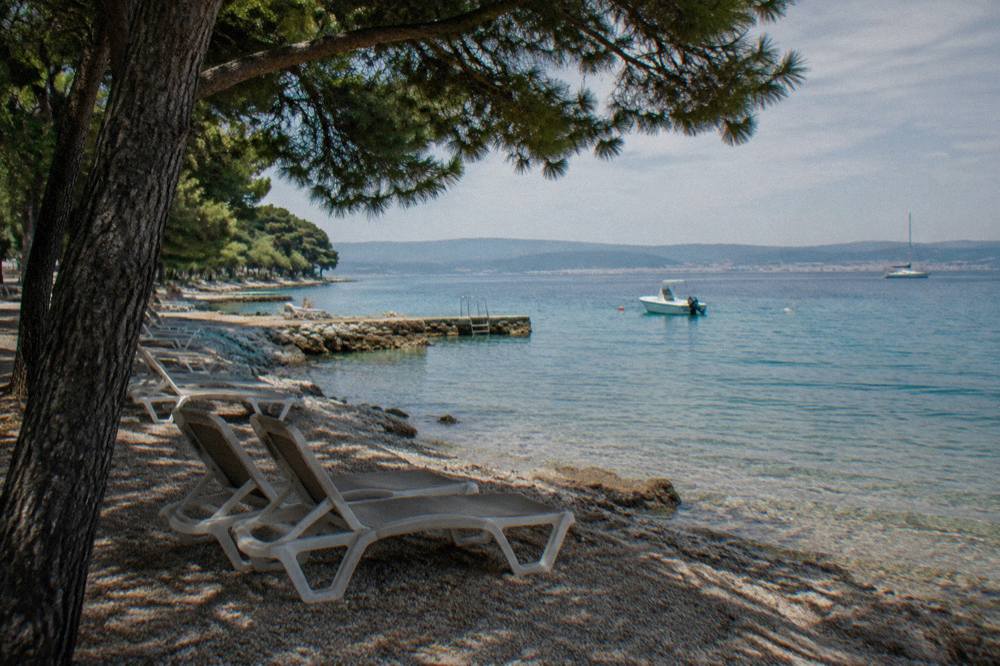
The city beaches divide by character. Kolovare is the long concrete-and-pebble stretch walkable from the Old Town. Puntamika sits by the marina at Borik, the hotel zone. Diklo, further out, is quieter and more residential. Across the water, Ugljan's Preko faces the city directly, and Dugi Otok's Sakarun lagoon is the famous white-sand day target. The full rundown, including the islands, is in the Zadar beaches guide.
| Beach | Position | Surface | Summer character |
|---|---|---|---|
| Kolovare | South-east of the Old Town, walkable | Pebble and concrete | City swimming, busiest |
| Puntamika | By the marina at Borik | Pebble | Hotel zone, family-friendly |
| Borik | North-west bay | Pebble | Shaded, calm water |
| Diklo | Further along the bay | Pebble | Quieter, residential |
| Preko (Ugljan) | Ferry crossing from Zadar | Pebble and sand | Faces the city, easy day trip |
| Sakarun (Dugi Otok) | Boat or ferry day trip | White sand | The famous lagoon beach |
As a rule of planning rather than a station figure, the Adriatic around Zadar is swimmable from early summer onward and at its warmest in August and early September.
Which Boat Trips Work Best From Zadar In Summer?
Boat trips are Zadar's core summer product: short island-hopping and snorkeling circuits run from the Borik marina area to the nearby islets, sunset trips pair the coast with the famous evening light, and full-day routes reach the Kornati national park and Telašćica nature park on Dugi Otok. Trips that include wine or tastings are a local speciality, and the fleet sails daily through the season, weather permitting.
The choice is really about time and distance. Half-day trips stay inside the immediate archipelago and get you back for a late-afternoon rest. Full-day trips push out to the Kornati islands, the dense island cluster that carries its own national park fee, charged per vessel by length and season rather than per person. The Kornati ticket for 2026 runs from 25 EUR for a boat under 7 metres in the off-season to 45 EUR in June-September at that length, rising with boat size, and it is bought outside the park itself.
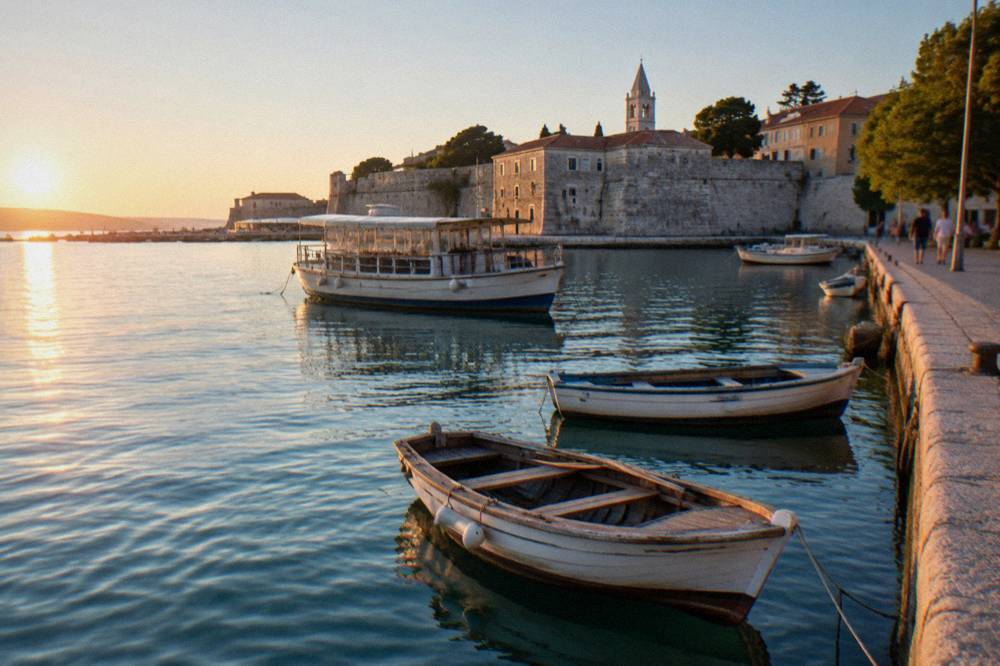
For swimmers, the trips that stop for snorkeling are the natural summer pick, and the roster includes both a luxury island circuit with snorkeling and wine, and a traditional-boat variant with multiple swim stops. The site's Zadar boat tours guide breaks the categories down, and the Zadar islands guide covers the destinations themselves.
How Do You Escape The Heat On A Summer Day In Zadar?
The reliable heat escapes from Zadar in summer are water, altitude and shade: a boat or beach morning before the afternoon peak, a river trip on the Zrmanja inland where the karst water runs cold, or a waterfalls day trip to Krka National Park, where the July mean upstream is not tabled here but the park's pools and shaded boardwalks are the point. All three are day trips that start and end in Zadar, with driving distances verified from the Old Town.
Krka lies about 91 km and roughly 73 driving minutes from Zadar's Old Town to the Skradinski Buk entrance, via Skradin at 76 km. Plitvice is the far option at 145 km and about 153 minutes of driving. The Zrmanja kayaking trips run on a river canyon inland of the coast, where the water temperature bears no resemblance to the Adriatic. These are the trips that make a hot-city day productive rather than soggy. The wider set of guides lives on Zadar Croatia Travel Guide.
One park rule matters more than any packing tip: swimming at Skradinski Buk has been banned since 2021 to protect the travertine formations, and swimming in Krka is allowed only at designated spots, at Roški slap, Stinice and Pisak, from 1 June to 30 September, weather and water conditions permitting. A Krka summer trip is a boardwalk-and-view trip at the main falls, with a swim stop possible only at those marked locations.
| Summer escape | Distance from Zadar Old Town | Approximate drive | What it offers |
|---|---|---|---|
| Krka NP (Skradinski Buk) | 91 km | 73 min | Waterfalls, boardwalks, designated swimming |
| Skradin | 76 km | 62 min | Riverside town, park boat connection |
| Paklenica NP | 46.8 km | 57 min | Canyon hiking, Velebit mountain shade |
| Plitvice Lakes NP | 145 km | 153 min | Lakes and waterfalls, full day |
| Zrmanja river | Inland canyon | Half-day kayak trips | Cold karst river water |
The waterfalls-with-ticket option this site features, a Krka trip from Zadar that includes the park entry in the price, is worth a look precisely because the summer Krka ticket is the year's most expensive at 40 EUR for an adult in June-September, and a bundled trip removes the queue-at-the-desk step. The site's Krka versus Plitvice comparison covers which park suits which traveller, and the full escape menu is in the Zadar day trips guide.
What Do The National Parks Cost In Summer?
Peak-season adult entry is 40 EUR at Krka (June-September) and 40 EUR at Plitvice before about 16:00 in June-September, with a 25 EUR late-afternoon Plitvice rate, while Paklenica charges 10 EUR from May to September, Telašćica 8 EUR at its land entrance, and Kornati charges the vessel, not the person, from 45 EUR for a boat under 7 metres for one day in season.
Both Krka and Plitvice drop to 20-23 EUR in October 2026 and to 7-10 EUR in the late autumn and winter months.
The summer premium is real: the same Krka ticket that costs 40 EUR in July costs 7 EUR in January. Plitvice follows the same ladder, 10 EUR in the depths of winter, 23 EUR in the shoulder, 40 EUR at summer peak. If your dates are flexible, the drop happens on 1 October, and the first week of that month still delivers warm sea and 16.3 C mean air temperature.
| Park | Adult summer fee (Jun-Sep) | Shoulder | Winter (Nov-Dec) | Basis |
|---|---|---|---|---|
| Krka NP | 40 EUR | 20 EUR (Apr, May, Oct) | 7 EUR | Per person |
| Plitvice Lakes NP | 40 EUR (25 EUR after ~16:00) | 23 EUR (Apr, May, Oct) | 10 EUR | Per person, timed |
| Paklenica NP | 10 EUR | 8 EUR (Mar, Apr, Oct) | 5 EUR | Per person |
| Telašćica | 8 EUR | 6 EUR | 6 EUR | Per person, land entrance |
| Kornati NP | from 45 EUR (boat under 7 m) | from 25 EUR | from 25 EUR | Per vessel by length |
Reduced child, student and group rates exist at every park, and Plitvice operates daily visitor limits with online timed tickets recommended, so a summer visit there should not be improvised on arrival. The park figures above come from the parks' own 2026 price lists.
What Rules Apply In Zadar's Old Town And On Its Beaches In Summer?
Two local rules arrived for the 2026 season and both matter to summer visitors: dress-code signs posted at key entrances to the historic peninsula require appropriate clothing, with no swimwear or nudity, enforced by verbal warning first and fines reported up to 130 EUR, and the municipality moved to restrict night-time retail alcohol sales in shops and kiosks in the Old Town, not in bars and restaurants, under a national law change.
Beach concession rules guarantee free public access with commercial zones capped at 40 to 60 percent of each beach.
The dress-code signage, installed in July 2026, applies the city's existing communal order decision: cover up between the beach and the Old Town streets. The alcohol restriction targets street drinking and noise rather than hospitality venues, and it was reported as an intent for the 2026 season, so confirm current enforcement locally. Neither rule is hostile to visitors, they are the city managing a peninsula that gets very full in July and August.
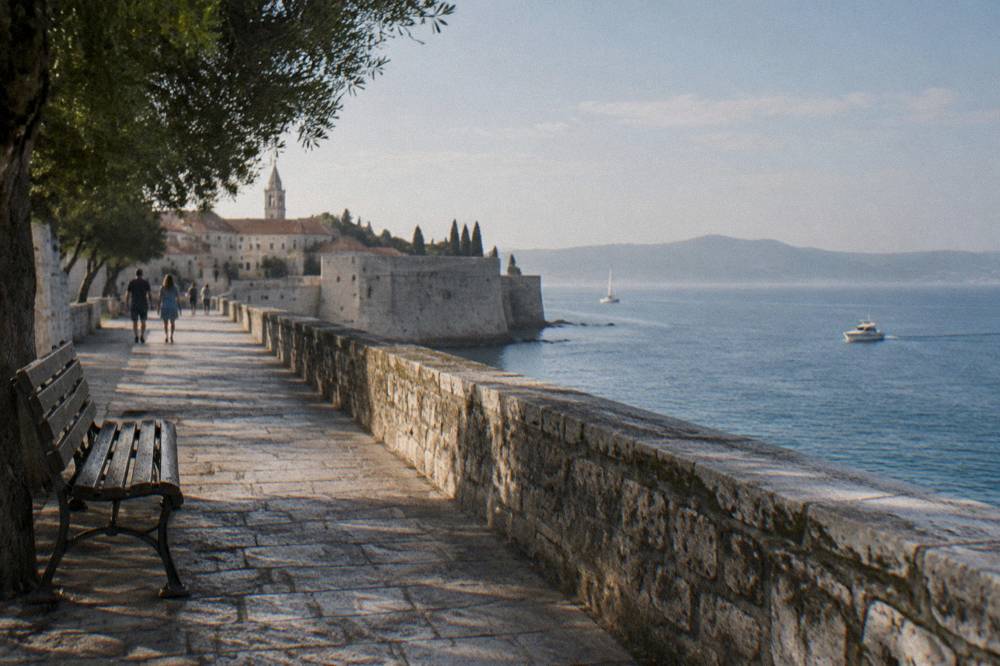
The free installations need no ticket and never have: the Sea Organ, built in 2005, and the Greeting to the Sun, from 2008, both by Nikola Bašić, are open public works on the waterfront, accessible at all hours. The Sea Organ's sound is produced by waves pushing air through pipes set under the steps, roughly 70 metres of them, and no start time needs checking because there is none to verify. Evening at the water's edge is the city's free signature event, and it costs nothing but patience for a good spot on the steps.
How Crowded Is Zadar In Summer, And When Should You Go Instead?
July and August concentrate the year's crowds, the full ferry timetables and the peak park prices into eight weeks, while the station data shows why: July brings 358.6 sunshine hours and only five rain days. September is the documented alternative, still 20.2 C on mean, with sea at its warmest and rainfall rising to 110.9 mm, and June at 21.9 C sits before the deepest crush.
This site's verdict on the trade-offs is in the best-time-to-visit guide, and the crowd question is really a heat-and-price question in disguise.
What the sources do not support is a visitor count. No verified total that includes day trippers exists, the cruise-call calendar is not published in a form this site can cite, and the Old Town's resident population was not found either, so none of those numbers appears here. What can be said is structural: summer is when the city's capacity, ferries, tours, beaches and beds, runs at or near its ceiling.
The planning arithmetic favours the shoulders if you want the same water at a lower price. Everything in the park table above falls on 1 October, the sea is warmer in September than in June after a full summer of heating, and the rain-day count in September, nine, is only one above June's eight. The gamble is the single big rain month, November at 123 mm, which arrives after the season is already closed.
What Should You Pack And Plan For A Zadar Summer?
Pack for sun and water: swimwear with cover-ups for the Old Town dress code, reef shoes for the pebble beaches, high-factor sun protection for days with ten or more hours of recorded sunshine, a hat, and refillable water, because the July heat averages 24.5 C with about ten days at or above 30 C. Plan the day Mediterranean-style, sights in the morning, sea or shade from midday, and the waterfront at dusk for the Sea Organ.
Money and documents are simple: Croatia has used the euro since 1 January 2023 and is in the Schengen area, so there are no border formalities for most European travellers and no currency maths. The emergency number is 112. Tipping is modest and customary but not compulsory.
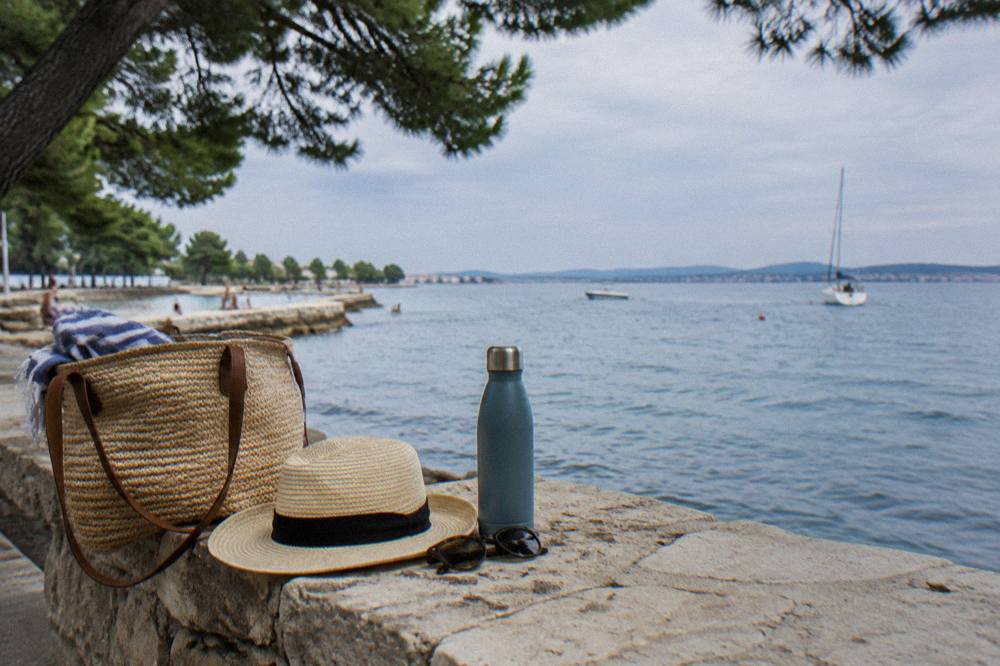
For the evenings, the Old Town walk is the classic wind-down, and the version that ends with a maraschino tasting folds in the city's own liqueur, the cherry-based spirit Zadar is known for. The food angle, from fresh fish to the local sheep cheese of Pag, is covered in the Zadar food guide and the restaurant picks in where to eat in Zadar.
What Can Go Wrong In A Zadar Summer, And How Do You Handle It?
The three realistic summer problems are heat, crowds and the occasional storm: heat is handled by the beach-and-boat rhythm above, crowds by booking park tickets and popular trips ahead and shifting sightseeing to early morning, and storms by treating a rain day as a museum day, since the Museum of Ancient Glass charges 7.00 EUR for an adult ticket and the Archaeological Museum and St Donatus run around 7 EUR at full price. The rare jugo wind can also hold small boats in port.
A note on St Donatus: the church faces a roof restoration, with works planned from autumn 2026 for about six months as the first phase of a roughly two-year project, so access may be limited and should be checked before a visit built around it. The building itself, the pre-Romanesque landmark on the Forum, is not going anywhere.
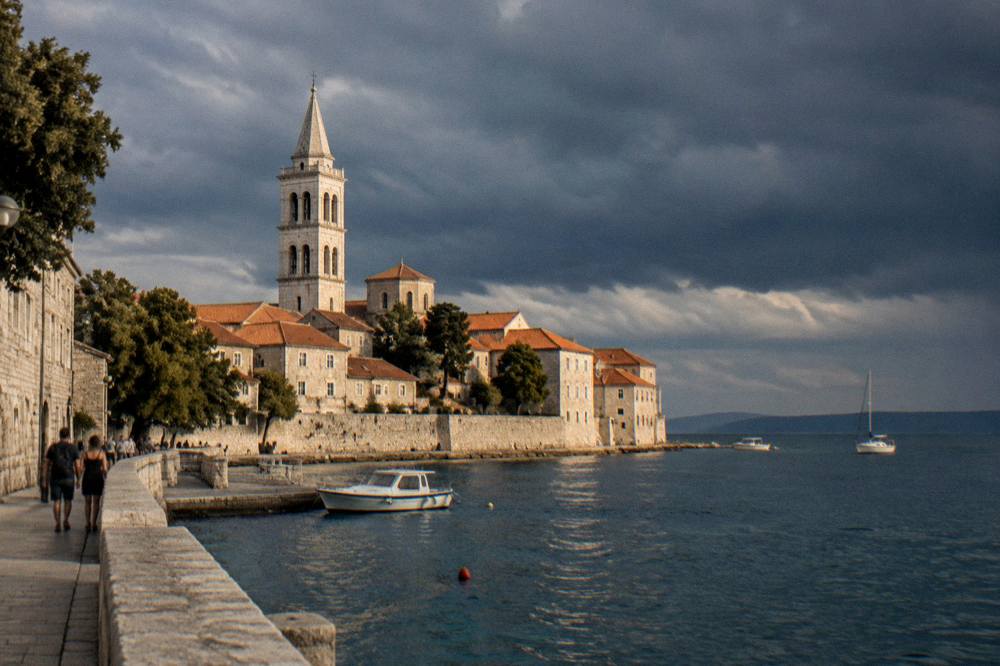
If the rain day arrives anyway, the site's rainy-day itinerary exists for exactly this. And if the whole summer question is really whether Zadar deserves the trip at all, the is Zadar worth visiting piece answers it with the same sourcing discipline as this one. A longer stay changes the maths too: the how many days in Zadar guide sets out the versions from one day to four.
Common Questions About Zadar In Summer
Is Zadar too hot in summer?
Not by record standards. The July mean is 24.5 C and August 24.1 C (Zadar station, 1961-2024), with about ten days at or above 30 C in each month. The sea moderates the peaks, and the afternoons are manageable with beach, boat or shade time built in.
Can you swim in Zadar in summer?
Yes, from the city's own beaches at Kolovare, Puntamika, Borik and Diklo, and from the island beaches reached by ferry or boat trip. Beach entry is free and public under the 2026 concession rules, with only the sunbed zones of a managed beach charged.
What is the warmest month in Zadar?
July, at a 24.5 C mean, with 358.6 recorded sunshine hours and only five rain days. August is a close second at 24.1 C and holds the station record high of 39.0 C from 6 August 2022.
Is the sea warm in Zadar in summer?
The Adriatic around Zadar is swimmable through the summer and at its warmest after the peak heating months. Only an official live sea reading exists for the city, so this site prints no monthly sea-temperature normal.
Are the national parks more expensive in summer?
Yes. Krka charges 40 EUR and Plitvice 40 EUR for adults in June-September, against 7 and 10 EUR respectively in the winter months. Both parks drop to shoulder prices on 1 October.
Can you drink alcohol in Zadar's Old Town at night in summer?
Bars and restaurants are unaffected, but the municipality moved to restrict night-time retail alcohol sales in shops and kiosks on the peninsula for the 2026 season, under a national law change. Enforcement details should be confirmed locally.
A Zadar summer rewards the same discipline the climate data suggests: water in the middle of the day, stone streets in the morning and evening, and the free waterfront installations at dusk. Plan around the heat rather than against it and the season delivers exactly what the station table promises, roughly ten hours of sun a day and almost no rain until the sea is at its best.