What Does Zadar Mean?
The meaning and origin of the name Zadar, what the city is, and what its name tells you about the place: a sourced overview from the Zadar Croatia Travel Guide editorial desk.
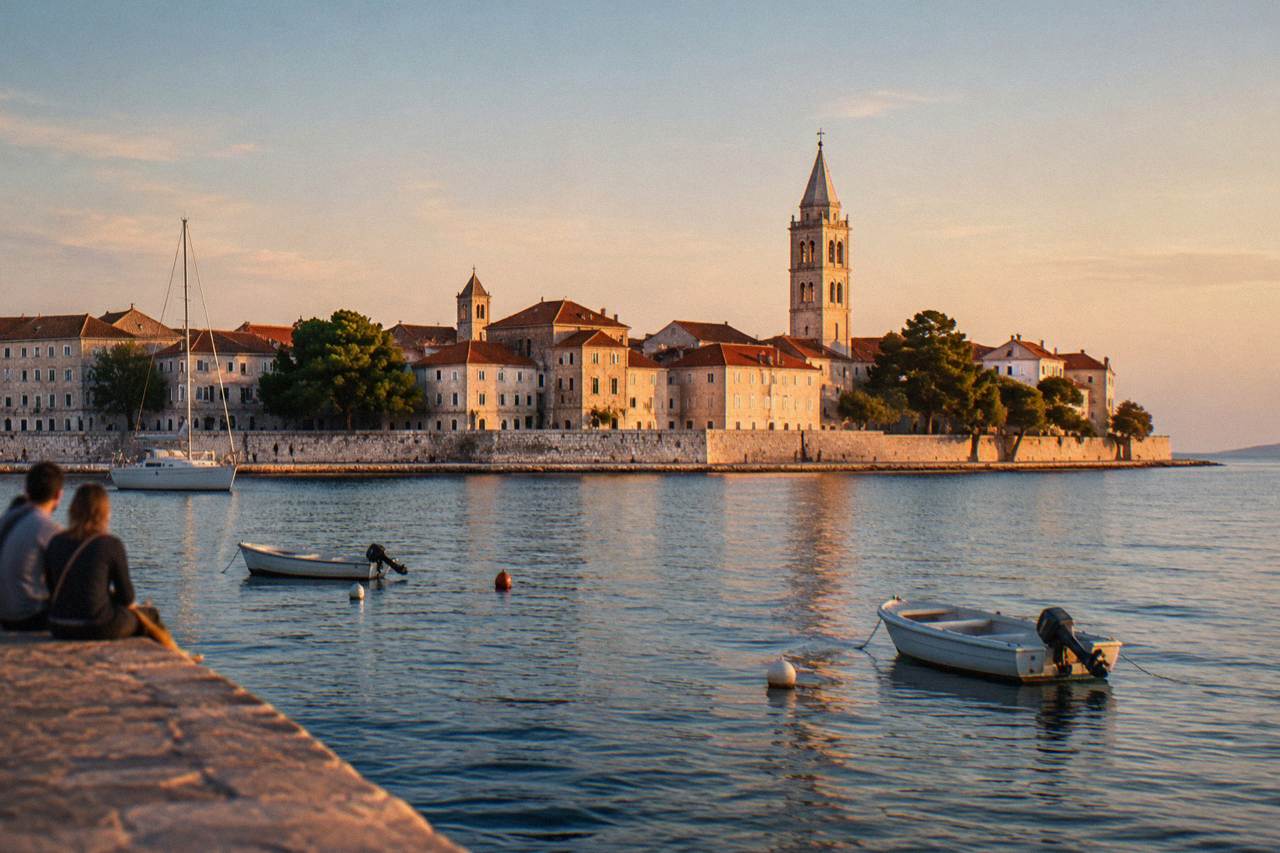
Zadar is a coastal city in Dalmatia, Croatia, sitting on the Adriatic Sea with its Old Town crowded onto a narrow peninsula called Poluotok, and the islands of Ugljan and Dugi Otok a short boat ride offshore. The name itself is short, sharp and old, and it carries more history than its two syllables suggest.
What Does Zadar Mean?
What is verified is the city the name points to: a coastal city in Dalmatia, Croatia, with a population of 67,309 at the 2021 census, a figure quoted from a secondary site. The name is best understood as a label with a long local history rather than a word with a translatable meaning.****
That answer can feel unsatisfying, because plenty of destinations come with a tidy origin story. Rather than repeat a folk etymology, this page stays with what the record supports and points you to what the name attaches to in practice.
In everyday use, "Zadar" names three overlapping things: the city itself, the wider administrative area around it, and the region travelers pass through on the way to the islands and national parks. The city's Old Town holds the Roman Forum, the Land Gate built in 1543 to a design associated with Michele Sanmicheli, the Sea Organ installation of 2005 by Nikola Bašić, and the Greeting to the Sun of 2008, also by Bašić. If you want the fuller picture of what the city puts its name on, the companion page what Zadar is famous for covers the attractions in detail.
Where Does The Name Zadar Come From?
What can be said is that the name is the settled Croatian form today, written plainly as Zadar, and that the city appears under that name in modern sources such as the city's own pages and the UNESCO listing documentation of 2017.
Etymology questions attract confident answers, and Zadar attracts more than most because the city clearly has deep layers: a Roman Forum stands in the middle of the Old Town, Venetian defence works earned UNESCO World Heritage status in 2017 as one component of a six-part cross-border property, and the Land Gate of 1543 still marks a main entrance to the peninsula. Deep layers invite naming stories.
The practical takeaway is simple. Treat any story about what the word "meant" in an ancient language as background rather than fact, and treat the city's documented landmarks as the reliable substance. The same caution applies to the claim that Zadar is the oldest city in Croatia, which is covered separately on the page is Zadar the oldest city in Croatia.
One related caution: the question "what does Zadar mean" sometimes gets answered with a place-age claim, as though the name's age proves the city's age. Those are two different questions.
What Is Zadar Like Today?
Zadar today is a working coastal city of about 67,309 people (2021 census, quoted from the national statistics office via a secondary site), the departure point for island and national park day trips, and a place where Croatia's euro currency has been in use since 1 January 2023. The city sits on a peninsula with Ugljan and Dugi Otok offshore, and Krka, Plitvice, Kornati, Paklenica, Nin and Pag trips all start from here, as the day trip network on this site documents.
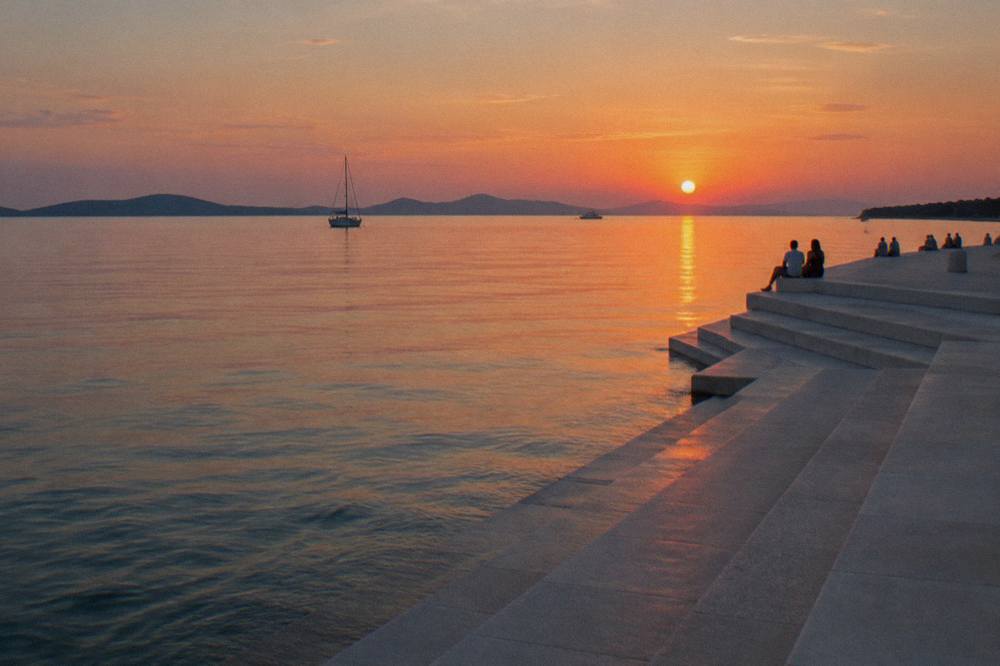
The name may be hard to explain, but the city is easy to describe. The Old Town is walkable end to end, bounded by water on nearly every side, and its seafront carries the two installations that give modern Zadar its signature: the Sea Organ, which sounds when waves push air through pipes set in the steps, and the Greeting to the Sun, a light circle beside it. Both are free and open at all hours. How the Sea Organ actually produces sound is covered on the page how the Zadar Sea Organ works.
The table below pulls together the verified identity facts this desk could attach to the name.
| Fact | Verified value | Note |
|---|---|---|
| Country and region | Croatia, Dalmatia, Adriatic coast | Euro in use since 1 January 2023; Schengen member |
| Population | 67,309 (2021 census) | Quoted from the national statistics office via a secondary site |
| UNESCO status | One of six components of the Venetian defence works property, 2017 | The Old Town as a whole is not inscribed |
| Old Town setting | Narrow peninsula (Poluotok) | Ugljan and Dugi Otok offshore |
| Emergency number | 112 | EU single number |
Because the sea defines the city, one of the clearest ways to understand what the name stands for is to get off the peninsula and look back at it. A boat trip along the nearby islands does exactly that, and the luxury island boat tour with snorkeling runs from the Zadar waterfront; you can Check availability if the water route appeals.
The name also stands for a transport hub. Zadar Airport gives its distance to the city as about 8 km on its own how-to-get-here page, and the airport's shuttle runs to the Old Town with a ticket that also covers 90 minutes of city bus travel. Whether that hub is worth a stop on a wider Croatian route is a fair question, and the comparison pages is Zadar worth visiting and is Zadar nicer than Split take it up in detail.
How Do You Say Zadar, And What Else Is The Name Attached To?
Beyond the city, the name attaches to Zadar County, to Zadar Airport and to the Gaženica ferry port from which Jadrolinija boats reach the islands.****
The spelling question matters more than it looks, because careless guides print decorated or archaic forms of the name that no current official source uses. The plain form is the one on the city's pages, the airport's pages and the ferry operator's route pages, and this site follows it in every title and heading. Croatian place names around the city do carry diacritics, and the site keeps them where the sources give them.
Here is where the name shows up across a visit.
| Where the name appears | What it names | Verified detail |
|---|---|---|
| Zadar (the city) | The peninsula Old Town and surrounding districts | Old Town on Poluotok; islands offshore |
| Zadar Airport (ZAD) | The airport at Zemunik | About 8 km from the city by the airport's own page |
| Gaženica ferry port | Zadar's deep-water ferry terminal | Jadrolinija line 434 to Brbinj on Dugi Otok takes 1 h 40 min |
| Zadar County | The wider administrative region | Includes Nin, Pag and Paklenica within day trip range |
The name also travels with the city's food and drink, most famously maraschino, the cherry liqueur historically tied to Zadar, though the details belong on the dedicated food pages. In short, when you ask what Zadar means, the honest answer has two halves: the word's exact origin remains uncertain, and the name's modern meaning is entirely practical, a shorthand for one of the Adriatic's most compact coastal cities.
What Else Should You Know About The Name Zadar?
Two cautions round out the answer: the name has no firm etymology or founding date, and several popular claims about Zadar, including sunshine-ranking boasts and oldest-city crowns, are stories rather than fact. Zadar station records about 2,600 sunshine hours a year, 1961-2024 (DHMZ). Treat the name as local identity, and treat every ancient meaning offered to you as a story rather than settled truth.
The Sea Organ alone, a free public installation that turns the sea itself into an instrument, gives the waterfront something no other city on this coast has in the same form. Pair it with the Roman Forum, the Land Gate of 1543 and an afternoon on the water, and the naming question resolves itself: Zadar means the city you are standing in.
For planning beyond the name, the site's other pages carry the load. How long to stay is answered on how many days in Zadar is enough, when to come is covered by the best time to visit Zadar, and where to base yourself is set out in the best part of Zadar to stay in. The Zadar Croatia Travel Guide homepage gathers the full range, from the Old Town sights to the island and national park day trips that start from the peninsula.
Common Questions About The Name Zadar
Is Zadar the oldest city in Croatia?
This page prints no founding date for the city. The verified historical anchors are the Land Gate of 1543, the UNESCO Venetian defence listing of 2017, and the Sea Organ (2005) and Greeting to the Sun (2008).
How do you pronounce Zadar?
Roughly "ZAH-dar", with the stress on the first syllable in Croatian. The name is written plainly, without diacritics, in every official source this desk holds.
Does the name Zadar appear on the UNESCO listing?
Zadar appears in the UNESCO record as one of six components of the Venetian defence works property, inscribed in 2017. The Old Town as a whole is not a World Heritage Site.
Why do some sites give a confident origin for the name?
Etymology stories circulate widely because layered cities invite them, but a claim without a primary source stays a story.
