Is Zadar, Croatia Worth Visiting?
Is Zadar worth the trip? An evidence-based answer covering the free waterfront installations, Old Town sights, park day trips, climate and costs, all from official sources.
Zadar sits on a narrow peninsula on the Dalmatian coast of Croatia, with the islands of Ugljan and Dugi Otok offshore and the national parks of Krka, Plitvice, Paklenica and Kornati all within day-trip range. The city's population is 67,309 (2021 census, reported via a secondary site quoting the Croatian Bureau of Statistics), and it charges no entry fee for its two best-known sights: the Sea Organ and the Greeting to the Sun, both free public installations by the architect Nikola Bašić. This page sets out what primary sources say the city offers, what it costs, and who it suits, so the verdict rests on record rather than impression.
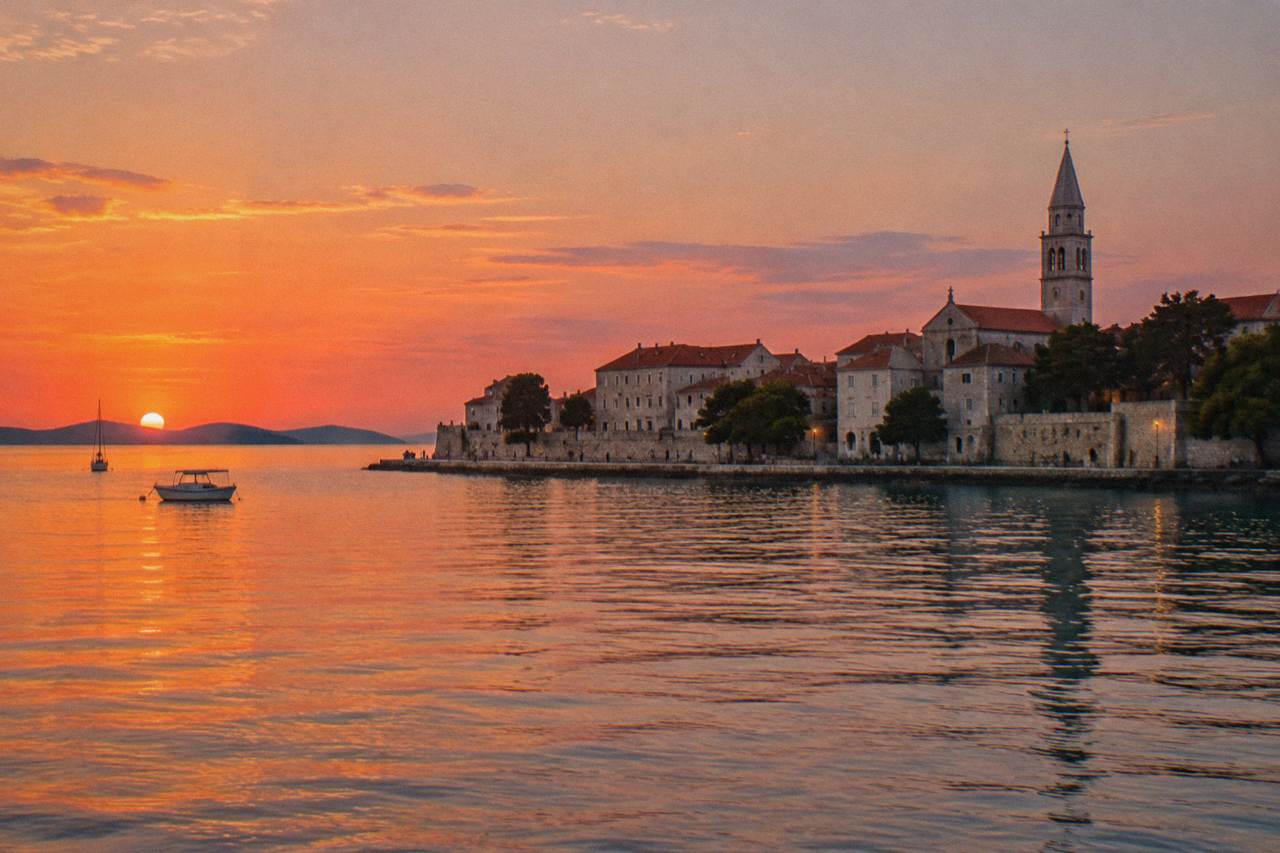
The short answer for anyone weighing Zadar against better-known Croatian stops: it is a compact, walkable city where the headline attractions are free, the record sunshine is about 2,600 hours a year, and the drive to Plitvice Lakes runs 145 km. Whether that adds up to a worthwhile trip depends on what a traveller wants from the Adriatic, and the sections below work through the evidence sight group by sight group.
Is Zadar, Croatia Worth Visiting?
Yes, for a traveller who wants a small, walkable coastal city with free headline sights and easy park access, Zadar is worth visiting: the Sea Organ and Greeting to the Sun are free and open at all hours, the Roman Forum and Land Gate of 1543 are public spaces, and Krka, Plitvice, Paklenica and Kornati all sit within day-trip range. It is less suited to anyone expecting a large resort strip or a big-city museum circuit.
That verdict rests on what the city's own pages and official price lists state rather than on impressions. The tourist board's page on the waterfront installations confirms the Sea Organ dates from 2005 and the Greeting to the Sun from 2008, both by Nikola Bašić, and both are open public installations rather than ticketed attractions. UNESCO recognition exists but is narrower than many guides imply: Zadar is one of six components of the "Venetian Works of Defence" property, a UNESCO listing inscribed in 2017, and the Old Town as a whole is not a World Heritage Site.
What the city does not offer matters too. The resort beaches of Borik and Puntamika sit outside the peninsula rather than on it. For a fuller comparison against Croatia's second city, see is Zadar nicer than Split, which compares the two only on what the sources record.
What Makes Zadar Different From Other Adriatic Cities?
Zadar's distinguishing features are its sound-and-light waterfront, its compact peninsula Old Town, and its position as a launch point for parks and islands: the Sea Organ plays from wave action along roughly 70 metres of steps, the Greeting to the Sun lights a 22-metre circle after dark, and ferries and roads connect the city to Ugljan, Dugi Otok, Nin, Pag and four national parks.
The waterfront pair is the city's signature. The Sea Organ, built in 2005, converts wave movement into sound through pipes set under marble steps, an effect explained in detail in how the Zadar Sea Organ works. Beside it, the Greeting to the Sun (2008) is a solar-powered light installation in a 22-metre circle; for its evening display, plan for dusk rather than a printed schedule. Both cost nothing and are accessible at any hour.
Behind them, the peninsula holds a Roman Forum, the Kalelarga main street, Five Wells Square and the Land Gate of 1543 by Michele Sanmicheli, all free public spaces. The one structural caveat for 2026 and 2027 concerns St Donatus Church: a public tender for roof restoration was launched at the end of August 2026 with works planned from autumn 2026 over about six months, the first phase of a wider restoration, so access may be limited and should be checked before a visit.
Beyond the peninsula, the city works as a base. Nin is 19.8 km away by road, Šibenik 89 km, Skradin 76 km, and Plitvice 145 km, all computed from verified routing data. Jadrolinija's route page shows the car ferry to Brbinj on Dugi Otok taking 1 h 40 min, and the crossing to Preko on Ugljan about 25 to 30 minutes. Few Adriatic bases put this many parks and islands within a single day's return journey.
What Does Zadar Cost To Visit?
Zadar's core sightseeing is unusually cheap because its headline attractions are free: the Sea Organ, Greeting to the Sun, Roman Forum, Kalelarga and Land Gate charge nothing, the Museum of Ancient Glass lists 7.00 EUR adult entry, and the Archaeological Museum and St Donatus run at around 7 EUR full price, while park day trips add 7 to 40 EUR per adult depending on the park and the season.
Croatia has used the euro since 1 January 2023 and is in the Schengen area, so there is no currency exchange step for euro-area travellers. The single emergency number is 112.
| Sight or park | Adult entry | Source status |
|---|---|---|
| Sea Organ and Greeting to the Sun | Free, open at all hours | City tourist board page |
| Museum of Ancient Glass | 7.00 EUR, groups of five or more 5.00 EUR | Museum ticket page |
| Archaeological Museum and St Donatus | Around 7 EUR full price | Museum tariff page |
| Krka National Park | 7 / 20 / 40 EUR by season | Park 2026 price list |
| Plitvice Lakes National Park | 10 / 23 / 40 EUR by season | Park price list |
| Paklenica National Park | 5 / 8 / 10 EUR by season | Park 2026 price list |
Two cautions keep that table honest. Kornati National Park charges per vessel by length and season rather than per person, and the entry is bought outside the park, so a boat tour's listed price is the practical comparison. And swimming at Krka's Skradinski Buk has been banned since 2021; swimming in the park is allowed only at designated spots such as Roški slap, Stinice and Pisak, from 1 June to 30 September.
Getting around costs little inside the city. The Barkajoli rowing boats cross the narrow harbour channel for a euro or two, though no official fare list exists, and the city bus network covers the peninsula and suburbs. For a deeper cost breakdown, how many days in Zadar is enough looks at how itinerary length changes the bill.
Is Zadar Worth Visiting Without A Car?
Yes, Zadar works without a car for the city itself and for several day trips: the Old Town is a walkable peninsula, the airport shuttle runs 5.00 EUR one way including luggage in about 20 minutes with the ticket valid 90 minutes on city buses, and Jadrolinija ferries reach Ugljan and Dugi Otok on foot, while organized bus and boat tours cover Krka, Plitvice and Kornati.
The walkability claim is structural: the historic core sits on a peninsula (Poluotok) where the main sights sit within a few minutes of one another, a layout examined in more detail across the site's Old Town coverage. Car-free travellers arriving by air can use the Liburnija shuttle, whose route runs airport, Gaženica ferry port, bus station, Old Town, per the airport's own how-to-get-here page.
The islands need no vehicle. Jadrolinija's route page shows the Preko crossing on Ugljan at about 25 to 30 minutes and the Brbinj crossing on Dugi Otok at 1 h 40 min, and the question of which island is best to visit from Zadar compares them. For the parks, guided day tours remove the driving entirely, and the trio of options above includes a Krka tour with a swim stop in Skradin.
A car does widen the map: Nin at 19.8 km, Pag Town at 54 km and Paklenica at 46.8 km are all straightforward drives. The trade-offs, including taxi fares and parking, are covered in how to get from Zadar airport to the city center.
What Are The Best Day Trips From Zadar?
The verified distances put Krka's Skradinski Buk 91 km from the Old Town (73 minutes' drive), Plitvice 145 km (about 2.5 hours), Paklenica 46.8 km, and Kornati reachable by boat, so the strongest day trips by the record are Krka for waterfalls, Plitvice for lakes, Paklenica for canyon hiking, and Kornati with Telašćica for islands, each with its own seasonal fee.
Krka and Plitvice divide opinion enough to warrant their own comparison in which is better, Plitvice or Krka. The fee structure differs: both are per-person and seasonal, but Krka's peak ticket is 40 EUR from June to September while Plitvice's peak is 40 EUR before about 16:00 with 25 EUR later in the day. Both dropped to shoulder rates on 1 October 2026.
| Day trip | Distance from Old Town | Drive time | Entry, adult |
|---|---|---|---|
| Krka (Skradinski Buk) | 91 km | 73 min | 7 / 20 / 40 EUR by season |
| Plitvice Lakes | 145 km | 153 min | 10 / 23 / 40 EUR by season |
| Paklenica | 46.8 km | 57 min | 5 / 8 / 10 EUR by season |
| Nin | 19.8 km | 28 min | Free to wander |
| Skradin | 76 km | 62 min | Via Krka ticket |
Boat days add a different register. The related tour on this page runs from Zadar to the Sakarun lagoon beach on Dugi Otok with a shipwreck swim stop and a tunnel visit, covering in one ticket a route that would otherwise need a ferry timetable and local transport. More detail sits on the Sakarun beach and shipwreck tour page, with live dates and pricing through Check availability.
When Is Zadar Worth The Trip?
By the Zadar station record (1961-2024), July is the warmest month at a 24.5 C mean and the driest at 35.4 mm of rain, November is the wettest at 123 mm, and sunshine totals about 2,600 hours a year, so the trip rewards late spring and early autumn for warmth without peak-season park fees, while winter suits the Old Town, museums and Zadar Advent from 24 November 2026.
| Month | Mean C | Rain mm |
|---|---|---|
| May | 17.9 | 64.4 |
| June | 21.9 | 48.5 |
| July | 24.5 | 35.4 |
| September | 20.2 | 110.9 |
| October | 16.3 | 106.8 |
| November | 12.1 | 123.0 |
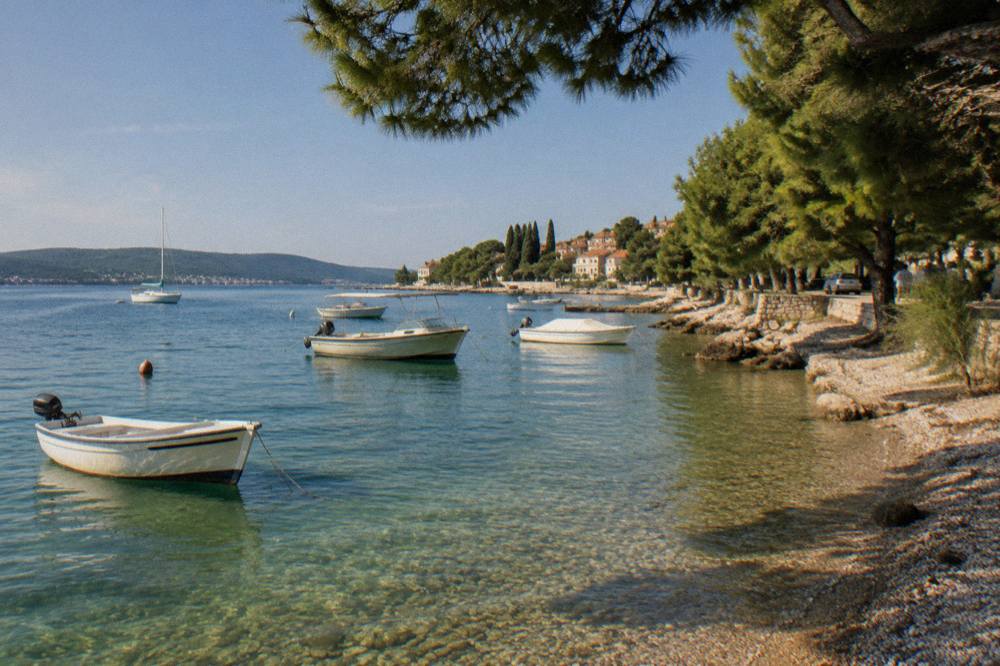
Those numbers come from the DHMZ station table for Zadar, a weather-station record rather than a model estimate. September stands out in the data: sea and air temperatures stay summer-like while rainfall already climbs toward its autumn peak, and park fees drop to 20 EUR at Krka in October and 23 EUR at Plitvice before both fall again in November. The question of the best time to visit Zadar develops this in full.
Winter has its own draw. The city's events page lists Zadar Advent from 24 November 2026 to 2 January 2027, expanded to three locations with a new ice rink on the Roman Forum, and the Zadar Christmas Run on 27 December 2026. No monthly sea-temperature normal exists on an official page, so winter swimmers should check the live DHMZ reading instead of a printed table.
Common Questions About Visiting Zadar
Is Zadar, Croatia worth visiting?
For a small, walkable coastal city with free headline sights and four national parks in day-trip range, yes. The Sea Organ and Greeting to the Sun are free, museum entry runs around 7 EUR, and Krka, Plitvice, Paklenica and Kornati are all reachable on organized tours.
Is Zadar expensive?
City sightseeing is cheap because the main attractions are free public installations. The Museum of Ancient Glass lists 7.00 EUR adult entry, park day trips run 7 to 40 EUR per adult by season, and a tourist tax is collected by accommodation with the amount confirmed at booking.
Can you visit Zadar without a car?
Yes. The Old Town is a walkable peninsula, the airport shuttle costs 5.00 EUR one way including luggage, and ferries reach Ugljan and Dugi Otok on foot. Krka, Plitvice and Kornati are covered by organized tours.
How many days does Zadar need?
The city itself is compact, but the park and island day trips each take a full day. The site's dedicated answer on itinerary length works through the trade-offs with the verified distances.
Is the Old Town in Zadar free to walk around?
Yes. The Roman Forum, Kalelarga, Five Wells Square and the Land Gate are public spaces with no entry charge, though museums such as the Archaeological Museum charge around 7 EUR at full price.
The verdict this site's evidence supports: Zadar earns its place on an Adriatic itinerary for the free waterfront installations, a walkable historic peninsula, and unmatched access to parks and islands, with the honest caveats that St Donatus faces restoration works from autumn 2026 and that a handful of oft-quoted figures, from tourist-tax rates to bell-tower prices, simply lack a verifiable source. More of the city's record, from what Zadar is famous for to where the locals eat in Zadar, is laid out across the guides on Zadar Croatia Travel Guide.
