Why Was Zadar Bombed In WWII?
The wartime bombing of Zadar, in Dalmatia, Croatia, explained: what the historical record assembled by this desk says about why the city was attacked, what happened to the Old Town peninsula, and what a visitor can still see today.
Zadar, a coastal city in Dalmatia, Croatia, sits on a narrow peninsula that juts into the Adriatic, and that position is the starting point for almost every chapter of its history, including the darkest one. Allied aircraft bombed the city repeatedly from November 1943 to October 1944, and the great majority of its buildings was destroyed. This page is written by the editorial desk of the Zadar Croatia Travel Guide.
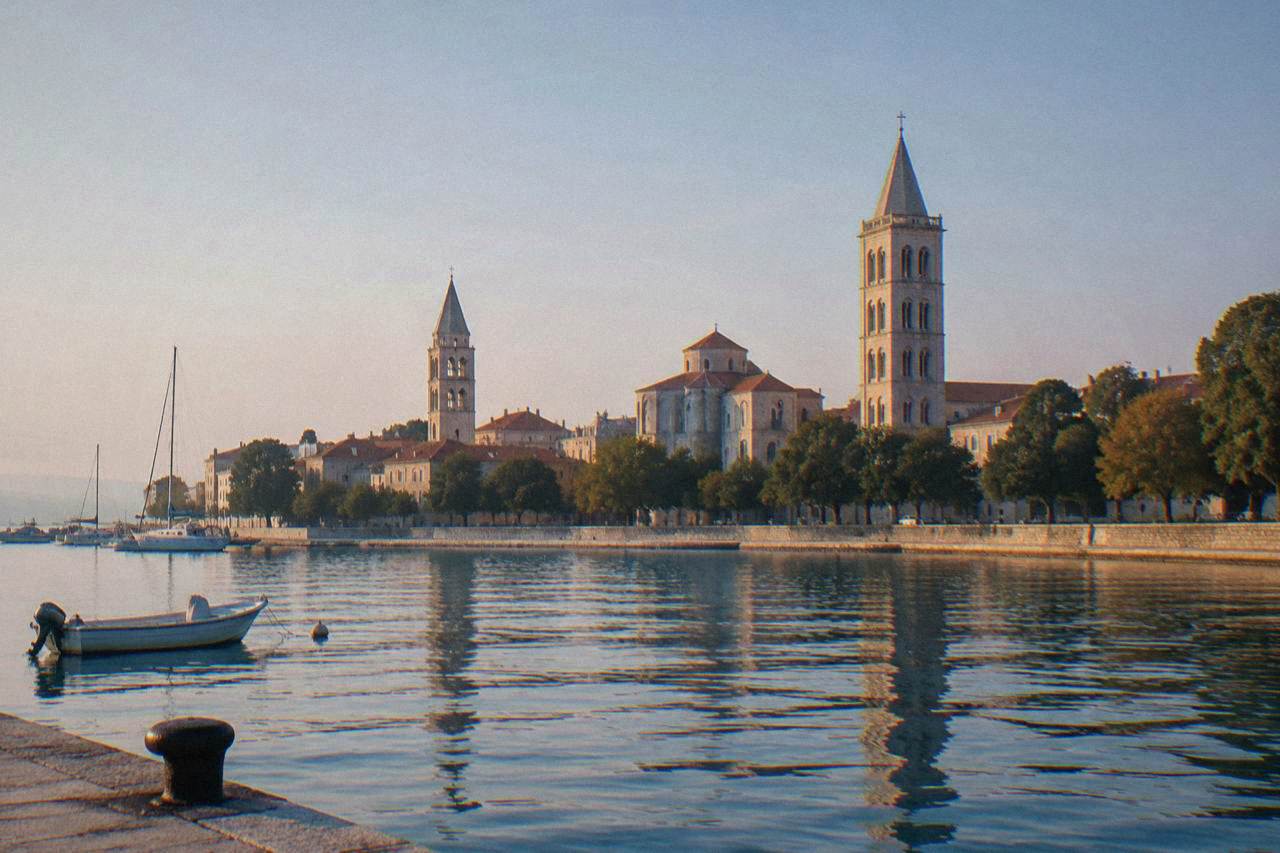
Why Was Zadar Bombed In WWII?
**Zadar was bombed because it was a fortified coastal city whose control changed hands between warring powers, occupying a peninsula that commanded a strategically placed stretch of the eastern Adriatic.
Before the war Zadar was an Italian enclave on the Croatian coast, a leftover of the post-First-World-War border settlements. When the Second World War reached the region, the city's status made it a point of contention between Italy and the puppet state installed by the Axis powers on the surrounding territory. It was, in the plainest terms, a disputed city inside a war zone, with a port, military installations and transport links on a peninsula that is almost impossible to hide from the air.
Allied air forces bombed Axis-held coastal targets across the Adriatic throughout the war, and Zadar, as an Axis-held port city, was among them. The raids fell hardest on the dense stone fabric of the peninsula. Because the Old Town is compact and built of heavy masonry, damage in one quarter spread collapse into the next. After the war ended and the city became part of socialist Yugoslavia under the postwar settlement, the rebuilding proceeded in the style of the era, which is why parts of the waterfront and the blocks behind it look nothing like the medieval street pattern that survives elsewhere on the peninsula.
Where the honest version of this story differs from the promotional one is in the numbers. Casualty totals for the bombing of Zadar circulate widely and disagree with each other by an order of magnitude. Anyone who wants the figures should consult the published historical literature directly, and any single confident number found in a travel article, including this one, deserves suspicion.
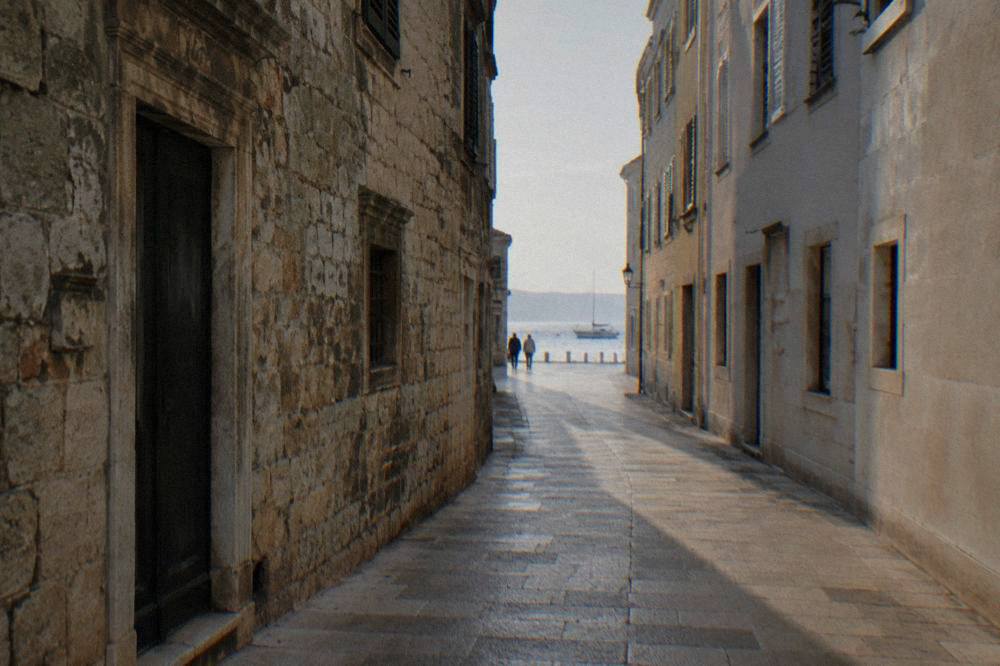
What Happened To The Old Town Of Zadar During The War?
**The bombing destroyed a substantial share of the Old Town peninsula's buildings, and the postwar reconstruction replaced some destroyed quarters with modern blocks while restoring others, which is why Zadar's Poluotok today mixes medieval churches with mid-century concrete.
What a visitor can do is read the city itself. The peninsula still carries its layers visibly. The surviving monuments are these:
| Landmark | Year | Status |
|---|---|---|
| Land Gate (Kopnena vrata), by Michele Sanmicheli | 1543 | Standing, public access |
| Sea Organ, by Nikola Bašić | 2005 | Open installation, free, at all hours |
| Greeting to the Sun, by Nikola Bašić | 2008 | Open installation, free, at all hours |
| UNESCO listing, Venetian defence works of the fifteen and sixteen hundreds | 2017 | Zadar is one of six components |
Note what that table does and does not say. It carries the dates themselves. It does not carry the founding date of the city, the age ranking behind the popular claim covered in whether Zadar is the oldest city in Croatia, or any wartime date at all.
Two features of the peninsula that visitors often connect to the war deserve a careful sentence each. The Sphinx of Zadar and the Pillar of Shame are real objects with dedicated pages in this site's answers section, and both attract invented backstories online. Where they stand is plain to see on the ground, but their detailed histories are another matter, and the confident wartime tales attached to them in tourist copy are best checked against the published literature before being repeated. The Pillar of Shame in particular is often folded into retellings of the bombing era, so treat any detailed version of that connection with caution. The Sphinx attracts the same treatment.
What Can You Still See Of Wartime Zadar Today?
The visible legacy of the bombing is less a set of marked monuments and more the city's own fabric: the contrast between restored medieval streets and postwar reconstruction blocks on the peninsula, alongside the churches that survived and were repaired. Rather than a specific wartime site, this page directs visitors to the physical city and its museums.
The practical way to read the peninsula is on foot. Start at the Roman Forum side of the Old Town and work toward the waterfront, and the transitions between old stone and newer construction mark where the destruction fell and what the rebuilding chose to do with the gaps. Allied bombing from November 1943 to October 1944 destroyed the great majority of the city's buildings, and the newer stretches of the Old Town fill those gaps. The church of St Donatus, the city's most recognisable pre-Romanesque building, faces roof restoration works planned from autumn 2026 for roughly six months: access may be limited during the works, so check before going. The Cathedral of St Anastasia's bell tower stands nearby; confirm the price and hours for the climb locally.
The museums carry the deeper story. The Archaeological Museum Zadar and St Donatus run on the same tariff, around 7 EUR at full price, and the Museum of Ancient Glass charges 7.00 EUR for an adult ticket; check its opening hours with the museum before a visit. None of these is a war museum as such, but together they hold the material record of a city that the wartime bombing left largely destroyed.
There is also a perspective on the city that the war never touched: the water. The rivers and karst country inland from Zadar carry no bomb damage, and a guided half-day kayaking trip on the Zrmanja river covers a landscape that looks today much as it did before any of the city's later history unfolded. The Zrmanja river half-day kayaking tour from Zadar is the tour this page features, with Check availability beside it. After a day reading a wounded city, the river is the counterpoint.
How Did Zadar Rebuild And Move On?
Zadar was badly damaged in World War II: Allied bombing from November 1943 to October 1944 destroyed the great majority of the city's buildings, and the peninsula a visitor walks today reflects the rebuilding that followed.
The most striking thing about the rebuilt city is how quickly the visitor stops noticing. The Sea Organ of 2005 and the Greeting to the Sun of 2008, both by Nikola Bašić, now define the waterfront end of the peninsula, on the very edge where Allied bombing from November 1943 to October 1944 destroyed most of the city's buildings. The two installations are free, open public works, accessible at all hours, and they sit on ground whose earlier history is invisible unless you already know to look for it. How the Sea Organ actually produces its sound is covered in how the Zadar Sea Organ works.
The UNESCO angle deserves a precise sentence, because it is often mangled. Zadar is one of six components of the transnational World Heritage property of Venetian defence works, inscribed in 2017. The Old Town as a whole is not a World Heritage Site, and the listing concerns fortification works of the fifteen and sixteen hundreds, not the modern city. Wartime damage and postwar rebuilding play no part in the inscription.
For visitors planning around the city's calendar rather than its history, the current season of note is Zadar Advent, which runs from 24 November 2026 to 2 January 2027 across three locations, including a new ice rink on the Forum, with the Zadar Christmas Run on 27 December 2026. If the trip falls in that window, the wartime story and the festive programme share the same small peninsula.
Planning A Historical Visit To Zadar
A historical visit to Zadar works best as a walking day on the peninsula followed by a water or inland day, because the wartime story lives in the streets while the region's landscape days, boat trips among the islands and river kayaking, sit within easy reach of the city. Krka's Skradinski Buk lies 91 km and Plitvice 145 km by road from the Old Town, so park days are half-day drives rather than afternoon excursions.
The region's scale is best sensed from the Old Town itself:
| Destination From Zadar Old Town | Distance By Road |
|---|---|
| Bus station | 2.6 km |
| Nin | 19.8 km |
| Paklenica National Park | 46.8 km |
| Skradin (Krka) | 76 km |
| Krka, Skradinski Buk | 91 km |
| Plitvice Lakes | 145 km |
For a city-focused trip, the practical questions are already answered elsewhere on this site: how many days in Zadar is enough for an itinerary that includes the historical quarter, and whether the Old Town is worth visiting for readers weighing Zadar against other Dalmatian stops such as the comparison in is Zadar nicer than Split. The wartime history is not a reason to skip the city. Between November 1943 and October 1944, Allied bombing destroyed the great majority of Zadar's buildings, and that destruction is the reason the city looks the way it does today.
Common Questions About Zadar In WWII
Why was Zadar bombed in WWII?
Zadar was an Axis-held, fortified coastal city on a disputed peninsula commanding the eastern Adriatic, which made it an Allied air target as well as a point of contention between Axis powers in the region.
How much of Zadar was destroyed in the war?
A substantial share of the Old Town peninsula's buildings was destroyed and later rebuilt, which is why the peninsula mixes restored medieval fabric with postwar construction.
Was Zadar part of Italy during the war?
Yes. Zadar was an Italian-held city before and during the war, set within a surrounding territory under a different administration, and its status was contested.
Are the Sphinx and the Pillar of Shame war memorials?
Both are real objects in Zadar that attract invented backstories. Treat any tale linking them to the war, or any confident account of their origins, as local legend rather than fact.
Can you see war damage in Zadar today?
Not as a marked ruin. The legacy is the city fabric itself: the contrast between restored medieval streets and postwar reconstruction blocks, plus repaired churches. St Donatus faces roof restoration works planned from autumn 2026, so access may be limited and should be checked before a visit.
Is the Old Town of Zadar a UNESCO site because of the war?
No. Zadar is one of six components of the UNESCO property of Venetian defence works inscribed in 2017, covering fortifications of the fifteen and sixteen hundreds. The Old Town as a whole is not inscribed, and the listing has nothing to do with the modern era of the city.
