What Is The Pillar Of Shame In Zadar?
The Pillar of Shame in Zadar, Dalmatia, Croatia: what the stone monument on the peninsula is, where to find it, what the research says about its story, and what to see nearby.
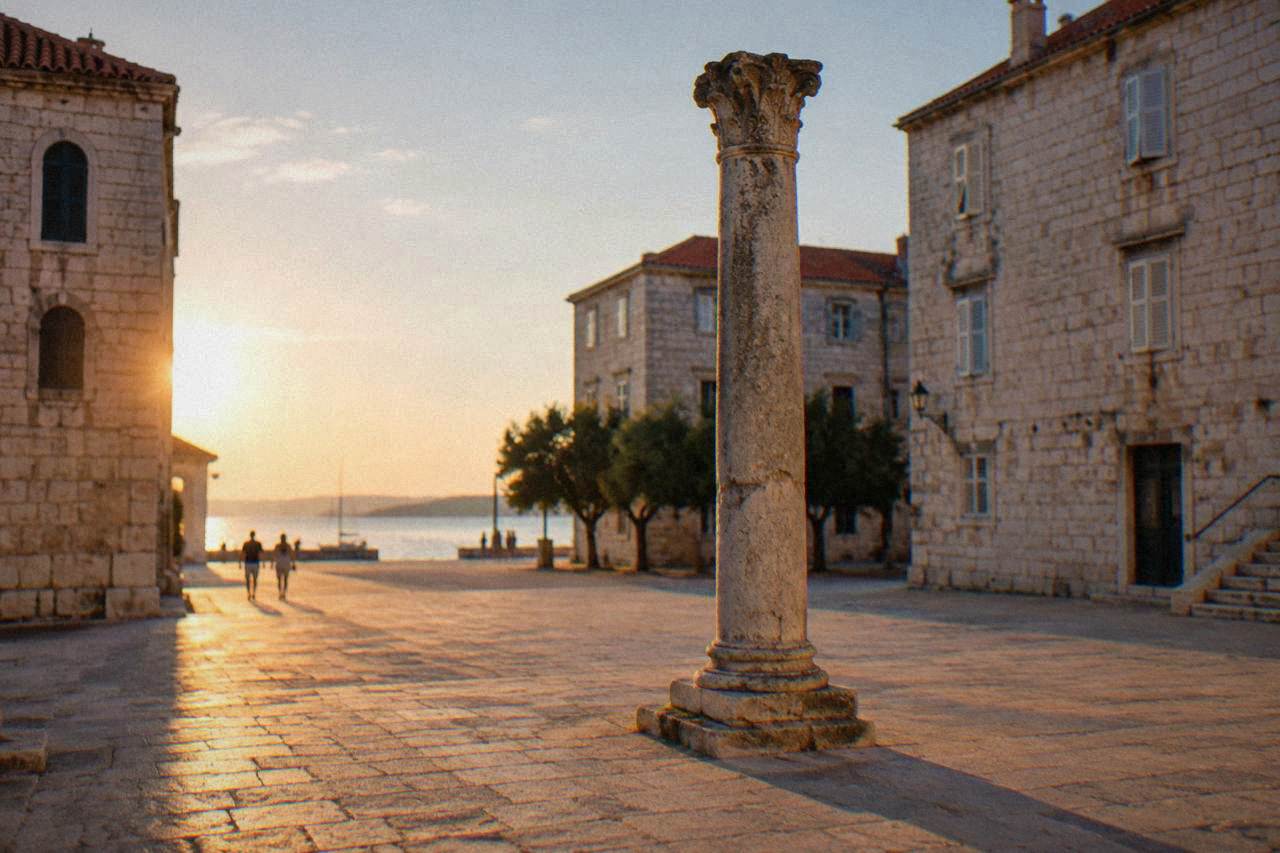
The Pillar of Shame is a roughly fashioned stone column that stands on Zadar's Old Town peninsula, in the Dalmatian coastal city on the Adriatic that this site covers end to end. It sits near Five Wells Square, a few minutes on foot from Kalelarga and the Roman Forum. Visitors notice it because the name sounds dramatic and because almost nothing at the spot explains it, so the question arrives at the editorial desk of the Zadar Croatia Travel Guide regularly: what is this thing, and is the story on the plaque or in the app true? The honest answer has two layers. The column itself is real, old-looking and freely accessible at any hour. The colourful historical explanation attached to it, punishment, public shaming, an exact date, does not survive checking, and this page separates the stone from the story.
What Is The Pillar Of Shame In Zadar?
The Pillar of Shame is a single worn stone column on Zadar's Old Town peninsula, close to Five Wells Square, that local tradition links to public punishment in the city's past. It is a free, always-accessible streetside monument you can walk to in a few minutes from Kalelarga.
That is the careful version, and it is worth explaining why. Zadar's peninsula is dense with genuine, documented history: the Roman Forum, the Land Gate built in 1543 to a design attributed to Michele Sanmicheli, the Church of St Donatus, and the city walls that form Zadar's component of the UNESCO-listed Venetian defence works inscribed in 2017. Against that backdrop, a rough column with a grim nickname invites a dramatic paragraph, and plenty of informal write-ups supply one: criminals chained to it, offenders exposed to the crowd, a medieval court a few steps away. Enjoy those tales as colour, but hold them lightly. What is documented is the column's presence, its location and its local name.
That gap is itself worth knowing before you go. The Pillar of Shame belongs to a category of monument common in old European towns, a reused architectural fragment or boundary marker that accumulates a punishment legend because the shape fits the story. Some of those legends are true. In Zadar's case, the sources this site relies on do not say either way, so the honest description is: an old stone column, locally called the Pillar of Shame, standing in a part of the Old Town that was the administrative heart of the Venetian-era city. Treat any exact anecdote attached to it as local tradition rather than established fact, and enjoy it in that spirit.
The practical side is simple. The column is on public street, there is no ticket, no fence and no opening hour, and it takes a minute or two of walking from either the Forum or the People's Square. Pair it with the surrounding square, which is one of the more atmospheric corners of the peninsula, rather than making it a destination on its own.
Where Exactly Does The Pillar Of Shame Stand In Zadar?
The Pillar of Shame stands on the Old Town peninsula of Zadar, in the streets around Five Wells Square on the western side of the historic core, within a short walk of the People's Square, Kalelarga and the Riva seaside promenade. There is no ticket or opening hour: the column is on an ordinary public street and can be reached on foot at any time of day or night.
Five Wells Square, Trg pet bunara in Croatian, is the anchor to navigate by. The square takes its name from a covered cistern with five openings that supplied the city with water, and it remains one of the peninsula's gathering places, with cafés spilling across the stone in the warmer months. The column sits in this immediate area. Coming from the direction of the People's Square, it is a short walk; coming from the Roman Forum or the Cathedral of St Anastasia, allow a little longer at a slow pace.
A sensible route takes in the column as a waypoint, not a goal. Start on the Riva by the Sea Organ, the wave-driven installation by Nikola Bašić opened in 2005, walk up through the People's Square, pass Five Wells Square and the column, and finish at the Land Gate and the Renaissance moat. That loop covers the peninsula's most photographed spots in a relaxed morning. Readers planning a fuller stay can compare timings in how many days in Zadar is enough, and anyone weighing the city against its bigger rival down the coast can start with is Zadar nicer than Split.
One practical note for summer: the Old Town introduced dress-code signage in 2026, with posted notices at key access points asking for appropriate clothing, no swimwear, backed by fines of up to 130 EUR under the existing communal order decision, as reported by local media. Cover up between the beach and the peninsula.
Is The Story On The Tours And Apps About The Zadar Pillar True?
The desk's answer is: partly unverifiable. The column exists and the punishment association is genuine local tradition, but no verified source gives an erection date, an original purpose or a documented event at the spot, so any tour script or app text that supplies a specific date, crime or victim for the Pillar of Shame is filling the gap with folklore, however confidently it is delivered.
This distinction matters because Zadar has a parallel case that makes the point neatly. A short walk away stands the so-called Sphinx of Zadar, a concrete sculpture in the Queen Jelena Madijevka Park, and its backstory is similarly contested, romantic, repeated everywhere and thin on documentation. The pattern repeats with the "oldest city in Croatia" claim, which this site also declines to state as fact. None of this makes Zadar's history weak: the city's documented heritage includes the Roman Forum, the 1543 Land Gate, the 2017 UNESCO inscription of the city's Venetian defence walls, and the modern installations of 2005 and 2008. It means that a handful of the city's favourite micro-stories, the Pillar of Shame among them, sit in the tradition column rather than the archive.
There is a reasonable way to enjoy the column regardless. Old European cities reused stone constantly, and a column standing beside a former administrative square is exactly the kind of object that carried meaning for centuries, whether as a marker, a support or something less comfortable. Local tradition has settled on the punitive reading, the name has stuck, and the atmosphere of the surrounding lanes makes the story easy to picture. Just repeat it as tradition if you repeat it at all.
For travellers who like their history better documented, the peninsula delivers within a five-minute radius. The Museum of Ancient Glass, whose ticket page lists 7.00 EUR for an adult, sits on the square by the city guard building. The Archaeological Museum and St Donatus run on a shared tariff with a 7.00 EUR row at full price. The Roman Forum is open public space. That is a solid half-day of verifiable antiquity around one unverifiable column.
| Site Near The Pillar Of Shame | What It Is | Access |
|---|---|---|
| Roman Forum | Open ancient paved square, free public access | Always open, free |
| Land Gate | City gate dated 1543, attributed to Michele Sanmicheli | Always open, free |
| Five Wells Square | Cistern square with five covered wells, cafés around it | Always open, free |
| Museum of Ancient Glass | Glass collection, 7.00 EUR adult per its ticket page | Ticketed; hours vary, check the museum's own page |
| Church of St Donatus | Pre-Romanesque church; roof works planned from autumn 2026 | Access may be limited during works, check before going |
Can You See The Pillar Of Shame On A Zadar Walking Tour?
Yes: the column sits in the standard Old Town sightseeing zone, and Zadar's guided walks and sightseeing rides regularly pass through Five Wells Square, so the Pillar of Shame typically appears as a brief stop or a pointed-out landmark rather than the centrepiece of a tour. Tip-based walks also run locally; confirm the arrangement with the guide before setting off.
The city's paid walking tours cover the peninsula's highlights, the Forum, Kalelarga, the Sea Organ and the Greeting to the Sun, and the Five Wells Square area is on the natural line between them, so the column usually gets a sentence of commentary as the group passes. Sightseeing alternatives exist too: tuk-tuk rides and a panoramic cabrio bus circuit the city, which suits visitors with limited mobility or tight timing. The Zadar walking tour options page on this site collects the bookable versions in one place alongside the sea-based alternatives.
There is also a case for skipping the guide entirely. The advantage of a walk with a guide is the storytelling, and here the honest caveat from the previous section applies twice over: a guide narrating the Pillar of Shame is sharing tradition, and the quality of that tradition varies with the guide. Ask them directly whether the story is documented; the good ones will say it is not, and that conversation is worth more than the anecdote.
One timing note drawn from the climate record, Zadar station, 1961-2024: July averages 24.5 C and November is the wettest month at 123 mm of rain, while July is the driest at 35.4 mm. A walking morning is pleasant across the whole year, but the column's square has limited shade, so the shoulder months are the comfortable choice for a slow history walk. Details are in what is the best time to visit Zadar.
How Should You Fit The Pillar Of Shame Into A Zadar Day?
Treat the Pillar of Shame as a five-minute stop inside a wider Old Town circuit, not a standalone attraction: pair it with Five Wells Square, the People's Square and the Land Gate on the way west, then finish on the Riva at the Sea Organ and the Greeting to the Sun, both free and open around the clock. An afternoon or a boat trip completes the day.
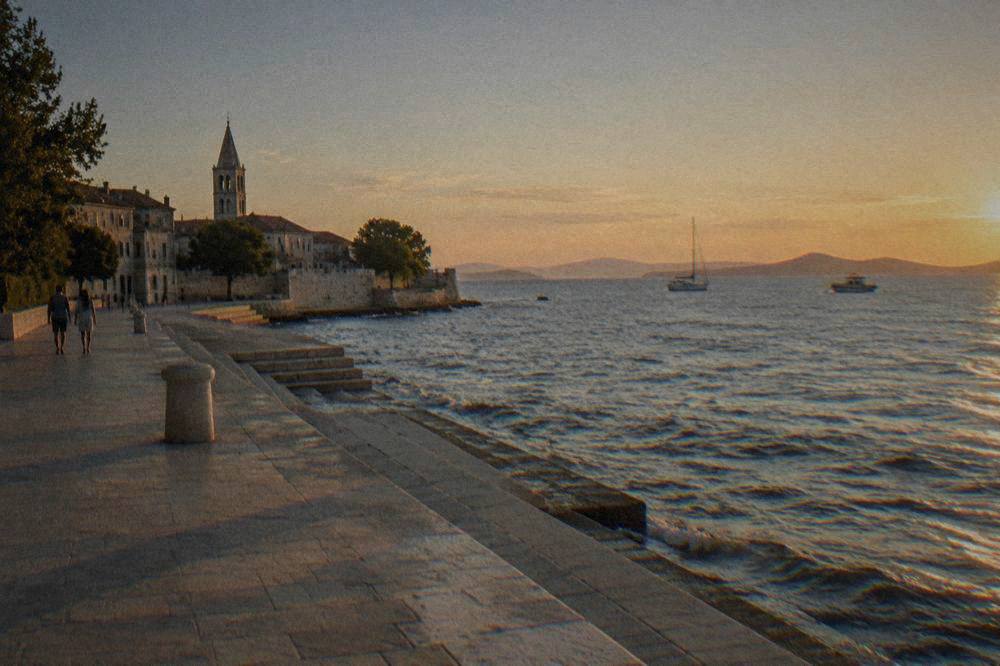
The column, the Forum, the museums and the walls are all morning material, before the heat and the crowds build. By early afternoon the sensible move is off the peninsula entirely. Zadar is a port for island day trips, and the boat category is the strongest in the local roster, with sailing, snorkeling stops and wine service on the water. The featured option on this page covers exactly that combination, and its live listing holds the current price, schedule and terms, with a free-cancellation window worth checking at booking.
Readers staying longer can build outward from there. The national parks sit within day-trip range: Krka and Plitvice both dropped to their winter-shoulder ticket rates on 1 October 2026, Plitvice at 23 EUR in October and 10 EUR from November to December, Krka at 20 EUR then 7 EUR later in the winter, per the parks' own seasonal lists. Kornati is charged per vessel rather than per person, which surprises drivers and matters if you are planning independent sailing.
The pillar itself, in the end, is a small stone with a big name. Give it a quick look, enjoy the square, keep the story filed under local legend, and spend the saved hours on the water or inside the museums, where every date on the wall has a source behind it.
Common Questions About The Pillar Of Shame In Zadar
What is the pillar of shame in Zadar?
A worn stone column on the Old Town peninsula near Five Wells Square, locally associated with public punishment in the city's past. No verified source gives an erection date or a documented event at the spot, so the punishment story is local tradition rather than established history.
Is the Pillar of Shame free to visit in Zadar?
Yes. The column stands on a public street with no ticket, fence or opening hours. It is reachable on foot in a few minutes from the People's Square, the Roman Forum or Kalelarga.
How far is the Pillar of Shame from the Sea Organ?
A short walk across the peninsula, on the order of five to ten minutes at a relaxed pace. The whole Old Town core is compact and flat, so no transport is needed between the two.
Can I take a photo of the Pillar of Shame?
Yes, it is an ordinary streetside monument on a public square. Morning light across the pale stone of the surrounding lanes is the most photogenic time of day.
Is the punishment story about the Zadar column true?
It is folklore rather than history. Treat any specific anecdote about the column as tradition, and repeat it as tradition, not as fact.
What else is near the Pillar of Shame?
Five Wells Square itself, the People's Square, the Land Gate of 1543, the Roman Forum, and the Church of St Donatus, whose roof restoration from autumn 2026 may limit interior access during the works. The Museum of Ancient Glass and the Archaeological Museum are a few minutes away and ticketed.
