Which Is Better, Zadar Or Šibenik?
A comparison of Zadar and Šibenik, two Dalmatian coastal cities, on access, day trips, the Sea Organ, Krka proximity and costs, based on verified sources.
Zadar, a coastal city in Dalmatia on the Adriatic, and Šibenik, roughly 89 road kilometres and about 71 minutes further down the coast, get compared often because both are smaller, walkable alternatives to Split and Dubrovnik. The comparison is not really a contest of quality but of shape: Zadar is a peninsula Old Town with two free waterfront installations by the architect Nikola Bašić, a busy airport link and boat tours running to the offshore islands, while Šibenik is best known as the town nearest the Skradin entrance of Krka National Park, about 76 kilometres from Zadar by road. This page sets out what the sources actually support, so the choice can be made on facts rather than slogans.
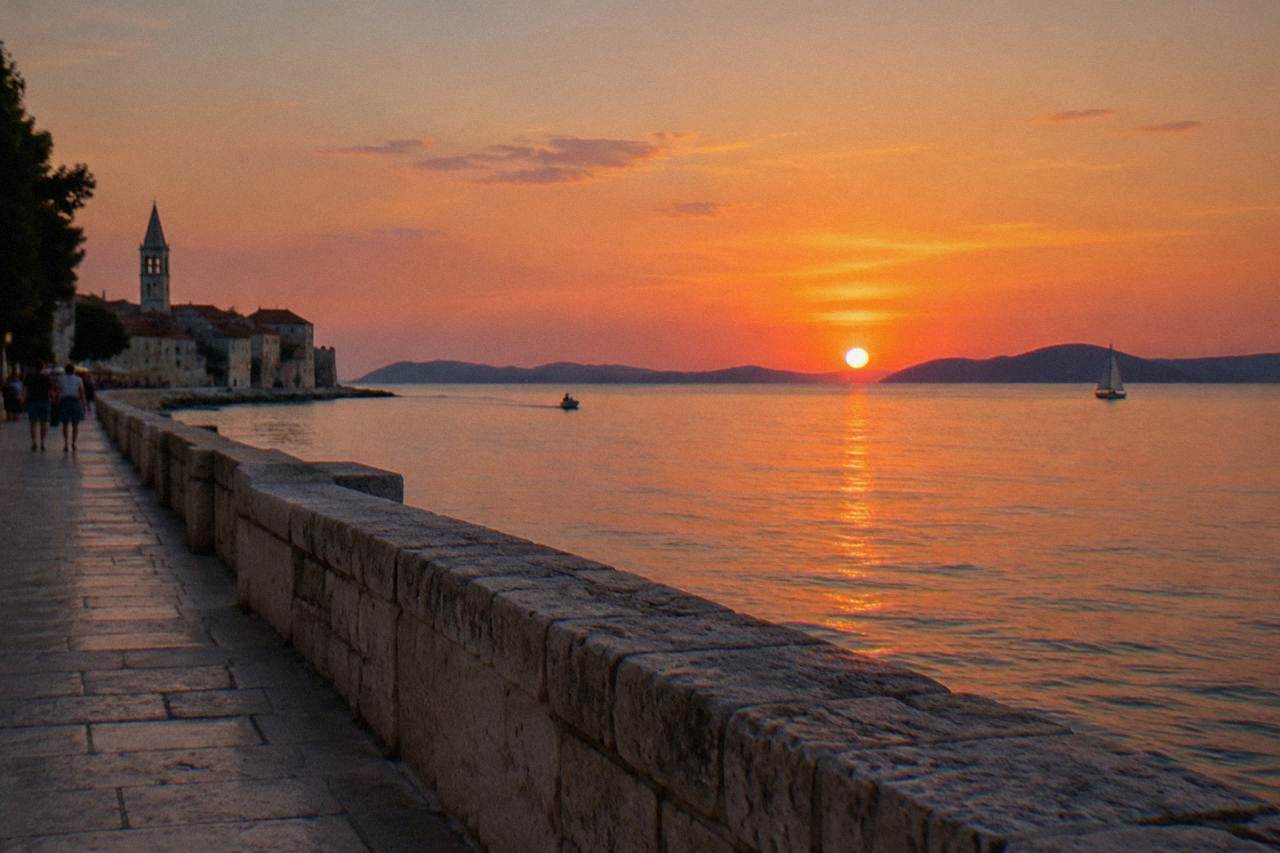
Which Is Better, Zadar Or Šibenik?
Zadar is the stronger base for a first Dalmatian trip of three days or more, because it combines a free-access Old Town peninsula, the Sea Organ and Greeting to the Sun installations, an airport about 8 kilometres from the city, and starting points for boat trips to Ugljan, Dugi Otok and the Kornati islands, while Šibenik is the better choice when Krka National Park is the single main goal, since Skradin, one of the park's gateway towns, sits between the two cities.
Neither city wins outright; the difference is one of scale and position. Zadar's population is 67,309 at the 2021 census, and its Old Town occupies the narrow Poluotok peninsula, with Ugljan and Dugi Otok offshore. For a wider sense of what the city offers, see what Zadar is famous for and whether Zadar is worth visiting.
Travellers already committed to Croatia's national parks can sleep in either city: Krka's Skradin entrance is 76 kilometres from Zadar, roughly 62 minutes of driving, and Šibenik sits closer still. Zadar, on the other hand, adds Plitvice at 145 kilometres, Paklenica at about 46.8 kilometres and Nin at about 20 kilometres to the same day-trip map. The day trips from Zadar guide covers the route to Šibenik in detail.
What Does Each City Offer That The Other Does Not?
Zadar's distinguishing sights are the Sea Organ, installed in 2005, and the Greeting to the Sun, installed in 2008, both by Nikola Bašić, both free and open at all hours on the western tip of the peninsula, plus the 1543 Land Gate by Michele Sanmicheli and a Roman Forum in free public access, while Šibenik is known here for its position relative to Krka National Park rather than any individual monument.
The Sea Organ is a wave-driven installation, its length reported at about 70 metres with 35 pipes, and the Greeting to the Sun is a 22-metre solar-powered light circle beside it. Zadar is also one of six components of the UNESCO property "Venetian Works of Defence between the 16th and 17th Centuries: Stato da Terra, western Stato da Mar", inscribed in 2017, a point worth care: the listing covers the defensive system, not the Old Town as a whole. The details are in the guides to the Sea Organ, the Greeting to the Sun and the Land Gate.
Šibenik's pull in the verified data is Krka. The park's own 2026 price list, published as a PDF on npkrka.hr, charges adults 7 EUR in January, February, March, November and December, 20 EUR in April, May and October, and 40 EUR from June to September for all accessible land sites, with reduced rates at Roški slap and the other outlying entrances. Swimming at Skradinski Buk has been banned since 2021 to protect the travertine, and swimming is permitted only in designated spots such as Roški slap, Stinice and Pisak between 1 June and 30 September. A separate comparison of the two inland parks is at Plitvice or Krka.
The other asymmetry is water. Zadar's boat tours reach the islands and the Kornati archipelago directly from the city harbour, which is something Šibenik's position does not replicate. Kornati National Park, one point of frequent confusion, charges per vessel by length and season rather than per person: the park's 2026 list shows 25 EUR for boats up to 6.99 metres in the off-season and 45 EUR in the June-to-September window for one day, with the entry bought outside the park. Telašćica Nature Park next door charges 6 EUR at the Dolac land entrance off-season and 8 EUR in summer. These figures belong to boat owners, not to passengers on an organised trip, which is why a Kornati and Telašćica boat trip with lunch included sidesteps the permit arithmetic entirely.
How Do The Two Cities Compare On Access And Day Trips?
Zadar Airport sits about 8 kilometres from the city. A Liburnija shuttle runs to the Old Town in about 20 minutes and costs 5.00 EUR one way including luggage, with the ticket valid for 90 minutes on city buses. By road, Zadar is 76 kilometres from Skradin, 145 from Plitvice and about 46.8 from Paklenica.
The access picture is where the two cities genuinely diverge for a visitor without a car. Zadar's airport announced new Wizz Air routes to Budapest and Warsaw from 7 June 2026, four times weekly, on its own news page, and a new departures terminal was presented on 24 July 2026 as part of an expansion toward 3 million passengers a year. Year-round Munich flights are confirmed for the winter of 2026-27 in county statements reported by 023.hr on 2 October 2026. The airport to city centre answer covers the transfer options, and the flights to Zadar page lists the carriers. Other pages covering the same trip are gathered on Zadar Croatia Travel Guide.
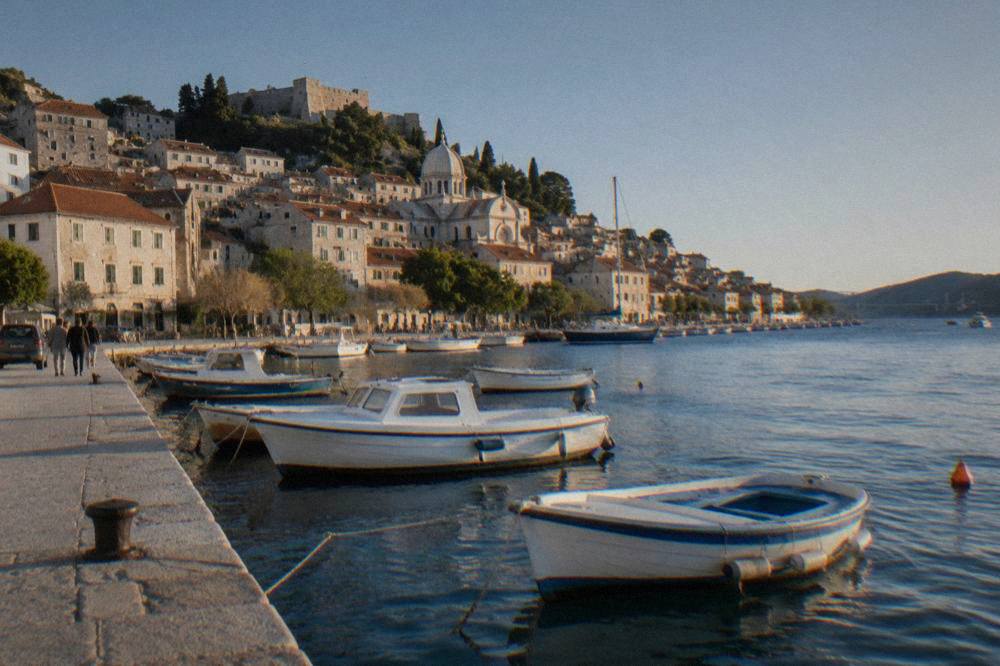
From Zadar the day-trip net is wide. Driving times run to about 28 minutes to Nin, 39 to Biograd, 57 to Paklenica, 62 to Skradin and Krka's Skradinski Buk at 91 kilometres, and 153 minutes to Plitvice. Jadrolinija runs the Gaženica to Brbinj ferry to Dugi Otok as line 434, a crossing of 1 hour 40 minutes, and the Preko crossing to Ugljan takes about 25 to 30 minutes.
Šibenik's verified role in this site's data is as a destination on that road south, closer to Krka's gates. For a traveller weighing the two as bases, the honest summary is that Zadar's transport grid, air links, ferries and tour departures, is the denser of the two.
What About Weather, Seasons And Costs?
Zadar's station record, labelled Zadar station, 1961-2024 by DHMZ, shows a July mean of 24.5 C and a January mean of 7.3 C, with November the wettest month at 123 mm and July the driest at 35.4 mm, about 2,600 hours of sunshine a year, and no separate verified climate table exists for Šibenik on this site, so no city-versus-city weather comparison is made beyond distance from the same coast.
The climate table below is the Zadar station record from DHMZ, monthly means for the period 1961-2024. It is a weather-station record, not a 1991-2020 normal, and the sunshine total is the computed sum of the twelve monthly values, 2,590.8 hours, written here as about 2,600.
| Month | Mean temperature (C) | Precipitation (mm) |
|---|---|---|
| Jan | 7.3 | 76.4 |
| Feb | 7.8 | 67.0 |
| Mar | 10.0 | 66.3 |
| Apr | 13.4 | 61.4 |
| May | 17.9 | 64.4 |
| Jun | 21.9 | 48.5 |
| Jul | 24.5 | 35.4 |
| Aug | 24.1 | 52.8 |
| Sep | 20.2 | 110.9 |
| Oct | 16.3 | 106.8 |
| Nov | 12.1 | 123.0 |
| Dec | 8.6 | 99.6 |
Costs tilt on park tickets more than on city prices. Both Krka and Plitvice dropped to winter-shoulder rates from 1 October 2026: the park price lists show Krka at 20 EUR in October and 7 EUR across the later winter months, Plitvice at 23 EUR in October and 10 EUR in November and December. An autumn visit to either base city therefore lands the two headline park fees at less than half their summer level. City-side, the Museum of Ancient Glass in Zadar lists 7.00 EUR for an adult on its own ticket page, the Archaeological Museum and St Donatus run at around 7 EUR at full price on the AMZD tariff page, and the tourist tax exists but its rate is confirmed at booking rather than printed here. For the full picture, see how many days in Zadar is enough and the best time to visit.
So Which City Should You Choose?
Choose Zadar for a stay of two days or more built around the Old Town, the free waterfront installations, boat trips to the islands and the Kornati archipelago, and day trips by road or tour to Krka, Plitvice, Paklenica, Nin or Pag, and choose Šibenik when the trip is short and Krka National Park is the priority, treating it as a stop on the Krka route rather than a destination judged on its own sights, hotels or prices.
A useful exercise is to list what cannot be decided from this site's data: hotel rates, restaurant prices and taxi fares in either city, none of which are verified here and none of which should be guessed. What can be decided is structural. Zadar holds the airport, the ferry lines, the island day trips and the two free installations that give the peninsula its evening ritual, and the Zadar boat tours that leave from its harbour, including the traditional boat run with three stops and unlimited wine, can be checked through the operator's live listing at Check availability. Šibenik shortens the drive to Krka and the two combine well: the coast road between them takes about 71 minutes.
One planning note from the fresh file: St Donatus Church in Zadar faces roof restoration, with works planned from autumn 2026 for about six months and individual access dependent on the phase, so anyone visiting Zadar specifically for that building should check access before going. The Sea Organ and the Greeting to the Sun have no reported closures. For readers still weighing Zadar against other bases, the Zadar or Zagreb and Zadar or Split comparisons cover the same question for the other two candidates.
Common Questions About Zadar Or Šibenik
Which is better, Zadar or Šibenik?
Zadar suits a first Dalmatian base of two days or more, with its free Sea Organ and Greeting to the Sun installations, ferry links and island boat trips, while Šibenik suits a short stay focused on Krka National Park, which sits closer to it than to Zadar.
How far is Zadar from Šibenik?
Zadar is about 89 kilometres from Šibenik, roughly 71 minutes of driving on the coastal route.
Can you visit Krka National Park from Zadar?
Yes. Skradin is about 76 kilometres and 62 minutes from Zadar by road, and the Skradinski Buk entrance is about 91 kilometres away, with organised day trips also running from Zadar.
Is the Sea Organ in Zadar free?
Yes, the Sea Organ, installed in 2005, and the Greeting to the Sun, installed in 2008, are free public installations by Nikola Bašić, open at all hours.
Does Zadar have an airport?
Yes. Zadar Airport is about 8 kilometres from the city by its own page, with a shuttle at 5.00 EUR one way including luggage, and new Wizz Air routes to Budapest and Warsaw launched in June 2026.
When do Krka and Plitvice tickets get cheaper?
From 1 October 2026 both parks dropped to winter-shoulder rates: Krka at 20 EUR in October and 7 EUR in the later winter months, Plitvice at 23 EUR in October and 10 EUR in November and December.