What Are The Roman Ruins In Zadar, Croatia?
The Roman ruins in Zadar cluster on the Old Town peninsula: the Forum, St Donatus Church, and the Archaeological Museum's collection. What survives, what it costs, and how to see it.
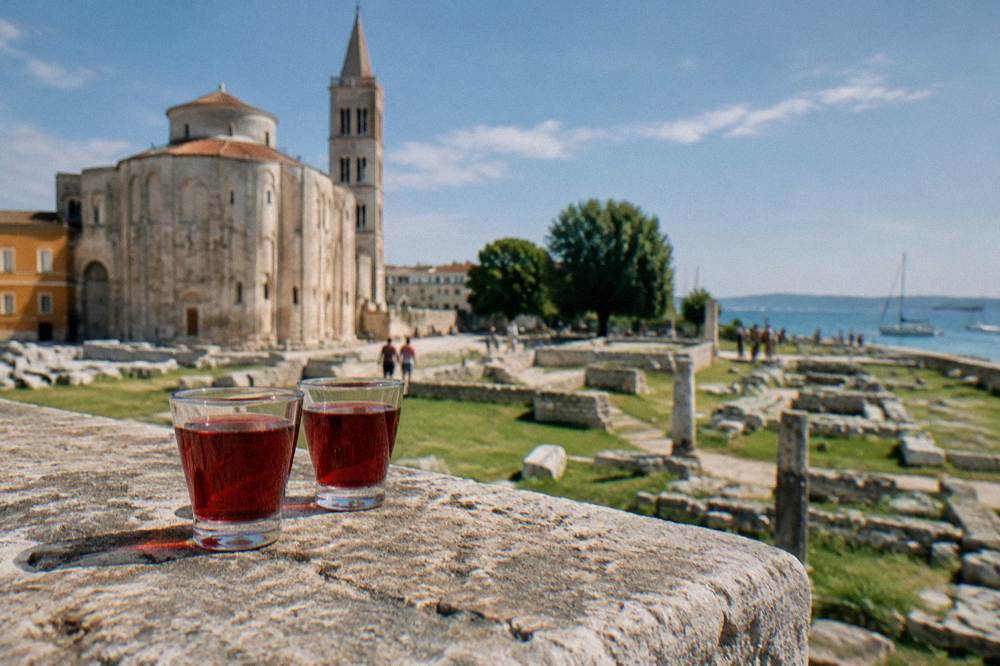
Zadar is a coastal city in Dalmatia, Croatia, and its Roman remains sit at the very center of it, on the narrow peninsula the locals call Poluotok. The ruins are not fenced off in a peripheral archaeological park: the Roman Forum is a free open square a few minutes' walk from the Riva waterfront, St Donatus Church stands directly beside it, and the Archaeological Museum holds the excavated material within sight of both. The city's tourist board page on the Sea Organ and the Greeting to the Sun lists those two modern installations as neighbors of the same waterfront, which gives a sense of how compact the whole arrangement is.
What Are The Roman Ruins In Zadar, Croatia?
The Roman ruins in Zadar are concentrated on the Old Town peninsula and center on the Roman Forum, a free, open public square; St Donatus Church, the pre-Romanesque church built hard against the Forum's edge; and the Archaeological Museum, which displays the excavated Roman material. The Forum, Five Wells Square, Kalelarga and the Land Gate are all free public spaces, and the Archaeological Museum's tariff page shows entry rows of 7.00 EUR and 5.00 EUR, so figure around 7 EUR at full price.
That is the short inventory, and it is genuinely walkable in a single loop. The Forum sits at the heart of the peninsula. The Archaeological Museum faces onto it. St Donatus, the city's most recognizable building, occupies the Forum's eastern edge. None of these involves transport, tickets bought in advance for the open-air parts, or more than a few hundred meters of walking between them.
One framing point matters before the detail. Zadar is one of six components of the UNESCO property "Venetian Works of Defence between the 16th and 17th Centuries: Stato da Terra, western Stato da Mar", inscribed in 2017, and that listing covers the fortification system, not the Roman layer and not the Old Town as a whole. The Roman remains are protected and studied, but a visitor should not arrive expecting a World Heritage archaeological park in the style of some larger Roman sites. What Zadar offers is a living city with Roman fabric embedded in it, which is a different and arguably better experience.
The question of how the ruins relate to the city's longer story is covered in is Zadar the oldest city in Croatia, which handles the age claims this page deliberately avoids.
Where To Find The Roman Forum In Zadar?
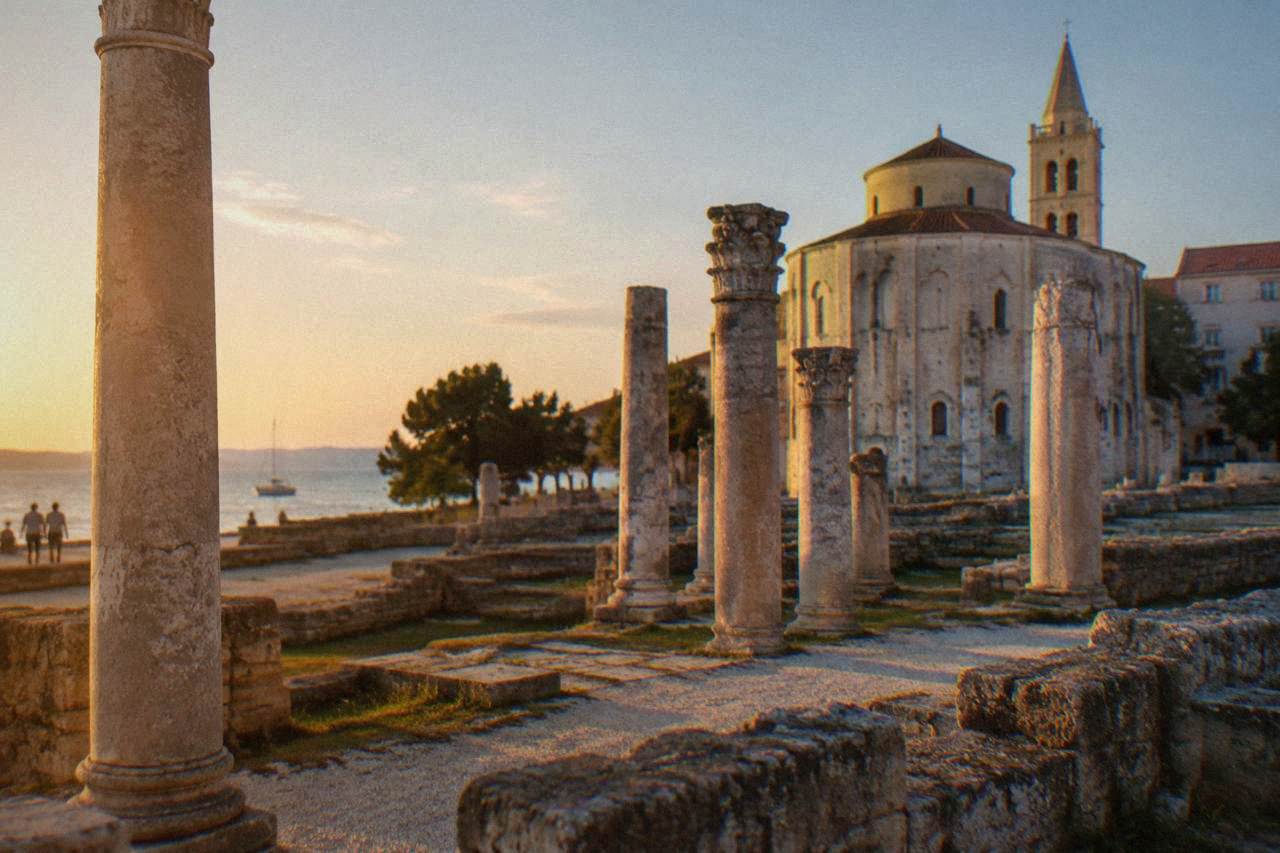
The Roman Forum in Zadar lies at the center of the Old Town peninsula, directly beside St Donatus Church and within sight of the Archaeological Museum, and it is free public space with open access at all hours, like Five Wells Square, Kalelarga and the Land Gate. No ticket, gate or fence controls entry; the stones stand in a square the city simply uses.
The Forum is the anchor site. It is a paved open area with surviving columns, steps and fragments, and the modern city has grown up around it rather than over it. The tourist board's own pages group it with the Land Gate of 1543, attributed to Michele Sanmicheli, among the free historic spaces of the peninsula, which tells a visitor the practical thing: nothing between arriving on the peninsula and standing among the Roman stones requires payment or a schedule.
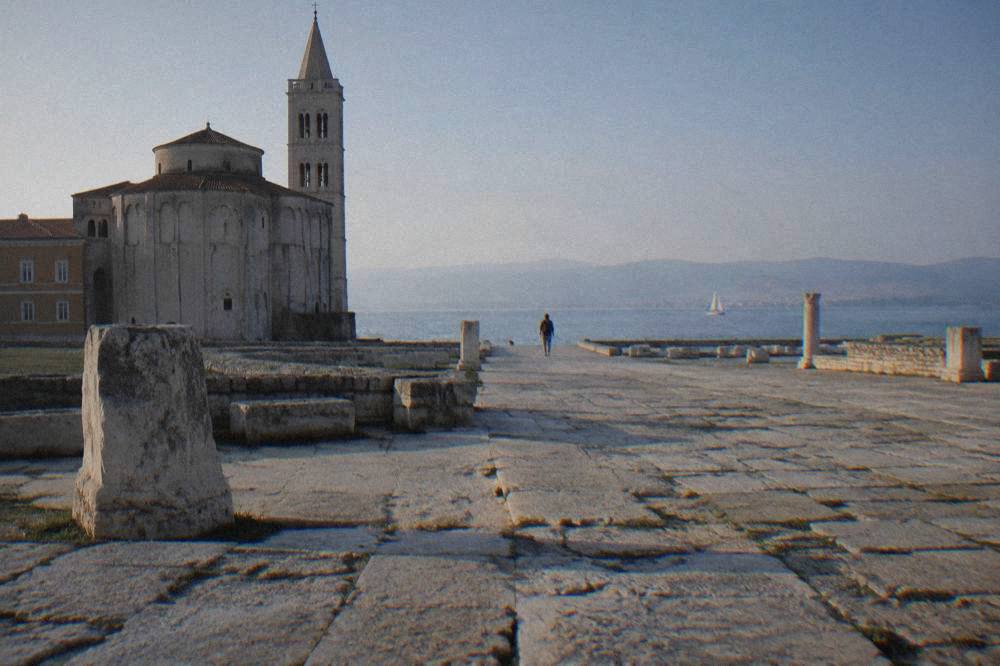
A sensible hour-by-hour approach for a first visit is straightforward, and the itinerary pages on this site, such as what to see with one day in Zadar, place the Forum early in the day before the square fills. Morning light also suits photographs of the stonework. The square is small enough that twenty minutes of unhurried looking covers the visible fabric, and the immediate neighbors, the church and the museum, are the natural next stops.
The practical detail worth flagging concerns St Donatus itself rather than the Forum. The church faces a roof restoration: a public procurement tender for the full replacement of the roof structure was launched at the end of August 2026, with works planned from autumn 2026 over roughly six months as the first phase of a wider restoration, during which group visits are suspended and individual access depends on the phase. The church's tariff, like the Archaeological Museum's, sits on the same tariff page showing 7.00 EUR and 5.00 EUR rows, so write "around 7 EUR at full price" and check access before counting on an interior visit. The full picture is in the St Donatus Church guide.
Which Zadar Museums Hold The Roman Collections?
The Archaeological Museum Zadar holds the Roman material excavated from the Forum and the peninsula, and its tariff page shows 7.00 EUR and 5.00 EUR entry rows, with free entry for children up to 10 and listed groups: around 7 EUR at full price. The Museum of Ancient Glass, a short walk away, is a separate museum, not a Roman collection as such, with a verified adult ticket of 7.00 EUR.
The Archaeological Museum faces the Forum and is the institution to visit for the Roman layer specifically. Its own page carries the tariff, and the free categories are stated there too, including Museum Night days. Hours are the thing to confirm on the museum's own schedule before setting out, since opening patterns shift by season. The rest of the planning pages sit on Zadar Croatia Travel Guide.
The Museum of Ancient Glass deserves a mention with an honest caveat: it is a glass museum, and its ticket page lists 7.00 EUR adult entry, 5.00 EUR for groups of five or more, 4.00 EUR for schoolchildren, and guided tours at 20 EUR in Croatian or 30 EUR in other languages. Ancient glasswork connects to the Roman world's material culture, but the museum is not the Roman collection. For what the city is known for more broadly, see what Zadar is famous for.
| Site or museum | Roman content | Entry | Notes |
|---|---|---|---|
| Roman Forum | The Forum itself: paving, columns, fragments | Free, open access | Public square, no hours or gates |
| St Donatus Church | Pre-Romanesque church built at the Forum's edge | Around 7 EUR full price | Roof works planned from autumn 2026, check access |
| Archaeological Museum Zadar | Excavated Roman material from the peninsula | Around 7 EUR full price | Free for children up to 10 and listed groups |
| Museum of Ancient Glass | Glass collections, not a Roman collection per se | 7.00 EUR adult | Groups 5.00 EUR, schoolchildren 4.00 EUR |
For planning the day around these stops, how many days in Zadar is enough works through the tradeoffs, and the ruins loop fits comfortably inside a single morning.
After the stones, the sea is minutes away. The featured pairing on this page is the 4-hour snorkeling boat tour with wine included, which leaves from the Zadar waterfront and covers swimming stops among the nearby islands with drinks on board: Check availability. It pairs naturally with a morning at the Forum, since the departure point sits at the foot of the peninsula the ruins occupy.
How Do The Roman Ruins Fit Into The Wider Old Town?
The Roman layer sits inside a peninsula that layers Roman, medieval, Venetian and modern fabric within a few hundred meters, and the free public spaces, the Forum, Five Wells Square, Kalelarga and the Land Gate of 1543, can all be walked in one loop without a ticket. The UNESCO inscription of 2017 covers Zadar as one of six components of the Venetian defence-works property, not the Roman remains themselves.
That layering is the point worth understanding. The Land Gate, dated 1543 and attributed to Michele Sanmicheli, is the Venetian layer. The Sea Organ of 2005 and the Greeting to the Sun of 2008, both by Nikola Bašić, are the contemporary layer, free and open at all hours on the same waterfront. The Roman Forum is the deepest visible layer, and none of these requires a bus, a car or a ferry to reach from any of the others. Whether the Old Town rewards that density is argued in is the Zadar Old Town worth visiting.
For visitors deciding between Zadar and its larger neighbor, is Zadar nicer than Split makes the comparison on walkability and scale; weigh Split's Roman remains on their own merits when planning.
| Layer | What represents it | Access |
|---|---|---|
| Roman | The Forum, and the Archaeological Museum's collection | Free square; museum around 7 EUR |
| Pre-Romanesque | St Donatus Church beside the Forum | Around 7 EUR, works planned from autumn 2026 |
| Venetian | The Land Gate, 1543, Michele Sanmicheli | Free public space |
| Contemporary | Sea Organ (2005) and Greeting to the Sun (2008), Nikola Bašić | Free, open at all hours |
Common Questions About Roman Zadar
What are the Roman ruins in Zadar, Croatia?
The Roman ruins in Zadar center on the Roman Forum on the Old Town peninsula, a free open public square, together with the Archaeological Museum Zadar, which holds the excavated Roman material, and St Donatus Church standing at the Forum's edge. The Forum is free; the museums charge around 7 EUR at full price.
Do you need tickets for the Roman Forum in Zadar?
No. The Forum is free public space with open access, like Five Wells Square, Kalelarga and the Land Gate. Only the adjacent museum and church interiors involve tickets, and those run around 7 EUR at full price on the published tariff.
Can you go inside St Donatus Church?
Access may be limited: roof restoration works are planned from autumn 2026 for roughly six months as the first phase of a wider restoration, during which group visits are suspended and individual access depends on the phase. Check the church's access arrangements before planning an interior visit.
How long does seeing the Roman ruins in Zadar take?
The Forum itself is a compact square that twenty unhurried minutes covers, and adding the Archaeological Museum and St Donatus makes a half-day loop on foot, all within a few hundred meters on the peninsula.
Are the Roman ruins part of a UNESCO World Heritage Site?
Not as such. Zadar is one of six components of the UNESCO property "Venetian Works of Defence between the 16th and 17th Centuries: Stato da Terra, western Stato da Mar", inscribed in 2017, and that covers the fortification system rather than the Roman remains or the Old Town as a whole.
The Roman ruins of Zadar ask very little of a visitor: no transport, no advance booking for the open-air parts, and no more than a morning of walking. The Forum is free and always open, the museums cost around 7 EUR at full price, and the church beside the square is the one piece to confirm ahead while the roof works run. Bring water, keep swimwear for the beach rather than the Old Town streets, where dress-code signage now carries fines, and let the sea around the peninsula finish the day.