Where Do The Locals Eat In Zadar?
Where do locals eat in Zadar? A reported guide to the konobas, markets and eating rhythms of Dalmatia's coast, with what to order and how to find the places residents actually use.
Zadar, a coastal city in Dalmatia on the Adriatic, keeps its eating culture close to the sea it sits on. The residents of this peninsula city of 67,309 people (2021 census, attributed to the national statistics office by secondary sources) shop at the city market, eat their main meal at midday when they can, and treat dinner as a slow, late, social affair that stretches along the Riva and into the side streets of the Old Town. Finding those places is less about a secret list and more about reading a few signals: a short chalkboard menu, fish priced by the kilo, a grill with smoke on it, and tables that fill after 20:00 rather than before.
Where Do The Locals Eat In Zadar?
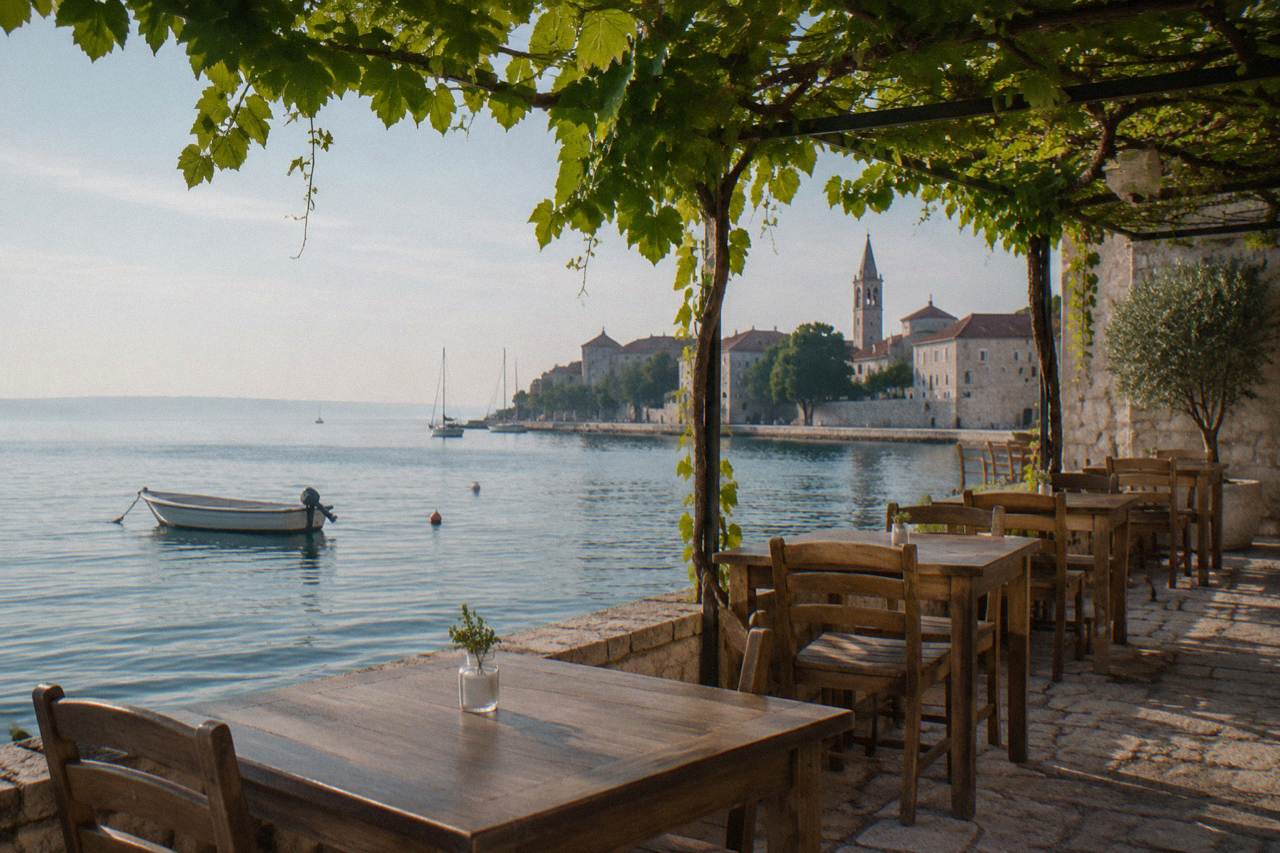
Zadar locals eat in small family-run konobas rather than the restaurants that line the main waterfront promenade, at the city market for bread, cheese and morning produce, and in the residential districts of Borik, Puntamika, Diklo, Arbanasi and Kolovare, where menus are short, fish is priced by the kilo and the grill runs all evening. The rule of thumb is simple: a hand-written chalkboard with five dishes on it, and a room full of Croatian conversation, beats any printed menu with photographs.
A konoba is the Dalmatian equivalent of a tavern: originally a cellar for storing wine and oil, now a family restaurant that serves whatever the market and the boats brought in that morning. The word matters because it is the single most reliable signal on a doorway. A place that calls itself a konoba has usually committed to a certain style, grilled fish, simple vegetables, house wine by the litre carafe, and to a pace that assumes you are staying a while.
This site reports rather than reviews, and no restaurant on this page has been visited by anyone writing it, so the aim is to give you the patterns locals use to choose, not a ranked list. Those patterns travel well. They work in the Old Town, and they work even better in the mainland neighbourhoods across the water, where the peninsula's day visitors thin out and the prices follow the residents rather than the season.
One more habit worth copying before anything else: locals look at the fish. If the catch on display is whole, iced and clearly the same fish that appears on the plate, the kitchen is buying from the market or the boats. If there is no fish on display at all, that tells you something too.
Which Zadar Neighbourhoods Do Locals Eat In?
Residents eat across five main areas: the Poluotok peninsula's Old Town for slow dinners and celebrations, Borik and Puntamika to the northwest for hotel-district konobas with local followings, Diklo further north for grilled fish by the water, Arbanasi across the bay for everyday weekday eating, and Kolovare southeast of the centre for the beach-side lunch trade. Each has its own rhythm, and the residential ones stay busy in the shoulder season when the Old Town empties.
The peninsula is where the visitors concentrate, and locals do eat there, but usually in the streets one or two rows back from the Riva, not on the front line facing the Sea Organ. That installation, built by Nikola Bašić in 2005, and the Greeting to the Sun beside it from 2008, are free public works open at all hours, so the waterfront itself costs nothing; what you pay for on the front row is the view of them. Step inland toward the Five Wells Square and Kalelarga side streets and the character changes.
Arbanasi, reached across the bay, is a genuinely local village-within-commuting-distance, with a small fishing and boating culture of its own. Kolovare, with its beach and park, feeds families at midday in summer. Diklo and Puntamika stretch northwest along the coast toward Borik, and this is the strip where a lot of weekday dinners happen, smoked ham, grilled squid, a carafe of the local white.
| Area | Character | When locals use it |
|---|---|---|
| Poluotok (Old Town) | Back-street konobas, slower dinners, weekend and celebration meals | Evenings and weekends, year-round |
| Borik and Puntamika | Hotel district with independent konobas alongside | Weekday dinners, shoulder season |
| Diklo | Grilled fish and seafood by the water, residential and quiet | Summer evenings |
| Arbanasi | Everyday eating, village-scale, few visitors | Weekday lunches and dinners |
| Kolovare | Beach-park area, family lunches near the sea | Midday in the warm months |
For planning how a food-focused visit fits a wider trip, see how many days in Zadar is enough, and for what else the city is known for beyond the table, what Zadar is famous for.
Some of the strongest local-flavoured experiences around the city now come with the territory rather than the table: a guided speedboat tour with organic food, olive oil and wine tasting runs from Zadar out onto the water the city eats from, pairing island swimming stops with the same oil and wine the konoba kitchens pour. Check availability.
How Do You Order Like A Local In Zadar?
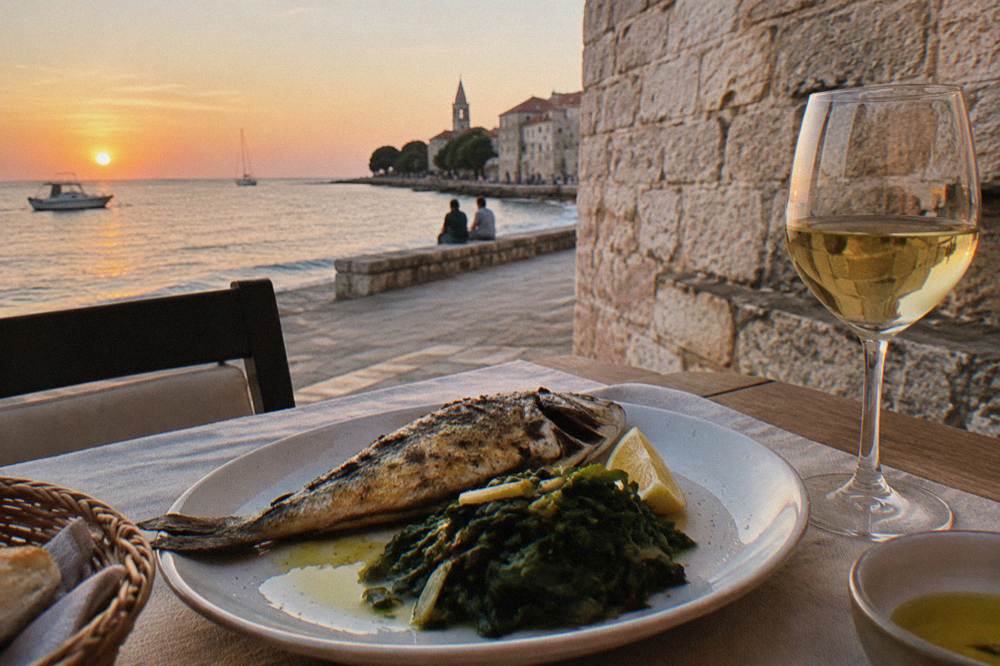
Order the fish that is displayed on ice, priced per kilogram, and let the kitchen tell you what is good today; ask for peka only if you have booked it hours ahead, because the dish is cooked under a bell of embers for hours; drink the house wine by the carafe rather than the bottle list; and finish with maraschino, the cherry liqueur Zadar has produced for centuries and still pours after dinner. A short menu is a promise, not a limitation.
Peka deserves its own sentence because it is the dish visitors ask about and then order wrongly. It is a slow-cooked mix of meat, often veal or octopus, with potatoes under a domed metal lid covered in embers, and it needs hours. Locals phone ahead in the morning and book it for the evening. Walking in at 20:00 and asking for peka is the classic outsider's move; the kitchen will be kind about it, and say no. The wider set of guides lives on Zadar Croatia Travel Guide.
The vocabulary is small and useful. A gablec is the midday set lunch that workers eat. Mala kava is the small espresso that follows everything. Riblji meni is the fish menu. A konoba's riblji meni usually has three or four fish, each priced by the kilo, and the waiter weighs the piece in front of you before cooking it. Blitva, chard with potatoes, and swiss chard in olive oil, arrives with almost everything, and Dalmatian olive oil is poured on bread rather than butter.
What Time Do Zadar Locals Actually Eat?
Locals eat lunch between 12:00 and 14:00, the main cooked meal of the day for many residents, and sit down to dinner late, often not before 20:00, with the tables on the Riva and in the back streets filling through 21:00 in the warm months. Cafés do their biggest trade in the morning and mid-afternoon, and the evening promenade, the西游 stroll after dinner, is a social institution rather than an afterthought.
That rhythm follows the coastal climate. The July mean at Zadar station, 1961-2024 (DHMZ), is 24.5 C with ten days at or above 30 C, so the heat of the afternoon belongs to shade, coffee and the sea, and eating moves to the cooler hours. Even in January, with a mean of 7.3 C, the café terraces keep going, and November, the wettest month at 123 mm, is when kitchens fill up earliest.
The morning half of the day belongs to the market. Zadar's Gradska tržnica, the city market near the peninsula, opens early and is where bread, cheese, olive oil, cured ham and the morning's produce change hands; locals shop there before work, and the fish stalls set the prices the konobas then cook against. Advent gives the market square a second life: the announced 2026/27 programme runs 24 November 2026 to 2 January 2027, with the Gradska tržnica among the locations named in the city's programme alongside the new Forum ice rink, so the market area turns into an evening eating and drinking ground in winter rather than closing down.
| Word or phrase | What it means | How to use it |
|---|---|---|
| Konoba | Family tavern, originally a wine and oil cellar | Choose it over restaurants with photo menus |
| Gablec | Midday set lunch at a fixed price | Ask "imate li gablec?" around noon |
| Peka | Meat or octopus with potatoes cooked under an ember-covered bell | Book in the morning for the evening |
| Mala kava | Small espresso | The default coffee order |
| Blitva | Chard with potatoes, served with grilled fish | Comes with the fish, not instead of vegetables |
| Maraschino | Cherry liqueur made in Zadar for centuries | After dinner, small glass |
Which Local Food Experiences Can You Book In Zadar?
The bookable local-food options fall into three groups: guided food and wine walks through the Old Town that stop at several producers and kitchens, boat trips that combine island swimming with organic food, oil and wine tasting on the water, and cooking-oriented day trips into the Dalmatian interior, where a quad tour can reach the olive groves, vineyards and hill villages the coast's kitchens draw from. Each pairs eating with a guide who can explain what is on the plate.
A food walk is the most direct way to answer this page's question with a local at your side: the roster lists several Old Town walks built around food, wine and history, one around maraschino tasting, and a longer food tour built on local dishes and city stories. The guided speedboat trip named above takes the same idea offshore, with organic produce, oil and wine served between swim stops, and it is the one this site features most often because the sea is the reason the coastal table exists at all.
Beyond food proper, the Dalmatian hinterland supplies the olive oil, the wine and the cheese that appear on every konoba table, and a quad tour of the hidden trails from Zadar reaches the kind of inland terrain a restaurant review never describes. For a day trip that ends with a long lunch in Skradin, the Krka waterfalls tour with ticket included pairs the park with the town whose kitchens sit at the river mouth; swimming in the park is allowed only at the designated spots, Roški slap, Stinice and Pisak, from 1 June to 30 September, so plan the swim stop, not just the meal.
The question of how the locals eat connects to two others this site covers: whether the city justifies the food reputation, which is Zadar worth visiting addresses in full, and how the eating here compares with the bigger city down the coast, where is Zadar nicer than Split runs the comparison. On the practical side, remember that Croatia uses the euro, that a tourist tax exists and is collected by your accommodation with the amount confirmed at booking, and that the emergency number is 112.
Common Questions About Eating In Zadar
Where do the locals eat in Zadar?
In small konobas one or two streets back from the Riva, in the residential districts of Borik, Puntamika, Diklo, Arbanasi and Kolovare, and at the city market in the morning. The signals to look for are a short hand-written menu, whole fish on ice priced by the kilo, and a room speaking Croatian after 20:00.
Is it expensive to eat where locals eat in Zadar?
Local konobas are generally cheaper than the front-row waterfront restaurants, and a gablec, the fixed midday set lunch, is the affordable option workers use. Check the chalkboard or the menu before sitting down.
What should I order in a Zadar konoba?
Grilled whole fish by the kilo, blitva as the vegetable, house wine by the carafe, and maraschino afterwards. Peka, cooked under embers, needs to be booked hours ahead. If there is a fish display, order from it rather than from a printed list.
What time is dinner in Zadar?
Locals sit down to dinner late, often not before 20:00, with tables filling through 21:00 in the warm months. Lunch is the main cooked meal of the day for many residents, eaten between 12:00 and 14:00.
Are there food tours in Zadar?
Yes. The roster includes Old Town food, wine and history walks, a maraschino tasting walk, a longer local-dishes food tour, and a guided speedboat trip with organic food, olive oil and wine tasting. Tip-based walks also run locally; confirm arrangements with the guide.
Can I visit the Zadar city market?
Yes, the Gradska tržnica is open to everyone and is where residents buy bread, cheese, oil and the morning's produce. In winter it also forms part of the Advent programme, which in 2026/27 runs 24 November to 2 January across several locations.
Eating like a local in Zadar comes down to three habits: order what is displayed, eat at the hours the city eats, and walk two extra streets to find the room full of Croatian conversation. The rest, the peka booked in advance, the carafe not the bottle, the maraschino at the end, follows from there.